
What Kind of Chemical Bonding Occurs Between Dye and Fiber?

The dye-fiber bond is the single most important factor in determining wash fastness — the bond type a dye uses to attach to its fiber governs whether color survives repeated laundering or bleeds after a few washes. Different dye classes rely on fundamentally different attachment mechanisms: covalent bonds (reactive dyes), ionic bonds (acid and basic dyes), hydrogen bonding and Van der Waals forces (direct dyes), and physical entrapment (disperse, vat, sulfur, azoic, and indigo dyes).
The table below summarizes how each major dye class fixes to its target fiber and the resulting wash fastness performance.
Summary of the Chemical Bonds of Dyes with Fibers (Means of Fixation)
| Dyes | Bonds |
|---|---|
| Direct dye | H-bond, Van der Waals force of attraction |
| Reactive dye | Covalent bond |
| Acid dye | Ionic bond, H-bond also contributes |
| Basic dye | Ionic bond |
| Disperse dye | Physical bond (Trapped) |
| Vat dye | Physical bond (Trapped in a water-insoluble form) |
| Sulfur dye | Physical bond (Trapped in a water-insoluble form) |
| Azoic color | Physical bond (Trapped in a water-insoluble form) |
| Indigo dyes | Physical bond (Trapped in a water-insoluble form) |
Wash Fastness Comparison by Dye Class
Wash fastness is measured on the ISO 105-C10 grey scale, where a rating of 1 indicates very poor fastness (heavy color transfer) and 5 indicates excellent fastness (no detectable color transfer). The table below consolidates fastness ratings across all dye classes covered in this article.
| Dye Class | Primary Fiber | Bond Type | ISO Wash Fastness |
|---|---|---|---|
| Direct dye | Cotton | H-bond, Van der Waals | 2–3 |
| Reactive dye | Cotton, protein fibers | Covalent | 4–5 |
| Leveling acid dye | Wool, nylon | Ionic + H-bond | 3–4 |
| Milling acid dye | Wool, nylon | Ionic + H-bond | 4–5 |
| Metal complex acid dye | Wool, nylon | Ionic + H-bond | 5–6 |
| Basic dye | Acrylic | Ionic | 4–6 |
| Disperse dye | Polyester | Physical entrapment | 4–6 |
| Vat dye | Cotton | Physical entrapment (insoluble) | 5–8 |
| Sulfur dye | Cotton | Physical entrapment (insoluble) | 4–6 |
| Azoic color | Cotton | Physical entrapment (insoluble) | 4–6 |
| Natural mordant dyes | Cotton, wool | Mordant bridge (ionic) | 3–4 (with mordant) |
Dye Selection Quick Reference
Use this guide to select the appropriate dye class for a given fiber type and fastness requirement.
- Polyester → Disperse dyes (100–130°C under pressure; ISO 4–6 wash fastness)
- Cotton — highest fastness → Vat dyes (ISO 5–8; requires reduction/oxidation process)
- Cotton — moderate process simplicity → Reactive dyes (ISO 4–5; covalent bond; 30–80°C depending on type)
- Cotton — easy application → Direct dyes (ISO 2–3; poor wash fastness; use fixing agents for improvement)
- Wool/nylon — bright shades → Leveling acid dyes (ISO 3–4; pH 2–4)
- Wool/nylon — wash fastness priority → Metal complex acid dyes (ISO 5–6; pH 2–7)
- Acrylic → Basic dyes (cationic; ISO 4–6 wash fastness)
- Unknown fiber or general craft use → Fiber reactive dyes (Procion MX type) for cellulosics; acid dyes for protein fibers
Methods to Improve Bonding in Wool and Cotton
Mordanting uses toxic heavy metal ions to create weak attachments that enhance dye bonding. Chromium salts, aluminum salts, and iron salts are common mordants — chromium salts were historically the standard for wool but environmental regulations have driven adoption of reactive and metal complex dyes as replacements.
The tannin process deposits a thin film over the fiber surface that physically blocks dye from migrating out of the fabric. This method significantly improves wash fastness without altering the dye chemistry itself.
Fixing agents increase dye molecule size by forming complexes with the dye, making mechanical removal through washing more difficult. These agents are particularly effective for direct dyes on cotton, which rely solely on weak Van der Waals forces.
Chemical Bonding Between Dye and Fibers
The different types of dyes available in the market have been covered in depth in our previous post. This article focuses specifically on the chemical bond types that attach each dye class to its target fiber.
Direct Dyes
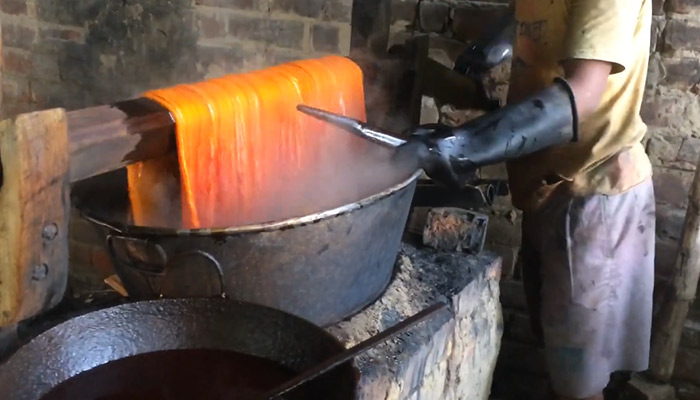
Direct dyes exhibit high substantivity toward cellulosic fibers through non-ionic forces, attaching to cotton via hydrogen bonding and Van der Waals dispersion forces. The substantivity increases with extended aromatic ring structures in the dye molecule, which promotes aggregation within fiber interstices. Because these bonds are physically based rather than covalent, direct dyes demonstrate poor to moderate wash fastness — typically rated 2–3 on the ISO 105-C10 grey scale — and lower brightness compared to reactive or vat dyes.
Fiber Reactive Dyes
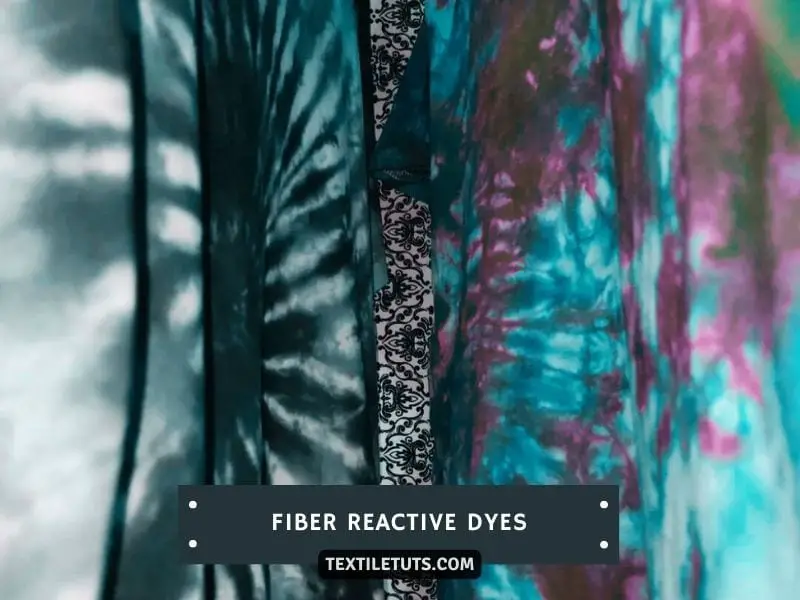
Reactive dyes, also known as fiber reactive dyes, are primarily applied to cotton but also work on protein fibers and polyamides. These dyes form covalent bonds with cellulose by sharing electrons between the dye’s reactive group and the fiber’s hydroxyl groups. This bond is exceptionally strong — the dye becomes part of the fiber structure itself — resulting in excellent wash fastness ratings of 4–5 on the ISO grey scale. The impact of temperature on dye properties plays a crucial role in determining the vibrancy and longevity of the colors. Higher temperatures can promote faster bonding between the dye and fiber, leading to improved color retention. However, excessive heat can also cause dyes to degrade, compromising their effectiveness and resulting in duller shades.
Dichlorotriazine reactive dyes (e.g., Procion MX) fix at 30°C through nucleophilic substitution of the chloride atom. Monochloro-triazine dyes require 80°C for fixation. Vinyl sulfone dyes (e.g., Remazol) fix at 40°C via Michael addition. The lower fixation temperature of dichlorotriazine dyes makes them energy-efficient but also more susceptible to hydrolysis in the dyebath, requiring precise pH control between 10.5 and 11.5.
Acid Dyes and Basic Dyes
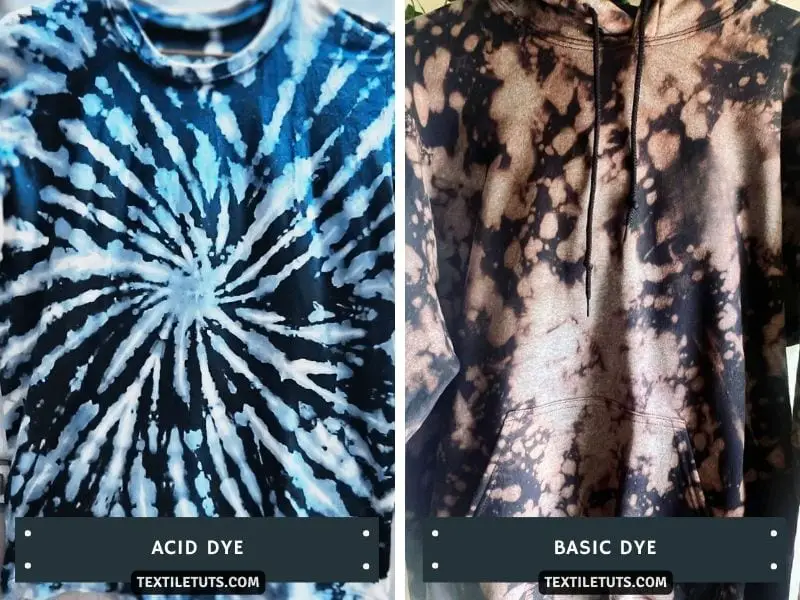
Acid dyes and basic dyes are applied primarily to polyamide fibers and acrylics. The amino acid side chains in protein fibers such as wool contain protonated –NH₂ groups that form ionic bonds with the anionic sulfonic and carboxylic acid groups present in most acid dye structures. This ionic bonding occurs between opposite charges, with wool and nylon becoming cationic under acidic dyebath conditions.
Acid dye classes are categorized by pH range and wet fastness. Leveling acid dyes operate at pH 2–4 and produce bright shades but exhibit low wet fastness (ISO 3–4). Milling acid dyes work at pH 4–7 and provide superior wash fastness (ISO 4–5). Metal complex acid dyes, formulated at pH 2–7 with chromium or cobalt chelates, deliver the highest wash fastness ratings of 5–6 on the ISO grey scale. The bonding mechanism combines ionic attraction with supplementary hydrogen bonding, resulting in excellent wash fastness for metal complex types.
Basic dyes operate on the same ionic principle but reverse the charge — they are cationic and bind to anionic sites on acrylic fibers. The dye cation attracts to the negatively charged sulfonate groups (-SO₃⁻) on acrylic fibers, forming a stable ionic bond that produces vivid colors with moderate to good wash fastness.
All the dye classes above create chemical bonds with the textile material. Some dyes instead fix through physical mechanisms — either mechanical trapping within fiber pores or by converting to a water-insoluble form that cannot exit the fiber.
Disperse Dyes
Disperse dyes are the best fabric dye for polyester and work exclusively in finely dispersed, water-insoluble form. Polyester has a glass transition temperature (Tg) of approximately 70°C (158°F). Above Tg, the polymer chains gain sufficient mobility to allow dye molecule diffusion. Commercial polyester dyeing uses 100–130°C under pressure, with 110°C (230°F) being the standard temperature — high enough above Tg to open the fiber pores while avoiding fiber damage.
During dyeing at 110°C, dye molecules diffuse through the opened pores and become trapped within the fiber as the temperature drops below Tg and the pore structure closes. This physical entrapment — not a covalent or ionic bond — produces excellent wash fastness ratings of 4–6 on the ISO grey scale because dye removal requires re-opening the fiber pores, which only occurs at or above Tg.
Vat Dyes and Sulfur Dyes
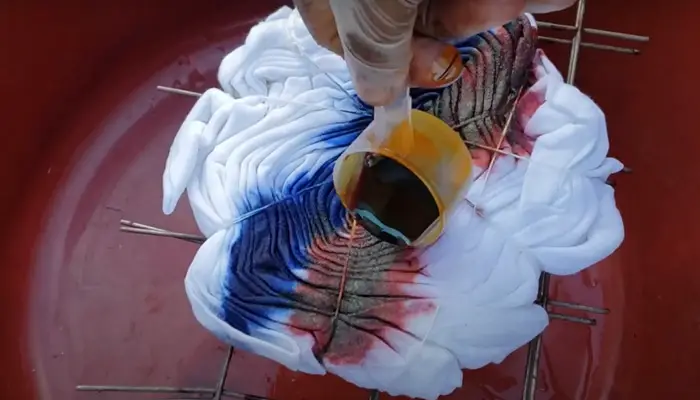
Vat and sulfur dyes are inherently water-insoluble and require chemical reduction to become soluble. Sodium dithionite (Na₂S₂O₄) is the most common reducing agent, converting the dye to its leuco form, which is soluble and can penetrate the fiber. After dyeing, oxidation — typically with hydrogen peroxide or atmospheric oxygen — converts the leuco dye back to its insoluble parent form, permanently trapping it within the fiber structure.
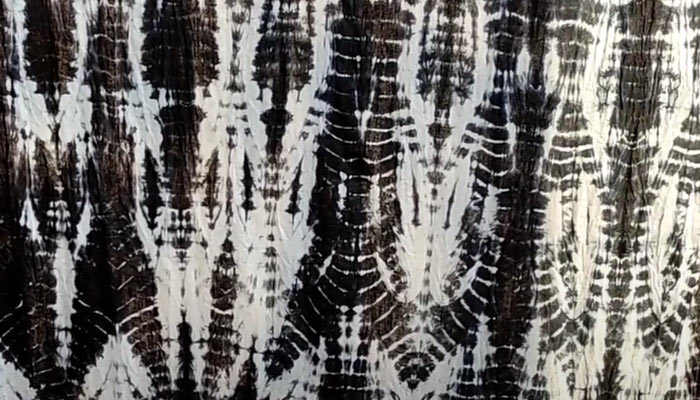
Vat dyes achieve high wash fastness ratings of 5–8 on the ISO grey scale, which is among the highest of any dye class. However, they tend to exhibit poor rubbing fastness due to surface deposition. When dye molecules fail to fully penetrate the fiber cross-section, ring dyeing results — the dye concentrates at the fiber surface and fades unevenly during abrasion. This characteristic is intentionally exploited in denim finishing, where controlled dye removal creates the deliberate aged appearance valued in jeans.
Azoic Colors
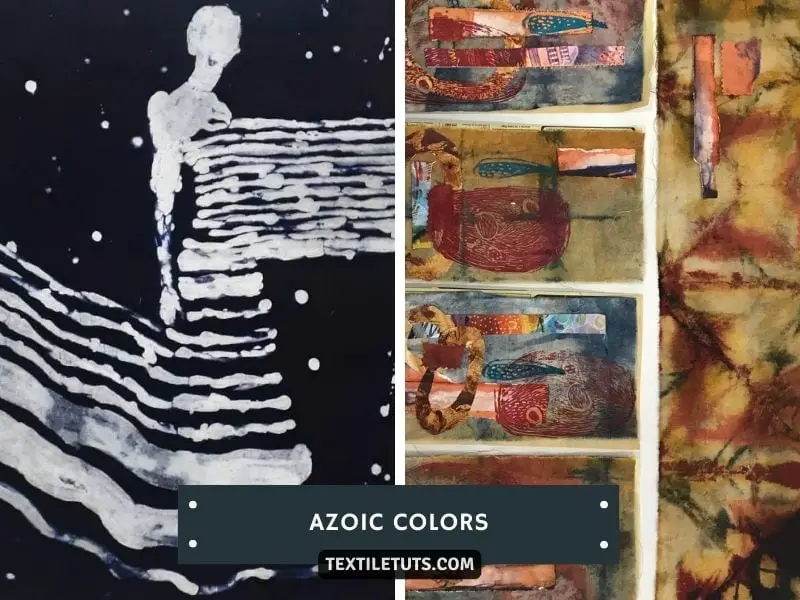
Azoic colors are generated in situ within the fiber through a two-component coupling reaction. The naphthol coupling component is made water-soluble by alkaline naphtholation, while the diazonium salt is produced separately through diazotization of an aromatic amine at 0–5°C. When these two components are combined, they couple to form a large, water-insoluble azoic pigment that precipitates directly inside the fiber pores.
The low temperature requirement for diazotization (0–5°C) and the toxicity of some diazonium components limit the widespread use of azoic dyeing. However, the technique produces exceptionally bright shades with good wash fastness (ISO 4–6) and excellent light fastness, making it still relevant for certain fashion and specialty textile applications.
Indigo Dyes
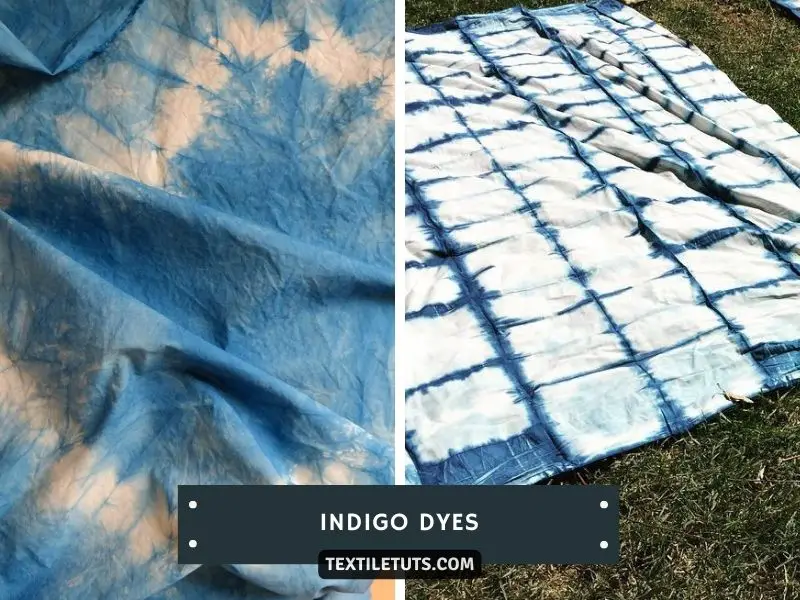
Indigo is the original vat dye, historically sourced from plants of the genus Indigofera but now produced synthetically in quantities exceeding 50,000 metric tons annually. Like all vat dyes, indigo is reduced to its leuco form using sodium dithionite, absorbed by the cotton yarn in the yellow-green leuco state, then oxidized by atmospheric oxygen or peroxide to regenerate the intensely blue, water-insoluble indigo pigment within the fiber.
The oxidation process produces the characteristic color change from yellow (leuco form in dyebath) to green (partial oxidation) to the final deep blue as the indigo fully oxidizes. Multiple dipping and oxidation cycles — typically 6–10 dips for denim yarn — build up the desired color intensity through layered deposition, with each layer capable of fading independently to create the depth of visual effect unique to indigo-dyed denim.
Natural Extracted Dyes
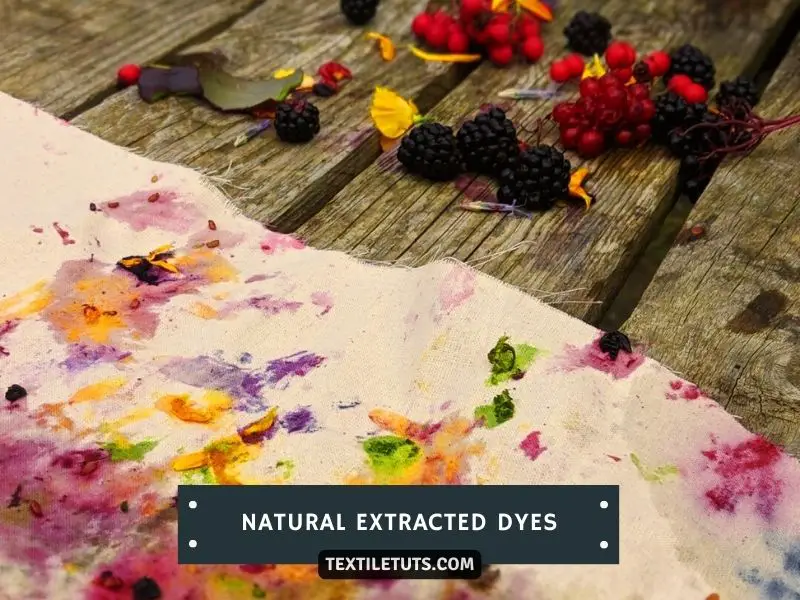
Most natural dyes lack substantivity to textile fibers and require mordanting agents to achieve acceptable fixation. Common natural mordants include alum (potassium aluminum sulfate), iron mordants (ferrous sulfate), and tannic acid. The mordant binds to both the dye molecule and the fiber, creating a bridge that improves wash fastness from poor (ISO 1–2 without mordant) to moderate (ISO 3–4 with mordant).
Three mordanting methods are used depending on the dye and fiber: pre-mordanting (fiber mordanted before dyeing), meta-mordanting (mordant added to dyebath), and post-mordanting (mordant applied after dyeing). Each method produces different hue shifts and fastness characteristics — iron mordants shift colors toward darker, duller shades while alum mordants preserve brighter tones.
References
- Koh, J. (2011). Dyeing characteristics and fastness properties of acid dyes. Fibers and Polymers, 12(5), 601–607.
- Clark, M. (2011). Handbook of Textile and Industrial Dyeing: Principles, Processes and Types of Dyes. Woodhead Publishing.
- U.S. Federal Trade Commission. (2023). Textile Labeling and Care Regulations. FTC.
- ISO. (2019). ISO 105-C10:2006 — Textiles — Tests for colour fastness — Part C10: Colour fastness to washing with soap or soap and soda. International Organization for Standardization.


