
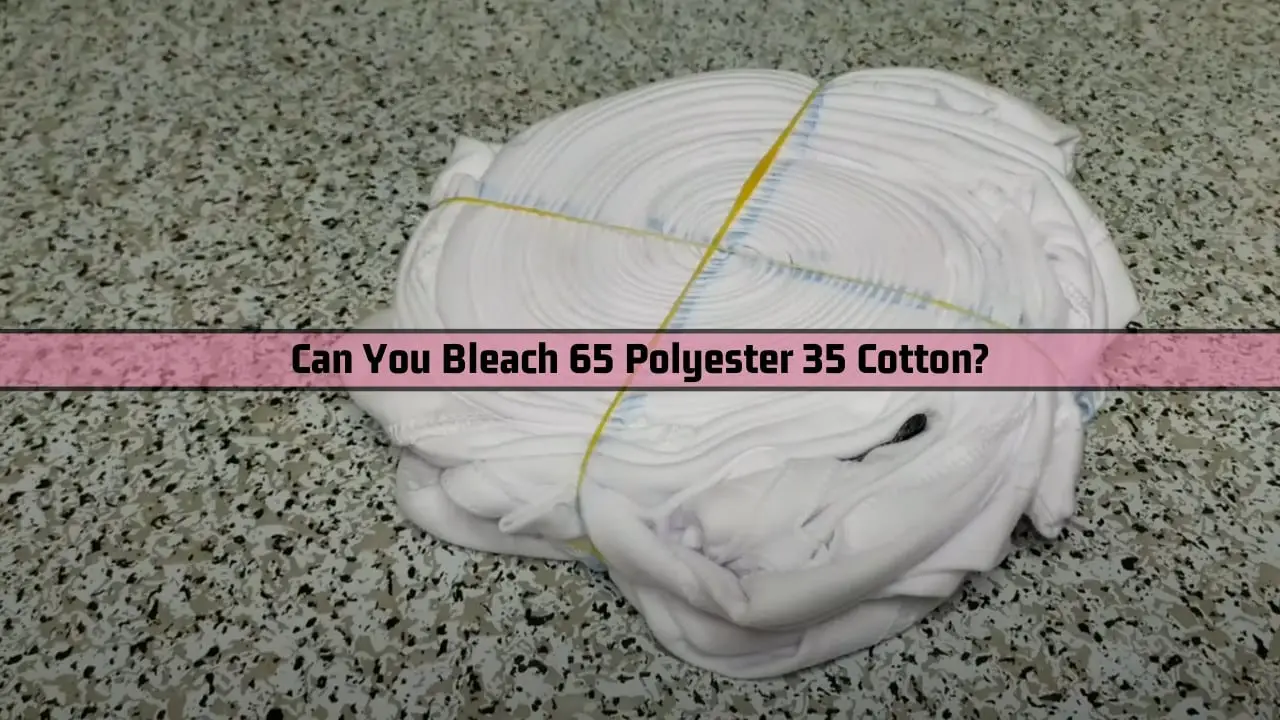
Can You Bleach 65 Polyester 35 Cotton?

Yes, you can bleach a 65 polyester 35 cotton fabric — but you must choose the right type of bleach. For disinfection, use mild, chlorine-free (oxygen-based) bleach. For color removal or lightening, stronger chlorinated or oxygen-based bleach works effectively when applied correctly.
This article provides definitive guidance on bleaching 65 polyester 35 cotton fabric safely and effectively.
To bleach dye a 65/35 polyester cotton fabric, use strong chlorinated or oxygen-based bleach to wash off the color or make it lighter. You must learn and follow the correct process for bleaching blended fabrics.
Quick-Reference: Bleach Types for 65/35 Polyester-Cotton
| Property | Chlorine Bleach (Sodium Hypochlorite) | Oxygen Bleach (Sodium Percarbonate) |
|---|---|---|
| Active Concentration | 5–6% | 2–5% |
| Working Time | 10–15 minutes per cycle | Up to 8 hours |
| Color Removal | Rapid, significant lightening | Gradual, gentler lightening |
| Polyester Impact | Degrades fibers with repeated use; risk of yellowing | Gentler on blended fabrics; no yellowing risk |
| Best Use | One-time rapid color removal only | Disinfection and repeated bleaching |
| Dilution (per gallon water) | 1/4 cup (59 mL) | 2 tbsp per quart (946 mL) |
| Water Temperature | 120°F (49°C) or cooler | 120°F (49°C) or cooler |
Pro Tip
To whiten 65 polyester 35 cotton fabrics, always use non-chlorinated oxygen-based bleach. Chlorine bleach causes the polyester fibers to turn yellow, rather than achieving a pure white result.
The Challenges of Bleach Dyeing 65 Polyester 35 Cotton
This fabric is 65% polyester, which makes it particularly sensitive to bleach. Multiple complications arise when bleaching 65 polyester 35 cotton blends, including yellowing, fabric damage, discoloration, and shrinkage.
The following section details each challenge and its solution:
Improper Discoloration
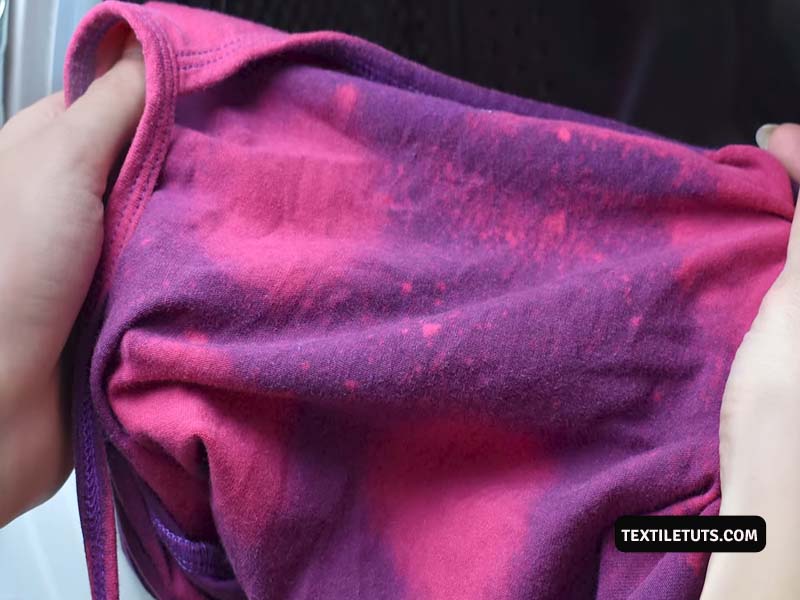
Polyester blends are treated with special dyes and finishes that resist fading and discoloration. These finishes significantly reduce the effectiveness of bleach as a color-removal agent. As a result, the fabric lightens rather than fully bleaching. Most blended fabrics achieve only 30-50% color removal with a single bleach cycle.
To solve this issue, use a dye specifically formulated for cotton-polyester blends and repeat the process as needed until the desired shade is reached.
Yellowing
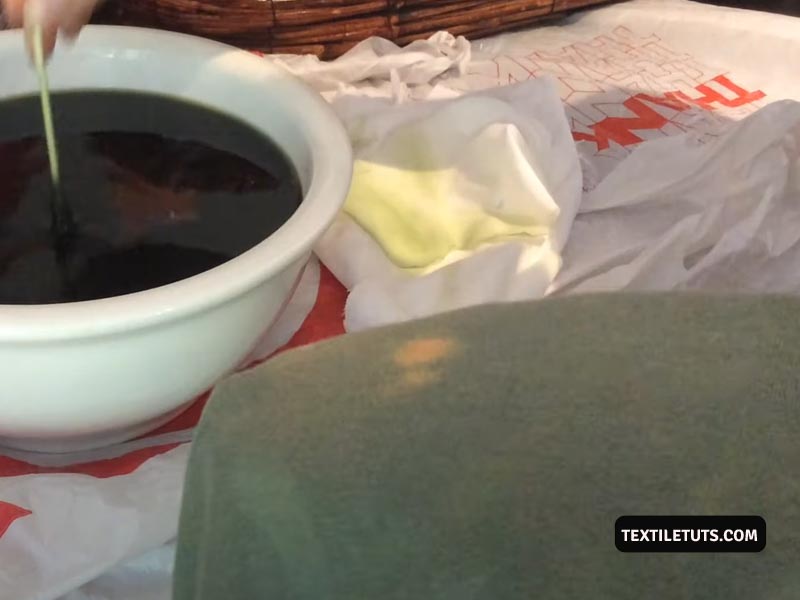
When bleaching 65 polyester 35 cotton clothes to make them white, they often turn more yellow instead. This occurs because chlorine bleach (sodium hypochlorite at concentrations of 5-6%) causes oxidative degradation of polyester fibers, leaving a yellowish tint. Incomplete rinsing leaves residual bleach that continues reacting with fabric finishes, compounding the yellowing effect.
To prevent yellowing, use oxygen-based bleach (sodium percarbonate) and always rinse the fabric thoroughly at 120°F (49°C) or below.
Damage to the Polyester Fibers
Bleach weakens the polymer chains in polyester fibers, causing molecular chain scission that makes fibers brittle, break-prone, and frayed. This results in holes, tears, or structural damage to the fabric. Polyester has a melting point of 260°C (500°F), but chlorine bleach exposure at elevated temperatures accelerates polymer degradation, altering the fabric’s texture to become stiff, scratchy, or rough.
Following the correct bleaching method — using oxygen bleach, temperatures below 120°F (49°C), and limiting soak time to 10 minutes — prevents fiber damage.
Fabric Shrinkage
65/35 polyester cotton blended fabric shrinks when exposed to bleach, particularly at water temperatures above 140°F (60°C). The cotton component absorbs moisture and swells while the polyester remains dimensionally stable, creating internal stress that manifests as shrinkage of 3-5% after repeated laundering. Exposure to high-heat drying after bleaching compounds this effect.
Prevent shrinkage by washing in water at or below 120°F (49°C), rinsing thoroughly, and air-drying or tumble-drying on low heat.
How to Bleach Dye 65 Polyester 35 Cotton — Step-by-Step Process
The proper bleaching process for 65 polyester 35 cotton blend fabrics requires careful attention to product selection, dilution, temperature, and timing. Follow each step precisely to avoid fabric damage and achieve consistent results.
Necessary Items and Precautions
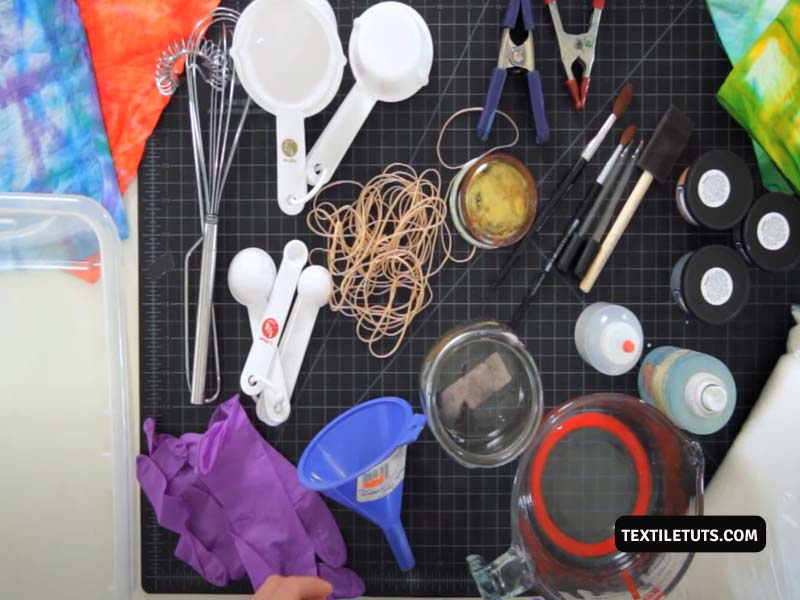
To bleach a poly-blended fabric, you need the following items:
Before starting, wear protective gloves, an apron, and a face mask to protect yourself from chemical exposure. Check the fabric’s care label to confirm it permits bleaching — look for symbols indicating bleach compatibility.
Select the Correct Bleach
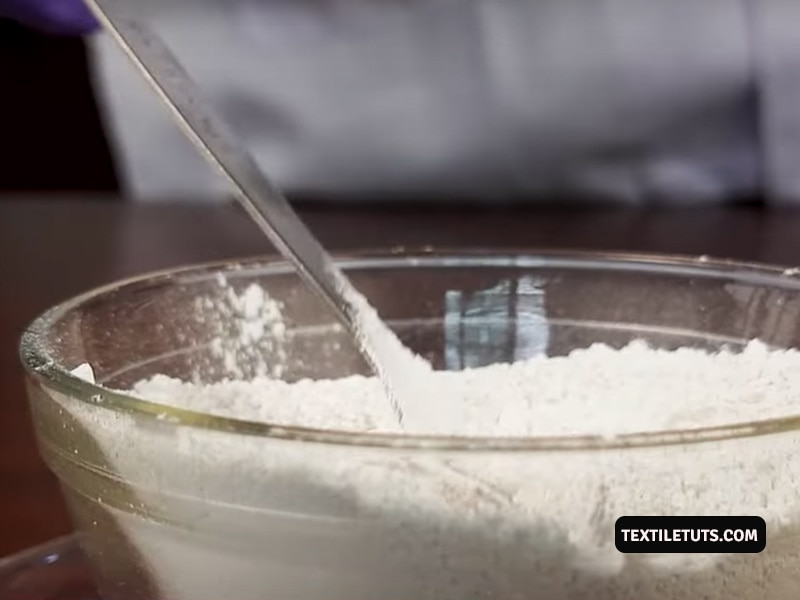
For 65 polyester 35 cotton fabric, choose between chlorinated bleach (sodium hypochlorite, 5-6% concentration) and non-chlorinated oxygen-based bleach (sodium percarbonate). Chlorinated bleach works rapidly, achieving significant lightening in 10-15 minutes, but repeated use degrades polyester fibers over time.
Oxygen-based bleach requires up to 8 hours to achieve full effect but is gentler on blended fabrics and eliminates the risk of yellowing. Reserve chlorinated bleach for one-time use when rapid color removal is essential.
Prepare the Bleach Solution
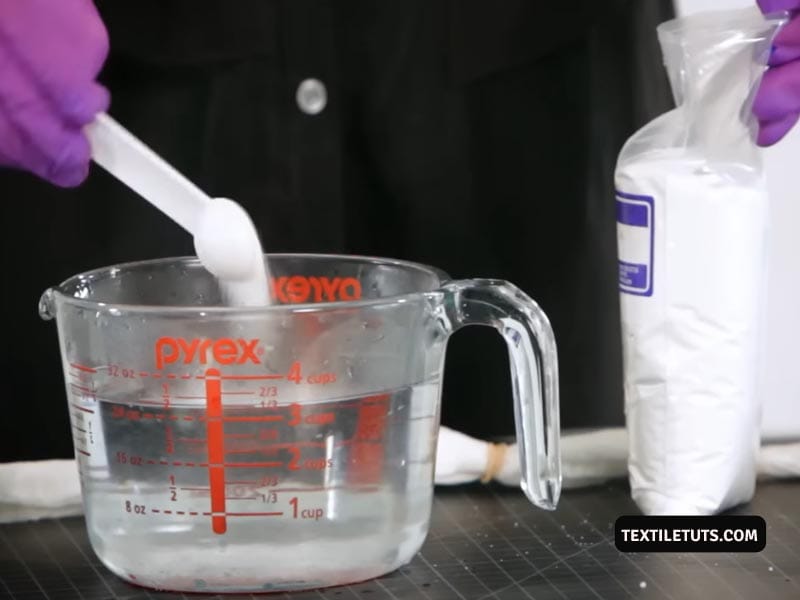
Dilute the bleach according to the ratio on the product label. For chlorine bleach, the standard dilution is 1/4 cup (59 mL) per gallon (3.79 L) of water, producing a solution with approximately 0.05-0.1% active sodium hypochlorite. For oxygen-based bleach, use 2 tablespoons per quart (946 mL) of water. Always use water at 120°F (49°C) or cooler to prevent heat-activated fiber damage.
Stir the solution thoroughly before adding fabric. Never combine bleach with ammonia, vinegar, or other acids — this produces toxic chloramine gas.
Pro Tip
Before full application, test the solution on a small, inconspicuous fabric swatch. If the swatch shows fiber deterioration, fabric softening, or color change within 5 minutes, dilute the solution further or switch to oxygen-based bleach.
Soak the Fabric
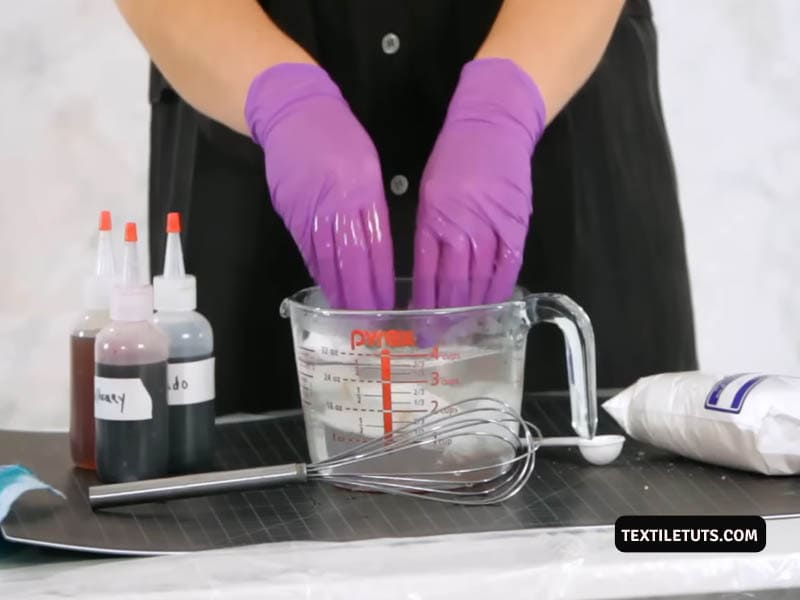
Fill a dyeing pot or bowl with enough 120°F (49°C) or cooler water to fully submerge the fabric. Add the diluted bleach and stir well. Submerge the fabric completely and stir gently to ensure even exposure.
Limit bleaching cycles to 5-10 minutes per session for chlorine bleach. Check the fabric’s progress every 5 minutes. For oxygen-based bleach, the fabric may remain in the solution for up to 8 hours, but inspect it every 2 hours. Prolonged exposure beyond recommended times causes progressive fiber damage.
Rinse in Hydrogen Peroxide Solution
To halt the bleaching process, prepare a neutralization bath using 3% hydrogen peroxide solution mixed with water at a 1:10 ratio (one part hydrogen peroxide to ten parts water). Soak the bleached fabric for 10 minutes. The hydrogen peroxide breaks down remaining active bleach and stabilizes the fabric’s pH.
Rinse the fabric with the solution and evaluate whether the desired level of lightening has been achieved. If not, repeat the bleaching step with a fresh solution.
Wash and Dry
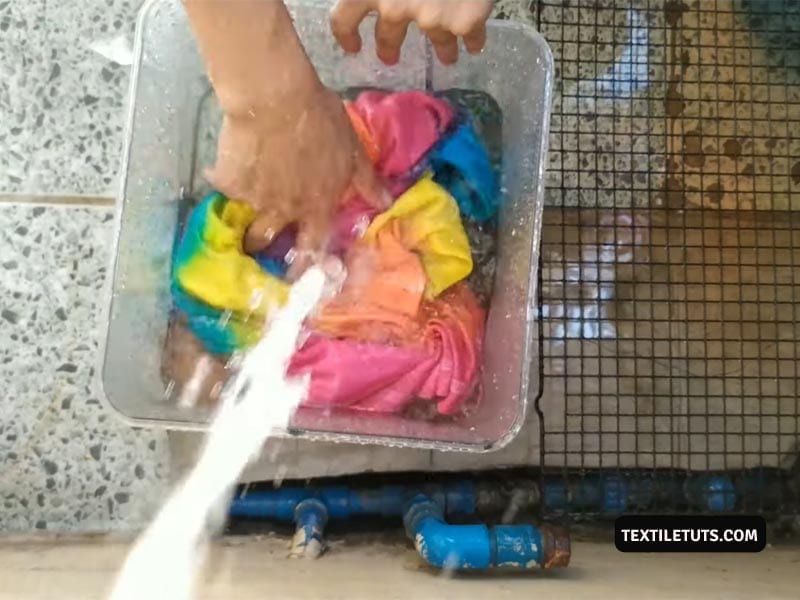
Once the fabric reaches the desired lightening, wash it thoroughly with cold water to remove all residual chemicals. Use a mild laundry detergent at 120°F (49°C) maximum to restore the fabric’s pH balance and remove any remaining bleach residue. Air-dry the fabric or tumble-dry on the lowest heat setting to prevent heat-induced shrinkage.
Dyeing a Polyester-Cotton Blend Fabric with Bleach
No, you cannot use bleach as a color dye for yellow fabric to dye a polyester-cotton blend. Bleach does not add color — it removes it through oxidation. Using bleach on polyester-cotton fabric may damage the fabric structure and cause uneven discoloration rather than achieving a usable dye result.
Conclusion
You can bleach a 65 polyester 35 cotton fabric successfully when you select the correct bleach type, follow proper dilution ratios, and adhere to recommended temperatures and soak times. The process involves preparing a bleach solution, soaking the fabric for 5-10 minutes per cycle, neutralizing with hydrogen peroxide, and washing thoroughly.
Always follow the instructions on the bleach packaging, and wash the fabric at or below 120°F (49°C) to remove all residual bleach and achieve flawless, damage-free results.
References
- American Society of Testing and Materials. (2021). ASTM D5489-14: Standard Guide for Care Symbols for Care Instructions on Textile Products. ASTM International.
- Food and Drug Administration. (2022). Cosmetic labeling: Bleaching products. FDA Cosmetics Labeling.
- Sharma, D., & Gupta, V. (2018). Optimization of bleaching process for polyester-cotton blends. Textile Research Journal, 88(14), 1623-1634.


