
The Best Paint for Clothes – An Easy Printing Alternative

Jacquard Textile Color Paint stands out as the best paint for clothes, offering 8 vibrant colors with excellent opacity and coverage of approximately 4.5 square meters per 2.25 oz bottle. This fabric paint excels in versatility, durability, and ease of use, making it the top choice for both beginners and professionals alike.
The quality of fabric paint directly determines how your clothing artwork will look and last. High-quality paints like Jacquard provide better color vibrancy, washability through 50-100+ wash cycles when properly heat-set, and a soft finish that won’t crack or stiffen the fabric.
This guide reviews 10 top-performing fabric paints, evaluating each for color range, opacity, washability, and safety certifications so you can pick the perfect paint for your specific project.
Why Fabric Painting is Better Than Fabric Printing?
- No design limitation
- No need to preapare screens
- Doesn’t require complex dye colour mixing
- No need for thickers or other auxiliary checmicals
- Workplace remain relatively clean
- Efforless to achieve fluorescent shades on clothes
Essential List of the 10 Best Paint for Clothes to Avoid Printing
If you are interested in the shortcut of coloring your clothes by applying fabric paints, then give each product a thorough read.
Quick-Reference Comparison Table
| Product | Colors | Volume/Size | Key Feature | Best For |
|---|---|---|---|---|
| 1. JAC1000 Fabric Paint | 8 | 2.25 oz pots | Soft finish, no cracking | Overall best |
| 2. Plaid Delta Ceramcoat | Single | 8 oz | Machine washable | Large projects |
| 3. Creative Joy Dual-Tipped Markers | 12 | Markers | Dual tips (detail + fill) | Precise designs |
| 4. Crafts 4-All Dual Tipped | 12/20/36 | Markers | Non-toxic, fade-proof | Kids & beginners |
| 5. Neon Nights UV Black Light | 8 | 0.7 fl oz | Glows in dark | Party/glow designs |
| 6. Tulip Washable Slick 3D | 6 | 1.25 fl oz | 3D dimensional effect | Textured projects |
| 7. Jacquard Dye-Na-Flow | 9 | 0.5 oz | Free-flowing, intense color | Swimwear, detailed work |
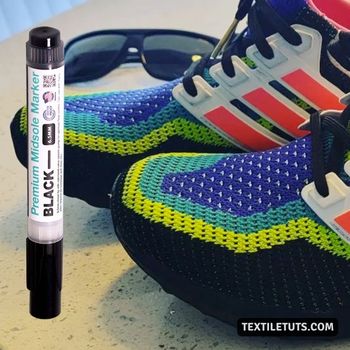
| 8. Wilkins Premium Midsole | 2 (B/W) | Marker | 3 interchangeable tips | Sneaker restoration |
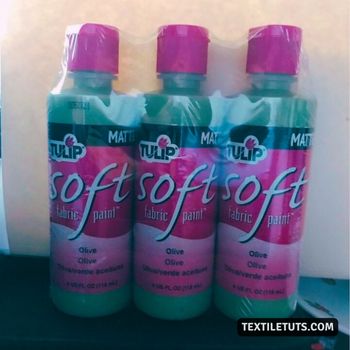
| 9. Tulip 20403 Soft Fabric | 34 | 4 oz | Single bottles, matte finish | Maximum color options |
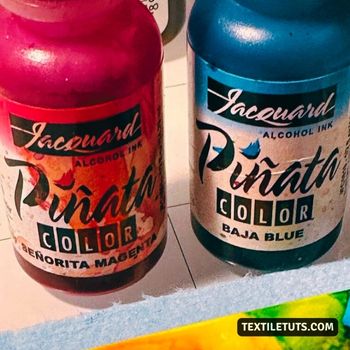
| 10. Jacquard Alcohol Fabric Inks | 16 | 5 oz | Alcohol-based, transparent | Synthetic fabrics |
1. JAC1000 Fabric Paint
Features
- Color: Eight different colors
- Volume: 25 oz
- Application: Easy to use
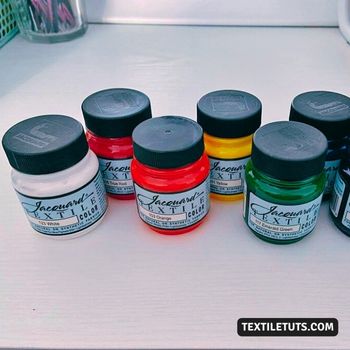
This product on this list is a package of multi-colors that is preferable for most fabric designers. Unlike the other paints, JAC1000 Textile Paint comes with eight different colors. The collection includes the primary colors every designer requires, including red, yellow, black, white, blue, purple, green, and orange. These are regarded as the best paint to use for clothes by many artisans.
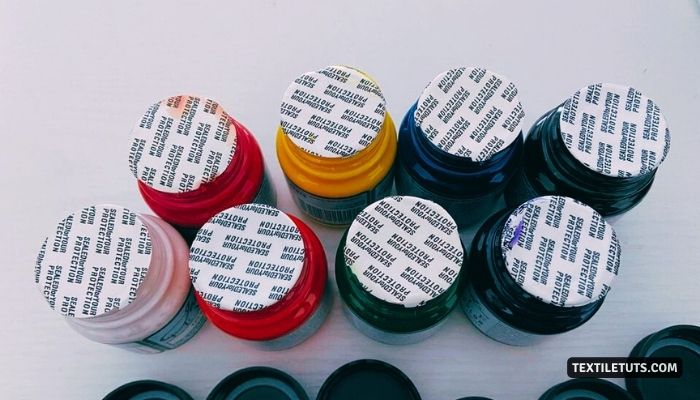
Besides that, every color comes with an individual 2.25 oz pots. That means you are getting enough quantity of paints you require for clothing designs. Moreover, Jacquard Paints are very handy and easy to use. All you have to do is dip your paintbrush inside the pot, and then you are ready to go.
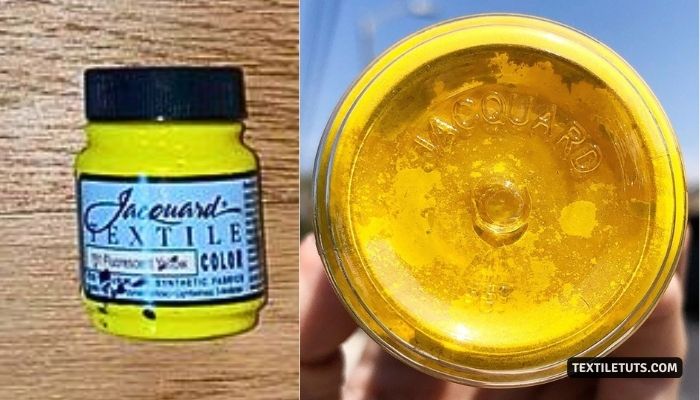
These compact 2.25 oz pots are highly portable. You can carry them wherever you want without any hassle. The pots are small enough to fit in any art supply bag or pocket.
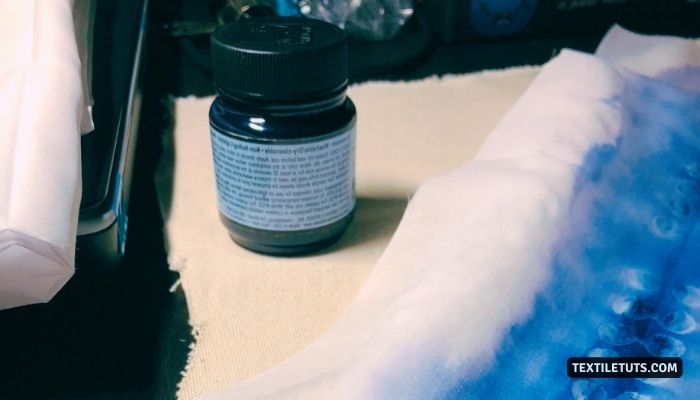
The best part of the JAC1000 textile paint is its quality. Once you apply those paints on the fabric, you will love the output, how it looks. The color spreads nicely and makes the fabric soft without any crackings on the design or the cloth. Therefore, you can easily make your innovative, mythical, and buoyant designs with the help of these paint sets.
PROS:
CONS:
2. Plaid Delta Acrylic Paint Ceramcoat
Features
- Volume: 8 oz
- Application: Smooth
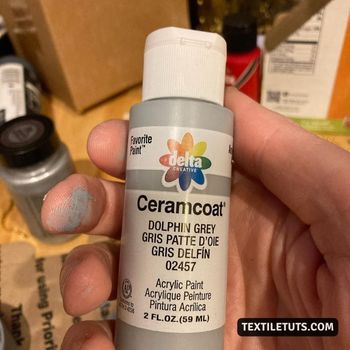
Plaid Delta Ceramcoat is a non-toxic paint with very low odor emissions. It is water-based, which allows easy cleanup without any special solvents.
Plaid Delta Ceramcoat comes in an 8-ounce bottle. Mix at a 2:1 ratio of delta textile medium ceramcoat to delta acrylic paint to create a wearable and washable fabric paint that bonds effectively with fabric fibers.
Once painted on fabric and properly heat-set, the paint forms a durable bond that withstands machine washing. To prevent damage, wash the fabric gently in a machine using mild soaps or detergents at temperatures not exceeding 40°C (104°F) to preserve the paint adhesion.
Plaid Delta Ceramcoat allows no bleeding, and it penetrates very nicely through the fiber of the cloth’s fabric. Moreover, this paint dries on the fabric cloth without any hassle of cracks. Therefore, it provides an excellent medium for you to design innovative creations of fabrics and becomes the best paint.
PROS:
CONS:
3. Dual-Tipped Fabric Markers with Washable Colors
Features
- Color: 12 color master set
- Volume: 06 x 5.59 x 1.26 inches
- Application: Easy to use
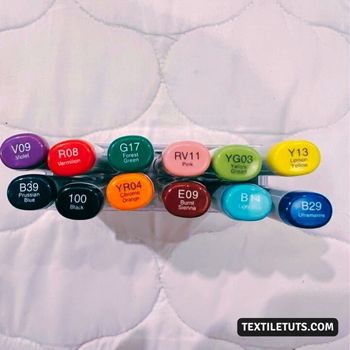
Like the JAC1000 paint set, Creative Joy also included twelve different colors in one set. Moreover, these paint markers have two tips. One for creating a precisely detailed outline, and the other one is to fill space with color. Besides that, the color set includes mint green, deep violet, brilliant blue, and many more colors.
You can use these fabric markers on almost all clothes, including fabrics of sneakers, aprons, jackets, and many more. The process of paint drying on the fabric is very easy, making it a worthy contender of being the best paint markers for clothing.
You can easily wash it in the cold water, and these types of paint markers don’t create any mess.
Furthermore, Creative Joy Dual Tipped Fabric Marker is non-toxic. Therefore children can also use them to improvise their creativity on the clothes.
However, the vibrant color quality of these markers matches the standard of EN 71-3 as well as ASTM D-4236. That refers to be useful for both the beginners as well as the experts. Indeed, its dual end tip allows maximum ease of applying textures and in-depth details on the fabrics.
Apart from all its features and specialties, from my side, I found these fabric paint markers very premium in quality and well-saturated colors. Hence, if you are looking for fabric paints that are brighter and easy to apply, then Creative Joy Dual-Tipped Fabric Markers will be ideal for you.
PROS:
CONS:
4. Crafts 4-All Dual Tipped Permanent Fabric Paint Markers
Features
- Color: A set of 12 markers
- Application: Effortless
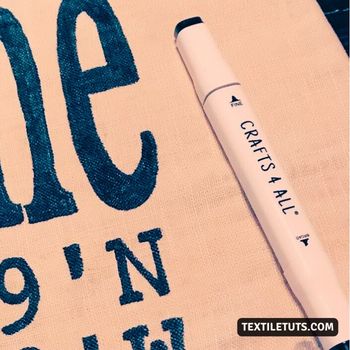
If you have any previous fabric painting experience, you must have known the Crafts 4-All brand. They are mostly known to the painters because of their versatile paint markers.
Meanwhile, I collected the most flexible dual-tipped fabric paint markers of Crafts 4-All for you to present your fabric sketches or drawings innovatively.
Like the JAC1000 Dual Tipped Paint Markers, you will also get some brilliant color combinations on their sets. Moreover, you can also choose color sets between twelve colors, twenty colors, and thirty-six colors. You can pick any of them according to your assertion.
Furthermore, Crafts 4-All involved too much effort in their color quality. Undoubtedly, the designs will stand out from the crowd once you apply them to the fabric and dry them. Having non-toxic chemicals, children can easily use these markers to enhance their art skills.
These paint markers work on almost all fabric objects including handbags, canvas, wall art, and baby gear. They are ideal for graffiti-style artwork, freehand sketches, and detailed paintings on fabric surfaces.
Crafts 4-All fabric paint markers have the exuberant pigment of fabric ink. And it doesn’t even create any mess. Also, if it does, you can spontaneously wipe off the messy part with water.
After all, these markers are the most long-lasting paints as it is washer-proof, weather-proof, light-fast, fade-proof, and no bleeding. So, once you embed your creative works on the raggery, dry them nicely. And then you will be ready to represent them as you want.
PROS:
CONS:
5. Neon Nights UV Black Light Glowing Fabric and Textile Paint
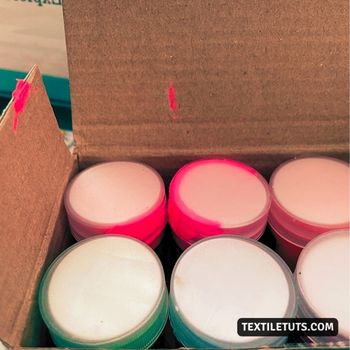
Features
- Color: Set of eight paints
- Volume: 0.7 fl oz each
- Application: Easy
In this list of best fabric paints reviews, I mentioned paints that mostly comes with multiple colors inset. And Neon Nights UV Glowing Fabric and Textile Paint are also one of them. This set of fabric paints also comes with eight different colors: red, blue, green, purple, orange, pink, yellow, and white.
Neon Night UV paints offer unique glowing effects under black light conditions. When you enter a darkened room or party venue, your custom-designed t-shirt will emit a vibrant glow that commands attention and creates a memorable visual effect.
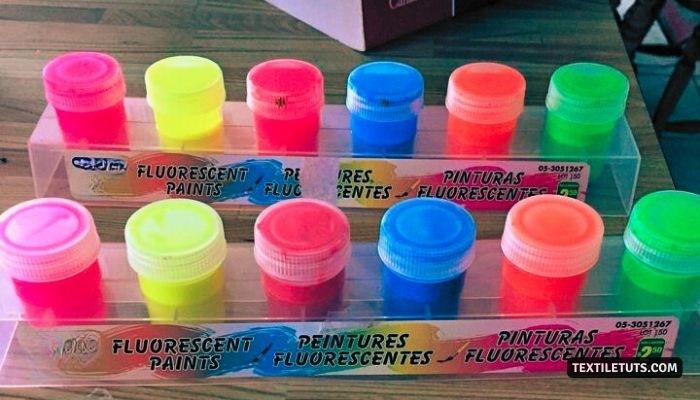
To get that unique look that grabs everyone’s attention for at least once, this glow in the dark paint is there for you. These paints will present your entire artwork, even in the dark. On the other hand, during day time, the color will also provide a standard look.
Talking about Glowing Fabric Paints (according to my research), Neon Nights is the finest fabric paint brand that provides such unique features that boosts every artist, painters, and sketchers skill.
Glowing textile and fabric paints come inside a pot of 0.7 fl oz each. Moreover, the colors are long-lasting and washable with water. Therefore, you don’t have to worry about the mess it creates (mostly, it doesn’t create any mess). Indeed, you can also iron your fabric even the paints are on. This is a must have item for any artist’s art supplies.
PROS:
CONS:
6. Tulip Washable Slick 3D Fabric Paint Set
Features
- Color: Set of six colors
- Volume: 1.25 fl oz each
- Application: Swift and easy
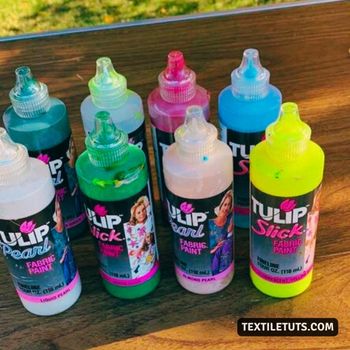
If you are looking for handy fabric paints, I suggest you try out this Washable 3D Fabric Paint Set. This paint set comes in 1.2fl oz squeezable bottles, which is why you can easily draw an outline, writer any words, or perform other detailing works very nicely.
Separately, these paints are not meant for large-scale coverage. Tulip Washable Slick 3D Fabric Paint excels at detailing and outlining on clothing. The six different color spectrums provide complete coverage for your fabric designs without gaps or inconsistencies.
Their precision and raised texture make them ideal for creating 3D dimensional effects on fabric. Whether crafting bold statement pieces or subtle textured accents, these paints are a versatile addition to any creative project. In addition to their versatility, Tulip Washable Slick 3D Fabric Paint is easy to blend, enabling artists to experiment with gradients and shading techniques.
Perfect for both beginners and seasoned crafters, these paints enhance your creative toolkit and inspire endless artistic exploration. The paint raises approximately 1-2mm above the fabric surface when applied in a single coat, creating a noticeable 3D effect that remains flexible after curing.
Nevertheless, the colorings allow a 3D effect on your design that makes your arts stand out from everyone ultimately. Apart from that, this paint will not show up any cracks at all. Moreover, kids can also use them as much as they want to bring their creativity to live on cloths.
Meanwhile, if you face any mess from this paint, then do not worry, as it is washable with water. Therefore, you can easily wipe off the messy part or wash the entire color using a washing machine. But if you want your art to last longer on your fabric, make sure you dry it well enough to keep that outlook.
PROS:
CONS:
7. Jacquard JAC9908 Dye-Na-Flow
Features
- Color: a set of 9 colors
- Volume: 0.5 oz each
- Application: Effortless
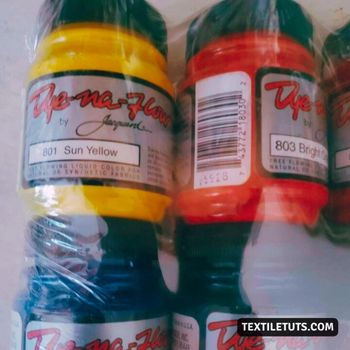
Pay heat swim lovers! I brought a gift that you can use to grab the crowd’s attention, even under the water. It is nothing but the Jacquard JAC9908 Fabric Paint, which is very easy to use and makes your sketches attract every eye.
Well, if you have gone through my entire content, you must notice that I already involved another Jacquard product that is JAC1000. Jacquard products are doing intensive works on their fabric paints, I must agree.
But the sad part of this fantastic coloring liquid is its amount. It comes in 0.5 oz pot measurements. that is not enough to deal with the entire swim-suit (if your artwork is that big, though).
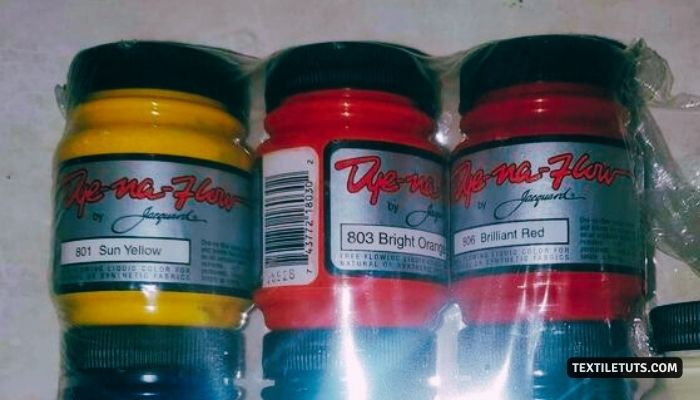
Apart from that, this free-flowing and highly intensive color makes the paint job very clear and visible even in daylight, like watching a headlight during the dark. With that feature, I must add that you will be getting nine colors along with this package. I meant the colors brass, blue (with three different shades), red, burnt orange, yellow, cranberry red, orange, and green.
After applying the paint, let it dry completely for 24 hours. Then iron at medium-high heat (approximately 150°C to 180°C or 302°F to 356°F) to heat-set the colors. Machine wash on a gentle cycle using cold water to maintain color vibrancy.
You can try them all on the ballet gears as well as on your T-shirts. In fact, this one can be hailed as the best paint for shirts. Those of you who are a beginner, you guys can use it to learn fabric paintings.
PROS:
CONS:
8. Wilkins Premium Midsole Marker Black
Features
- Color: Either black or white
- Application: Flexible
During our everyday life, lots of us face the issues of damaged shoes or sneakers. Mostly the school kids involve themselves with this problem a lot.
Sometimes, some expensive shoes or sneakers like the Gucci Sneaks, LV Sneaks, etc. break us into tears when they get the scuffs, marks, or damages.
Well, here I brought a solution for you. It is the Wilkins Premium Markes. It is a permanent paint marker that has acrylic-bonds in it. And these acrylic-bonds helps a lot to cover the marks, scuffs, and blemish your shoe more like a brand new one. Wilkins Markers are also a handy tool if you want to restore or treat the yellowish boost or ultra boost.
But before you get confident, I must remind you that there are only two colors available of the Wilkins Premium Markers: Black and White. Therefore, if your footwears are black or white, then you can use these markers.
The three interchangeable tips (fine, medium, and broad) allow you to create fine details using this marker. The pump-action feature prevents the marker from overflowing liquid, ensuring no mess as it releases a matte-finish color shade.
On the other hand, professionals also use them to paint on sneakers and give them an outstanding look.
I guess you have already seen the footwear of 69, Trey, JB, XXXTentacion, and many more. Their footwears include unique designs that stand out in a pretty unique way.
I don’t know if they use these markers to do those stuff or not. But, surely, you can do those designs on your sneaks using the Wilkins Premium Midsole Markers.
PROS:
CONS:
9. Tulip 20403 Soft Fabric Paint
Features
- Color: 34 different colors
- Volume: 4 fl oz
- Application: Straightforward
So far, you have seen the fabric paint products that come in sets of multiple colors. But now I mentioned a cloth paint that has over two dozen colors. Just pick the right color you require, and you are ready to go. I short, Tulip 20403 Soft Fabric Paint comes with single paint bottles, not an entire set of color bottles.
Nevertheless, Tulip 20403 is not so different from the other fabric paints but has some features that make it unique.
Starting with the standard features is that Tuli 20403 is a non-toxic fabric paint, which is why children can use them. Moreover, it includes the water-based formula, i.e., once you apply the paint on the material, let it dry naturally for a couple of minutes. Then use a steam iron machine and hold it approximately 0.5 meters above the design to make it dry correctly and get a nice texture on your art.
The soft matte finishing of this fabric paint makes the artwork looks more eye-catchy. And obviously, you can follow plenty of ways to apply the Tulip 20403 Fabric Paint on your attire. You can use a sponge applicator, a brush, or a paired stamp and stencil to give the design a beautiful detail.
On dark fabrics, you typically require 2-3 layers of paint to achieve full opacity and visibility. Apply thin, even coats rather than one thick layer. Excessive paint (more than 3-4 layers) will create a stiff, crusty texture that may crack over time.
And lastly, this color also comes in 4-ounce bottles. That means you will be getting lots of colors to make your work done very precisely.
PROS:
CONS:
10. Jacquard Alcohol Fabric Inks
Features
- Color: A set of 16 colors
- Volume: 5 oz. bottles
- Application: Easy
Here comes the last fabric paint on this list. But being the last one doesn’t mean that it would be the worst one. Honestly, I mentioned the top ten fabric paints (according to my research) for every type of clothing artist, no matter he/she is a pro or a beginner. These Fabric Paints will help them in many ways on their projects.
Ending this list with another premium tool from Jacquard highlights the brand’s excellence in fabric paints. Jacquard Alcohol Fabric Inks is an alcohol-based fabric paint that provides exceptional transparency, delivering dye-like results in fabric applications.
If you are one of them who prefers light paints or transparent paints on their fabric materials, Jacquard Alcohol Ink will surely be the most reliable option. The color looks very astonishing, light-fast, and it is very durable.
On the other hand, you can easily wash your paints off the cloths using alcohol. Furthermore, using acrylic paints on any type of material is very relaxing and satisfying. It makes the work more accessible than acrylic paints.
This paint suits mostly on the non-porous surfaces or any synthetic fabrics. Being light in color it also allows you to create and design innovative arts on your cloths. But then, you can also use the airbrush system to get a high flow of colors.
PROS:
CONS:
Factors You Should Consider to Pick the Best Paint for Clothes
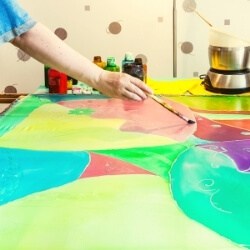
Before you jump to the list of paints, you must know how you can select the best one for your purpose? Basically, there are plenty of fabric colorings that have a variety of usage. So, don’t you think proper guidance will help you to pick the precise one from the list? Yes, it will. So let’s check them out:
Varieties
If you have previous experience in fabric dyes, you might notice that fabric dyes are not smooth. Their pigments are sticky enough to bind with the fiber molecules of the fabric cloths. Most of the fabric paint brands use different chemicals to get that stickiness and permanency.
Besides that, there are plenty of ways you can apply paints on your fabric cloths that include; brush paintings, markers, sprays, and many more. It is more likely to be a precise decision if you know first how you will be using those paints.
Hence, you must understand the types of fabric paints you need and how you can use them before you go for a certain one that has in your mind.
Fabric Dye
Fabric dye is mostly a transparent clone of this type of paints. The results are almost the same as the alcohol-based fabric colorings. But the rich tone with higher saturation also provides the same output as the acrylic-based paints. Sometimes the appearance looks more like the inks of the alcohol-based paints than the acrylic fabric colorings.
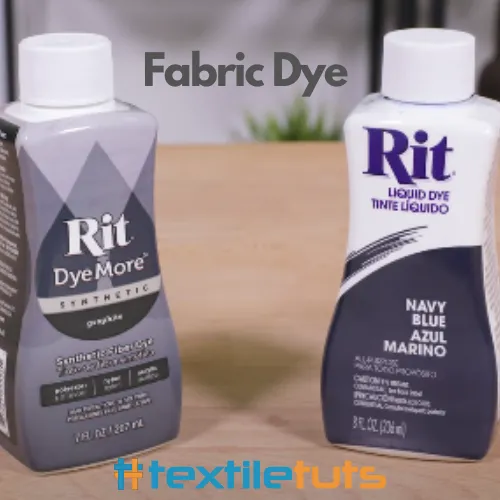
After all, fabric dye is an alternative option for fabric paints. Yet, I remind you it results slightly different from the fabric paints. On the other hand, your usage of dyes relies on the types of fabric dyes. So make sure you pick a specific fabric dye that matches your applying method.
Acrylic-Based Fabric Paint
These paints are generally the combination of color pigments and the acrylic polymer. This mixture is then emulsified with the help of water to get the precise texture of the fabric paints. And to be real, these acrylic paints results excellent in most cases. As a result, you will notice that acrylic paints are the most popular and common paints in the garments industries.
Apart from all the other types of fabric paints, acrylic-based fabric paints are very durable, and it nicely bonds with the fabric cloths.
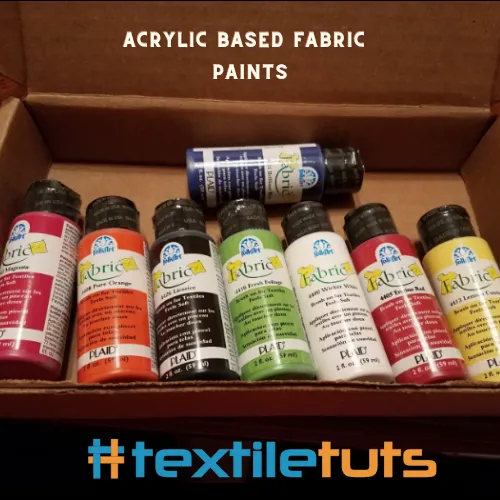
Thus, the design or the paint stays on the fabric cloths for the long term. Even though it gets through repetitive washes, the paint won’t decolorize or lose its texture.
On the other hand, this acrylic fabric paint prevents fading very quickly even after it gets through too much light exposure. Moreover, without demolishing its consistency, you can easily change the transparency of this acrylic fabric paints.
Apart from its features, these acrylic cloth paints have many methods of applying it on cloths as well. You can go for brush paints, painting markers, sprays, and so on. If you are looking for cloth paints regarding textile works or garments clothing design activities, I don’t think acrylic-based paints have any competitors in this sector.
Alcohol-Based Fabric Paint
These are mostly usable on non-porous fabric cloths. As you know, this paint contains alcohol in it. Therefore it drains through the porous fabric cloths very easily. In short, alcohol-based fabric colorings are not for porous fabrics. And that is why these paints are not that common in the market.
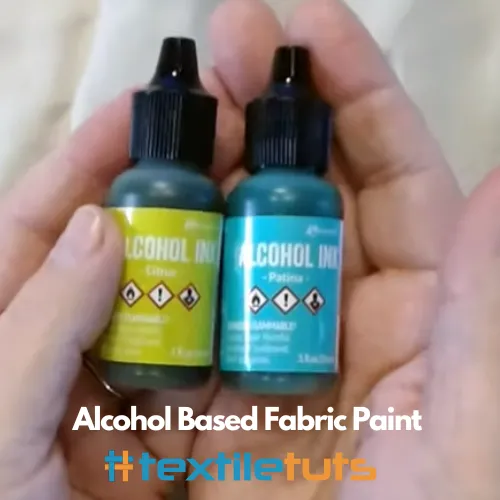
Apart from that, I must remind you, most of our garments’ clothes and fabrics are porous. Moreover, the ink of this paint has very low saturation and higher transparency.
Therefore, you need to apply more amounts of this paint on specific places to get the rich tone, texture, and color. Besides that, alcohol fabric paint doesn’t provide better output on dark color clothes as it is pretty light in color brightness.
But if you use this on non-porous clothes, I must say you will get impressed. These alcoholic-based colorings are the perfect choice for non-porous fabric clothes. The pigment gets delivered to the medium very precisely with the help of alcohol. In this paint, alcohol is acting as a binder, which is why you will be getting a stunning appearance on your cloths.
Specifications to Classify Paints for Fabric
Apart from the types of fabric paints, there are other features and characteristics of a fabric paint that you must consider before selecting a particular fabric paint.
Here, I mentioned those characteristics that result in both the functionalities and the final outlook of the colors. So once you get to know those features, it will be easier for you to make a decision.
Temperature Setting
After applying the design on the fabric clothes, the next question we face too often is how to make it last longer. Well, the answer to this question is by applying a certain amount of heat on the paint after you use it on your cloth.
Different fabric paints require specific heat levels to cure properly. Acrylic-based fabric paints typically cure at 150°C to 180°C (302°F to 356°F) when ironed for 3-5 minutes. Quality paints maintain adhesion even at lower heat settings, but insufficient heat results in premature wash deterioration.
On the other hand, the fabric also matters a lot. If you are using a poor heat setting fabric paint, then you will need to apply too much heat to make it adhere to the cloth. But too much heat might burn or demolish your fabric.
Paint Vagueness
Different types of fabric paint come with varying paint opacities. It depends on what kind of paint you need or the type of paint you are using on your fabrics.
You will get to see that some paints have rich tones; some have a better blurry effect, whereas some are transparent. So you will surely get a good result if you can judge the paint features and match your requirement.
As a hint, I would suggest you use the dull colors of cloth paints on your dark clothes and use the transparent one on your light-colored clothes.
Text and Body of Paint
If you have some previous knowledge about fabric designs and colorings, then you may already know that almost all paints for fabric are bodiless. These bodiless paints are the most suitable options if you want to paint your airbrush system, or you are willing to get the water-color look-alike effect on the paints.
Besides these bodiless paints, you will get good output from the heavy thick body paints. They perform great on the fabrics and provides more textures in the designs.
Furthermore, you can also change the consistency of the heavy thick body paints to light and bodiless paints by just adding and mixing some water in it.
Forms of Cloth Paints and Applying Procedures
These paints have many ways to apply them to clothes. I am guessing; you already know most of them. Even though if you don’t, then nothing to worry about as you will get all of the application methods in this section.
But not all of them might suit your choice because you will find some of them are adaptable, whereas some of them make it easy for you to create unique designs on the clothes and give it a new appearance.
Fabric Ink Markers
Fabric markers are undoubtedly the ideal choice for giving your design a niche and sharp details and elaborate it on the clothes. These markers are not different from ordinary markers that kids, students, etc. use in their daily works. Indeed, ordinary ones are not paintable on the fabric clothes, but with the fabric paint markers, you can easily design on the fabric clothes.
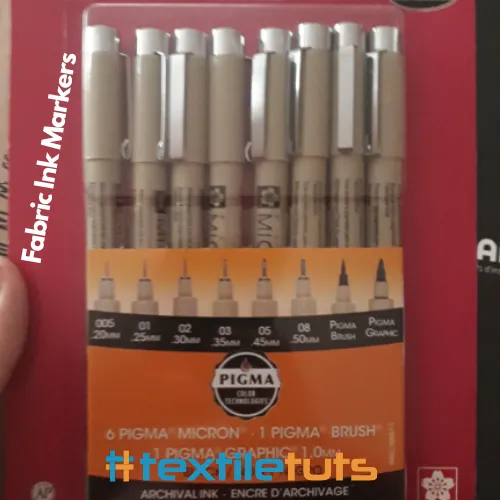
Moreover, other application methods are not that portable and convenient, as the fabric paint markers. You can easily carry them inside your bag or pouch, from place to place. But sadly, being compact, the amount of paint quantity is less in it compare to the other applying materials like paint sprays, special-dimensional paints, etc.
If you need those, you can go through our Arteza fabric paint reviews.
Spray Cans
Like the Fabric Paint Markers, spray cans are also an ordinary tool that you can use to decorate or paint designs on your fabric clothes. The only difference between regular spray cans and fabric spray paints is that the spray paint is only designed for clothes painting.
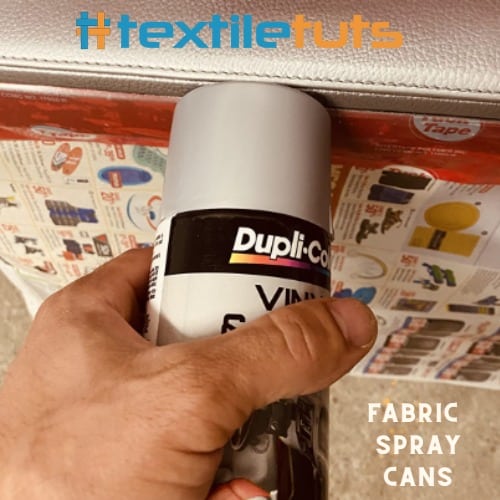
These spraying paint cans are an essential tool for the designs that are very simple and include no details. In that case, you can go for the spray cans.
Puff Paints
Puff paints are mostly acrylic-based fabric paints. Most of the textile works or garments sectors require the appearance of separate-layers or certain textures. For those works, you can use these puff paints. These paints are also known as the Dimensional Fabric Paint.
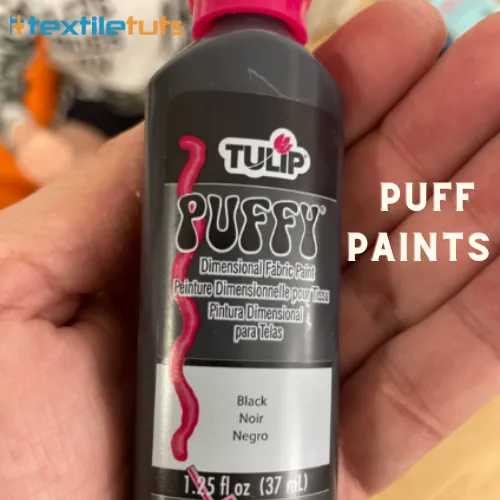
Moreover, if you desire to add some uniqueness to your clothes design, then these puff paints will make it work for you.
Liquid Form
This paint form is the most common version that you will find in every craft store. And most of the painters use this liquid paint forms to work on fabric clothes. Depending on the paint brands, you will find lots of different consistencies of these liquid fabric paints.
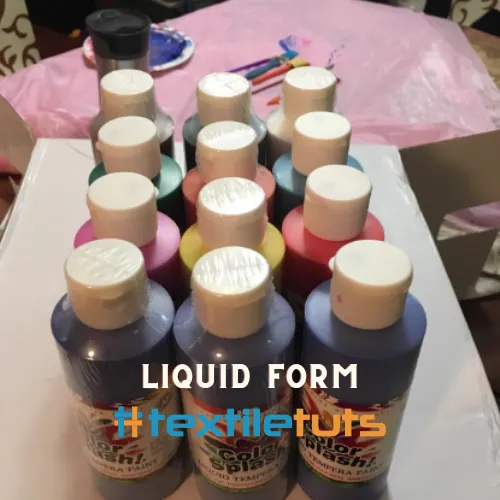
Apart from that, there are lots of supplements available along with these liquid paints. With these supplements, you can easily change its transparency and consistency as well. These are available in a set of many colors. This is the type, which is used for clothes printing machine by many brands. And of course, you can print your clothes with the best hand iron transfer paper as well.
Frequently Asked Questions
The Best Paint for Clothes: Jacquard Textile Color Paint
The Jacquard Textile Color Paint stands out as the best paint for clothes. It meets diverse crafting needs with 8 vibrant colors including red, yellow, blue, green, orange, purple, black, and white. The paint provides excellent opacity with coverage of approximately 4.5 square meters per 2.25 oz bottle under normal application conditions.
It is suitable for beginners and professionals alike. The application process is straightforward and the paint flows smoothly for precise control during detailed work.
The high opacity of these colors ensures long-lasting results on clothing, furniture, shoes, and decorative embellishments. You can also use this fabric paint for DIY projects and school activities. This multi-purpose paint excels in versatility, durability, and ease of use compared to other options on the market.
Types of Paint Suitable for Fabric Applications
Acrylic fabric paints are the gold standard for fabric applications. You can use any paint specifically labeled as fabric paint or textile paint. Always verify the paint is labeled as washable and fabric-safe before application.
Key factors to consider when selecting fabric paint include durability against routine use, regular washing cycles (50+ wash cycles for quality paints), sun exposure resistance, and body moisture exposure. Quality acrylic fabric paints maintain color vibrancy through 50-100 wash cycles when properly heat-set.
The Method for Permanently Painting Fabric
The most effective method for permanent fabric painting uses a 2:1 ratio of acrylic paint to fabric medium. This combination ensures permanency and seamless color coverage. Pre-wash your garment before painting to remove finishes. After painting, allow the fabric to cure for 24 to 48 hours before the first wash.
Once dried, apply heat using an iron on medium-high settings (approximately 150°C/302°F) for 4 to 5 minutes to heat-set the paint. For delicate fabrics, use a pressing cloth and iron for no more than 3 minutes to prevent scorching.
Acrylic Paint Works Effectively on Fabric
Yes, acrylic paint works effectively on fabric when properly prepared and heat-set. Acrylic paints outperform other fabric paints in terms of durability (maintaining color through 50-100+ wash cycles) and opacity (covering dark fabrics with 2-3 thin coats).
Removing Odors from Painted Fabric
Fabric odor after painting typically results from using low-quality paint with high VOC content. To solve this issue, apply an odor eliminator spray for fabric and allow the painted item to air out in a well-ventilated area for 24-48 hours before the first wash.
Last Thoughts
This comprehensive guide presents the ten best paints for clothes suitable for clothing design hobbies, textiles, and garment industry applications. Each product has been evaluated based on color range, washability, durability, opacity, and safety certifications including ASTM D-4236 and EN 71-3 standards.
Use this guide to select the ideal fabric paint for your specific project requirements. Consider factors such as fabric type, desired opacity, wash frequency, and safety certifications when making your selection.
REFERENCES
Broadbent, A.D. (2001). Basic Principles of Textile Coloration. Society of Dyers and Colourists.
Burch, P. (n.d.). All-Purpose Dyes. Paula Burch – All About Hand Dyeing.
Choudhury, A.K.R. (2006). Textile Preparation and Dyeing. Oxford University Press.
Chakraborty, J.N. (2010). Fundamentals and Practices in Colouration of Textiles. Woodhead Publishing India.
ASTM International. (2026). ASTM D4236-26: Standard Practice for Labeling Art Materials for Chronic Health Hazards. ASTM International.
European Committee for Standardization. (2019). EN 71-3: Safety of Toys – Migration of Certain Elements. CEN/CENELEC.
Jacquard Products. (n.d.). Textile Paint Products and Technical Information. Jacquard Products.
Tulip Color. (n.d.). Fabric Paint Products and Application Guidelines. Tulip Color.


