
Best Fusible Web for Applique You Can Buy in 2024 [Updated List]

The Pellon PLF36 Ultra Lightweight Fusible Interfacing is the best fusible web for applique, delivering exceptional bond strength, wash stability, and flexibility across light to midweight fabrics. Its 100% polyester construction provides up to 2.5 times the reinforcement of unsupported fabric while remaining nearly invisible in finished garments, and it withstands machine washing at temperatures up to 60°C (140°F).
Unlike conventional interfacing that requires stitching or hand sewing, fusible webs bond using only heat and pressure — eliminating hours of tedious sewing while providing durable, puckering-free results. After extensive testing across fabric types, these five products emerged as the strongest performers for applique work.
Let’s get into the reviews.
5 Best Fusible Web for Applique Reviewed
| Product | Weight | Material | Application Temp | Wash Temp | Made In |
|---|---|---|---|---|---|
| Pellon PLF36 Ultra Lightweight | 0.16 oz | 100% Polyester | 150-170°C (302-338°F) | 60°C (140°F) | — |
| Heat’n Bond Non-Woven Lightweight | 1.03 oz/sq yd | 100% Polyester | 150-170°C (302-338°F) | 60°C (140°F) | USA |
| HTC 422 Fusible Non-Woven | 1.06 oz/sq yd | 100% Polyester | 150-170°C (302-338°F) | 60°C (140°F) | — |
| Thermoweb 3336 Heat’n Bond Light | 0.32 oz/sq yd | 100% Polyester | 150-170°C (302-338°F) | 60°C (140°F) | USA |
| HeatnBond Fusible Iron-On (Heavyweight) | 1.9 lbs/sq yd | 100% Polyester | 150-170°C (302-338°F) | 60°C (140°F) | USA |
IMAGES | DESCRIPTION | RATING | ACTION |
Meets All Criteria 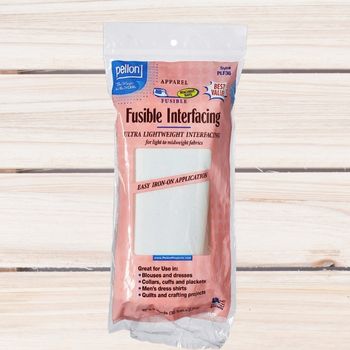 | Pellon PLF36 Ultra Lightweight Fusible Interfacing
|
1. Pellon, White, PLF36 Ultra Lightweight Fusible Interfacing
Features
- Weight: 0.16 Ounces
- Used for: Blouses and dresses, cuffs, collars, men’s shirts and quilts
- Application: Iron-on at 150-170°C (302-338°F)
- Material: 100% Polyester
Pellon’s ultra-lightweight fusible interfacing leads this list for its exceptional balance of support and flexibility.
The PLF36 features a high-quality 100% polyester construction that ensures long-lasting performance through repeated wash cycles.
Polyester delivers reliable durability, wrinkle resistance, and dimensional stability in finished projects.
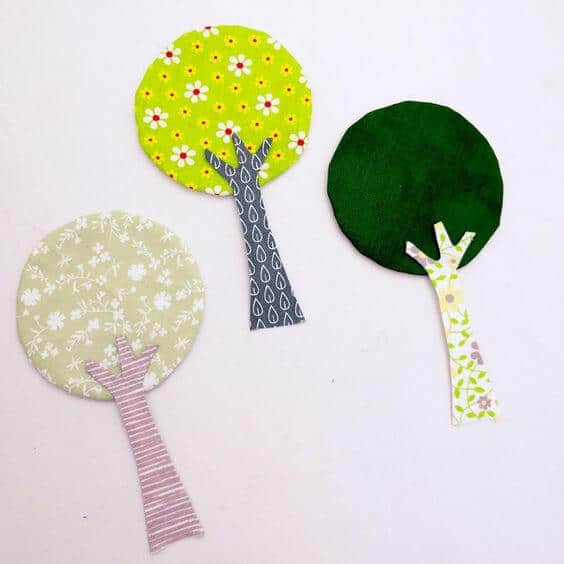
This interfacing performs well on light to moderately weighted fabrics including lined fabrics, challis, jersey, broadcloth, and chambray.
For delicate fabrics, the PLF36 integrates seamlessly without adding perceptible bulk or stiffness to the final garment.
The PLF36 measures 15″ × 3 yards (approximately 381mm × 2.74m), providing sufficient coverage for medium-sized fabric pieces.
For smaller projects, you can trim the interfacing to match your exact project dimensions without compromising bond strength.
The compressed 0.16 oz weight ensures the interfacing adds negligible bulk while delivering up to 2.5 times the reinforcement of unsupported fabric.
After application, the interfacing creates a nearly invisible bond that remains undetectable in finished garments.
The interfacing strengthens and stabilizes seams without causing puckering, and it withstands machine washing at temperatures up to 60°C (140°F).
PROS:
CONS:
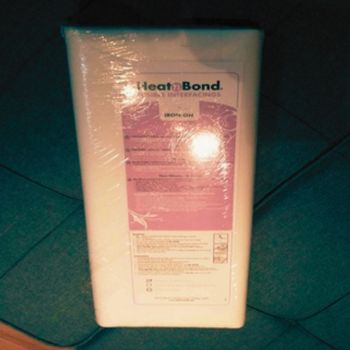
2. Heat’n Bond Non-Woven Lightweight Fusible Interfacing
Features
- Weight: 1.03 Ounces per square yard
- Used for: Blouses, dresses, accessories and lightweight fabrics
- Application: Iron-on at 150-170°C (302-338°F) for 10-15 seconds
- Material: 100% Polyester
Heat’n Bond non-woven fusible interfacing offers a higher weight ratio than the Pellon PLF36, making it suitable for small to large fabric projects.
This interfacing delivers the best fusible web for applique results on medium-sized fabrics where moderate reinforcement is needed.
The 1.03 oz/sq yd weight provides substantial support while remaining flexible enough for curved applique work.
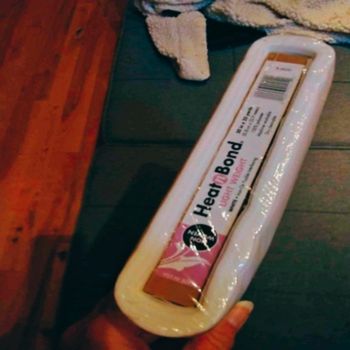
Trimming the interfacing to your required dimensions is straightforward with standard scissors or a rotary cutter.
The 100% polyester construction ensures high resilience and long-lasting bond durability through multiple wash cycles.
Application requires a standard household iron set to 150-170°C (302-338°F) with firm pressure for 10-15 seconds per section.
The interfacing bonds effectively to casual clothing, dresses, blouses, and accessories without adding significant bulk.
Heat’n Bond non-woven interfacing strengthens accessories by holding them in their intended shape through repeated use.
This interfacing performs best on lightweight fabrics and provides lasting reinforcement without stiffening the fabric drape.
PROS:
CONS:
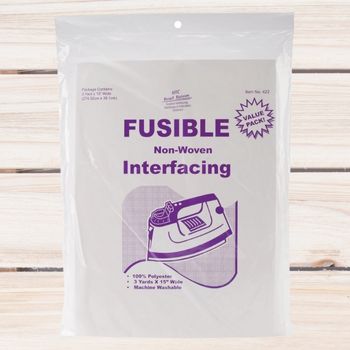
3. HTC 422 Fusible Non-Woven Interfacing
Features
- Weight: 1.06 Ounces per square yard
- Used for: Collar, cuffs, waistbands, pockets and facings
- Application: Iron-on at 150-170°C (302-338°F) with steam optional
- Material: 100% Polyester
The HTC 422 is a 100% polyester non-woven fusible interfacing designed to reinforce fabric detail areas where shape retention is critical.
The interfacing prevents distortion in high-stress areas such as collar, cuffs, waistbands, and pocket facings that are prone to stretching during wear and laundering.
This product works effectively across a range of garments including dresses, blouses, and lightweight tops, as well as paper pattern reinforcement and craft stationery applications.
Application requires only light steam or no steam at all, with a 10-15 second press at 150-170°C (302-338°F) producing a reliable bond.
PROS:
CONS:
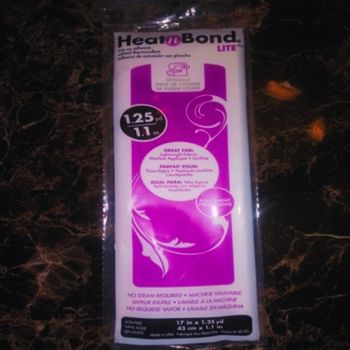
4. Thermoweb 3336 Heat’n Bond Light Weight Iron-On Fusible Interfacing
Features
- Weight: 0.32 Ounces per square yard
- Used for: Light, midweight and heavyweight fabrics
- Application: Iron-on at 150-170°C (302-338°F) for 10-15 seconds
- Material: 100% Polyester
The Thermoweb 3336 lightweight interfacing stands apart with its versatility across light, medium, and heavyweight fabrics.
The 20″ × 36″ (508mm × 914mm) sheet provides comprehensive coverage for projects requiring reinforcement across multiple fabric weights.
This interfacing holds firm to fragile fabric areas including collars, facings, and detail regions that require sufficient reinforcement without stiffness.
Heavy to midweight fabrics present greater challenges for interfacing because they carry more inherent weight, requiring a product that can adhere strongly without delaminating.
This interfacing excels in quilting, home décor, and diverse crafting applications, making it the preferred choice among experienced quilters.
Unlike many competing products, the Thermoweb 3336 requires no pinning, basting, or shifting during application, which reduces project time significantly.
PROS:
CONS:
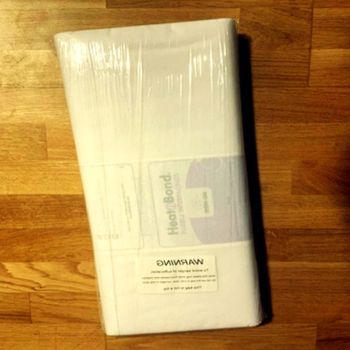
5. HeatnBond Fusible Iron-On Interfacing
Features
- Weight: 1.9 Pounds per square yard (heavyweight)
- Used for: Quilt stabilization, home décor projects, tote bags, purses
- Application: Iron-on at 150-170°C (302-338°F) for 15-20 seconds
- Material: 100% Polyester
The HeatnBond fusible iron-on interfacing differs significantly from the HeatnBond non-woven variety in attributes, uses, and texture.
This interfacing delivers optimal support for quilt blocks and various quilt components, reducing the labor intensity of seam reinforcement.
The loft fleece construction provides substantial assistance to tote bags, beach bags, handbags, and purses that require structure without excessive stiffness.
Working with curved shapes presents challenges, but this fusible web for applique handles them effectively, enabling smooth crafting outcomes.
The 20-inch × 11-yard (508mm × 10m) dimension makes this interfacing ideal for placemats and table runners that demand enhanced structure and support.
Constructed from 100% polyester with iron-activated bonding, this interfacing accommodates smaller to midweight projects with flexibility and ease.
PROS:
CONS:
Buyers Guide: A Brief Guide to Help You Shopping
Selecting the right fusible interfacing requires understanding several key factors that determine how well it will perform in your specific project.
Let’s get into it!
Weight Quotient
The weight of your interfacing determines the final weight and drape of your fabric, which directly impacts garment comfort and appearance.
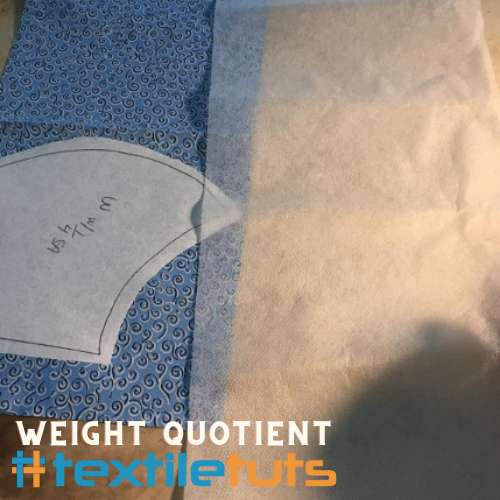
Heavyweight interfacing adds substantial weight to garments, making them unsuitable for warm weather or extended wear. Lightweight interfacing maintains the original fabric drape while adding minimal bulk.
Matching interfacing weight to fabric weight ensures optimal comfort and longevity. Select an interfacing that weighs approximately the same as your fabric or slightly lighter.
This principle applies universally across garment types, from delicate blouses to structured bags and quilts.
Type
Interfacing falls into three primary categories: woven, non-woven, and knit. Each offers distinct characteristics suited to different applications.
Woven Interfacing
Woven interfacing follows a traditional textile construction with crosswise grains, similar to standard fabric weaves.
This construction provides superior stability compared to non-woven alternatives, making woven interfacing the preferred choice for tailored garments requiring significant structure.
Woven interfacing is cut on the bias to allow it to curve around garment shapes without separating from the fabric.
Non-woven Interfacing
Non-woven interfacing consists of a mesh structure with no directional grain, created through fiber bonding or felting processes.
You can trim non-woven interfacing in any direction without affecting its performance, which simplifies pattern matching and reduces waste. This quality makes non-woven interfacing ideal for projects requiring ease of use and consistent results.
Knit Interfacing
Knit interfacing provides inherent flexibility and a softer hand feel, designed specifically for stretch fabrics including jersey and elastic materials.
Knit interfacing preserves the stretch characteristics of the base fabric while adding reinforcement, making it essential for activewear and fitted garments.
Different fabric types require different types of fusing methods, and matching your interfacing type to your fabric construction ensures the best bond strength.
Some interfacing alternatives, like felt, work for specific applications where traditional fusibles are unsuitable.
Material
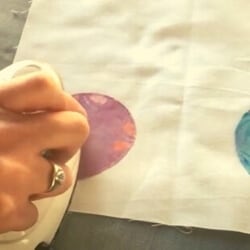
Polyester dominates the fusible web market because it delivers durability, wrinkle resistance, water and heat resistance, and easy care at an accessible price point.
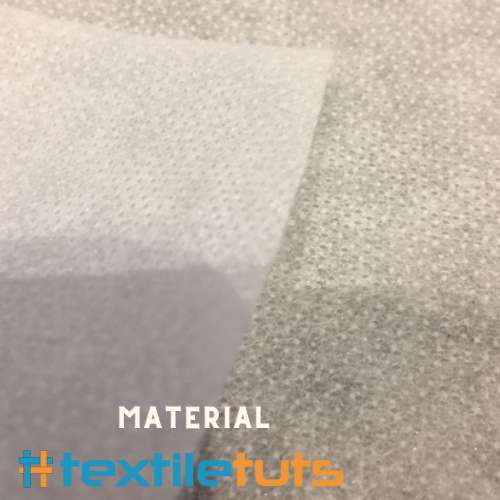
A blend of polyester and nylon or 100% polyester formulation provides the best combination of bond strength and fabric compatibility. Standard household irons at 150-170°C (302-338°F) activate these adhesives without requiring specialized fusing equipment.
You do not need expensive fusing machines to achieve professional results with polyester-based fusible webs.
Price
Interfacing prices vary considerably based on material quality, brand reputation, and production origin. Higher-priced interfacings often incorporate more precise coating methods and stricter quality control.
Budget-friendly interfacings deliver competent performance for casual projects, but they may show premature degradation in high-stress applications or after repeated laundering.
The most important consideration is evaluating the specific advantages you will receive from a product relative to its cost. When a product justifies its price through superior performance or longevity, the investment makes sense. For budget-constrained projects, select the highest-quality option within your price range rather than defaulting to the cheapest alternative.
These factors determine whether a particular fusible interfacing suits your project requirements.
Frequently Asked Questions
Fusible Interfacing for Face Masks
Fusible interfacing serves as an effective face mask material. Non-woven and lightweight fusible interfacing provides the filtration and breathability balance that face masks require.
Heavyweight and woven interfacings create excessive heat retention against the face and may restrict nasal passage airflow, causing discomfort during extended wear.
Washing Non-Woven Fusible Interfacing
Non-woven fusible interfacing contains no grain structure, so it does not shrink when exposed to water and does not ravel during laundering.
Non-woven fusible interfacings withstand machine washing at temperatures up to 60°C (140°F) without delaminating when properly bonded.
Sewing Through Fusible Interfacing
Since fusible interfacing bonds through heat activation, additional sewing is typically unnecessary for standard garment construction.
For loosely woven fabrics where adhesive penetration is uncertain, hand-sewing or machine-stitching through the interfacing provides additional security against delamination.
Fusible Interfacing Safety
Fusible interfacing presents minimal health risk when used as directed. The thin adhesive layer activates only under heat and simplifies sewing construction without releasing harmful substances.
Avoid prolonged direct contact with respiratory passages when using fusible interfacing in mask or filtering applications.
Troubleshooting Interfacing That Does Not Bond
Insufficient iron temperature or inadequate pressing time causes most bonding failures. Ensure your iron reaches at least 150°C (302°F) and apply firm pressure for 10-15 seconds per section.
Loosely woven fabrics may also fail to bond properly because the adhesive penetrates through the gaps in the weave rather than forming a surface bond.
Fusible Interfacing for Fabric Stiffening
Fusible webs work effectively for joining fabrics and providing backing material where one fabric surface must remain visible.
For projects requiring maximum stiffness on exposed surfaces, fabric stiffener spray delivers superior results compared to fusible alternatives.
Why Fusible Web is an Essential Accessory for Garment Trimmings and Applique
Fusible web is an essential accessory for garment trimmings and accessories. It simplifies the process of applying applique designs to fabrics, saving significant time and effort. This heat-activated adhesive ensures a secure and durable bond that withstands repeated laundering, making it indispensable for sewing projects involving garment trimmings and accessories.
Verdict
Each product in this review addresses different project requirements and fabric types.
All reviewed interfacings are lightweight and eliminate the need for hand sewing, consistent with modern no-sew fabric joining methods.
Ultra-lightweight options like the Thermoweb 3336 and Heat’n Bond #2 work best on delicate fabrics but may provide insufficient support for already-lightweight base materials. Extremely light interfacing can fail to reinforce seams properly when the fabric itself is barely substantial.
For midweight fabrics, the best fusible web for applique provides reliable reinforcement that enhances garment durability without altering drape. Final product selection depends on your specific fabric weight and project requirements.
This review provides the information needed to select the right product for your needs.
References
- Wikipedia. (2024). Interfacing (Sewing) – Wikipedia. Wikimedia Foundation.


