
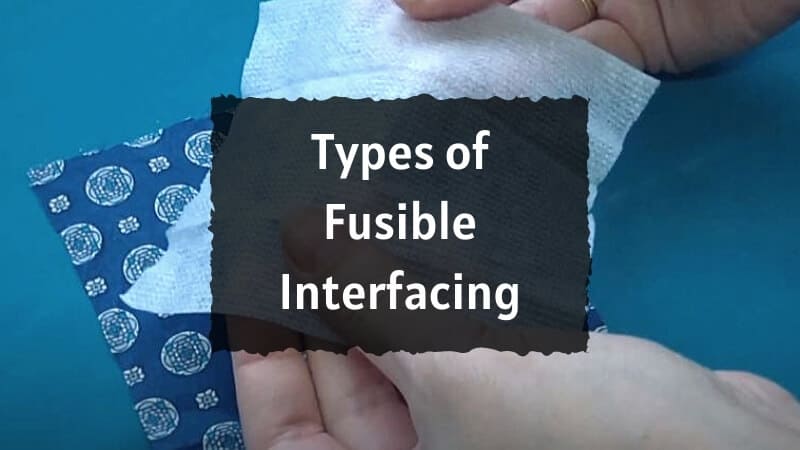
What is Fusible Interfacing | Types of Fusible Interfacing

What is Fusible Interfacing?
Fusible interfacing is a textile material coated with thermoplastic resin that bonds to fabric when heat and pressure are applied, creating a permanent bond without sewing. The resin layer melts at specific temperatures and adheres the interfacing to the fabric’s reverse side, providing structure, stability, and shape retention to garments. Unlike sewn interfacing, fusible varieties eliminate shrinkage and puckering along seam lines, particularly in collars and coat fronts.
Fusible interfacing bonds to the primary fabric using heat and pressure. A thin layer of thermoplastic resin—applied as dots, film, or dispersion—melts and adheres the interfacing to the fabric when activated by a fusing press. The base fabrics for fusible interfacing include woven, knitted, or felted textiles made from natural fibers, synthetic fibers, or blends. Different resin types offer varying performance characteristics for specific end uses.
What is Fusible Interfacing?
How Fusible Interfacing Works
- After positioning the fusible interfacing on garment parts, heat and pressure are applied. The thermoplastic resin melts and bonds the interfacing to the fabric—similar to how adhesive works in hot-melt bonding.
- Three critical parameters control the fusing process: temperature, pressure, and dwell time. All three must be precisely maintained for proper bonding.
- The fusing temperature must reach the resin’s melting point. Polyamide resins typically melt between 120–130°C, polyethylene between 130–145°C, and polyester between 140–160°C.
- If temperature falls below the resin’s activation threshold, the bond will be weak and may separate during washing or wear.
- If temperature exceeds the recommended range, the resin degrades excessively, causing strike-through (resin penetrating the fabric face) or strike-back (resin bleeding through the back).
Fusing Temperature Quick Reference
| Resin Type | Fusing Temperature | Max Temperature |
|---|---|---|
| Polyamide | 120–130°C | 150°C |
| Polyethylene | 130–145°C | 160°C |
| Polyester | 140–160°C | 175°C |
| PVC | 140–160°C | 175°C |
| Polypropylene | 130–150°C | 165°C |
| PVA | 75–120°C | 130°C |
Properties of Fusible Interfacing
The choice of interfacing type depends on the garment fabric, fusing equipment, garment end-use, and required performance properties. Key specifications include:
| Property | Specification |
|---|---|
| Fusing Temperature Range | 110°C – 175°C |
| Maximum Fusing Temperature | 175°C |
| Minimum Fusing Temperature | 110°C |
| Typical Fusing Pressure | 0.5 – 3 bar (50 – 300 kPa) |
| Dwell Time | 10 – 25 seconds |
| Wash Durability | Must withstand 40°C – 60°C domestic wash cycles |
| Dry Clean Resistance | Must retain bond after perchloroethylene or hydrocarbon dry cleaning |
| Color | White or transparent preferred |
| Handle After Fusing | Should match fabric’s natural drape and rigidity requirements |
- Fusing temperature must be precisely controlled to prevent fabric discoloration or thermal degradation.
- The maximum fusing temperature should not exceed 175°C to prevent resin breakdown.
- The minimum fusing temperature should not fall below 110°C, as insufficient heat prevents adequate bonding and the interface will separate during washing or end-use.
- The bond of fusible interfacings must remain intact through both washing and dry cleaning cycles.
- After fusing, the interfacing should provide the required stiffness and drape properties without altering the garment’s handle.
- The interfacing must not contain toxic substances that could harm the human body during garment end-use.
Advantages of Fusible Interfacing in Textile Manufacturing
- Fusible interfacing bonds to fabric in a fraction of the time required for sewn applications, enabling higher production output with reduced labor costs.
- The fusing process requires no specialized skills—workers need minimal training compared to traditional sewn interfacing methods.
- Fused garments maintain consistent shapes and smooth outer surfaces that are difficult to achieve consistently with sewn interfacing.
- Fusible interfacing improves garment aesthetics and performance compared to sewn alternatives, providing uniform support across the bonded area.
- Fusible interfacing serves as an effective production aid for specialized garments such as waist belts, where structured interfacing simplifies construction.
- A wide variety of fusible interfacing types are commercially available for different fabric weights and garment applications.
Conditions Required for Proper Fusing
There are multiple types of fusing methods used in garment manufacturing. Regardless of the method, specific conditions must be met to achieve quality results:
- Bond Strength: The resin bond must withstand manufacturing processes, end-use wear, and repeated washing cycles throughout the garment’s expected lifespan. Weak bonds separate during wear, causing visible puckering and garment rejection.
- Aesthetic Appearance: Fused garments must retain their aesthetic appeal without surface irregularities, strike-through marks, or discoloration at the fusing site.
- Temperature Control: Resin activation typically occurs at 150–170°C. Fabrics sensitive to heat may require lower temperatures or alternative interfacing types to prevent shrinkage or color change.
- Pressure Control: Excessive pressure causes strike-through (resin emerging on the fabric face) or strike-back (resin bleeding through the back). Insufficient pressure results in incomplete bonding.
- Color Matching: The fused area must not exhibit shade variation from the surrounding fabric. Color change due to thermal exposure leads to garment rejection during quality control.
- Surface Consistency: When fusing pile fabrics, the pile direction may be altered by heat and pressure, creating visible differences between fused and unfused areas.
- Special Finish Preservation: Functional finishes such as water repellency, flame retardancy, or antimicrobial treatments must not be degraded during the fusing process.
- Wash and Dry Clean Resistance: The bond must remain stable through both domestic laundering and professional dry cleaning.
- Human Safety: The interfacing must not emit harmful substances, particularly in garments intended for children.
To meet these conditions, appropriate selection of interfacing type for the specific fabric is essential. The type of fusing machine used is equally important. Temperature, pressure, and timing must all be precisely controlled. Testing is often required to verify that fusing has been completed properly, as some defects are not visible to the naked eye.
Types of Fusible Interfacing
Fusible interfacings are classified primarily by their resin coating type, which determines the fusing temperature, wash durability, and suitable applications. Six main types are used across the garment industry:
| Resin Type | Fusing Temperature | Wash Durability | Dry Clean | Primary Applications |
|---|---|---|---|---|
| PVC (Polyvinyl Chloride) | 140–160°C | Excellent | Excellent | Coats, suits, heavy outerwear |
| PVA (Polyvinyl Acetate) | 75–120°C | Limited | Not recommended | Lightweight garments, leather, fur |
| Polyethylene | 130–145°C | Good | Limited (high-resin only) | Necklines, shirt cuffs, collars |
| Polyester | 140–160°C | Excellent | Excellent | Standard for most garment types |
| Polyamide | 120–130°C | Good (up to 60°C) | Excellent | Dry clean only garments |
| Polypropylene | 130–150°C | Excellent | Not recommended | Water-washed garments, activewear |
PVC (Polyvinyl Chloride) Coated Interfacing
- Polyvinyl chloride resin is applied in varying amounts to the base fabric of the interfacing, with coating weight typically ranging from 15–40 g/m².
- Both water washing and dry cleaning are suitable for PVC-coated interfacing, as the resin remains stable through both processes.
- This type is primarily used for coat and suit manufacturing where high bond strength and durability are required.
PVA (Polyvinyl Acetate) Coated Interfacing
- A light coating of plasticized polyvinyl acetate resin is applied as the bonding agent, typically at coating weights of 10–20 g/m².
- PVA-coated interfacing is not suitable for dry cleaning, as the resin degrades in perchloroethylene. It has limited launderability but tolerates gentle hand washing.
- Low activation temperature and pressure make it suitable for delicate fabrics, leather, and fur where high heat could cause damage.
- Usage in the readymade garment industry is declining due to durability limitations.
Polyethylene Coated Interfacing
Polyethylene resin is applied to the base fabric, with coating weight varying from 8–35 g/m² depending on the fabric weight and required stiffness. Higher resin content produces firmer hand feel and greater resistance to cleaning solvents.
The thickness of the polyethylene coating directly affects the final handle of the fused garment. Heavier coatings create stiffer results, while lighter coatings maintain more of the fabric’s natural drape. Varying the coating thickness also adjusts the melting point range and flexibility of the bond.
Garments made with polyethylene coated interfacing are water-washable but not suitable for dry cleaning unless the resin content is high enough to resist solvent action.
This type of interfacing is commonly used in necklines, shirt cuffs, and collar constructions where moderate stiffness with good wash stability is required.
Polyester Coated Interfacing
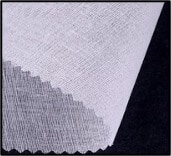
Polyester resin serves as the bonding agent in this interfacing type, with typical coating weights of 12–30 g/m². The specific formulation of the polyester resin determines the fusing temperature window and final bond characteristics.
Polyester coated fusible interfacing is suitable for a broad range of garment applications because the bond resists degradation from both water laundering and dry cleaning. This versatility has made it the industry standard for general garment manufacture. The resin provides excellent resistance to water exposure and maintains bond integrity through multiple wash cycles.
Polyester coated interfacing is widely available in the market but commands a higher price than polyethylene or PVA alternatives due to superior performance characteristics.
Polyamide Coated Interfacing
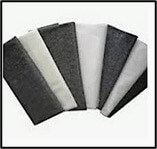
Polyamide resin (nylon) is used as the coating material for this interfacing type, activated at relatively low fusing temperatures of 120–130°C.
Polyamide coated interfacing is the preferred choice for garments that require dry cleaning, as the resin bond remains stable through professional solvent processing. It can also be used for garments that will be machine washed at temperatures below 60°C when high-temperature polyamide variants are selected.
The lower activation temperature makes polyamide coated interfacing suitable for heat-sensitive fabrics that cannot withstand the higher temperatures required for polyester or polyethylene resins.
Polypropylene Coated Interfacing

Polypropylene coated fusible interfacing shares similar properties with polyethylene coated varieties, including good water-wash stability and a relatively high fusing temperature range of 130–150°C.
The primary application for polypropylene coated interfacing is garments that will be repeatedly laundered in water, such as workwear, children’s clothing, and activewear where chlorinated or harsh detergents are used.
Methods of Resin Coating
Fusible interfacing performance depends not only on the resin type but also on how the resin is applied to the base fabric. The coating method affects bond uniformity, handle, and cost. Five primary coating methods are used in the industry:
| Coating Method | Dot/Particle Size | Handle | Uniformity | Cost |
|---|---|---|---|---|
| Scatter Coating | 150–400 microns | Heavy | Low | Lowest |
| Dry-Dot Coating | 80–200 microns | Light to medium | Highest | High |
| Paste Coating | 1–80 microns | Lightest | High | High |
| Film Coating | Continuous layer | Stiff | N/A (continuous) | Medium |
| Emulsion Coating | N/A (both sides) | Firmest | High | Medium |
Scatter Coating
Thermoplastic resin in fine particle form is sprayed onto the base fabric through precision nozzles. The fabric then passes through heated rollers where the resin melts and bonds to the surface under controlled pressure.
The resin particle size in scatter coating ranges from 150 to 400 microns, which is larger than other methods. This results in less uniform coverage and a heavier final handle.
Scatter coated interfacing has lower manufacturing cost compared to finer coating methods, but the consistency and flexibility of the bonded product is comparatively lower. This method is typically used for budget or heavy-duty applications where uniform handle is not critical.
Dry-Dot Coating
Fine resin powder is applied to the base fabric in precise dot patterns using engraved rollers. The fabric then passes through an oven where the resin melts, followed by pressure rollers that press the molten resin into the fabric for secure adhesion.
The dot density ranges from 3 to 12 dots per centimeter, with resin particle sizes varying from 80 to 200 microns. Lightweight fabrics use smaller dots (80–120 microns), while heavy or coarse fabrics use larger dot sizes (150–200 microns).
Dry-dot coating produces the most uniform bonding results of all methods, making it the preferred choice for visible garment areas and high-quality apparel production. The precise dot pattern allows consistent heat and pressure transfer during fusing.
Paste Coating
Fine resin powder is converted into a paste using chemical solvents and water. This paste is then printed onto the base fabric in precise dot patterns using rotogravure or screen printing techniques. The fabric subsequently passes through a drying oven where the solvent and water evaporate, leaving the resin dots bonded to the fabric.
The resin dot size in paste coating ranges from 1 to 80 microns, making it the finest dot coating method available. This produces a very light handle and uniform bonding, particularly suitable for delicate fabrics and high-end garments.
Paste coating provides uniform properties throughout the fabric and is especially valued for applications where a soft hand feel is critical, such as blouses, lingerie, and children’s wear.
Film Coating
Thermoplastic resin is melted and extruded as a continuous thin film onto one side of the base fabric using a heated roller or belt system. Polyethylene is the most common resin used for film coating due to its favorable melting characteristics.
Film coated interfacing has less flexibility compared to dot coating methods. The continuous resin layer creates a stiffer handle, making it suitable for applications requiring maximum stiffness such as collars, waistbands, and structural hem reinforcements.
Emulsion Coating
Resin powder is dispersed in water with chemical surfactants to create a stable emulsion. The base fabric passes through the emulsion bath and picks up a controlled amount of resin through squeeze rollers. The fabric is then dried in an oven where the water evaporates and the resin particles fuse into a continuous coating on both sides of the fabric.
Emulsion coating produces the firmest hand feel of all methods, as the resin coats both sides of the fabric uniformly. This type of coated interfacing is used in heavy-duty applications requiring maximum stiffness and dimensional stability, such as industrial workwear and structural garment components.
References
- Smith, B. & Jones, M. (2014). Garment Manufacturing Technology. Elsevier Science. https://www.sciencedirect.com/book/9781782422327/garment-manufacturing-technology
- Carr, H. & Latham, B. (2008). Technology of Clothing Manufacture, 4th Edition. Wiley-Blackwell. https://www.wiley.com/en-us/Carr+and+Latham%27s+Technology+of+Clothing+Manufacture%2C+4th+Edition-p-9781405161985


