
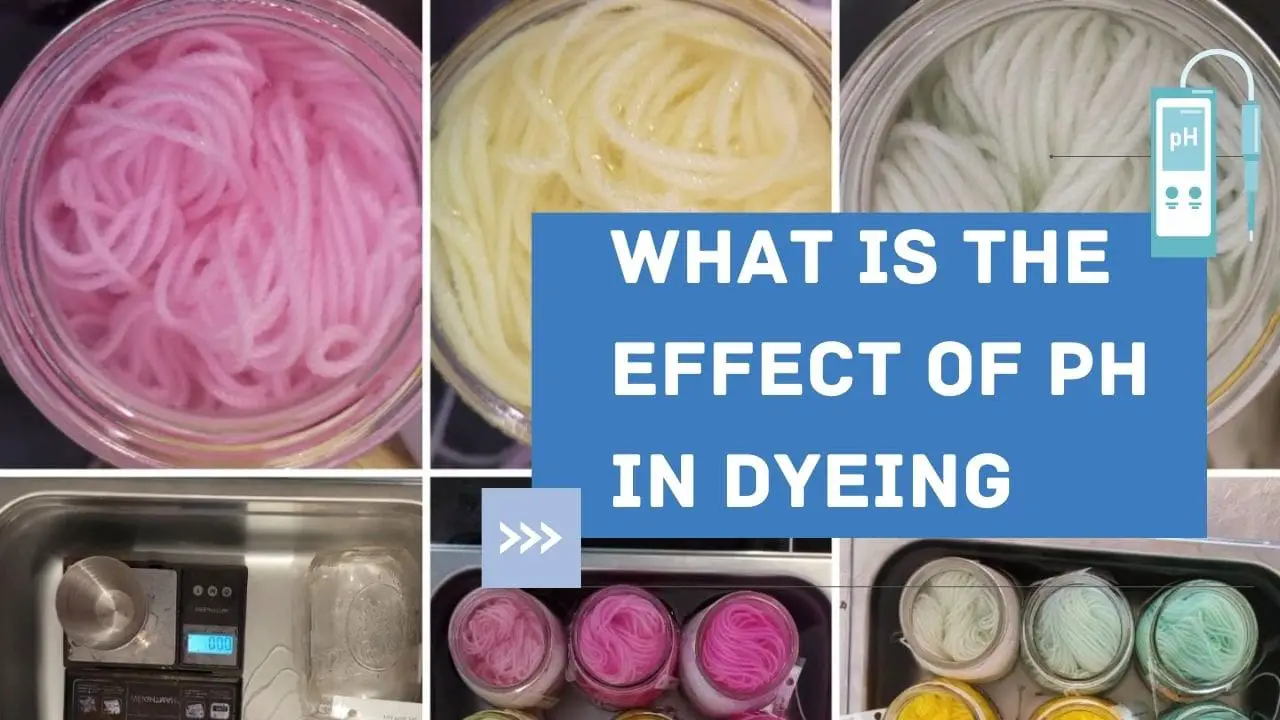
What is the effect of pH in dyeing and What is the optimal pH

pH control is the single most critical factor in textile dyeing — it determines the strength of dye-fiber bonds, wash fastness, and final color depth. Every dye type requires a specific pH range to function properly, and even small deviations cause poor dye exhaustion, inferior color yield, and fabric damage. Getting the pH right is what separates professional-quality dyeing results from washed-out, patchy failures.
pH is a measure of acidity or alkalinity of a solution expressed on a logarithmic scale from 0 to 14. A value of 7 indicates neutrality; values below 7 indicate acidity, and values above 7 indicate alkalinity. The pH scale operates exponentially — each whole number change represents a tenfold shift in hydrogen ion concentration, making precise pH control critical in textile dyeing processes where small deviations significantly affect color yield and fabric quality.
Different dye types require specific pH ranges to achieve proper fiber interaction, exhaustion, and fixation:
- Reactive dyes (cotton, rayon): High alkaline pH of 10.5–11.5 — requires soda ash (Na₂CO₃) for covalent bonding
- Acid dyes (wool, silk, nylon): Acidic pH of 2.0–7.0 depending on dye class — protonates amino groups for ionic bonding
- Disperse dyes (polyester): Acidic pH of 4.2–4.7 — buffered with acetic acid, requires high-temperature dyeing at 130°C
- Basic (cationic) dyes (acrylic): Slightly acidic pH of 4.5–5.5 — buffered with ammonium sulphate and formic acid
Effect of pH on Fiber Reactive Dyes
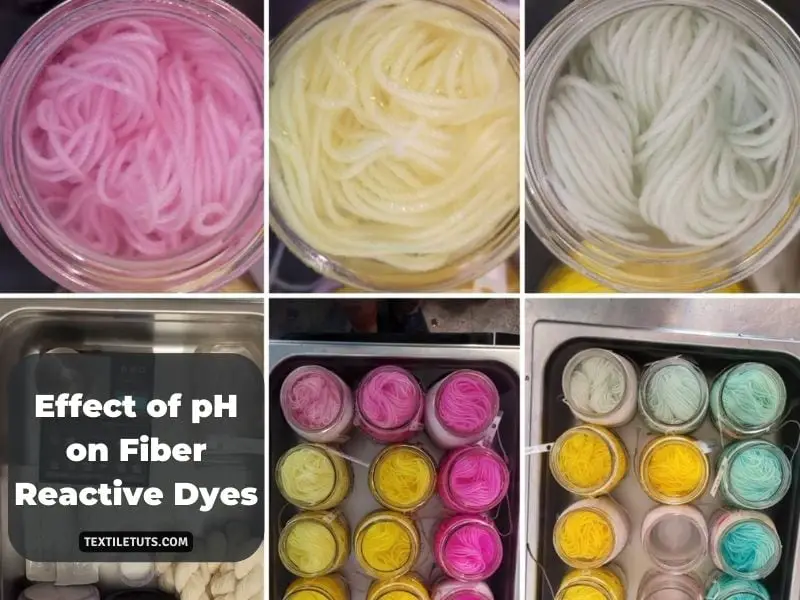
Most fiber reactive dyes, including the best cotton dye products, require a high alkaline pH in the range of 10.5–11.5 for successful covalent bonding with cellulosic fibers. At this alkaline pH, hydroxyl groups on cotton cellulose (C₆H₁₀O₅) convert to cellulosate anions (Cell-O⁻), which then form strong covalent bonds with the dye molecule’s reactive groups. Without sufficient alkaline pH, the dye cannot bond with the fiber and simply washes out during the wash-off stage. In reactive dyeing, soda ash (sodium carbonate, Na₂CO₃) is the standard alkali used during the fixation stage to create the required alkaline medium.
The following describes pH influence at each stage of the reactive dyeing process:
- Start of dyeing (exhaustion): Bath pH must be neutral or slightly acidic (6.0–7.0) to prevent premature hydrolysis of dye molecules. Residual alkali from preprocessing causes patchy or uneven dyeing if fabric is not properly neutralized before entering the dye bath.
- Insufficient alkali: Lower bath pH reduces cellulosate anion formation, limiting covalent bond formation. Result: poor wash fastness and reduced rubbing fastness as unfixed dye remains loosely bound to the fiber surface.
- Excessive alkali: Bath pH raised too high accelerates hydrolysis of dye reactive groups before they can bond with the fiber. Result: lower depth of shade and diminished wash fastness as hydrolyzed dye cannot participate in fixation.
- Neutralization after dyeing: Fabric must be thoroughly neutralized with mild acid (acetic acid) to lower pH to 6.0–7.0. Without this, residual alkali continues affecting dye during hot wash and soaping cycles, causing dye bleeding and reduced color fastness.
For dyeing mercerized cellulosic fiber with Procion MX type dichlorotriazine dyes, research establishes the following optimum pH values for each dye color:
| Dye | Optimum pH |
|---|---|
| Brilliant Red 2BS | 10.2 |
| Brilliant Red 5BS | 10.4 |
| Brilliant Yellow 6GS | 10.8 |
| Blue 3GS | 10.8 |
| Yellow RS | 10.9 |
| Brilliant Orange GS | 11.0 |
| Brilliant Blue RS | 11.0 |
| Red GS | 11.1 |
Across all Procion MX dyes, a pH of approximately 10.5 is generally optimal for mercerized cotton. For rayon (viscose) fibers, the optimum pH runs 0.1–1.0 units higher than for cotton due to differences in fiber accessibility and reactive site availability.
For dyeing cotton with Remazol type vinyl sulfone dyes, the optimum fixation pH is 11.5. Remazol dyes also serve as true fiber reactive dyes for wool and other protein fibers but at a significantly lower pH of 5.5, which protects the fiber from alkali damage during protein fiber dyeing.
Effect of pH on Acid Dyes
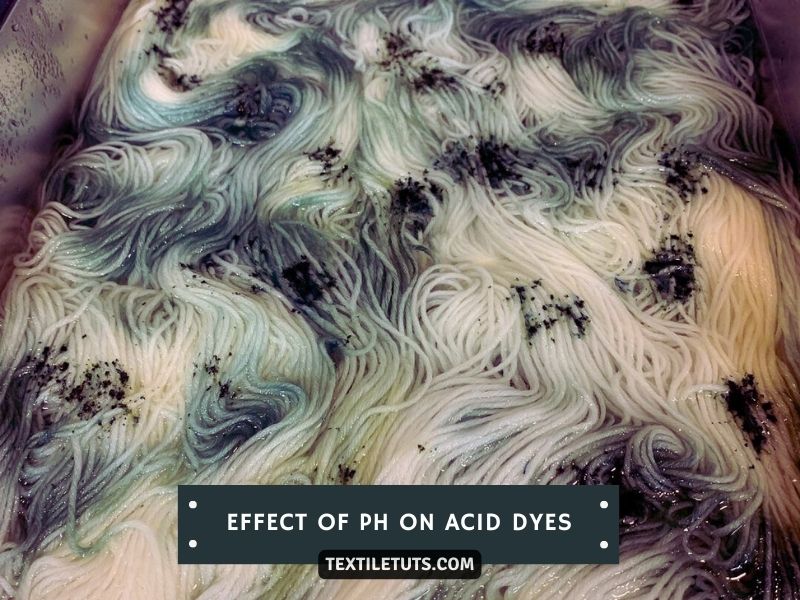
Acid dyeing requires an acidic pH at which acid dye molecules form ionic bonds with protonated amino groups (–NH₃⁺) in protein fibers. The pH directly controls the degree of amino group protonation — below the fiber’s isoelectric point (pI ≈ 4.5–5.0 for wool, pI ≈ 3.5–4.5 for silk), amino groups become positively charged and attract the anionic sulfonate groups (–SO₃⁻) on acid dye molecules.
Silk tolerates dyeing across a wider pH range than wool — it accepts both acidic pH and higher pH conditions — but wool sustains permanent fiber damage including reduced tensile strength and surface scales degradation when exposed to pH above 9.0. Nylon (polyamide) contains approximately twenty times fewer amino groups than wool and five times fewer than silk, which directly affects dye uptake capacity and exhaustion rates.
The required pH varies significantly depending on the acid dye classification:
| Dye Class | pH Range | Levelling Property | Wash Fastness |
|---|---|---|---|
| Super Milling | 6.0–7.0 | Poor | Very Good |
| Milling | 4.0–6.0 | Poor to Moderate | Good |
| Lanaset | 4.5–5.0 | Moderate | Good |
| Leveling | 2.0–4.0 | Excellent | Poor |
| Procion MX (used as acid dye) | 2.0–4.0 | Moderate | Good |
Effect of pH on Disperse Dyes
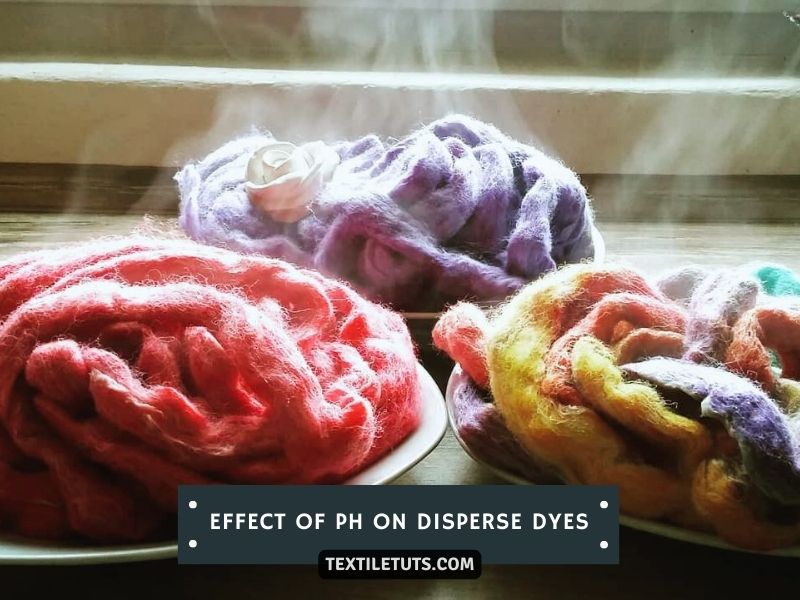
Dyeing polyester with disperse dyes requires an acidic pH of 4.5–5.0 maintained throughout the dyeing cycle. When leveling agents (carriers or dispersing agents) are introduced to the dye bath, the initial pH is set between 4.5–4.7. After disperse dye dispersion is added, the pH drops slightly to 4.2–4.3 due to the acidic nature of the dye formulations. Maintaining this narrow acidic range is essential — pH above 5.5 causes dye aggregation and poor fiber penetration, while pH below 4.0 can degrade certain disperse dye structures and damage polyester fiber surface properties.
Disperse dye baths are typically buffered with acetic acid (CH₃COOH) or formic acid (HCOOH) at concentrations of 0.5–2.0 g/L. The standard dyeing temperature for polyester is 130°C under pressure, with a typical hold time of 20 minutes at maximum temperature for adequate dye diffusion into the fiber’s micropore structure.
Effect of pH on Basic Dyes
Basic (cationic) dyes are applied to acrylic fibers from a buffered acidic bath maintained at pH 4.5–5.5 using an ammonium sulphate–formic acid buffer system. This slightly acidic pH ensures the acrylic fiber’s anionic sites (sulfonate and carboxylate groups from copolymerization) are fully ionized and available to attract the positively charged (cationic) dye molecules. Dyeing temperature ranges from 100°C (with carrier) to 130°C (high-temperature pressure dyeing) depending on the fiber’s critical temperature rating.
| Bath pH | Result |
|---|---|
| Below 4.0 (excessively acidic) | Poor dye uptake and reduced wash fastness due to excessive protonation competing with dye cations |
| 4.5–5.5 (optimal range) | Maximum dye uptake, optimal color depth, and excellent wash fastness |
| Above 6.0 (alkaline) | Reduced fiber ionization, poor dye exhaustion, and uneven dyeing due to competition from OH⁻ ions |
Basic Dyes and Alkaline Conditions: Why Dyeing Fails
- Basic dyes consist of positively charged (cationic) chromophore molecules. At alkaline pH above 7.0, hydroxyl ions (OH⁻) compete with the cationic dye molecules for the negatively charged anionic sites on acrylic fibers, significantly reducing dye exhaustion and producing pale, uneven coloration.
- At excessively acidic pH below 4.0, fiber anionic sites become oversaturated with hydrogen ions (H⁺), which repels incoming cationic dye molecules and prevents adsorption onto the fiber surface, resulting in poor dye uptake and washed-out color.
- The optimal pH window of 4.5–5.5 balances fiber ionization and dye cation availability, creating sufficient electrostatic attraction between oppositely charged dye and fiber without competitive inhibition from excess H⁺ or OH⁻ ions.
Alkaline pH above 7.0 in basic dye baths causes excessive electrostatic attraction between cationic dye molecules and fiber anionic sites, resulting in overly rapid dye uptake that produces over-dyeing, dark marks, and poor wash fastness as dye desorbs from fiber surface.
Excessively acidic conditions (pH below 4.0) prevent basic dye uptake because the high concentration of hydrogen ions saturates the fiber’s anionic binding sites, electrostatically repelling incoming cationic dye molecules. This results in under-dyeing, poor color yield, and wasted dye.
Summary of pH Requirements by Dye Type
| Dye Type | Optimal pH Range | Primary Fiber Types | Key Alkali/Acid Used |
|---|---|---|---|
| Reactive (Procion MX) | 10.2–11.1 | Cotton, rayon | Soda ash (Na₂CO₃) |
| Reactive (Remazol) | 11.5 | Cotton | Caustic soda (NaOH) |
| Acid (Leveling) | 2.0–4.0 | Wool, silk, nylon | Sulphuric acid (H₂SO₄) |
| Acid (Milling) | 4.0–6.0 | Wool, silk, nylon | Acetic acid (CH₃COOH) |
| Acid (Super Milling) | 6.0–7.0 | Wool, nylon | Acid liberating salts |
| Disperse | 4.2–4.7 | Polyester | Acetic acid (CH₃COOH) |
| Basic (Cationic) | 4.5–5.5 | Acrylic | Ammonium sulphate / Formic acid |


