
Should I Use Distilled or Spring Water Instead of Tap Water for Dyeing?

Should I Use Distilled Or Spring Water Instead Of Tap Water
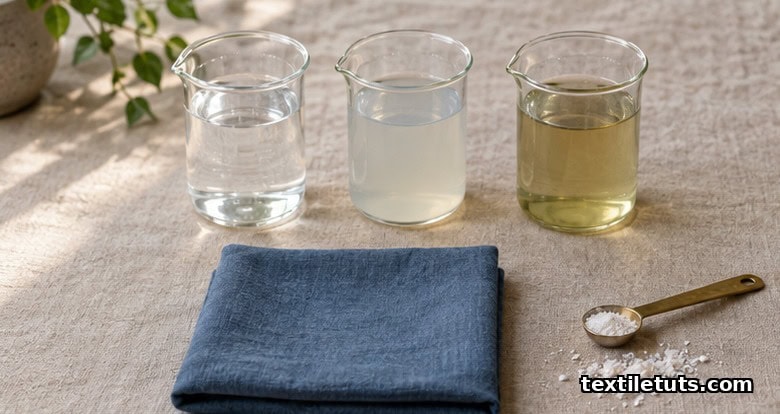
For textile dyeing, use distilled or softened water—never spring water. Spring water contains variable mineral content (50–500 mg/L) that produces unpredictable, inconsistent dyeing results. Distilled water or properly treated tap water delivers the most reproducible colors. The answer depends on your budget, project scale, and color precision requirements.
This guide examines water hardness, its effects on textile dyes, and how to choose the right water source for your specific situation. Whether you’re a hobbyist or working at scale, water quality directly determines your color outcomes.
| Water Type | Mineral Content | Dyeing Suitability | Best For |
| Distilled | ~0 mg/L | ✅ Ideal | All dye types, color-critical projects |
| Softened tap | Variable (sodium only) | ✅ Good | Most projects when tested |
| RO water | ~0–5 mg/L | ✅ Ideal | Large-scale operations |
| Filtered rainwater | Variable | ⚠️ Acceptable | Hobbyists with proper filtration |
| Tap (untreated) | 50–250+ mg/L | ⚠️ Depends on locale | Test first; treat if above 120 mg/L |
| Spring water | 50–500 mg/L (variable) | ❌ Not recommended | Never for dyeing—unpredictable results |
Understanding Water Hardness for Textile Dyeing
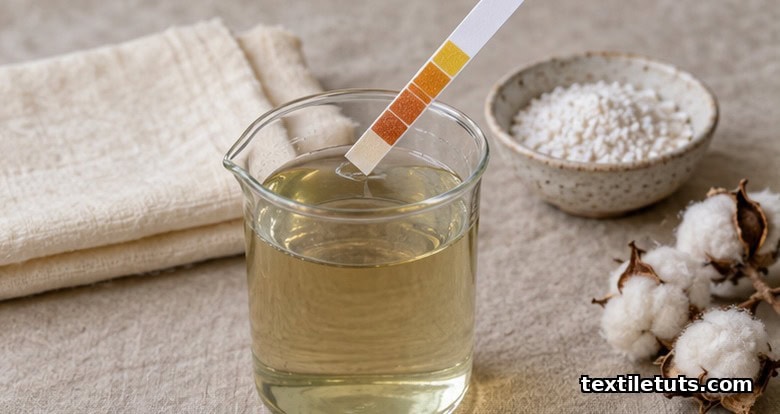
Water contains dissolved mineral salts—primarily calcium and magnesium—that determine its hardness. These minerals occur as bicarbonates, carbonates, sulfates, and chlorides. Water hardness directly impacts dyeing processes by reacting with dye chemicals and affecting color uptake.
Types of Water Hardness
Water hardness exists in two distinct forms, each with different implications for textile processing.
Temporary hardness results from bicarbonate salts of calcium and magnesium. This type of hardness precipitates when water is heated, forming insoluble carbonates. The thermal decomposition releases carbon dioxide gas and produces scale deposits. The chemical reactions demonstrate this process:
Mg(HCO3)2(aq) → MgCO3(s) + CO2(g) + H2O
Ca(HCO3)2(aq) → CaCO3(s) + CO2(g) + H2O
Permanent hardness arises from chlorides, nitrates, and sulfates of calcium and magnesium. Unlike temporary hardness, permanent hardness does not precipitate when heated. This type requires chemical treatment methods for removal, making it more challenging to address in dyeing operations.
Water Hardness Classification Standards
The water hardness scale uses milligrams per liter (mg/L) or parts per million (ppm) to classify water quality. The United States Geological Survey (USGS) establishes these classifications, which textile practitioners use to evaluate process water:
| Classification | mg/L (ppm) | Grains per Gallon | Dyeing Impact |
| Soft water | Less than 17.1 | Less than 1.0 | Ideal for all dye types |
| Slightly hard | 17.1–60 | 1.0–3.5 | Suitable for most projects |
| Moderately hard | 60–120 | 3.5–7.0 | May cause slight color variation |
| Hard water | 120–180 | 7.0–10.5 | Produces soap scum, uneven dyeing |
| Very hard water | Above 180 | Above 10.5 | Severe dyeing problems, scale buildup |
Conversion factor: 1 grain per gallon equals 17.118 mg/L. Textile laboratories recommend maintaining water below 50 mg/L total hardness for consistent reactive dye results.
Problems Caused by Hard Water in Dyeing
Hard water creates multiple challenges during the dyeing process. Understanding these problems helps you recognize why water quality matters for your textile projects.
Soap Scum Formation
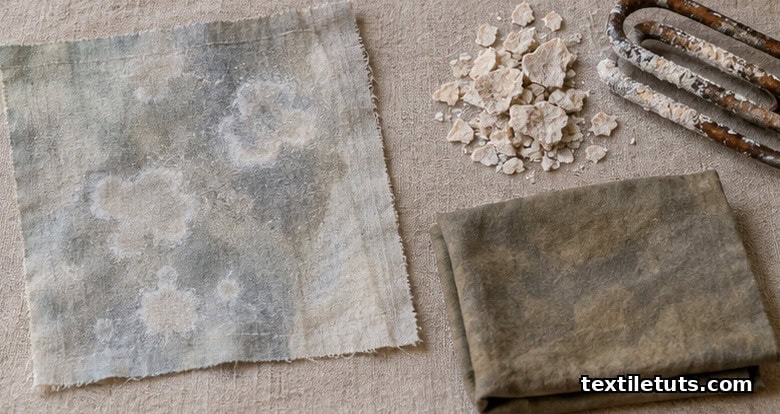
When sodium carbonate (soda ash) contacts calcium and magnesium ions in hard water, it produces insoluble compounds called soap scum. This residue deposits on fabric fibers, creating spots and uneven color distribution. The reaction occurs because the mineral ions replace the sodium in the soap or detergent molecule, forming stearates that won’t rinse away.
Dye Complex Formation
Some fabric dyes—especially direct dyes and acid dyes—form metal-dye complexes when exposed to hard water. These complexes produce duller colors and prove extremely difficult to wash out. The metallized dye complexes result in color shades that differ significantly from the expected hue, often appearing muddy or desaturated.
Scale Formation in Equipment
Calcium carbonate scale accumulates on heating elements, dye jets, and pipework when hard water is used. This scale reduces heating efficiency by up to 30% and can cause hot spots that damage delicate fibers. Scale removal requires acid washing, which adds maintenance time and cost to your operation.
Methods for Softening Hard Water
Several effective methods exist for treating hard water for textile dyeing. The right choice depends on your scale of operation, budget, and the specific dye types you use.
Chemical Water Softeners
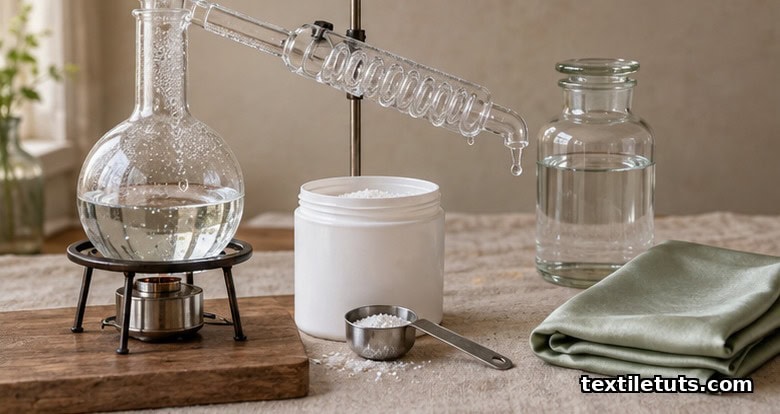
Phosphate-based water softeners work by chelating calcium and magnesium ions, preventing them from reacting with dyes or forming scale. These products contain sodium hexametaphosphate (Na₆P₆O₁₈) or similar polyphosphate compounds. Commercial textile softeners include Calgon (sodium hexametaphosphate), Jacquard’s Calgon, and ProChem’s Metaphos.
Application rate typically ranges from 1–3 grams per liter of water, depending on initial hardness. Dissolve the powder completely in warm water before adding to the dye bath. Do not use phosphate-free liquid softeners containing polycarboxylate—they lack the chelation strength required for textile dyeing.
Household Water Softeners
Residential water softeners using ion-exchange technology replace calcium and magnesium ions with sodium ions. This softened water works well for dyeing, but you should verify the actual hardness level with test strips. Many household softeners do not treat cold water taps, so you may need to use bottled or distilled water for cold-water dyeing processes.
If you use household softened water, test the pH before dyeing. Ion exchange can slightly alkalinize water, which benefits reactive dyes but may affect acid dye behavior. Target pH values between 7.0 and 8.5 for most dye applications.
Reverse Osmosis Water
Reverse osmosis (RO) systems remove 95–99% of dissolved minerals, producing nearly pure water suitable for all dyeing applications. While RO water costs more than chemically softened water, it eliminates all hardness-related issues. The trade-off involves higher equipment and maintenance costs, plus approximately 3–4 gallons of wastewater per gallon of purified water produced.
Distilled Water
Distilled water is produced by boiling water and condensing the steam, removing 99.9% of all dissolved minerals and contaminants. This water quality is ideal for textile dyeing because it contains zero hardness minerals and no chlorine or chloramine that might affect color development. However, the energy cost of distillation makes it expensive for large-scale operations.
Spring Water
Spring water is not recommended for textile dyeing. Natural spring water contains variable mineral profiles depending on its underground source, including calcium, magnesium, iron, and sulfur compounds. These minerals introduce unpredictability into the dyeing process. The mineral content of spring water can range from 50–500 mg/L, making consistent results impossible to achieve.
Rainwater
Collected rainwater can serve as an acceptable alternative when properly filtered and stored. Rainwater is naturally soft, but it absorbs airborne contaminants including dust, pollen, and industrial pollutants. Filter rainwater through a 5-micron sediment filter before use, and test pH to ensure it remains between 6.5 and 7.5. Avoid collecting rainwater from the first 30 minutes of a rainfall event, as this initial runoff contains the highest pollutant concentration.
Water Quality Requirements by Dye Type
| Dye Type | Maximum Hardness (mg/L) | Special Requirements |
| Reactive dyes | 50 | Low iron (<0.1 mg/L), no chlorine |
| Direct dyes | 100 | Low calcium for level dyeing |
| Acid dyes | 120 | Metal ions can shift hues |
| Disperse dyes | 200 | Most tolerant dye class |
| Vat dyes | 50 | Reducing agent compatibility critical |
Recommendations for Home Dyeing
For hobbyists and small-scale dyers, follow this decision framework based on your available water supply:
- Test your water—Purchase hardness test strips from a aquarium or pool supply store. Results above 120 mg/L require treatment.
- Use chemical softeners—Add 1–2 teaspoons of sodium hexametaphosphate per gallon for moderately hard water. This costs approximately $0.10–0.20 per gallon.
- Consider distilled water—For projects requiring precise color matching, distilled water eliminates all variables. One gallon costs $0.75–1.50 at retail.
- Avoid spring water—The mineral variability in spring water makes it unsuitable for any dyeing work requiring color consistency.
If your household uses a water softener, you can generally use this water for dyeing. Run the softened water for 30–60 seconds before collecting for dyeing to flush any residual hard water from the pipes. Always verify with a test strip before starting important projects.
Key Takeaways
For textile dyeing, water quality directly determines your results. Distilled water provides the most consistent results but at higher cost. Chemical water softeners offer an affordable middle ground—sodium hexametaphosphate-based products effectively neutralize hardness minerals at approximately $0.15 per gallon. Household softened water works well when properly tested. Never use spring water for dyeing projects, as its variable mineral content produces unpredictable and often disappointing results.
References
- United States Geological Survey. (2024). Water Hardness Scale. USGS Water Science School.
- ASTM International. (2023). Standard Specification for Water Used in Textile Processing. ASTM D19-19.
- Shore, J. (1996). Colorants and Auxiliaries: Volume 1 – Colorants. Society of Dyers and Colourists.
- U.S. Food & Drug Administration. (2022). Food Defect Levels Handbook. FDA Center for Food Safety and Applied Nutrition.
- World Health Organization. (2022). Chemical Aspects of Drinking Water Quality. WHO Guidelines for Drinking-Water Quality.


