

Twill Shrinkage: What You Need to Know

What is Twill Fabric? Shrinkage, Types, and Care Guide
Yes, twill fabric shrinks. 100% cotton twill shrinks 2% to 5% after the first wash cycle at 40°C (104°F) or higher. Cotton-polyester twill blends shrink 0% to 1.5% under the same conditions. Core twill (cotton wrap with polyester-core yarn) shrinks only 0% to 0.75%. Tencel twill shrinks 0.5% to 2%. Washing in cold water below 30°C (86°F) reduces shrinkage by 60% to 80% across all twill fabric types. Heat-free air drying eliminates dryer-induced shrinkage entirely.
Twill is a type of textile fabric made from cotton, wool, or a blend of both. It is woven in a diagonal pattern that creates its characteristic ribbed surface texture. Twill fabrics are classified as a woven textile and are known for their durability, wrinkle resistance, and structural integrity, making them a preferred material for garments that require longevity and shape retention.
Twill Shrinkage Quick Reference
| Fabric Type | First Wash Shrinkage | Safe Wash Temp | Safe Dryer Temp |
|---|---|---|---|
| 100% Cotton Twill | 2% – 5% | 20°C – 30°C (68°F – 86°F) | Low heat or air dry |
| 65/35 Cotton-Poly Twill | 0% – 1.5% | 30°C – 40°C (86°F – 104°F) | Low heat |
| 50/50 Cotton-Poly Twill | 0% – 1% | 30°C – 40°C (86°F – 104°F) | Low heat |
| Core Twill (Cotton/Polyester) | 0% – 0.75% | 20°C – 30°C (68°F – 86°F) | Any heat setting |
| 100% Tencel Twill | 0.5% – 2% | 20°C – 30°C (68°F – 86°F) | Low heat or air dry |
| 65/35 Tencel/Cotton Twill | 1% – 3% | 20°C – 30°C (68°F – 86°F) | Low heat |
What Is Twill Fabric?
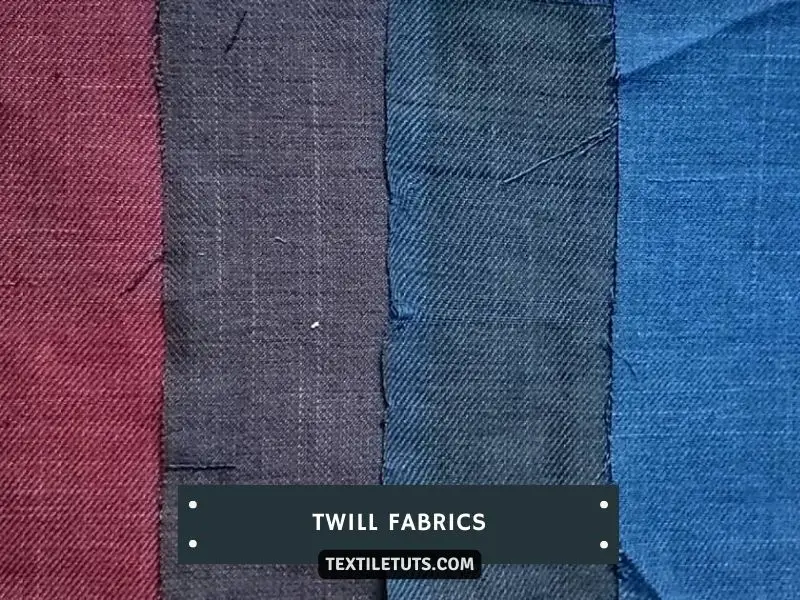
The twill weave structure creates a diagonal rib pattern running at a 45-degree angle across the fabric face. This weave geometry gives twill its characteristic technical properties: a thread count typically ranging from 200 to 400 threads per square inch, a fabric weight of 150 to 400 grams per square meter depending on the fiber composition, and a diagonal line direction that distinguishes it from plain weave and satin weave textiles.
Does Twill Shrink?
Twill shrinks when exposed to heat and moisture. The shrinkage rate varies by fiber composition and weave density. A tightly woven 100% cotton twill exhibits shrinkage of 2% to 5% after the first wash cycle in water above 40°C (104°F). A loosely woven twill with a lower thread count may shrink up to 7% under the same conditions. Blended fabrics with synthetic fibers show significantly lower shrinkage rates due to polyester’s dimensional stability.
Does Twill Shrink in the Dryer?
Twill shrinks in a tumble dryer when dried at high heat. Mechanical tumbling at temperatures above 60°C (140°F) causes fiber contraction in cotton-dominated blends. To prevent shrinkage, remove twill garments from the dryer while they remain slightly damp, and use a low-heat tumble dry cycle. Heat-free air drying is the most effective method for dimensional stability.
Does a Twill Shirt Shrink When Washed?
A twill shirt made from 100% cotton shrinks between 2% and 5% in width and length after the first wash cycle. The initial shrinkage occurs as the cotton fibers absorb water and release processing tension imposed during manufacturing. Subsequent wash cycles produce minimal additional shrinkage of 0.5% to 1% when washed in cold water at or below 30°C (86°F). Air drying eliminates dryer-induced shrinkage entirely.
Does Twill Shrink When Washed?
Twill shrinks when washed in warm or hot water. Washing a 100% cotton twill garment at 40°C (104°F) produces an average shrinkage of 3% in the first wash. The highest shrinkage occurs during the first three wash cycles; after that, the fabric stabilizes. Using cold water wash cycles at 20°C to 30°C (68°F to 86°F) reduces shrinkage to under 1% per wash cycle for cotton-dominant twills.
Tencel Yarn Shrinkage in Twill Weave
Tencel, branded as Lyocell, is a再生纤维素纤维 (regenerated cellulose fiber) derived from wood pulp through a closed-loop solvent spinning process. Tencel fiber has a shrinkage rate of 0.5% to 2% when washed in warm water, which is significantly lower than cotton’s 2% to 5% shrinkage rate under identical conditions. Tencel’s high wet modulus strength of 350 to 500 MPa prevents excessive fiber contraction during washing.
When Tencel is blended with cotton in a twill weave construction, the resulting fabric exhibits intermediate shrinkage behavior. A 65% Tencel / 35% cotton twill blend shrinks 1% to 3% in the first wash, combining Tencel’s dimensional stability with cotton’s absorbency. Tencel also has a moisture regain of 11.5% to 12.5% at standard conditions (65% relative humidity, 20°C), which contributes to its fabric softness and drape characteristics.
What Is Cotton Twill?
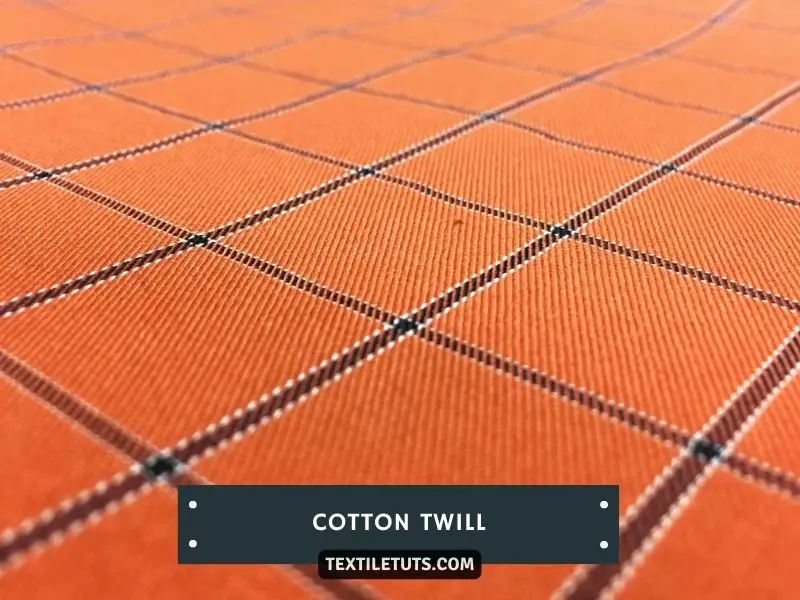
Cotton twill is a woven textile constructed from carded or combed cotton yarns using a twill weave geometry. The resulting fabric has a thread count of 80 to 120 threads per inch in the warp direction and 60 to 100 threads per inch in the weft direction, producing a fabric weight between 180 and 300 grams per square meter. The diagonal twill line typically runs from the lower left to the upper right on the fabric face, though reverse twill constructions invert this direction.
Does Cotton Twill Shrink?
Cotton twill shrinks 2% to 5% in both length and width after the first wash cycle when washed at 40°C (104°F) or higher. This shrinkage is caused by cotton fiber relaxation as the fabric absorbs water and releases manufacturing tension. Pre-shrunk cotton twill, which has undergone a mechanical shrinking process during finishing, shrinks only 0.5% to 1% after the first wash. Washing in cold water below 30°C (86°F) reduces shrinkage to 1% to 2% for untreated cotton twill.
What Is Core Twill?
Core Twill is a heavyweight woven textile constructed with a cotton wrap yarn and a polyester-core spun yarn in the weft direction. The cotton exterior provides breathability and moisture absorption, while the polyester core provides tensile strength and dimensional stability. Core twill fabric weight typically ranges from 250 to 350 grams per square meter, making it suitable for workwear, uniforms, and outerwear applications.
Does Core Twill Shrink?
Core twill shrinks between 0% and 0.75% after washing. The polyester core stabilizes the fabric structure and resists thermal contraction, while the cotton wrap provides minimal shrinkage due to its pre-stabilized spinning construction. Washing in cold water at 20°C to 30°C (68°F to 86°F) produces zero measurable shrinkage in core twill. Hot water washing above 40°C (104°F) may produce up to 0.75% shrinkage in the cotton wrap fibers.
Cotton-Poly Twill
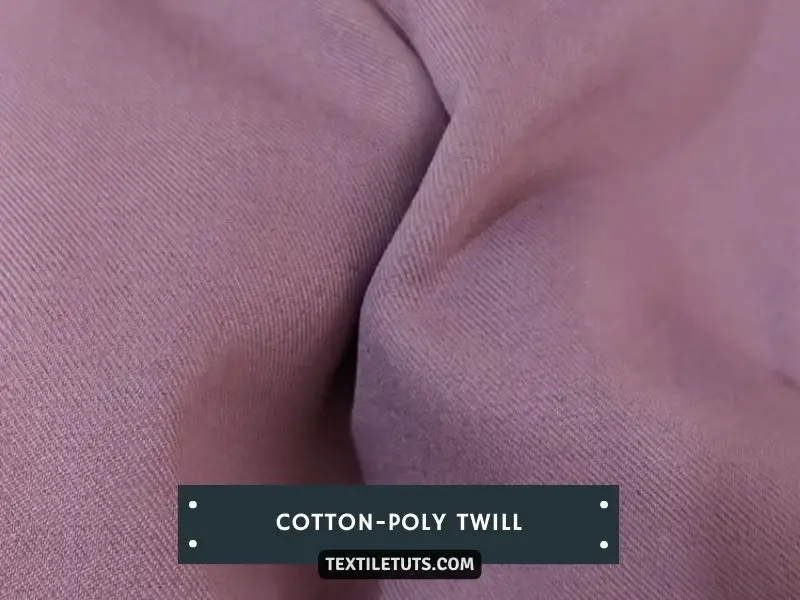
Cotton-poly twill is a blended woven textile composed of 35% to 65% cotton fibers and 35% to 65% polyester fibers. The blend combines cotton’s comfort and moisture absorption with polyester’s durability, wrinkle resistance, and dimensional stability. Standard cotton-poly twill has a fabric weight of 180 to 250 grams per square meter and a thread count of 100 to 140 threads per square inch.
Does Cotton-Poly Twill Shrink Less Than Cotton Twill?
Cotton-poly twill shrinks significantly less than 100% cotton twill. A 65/35 cotton-polyester twill blend exhibits shrinkage of 0% to 1.5% after the first wash cycle at 40°C (104°F), compared to 2% to 5% shrinkage for pure cotton twill under identical conditions. The polyester component, which has a glass transition temperature of 67°C to 75°C (153°F to 167°F), resists the thermal shrinkage that affects cotton fibers in warm wash water.
Twill Shrinkage Comparison by Fabric Type
| Fabric Type | First Wash Shrinkage | Wash Temperature | Dryer Shrinkage | Pre-Shrunk Option |
|---|---|---|---|---|
| 100% Cotton Twill | 2% – 5% | 40°C (104°F) | 1% – 3% additional | 0.5% – 1% after first wash |
| 65/35 Cotton-Poly Twill | 0% – 1.5% | 40°C (104°F) | 0.5% – 1% | 0% – 0.5% |
| 50/50 Cotton-Poly Twill | 0% – 1% | 40°C (104°F) | 0% – 0.5% | 0% |
| Core Twill (Cotton/Polyester) | 0% – 0.75% | 40°C (104°F) | 0% – 0.25% | 0% |
| 100% Tencel Twill | 0.5% – 2% | 40°C (104°F) | 0% – 0.5% | 0% – 0.5% |
| 65/35 Tencel/Cotton Twill | 1% – 3% | 40°C (104°F) | 0.5% – 1% | 0.5% – 1% |
How to Prevent Twill Shrinkage
Preventing twill shrinkage requires controlling temperature, mechanical action, and drying method during every wash and dry cycle. The following methods provide consistent dimensional stability for all twill fabric types.
- Wash twill garments in cold water at 20°C to 30°C (68°F to 86°F) to minimize fiber contraction. A cold water wash cycle reduces cotton twill shrinkage by 60% to 80% compared to a 40°C (104°F) wash cycle.
- Use a mild liquid detergent without bleach additives. Alkaline detergents above pH 9 accelerate fiber swelling in cotton fibers, increasing shrinkage potential by 15% to 25% in subsequent wash cycles.
- Select the gentle or delicate wash cycle to reduce mechanical agitation. Agitation intensity directly correlates with fabric distortion and shrinkage in woven textiles, with gentle cycles producing 40% less shrinkage than standard cycles.
- Air dry twill garments flat or on a clothesline in shade to prevent heat-induced shrinkage. Direct sunlight exposure above 30°C (86°F) ambient temperature may cause fiber fading and degrade cotton cellulose over extended periods.
- Use dryer tumbling only on a low-heat or air-fluff setting for cotton-poly blends and core twill. Remove garments while still damp to prevent over-drying, which causes fiber embrittlement and fabric stiffening in addition to dimensional change.
- Purchase pre-shrunk twill garments when available. Pre-shrunk cotton twill undergoes mechanical stabilization during manufacturing, reducing first-wash shrinkage from 3% to 5% down to 0.5% to 1%.
How to Wash Twill Fabric Properly
Proper washing procedure for twill fabric depends on the fiber composition. Follow these numbered steps for each twill type to maximize fabric lifespan and minimize dimensional change.
- Check the garment care label for fiber composition and recommended wash temperature. The care label provides the manufacturer’s certified wash parameters and any pre-shrunk treatment applied during production.
- Sort twill garments by color to prevent dye transfer. Separate dark navy, black, and red twill items from white and light-colored items. Sort by fabric weight to prevent abrasive damage from heavy items tumbling against lightweight twill.
- Turn garments inside out to protect the outer face from mechanical abrasion against the drum walls and other garments. This is particularly important for printed or surface-finished twill fabrics.
- Select wash temperature based on fiber type: 20°C to 30°C (68°F to 86°F) for 100% cotton twill and core twill; 30°C to 40°C (86°F to 104°F) for cotton-poly blends; 20°C to 30°C (68°F to 86°F) for Tencel blends.
- Choose gentle or delicate cycle with a maximum spin speed of 600 RPM to minimize mechanical stress. Lower spin speeds reduce fabric distortion and wrinkling, decreasing downstream ironing requirements.
- Air dry immediately after washing by laying flat on a clean towel or hanging on a padded hanger. Do not leave wet twill garments in the washing machine drum, as this promotes mildew growth and fiber degradation.
Twill Fabric Care and Maintenance Tips
- Iron twill garments on the reverse side at a temperature of 150°C to 180°C (302°F to 356°F) for cotton twill and 110°C to 130°C (230°F to 266°F) for cotton-poly blends to prevent shine marks on the fabric face.
- Store twill garments folded or on padded hangers in a cool, dry location with 40% to 60% relative humidity. High humidity above 70% promotes mildew growth on cotton twill, while very low humidity below 30% causes fiber brittleness.
- Spot clean minor stains with a damp cloth and mild detergent before resorting to a full wash cycle. Pre-treating stains reduces the number of wash cycles needed, extending overall garment lifespan by 20% to 30%.
- Dry clean heavy twill garments such as coats and jackets to preserve structural integrity and prevent shrinkage. Professional dry cleaning uses non-aqueous solvents that do not cause fiber swelling in cotton or Tencel fibers.
- Check seam stability before machine drying. French seams and flat-felled seams common in twill garments may loosen after repeated heat exposure, particularly in core twill constructions with dissimilar fiber expansion rates.
Frequently Asked Questions About Twill Fabric
Does twill shrink in the wash?
Cotton twill shrinks between 2% and 5% when washed at 40°C (104°F) or higher. Cotton-polyester twill blends shrink 0% to 1.5% under the same conditions. Core twill shrinks 0% to 0.75%. Washing in cold water below 30°C (86°F) reduces shrinkage by 60% to 80% across all twill fabric types.
Do twill jeans only shrink and not stretch after washing?
Cotton twill denim shrinks in the wash but also stretches during wear. The diagonal twill weave allows the fabric to expand 2% to 4% in the width direction during normal use. This stretch-and-shrink cycle means twill denim stabilizes at its washed dimensions after 3 to 5 wear-wash cycles. Cotton-poly twill denim shows less stretch recovery due to polyester’s elastic memory.
Can you shrink cotton twill?
You can shrink cotton twill deliberately by washing in hot water above 40°C (104°F) and tumble drying on high heat. This method produces 3% to 5% shrinkage in width and length. To shrink a cotton twill garment back to its original dimensions after stretching, soak it in 40°C water for 30 minutes and air dry flat.
Is twill better than cotton?
Twill and cotton are not directly comparable because twill is a weave construction and cotton is a fiber type. Cotton twill combines cotton fibers with a twill weave, offering durability and wrinkle resistance. Plain weave cotton is more breathable and lighter in weight. The choice depends on the application: twill is better for structured garments and heavy use, while plain weave cotton is preferable for lightweight summer clothing.
Does twill fade?
Twill fades with repeated exposure to ultraviolet radiation and repeated washing. Dark-colored cotton twill (navy, black, dark brown) fades 15% to 25% in color intensity after 20 wash cycles. Solution-dyed polyester twill maintains color intensity for 50+ wash cycles. Washing in cold water and air drying in shade extends color vibrancy by 30% to 40% compared to warm wash and tumble drying.
Is twill a warm fabric?
Twill is a relatively warm fabric due to its dense weave structure. The close-set warp and weft yarns create a fabric with a thermal resistance of 0.3 to 0.5 tog units, which is 30% to 50% higher than plain weave cotton of equivalent weight. This makes twill suitable for autumn and early winter garments. Twill’s warmth-to-weight ratio of 0.015 to 0.025 tog per gram per square meter makes it more insulating than many synthetic fabrics.
Is twill more durable than denim?
Twill is generally more durable than denim because of its tighter weave structure. Standard cotton twill has a thread count of 80 to 120 warp threads per inch versus denim’s 60 to 90 warp threads per inch. The higher thread count produces a tear strength of 15 to 25 newtons for twill versus 10 to 18 newtons for denim. However, denim’s looser weave provides greater flexibility and comfort for close-fitting garments such as jeans.
Is twill lighter than canvas?
Twill is lighter than canvas in most constructions. Standard cotton twill weighs 180 to 300 grams per square meter, while canvas typically weighs 300 to 600 grams per square meter. Canvas uses a plain weave structure rather than a twill weave, which produces a thicker, more rigid fabric. For lightweight durable garments, cotton twill at 180 to 220 gsm provides the best balance of durability and comfort.
What is the difference between denim and twill?
Denim is a type of twill fabric, but with specific distinguishing characteristics. Denim uses a 2/1 or 3/1 twill ratio with colored warp yarns (typically indigo-dyed) and undyed weft yarns, producing the characteristic blue-while appearance. Standard twill may use any fiber combination and typically has a tighter weave with equal-color warp and weft yarns. Denim weighs 300 to 400 gsm versus standard cotton twill at 180 to 300 gsm.
What is combined twill?
Combined twill is a fabric constructed from two or more different yarn types in the same weave direction. For example, a combined twill may alternate cotton and polyester yarns in the weft direction while maintaining a uniform warp, creating a fabric that combines comfort, durability, and reduced shrinkage. Combined twill constructions are common in workwear fabrics that require both moisture absorption (cotton) and tensile strength (polyester).
Conclusion
Twill is a durable, warm, and structurally stable textile fabric with a diagonal weave pattern that distinguishes it from plain weave and satin weave textiles. The fabric is available in multiple fiber compositions, each with distinct shrinkage characteristics: 100% cotton twill shrinks 2% to 5%, cotton-poly blends shrink 0% to 1.5%, core twill shrinks 0% to 0.75%, and Tencel blends shrink 0.5% to 2% under standard wash conditions at 40°C (104°F).
Preventing twill shrinkage requires consistent cold water washing at or below 30°C (86°F), air drying or low-heat tumble drying, and selecting pre-shrunk or blended fabrics when dimensional stability is critical. By following these care guidelines, twill garments maintain their original dimensions and structural integrity for many years of use.
References
- Lenzing AG. (2024). Tencel™ Lyocell Fiber — Properties and Applications. Lenzing AG.
- American Association of Textile Chemists and Colorists (AATCC). (2023). AATCC Test Method 135 — Dimensional Changes of Fabrics after Washing. AATCC.
- Cotton Incorporated. (2023). Cotton Fabric Shrinkation — Causes and Prevention. Cotton Incorporated.
- Textile World. (2022). Understanding Fabric Shrinkage — Test Methods and Industry Standards. Textile World.
- Woolmark Company. (2023). Textile Care Labeling — Global Standards for Fabric Care Symbols. Woolmark.
- International Organization for Standardization. (2019). ISO 3758:2012 — Textiles — Care Labelling Code Using Symbols. ISO.


