
Tencel vs. Cotton: Sustainability and Comfort Compared

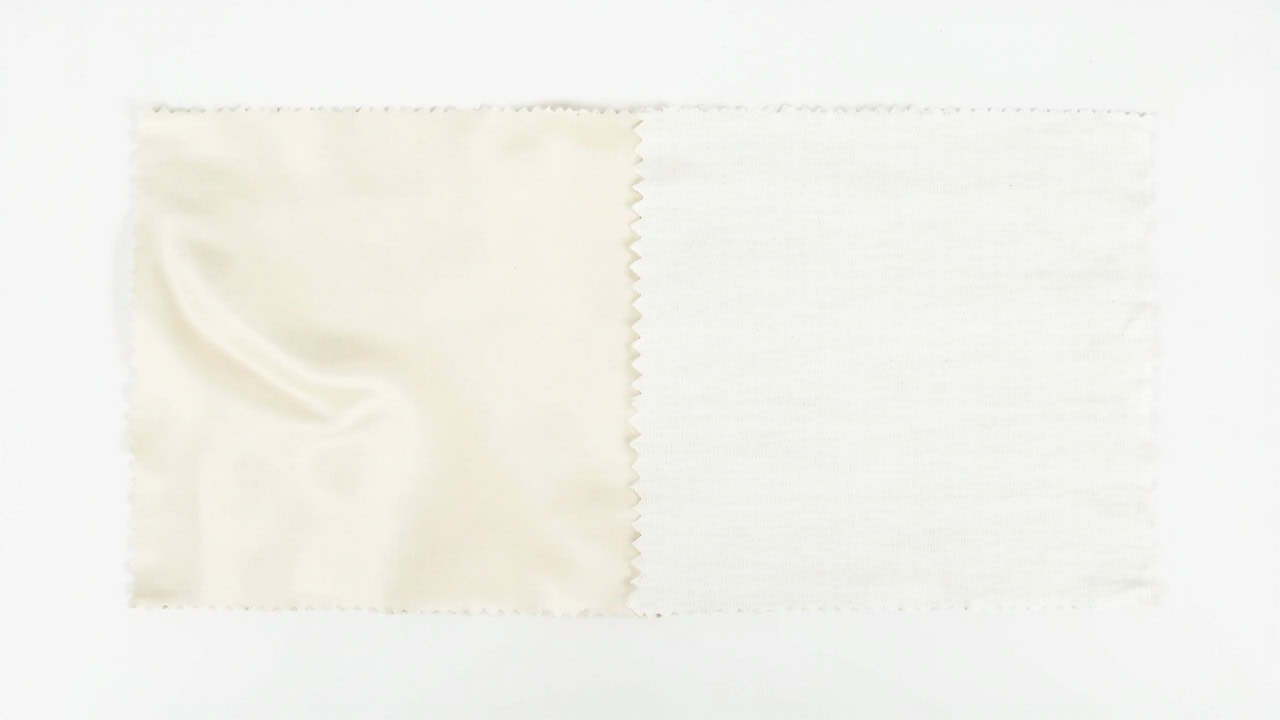
Tencel (lyocell) outperforms conventional cotton on sustainability metrics — producing Tencel requires approximately 10 litres of water per kilogram of fibre versus cotton’s 8,000–10,000 litres per kilogram, uses a closed-loop manufacturing process that recycles 99% of its NMMO solvent, and generates fewer carbon emissions per kilogram of fibre — while cotton offers superior air permeability and proven moisture absorption in hot, humid conditions at a significantly lower price point. The choice between them depends on whether environmental impact or climate-specific comfort and budget are your primary priorities.
Quick Comparison: Tencel vs. Cotton at a Glance
| Property | Tencel (Lyocell) | Conventional Cotton |
|---|---|---|
| Fibre origin | Wood pulp (eucalyptus/beech) | Cotton boll (plant seed fibre) |
| Manufacturing process | Closed-loop solvent spinning | Conventional mechanical/chemical |
| Water usage | ~10 litres/kg fibre | ~8,000–10,000 litres/kg fibre |
| Solvent recovery | 99% recovered/recycled | N/A |
| Biodegradability | Yes (soil compostable) | Yes |
| CO₂ emissions | Lower per kg | Higher per kg |
| Typical price range | $15–$30/yard | $5–$15/yard |
| Breathability (air permeability) | Good | Excellent |
| Moisture absorption | Good (50% more than cotton) | Very good (25–30% by weight) |
| Softness (handle) | Exceptional (silky) | Good (improves with wash) |
| Durability (Martindale) | 20,000–40,000 cycles | 15,000–30,000 cycles |
| Shrinkage risk | Low (1–3%) | Moderate (3–7%) |
What Is Tencel? Definition and Manufacturing
Tencel is the branded name for lyocell fibre, owned by Lenzing AG and produced from wood pulp sourced primarily from eucalyptus, beech, and bamboo trees grown in sustainably managed forests. The manufacturing process dissolves this wood pulp in N-methylmorpholine N-oxide (NMMO) — a water-based organic solvent — then forces the solution through spinnerets and into a water bath where the fibre sets. The critical distinction from viscose/rayon is that the NMMO solvent is captured and recycled in a closed-loop system, with 99% recovered and reused rather than discharged as wastewater (Wikipedia — Lyocell). This makes Tencel substantially more environmentally responsible than conventional rayon, which uses harsher and more polluting chemical baths.
In wet state, Tencel fibre tensile strength is comparable to polyester; in dry state, its strength is similar to cotton. The fibre is available in two main generations: Tencel Lyocell (the original eucalyptus-based fibre) and Tencel Modal (beech-based, using the same NMMO process with slightly different fibre properties). Both generations share the same OEKO-TEX Standard 100 certification and closed-loop manufacturing credentials (OEKO-TEX). Tensile strength in the wet state remains a key performance advantage over cotton, which loses considerable strength when wet — a property that directly affects how garments hold up through repeated laundering.
Why Tencel Is the More Sustainable Choice
The defining sustainability advantage of Tencel over conventional cotton is its closed-loop solvent system. The NMMO process captures and reuses 99% of the chemical solvent, which then biodegrades without producing harmful by-products (Wikipedia — Lyocell). This is not an incremental improvement — it is a fundamentally different manufacturing paradigm that eliminates the toxic discharge associated with viscose production and dramatically reduces the chemical footprint compared to cotton’s agricultural inputs.
Closed-Loop Solvent System
The NMMO closed-loop process is the cornerstone of Tencel’s environmental credentials. The solvent is dissolved in water, used to break down wood cellulose, recovered through evaporation and filtration, then fed back into the process. The 99% recovery rate means that for every 100 kg of NMMO solvent used, 99 kg are reclaimed and reused — the remaining 1% degrades naturally without harmful residue (Wikipedia — Lyocell). This is in stark contrast to conventional viscose rayon, which uses carbon disulphide — a known neurotoxin — and releases significant quantities into waterways.
Land and Water Use
Eucalyptus and beech trees used for Tencel pulp grow rapidly on non-irrigated land without the need for pesticides, and can be harvested in 7–10 years versus cotton’s annual planting cycle. Cotton, by contrast, is one of the most water-intensive crops on the planet, requiring approximately 8,000–10,000 litres of water to produce one kilogram of fibre globally — and up to 22,500 litres per kilogram in arid regions such as parts of India (Wikipedia — Cotton). Tencel production requires approximately 10 litres of water per kilogram of fibre — roughly 1,000 times less than cotton.
Cotton’s water footprint is not merely a numbers issue — it has shaped geopolitical disaster. The Aral Sea, once the world’s third-largest lake, lost 60% of its surface area and 80% of its volume between 1960 and 1998 primarily because rivers that once fed it were diverted to irrigate cotton fields in Uzbekistan and Kazakhstan (Wikipedia — Aral Sea). At its peak, 20–60 cubic kilometres of water were diverted annually for cotton cultivation. The UN Secretary-General Ban Ki-moon called this shrinkage “one of the planet’s worst environmental disasters” (Wikipedia — Aral Sea). The Aral Sea’s salinity soared from 10 g/L to 376 g/L — roughly 10 times that of normal seawater (Wikipedia — Aral Sea).
Pesticides and Chemicals
Conventional cotton is among the most pesticide-intensive crops globally. While the cotton industry has made measurable progress — Cotton Incorporated reports a 50% reduction in pesticide applications over the past 40 years and a 45% reduction in irrigated water applications (Cotton Incorporated) — pesticide use remains significant in non-organic production systems. Tencel, sourced from FSC or PEFC-certified forests (296 million hectares globally are PEFC-certified (PEFC)), requires minimal pesticide input since eucalyptus and beech are naturally resistant to pests in plantation settings.
End-of-Life and Certifications
Both Tencel and cotton fibres are biodegradable, but Tencel composts more rapidly under industrial composting conditions due to its shorter polymer chain and higher surface area. For consumers prioritising chain-of-custody environmental credentials, Tencel carrying OEKO-TEX Standard 100 certification has been independently verified across more than 1,000 harmful substances at every component level — every thread, button, and accessory — with limit values reviewed at least annually (OEKO-TEX). FSC or PEFC forest certifications provide the raw material traceability for the wood pulp component.
Why Cotton Still Dominates: Advantages Over Tencel
Despite Tencel’s strong sustainability credentials, conventional cotton retains decisive advantages in three areas that matter most to everyday consumers: breathability, cost accessibility, and supply chain maturity.
Breathability and Air Permeability
Cotton’s natural fibre structure allows significantly greater airflow than Tencel’s more densely packed cellulose bundles. This superior air permeability is the primary reason cotton remains the preferred fibre for summer clothing, underwear, and hot-climate wardrobes. Air movement through the fabric is the primary cooling mechanism in hot, humid conditions — and this is where Tencel’s slightly higher moisture absorption (50% more absorbent than cotton (Wikipedia — Lyocell)) does not fully compensate for lower breathability.
Moisture Absorption Without Dampness
Cotton absorbs 25–30% of its weight in moisture without feeling wet against the skin. Tencel absorbs approximately 50% more moisture by weight than cotton, but its faster moisture-wicking means it can feel clammy if that moisture is not actively wicked away by air movement or evaporation. In still, humid conditions — where moisture-wicking performance is limited — cotton’s slower absorption and more breathable fibre structure often feels more comfortable for all-day wear.
Cost Accessibility
Conventional cotton fabric costs $5–$15 per yard versus Tencel at $15–$30 per yard — roughly 40–60% cheaper. This price differential is critical for everyday clothing: T-shirts, underwear, socks, workwear, and children’s clothing where consumers need to purchase multiple items within a budget. While organic cotton narrows this gap ($10–$20 per yard), it still does not fully match Tencel’s price point, and organic cotton retains the higher water and pesticide impact of conventional cotton farming (Cotton Incorporated).
Mature Supply Chain and Versatility
Cotton benefits from thousands of years of agricultural optimisation and a global trading infrastructure with standardised quality grades, established pricing benchmarks, and predictable availability. It works in virtually every textile construction: woven shirting, knit jersey, denim, terry towelling, flannel, and bedsheets. Tencel, with only ~30 years of commercial history, is increasingly common but still requires more deliberate sourcing. The fabric shrinkage complete guide explains how cotton’s 3–7% first-wash shrinkage rate, while higher than Tencel’s 1–3%, has been fully characterised and managed by the industry for generations.
When to Choose Tencel Over Cotton
Tencel is the better choice when specific performance characteristics or environmental priorities outweigh cost considerations. Here are the clear use cases where Tencel delivers measurable advantages.
Sleepwear and Bedding
Tencel’s silky hand feel and effective moisture-wicking make it superior for sheets, pillowcases, and pyjamas — particularly for people who sleep warm or experience night sweats. The fibre’s smooth surface (no cuticle scales, unlike wool) reduces skin irritation and wicks moisture away from the skin surface more effectively than cotton in controlled-environment sleep settings where air movement is minimal but temperature regulation still matters.
Activewear Base Layers
Tencel’s smooth fibre surface and moisture-wicking properties perform well in blend fabrics for exercise clothing. When blended with synthetic fibres or cotton, Tencel adds a sustainability dimension to activewear without the static-cling and odour-retention issues associated with pure polyester. The dimensional stability of Tencel — its resistance to shrinking and stretching through wash cycles — also means activewear garments maintain their compression fit and shape longer.
Sustainable Fashion Purchases
When environmental credentials are a primary purchasing decision, Tencel’s Life Cycle Assessment is substantially better than conventional cotton on water use, chemical discharge, and land use metrics. A garment made from Tencel requires roughly 1,000 times less water to produce than its cotton equivalent (Wikipedia — Lyocell). For consumers building an eco-conscious wardrobe, Tencel represents one of the most credibly sustainable fibre choices available at scale.
Sensitive Skin and Eczema-Prone Individuals
Tencel’s extremely smooth fibre surface — no cuticle scales like those found on wool, and minimal fibre shedding — causes significantly less mechanical irritation to the skin. This makes Tencel preferable for individuals with eczema-prone skin, contact sensitivity, or textile allergies. The OEKO-TEX Standard 100 certification (Class 1 for baby products) ensures no harmful residual chemicals are present in the finished fabric (OEKO-TEX).
Garments Requiring Fluid Drape
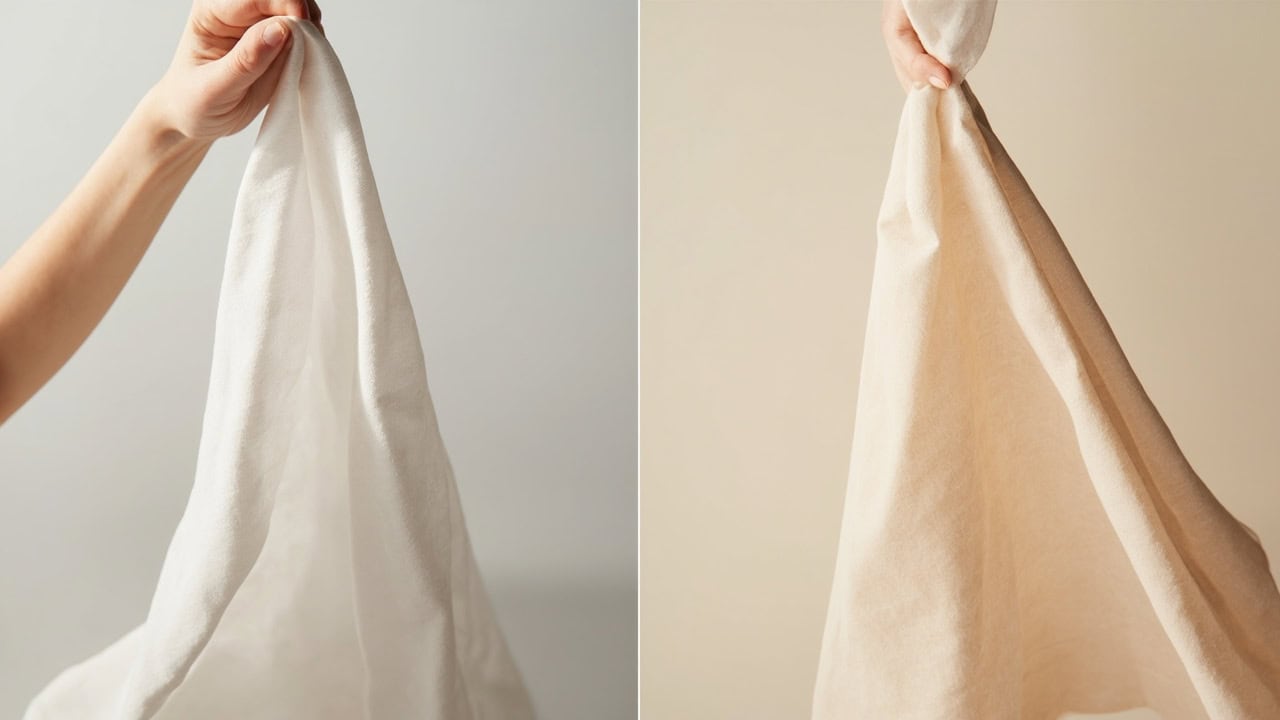
Tencel’s higher lustre and fluid drape — the way the fabric falls and moves when suspended — make it the preferred choice for dresses, blouses, scarves, and flowing garments. Tencel also requires slightly less dye than cotton to achieve the same colour depth (Wikipedia — Lyocell), which means more vivid colour saturation with lower dye consumption and reduced wastewater impact during dyeing.
When to Choose Cotton Over Tencel
Cotton remains the pragmatic choice in specific contexts where performance, budget, or practical constraints outweigh sustainability considerations.
Hot, Humid Outdoor Climates
In tropical and subtropical conditions where high humidity suppresses evaporation and air movement is the primary cooling mechanism, cotton’s superior air permeability makes it the more comfortable choice for all-day wear. The how to wash cotton fabric properly guide covers care routines that help cotton garments maintain this breathability through repeated use.
Budget-Conscious Everyday Clothing
T-shirts, underwear, casual wear, and children’s clothing are categories where price-per-item genuinely matters. The 40–60% cost premium for Tencel over conventional cotton makes it an impractical default for these categories. Cotton delivers acceptable performance at an accessible price point that Tencel currently cannot match for mass-market everyday clothing.
Heavy-Duty Workwear and Denim
Cotton’s tensile properties — specifically how it breaks in with wear, developing a personalised fit and patina over time — remain preferred for durable work clothing and denim. While Tencel scores well on Martindale abrasion cycles (20,000–40,000 versus cotton’s 15,000–30,000), cotton’s mechanical behaviour during extended physical wear, including how it responds to heat, abrasion, and repeated laundering, is well-understood and considered desirable in workwear applications.
Kitchen Textiles and High-Temperature Laundering
Towels, dishcloths, and aprons require the high moisture absorption that cotton delivers, combined with heat resistance that allows laundering at 60°C+ without fibre damage. While Tencel can be machine washed, temperatures above 40°C risk damaging the fibre’s dimensional stability — meaning cotton remains the practical choice for items that must withstand repeated high-temperature wash cycles for hygiene reasons.
Price and Availability Comparison
Tencel commands a significant price premium over conventional cotton that reflects both its more complex manufacturing process and its sustainability credentials.
| Fibre Type | Fabric Cost ($/yard) | Typical Garment Price | Water Impact |
|---|---|---|---|
| Conventional Cotton | $5–$15 | $15–$40 | Very High (8,000–22,500 L/kg) |
| Organic Cotton | $10–$20 | $25–$50 | High (reduced pesticides, similar water) |
| Tencel Lyocell | $15–$30 | $40–$80 | Low (~10 L/kg, 99% solvent recovery) |
| Tencel/Cotton Blend | $10–$20 | $25–$55 | Moderate (improved over pure cotton) |
Tencel-cotton blends at 50/50 ratios offer a practical middle ground: they cost $10–$20 per yard, improving sustainability over pure cotton while maintaining better price accessibility than full Tencel. For consumers who want to make more sustainable choices without committing to the full Tencel price premium, blends are a credible entry point. Tencel fabric is increasingly available through specialist textile retailers, though conventional cotton remains universally available at any fabric store or mass retailer globally.
Care Comparison: Washing, Drying, and Ironing
| Care Aspect | Tencel (Lyocell) | Cotton |
|---|---|---|
| Washing temperature | Cold to 40°C (avoid 60°C+) | Hot wash 60°C safe for whites |
| Cycle type | Gentle/delicate cycle | Standard cycle acceptable |
| Detergent | Mild detergent | Standard laundry detergent |
| Drying | Lay flat or tumble dry low | Tumble dry medium safe |
| Ironing | Medium heat, slightly damp | High heat safe |
| Shrinkage | Minimal (1–3%) | Moderate (3–7% first wash) |
| Wrinkling | Moderate | More prone to wrinkles |
Tencel’s 1–3% shrinkage rate means garments maintain their fit and shape better through repeated laundering compared to cotton’s 3–7% first-wash shrinkage. Tencel garments should be removed promptly from the dryer to avoid excessive wrinkling, as the smoother fibre surface tends to set wrinkles if left crumpled in a hot drum. Cotton’s tolerance for high-heat ironing makes it preferable for crisp professional appearances — a cotton dress shirt pressed at 200°C holds a sharp crease in a way that Tencel cannot reliably replicate.
Tencel’s smoother fibre surface resists pilling slightly better than cotton in comparable fabric constructions. The how to wash cotton fabric properly guide has detailed instructions for maintaining cotton garments at various wash temperatures — a care routine that differs significantly from Tencel’s gentler requirements.
Frequently Asked Questions
Q: Is Tencel more sustainable than cotton?
A: Yes — on most Life Cycle Assessment metrics, Tencel (lyocell) is more sustainable than conventional cotton. Tencel uses approximately 10 litres of water per kilogram of fibre versus cotton’s 8,000–22,500 litres per kilogram, 99% of its NMMO solvent is recovered and recycled in closed-loop production, and eucalyptus trees used for Tencel require no irrigation or pesticides. However, organic cotton substantially narrows the gap, particularly in pesticide reduction — the cotton industry has achieved a 50% reduction in pesticide applications over 40 years according to Cotton Incorporated.
Q: Is Tencel cooler to wear than cotton?
A: Tencel and cotton perform differently in heat. Cotton offers superior air permeability through its natural fibre structure, making it the better choice in hot, humid conditions where air movement is the primary cooling mechanism. Tencel has slightly better moisture-wicking and can feel smoother against skin, but absorbs 50% more moisture than cotton which can feel clammy if not wicked away. For warm, dry conditions where moisture management matters more than airflow, Tencel performs well; for hot, humid tropical and subtropical climates, cotton is the more comfortable choice.
Q: Does Tencel shrink like cotton?
A: Tencel shrinks significantly less than cotton — typically 1–3% shrinkage versus cotton’s 3–7% on first wash. Tencel’s dimensional stability means garments maintain their fit and shape better through repeated laundering, and Tencel can be tumble dried on low heat without the shrinkage risk that cotton carries. Cotton’s higher shrinkage rate is managed through pre-shrunk fabric treatments and care routines detailed in our how to wash cotton fabric properly guide.
Q: Is cotton or Tencel better for sensitive skin?
A: Tencel is generally better for sensitive skin. Tencel’s lyocell fibres have an extremely smooth surface with no cuticle scales (unlike wool) and minimal fibre shedding, which reduces mechanical skin irritation. Cotton is also non-irritating for most people, but Tencel’s smoother fibre geometry, OEKO-TEX Standard 100 certification (which tests every component including threads and buttons against over 1,000 harmful substances (OEKO-TEX)), and lower moisture retention on the skin surface make it preferable for individuals with eczema-prone skin and contact sensitivity.
References
- Wikipedia. (2024). Lyocell. Wikimedia Foundation.
- Wikipedia. (2024). Cotton. Wikimedia Foundation.
- Wikipedia. (2024). Aral Sea. Wikimedia Foundation.
- Cotton Incorporated. (2024). Sustainability Research. Cotton Incorporated.
- OEKO-TEX. (2024). OEKO-TEX Standard 100 Overview. International Association for Research and Testing in the Field of Textile and Leather Ecology.
- PEFC. (2024). Programme for the Endorsement of Forest Certification — Global Statistics. PEFC International.


