
Bamboo vs. Cotton: Care and Sustainability Compared

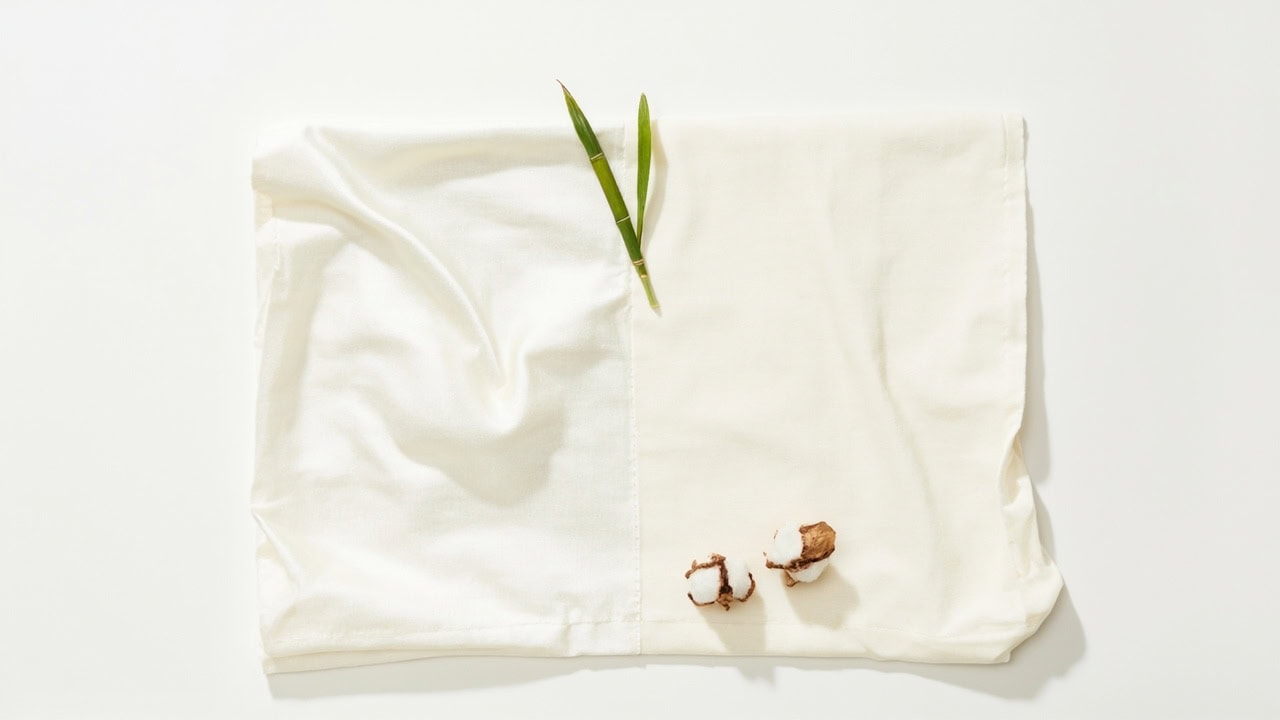
Bamboo fabric biodegrades in months while cotton takes years, but cotton survives 200+ wash cycles with minimal fiber degradation versus bamboo’s progressive weakening after 50–100 cycles — bamboo wins on environmental impact and raw material efficiency, cotton wins on long-term durability and care versatility. The choice depends on your priority: planet-friendly disposability or long-haul fabric longevity.
Both bamboo and cotton belong to the cellulosic fiber family, yet their origins, processing methods, and end-of-life behaviors differ substantially. Bamboo fabric is a regenerated fiber produced from bamboo grass through either the conventional viscose process or the environmentally preferred lyocell process. Cotton fabric is a natural fiber harvested from cotton bolls and spun into yarn with minimal processing. Understanding these fundamental differences equips you to make informed purchasing decisions aligned with your values — whether sustainability, longevity, or care simplicity drives your choices.
Key Differences at a Glance
Bamboo and cotton represent two distinct approaches to textile production, each with strengths and trade-offs that affect everything from environmental footprint to daily care routines.
- Bamboo is a regenerated cellulosic fiber extracted from bamboo grass and processed either mechanically or chemically — the lyocell process recovers 99% of chemicals used, while conventional viscose uses carbon disulfide, a neurotoxin
- Cotton is a natural cellulosic fiber hand-picked from cotton bolls and spun into yarn, requiring significantly more water to cultivate than bamboo
- Bamboo fabric smoothness rivals silk at a fraction of the cost, while cotton provides the classic textile handle that has defined everyday clothing for centuries
- Bamboo wicks moisture naturally through its hollow hexagonal fiber structure without any chemical treatment; cotton absorbs moisture readily but retains dampness against the skin
- Both are cellulosic fibers but diverge sharply in growth rate, processing intensity, and end-of-life environmental behavior
Side-by-Side Comparison
| Property | Bamboo | Cotton |
|---|---|---|
| Fiber origin | Bamboo grass (regenerated cellulose) | Cotton boll (natural cellulose) |
| Biodegradability | 6–12 months in native conditions | 1–5 years |
| Water usage to grow | Low — drought-tolerant, minimal irrigation | High — 8,000–10,000 L/kg (up to 22,500 L/kg in some regions of India) |
| Processing chemicals | Lyocell (closed-loop, 99% recovery) or caustic soda for viscose | Minimal for organic; heavy for conventional (pesticides, fertilizers) |
| Softness out of box | Silky-soft immediately | Improves with each wash |
| Durability (wash cycles) | 50–100 cycles before thinning | 200+ cycles |
| Breathability | High — porous hollow fiber structure | High — loose weave construction |
| Moisture-wicking | Natural — hollow structure pulls moisture away | Absorbs but retains moisture |
| Typical cost per yard | $$–$$$ ($8–$25) | $–$$ ($3–$15) |
| Common end uses | Activewear, underwear, bedding | T-shirts, denim, towels, home textiles |
Bamboo yields up to 60 tonnes per hectare annually, compared to just 2 tonnes per hectare for cotton, making it dramatically more efficient as a raw material source. Bamboo grass grows up to 1 meter per day and regrows rapidly after harvest without requiring replanting, while cotton is an annual crop that depletes soil nutrients with each cycle. Bamboo plantations sequester approximately 62 tonnes of CO₂ per hectare annually, substantially more than the 15 tonnes absorbed by young forests on the same land area.
When to Choose Bamboo Fabric
Bamboo fabric makes the stronger choice in several specific scenarios where its material properties align directly with consumer priorities.
- You prioritize sustainability and faster biodegradability. Bamboo fabric decomposes in 6–12 months under native conditions, whereas cotton requires 1–5 years. At end of life, bamboo clothing can be composted rather than landfilled.
- You want silky-soft fabric without silk care complexity. Bamboo’s smooth, round fibers feel luxuriously soft against skin immediately after purchase, requiring no break-in washing cycles to achieve comfort.
- You need moisture-wicking activewear without chemical treatments. The hollow hexagonal structure of bamboo fiber creates natural capillary action that pulls perspiration away from skin — no DWR (durable water repellent) chemicals required, unlike many synthetic performance fabrics.
- You prefer bedding that stays cool and antimicrobial naturally. Bamboo fabric’s temperature-regulating properties and natural antimicrobial agent bamboo-kun resist bacterial growth, mold, and odors without chemical finishes.
- You want eco-friendly production. Bamboo lyocell — the preferred processing method — recovers 99% of the N-methylmorpholine N-oxide (NMMO) solvent used, and that solvent biodegrades without producing harmful byproducts. This contrasts sharply with conventional bamboo viscose, which emits approximately 75% of processing chemicals as air pollutants, primarily carbon disulfide.
When to Choose Cotton Fabric
Cotton remains the workhorse fabric for a reason — its durability, versatility, and care tolerance make it the practical choice for high-usage items that must withstand years of laundering.
- You need a workhorse fabric that survives hundreds of washes. Cotton endures 200+ wash cycles before showing meaningful fiber degradation, compared to bamboo’s 50–100 cycle lifespan. For frequently laundered items like t-shirts, towels, and bedsheets, cotton’s longevity justifies its lower initial cost.
- You want versatile care tolerance. Cotton tolerates warm water washing at 40°C, machine drying at medium heat, and ironing at 150–200°C — care practices that would progressively damage bamboo’s regenerated fibers. This tolerance makes cotton practical for everyday household laundering.
- You prefer a natural fiber with proven long-term durability. Cotton has been used in textiles for over 7,000 years, giving it an extensively documented performance record. Its twisted ribbon fiber structure provides inherent tensile strength that regenerated bamboo fibers cannot match.
- You need high absorbency for towels or medical textiles. Cotton’s absorbent capacity exceeds bamboo’s — ideal for towels, swabs, and hygiene products where moisture absorption rather than moisture transport is the primary function.
- You want affordability with established supply chain transparency. Cotton at $3–$15 per yard undercuts bamboo at $8–$25 per yard. Organic cotton costs 20–50% more but eliminates pesticide residue and supports soil health — a premium worth paying for those prioritizing chemical-free production.
The Fiber Structure Difference explains much of the performance gap between these two materials. Bamboo fibers possess a hollow hexagonal cross-section with microscopic gaps that create natural ventilation channels — this structural design enables bamboo to pull moisture away from skin and release it into the air. Cotton fibers, by contrast, have a twisted ribbon structure with a central lumen that absorbs and retains moisture rather than channeling it away. The twisted cotton structure provides more fiber-to-fiber contact points, which increases mechanical bonding during spinning and contributes to cotton’s superior tensile strength and wash durability.
Price and Availability
Both fabrics are widely accessible, but pricing and availability differ substantially across the quality spectrum.
- Bamboo fabric commands $8–$25 per yard, with prices varying by processing method. Bamboo lyocell (the eco-preferred option) costs $12–$30 per yard, while bamboo viscose (conventional) ranges $6–$15 per yard. Specialty retailers and online stores stock bamboo fabric; it is rarely found in big-box craft stores.
- Cotton fabric costs $3–$15 per yard and is available at every fabric retailer, from independent craft stores to major chains. Organic cotton sits at the premium end ($8–$20 per yard), reflecting the higher cost of pesticide-free cultivation.
- Blends combining bamboo with cotton or modal occupy the mid-range pricing tier, typically $8–$18 per yard. These blends aim to capture bamboo’s softness and moisture-wicking properties while adding cotton’s durability and affordability.
- Quality indicators to watch: For bamboo, look for Oeko-Tex Standard 100 certification or explicit “bamboo lyocell” labeling — avoid products labeled simply “bamboo viscose” due to carbon disulfide processing. For cotton, GOTS (Global Organic Textile Standard) certification ensures organic chain-of-custody from farm to finished fabric.
Care Comparison: Washing, Drying, and Ironing
Care requirements represent one of the starkest practical differences between bamboo and cotton. Treating bamboo like cotton — warm washes, hot dries, high-heat ironing — dramatically accelerates fiber degradation and shortens the garment’s usable life.
Washing
- Bamboo: Wash in cold water at 30°C maximum on a gentle cycle. Use mild, pH-neutral detergent. Cold washing preserves both the fiber integrity and the natural antimicrobial properties that bamboo-kun provides. High temperatures degrade the regenerated cellulose structure.
- Cotton: Tolerates warm water washing at 40°C with stronger detergents. Cotton’s natural fiber structure resists fiber damage from agitation and standard cleaning agents. Organic cotton benefits from gentle detergents but doesn’t require them for fiber preservation.
- Both fabrics benefit from inside-out washing to minimize surface abrasion, which causes pilling over time. Zippered items should be closed, and hooks should be fastened to prevent snagging.
Drying
- Bamboo: Air drying is strongly preferred. If tumble drying is necessary, use only low heat — high heat causes fiber degradation, shrinkage (2–5% on first hot dry), and loss of the fabric’s smooth texture. Flat drying on a clean towel preserves the garment’s shape and extends its usable life.
- Cotton: Tumble drying at medium heat is well-tolerated. Air drying extends cotton’s lifespan but is not required to prevent damage. Cotton shrinkage on first wash is 1–3% — lower than bamboo’s, and predictable enough to pre-shrink commercially.
Ironing
- Bamboo: Iron on low heat (110°C maximum). Use a pressing cloth between the iron and fabric to prevent shine marks — bamboo’s smooth fibers can develop a glossy appearance when directly contact-ironed. Steam is not recommended for bamboo.
- Cotton: Tolerates medium-to-high iron heat (150–200°C), direct contact, and steam without damage. The high heat actually helps cotton’s twisted fibers relax and release wrinkles more effectively than bamboo.
| Care Action | Bamboo | Cotton |
|---|---|---|
| Wash temperature | Cold (30°C max) | Warm (40°C) |
| Tumble dry | Low heat or air dry | Medium heat |
| Iron temperature | Low (110°C max) | High (150–200°C) |
| Chemical detergent tolerance | Low — mild detergent only | Medium–High |
| First-wash shrinkage | 2–5% (hot dry) | 1–3% |
The regeneration process that gives bamboo its silk-like softness also makes it more sensitive to thermal and chemical stress than naturally-grown cotton. This trade-off is fundamental: you cannot have both bamboo’s immediate luxury feel and cotton’s care-free durability in a single fabric. Each material’s care requirements reflect its intrinsic properties.
Frequently Asked Questions
Q: Is bamboo fabric more sustainable than cotton?
A: Bamboo fabric is more biodegradable and requires less water to grow than cotton — bamboo grass needs minimal irrigation and regrows rapidly after harvest without replanting. Bamboo yields 60 tonnes per hectare annually versus cotton’s 2 tonnes per hectare. However, conventional bamboo viscose processing uses carbon disulfide, a neurotoxin, so look for Oeko-Tex certified bamboo lyocell (which recovers 99% of processing chemicals) for the most eco-friendly option. Organic cotton eliminates pesticides but still requires 8,000–10,000 liters of water per kilogram.
Q: Does bamboo fabric shrink in the wash?
A: Bamboo fabric shrinks 2–5% on the first wash if dried at high heat, but maintains dimensional stability when washed cold and air dried. Unlike cotton, which preshrinks predictably, bamboo’s regenerated fibers progressively degrade under heat stress. Always wash bamboo in cold water at 30°C maximum and dry on low heat or flat to maximize the garment’s lifespan.
Q: Which fabric is better for sensitive skin?
A: Bamboo fabric is naturally hypoallergenic and antibacterial without chemical treatment, making it better for eczema-prone or sensitive skin. Bamboo-kun, the natural antimicrobial agent in bamboo, resists bacteria, mold, and dust mites. Cotton is also gentle but can harbor bacteria if damp for prolonged periods. Bamboo’s smooth round fibers cause less mechanical skin irritation than cotton’s twisted ribbon structure.
Q: How many washes does bamboo fabric last?
A: Bamboo fabric typically lasts 50–100 wash cycles before showing significant fiber thinning, compared to 200+ washes for cotton. The regenerated bamboo cellulose fibers break down progressively with each wash cycle, especially at high temperatures. For long-term durability under repeated laundering, cotton outperforms bamboo by a factor of two to four.
References
- Yun, L. & Chen, W. (2011). Bamboo Fiber Textiles. Woodhead Publishing. https://www.sciencedirect.com/science/article/pii/B9781845696097500017
- Shen, J. & Patel, I. (2010). Development of bamboo fiber textiles. Journal of Textile Engineering. https://www.researchgate.net/publication/249945785_Development_of_bamboo_fiber_textiles
- Textile Exchange. (2024). Material Snapshot: Organic Cotton. https://www.textileexchange.org/
- American Association of Textile Chemists and Colorists (AATCC). Test Methods and Procedures. https://www.aatcc.org/standards/
- ISO. (2012). ISO 3758:2012 — Textiles — Care labelling code using symbols. https://www.iso.org/standard/62511.html
- Cotton Incorporated. Cotton Properties and Benefits. https://www.cottoninc.com/about-cotton/


