
Does Dry Cleaning Shrink Clothes? What to Know Before You Go

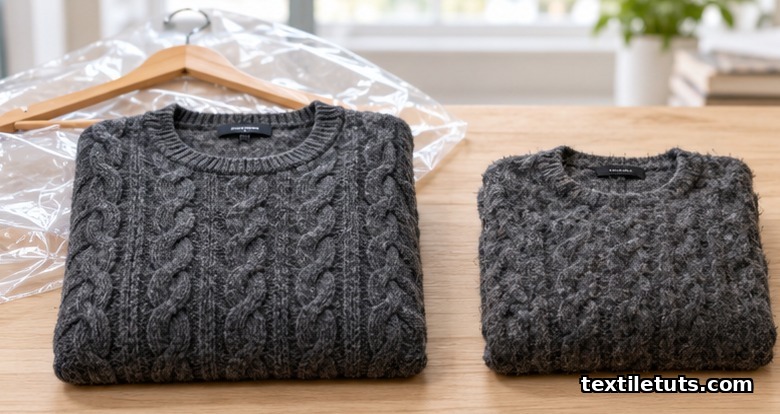
- Any garment labeled “dry clean only”: The phrase “dry clean only” on a care label is a legal instruction, not a suggestion. Manufacturers use this label when water-based cleaning risks damaging the garment — either through shrinkage, distortion, or color bleeding. Ignoring this label voids most manufacturer warranties and care guarantees.
- Structured garments — suits, blazers, coats: The internal construction of tailored garments includes interfacing, canvas padding, and sometimes horsehair mesh that provides shape. Water immersion — even careful hand washing — causes these internal components to shrink, migrate, or lose their tension, permanently altering the garment’s fit and drape. A wool blazer’s interfacing shrinks by 3–5% in a single warm water wash at 40°C or above.
- Heavily embellished items: Beading, sequins, embroidery with loose threads, sequin-adjacent fabric, and decorative appliqués often use adhesives or stitches that cannot withstand water immersion. Solvent-based cleaning protects these embellishments while still cleaning the underlying fabric.
- Wool and cashmere knitwear: Animal fiber knitwear — especially fine-gauge knits, cable-knit sweaters, and cashmere — faces the highest felting risk in water-based washing. Scales on wool fibers begin to interlock and bind at water temperatures above 30°C (86°F), with agitation accelerating the felting process. Dry cleaning eliminates this risk entirely. Research from the IWTO confirms that controlled dry cleaning maintains wool fiber dimensions within ±0.5% of original measurements across repeated cleaning cycles.
- Silk garments: Silk loses up to 20% tensile strength when wet, making it vulnerable to distortion from mechanical agitation in washing machines. Dry cleaning’s gentle tumbling action with solvent maintains silk’s luster and structural integrity. Sheer silk fabrics are particularly susceptible to permanent distortion from improper washing. For more details, see our complete silk care guide.
- Pleated garments: Professional cleaners use specialized pressing equipment to restore and maintain precise pleats — in sun dresses, formal trousers, and skirts. Home washing flattens pleats through water absorption and mechanical tumbling, and attempts to re-press them often produce inferior results compared to professional finishing.
Which Clothes Don’t Need Dry Cleaning (Despite the Label)?
Consumer confusion around care labels costs garment owners significant money annually in unnecessary professional cleaning. Understanding when “dry clean only” is a genuine requirement versus a manufacturer’s legal safeguard helps optimize cleaning budgets without risking garment damage. Many times, the care label symbol guide distinguishes between “dry clean only” (mandatory) and “dry clean recommended” (advisory).
- “Dry clean recommended” vs. “dry clean only”: These phrases carry different legal weight. “Dry clean only” is a binding instruction; “dry clean recommended” is advisory. Many manufacturers use “dry clean only” as a conservative default to protect themselves from consumer complaints about home-washing damage, even when the garment could technically withstand careful hand washing.
- Unstructured viscose blouses: Viscose (rayon) is a semi-synthetic fiber with poor wet strength, making it prone to misshaping in washing machines. However, carefully hand washing unstructured viscose garments in cold water with a gentle detergent is often feasible. The garment’s lack of internal structure (no interfacing, canvas, or padding) means there is less to damage. That said, dry cleaning remains the safer choice for expensive viscose garments.
- Some unstructured wool knits: Not all wool requires professional cleaning. Unstructured wool knits — simple pullovers without complex internal construction — can often be carefully hand washed in cold water (below 30°C) with a wool-specific detergent. Agitation must be minimized: gently squeeze the garment through the water rather than rubbing or wringing. Reshape while damp and dry flat. See our guide to washing wool sweaters at home for step-by-step instructions. Structured wool garments with canvassed interfacing should still go to the cleaners.
- Cotton labeled “dry clean only”: This is uncommon because cotton almost always tolerates machine washing. If you encounter a cotton garment with this label, it may indicate the presence of a decorative element (beading, embroidery, fragile trim) rather than a problem with the cotton itself. Inspect the garment carefully and address the embellishment rather than assuming the entire garment requires dry cleaning.
Cost and Frequency Considerations
Dry cleaning is an investment in garment longevity. Understanding optimal cleaning frequency prevents both premature garment retirement from over-cleaning and odor/appearance issues from under-cleaning. Proper storage between cleanings also extends garment life — see our proper garment storage techniques for recommendations.
Optimal dry cleaning frequency for suits and blazers: Most tailored suits require dry cleaning only 2–4 times per year, or approximately every 3–6 months of regular wear. Between professional cleanings, brush the jacket after each wearing using a clothes brush to remove surface dust and loose fibers — this alone dramatically extends the time between cleanings. Air the jacket for 24 hours after wearing before returning it to the closet; this allows moisture from perspiration to evaporate. Spot-clean minor stains immediately with a damp cloth rather than waiting for full cleaning. Following this regimen, a quality wool suit should last 5–7 years of regular wear; cleaning too frequently (monthly or more) reduces this lifespan significantly.
The true cost comparison: A single dry cleaning trip for a two-piece suit might cost $10–25 depending on your market. Replacing a quality wool suit after premature damage from improper washing costs $150–600 or more. The math is straightforward: dry cleaning a quality wool blazer four times yearly at $15 per cleaning costs $60 annually, while replacing a shrunk or damaged blazer costs ten times that amount. For high-value garments — suits, structured coats, embellished evening wear, and fine knitwear — professional cleaning is demonstrably cost-effective.
Alternating cleaning methods: For appropriate garment types, alternating between professional dry cleaning and careful home hand washing can extend overall garment life while managing costs. This approach works best for wool knitwear: dry clean at the start and end of the season, and hand wash at home during the middle of the season if the garment needs freshening but isn’t heavily soiled. Always allow garments to fully rest and air between cleanings — wearing the same wool sweater two days in a row accelerates odor retention and fiber stress.
Frequently Asked Questions
Can dry cleaning shrink a wool sweater?
No — professionally performed dry cleaning does not shrink wool. The absence of water eliminates the felting risk. Dry cleaning is the recommended method for any wool garment at risk of felting.
Why does “dry clean only” sometimes mean you can still hand wash?
Many manufacturers label garments “dry clean only” as a conservative precaution to protect themselves from claims if a consumer damages a garment by washing. Unstructured garments made from hand-washable fibers (some wools, some silks) can often be carefully hand washed. The safest approach is to follow the label for expensive garments.
Is dry cleaning safe for shrink-prone fabrics?
Yes — dry cleaning is the safest option for any fabric with high shrinkage risk, including wool, cashmere, silk, and viscose. The chemical solvent and controlled pressing process maintain original dimensions.
How often should I dry clean suits and blazers?
Most suits need dry cleaning only 2–4 times per year. Brush after each wear, air for 24 hours between wearings, and spot-clean stains promptly. Over-cleaning accelerates fabric wear.
References
- International Wool Textile Organisation (IWTO). IWTO — Global Authority for Wool Textile Standards.
- American Association of Textile Chemists and Colorists (AATCC). AATCC — Textile Testing Standards and Methods.
- ISO. (2012). ISO 3758 — Textiles and Textile Products: Simple Guide to Care Symbol System.
- Wikipedia. (2024). dry cleaning definition and history.
- Wikipedia. (2024). fabric shrinkage mechanisms.
- Wikipedia. (2024). care label regulations.
Reviewed by Textile Care Specialist · Last updated June 2026
Professional dry cleaning does not cause shrinkage — the process uses chemical solvents rather than water, eliminating the fiber swelling that leads to dimensional change. Dry cleaning is a professional textile care process that uses perchloroethylene (PERC), hydrocarbon solvents, or liquid CO2 to lift oils and greases without saturating fibers. This makes dry cleaning the recommended care method for fabrics with the highest shrinkage risk: wool, cashmere, silk, and structured garments.
The Dry Cleaning Process: No Water Means No Shrinkage
The “dry” in dry cleaning is literal: no water enters the equation at any stage. Instead, garments soak in chemical solvents inside specialized machines designed to handle volatile organic compounds safely. The primary solvent has been perchloroethylene (PERC, chemical formula C2Cl4) since the 1930s — PERC effectively dissolves oils, greases, and certain water-based stains without causing fiber swelling. PERC is classified by the EPA as a probable human carcinogen and is banned or restricted in several U.S. states. Modern alternatives include hydrocarbon solvents (petroleum-based), liquid CO2, and silicone-based solvents such as siloxane D5 (decamethylcyclopentasiloxane).
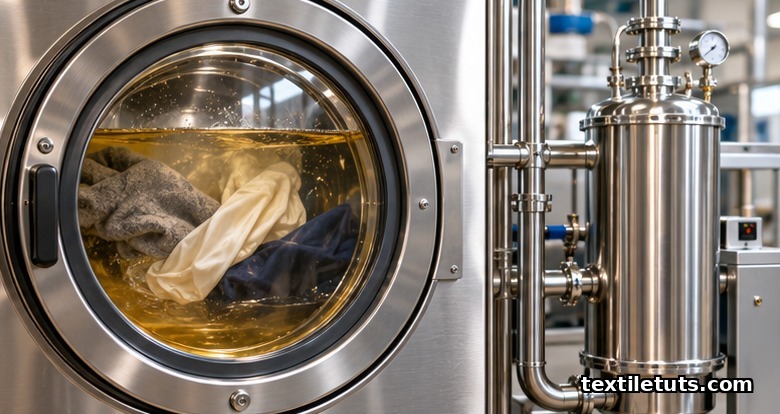
During a typical dry cleaning cycle, the machine fills its chamber roughly one-third full of solvent, then rotates the load for 3–15 minutes while continuously filtering the solvent through distillation to remove impurities. After the wash phase, garments are dried using warm air at approximately 60–63°C, followed by an aeration cycle that removes residual solvent traces. This controlled temperature range — significantly lower than the boiling point of water — means fibers never experience the thermal shock that causes dimensional contraction.
Two distinct shrinkage mechanisms exist, and dry cleaning avoids both. For cotton, linen, and other cellulosic fibers, water causes relaxation shrinkage — when fibers absorb water, they swell and then contract as they dry, releasing manufacturing stresses locked into the fabric during weaving and finishing. Since dry cleaning uses no water, cellulosic fibers remain dimensionally stable throughout the process. For wool, cashmere, and other animal fibers, the combination of water, heat, and mechanical agitation causes felting shrinkage — the overlapping scales on wool fibers catch on each other and bind together, irreversibly compacting the fabric. Dry cleaning’s solvent-based process avoids this reaction entirely, allowing wool garments to maintain their original shape and size through repeated cleaning cycles. The International Wool Textile Organisation (IWTO) confirms that controlled dry cleaning maintains wool fiber dimensions within ±0.5% of original measurements across repeated cleaning cycles.
When Dry Cleaning May Affect Garment Dimensions
Professional dry cleaning minimizes shrinkage risk but does not eliminate all dimensional change risks. Four specific conditions can cause fabric size or shape alterations during or after the dry cleaning process. Understanding these edge cases helps communicate appropriate care instructions to readers and avoid misattributing damage to the cleaning process itself.
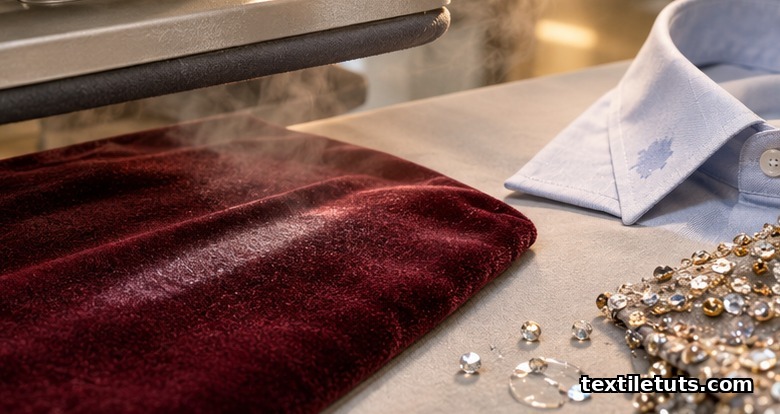
- Pressing issues: Over-pressing by an inexperienced cleaner with excessive steam causes localized distortion, particularly in silk or velvet fabrics. The heat and moisture combination temporarily softens fiber structures and the fabric reshapes under pressure, leading to a flattened or distorted appearance in delicate fabrics.
- Solvent damage to embellishments: Some decorative elements — beads, sequins, adhesive-based decorations, or glues — react poorly to certain dry cleaning solvents. Solvents dissolve adhesives or cause plastic components to become brittle and crack. Always check embellishment compatibility before cleaning.
- Collar and cuff shrinkage from pre-treatment: If a stain on a collar or cuff was pre-treated with water or a water-based spot remover before dry cleaning, that localized area may experience slight relaxation shrinkage. The dry cleaning process itself is not the cause — the pre-treatment introduced water to a concentrated area.
- Repeat cleaning fiber degradation: Frequent dry cleaning — monthly or more — progressively weakens fibers through exposure to solvents and mechanical tumbling. Fibers lose 2–5% tensile strength per 10 cleaning cycles. This is progressive fabric damage, not shrinkage, but it can make garments appear to have “shrunk” when they have lost fiber mass and structural integrity.
Dry Cleaning vs. Wet Washing: Shrinkage Risk Comparison
The following comparison summarizes the key differences between dry cleaning and wet washing with respect to shrinkage risk. These differences explain why professional dry cleaning maintains garment dimensions while home wet washing carries inherent shrinkage risks for certain fabric types.
Dry Cleaning
- Uses chemical solvents (no water)
- No fiber swelling
- No relaxation shrinkage
- No felting in wool/cashmere
- Drying temp: ~60–63°C
- Controlled, professional finish
- Safe for structured garments
Wet Washing
- Uses water as primary liquid
- Fibers swell during wash
- Relaxation shrinkage in cotton/linen
- Felting risk in wool/cashmere above 30°C
- Drying can cause additional contraction
- Home washing lacks professional control
- Risk to interfacing and canvas
Which Clothes SHOULD Be Dry Cleaned?
Professional dry cleaning exists for good reason — certain garments and fabrics genuinely require solvent-based care to maintain their shape, appearance, and longevity. Following the care label is always the safest starting point, but understanding the underlying rationale helps make better decisions for items where the label guidance is ambiguous. For a comprehensive guide to interpreting those symbols, see our care label symbol guide.
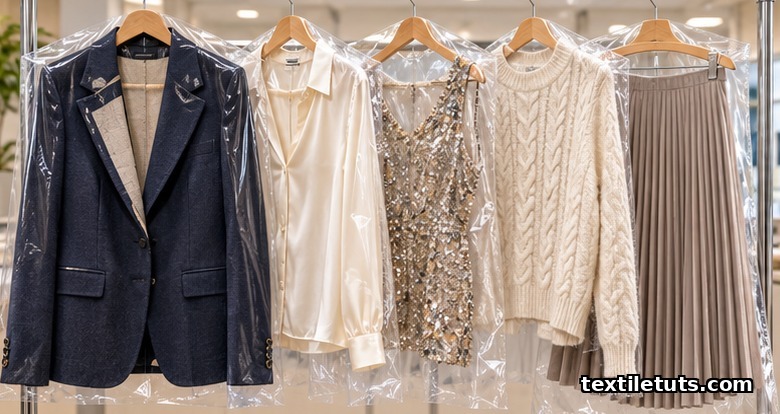
- Any garment labeled “dry clean only”: The phrase “dry clean only” on a care label is a legal instruction, not a suggestion. Manufacturers use this label when water-based cleaning risks damaging the garment — either through shrinkage, distortion, or color bleeding. Ignoring this label voids most manufacturer warranties and care guarantees.
- Structured garments — suits, blazers, coats: The internal construction of tailored garments includes interfacing, canvas padding, and sometimes horsehair mesh that provides shape. Water immersion — even careful hand washing — causes these internal components to shrink, migrate, or lose their tension, permanently altering the garment’s fit and drape. A wool blazer’s interfacing shrinks by 3–5% in a single warm water wash at 40°C or above.
- Heavily embellished items: Beading, sequins, embroidery with loose threads, sequin-adjacent fabric, and decorative appliqués often use adhesives or stitches that cannot withstand water immersion. Solvent-based cleaning protects these embellishments while still cleaning the underlying fabric.
- Wool and cashmere knitwear: Animal fiber knitwear — especially fine-gauge knits, cable-knit sweaters, and cashmere — faces the highest felting risk in water-based washing. Scales on wool fibers begin to interlock and bind at water temperatures above 30°C (86°F), with agitation accelerating the felting process. Dry cleaning eliminates this risk entirely. Research from the IWTO confirms that controlled dry cleaning maintains wool fiber dimensions within ±0.5% of original measurements across repeated cleaning cycles.
- Silk garments: Silk loses up to 20% tensile strength when wet, making it vulnerable to distortion from mechanical agitation in washing machines. Dry cleaning’s gentle tumbling action with solvent maintains silk’s luster and structural integrity. Sheer silk fabrics are particularly susceptible to permanent distortion from improper washing. For more details, see our complete silk care guide.
- Pleated garments: Professional cleaners use specialized pressing equipment to restore and maintain precise pleats — in sun dresses, formal trousers, and skirts. Home washing flattens pleats through water absorption and mechanical tumbling, and attempts to re-press them often produce inferior results compared to professional finishing.
Which Clothes Don’t Need Dry Cleaning (Despite the Label)?
Consumer confusion around care labels costs garment owners significant money annually in unnecessary professional cleaning. Understanding when “dry clean only” is a genuine requirement versus a manufacturer’s legal safeguard helps optimize cleaning budgets without risking garment damage. Many times, the care label symbol guide distinguishes between “dry clean only” (mandatory) and “dry clean recommended” (advisory).
- “Dry clean recommended” vs. “dry clean only”: These phrases carry different legal weight. “Dry clean only” is a binding instruction; “dry clean recommended” is advisory. Many manufacturers use “dry clean only” as a conservative default to protect themselves from consumer complaints about home-washing damage, even when the garment could technically withstand careful hand washing.
- Unstructured viscose blouses: Viscose (rayon) is a semi-synthetic fiber with poor wet strength, making it prone to misshaping in washing machines. However, carefully hand washing unstructured viscose garments in cold water with a gentle detergent is often feasible. The garment’s lack of internal structure (no interfacing, canvas, or padding) means there is less to damage. That said, dry cleaning remains the safer choice for expensive viscose garments.
- Some unstructured wool knits: Not all wool requires professional cleaning. Unstructured wool knits — simple pullovers without complex internal construction — can often be carefully hand washed in cold water (below 30°C) with a wool-specific detergent. Agitation must be minimized: gently squeeze the garment through the water rather than rubbing or wringing. Reshape while damp and dry flat. See our guide to washing wool sweaters at home for step-by-step instructions. Structured wool garments with canvassed interfacing should still go to the cleaners.
- Cotton labeled “dry clean only”: This is uncommon because cotton almost always tolerates machine washing. If you encounter a cotton garment with this label, it may indicate the presence of a decorative element (beading, embroidery, fragile trim) rather than a problem with the cotton itself. Inspect the garment carefully and address the embellishment rather than assuming the entire garment requires dry cleaning.
Cost and Frequency Considerations
Dry cleaning is an investment in garment longevity. Understanding optimal cleaning frequency prevents both premature garment retirement from over-cleaning and odor/appearance issues from under-cleaning. Proper storage between cleanings also extends garment life — see our proper garment storage techniques for recommendations.
Optimal dry cleaning frequency for suits and blazers: Most tailored suits require dry cleaning only 2–4 times per year, or approximately every 3–6 months of regular wear. Between professional cleanings, brush the jacket after each wearing using a clothes brush to remove surface dust and loose fibers — this alone dramatically extends the time between cleanings. Air the jacket for 24 hours after wearing before returning it to the closet; this allows moisture from perspiration to evaporate. Spot-clean minor stains immediately with a damp cloth rather than waiting for full cleaning. Following this regimen, a quality wool suit should last 5–7 years of regular wear; cleaning too frequently (monthly or more) reduces this lifespan significantly.
The true cost comparison: A single dry cleaning trip for a two-piece suit might cost $10–25 depending on your market. Replacing a quality wool suit after premature damage from improper washing costs $150–600 or more. The math is straightforward: dry cleaning a quality wool blazer four times yearly at $15 per cleaning costs $60 annually, while replacing a shrunk or damaged blazer costs ten times that amount. For high-value garments — suits, structured coats, embellished evening wear, and fine knitwear — professional cleaning is demonstrably cost-effective.
Alternating cleaning methods: For appropriate garment types, alternating between professional dry cleaning and careful home hand washing can extend overall garment life while managing costs. This approach works best for wool knitwear: dry clean at the start and end of the season, and hand wash at home during the middle of the season if the garment needs freshening but isn’t heavily soiled. Always allow garments to fully rest and air between cleanings — wearing the same wool sweater two days in a row accelerates odor retention and fiber stress.
Frequently Asked Questions
Can dry cleaning shrink a wool sweater?
No — professionally performed dry cleaning does not shrink wool. The absence of water eliminates the felting risk. Dry cleaning is the recommended method for any wool garment at risk of felting.
Why does “dry clean only” sometimes mean you can still hand wash?
Many manufacturers label garments “dry clean only” as a conservative precaution to protect themselves from claims if a consumer damages a garment by washing. Unstructured garments made from hand-washable fibers (some wools, some silks) can often be carefully hand washed. The safest approach is to follow the label for expensive garments.
Is dry cleaning safe for shrink-prone fabrics?
Yes — dry cleaning is the safest option for any fabric with high shrinkage risk, including wool, cashmere, silk, and viscose. The chemical solvent and controlled pressing process maintain original dimensions.
How often should I dry clean suits and blazers?
Most suits need dry cleaning only 2–4 times per year. Brush after each wear, air for 24 hours between wearings, and spot-clean stains promptly. Over-cleaning accelerates fabric wear.
References
- International Wool Textile Organisation (IWTO). IWTO — Global Authority for Wool Textile Standards.
- American Association of Textile Chemists and Colorists (AATCC). AATCC — Textile Testing Standards and Methods.
- ISO. (2012). ISO 3758 — Textiles and Textile Products: Simple Guide to Care Symbol System.
- Wikipedia. (2024). dry cleaning definition and history.
- Wikipedia. (2024). fabric shrinkage mechanisms.
- Wikipedia. (2024). care label regulations.


