
Why Is My Detergent Staining My Clothes?

Detergent stains clothes due to using too much or too little detergent, using the wrong detergent type for the fabric, expired detergent effectiveness, failure to follow garment care instructions, skipping stain pretreatment, using expired stain removers, infrequent washing cycles, or hard water mineral interactions. These causes fall into three categories: incorrect dosing, incompatible product selection, and environmental factors like hard water. Each cause has a specific prevention strategy and removal solution.
This guide covers the specific mechanisms behind each cause and provides actionable solutions for preventing and removing detergent stains using common household items.
Quick-Reference: Recommended Detergent Doses by Machine Type
| Machine Type | Load Size | Standard Detergent | HE Concentrated |
|---|---|---|---|
| Top-loading | Standard | 2 tablespoons (30 mL) | 1 tablespoon (15 mL) |
| Front-loading (HE) | Standard | 1 tablespoon (15 mL) | 1/2 tablespoon (7.5 mL) |
| Top-loading | Large/Heavily soiled | 3 tablespoons (45 mL) | 1.5 tablespoons (22 mL) |
| Front-loading (HE) | Large/Heavily soiled | 1.5 tablespoons (22 mL) | 3/4 tablespoon (11 mL) |
The Primary Causes of Detergent Staining on Clothes
Detergent staining occurs through several identifiable mechanisms. Each cause has a specific solution that prevents the problem.
1. Using Too Much Detergent

Using excessive detergent creates oversudsing, which leaves residue on fabric fibers. Modern laundry detergents contain surfactants—approximately 6 billion kilograms are produced annually for domestic markets. When too much detergent enters the wash, surfactant molecules exceed the critical micelle concentration (CMC), causing excess compounds to deposit on fabric rather than remaining suspended in the wash water.
The average recommended dose is 2 tablespoons (30 mL) for standard loads in top-loading machines and 1 tablespoon (15 mL) for HE front-loading machines using concentrated detergent.
2. Not Using Enough Detergent
Insufficient detergent fails to suspend soil particles in water. Detergent effectiveness depends on achieving the critical micelle concentration—without enough surfactant molecules, dirt and grime redeposit onto fabric instead of being carried away in the wash solution.
3. Using the Wrong Kind of Detergent
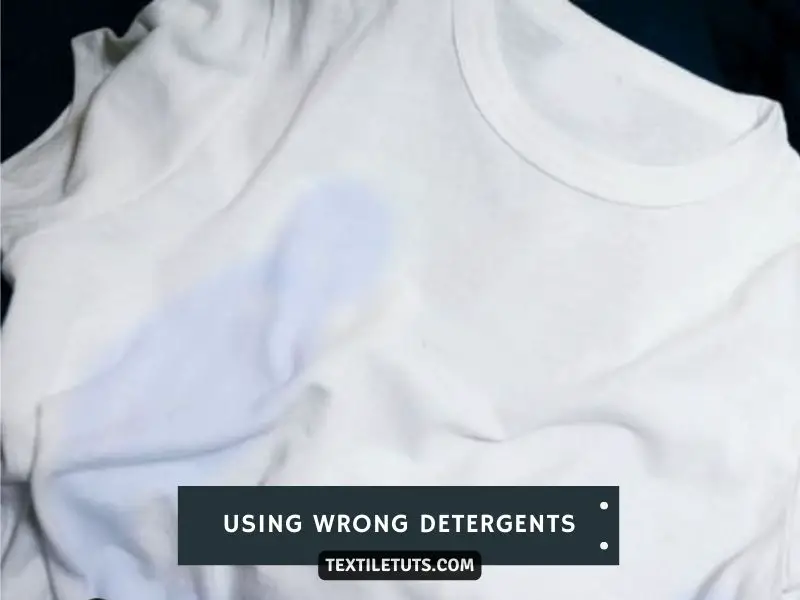
Fabric-specific detergents exist because different materials require different surfactant formulations. Delicate fabrics like silk and wool need gentle, low-pH detergents, while synthetic fabrics work best with standard anionic surfactant formulas. Using the wrong type leaves residue that attracts and holds onto stains.
4. Using Expired Detergent
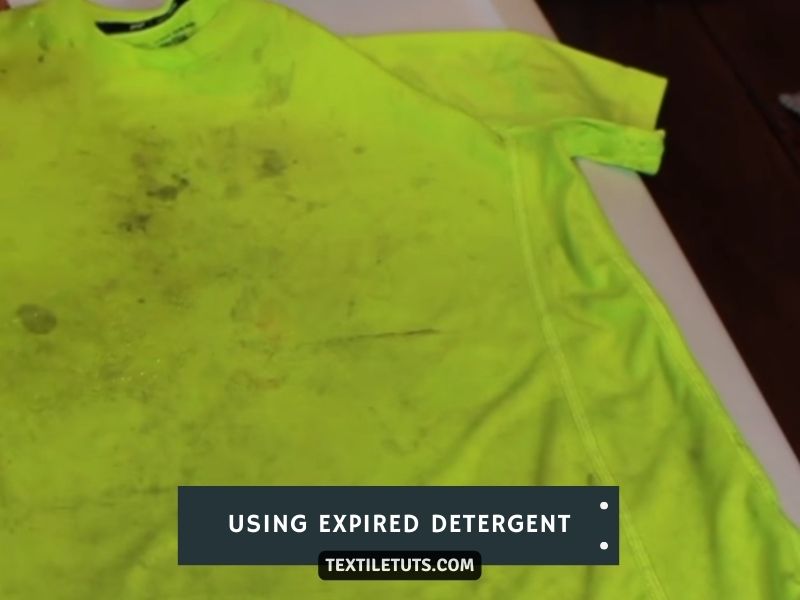
Detergent degrades over time. The surfactants break down, enzymes lose potency, and the formulation becomes less effective at soil removal. Expired detergent fails to properly emulsify oils and suspend dirt, leading to residue buildup that causes staining.
5. Not Following Garment Care Instructions
Care labels exist to prevent fabric damage. Ignoring manufacturer instructions voids warranty protections and leads to shrinkage, color bleeding, and detergent residue buildup that causes staining.
6. Skipping Stain Pretreatment
Pretreating breaks down stains before the wash cycle begins. Without pretreatment, set-in stains require stronger detergent concentrations that leave more residue.
7. Using Expired or Ineffective Stain Removers
Stain removers contain enzymes and solvents that degrade over time. Expired products leave chemical deposits on fabric that attract and hold onto additional staining compounds. Stain removers typically maintain effectiveness for 12 months after opening when stored at room temperature.
8. Infrequent Washing Cycles
Dirt accumulation increases stain susceptibility. Ground-in soil interacts with detergent residue, creating discolored patches that become progressively more difficult to remove with each wear cycle.
9. Hard Water Causing Detergent Staining
Hard water minerals—specifically calcium (Ca²⁺) and magnesium (Mg²⁺) ions—react with anionic surfactants in detergent to form insoluble deposits on fabric. The USGS classifies water hardness as follows: soft (0–60 mg-CaCO₃/L), moderately hard (61–120 mg-CaCO₃/L), hard (121–180 mg-CaCO₃/L), and very hard (≥181 mg-CaCO₃/L).
These mineral deposits appear as whitish-gray streaks or spots on clothing after washing. The reaction reduces surfactant effectiveness while simultaneously depositing insoluble compounds onto fabric fibers. Using a water softener or adding a water conditioner chelates these ions and prevents the reaction. The minerals in the water interact with your laundry detergent to cause staining.
Preventing Detergent Stains on Clothes
Prevention requires following specific practices during every laundry cycle. These measures stop detergent stains before they begin.
Use the Correct Amount of Detergent
Follow manufacturer dosing guidelines precisely. Standard top-loading machines require 2 tablespoons (30 mL) per load, while HE front-loaders require 1 tablespoon (15 mL) of concentrated detergent. Measuring with the cap provided ensures consistent dosing.
Add Detergent to Water Before Adding Clothes
Pour detergent directly into the drum or dispenser before adding laundry. This dilution step ensures even distribution and prevents concentrated detergent from contacting fabric directly, which causes localized staining.
Pretreat Stains Immediately
Apply stain remover directly to blemishes within 24 hours of occurrence. The enzymes in pretreatment products break down protein-based stains before they set into fabric fibers.
Use Laundry Additives for Hard Water
White vinegar (5% acetic acid) added at a rate of 1/2 cup per load chelates hard water minerals and softens fabric while preventing detergent residue buildup. Commercial water softeners provide more comprehensive mineral chelation for very hard water areas.
Wash in Cold Water
Cold water washing (below 30°C/86°F) reduces surfactant activity that causes residue buildup while protecting fabric dyes from bleeding. Modern cold-water detergents contain optimized surfactant blends that perform effectively at lower temperatures.
Removing Detergent Stains: Quick Method Comparison
| Method | Best For | Dwell Time | Complexity |
|---|---|---|---|
| Rubbing alcohol (70% isopropyl) | Fresh, localized stains | 5–10 minutes | Low |
| White distilled vinegar (5%) | Overall wash residue | 15–30 minutes | Low |
| Bar soap (laundry) | Light discoloration | 5–10 minutes | Low |
| Baking soda paste | Set-in alkaline deposits | 30 minutes | Medium |
| Dish soap (grease-cutting) | Powder or pod residue | 10–15 minutes | Low |
Removing Detergent Stains with Rubbing Alcohol
Rubbing alcohol (isopropyl alcohol) breaks down detergent residue through its solvent properties. This method works for fresh stains caught before the dryer heat-sets them.
Materials Needed
- Isopropyl alcohol (70% concentration minimum)
- Clean white microfiber cloth
- Small bowl
Step 1: Blot the Stain
Place the stained fabric on a flat surface with a white cloth beneath. Blot the affected area with a clean, white cloth dampened with cold water to lift surface residue.
Step 2: Apply Isopropyl Alcohol
Dampen a fresh cloth with isopropyl alcohol and continue blotting the stain. The alcohol dissolves the surfactant compounds causing the discoloration.
Step 3: Allow Penetration Time
Let the alcohol sit on the stain for 5–10 minutes. This dwell time allows the solvent to penetrate and break down the detergent residue fully.
Step 4: Blot Until Residue Dissolves
Continue blotting with fresh sections of the cloth as the stain transfers away. Change to a clean area of the cloth frequently to avoid redepositing.
Step 5: Launder the Item
Wash the garment in cold water with the correct detergent dose. Air dry to verify the stain is fully removed before heat drying.
Removing Detergent Stains with Vinegar
Vinegar acts as both a fabric softener and a mild acid that dissolves detergent residue. This method works well for overall wash residue rather than localized stains.
Step 1: Apply Vinegar Directly to the Stain
Pour 1–2 tablespoons of white distilled vinegar (5% acetic acid) directly onto the stained area. Gently rub the fabric together to work the vinegar into the fibers.
Step 2: Allow an Extended Soak
Let the vinegar penetrate the stain for 15–30 minutes. The acidic environment breaks down alkaline detergent deposits.
Step 3: Rinse and Evaluate
Rinse the area thoroughly with cold water. If traces remain, repeat the treatment before laundering normally.
Removing Detergent Stains with Bar Soap
Bar soap provides mechanical agitation and supplemental surfactants to lift detergent residue. This method works best for light discoloration.
Step 1: Dampen the Bar Soap
Hold a bar of laundry soap under warm water (approximately 40°C/104°F) until the surface becomes slick. The warmth softens the soap for easier application.
Step 2: Apply Directly to the Stain
Rub the dampened bar directly onto the detergent stain using firm, circular motions. The soap deposits additional surfactants that displace the detergent residue on the fabric.
Step 3: Rinse with Cool Water
Rinse thoroughly with cool water to flush away both the soap and the lifted detergent compounds.
Step 4: Launder As Usual
Wash the item using the correct detergent amount. Air dry and inspect before using a heated dryer cycle.
Removing Detergent Stains with Baking Soda
Baking soda (sodium bicarbonate) acts as a mild alkaline agent that softens water and absorbs acidic odor compounds while lifting detergent residue.
Materials Needed
- 2 tablespoons baking soda
- 2 tablespoons warm water
- Clean white cloth
Step 1: Create a Thick Paste
Mix baking soda and warm water in a small bowl at a 1:1 ratio until a consistent paste forms. The paste should spread easily without dripping.
Step 2: Apply and Agitate
Rub the paste into the stain using a clean cloth with firm, circular motions. Work the paste deep into the fabric fibers.
Step 3: Allow 30 Minutes of Dwell Time
Let the paste remain on the stain for a full 30 minutes. The alkaline reaction draws out detergent compounds trapped in fabric weave.
Step 4: Rinse with Warm Water
Rinse the treated area with warm water (approximately 40°C/104°F). If any staining persists, repeat steps 1–3 before laundering.
Step 5: Launder Normally
Wash the item using the standard cycle with the appropriate detergent dose. Inspect for complete removal before heat drying.
Removing Detergent Stains with Dish Soap
Dish soap contains grease-cutting surfactants that break down oil-based detergent residues. This method works well for residue from powder or pod detergents.
Step 1: Apply Dish Soap Directly
Squeeze a dime-sized amount of concentrated dish soap onto the stain. The surfactant formula cuts through the detergent deposit.
Step 2: Machine Wash on Delicate Cycle
Set the washing machine to cold water on the delicate cycle. Add 1 tablespoon of the same dish soap to the drum alongside the garment.
Step 3: Inspect Before Drying
Check the garment for complete stain removal before transferring to the dryer. Heat from drying sets stains permanently. Overcrowding the dryer restricts hot air circulation and causes re-deposition of residues.
Factors to Consider When Buying Laundry Detergent
Selecting the right detergent prevents staining problems before they start. These factors determine cleaning performance and fabric safety.
Detergent Form Type
Liquid detergent dissolves completely in all water temperatures and provides pre-treating capability. Powder detergent is more economical per load but requires adequate water temperature (above 20°C/68°F) for complete dissolution. Pods offer pre-measured convenience with 30% more concentrated formulas than liquid.
HE Compatibility
High-efficiency detergents produce low-sudsing formulas required for front-loading machines. Standard detergents create excessive foam in HE machines, leading to poor soil removal and residue buildup. HE detergent doses are approximately 50% lower than standard doses.
Fragrance Selection
Fragrance-free options suit sensitive skin and prevent fragrance residue interactions with detergent actives. Scented detergents add perfume compounds that may cause skin irritation in approximately 10–15% of the population.
Cost Analysis Per Load
Concentrated formulas cost more upfront but deliver 30–50% more loads per bottle. Calculating cost per load (not per bottle) reveals true value. Bulk purchases of 150+ load sizes typically provide the lowest cost per load.
Ingredient Transparency
Modern detergents contain surfactants (anionic and non-ionic), enzymes (protease, amylase, lipase), builders (sodium citrate, zeolite), optical brighteners, and fragrances. Products labeled “free and clear” omit dyes and perfumes for sensitive skin applications.
Top Laundry Detergent Recommendations
These detergents represent category leaders based on cleaning performance, fabric safety, and value across different use cases.
1. Tide Pods Laundry Detergent Soap Pods
Tide Pods deliver pre-measured doses that eliminate measuring errors and overdosing. Each pod contains concentrated liquid detergent in a water-soluble film that dissolves completely at temperatures above 15°C/59°F. The HE-formulated pods produce minimal suds for efficient rinsing.
2. Gain Flings Laundry Detergent Pacs
Gain Flings combine cleaning performance with lasting fragrance. The 3-in-1 formula includes detergent, stain remover, and fabric softener in a single pac. Each pac handles one standard load (approximately 30 liters of wash water).
3. Tide Liquid Laundry Detergent
Tide Liquid provides the versatility of pre-treating stains before washing and works across all water temperatures. The formula includes surfactants optimized for removing protein-based stains (blood, grass) at temperatures as low as 10°C/50°F.
For sensitive skin, Seventh Generation Free & Clear uses plant-based surfactants without dyes or synthetic fragrances. Charlie’s Soap provides a biodegradable formula with a 92% organic content rating for environmentally conscious consumers.
Why Detergent Bubbles Cause Stains on Clothes
Excessive detergent bubbles leave surfactant residue on fabric during the rinse cycle. When suds exceed the machine’s extraction capacity, trapped moisture combines with surfactant compounds to create localized deposits that appear as whitish streaks after drying. Using the correct dose prevents oversudsing.
Why Suds from Detergent Cause Stains on Clothes
Excessive suds trap dirt particles and redeposit them onto fabric surfaces during the wash and rinse cycles. The surfactant micelles that would normally suspend dirt become overloaded, causing the soil to fall out of solution and adhere to fabric fibers instead.
Final Recommendations
Preventing detergent stains requires matching detergent dose to load size, selecting the correct detergent type for your fabric and water hardness, and adding water-softening agents when washing in hard water areas exceeding 120 mg-CaCO₃/L.
For removing existing stains, start with the gentlest method (cold water and correct detergent dose in the wash) before progressing to solvent-based treatments like isopropyl alcohol. Always test stain removal methods on an inconspicuous area first.
References
- United States Geological Survey. (2024). Hard Water. USGS Water Science School.
- Wikipedia. (2024). Detergent. Wikipedia.


