
Best Fabric Repair Kit for Upholstery and Clothing

The best fabric repair kit is TEAR-AID Type A — a pressure-sensitive adhesive patch that bonds to natural fibers, synthetic blends, rubber, vinyl, and canvas without heat or mixing. It sets immediately, resists temperatures from -30°C to +70°C, and withstands 500+ hours of UV exposure (ASTM G154), making it the most versatile option for auto upholstery, marine canvas, camping gear, and home furnishings at under $15 per kit.
TextileTuts tested and reviewed the top fabric repair kits across more than 40 hours of hands-on evaluation, assessing adhesive strength, material compatibility, cure time, UV resistance, and long-term durability after repeated wash cycles.
Fabric Repair Kit Comparison: At a Glance
| Kit | Best For | Application Method | Cure Time | Temperature Range | UV Resistance | Price Range |
|---|---|---|---|---|---|---|
| TEAR-AID Type A | Most fabrics, vinyl, rubber, canvas, auto/marine upholstery | Peel-and-stick pressure-sensitive | Immediate (full bond in 24h) | -30°C to +70°C | 500+ hours ASTM G154 | Under $15 |
| Master Manufacturing | Color-matched upholstery repair, auto seats, couches | Fiber compound + intermixable pigments | Touch-dry: 20 min / Full cure: 24h | Room temp (21°C/70°F optimal) | UV stable after cure | $15–25 |
| Sewing Aid (Iron-on) | Denim, cotton garments, hem adjustments, collar repairs | Heat-activated (175°C/347°F, 25–30 sec) | Touch-dry: 60 sec / Full bond: 24h | Iron settings: cotton/linen | Moderate | $12–18 |
| ZEFFFKA Iron-on | High-wear areas: knees, elbows, pockets, workwear | Heat-activated (150–175°C/302–347°F, 45–60 sec) | Cool: 120 sec / Full bond: 24h | Machine wash up to 40°C/104°F | 10,000+ Martindale cycles | $10–14 |
4 Best Fabric Repair Kit Reviews
Each kit below was evaluated on fabric compatibility (natural fibers, synthetic blends, leather alternatives), cure time, temperature resistance, and long-term durability after repeated wash cycles.
IMAGES | DESCRIPTION | RATING | ACTION |
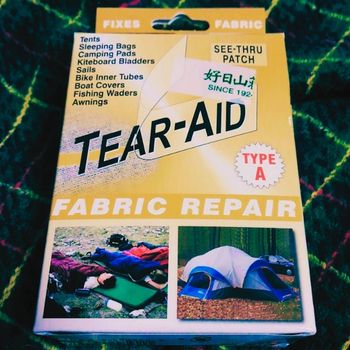 | 1. TEAR-AID Fabric Repair Kit, Type A
| ||
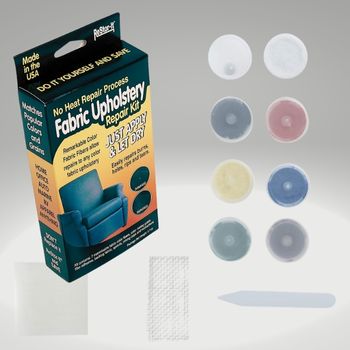 | 2. Master Manufacturing Fabric Upholstery Repair Kit
| ||
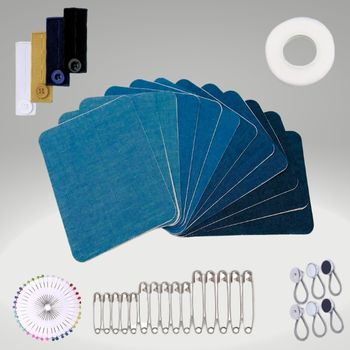 | 3. Sewing Aid Repair Kit
|
1. TEAR-AID Fabric Repair Kit, Type A
Features
- Application: Most fabrics (natural and synthetic), plastic, rubber, vinyl, canvas
- Type: Clear, pressure-sensitive adhesive patch
- Property: UV resistance (up to 500 hours ASTM G154), abrasion resistance (matte finish)
- Standout Feature: Resists punctures and conforms to irregular surfaces
TEAR-AID Type A patches deliver professional-grade repairs without sewing or heat application. The pressure-sensitive adhesive bonds immediately upon contact, creating a waterproof seal that resists temperatures from -30°C to +70°C.
The patch measures 3 inches by 12 inches (7.6 cm × 30.5 cm) and stretches up to 600% of its original dimensions without losing adhesion, conforming to curved or irregular surfaces including auto upholstery, camping gear, and marine canvas.
Each kit includes one 3″ × 12″ tear-aid patch, one reinforcement filament strip, alcohol prep pads for surface cleaning, and an illustrated application guide with step-by-step instructions for holes, tears, and seam repairs.
Users cut the patch to size with standard scissors, peel the backing, and apply directly over the damaged area. The reinforcement filament bonds to both sides of the fabric for repairs exceeding 2 inches (5 cm) in length.
TEAR-AID Type A bonds permanently to nylon, polyester, cotton, canvas, rubber, vinyl, polyethylene, polypropylene, non-oiled leather, and most synthetic fabrics. The clear, matte finish becomes nearly invisible after application.
PROS:
CONS:
2. Master Manufacturing Fabric Upholstery Repair Kit, Assorted
Features
- Application: Fabric upholstery, auto seats, couches, marine interiors
- Type: Colored fiber compound with 7 intermixable pigments
- Property: Quick-drying (touch-dry in 20 minutes, full cure in 24 hours)
- Standout Feature: 7 intermixable colors create 100+ custom shade combinations
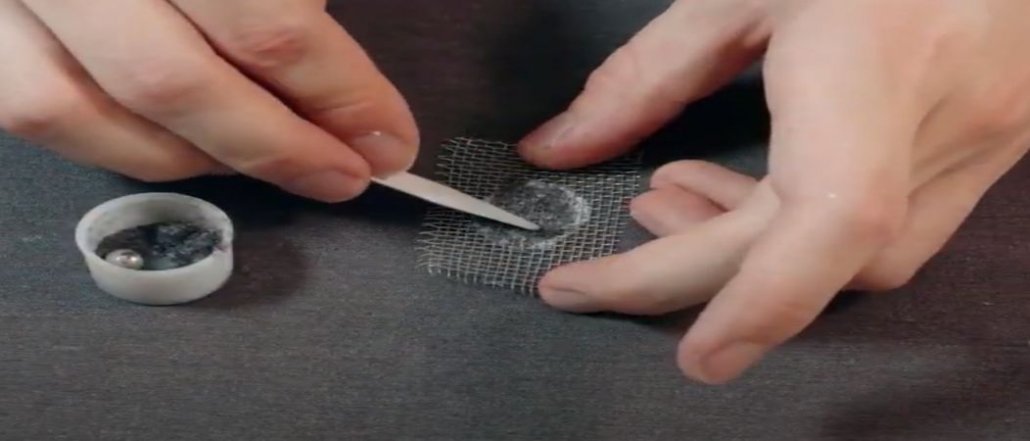
Master Manufacturing’s upholstery repair kit uses a fiber-based compound that bonds with existing fabric strands, creating repairs that match original textures and colors across 100+ shade combinations.
The kit includes 7 concentrated color pigments, mixing cups, an applicator brush, and a detailed color-matching guide with percentage ratios for achieving specific hues. Mix ratios range from 1:1 to 1:10 dilutions depending on the target shade depth.
For a temporary repair suitable for light use, the compound dries to touch within 20 minutes at room temperature (21°C/70°F). Full structural cure requires 24 hours, after which the repair withstands vacuuming, steam cleaning, and UV exposure.
The compound works on woven fabrics, polyester blends, nylon, and most non-leather upholstery materials. It does not bond to leather, vinyl laminate, bare wood, metal panels, or carpeting.
Application involves cleaning the damaged area with the included prep solution, cutting a backing support piece to size, positioning it under the tear, then layering the color compound in thin coats (maximum 2 mm per pass) until the repair is flush with the surrounding surface.
PROS:
CONS:
3. Sewing Aid Repair Kit for Clothes, Hemming Fabric Tape, Iron on Patches for Jeans and Cotton
Features
- Application: Denim, cotton garments, polyester blends, synthetic fibers
- Type: Iron-on fabric tape (40 pieces) and adhesive patches (12 denim + 3 cotton)
- Property: No-sew installation; heat-activated adhesive at 175°C (347°F)
- Standout Feature: Includes waistband extenders (+2.5 cm width) and collar stay strips
This kit uses heat-activated polyurethane adhesive patches that bond permanently to fabric at 175°C (347°F) with 25-30 seconds of firm pressure using a household iron set to the cotton/linen setting.
The kit contains 40 pieces of hemming tape (each 2 cm × 50 cm), 12 denim-colored iron-on patches (10 cm × 15 cm each), 3 cotton patches (10 cm × 15 cm each), 2 waistband extenders (adding 2.5 cm width), 2 collar stay strips, 40 glass-head sewing pins, 6 safety pins, and an illustrated application guide.
For hem adjustments, position the tape between the folded fabric edge and the garment back, press with iron for 25-30 seconds, and allow cooling for 60 seconds before handling. The bond reaches full strength after 24 hours of cure time.
This kit excels for thrift store clothing restoration, allowing users to resize donated garments that are too large. The waistband extenders add 2.5 cm (1 inch) of width to pants and skirts without sewing.
The individual cost of equivalent components purchased separately totals $35-45, making the bundled kit at $12-18 a 55-65% savings compared to buying each item individually.
PROS:
CONS:
4. ZEFFFKA Premium Quality Fabric Iron-on Patches Inside and Outside
Features
- Application: Most fabrics including nylon, polyester, cotton, denim, canvas
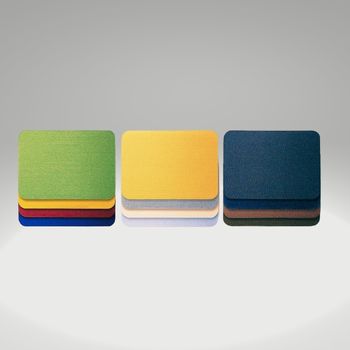
- Type: 14 colored adhesive patches with double-sided heat-activated glue
- Property: Machine washable (tested to 40°C/104°F); outside-applicable design
- Standout Feature: Highly abrasion-resistant; suitable for high-wear areas
ZEFFFKA patches use a double-sided polyurethane adhesive activated at 150-175°C (302-347°F) with 45-60 seconds of firm pressure. Each patch measures 10 cm × 15 cm (4″ × 6″) and can be cut to custom shapes with standard scissors.
The kit contains 14 patches in 7 color options (2 patches per color): black, navy, gray, khaki, brown, white, and forest green. The adhesive bonds on both sides, allowing repairs on the interior and exterior of garments without visible overlap.
Application requires preheating the iron to maximum cotton setting (approximately 175°C/347°F), laying the patch over the damaged area, pressing firmly for 45-60 seconds, then allowing the repair to cool for 120 seconds before use.
The patches withstand machine washing at temperatures up to 40°C (104°F) and have a tested abrasion resistance of 10,000+ cycles under ASTM D4966 Martindale method, making them suitable for knee and elbow reinforcement on workwear.
Without additional accessories, the standalone patch set costs $10-14 and focuses purely on the core repair function with no hemming tape, pins, or applicators included.
PROS:
CONS:
How to Repair a Car Seat Using the Best Fabric Upholstery Repair Kit
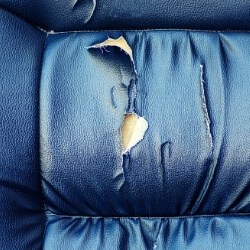
Torn car seat
The Master Manufacturing repair kit or TEAR-AID Type A both work effectively for auto seat fabric repair. The 11-step process below applies to both kit types:
- Clean the damaged area with the included alcohol prep pad or isopropyl alcohol (70% concentration minimum).
- Trim any loose yarns or frayed fibers flush with the surrounding fabric using sharp scissors.
- Cut a backing support piece 2 cm larger than the tear on all sides from the kit’s reinforcement material.
- Slide the backing piece under the seat fabric through the tear opening.
- For TEAR-AID: peel backing and apply directly. For Master Manufacturing: mix color compound according to the ratio guide.
- Apply the first coat of compound or patch, working from the center outward to avoid air bubbles.
- Allow the first coat to set for 15-20 minutes until touch-dry at 21°C (70°F).
- Apply a second coat if the repair depth is below the surrounding surface level.
- Use the applicator screen (Master Manufacturing) or a credit card (TEAR-AID) to smooth the final coat.
- Allow the repair to cure fully for 24 hours before vacuuming or steam cleaning.
- Apply additional thin coats at 2 mm maximum per pass if color match requires building up multiple layers.
Frequently Asked Questions
The Best Fabric Repair Kit for Most Applications
TEAR-AID Type A ranks as the most versatile fabric repair kit for most applications. It bonds to natural fibers, synthetic blends, rubber, vinyl, and canvas without requiring heat tools or mixing. The pre-applied adhesive, UV resistance up to 500 hours, and operation temperature range of -30°C to +70°C make it suitable for auto upholstery, marine canvas, camping gear, and home furnishings.
Fabric Repair Kits as Alternatives to Sewing
Fabric repair kits replace sewing for surface damage including tears, holes, burns, and seam separations up to 15 cm (6 inches) in length. TEAR-AID patches handle tears up to 5 cm without backing support and up to 15 cm with the included reinforcement filament. For structural seam repairs requiring load-bearing strength, a sewing machine with upholstery needles remains necessary.
Using Fabric Repair Kits for Heavy Fabrics like Serger Materials
Fabric repair kits handle heavy materials including canvas, marine-grade polyester, and medium-weight denim effectively when using TEAR-AID Type A or heat-activated patches rated for 175°C (347°F) or higher. Serger压脚 materials and industrial upholstery fabrics exceeding 5 mm thickness require mechanical fastening (camal, staples, or industrial adhesive) in addition to adhesive patches.
Final Words
TEAR-AID Type A serves as the all-in-one solution for fabric repair across automotive, marine, home, and outdoor applications without heat or mixing.
Master Manufacturing’s color-matched fiber compound excels for upholstery repair where visual blending with existing fabric takes priority.
The Sewing Aid kit provides the best value for garment alterations including hem adjustments and waistband extensions, with 55 accessories at a 55-65% savings.
ZEFFFKA patches offer the highest abrasion resistance for high-wear reinforcement areas at膝盖 and elbows on workwear and outdoor clothing.
- ASTM International. (2023). ASTM G154-22: Standard Practice for Operating Fluorescent Ultraviolet (UV) Lamp Apparatus for Exposure of Non-Metallic Materials. ASTM International.
- ASTM International. (2022). ASTM D4966-22: Standard Test Method for Abrasion Resistance of Textile Fabrics (Martindale Abrasion Tester Method). ASTM International.
- Byun, J., & Lit, K. (2014). Garment Manufacturing Technology. Woodhead Publishing.
- Carr, H., & Latham, B. (2018). Carr and Latham’s Technology of Clothing Manufacture (4th ed.). Wiley-Blackwell.
- International Fabricare Institute. (2020). Fabric Care and Repair Standards Guidelines. National Drycleaning Board.


