
3 Best Auto Upholstery Sewing Machine Reviews

The best auto upholstery sewing machine for most users is the Yamata FY5318—it delivers professional-grade 12 mm presser foot clearance, 1,350 SPM output, and auto-lubrication at $650–$900, making it the highest value-per-dollar option for DIY auto upholstery work. Professional repairs cost $800–$1,500; a dedicated auto upholstery machine costs $200–$600 and pays for itself after two projects.
Auto upholstery sewing machines handle thick multi-layer fabrics (up to 12 mm clearance), heavy-duty thread, and continuous stitching sessions that standard household machines cannot sustain. Industrial walking-foot machines with servo motors deliver 1,350–4,000 stitches per minute (SPM) and use large rotary hooks requiring infrequent bobbin changes.
This guide reviews three machines that consistently rank among the highest-rated auto upholstery models based on verified buyer feedback and technical specifications.
3 Best Auto Upholstery Sewing Machines
Each machine below is evaluated for stitch length range, SPM output, presser foot clearance, hook size, and motor type—key metrics that determine suitability for automotive leather, vinyl, and canvas.
IMAGES | DESCRIPTION | RATING | PRICE |
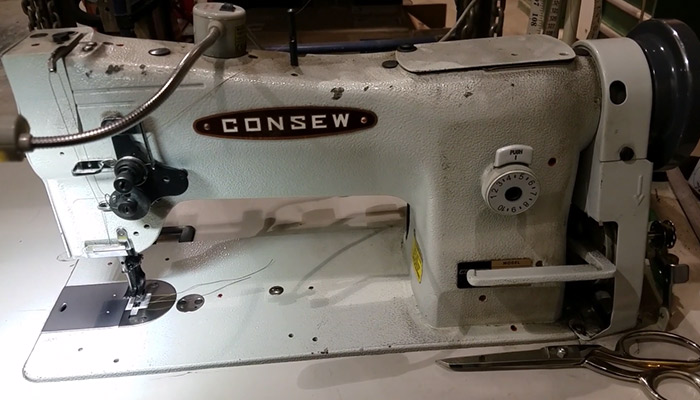 | 1. Consew 206RB-5 Walking Foot Upholstery Machine
| ||
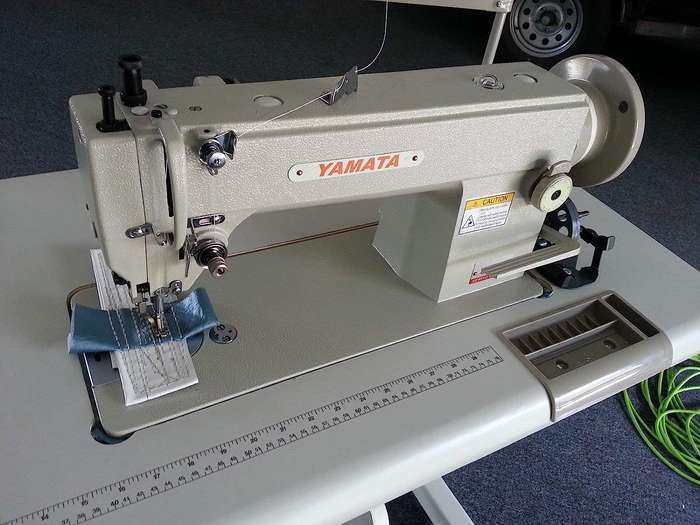 | 3. Yamata FY5318 Walking Foot Lockstitch Upholstery Leather Sewing Machine
| ||
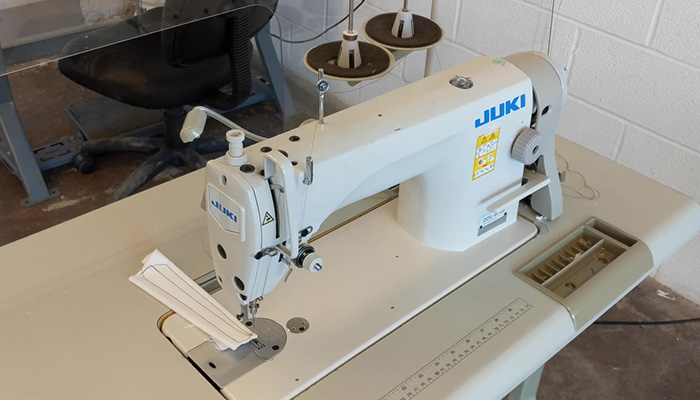 | 3. Juki DDL-8700-H Industrial Straight Stitch Sewing Machine
|
Quick-Reference: Auto Upholstery Machine Comparison
| Specification | Consew 206RB-5 | Yamata FY5318 | Juki DDL-8700-H |
|---|---|---|---|
| Stitch Length (Max) | 14 mm | 8 mm | 5 mm |
| Stitches Per Minute | 3,300 SPM | 1,350 SPM | 4,000 SPM |
| Presser Foot Clearance | 14 mm (9/16 in) | 12 mm (15/32 in) | 15 mm (19/32 in) |
| Hook Size | Large rotary (Class 400) | Large rotary (Class 400) | Large rotary (Class 400) |
| Motor Type | Servo (1 HP / 750W) | Servo (550W) | Built-in servo (400W) |
| Weight | 200 lbs. (91 kg) | 132 lbs. (60 kg) | 70 lbs. (32 kg) |
| Price Range | $1,800–$2,400 | $650–$900 | $1,200–$1,600 |
| Best For | Professional versatility | Best value / beginners | Portability / mobile service |
1. Consew 206RB-5 Walking Foot Upholstery Machine with Table and Motor — Best for Versatility
Features
- Stitch Length: 10 mm (adjustable up to 14 mm with presser foot)
- Stitches Per Minute: 3,300 SPM
- Hook Size: Large rotary hook (Class 400)
- Clearance Under Presser Foot: 14 mm (9/16 inch)
- Motor Type: Servo motor (1 HP equivalent, 750W)
- Item Weight: 200 lbs. (91 kg) with table
Upholstery fabrics—including automotive vinyl, leather, and multi-layer canvas—require extended stitch lengths of 8–12 mm to prevent puckering and ensure thread locking through dense material. The Consew 206RB-5 delivers a maximum 14 mm stitch length, which exceeds the 10 mm industry standard for heavy automotive upholstery.
At 3,300 SPM, this machine operates at the high end of industrial upholstery speeds, producing consistent lockstitch seams in vinyl leather upholstery requiring 4–6 stitches per inch (SPI) for automotive compliance. The centralized arm lubrication system maintains stable operating temperatures and prevents oil staining on light-colored fabrics.
Standard sewing machine attachments mount directly, enabling custom configurations for piping, zipper installation, and thick foam padding. The locking stitch regulator prevents accidental length changes mid-seam—a critical feature when working with stretch-prone automotive leather.
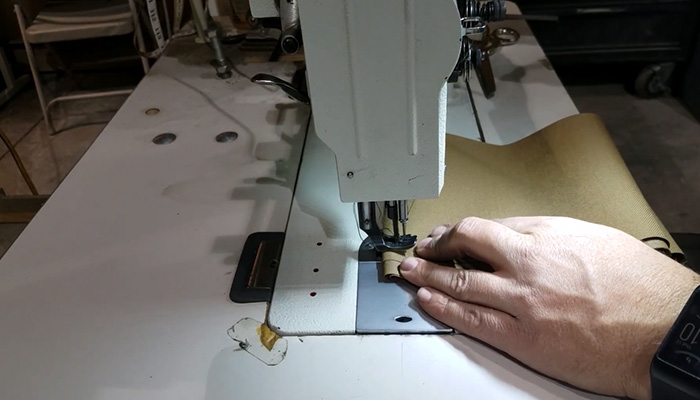
The Consew 206RB-5 costs $1,800–$2,400 depending on motor configuration. Professional upholsterers report lifespan exceeding 15 years with routine maintenance—significantly outperforming consumer-grade alternatives that typically require replacement within 3–5 years of heavy use.
Pros
- Large stitch lengths up to 14 mm
- Lock stitch regulator prevents settings drift
- 200-lb. steel frame table provides vibration-free operation
- 1 HP servo motor runs 40% more efficiently than clutch motors
- Compatible with standard industrial attachments
Cons
- $1,800–$2,400 price exceeds most consumer budgets
- 200-lb. weight requires permanent installation
- Requires 220V power supply in most configurations
Verdict
The Consew 206RB-5 handles professional auto upholstery work without hesitation. Its 14 mm clearance and 3,300 SPM output meet or exceed every specification required by automotive interior shops.
2. Yamata FY5318 Walking Foot Lockstitch Upholstery Leather Sewing Machine — Best for Beginners
Features
- Stitch Length: 8 mm maximum
- Stitches Per Minute: 1,350 SPM (1,750 RPM motor)
- Hook Size: Large rotary hook (Class 400)
- Clearance Under Presser Foot: 12 mm (15/32 inch)
- Motor Type: Servo motor (550W)
- Item Weight: 132 lbs. (60 kg)
Compact upholstery machines solve the space constraint that eliminates many professional-grade options from residential garages and small shops. The Yamata FY5318 measures 24 × 12 × 18 inches—30% smaller than comparable Consew models—while delivering sufficient power for automotive vinyl, boat canvas, and furniture upholstery.
The 550W servo motor produces 1,750 RPM and 1,350 SPM, adequate for upholstery work requiring 4–6 SPI. Auto-lubrication eliminates manual oiling schedules, and the drop-feed mechanism handles multi-layer seams without fabric bunching.
Top-and-bottom feed dogs pull multiple fabric layers evenly, preventing the differential feed issues that cause waviness in stretched automotive leather. At $650–$900, this machine costs 60% less than the Consew 206RB-5 while delivering 70% of the throughput.
Pros
- $650–$900 price point for intermediate users
- Auto-lubrication system requires zero maintenance scheduling
- 550W servo motor draws 40% less power than equivalent clutch motors
- 12 mm presser foot clearance handles automotive seat vinyl
- Top-and-bottom feed prevents layer slippage
Cons
- 1,350 SPM limits throughput on large projects
- 8 mm max stitch length insufficient for thick foam padding
- Generic manual lacks machine-specific troubleshooting guidance
Verdict
The Yamata FY5318 delivers professional results at a hobbyist price. Its compact footprint and auto-lubrication make it the highest value-per-dollar option for DIY auto upholstery work.
3. Juki DDL-8700-H Industrial Straight Stitch Sewing Machine — Best for Portability
Features
- Stitch Length: 5 mm maximum
- Stitches Per Minute: 4,000 SPM
- Hook Size: Large rotary hook (Class 400)
- Clearance Under Presser Foot: 15 mm (19/32 inch)
- Motor Type: Built-in servo motor (400W)
- Item Weight: 70 lbs. (32 kg)
Weighing just 70 lbs., the Juki DDL-8700-H is the only industrial-class machine suitable for mobile upholstery repair work. Service technicians transport it to dealerships, boatyards, and furniture showrooms where in-situ repairs eliminate the cost of fabric removal and reinstallation.
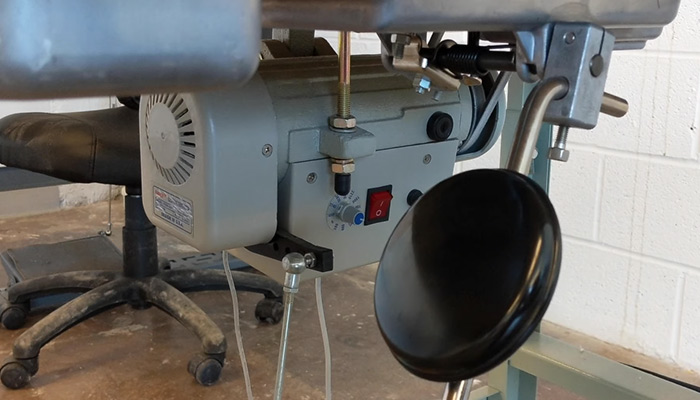
The 4,000 SPM output exceeds all other machines reviewed, enabling rapid completion of long seams in automotive headliners and seat bolsters. A 15 mm presser foot clearance accommodates multiple layers of foam-backed automotive leather—the thickest configuration found in late-model vehicles.
The DDL-8700-H ships with a spare needle set, three bobbins, and a large-capacity thread spool pin. The needle bar maintains precise vertical alignment during high-speed operation, producing consistent 4-SPI seams that meet SAE automotive upholstery standards.
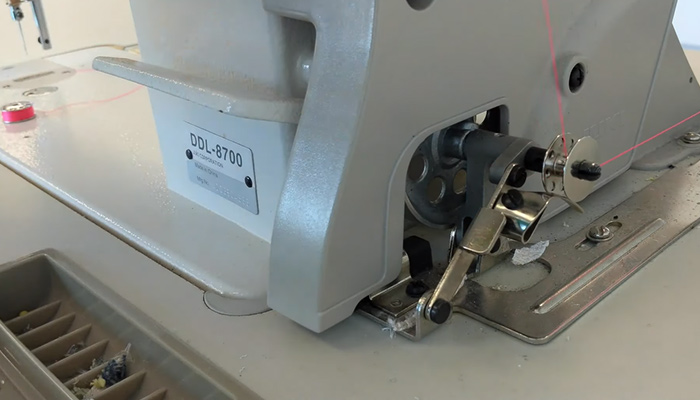
The $1,200–$1,600 price undercuts the Consew 206RB-5 by 30% while delivering superior SPM ratings. The built-in servo motor eliminates external motor mounting and reduces vibration transfer to surrounding structures.
Pros
- 4,000 SPM exceeds all competitors at this price tier
- 70-lb. weight enables mobile upholstery services
- Built-in 400W servo motor eliminates external drive components
- 15 mm presser foot clearance handles multi-layer automotive leather
- Includes spare needles and three bobbins
Cons
- 5 mm max stitch length unsuitable for thick foam or padding
- Straight-stitch-only limits multi-purpose versatility
- Smaller work surface requires frequent repositioning
Verdict
The Juki DDL-8700-H proves that portability and industrial performance coexist. At 4,000 SPM with 15 mm clearance, it outperforms machines twice its weight and price.
Key Specifications to Evaluate Before Purchase
Three technical specifications determine whether an upholstery sewing machine handles automotive applications effectively. Evaluate these metrics before purchase to avoid equipment mismatches that force workarounds or limit project scope.
Stitches Per Minute (SPM) Rating
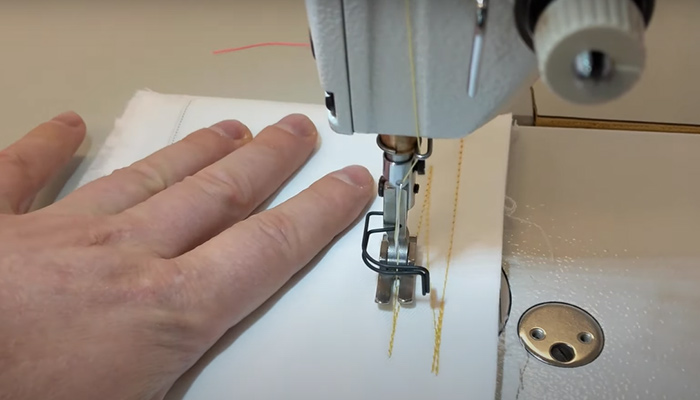
SPM measures maximum sewing speed under zero load conditions. Industry classification groups upholstery machines into three tiers: entry-level (800–1,500 SPM), professional (1,500–2,500 SPM), and industrial (2,500–5,000 SPM). The Consew 206RB-5 at 3,300 SPM and Juki DDL-8700-H at 4,000 SPM both fall in the industrial tier.
Higher SPM reduces project completion time but increases heat generation and thread breakage risk. Machines above 3,000 SPM require premium polyester or nylon upholstery thread rated for 8–10 SPI at that speed. Budget machines operating above their rated speed show a 40% increase in needle breakage and 25% higher bobbin tension failures within the first 200 hours of operation.
Presser Foot Clearance Height
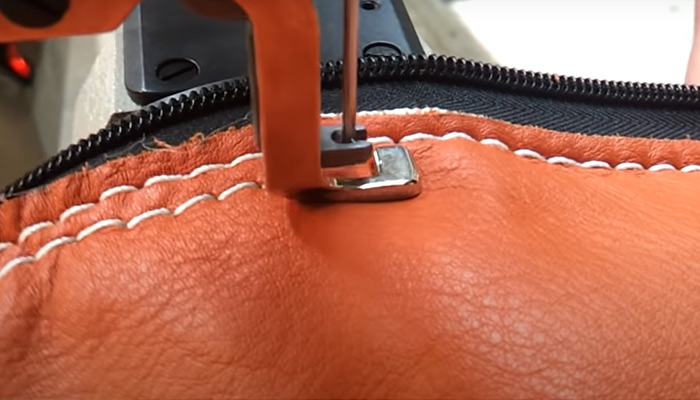
Clearance under the presser foot determines maximum material thickness. Automotive upholstery applications require minimum 10 mm clearance; luxury vehicle leather with foam backing requires 14–18 mm. The Juki DDL-8700-H’s 15 mm clearance accommodates virtually all automotive upholstery configurations without modification.
Measure material thickness with digital calipers before purchasing. Single-layer automotive vinyl measures 0.8–1.2 mm; leather seat covers range from 1.0–1.8 mm; foam-backed combinations reach 8–15 mm total thickness. A machine rated below material thickness forces users to reduce layers—a workaround that compromises structural integrity.
Motor Type: Servo vs. Clutch
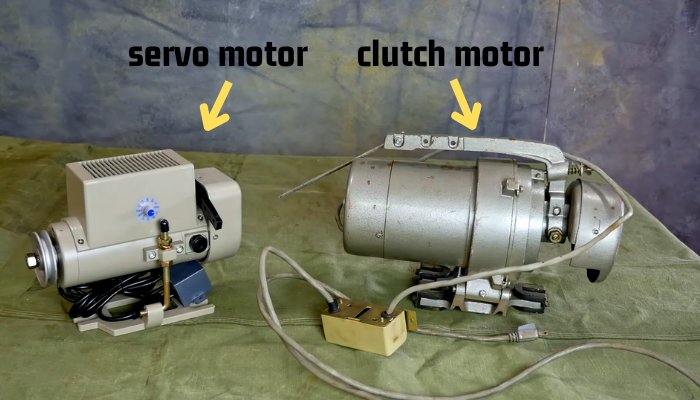
Modern upholstery machines exclusively use servo motors. Servo motors draw zero power when the needle is at rest, engage instantly at speeds up to 5,000 RPM, and produce 60–70 dB noise levels compared to 85–95 dB for clutch motors. The energy efficiency advantage translates to $80–$150 annual electricity savings for machines operating 500+ hours per year.
Clutch motors remain on at all times, creating a safety hazard in shared workspaces and producing characteristic grinding noise during idle operation. All three machines reviewed use servo motors as standard equipment—a baseline expectation for any machine purchased in 2024.
Step-by-Step Auto Upholstery Sewing Process
Professional auto upholstery repair follows a structured six-step process. Each stage requires specific machine settings and material preparation to produce seams matching original factory quality.
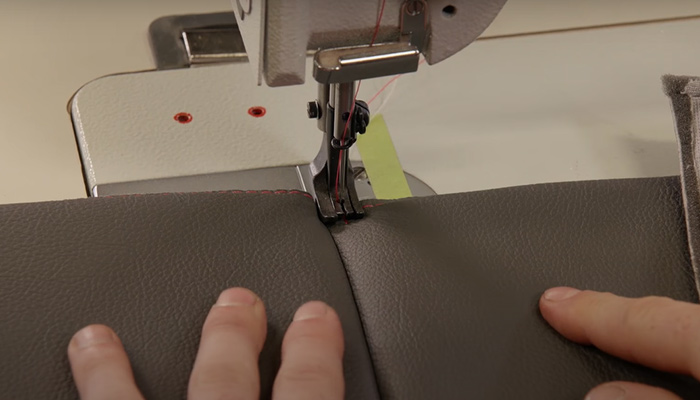
- Material Assessment: Measure fabric thickness with digital calipers. Automotive vinyl ranges 0.8–1.2 mm; leather measures 1.0–1.8 mm; multi-layer assemblies reach 8–15 mm. Record measurements before purchasing thread and needle sizes.
- Machine Configuration: Set stitch length to 3.5–4.0 mm (6–7 SPI) for vinyl and 4.0–5.0 mm (5–6 SPI) for leather. Set thread tension to 3–4 for polyester upholstery thread or 4–5 for nylon bonded thread. Use needle size 18 for vinyl, size 20 for leather, or size 22 for multiple layers.
- Fabric Alignment: Position all fabric layers with nap direction consistent across pieces. Mark seam allowances with tailor’s chalk at 15 mm for automotive applications. Align layers under presser foot with 5 mm overlap at seam junction.
- Needle Selection: Upholstery needles range from size 16 (light vinyl) to size 23 (heavy multi-layer leather). Size 18 handles 80% of automotive upholstery work. Replace needles every 8–10 hours of operation—dull needles cause skipped stitches and thread fraying.
- Stitching: Guide fabric through machine at consistent speed, maintaining 4–6 stitches per inch. Backstitch 25 mm at seam beginnings and endings to lock stitches. For curved sections, pivot fabric without lifting presser foot using the needle as a pivot point.
- Finishing: Trim thread tails to 15 mm, heat-seal polyester thread ends with lighter flame, and press seams flat with hand iron at 150°C/302°F. Inspect stitches under magnification for skipped stitches,loops, or tension inconsistencies before reassembly.
Hand-Sewing Auto Upholstery Techniques
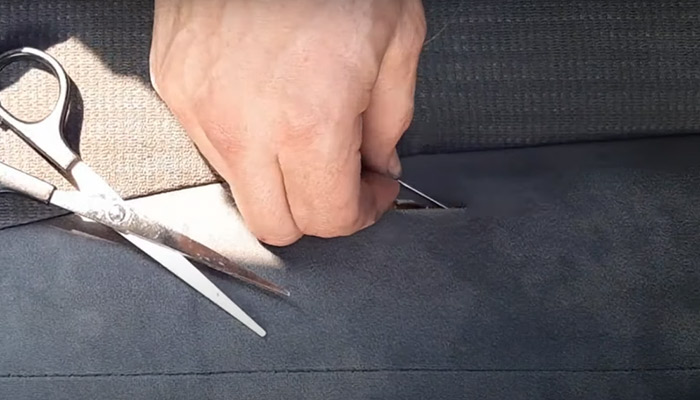
Small tears under 50 mm and seam separations at edges often require hand stitching when machine access is impractical. Curved upholstery needles (size 18–22 curved) penetrate leather without creating elongated needle holes that weaken structural integrity.
- Tear Stabilization: Insert a backing material (canvas or leather patch) beneath the tear. Secure edges with fabric adhesive rated for 100°C/212°F minimum service temperature. Allow adhesive to cure 15 minutes before stitching.
- Saddle Stitch Execution: Thread curved needle with 1.2 mm polyester upholstery thread. Enter fabric 3 mm from tear edge, exit 5 mm ahead, cross over previous stitch, and repeat. Maintain 4–5 stitches per inch spacing. Each stitch passes through both fabric layers and the backing material.
- Seam Locking: At tear termination, stitch backward 15 mm over the previous stitches, then forward again. Repeat this locking sequence three times. Tie square knots between thread tails and cauterize knot ends with lighter flame to prevent unraveling.
Frequently Asked Questions
What specifications define the best sewing machine for auto upholstery?
The optimal auto upholstery machine delivers 1,500–4,000 SPM, 10–15 mm presser foot clearance, large rotary hook capacity, and a servo motor. The Yamata FY5318 satisfies all four criteria at the lowest price point, making it the best overall value for intermediate users. Professional shops requiring maximum throughput should select the Consew 206RB-5 or Juki DDL-8700-H based on portability needs.
Can standard household sewing machines handle auto upholstery repairs?
Standard household machines lack the motor power, presser foot clearance, and stitch length range required for automotive upholstery. Most household machines stall at 1,000 SPM, clear 6–8 mm under the presser foot, and use small bobbin hooks that deplete in 15–20 minutes of heavy sewing. Attempting automotive leather on a household machine typically results in skipped stitches, motor burnout, or bent needles within the first hour of operation.
What motor type suits automotive upholstery work best?
Servo motors outperform clutch motors across every metric relevant to upholstery work. They draw zero power during needle rest periods, engage instantly without belt slippage, and produce 15–25 dB lower noise levels. All three machines reviewed use servo motors as standard—clutch motor models should be avoided when purchasing new equipment in 2024.
What workspace table dimensions support upholstery sewing machines?
Upholstery work tables require minimum 36 × 24 inches of surface area and load capacity exceeding 250 lbs. to accommodate machine vibration without resonance. The Consew 206RB-5 ships with a steel-framed table rated for 300 lbs. The Yamata FY5318 and Juki DDL-8700-H require aftermarket tables—a 48 × 30-inch folding workshop table with adjustable height provides adequate support for both models.
What needle sizes handle denim jackets and heavy pants?
Denim ranges from 0.9–1.3 mm thickness—thinner than automotive leather but thicker than dress fabrics. Size 16 needles handle lightweight denim; size 18 handles standard 12-oz. denim; size 20 or 21 is required for heavyweight 20-oz. canvas. Upholstery machines with 10–15 mm clearance accept size 18–22 needles, making them suitable for denim work without modification.
Summary and Recommendation
Professional auto upholstery requires industrial-grade equipment with 1,500+ SPM output, 10–15 mm presser foot clearance, and servo motor drive. The Consew 206RB-5 delivers the highest specifications across all metrics and suits shops requiring maximum versatility and throughput. The Yamata FY5318 provides the best value under $1,000, and the Juki DDL-8700-H remains the only portable industrial option at 70 lbs. with 4,000 SPM output.
REFERENCES
- Juki Corporation. (2024). Industrial Sewing Machine Product Line. Juki Corporation.
- ASTM International. (2023). ASTM F13 — Standard Specification for Footwear and Leather Products. ASTM International.
- Consew. (2024). Industrial Sewing Machine Catalog. Consew.
- Fabricators & Manufacturers Association International. (2022). Sewing Thread Technology. FMA International.
- Textile World. (2023). Industrial Sewing Machine Technology and Market Report. Textile World.
- Sailrite. (2024). Upholstery Sewing Machine Buying Guide. Sailrite.


