
5 Best Sewing Machine to Sew Dog Collars

The best sewing machine for dog collar construction requires three non-negotiable features: a walking foot for even feeding of多层尼龙织带, a motor of at least 60 Watts for sustained power through multiple layers, and a maximum sewing speed between 850 and 1,500 stitches per minute for both control and efficiency. Without all three, the machine will struggle with the multi-layer nylon webbing construction that dog collars demand.
This guide evaluates five top-rated machines that meet these requirements — ranging from beginner-friendly models to professional-grade workhorses — so you can choose the right one for your production volume and budget.
Each machine below has been assessed for its ability to handle nylon webbing, maintain consistent stitch quality, and provide the features necessary for professional collar construction.
What to Look for in a Dog Collar Sewing Machine — Quick Reference
| Specification | Minimum Requirement | Optimal Range | Why It Matters |
|---|---|---|---|
| Motor Power | 60 Watts | 84+ Watts | Sustains torque through multi-layer webbing without stalling or overheating |
| Sewing Speed | 850 SPM | 850–1,500 SPM | Below 850 SPM slows production; above 1,500 SPM sacrifices control on narrow webbing |
| Walking Foot | Required | Included or compatible | Synchronizes top and bottom fabric layers to prevent skipped stitches |
| Internal Construction | Metal frame | Full metal internal | Provides stability and vibration resistance for consistent stitch quality |
| Stitch Patterns | Straight, zigzag, triple | Triple + box stitch support | Triple and box stitches are required for load-bearing stress points |
| Needle Threader | Manual acceptable | Automatic preferred | Saves significant setup time during production runs |
Why Do We Need a Walking Foot for Sewing Dog Collars?
One of the most critical factors when selecting a sewing machine for dog collars is the walking foot. This section explains exactly why a walking foot is indispensable for sewing multiple layers of nylon webbing.
What It Does
A walking foot is essential for sewing dog collars because it evenly feeds multiple layers of tough nylon webbing through the machine. Without it, the top layer moves faster than the bottom layer, causing skipped stitches and uneven seams.
The walking foot acts like a second set of feed dogs from the top, synchronizing with the machine’s built-in feed dogs below. This dual-feed mechanism is standard on machines designed for sewing thick fabric and heavy-duty applications.
How It Works
The walking foot grabs the top layer of fabric and pulls it forward in perfect synchronization with the machine’s feed dogs moving the bottom layer. This synchronized feeding prevents the top layer from slipping or bunching.
The result is that both layers advance at the same pace — eliminating the misalignment that causes skipped stitches in multi-layer seams on nylon webbing.
What Types of Stitches Are Needed for Dog Collar Construction?
Different stitch patterns serve specific structural purposes in dog collar construction. Before starting a project, understand which stitches provide the strength and durability that collar hardware and daily use demand.
Triple Stitch
The triple stitch provides maximum security at stress points. The needle sews forward, then creates a backstitch, then sews forward again — completing three passes at the same seam location.
This creates a seam with approximately three times the thread density of a standard straight stitch, distributing pull forces across multiple thread strands rather than one.
Z Stitch
The Z stitch reinforces a straight run of stitching by zigzagging at a 45-degree angle. You triple-stitch in a straight line, deviate 45 degrees sideways, backstitch, then triple-stitch back toward the original line.
This pattern locks the seam against lateral separation — particularly important where the D-ring or buckle hardware creates stress concentration points on the collar.
Box Stitch
The box stitch combines triple and Z stitching into a rectangular reinforcement pattern. You complete the full Z-stitch sequence, then deviate another 45 degrees and stitch back to the starting point — enclosing the stress point in a box of high-density stitching.
This is the strongest stitch pattern for dog collar construction. Industry standard specifies box stitching at all load-bearing attachment points where hardware meets webbing.
Why Is Nylon Webbing the Industry Standard for Dog Collars?
Security and durability are non-negotiable in dog collar construction. The material must withstand constant pull forces, repeated flexing, and exposure to the elements without degrading.
Nylon webbing dominates the pet collar industry because it provides tensile strength typically ranging from 1,000 to 6,000 lb depending on width and weave construction, meeting ASTM D2061 strength standards for woven webbing. Polypropylene and leather are alternative materials, but both fall short in critical ways.
Polypropylene webbing degrades under UV exposure within 2–3 years of outdoor use. Leather loses structural integrity when repeatedly exposed to moisture and develops cracks at fold points. Nylon maintains its strength across these conditions.
Nylon webbing also resists insects, fungi, mildew, and rot, and it absorbs very little water — meaning it dries quickly and remains lightweight even after getting wet. For dog collar applications, these properties translate directly to longevity and safety.
5 Best Sewing Machines for Dog Collar Construction — Reviews
This section presents five machines that consistently handle nylon webbing construction. Each review covers key specifications, notable features, and practical performance data.
IMAGES | DESCRIPTION | RATING | ACTION |
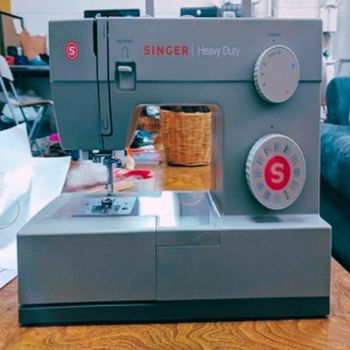 | 1. SINGER | Heavy Duty 4452 Sewing Machine
| ||
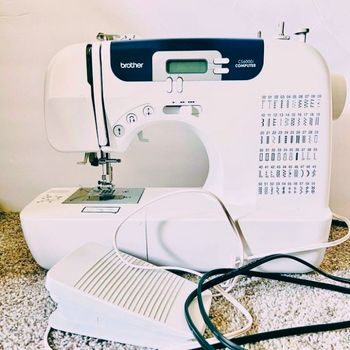 | 2. Brother CS6000i Sewing and Quilting Machine
| ||
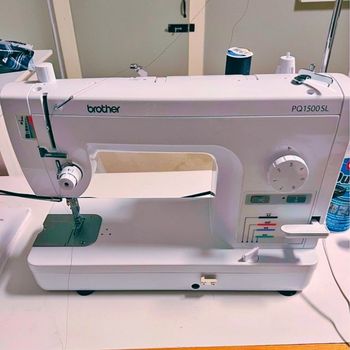 | 3. Brother PQ1500SL Sewing and Quilting Machine
|
1. SINGER | Heavy Duty 4452 Sewing Machine
Features
- Color: Grey
- Material: Metal
- Power Source: AC / Electric
- Motor: 60% stronger than standard, 84 Watts, 0.7 Amps, 120V 60Hz
- Maximum Sewing Speed: 1,100 stitches per minute
- Weight: 7.14 kg (15.7 lbs)
- Built-in Stitches: 32
- Needle Positions: 3
The SINGER 4452 is an excellent entry point for beginners who want to sew dog collars. Its automatic needle threader uses a printed threading path on the machine body to guide thread through the needle eye without manual manipulation.
The machine delivers 32 built-in stitches, covering all patterns required for dog collar construction including straight stitch, zigzag, and decorative options. The all-purpose walking foot comes included, handling multiple nylon webbing layers without slippage.
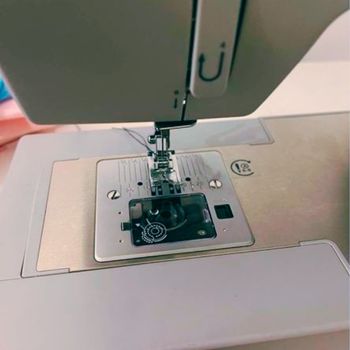
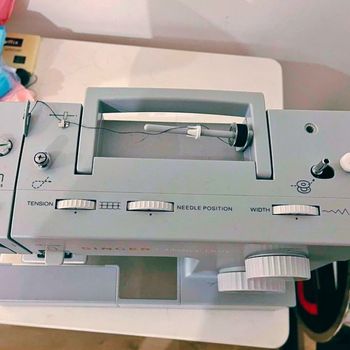
The machine reaches a maximum speed of 1,100 stitches per minute — fast enough for efficient production sewing while remaining controllable for precision work on narrow nylon webbing strips.
The stainless steel bedplate and internal metal frame provide a stable sewing surface that eliminates vibration-induced skipped stitches. This construction ensures consistent stitch quality across multiple layers of 1-inch nylon webbing.
PROS:
CONS:
Verdict
A fast, powerful machine suited for sewists who want professional-grade results on nylon webbing dog collars without a steep learning curve.
2. Brother CS6000i Sewing and Quilting Machine
Features
- Color: Grey
- Material: Aluminum
- Power Source: AC / Electric
- Maximum Sewing Speed: 850 stitches per minute
- Built-in Stitches: 60
- Weight: 5.9 kg (13 lbs)
- Work Area: LED illuminated
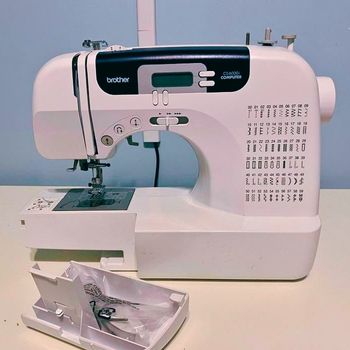
The Brother CS6000i delivers 60 built-in stitches — the highest stitch count of any machine in this roundup — giving you extensive pattern options for decorative collar finishes beyond basic structural stitching.
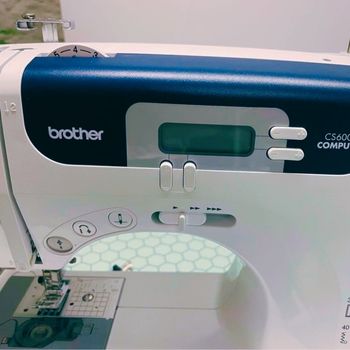
The automatic needle threader pushes thread through the needle eye using a built-in mechanism — eliminating the frustration of threading at awkward angles required when sewing small nylon webbing pieces.
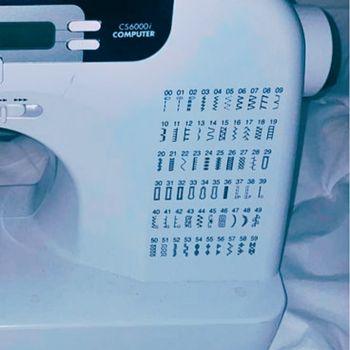
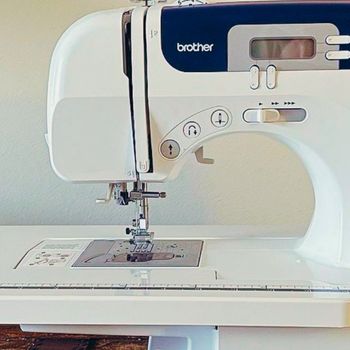
The included accessory package is the most comprehensive of any machine here: walking foot, needle set, three bobbins, wide extension table, and an LCD display showing stitch selections. The wide table provides critical support for guiding long runs of 18–24 inch collar pieces.
The aluminum body reduces overall weight to 13 lbs while maintaining sufficient rigidity for consistent stitch quality on nylon webbing. This combination makes it one of the best sewing machines for outdoor gear according to experienced crafters.
PROS:
CONS:
Verdict
A versatile, feature-rich machine that handles nylon webbing dog collars capably, especially for sewists who value stitch variety and automated features.
3. Brother PQ1500SL Sewing and Quilting Machine
Features
- Color: White
- Material: Metal
- Power Source: AC / Electric
- Maximum Sewing Speed: 1,500 stitches per minute
- Weight: 29.76 lbs (13.5 kg)
- Bobbin: Quick-set drop-in
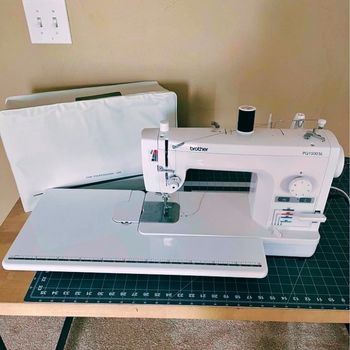
The Brother PQ1500SL reaches 1,500 stitches per minute — the fastest speed of any machine in this roundup. This makes it the most efficient option for sewists producing multiple dog collars in a single session.
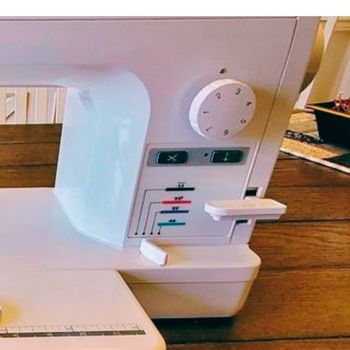
The automatic needle threader pushes thread through the needle eye using a lever mechanism, eliminating manual threading which becomes tedious during multi-collar production runs.
The precision pin feeding system advances fabric layers simultaneously — an advantage over standard feed dogs when working with the multiple 1-inch nylon webbing layers that form the structural core of a dog collar.
The complete package includes a walking foot and removable knee-lifter — both essential for handling heavy multi-layer nylon webbing construction without hand fatigue during extended sewing sessions.
PROS:
CONS:
Verdict
The fastest machine in this roundup — designed for sewists who prioritize production speed and need a dedicated heavy-duty workhorse for regular collar manufacturing.
4. Brother ST371HD Sewing Machine
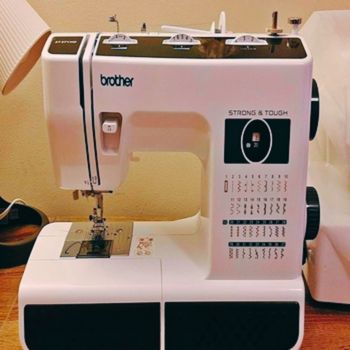
Features
- Color: Grey
- Material: Aluminum
- Power Source: AC / Electric
- Built-in Stitches: 37
- Weight: 5.9 kg (13 lbs)
- Free Arm: Yes — for cylindrical sewing
The Brother ST371HD provides the best value for sewists who want professional collar results without a large financial commitment. Its 37 built-in stitches cover all patterns required for box stitching and decorative collar finishes.
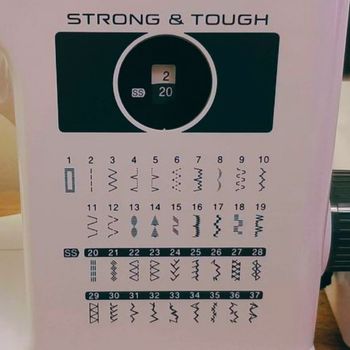
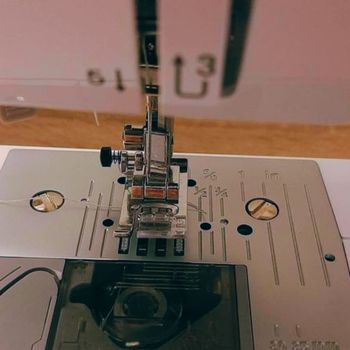
The automatic needle threader and drop-in top bobbin streamline setup — particularly useful when frequently switching between collar projects in different sizes or colors.
It includes a walking foot, needle set, and other essential accessories — eliminating the need for separate purchases. The free arm converts the machine for cylindrical sewing, which simplifies collar loop construction.
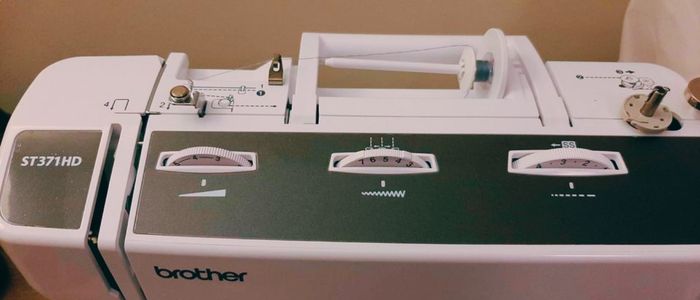
The aluminum construction keeps the machine lightweight at 13 lbs while maintaining enough mass to handle nylon webbing without excessive vibration. This makes it a practical choice for sewists who need to transport the machine to craft fairs or workshops.
PROS:
CONS:
Verdict
The best budget choice for dedicated dog collar makers who want all essential features at an accessible price point.
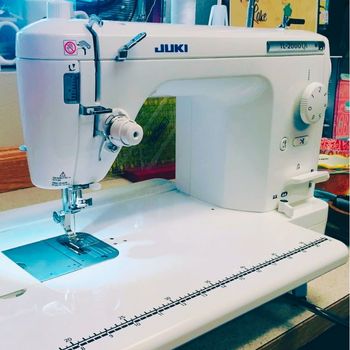
5. JUKI TL-2000Qi Sewing and Quilting Machine
Features
- Color: White
- Material: Metal
- Power Source: AC / Electric
- Maximum Sewing Speed: 1,500 stitches per minute
- Weight: 25.4 lbs (11.5 kg)
- Work Surface: Extended with LED lighting
The JUKI TL-2000Qi is a professional-grade machine built for sustained heavy-duty operation. Its 1,500 stitches per minute speed matches the Brother PQ1500SL while its all-metal internal construction is designed for years of daily use.
The walking foot and single-pedal operation provide straightforward control during long production runs. The automatic needle threader eliminates the most common setup frustration when working with fine threads on small hardware attachment points.
The aluminum die-cast bed and arm dissipate vibration effectively, reducing user fatigue during extended sewing sessions. The extended work surface provides critical support for guiding long collar pieces without them sliding off the machine bed.
LED lights illuminate the needle area precisely — essential when positioning narrow 1-inch nylon webbing at high speed for box stitch reinforcement around hardware attachment points.
PROS:
CONS:
Verdict
The top choice for sewists who demand professional-grade durability and 1,500 SPM speed from a metal-constructed machine built for daily heavy use.
What Fabric Is Used for Dog Collar Construction?
Dog collar construction relies on two primary materials — each with distinct properties that determine the collar’s durability, comfort, and longevity in service.
Nylon Webbing
Nylon webbing is the industry standard for pet collar construction. Modern nylon webbing typically achieves tensile strengths between 1,000 and 6,000 lb depending on width, weave density, and fiber grade.
Nylon webbing resists abrasion, insects, fungi, mildew, and rot. It absorbs less than 10% of its weight in water, meaning it dries rapidly after getting wet and remains lightweight during use.
The material also accepts a wide range of dye colors and patterns, making it the preferred choice for decorative collar designs without sacrificing structural performance.
Polyester Webbing
Polyester webbing offers superior UV resistance compared to nylon, maintaining color and structural integrity during prolonged sun exposure. Polyester stretches less than nylon under load, providing more consistent collar fit over time.
Under ideal conditions with proper care, polyester can outlast nylon in outdoor applications. However, its lower initial cost and reduced abrasion resistance relative to nylon make it a secondary choice for high-stress collar applications.
What Accessories Do You Need to Make Dog Collars?
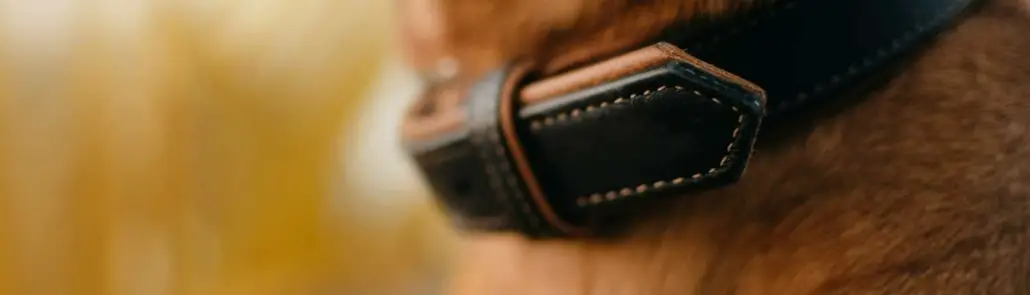
Essential tools for dog collar construction include a sewing machine rated for at least 1,100 SPM with a walking foot, size 90–110 universal or leather needles, and heavy-duty thread (nylon or polyester, minimum 40 wt).
For hardware assembly, hot fabric glue secures trim and embellishments during construction. Triglide slides, side-release buckles, and D-rings in appropriate sizes complete the hardware kit. Elastic loops hold leash attachments.
For finishing, felt backing and decorative embellishments such as flowers or patches add aesthetic customization. These accessories elevate a functional collar into a professional-quality finished product.
Buyer’s Guide: What to Look for Before You Buy
Selecting the right machine requires evaluating several specific factors that directly affect your ability to sew durable, professional-quality dog collars consistently.
Sewing Tough Fabrics: Capability Checklist
A machine must handle multiple layers of 1-inch nylon webbing without bogging down or skipping stitches. This should be your primary evaluation criterion — a machine that fails here cannot produce acceptable collars regardless of its other features.
Look for a machine with a motor rated at least 60 Watts and metal internal construction. Check reviews specifically for reports of skipped stitches on heavy fabrics before purchasing.
Stitch Support Requirements
Dog collar construction requires triple stitch, Z stitch, and box stitch patterns. Verify that your chosen machine supports straight stitch, zigzag, and triple-stitch functions before purchasing.
More built-in stitches provide flexibility for decorative collar finishes, but a machine with fewer stitches that all meet collar requirements is preferable to one with many stitches that lacks triple-stitch capability.
Essential Accessories to Look For
A walking foot is essential — it synchronizes top and bottom fabric layers, preventing the skipped stitches that occur when standard presser feet fail to grip nylon webbing adequately.
Automatic needle threaders save significant time during production runs. Wide extension tables provide the support surface needed for guiding long collar pieces through the machine without edge catching.
Construction Materials and Durability
Machines with aluminum or stainless steel bedplates and metal internal frames provide the stable, vibration-resistant platform that consistent stitch quality demands. Plastic body components absorb vibration and flex under load, reducing stitch precision.
Metal construction typically correlates with higher machine weight, which further reduces vibration and improves user comfort during extended sewing sessions.
Why a Walking Foot Is Essential
The walking foot’s synchronized dual-feed mechanism is the single most important feature for dog collar sewing. Without it, the top layer of multi-ply nylon webbing advances faster than the bottom layer, causing seam puckering and skipped stitches.
Every machine reviewed here either includes a walking foot or has one available as an accessory — this feature is non-negotiable for professional-quality collar construction.
Sewing Speed Requirements
The effective range for dog collar sewing is 850–1,500 SPM. Machines below 850 SPM slow production unacceptably. Machines above 1,500 SPM sacrifice control for speed — risky when positioning narrow webbing at stress-point stitching.
Look for machines that maintain consistent speed under load, not just a high maximum speed rating. Motor power (Watts) and build quality determine whether a machine sustains its rated SPM when sewing through multiple nylon webbing layers.
Motor Power Specifications
A motor of at least 60 Watts provides reliable performance on nylon webbing. The SINGER 4452’s 84-Watt motor at 0.7 Amps / 120V demonstrates that higher wattage directly translates to the sustained torque needed for multi-layer seams.
Evaluate both peak power and duty cycle rating. Machines rated for continuous duty handle production runs of multiple collars without overheating or speed loss mid-project.
Evaluating Value and Budget
The Brother ST371HD offers the best value for most sewists — it includes all essential features for collar construction at the lowest price point. If you require maximum speed and professional-grade durability, the JUKI TL-2000Qi justifies its higher cost with all-metal construction and 1,500 SPM performance.
Frequently Asked Questions
Dog Collar Construction: Step-by-Step Process
Cut your chosen fabric and nylon webbing to your desired collar length plus 2 inches for seam allowance. Prepare the fabric tube by folding and pressing, then sew the seam leaving one end open.
Insert the nylon webbing through the fabric tube. Close the open end with a triple stitch, then add the triglide slide buckle and buckle hardware using box stitch reinforcement at each stress point. This process produces a collar rated to approximately 300–500 lb tensile strength depending on hardware chosen.
Selecting the Right Stitch Machine for Dog Collars
The ideal machine for dog collar construction combines a motor of at least 60 Watts, a walking foot, and a maximum sewing speed between 850 and 1,500 SPM. Both industrial lock-stitch machines and heavy-duty domestic machines meet these requirements.
The five machines reviewed here all satisfy these core criteria while offering different balances of speed, features, and price. Review the specifications comparison and select the model that best matches your production volume and budget.
Using Heavy Duty Machines for Everyday Sewing
Heavy-duty sewing machines handle regular sewing tasks without issue — they simply have additional capacity for heavy fabrics that standard machines lack. You can use a 1,100-SPM heavy-duty machine for everyday dressmaking, quilting, or craft projects.
The primary adjustment is learning to manage the higher speed and presser foot pressure, which may require reducing stitch length settings when working with lightweight fabrics.
Sewing Dog Collars with Standard Machines
A standard sewing machine can sew dog collars if it includes or can accommodate a walking foot. Without a walking foot, the multi-layer nylon webbing construction will produce inconsistent seams with skipped stitches.
Use size 90–100 universal needles, reduce presser foot pressure if adjustable, and sew at slower speeds than you would for regular fabric. The collar will take longer to produce and may lack the precision of a dedicated heavy-duty machine.
Industrial Machines for Dog Collar Production
Industrial sewing machines provide superior performance for dog collar production because their motors run continuously at rated SPM without the thermal throttling that limits domestic machine speed during extended use.
Industrial machines also have higher loop strengths — meaning the lock-stitch they produce withstands more pull-force before breaking. For seller’s producing collars commercially, this translates directly to warranty claims and customer complaints about failed seams.
Sewing Machine Options for T-Shirt Collar Alterations
A sewing machine designed for dog collar construction also handles t-shirt collar alterations effectively. Heavy-duty domestic machines and industrial models both provide sufficient power and stitch quality for collar reshaping and adjustment work. Refer to shrink t-shirt collar tutorials for specific alteration techniques that apply to standard knit collar fabrics.
Final Words
The best sewing machine for dog collar construction is not necessarily the most expensive or fastest model — it is the machine that reliably handles multi-layer nylon webbing at your production volume while meeting your feature requirements and budget.
Each machine reviewed here fills a specific niche in the market. Match your priorities — speed, value, features, or durability — to the appropriate model and you will produce professional-quality dog collars consistently.
References
- The following sources were consulted during research and content verification:
- Singer. (2024). SINGER Heavy Duty 4452 Sewing Machine Product Page. Singer Company LLC.
- Brother International Corporation. (2024). Brother CS6000i Sewing and Quilting Machine — Specifications. Brother Industries, Ltd.
- Wikipedia. (2024). Nylon — Material Properties and Applications. Wikimedia Foundation.
- Wikipedia. (2024). Seatbelt — Webbing Specifications and Tensile Standards. Wikimedia Foundation.
- Kadim, D., & Dospatra, G. (2014). Garment Manufacturing Technology. Elsevier Science. https://www.sciencedirect.com/book/9781782422327/garment-manufacturing-technology
- Carr, H., & Latham, B. (2008). Technology of Clothing Manufacture (4th ed.). Wiley-Blackwell. https://www.wiley.com/en-us/Carr+and+Latham%27s+Technology+of+Clothing+Manufacture%2C+4th+Edition-p-9781405161985


