
Mordants in Natural Dyeing: How Alum Iron and Tannin Change Color

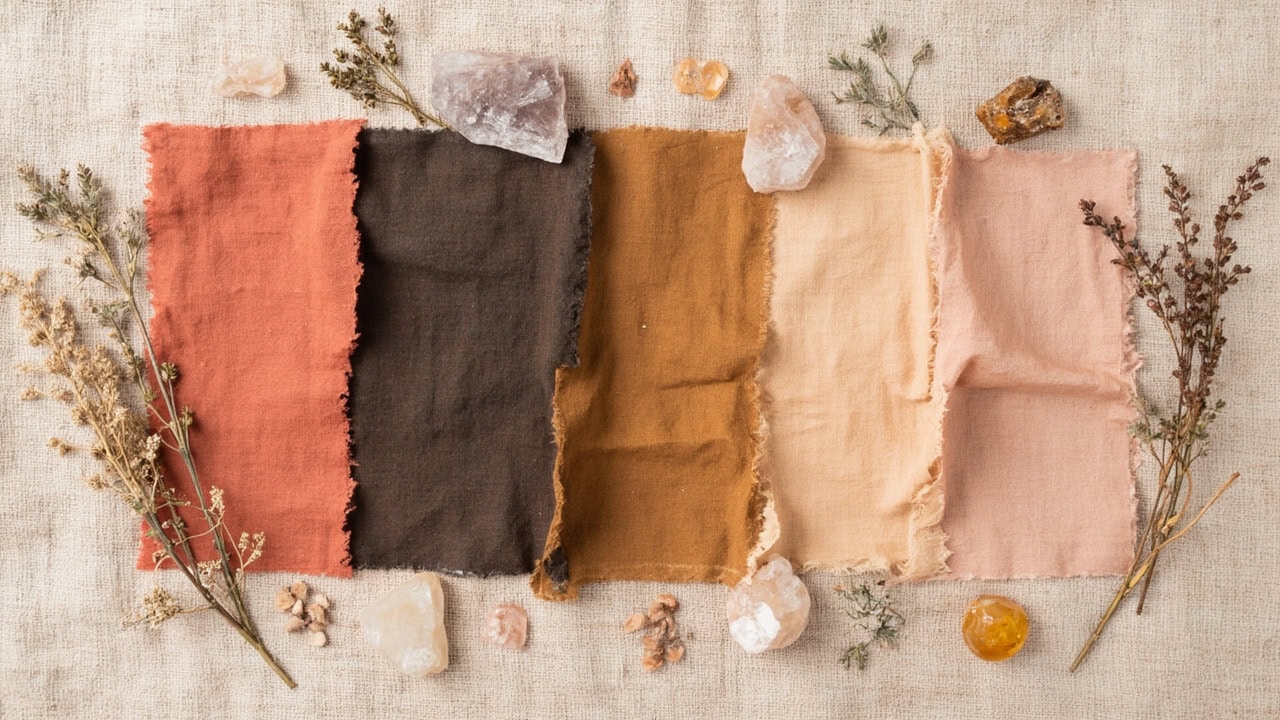
Mordants in natural dyeing are metallic salts that act as binding agents between natural dye molecules and fabric fibers — without a mordant, most plant-based dyes wash out within a few cycles because they lack the chemical affinity to bond with cellulose or protein fibers. Alum (potassium aluminum sulfate) produces the brightest, most colorfast results on protein fibers, shifting dye shades toward yellows, oranges, and reds; iron (ferrous sulfate) acts as a saddening agent that darkens and dulls existing colors by creating complexes that absorb more light; tannin (gallotannic acid) serves as a primary mordant for cellulose fibers and as a secondary mordant that deepens and fixes color across all fabric types. Understanding these three mordants is the difference between a dyed fabric that holds its color for years and one that fades to a ghost of its original hue after a handful of washes.
What Are Mordants and Why They Matter in Natural Dyeing
Mordants are metallic compounds — specifically metal salts — that create a chemical bridge between natural dye molecules and fiber molecules. The word “mordant” comes from the Latin mordere, meaning “to bite,” which reflects the mordant’s role in helping dyes “bite into” or grip the fiber. Without this bridge, most natural dyes sit loosely on the fiber surface and wash away easily.
Natural dyes fall into two categories: substantive dyes and adjective dyes. Substantive dyes — indigo, walnut hulls, and certain lichens — can bond directly to fibers without assistance. Adjective dyes, which include madder, weld, cochineal, and onion skin, require a mordant to become colorfast. The mordant does not add its own color to the fabric; instead, it modifies the molecular structure of the dye so that it can form a lasting chemical bond with the fiber.
Mordant selection is arguably the most consequential decision in natural dyeing. The same root, bark, or insect can produce coral, rust, olive, or deep brown depending entirely on which mordant was used. This variability is not a limitation — it is the artistic core of natural dyeing. Three mordants form the foundation of the craft: alum (aluminum), iron (ferrous/ferric), and tannin (gallotannic acid).
The Three Primary Mordants: Alum, Iron, and Tannin
Alum (Potassium Aluminum Sulfate — KAl(SO₄)₂·12H₂O)
Alum is the most widely used mordant in home natural dyeing, and for good reason. Potassium aluminum sulfate is non-toxic, readily available, relatively inexpensive, and produces bright, clear, long-lasting colors on protein fibers. It is the mordant of choice for wool and silk, where it consistently yields the most vibrant results.
The mechanism is straightforward: aluminum ions (Al³⁺) from the alum dissociate in hot water and form coordination complexes with the dye molecules. These complexes then bond to amino acid groups present in protein fibers like wool (keratin) and silk (fibroin). The result is a dye-fiber bond that resists washing, light, and wear.
On cellulose fibers — cotton, linen, and hemp — alum’s effectiveness is considerably weaker because cellulose lacks the amino acid groups that protein fibers possess. For cellulose, alum must be preceded by a tannin treatment to create the necessary binding sites. Alum concentration for protein fibers is 15–20% by weight of fiber (WOF), dissolved in hot water and applied at a simmering temperature of 180–185°F (82–85°C) for 45–60 minutes.
Safety is a major advantage of alum. It is the same compound the FDA approves for pickling, and it produces no toxic fumes. It is safe to use indoors with adequate ventilation and standard gloves. One caveat: use glass or stainless steel equipment only. Aluminum or reactive iron cookware can produce unexpected — and often unwanted — color reactions.
Iron (Ferrous Sulfate — FeSO₄·7H₂O)
Iron is a saddening agent, not a brightening one. Where alum pushes colors toward clarity and warmth, iron shifts them toward depth, darkness, and complexity. Ferrous sulfate (FeSO₄·7H₂O) reacts with dye molecules to form complexes that absorb more wavelengths of light, which our eyes perceive as darkening and dulling — the “saddening” effect.
Iron is almost never used as a primary mordant. Instead, it is applied in dilution — typically 0.5–2% by weight of fiber (WOF) — to modify or deepen colors already established by another mordant or dye. On yellows and oranges, iron creates distinctive gray-green or gray-brown undertones. On reds and purples from anthraquinone dyes, iron shifts the hue toward brown and slate.
Application technique is critical. Iron must be added to the dye bath only in the last 20–30 minutes of the process. Longer exposure risks fiber degradation, particularly in protein fibers. Excessive iron makes wool brittle and can cause canvas to weaken significantly over time. The recommended maximum exposure time is 30 minutes, and the bath temperature should remain at or below 185°F (85°C) during iron application.
Iron is safe to use at recommended concentrations with gloves and eye protection. It is not food-safe and should not be used on items intended for food contact or for young children’s clothing. Used correctly, iron is an indispensable tool for extending the color palette of natural dyeing.
Tannin (Gallotannic Acid — C₇₆H₅₂O₄₆)
Tannin occupies a unique position among mordants because it serves two distinct roles. For cellulose fibers — cotton, linen, and hemp — tannin is the primary mordant, creating the binding sites that these fibers lack naturally. For all fabric types, tannin also acts as a secondary mordant that deepens and helps fix color.
Gallotannic acid (C₇₆H₅₂O₄₆) is found in abundance in tree bark (oak, chestnut, and sumac), gallnuts, and tea. These natural sources have been used for millennia in combination with metallic salts to produce durable natural colors. Liquid tannin extracts offer convenience, while bark extracts require longer soaking times — typically 1–2 hours for effective mordanting.
The two-stage mordanting process for cellulose begins with a tannin soak at room temperature to warm temperature (5–10% concentration), followed by rinsing and then a standard alum mordant bath. On its own, tannin produces warm golden-brown to deep brown shades — a desirable outcome for certain projects, and a useful base for subsequent dye layers.
The combination possibilities are extensive. Tannin + alum on cotton yields soft pastels comparable to those achieved directly on wool. Tannin + iron on cellulose produces deep browns approaching the intensity of logwood blacks. A three-step sequence — tannin, then alum, then dilute iron — creates maximum color depth and complexity on cellulose fibers.
How to Mordant Fabric for Natural Dyeing: Step-by-Step
For Protein Fibers (Wool, Silk) — Alum Method
The alum mordanting process for protein fibers produces the most reliable, colorfast results in natural dyeing. Follow these steps precisely:
- Calculate alum at 15% by weight of fiber (WOF). For 100g of fiber, use 15g of potassium aluminum sulfate.
- Dissolve alum crystals in a separate container of boiling water, stirring until fully dissolved. Use glass or stainless steel — never aluminum or bare iron cookware.
- Fill your dye pot with enough water to allow the fabric to move freely without crowding. A ratio of approximately 20:1 water to fiber is standard.
- Add the dissolved alum solution to the pot and stir to distribute evenly throughout the water.
- Thoroughly wet your fabric in plain water before adding it to the mordant bath. Dry fiber absorbs mordant unevenly, leading to streaking and patchy color.
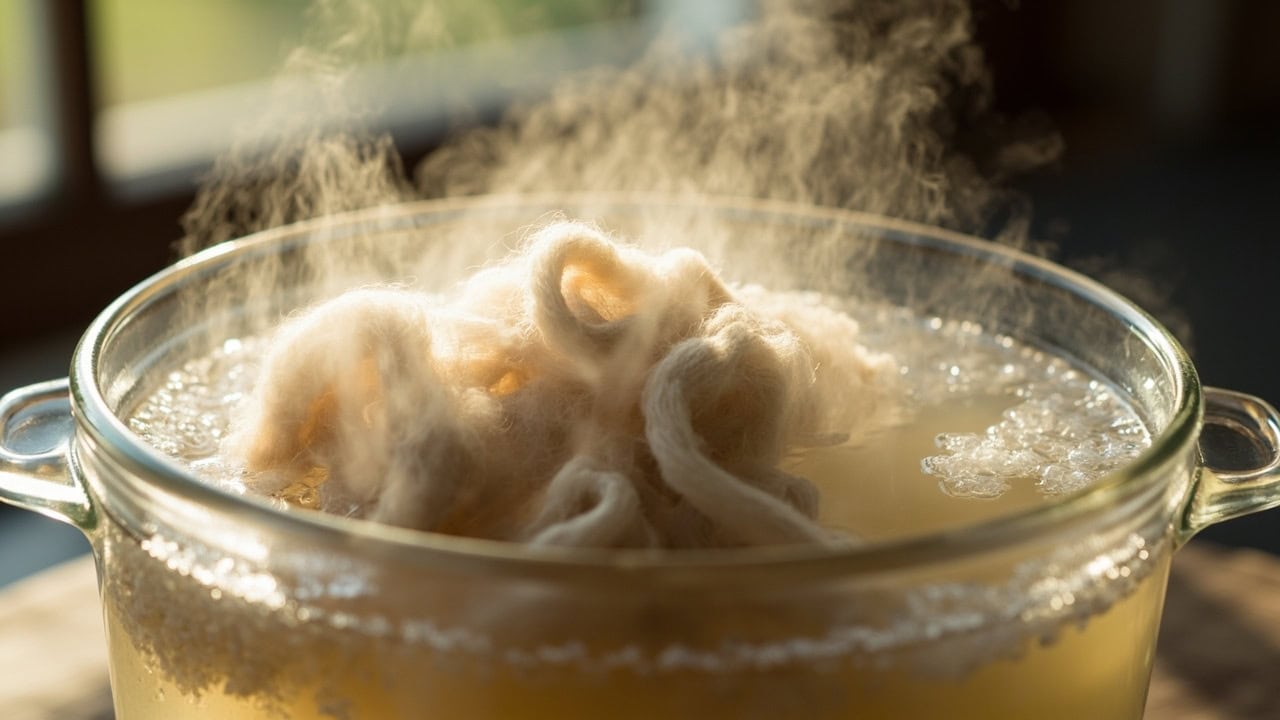
- Add the wet fabric to the mordant bath. Bring the bath to a simmer — not a boil — maintaining 180–185°F (82–85°C).
- Hold at this temperature, stirring gently every 10–15 minutes, for 45–60 minutes. Gentle movement ensures even distribution without agitating wool fibers excessively.
- Turn off the heat and allow the fabric to cool in the mordant bath overnight. This extended cooling period allows the mordant to bond fully before rinsing.
- Remove the fabric and squeeze gently — never wring — to remove excess liquid. Proceed directly to the dye bath.
- Critical rule: never let mordanted fabric dry before dyeing. A mordanted fiber that dries unmordanted allows the mordant to oxidize and become ineffective. If you cannot proceed to dyeing immediately, keep the fabric damp in a sealed plastic bag in the refrigerator for up to 24 hours.
The key parameters to remember: 15% WOF alum concentration, 180–185°F (82–85°C) simmering temperature, 45–60 minutes duration, and cool overnight in the bath. Deviation from any of these — particularly temperature — is the primary cause of mordanting failure.
Mordant Comparison Table
| Mordant | Fiber Type | Color Effect | Concentration (WOF) | Bath Temperature | Exposure Time | Toxicity |
|---|---|---|---|---|---|---|
| Alum | Protein (wool, silk) | Brightens; clear pastels | 15–20% | 180–185°F (82–85°C) | 45–60 min simmer | Low — safe for home |
| Alum + Tannin pre | Cellulose (cotton, linen) | Soft pastels | 15% alum + tannin pre | 180–185°F (82–85°C) | 45–60 min | Low |
| Iron | All fibers | Darkens; saddens colors | 0.5–2% | Room temp or last 20 min | 20–30 min max | Low — wear gloves |
| Tannin | Cellulose (primary) | Golden-brown base | 5–10% | Room temp to warm | 1–2 hour soak | None |
Common Mordanting Mistakes and How to Avoid Them
Even experienced natural dyers encounter these pitfalls. Understanding the specific cause of each problem is the fastest path to correction:
- Using too much iron: Causes fiber brittleness and color graying. Measure precisely at 0.5–2% WOF. More is not better — iron’s saddening effect is potent, and overuse permanently damages protein fibers. A 2% iron bath on wool for 60 minutes instead of the recommended 30 can leave fiber so weakened it tears with minimal stress.
- Letting fabric dry after mordanting: Mordant must be fixed with dye immediately. A mordanted fiber that dries unmordanted allows the metal salts to oxidize on the fiber surface, destroying their ability to bond with dye molecules. The fix: always keep mordanted fiber damp, and always proceed to the dye bath within 24 hours.
- Boiling instead of simmering: The distinction matters enormously for wool. Boiling (212°F / 100°C) agitates fiber and causes felting — a permanent, irreversible change in the wool’s surface structure that makes it rough and shrinked. Maintain 180–185°F (82–85°C) throughout the mordant process.
- Not pre-soaking fiber: Dry fiber absorbs mordant unevenly, producing streaking, banding, and inconsistent color. A minimum 30-minute water soak before mordanting ensures even penetration and consistent results.
- Using aluminum or iron cookware: Reactive metals can cause unexpected color reactions — from muddy tones to complete color loss — because the metal itself participates in the dye-mordant complex. Glass and stainless steel are inert and reliable.
- Skipping tannin for cellulose: Cotton, linen, and hemp have no natural affinity for dye molecules. Tannin pre-treatment is not optional — it is mandatory. Without tannin as a bridge, alum mordanting on cotton produces almost no colorfastness improvement over undyed fiber.
How Mordants Change Color: The Chemistry Behind the Shift
The color change that occurs when mordant meets dye is not alchemy — it is coordination chemistry. Dye molecules are chromophores: structures that absorb certain wavelengths of visible light and reflect others. The specific wavelengths a molecule absorbs are determined by its electron structure, particularly the arrangement of double bonds and heteroatoms (oxygen, nitrogen, sulfur).
When a mordant — specifically its metal ions — forms a coordination complex with a dye molecule, it changes the electron density around the chromophore. This changes which wavelengths of light are absorbed, which changes the perceived color. Different metal ions perturb electron structures differently, which is why iron produces gray-green undertones on flavonoids while aluminum produces bright reds on anthraquinones.
Concrete examples demonstrate the scope of this effect. The same madder root dye bath — containing the anthraquinone dye alizarin — produces soft coral on alum-mordanted wool, deep gray-brown on iron-mordanted wool, golden tan on tannin-only treated fabric, and pale faded pink on untreated fiber. The dye molecules are identical; only the metal ion complex differs.
Specific metal-dye combinations produce predictable results based on decades of documented practice and scientific analysis:
- Aluminum (alum) + anthraquinone dyes (madder, cochineal, lac): produces bright reds, corals, and oranges. The Al³⁺ ion complexes with the quinone structure to enhance the red-shifted absorption.
- Iron + flavonoid dyes (onion skin, oak galls, weld): produces muted olive greens, grays, and browns. Fe²⁺/Fe³⁺ forms complexes with the catechol groups common in yellow flavonoids, shifting absorption toward longer wavelengths and creating gray-green undertones.
- Tannin + iron on cellulose: produces logwood-style blacks and deep browns. The multiple gallic acid units in tannin provide numerous coordination sites for iron ions, creating a highly complex, dark-colored final molecule.
- Alum on indigo (vat dye): produces the characteristic bright blues of traditional indigo dyeing, as the aluminum ion helps indigo particles adhere to fiber during oxidation.
Combining Mordants for Extended Color Ranges
Advanced natural dyers combine mordants in sequence to achieve color complexity that a single mordant cannot produce. These techniques leverage the cumulative and interactive effects of multiple metal ions on the same dye bath.
Alum then dilute iron is the most common sequential approach. Start with an alum mordant to establish the brightest possible base color, then introduce iron at 0.5–1% WOF for the final 20 minutes of the dye bath. This “sadden after brightening” technique produces colors of remarkable depth — a coral becomes a dusty rose, a golden yellow becomes olive, an orange becomes rust.
Tannin + alum + iron sequence is the three-step approach for maximum color depth on cellulose. First, tannin soaks for 1–2 hours to coat the fiber in gallotannic acid. Second, alum mordanting at standard parameters (15% WOF, 180–185°F, 45–60 min) fixes the aluminum to the tannin. Third, a brief iron bath (0.5–1% WOF, 20 min) deepens and complexifies the result. This sequence transforms cotton — which has zero natural dye affinity — into a fiber capable of producing rich, lasting natural colors.
Iron added at the end of the dye bath is a controlled saddening technique. Rather than mordanting with iron beforehand, you add iron sulfate directly to the completed dye bath for a 10–20 minute final exposure. This targets the topmost layer of dye molecules, darkening the perceived color without fully converting the entire complex. The result is visible depth — a single color that appears to have undertones of another.
Over-dyeing mordanted fabric with a second color is a technique for creating buried undertones. A fabric mordanted with iron first, then dyed with a yellow natural dye, will appear olive or brown — the yellow dye color is present but modified by the iron undertones beneath. This layering creates visual complexity that reads as richness in the finished textile.
Frequently Asked Questions
Q: Can you use natural dyeing without mordants?
A: Some natural dyes are substantive (indigo, walnut hulls, lichen) and will bond to protein fibers without mordant, but most plant dyes (madder, weld, cochineal, onion skin) wash out within 2–3 cycles without a mordant. Mordanting is the difference between a color that lasts years and one that fades in weeks.
Q: Is alum safe for dyeing food-contact items?
A: Alum (potassium aluminum sulfate) is FDA-approved for pickling and is considered the safest mordant for home use. It produces colorfast results on fabric without toxic fumes or residue. Iron and other heavy metal mordants should not be used on items that contact food or skin of young children.
Q: Why does iron sometimes turn colors green instead of gray?
A: Iron interacts differently with different dye chemistries — flavonoids (yellows, oranges) shift toward olive and gray-green when iron complexes form, while anthraquinones (reds, purples) shift toward brown and slate. The greenish cast typically appears when iron is used on yellow dyes without enough dye concentration to push into gray territory.
Q: How do you mordant cotton for natural dyeing?
A: Cotton requires a two-step mordanting process because cellulose fibers have no natural affinity for dye. First, soak cotton in a tannin solution (oak gall extract, sumac, or 5–10% liquid tannin) for 1–2 hours; rinse slightly. Then mordant with alum using the standard protein fiber method — the tannin creates the binding sites that alum can then fix to the fiber.
References
- Abrahart, E.N. (1977). Dyes and Their Interconversion. London: Applied Science Publishers. [https://doi.org/10.1007/978-94-009-5770-6]
- Booth, G. (2000). The Chemistry of Mordant Dyes. In: Hunger, K. (ed.) Industrial Dyes: Chemistry, Properties, Applications. Weinheim: Wiley-VCH. [https://doi.org/10.1002/3527602493]
- Cardon, D. (2007). Natural Dyes: Sources, Tradition, Technology and Science. London: Archetype Publications.
- Cooksley, V.G. (1996). Natural Dyes: An Introduction to Natural Dyes. Loveland, CO: Interweave Press.
- Department of Agriculture, Cotton Works. Natural Dyeing and Mordanting Processes. [https://cottonworks.com/topics/pre-treatment/bleaching/dyeing/]
- Domínguez, A.R., et al. (2013). The Effect of Different Mordants on the Color Yield of Natural Dyes Extracted from Medicinal Plants. Cellulose, 20(2), 897–903. [https://doi.org/10.1007/s10570-012-9849-3]
- International Wool Textile Organisation (IWTO). Colour Fastness Testing. [https://www.iwto.org/resources/colour-fastness-testing]


