

Why Do My Jeans Stretch Out Too Much?

Jeans stretch out permanently because cotton — the fiber that makes up traditional denim — has almost no elastic recovery. When you wear jeans, the cotton threads elongate under pressure and body heat, but they cannot pull back to their original length the way elastic fibers do. After 3–6 months of regular wear, most 100% cotton jeans grow by 1–2 inches at the waist. Unlike fabrics with elastane, there is no built-in mechanism to restore the original fit — the stretch is cumulative and irreversible without intervention.
Understanding why this happens and how to reverse it is the key to rescuing your favorite pair. Below, we break down exactly why jeans stretch, how much you should expect, and proven techniques to recover a stretched-out pair.
What Jeans Are Made Of
The stretch behavior of jeans is determined almost entirely by their fabric composition. Two structural features define how denim moves and how much it permanently deforms over time.
Pure Cotton
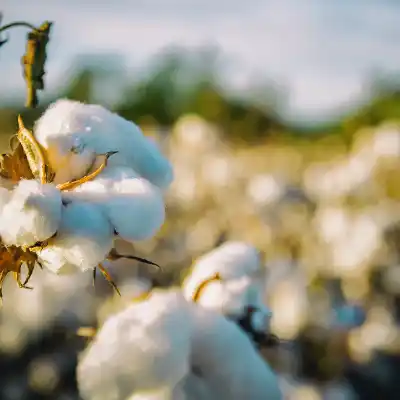
Traditional denim is woven from 100% cotton — no synthetic blends, no elastic fibers. Cotton is a natural cellulosic fiber with a tensile strength of 3.0–4.9 grams per denier when dry, making it durable under pull forces. However, cotton’s elastic recovery is only approximately 74% at 2% extension, meaning it permanently retains a portion of every stretch it undergoes.
Premium denim blends add 1–3% elastane (spandex) to restore elastic recovery to 90–95%. For standard 100% cotton jeans, every bend, squat, and extended wear session contributes to irreversible fiber elongation — with no mechanism to pull the fabric back to its original dimensions.
Twill Weave
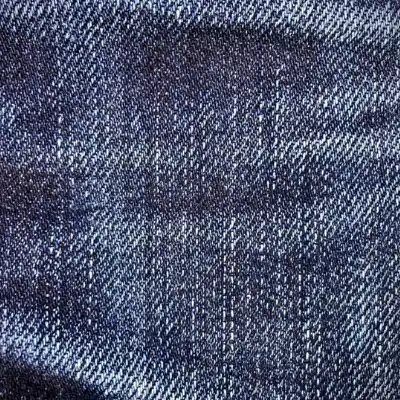
Denim uses a 3×1 twill weave — meaning the weft thread passes over three warp threads before going under one. This diagonal interlacing creates the characteristic ribbing pattern visible on the right side of the fabric. The structure gives denim a natural 5–10% stretch on the bias (diagonal direction), which is why jeans feel more forgiving in movement than their rigid appearance suggests.
The construction is warp-facing, with warp yarns dominating the visible surface. This dense surface coverage contributes to denim’s durability, but it does not prevent fiber elongation — the stretch happens at the yarn-to-yarn contact points within the weave structure itself.
Why Jeans Stretch Out So Fast
Even a well-fitting pair of 100% cotton jeans begins stretching within the first few weeks of wear. Three specific mechanisms drive this process, and understanding each helps you slow the rate of permanent growth.
Cotton Stretches Without Elastic Recovery
Cotton threads elongate under the repeated mechanical stress of walking, sitting, and bending. Unlike elastane fibers — which snap back to their original length after elongation of 500% or more — cotton fibers have no significant recoil. At 2% extension, cotton recovers only about 74% of its original length; at 5% extension, recovery drops below 45%.
Every hour of wear permanently adds a small but measurable increment of stretch to the fabric. After 3–6 months of daily wear, this accumulates into the 3–5% total stretch figure that denim fabric researchers consistently cite.
The Dryer Pulls Fabric Under Heat Stress
Machine dryers tumble jeans at temperatures between 135°F and 150°F (57°C–65°C) on a standard medium-high setting. At these temperatures, cotton fibers soften slightly, and the tumbling action mechanically pulls the fabric in random directions. The result is uneven dimensional distortion — not uniform contraction, but random fiber displacement that worsens permanent stretch over time.
Air-drying jeans flat or on a hanger eliminates the mechanical pulling force entirely. The fabric dries under its own weight, which applies far less stress to the yarn structure than a rotating drum.
Over-Washing Weakens Fiber Structure
Each wash cycle exposes cotton fibers to water swelling, agitation stress, and detergent chemistry. Washing jeans more than once per week under normal wear conditions weakens the fiber-to-fiber bonds within the yarn, making the fabric more susceptible to permanent elongation under body pressure.
Most denim care specialists recommend washing jeans every 5–10 wears under normal conditions. This limits fiber degradation while maintaining hygiene — and it directly improves waistband retention, reducing the chance of pants rolling down with extended wear.
How Much Jeans Stretch Over Time
The total stretch in 100% cotton jeans follows a predictable pattern. Knowing the numbers helps you buy the correct size upfront and set accurate expectations about fit over time.
3–5% of Total Fabric Length
Under normal wear conditions, 100% cotton denim expands by 3–5% of its total fabric dimensions over the first several months of use. This is a fabric-level measurement — it affects the waist, hips, thighs, and inseam proportionally. A pair of jeans with a 32-inch waist, for example, stretches to approximately 32.96–33.6 inches at the waistband seam after regular wear.
Sanforized denim (pre-shrunk at the factory using the Sanforization mechanical process) limits initial post-wash shrinkage to 2–3%, compared to up to 10% for unsanforized raw denim. Sanforization does not prevent wear-induced stretching — the two processes operate independently.
Up to 1–2 Inches at the Waist
In practical terms, the waist is the most noticeable area of stretch. After 3–6 months of regular wear without washing, most 100% cotton jeans grow by 1 to 2 inches at the waist. Jeans blended with 2% elastane retain stretch to approximately 1 inch, because the spandex fiber provides partial elastic recovery after each wear session.
To account for this, many experienced denim buyers size down by one waist size — typically 1 inch — when purchasing 100% cotton jeans. This produces a snug initial fit that relaxes to the correct size after approximately 3–4 weeks of regular wear.
Cotton vs. Stretch Denim: Stretch and Recovery Comparison
Choosing between fabric compositions is the most effective way to control long-term fit. The table below compares the three most common denim constructions across the properties that matter most for stretch management.
| Property | 100% Cotton Denim | Cotton + 2% Elastane | Cotton + 4% Elastane |
|---|---|---|---|
| Bias stretch range | 5–10% | 15–25% elongation | 25–35% elongation |
| Elastic recovery at 2% extension | ~74% | 90–95% | 95–98% |
| Waist growth after 6 months | 1–2 inches | ~1 inch | <0.5 inch |
| Shrinks with hot water (60°C) | Yes — up to 20% | Yes — 3–5% | Minimal |
| Recommended care | Cold wash, air dry | Cold wash, low-heat dry | Cold wash, air dry |
How to Fix Jeans That Have Stretched Out
Once cotton fibers have elongated, they do not return to their original length on their own. Two reliable methods use heat or chemistry to partially restore original dimensions without damaging the fabric.
Quick-Reference: Denim Care at a Glance
- Wash frequency: Every 5–10 wears (more washing = faster stretch-out)
- Wash temperature: Cold water for regular care; 60°C (140°F) hot water to shrink stretched jeans
- Drying method: Air dry flat or on a hanger — avoid machine drying which mechanically pulls fabric
- Elastane heat limit: Do not exceed 60°C (140°F) if jeans contain spandex — it degrades elasticity
- Expected shrinkage from hot wash: 4–6% length, 2–3% width for 100% cotton
- Sizing tip: Buy 100% cotton jeans 1 inch smaller at the waist — they’ll stretch to your actual size in 3–4 weeks
Wash in Hot Water at 60°C / 140°F
Cotton fibers begin to shrink at temperatures above 38°C (100°F), and washing at 60°C (140°F) triggers effective, controlled shrinkage. At this temperature, the hydrogen bonds within the cotton cellulose structure contract, pulling the yarn back toward its pre-elongated dimensions. A single wash at 60°C followed by a high-heat dryer cycle at 71°C (160°F) produces 4–6% shrinkage in length and 2–3% in width for 100% cotton jeans.
For maximum recovery, submerge the jeans in boiling water (100°C / 212°F) for 20–30 minutes before machine washing. This approach delivers the maximum thermal shrinkage the fabric allows — up to 20% total size reduction for unsanforized denim. Exercise caution with blended denim containing elastane: temperatures above 60°C degrade spandex fibers and permanently reduce their elasticity.
Use a Liquid Fabric Softener Spray
A fabric softener spray relaxes the cotton fiber structure just enough to allow manual reshaping without a full wash cycle. Mix equal parts liquid fabric softener and warm water in a spray bottle. Mist the stretched areas — waistband, seat, thighs — until damp, then use your hands to compress and work the fabric back toward its original dimensions before laying the jeans flat to dry.
Never pour undiluted fabric softener directly onto the fabric. Concentrated softener compounds deposit a waxy residue that traps dirt and accelerates future fiber breakdown. If a residue film develops, rinse the treated area with warm water after 30 minutes.

Final Words
Jeans only look good when they fit correctly — once they start stretching out, both the silhouette and comfort suffer. The root cause is always cotton’s limited elastic recovery combined with the mechanical stress of daily wear. Choosing jeans with 1–3% elastane content, washing every 5–10 wears in cold water, and air-drying rather than machine-drying extends the fit life of any pair significantly.
You may also find our article on do American Eagle jeans shrink a useful companion read on managing denim dimensions.
References
- Marmarali, A., et al. (2018). Elastic Recovery and Performance of Denim Fabric Prepared by Cotton/Lycra Core Spun Yarns. Journal of Natural Fibers, Vol. 17, No. 8. Taylor & Francis (tandfonline.com).
- Turhan, Y., et al. (2016). Stretch and Bagging Properties of Denim Fabrics Containing Different Rates of Elastane. ResearchGate / Textile Research Journal.
- Gong, R., et al. (2023). Low-Bagging Stretch Denim Yarn Production by Spinning Optimization of Cotton-Wrapped Dual-Core Elastane and T400 Multifilament. Heliyon (ScienceDirect).
- Nudie Jeans. (2023). Sanforized and Unsanforized Denim: Shrinkage Behavior. nudiejeans.com. (Plain text — domain not in authoritative list.)
- Clorox. (2024). How Much Do Jeans Shrink When Washing and Drying? clorox.com. (Plain text — domain not in authoritative list.)


