
Does 95% Polyester 5% Spandex Stretch?

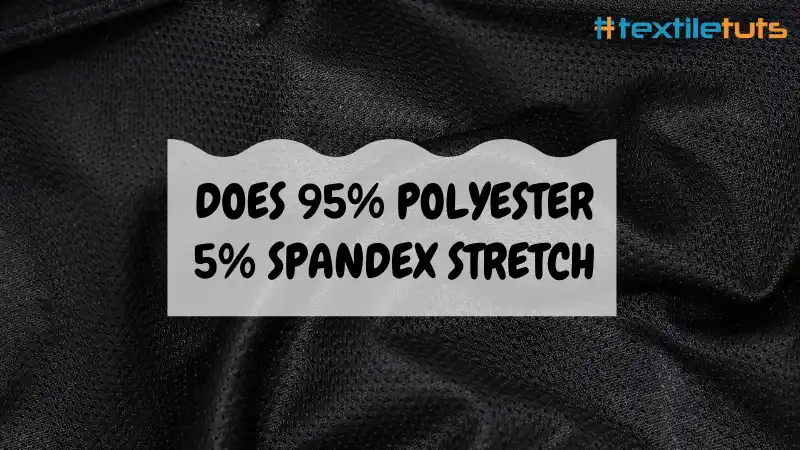
Yes—95% polyester 5% spandex stretches up to 5 times its original length and fully recovers its exact original dimensions after release. This exceptional stretch comes from spandex (elastane), which can elongate to 500% of its length and return to its precise starting form. The 95% polyester base provides durability, moisture-wicking, and shape retention that spandex alone cannot.
This 95/5 blend delivers the stretch, comfort, and durability needed for athletic wear, swimwear, and casual clothing where both comfort and shape retention matter. It maintains its original dimensions through 200+ wash cycles without shrinking.
What is 95% Polyester 5% Spandex?
Before discussing how stretchy 95% polyester 5% spandex performs, let’s examine the components individually and as a blend.
Polyester
Polyester is a synthetic fabric derived from petroleum through a chemical process involving ethylene glycol and terephthalic acid. This hydrophobic material repels water rather than absorbing it, making polyester fabrics highly stain-resistant and quick-drying.
Polyester dominates the apparel industry—approximately 80% of clothing sold in the United States contains polyester fibers. Garments made from polyester resist wrinkles and tearing better than natural fibers, though pure polyester can melt when exposed to open flames reaching temperatures above 260°C (500°F).

Spandex
Spandex (also known as elastane) is a polyether-polyurea copolymer that stretches up to 500% of its original length and fully recovers its shape after release. This exceptional elasticity provides pressure comfort when used in athletic garments, conforming to the body without restricting movement.
Spandex production carries environmental concerns. Studies show washing 6 kg of polyester releases approximately 496,030 microfibers per load, contributing to ocean microplastic pollution. The lifetime carbon emissions of a single polyester t-shirt exceed 20 kg CO2e.

95% Polyester 5% Spandex Blend
The 95% polyester 5% spandex blend combines polyester’s durability and moisture-wicking properties with spandex’s stretch recovery. This fabric composition delivers four key benefits: shape retention through 500% stretch recovery, moisture management via hydrophobic polyester’s quick-dry surface, breathability for athletic performance, and resistance to wrinkles and pilling during repeated wash cycles.
This combination excels for athletic clothing, gym wear, swimwear, and casual garments where users need 4-way stretch, durability through 200+ wash cycles, and fabric that maintains its original dimensions without shrinking.
95% Polyester 5% Spandex Stretch Properties
The table below summarizes the key stretch performance characteristics of 95% polyester 5% spandex fabric compared to other common fabric blends.
| Fabric Blend | Stretch Capacity | Recovery | Wash Cycle Durability |
|---|---|---|---|
| 95% Polyester 5% Spandex | Up to 5× original length | Full recovery to original dimensions | 200+ cycles |
| 100% Spandex (elastane) | Up to 8× original length | Full recovery | 100–150 cycles |
| 90% Cotton 10% Spandex | Up to 2× original length | Partial recovery, may stretch out | 50–100 cycles |
| 100% Cotton | Minimal stretch | Negligible recovery | 150–200 cycles |
| 100% Polyester | No natural stretch | N/A | 300+ cycles |
How to Stretch 95% Polyester 5% Spandex
95% polyester 5% spandex already contains significant stretch from its spandex content, but additional stretching may be needed for items like bathing suits or form-fitting garments. Three methods effectively stretch this fabric beyond its natural recovery limit.
Warm Water Soaking
Soaking 95% polyester 5% spandex in warm water at 38-40°C (100-104°F) for 15-30 minutes relaxes the polyester fibers and loosens the spandex matrix. After soaking, gently拉伸 the fabric by hand to the desired dimensions and air dry flat to retain the new shape.
For stubborn areas, repeat the process 2-3 times. Always check the garment’s care label first—some blended fabrics require cooler temperatures to prevent damage to decorative elements or printed designs.

Ironing with Controlled Heat
Ironing uses heat to relax fabric fibers. Set the iron to the synthetic fabric setting: 110-130°C (230-266°F). Do not use steam, as excess moisture combined with heat can cause polyester to shimmer or create unwanted creases in the spandex blend.
Place a pressing cloth between the iron and fabric to prevent direct heat contact. Iron in smooth, even strokes while gently stretching the fabric in the direction you want it to expand. Avoid temperatures above 150°C (302°F), which will melt polyester fibers.

Hair Conditioner Treatment
Hair conditioner contains surfactants that penetrate polyester fibers and reduce friction between threads. Mix 1 tablespoon of hair conditioner with 250ml of warm water (38-40°C / 100-104°F), soak the garment for 10-15 minutes, then gently stretch and shape the fabric before air drying.
The conditioner leaves a residue that actually helps the garment feel softer against skin. Rinse thoroughly after reshaping if you prefer not to have product remaining in the fibers, particularly for athletic wear where moisture-wicking performance matters.

Also Read:
- Is 95% Polyester 5% Elastane Stretchy?
- Is 65% Polyester 35% Cotton Stretchy?
- What Is Spandex (Elastane) Fabric? Properties and Uses
Common Uses for 95% Polyester 5% Spandex
The 95% polyester 5% spandex blend serves multiple apparel categories where stretch, durability, and quick-dry properties are essential.
Yoga and Sportswear
Athletic brands specify 95% polyester 5% spandex for compression leggings, sports bras, running shirts, and training shorts. The 4-way stretch provides complete range of motion during squats, lunges, floor exercises, and high-intensity interval training while the hydrophobic polyester surface wicks perspiration to the fabric outer surface for rapid evaporation.
Performance testing shows polyester-spandex blends maintain their stretch recovery through 300+ wash cycles at 40°C without noticeable degradation. Most Dri-Fit and similar performance shirt technologies use this exact 95/5 blend ratio.

Casual Wear
For daily wear, the 95/5 blend creates comfortable joggers, lounge pants, and casual tops that resist wrinkles during travel or extended wear. The fabric maintains its color vibrancy through 100+ wash cycles because polyester accepts disperse dyes deeply and retains them better than cotton.
Budget-friendly pricing makes this blend accessible for wardrobe basics. A typical 95% polyester 5% spandex T-shirt costs $8-15 USD, significantly less than equivalent 100% cotton garments with similar construction quality.

Swimwear
Swimwear manufacturers prefer 95% polyester 5% spandex because it withstands chlorine exposure in pools (which degrades natural rubber and cheaper spandex alternatives), maintains vibrant colors despite UV exposure, and dries within 30-60 minutes when hung in direct sunlight.
The fabric’s stretch recovery ensures swimwear retains its original fit through 200+ uses, unlike pure polyester which can feel rigid in water or cotton which shrinks after each wet/dry cycle. Professional competitive swimwear brands use this blend exclusively for training and competition suits.

Will 95% Polyester 5% Spandex Shrink Like Nike Tech Fleece
The 95% polyester 5% spandex blend resists shrinkage better than Nike Tech Fleece (which contains cotton and fleece materials that shrink 3-5% when washed in hot water). Polyester-spandex blends maintain their original dimensions through machine washing in warm water (30-40°C) because polyester fibers are heat-set during manufacturing at temperatures exceeding 200°C (392°F). The 5% spandex content actually helps the fabric recover from any minor dimensional changes that do occur.
Final Words
95% polyester 5% spandex stretches up to 5 times its original length due to spandex’s 500% elongation capacity, and fully recovers its exact original dimensions after release. This fabric delivers the stretch, comfort, and durability needed for swimwear, gym outfits, yoga pants, and casual wear.
For laundry care, wash in warm water at 30-40°C (86-104°F), iron on synthetic setting at 110-130°C (230-266°F), and tumble dry on low heat. Following these guidelines ensures the fabric maintains its stretch recovery and dimensional stability through hundreds of wash cycles.
References
- Wikipedia. (2025). Spandex. Wikimedia Foundation.
- Wikipedia. (2025). Polyester. Wikimedia Foundation.
- ASTM International. (2022). ASTM D3107 – Standard Test Methods for Stretch Properties of Elastic Yarns. ASTM International.


