
Why Do My Pants Roll Down At The Waist?

15 Reasons Why Your Pants Are Rolling Down at the Waist — and How to Fix Them
Pants roll down at the waist because of incorrect sizing, weak elastic degradation, postural factors, or physiological changes in your body. You can resolve the problem by wearing properly sized pants, using a belt or suspenders, replacing worn elastic, or choosing garments designed for your body type.
This guide covers the 15 most common reasons pants fall down at the waist and provides actionable solutions for each cause.
Quick Reference: US Pants Size to Waist Measurement
US clothing sizing is inconsistent across manufacturers — a size 34 from one brand may differ by 3–5 cm from another. Use this chart as a starting point, then measure yourself for accuracy.
| US Pant Size | Waist (inches) | Waist (cm) |
|---|---|---|
| 28 | 28″ | 71 cm |
| 30 | 30″ | 76 cm |
| 32 | 32″ | 81 cm |
| 34 | 34″ | 86 cm |
| 36 | 36″ | 91 cm |
| 38 | 38″ | 97 cm |
| 40 | 40″ | 102 cm |
15 Reasons Why Pants Roll Down at the Waist
Pants roll down at the waist for physiological, structural, and garment-related reasons. Identifying which cause applies to your situation determines the right fix.
1. Pants No Longer Fit Properly
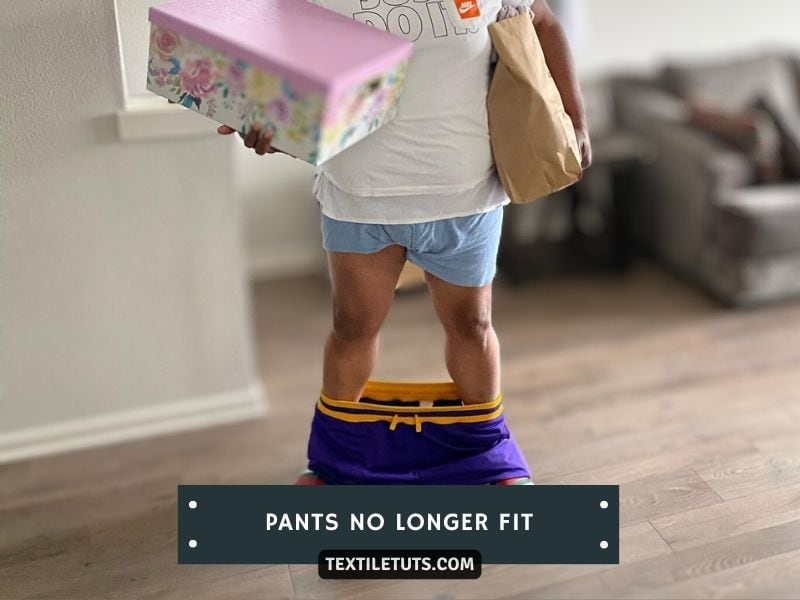
One of the most common reasons pants roll down at the waist is that they no longer fit properly. Weight fluctuations, pregnancy, and fabric stretching over time all change how pants sit at the waist. According to EN 13402 clothing size standards, a waist measurement shift of just 4–5 cm can move a wearer from one size to another.
If your pants feel snug at the waist, the waistband may be under constant tension that forces it to slide down seeking relief. Conversely, pants that have stretched out from extended wear no longer grip the waist effectively.
2. Belt Is Not Tight Enough
A belt that is not cinched tightly enough fails to anchor the waistband in place. The belt must be snug enough to compress the waistband fabric against your waist without cutting off circulation. A belt gap of more than 2–3 cm between your body and the belt buckle indicates insufficient tightening.
3. Wearing the Wrong Size Pants
US clothing sizing for pants uses waist circumference in inches. A size 32 pant corresponds to an 81 cm waist, size 34 to an 86 cm waist. However, US sizing standards are voluntary, meaning manufacturers apply their own measurements. This leads to what the Wikipedia clothing sizes article confirms: inconsistent sizing across brands where a size 34 from one manufacturer may differ by 3–5 cm from another.
Pants that are too large will always fall down regardless of belt tightness, because the waistband circumference exceeds your actual waist measurement.
4. Abdominal Muscle Weakness
Weakness in the abdominal muscles — whether from surgery, aging, or medical conditions — reduces the natural platform your core provides for waistbands to rest against. Conditions such as diastasis recti, which is a separation of the rectus abdominis muscles, directly affect how securely pants sit at the waist.
The Wikipedia article on diastasis recti notes that this condition involves an increased gap between the right and left rectus abdominis muscles caused by stretching of the linea alba connective tissue. Pregnant women over age 35, those with high birth weight infants, or multiple pregnancies face higher risk.
5. Pants Are Too Loose
Excessively loose pants with extra fabric at the waist create a situation where gravity and movement work against the waistband. The more extra material present, the greater the leverage force pulling the waistband downward with each step or seated movement.
6. Gluteal Volume Loss
As noted in Wikipedia’s trousers article, maintenance of fit is more challenging for trousers than for some other garments because adjustments to girth are relatively limited. The gluteal muscles provide structural support for the back of the waistband. Age-related muscle atrophy in the buttocks reduces this support, allowing the waistband to tip forward and roll down.
7. Posture
Posture directly affects waistband stability. Per WHO standards cited in the Wikipedia waist article, waist circumference is measured midway between the lowest palpable rib and the iliac crest. When you slouch or hunch forward, your abdominal contents shift forward, increasing the forward pressure on your waistband and causing it to roll downward.
8. Wrong Pant Type for Activity
Each pant style is engineered for specific activities. Loose-fitting denim is designed for casual wear — not hiking or physical labor. When you wear pants designed for sitting in an office while performing active work, the waistband construction cannot handle the repeated dynamic forces.
9. Pants That Are Too Tight
Pants that are too tight create a “muffin top” effect where flesh bulges over the waistband and pushes it downward. The tighter the pants, the more force the body exerts against the waistband edge, eventually forcing it to roll over and downward.
10. No Belt or Secure Closure
Without a belt, button, or other secure closure, pants rely entirely on friction and elastic tension to stay in place. This works for fitted garments with elastic waists but fails for traditional fixed-waist pants that depend on a belt to anchor them.
11. Weak or Degraded Elastic
Elastic waistbands lose their stretch recovery over time. According to Wikipedia’s spandex article, spandex fibers can stretch up to five times their original length while returning to their original shape. However, repeated exposure to body heat, sweat, detergents, and mechanical agitation degrades the polyether-polyurea copolymer structure, reducing recovery force.
After approximately 100–200 wash cycles, elastic waistbands can lose 30–50% of their original recovery force, resulting in visible sagging and reduced grip.
12. Significant Weight Changes
Weight gain redistributes body fat around the midsection, altering waist shape from a relatively flat profile to a more protruding one. WHO health thresholds classify waist circumference above 102 cm for men and above 88 cm for women as carrying high health risks. Even a 5–8 cm increase in waist measurement can make previously well-fitting pants fall down.
13. Pregnancy and Postpartum Changes
Pregnancy fundamentally alters midsection geometry. The growing uterus expands the abdominal cavity, stretching the rectus abdominis muscles and the linea alba connective tissue. After childbirth, the diastasis recti Wikipedia article states that while the separation typically lessens within 8 weeks after childbirth, the connective tissue remains stretched for many individuals, and some live with the condition for years.
This changed anatomy reduces the smooth cylindrical surface the waistband once rested against, making it harder for pants to stay up without rolling.
14. Age-Related Tissue Changes
As we age, skin loses elastin and collagen, and muscle mass decreases. The spandex article confirms that elastic fibers — while exceptional in their stretch recovery — are subject to degradation over time. Combined with reduced muscle tone in the core and glutes, aging creates multiple factors that reduce waistband stability.
15. Incorrect Washing Method
Washing pants in hot water at temperatures above 40°C causes cotton fibers to shrink and synthetic fibers to degrade faster. High heat drying at temperatures above 60°C accelerates elastic degradation. The combination of hot water washing and high-heat drying can reduce elastic waistband life by 50% or more per cycle.
How to Stop a Waistband from Rolling Down
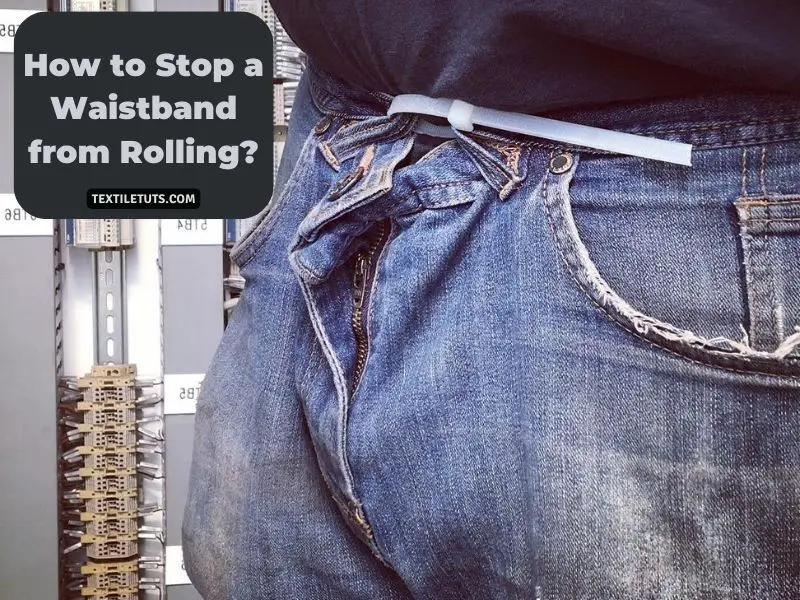
Preventing waistband roll requires matching the solution to the root cause. Here are targeted fixes for each category of problem.
Choose the Correct Size
If your pants are too big in the waist, they will slip and slide regardless of belt tightness. Per the Wikipedia clothing sizes article, European standard EN 13402 attempts to standardize sizing using actual body measurements, but inconsistencies persist across brands and regions.
Measure your waist at the smallest point — typically just above the belly button — using a cloth tape measure. Compare your measurement against the size chart of the specific brand you are purchasing. When between sizes, size down for pants designed to sit at the natural waist, or choose a brand with stretch fibers if you prefer a looser fit.
Tighten Your Belt Properly
A belt should be tightened enough that you can fit no more than one finger between your body and the belt strap at the buckle hole you use. Many people under-tighten belts because they fear discomfort, but an improperly tightened belt defeats its own purpose.
For pants with a lower rise, position your belt at the narrowest point of your waist rather than at your hip bone, as this creates a more stable anchor point.
Belt Style Matters
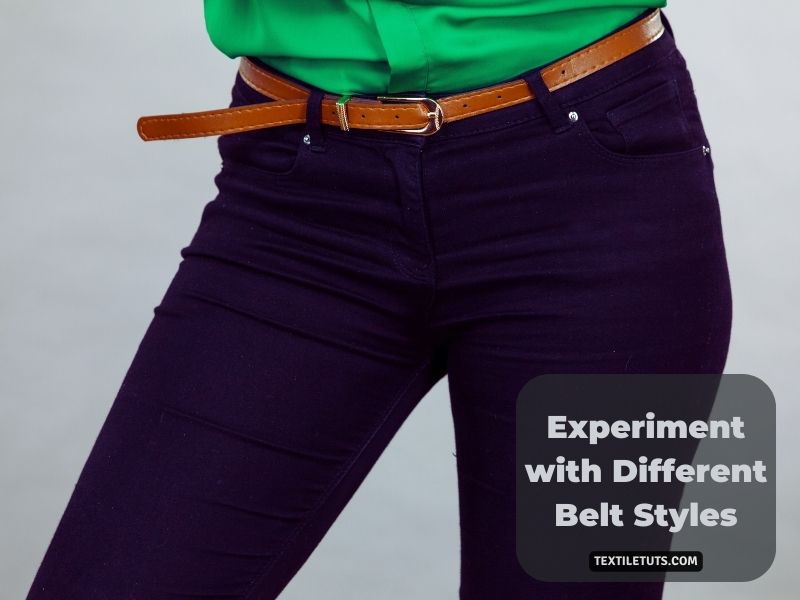
A wide, flat belt distributes pressure across a broader waist area, but narrower belts with raised edges or textured undersides grip fabric more effectively. For pants made from slippery synthetic fabrics, a belt with a nubuck or suede underside provides additional friction that plain leather cannot offer.
Use Suspenders
Suspenders attach to the waistband at front and back, applying vertical tension that counteracts gravity’s downward pull. They eliminate waistband rolling entirely because the garment hangs from your shoulders rather than being held by friction at the waist.
Clip-on suspenders work for quick fixes; button-in suspenders provide a more secure, permanent solution. Suspenders are especially effective for individuals with postural variations or those who find belts uncomfortable.
Replace the Elastic Waistband
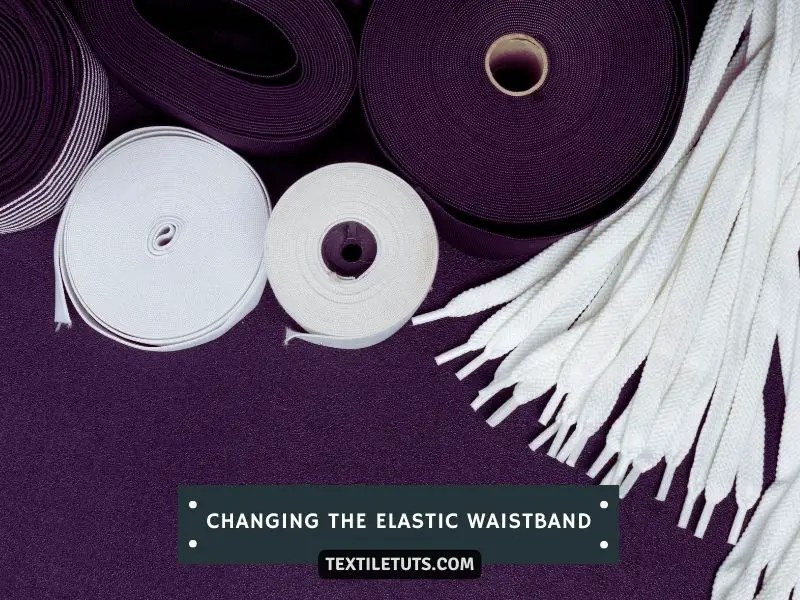
For pants with worn elastic, replacing the waistband is more cost-effective than buying new pants. Choose elastic with a recovery force of at least 200–400 grams-force for durability. As the spandex Wikipedia article indicates, spandex-blend elastics maintain their properties longer than pure rubber alternatives.
Try Padded Underwear
Padded underwear or belly bands add a friction layer between your body and the waistband, preventing the waistband from sliding directly against skin. The padding also fills any gap between your body and the waistband, creating a more secure interface.
Have Pants Tailored
Taking in the waist by 2–4 cm on each side brings the waistband circumference back in line with your actual waist measurement. A tailor can also add adjustment tabs with Velcro or hooks that allow you to fine-tune the fit.
Follow Proper Wash Care
Wash elastic-waist pants in cold water (30°C or below) on a gentle cycle. Lay flat to dry or tumble dry on low heat. Avoid fabric softeners with elastic garments, as they coat elastic fibers and accelerate degradation by reducing the material’s recovery force.
Buy Pants Designed for Your Body Type
High-waisted pants sit above the natural waist where the torso is more cylindrical and provides better anchoring. Pants with a contoured waistband that curves with your body shape reduce the likelihood of rolling more effectively than straight-cut waistbands.
How to Tighten an Elastic Waistband: Step-by-Step Guide
If your favorite pants have an elastic waistband that has stretched out, you can tighten them at home with basic materials. Here is a step-by-step guide.
Materials Needed
- A pair of shorts or pants with an elastic waistband
- Sewing needle and thread or a sewing machine
- Safety pin
- Cloth measuring tape
Step 1: Measure Your Waist
Using a cloth tape measure, determine your waist circumference at the point where the waistband sits. Per WHO standards, measure midway between the lowest palpable rib and the iliac crest. Note this measurement.
Step 2: Pin the Elastic Waistband
Turn the pants inside out. Using a safety pin, secure the elastic waistband at the point where you want to gather it. Work from the inside of the garment to keep stitches hidden.
Step 3: Sew the Elastic in Place
Using a needle and thread or a sewing machine, stitch along the elastic where it overlaps itself. Use a zigzag stitch or multiple rows of straight stitching for durability. Remove the safety pin as you sew.
Step 4: Try On the Pants
Turn the pants right-side out and try them on. The waistband should now fit snugly without being uncomfortably tight. If additional tightening is needed, repeat the process.
How to Keep Pants Up with a Larger Stomach
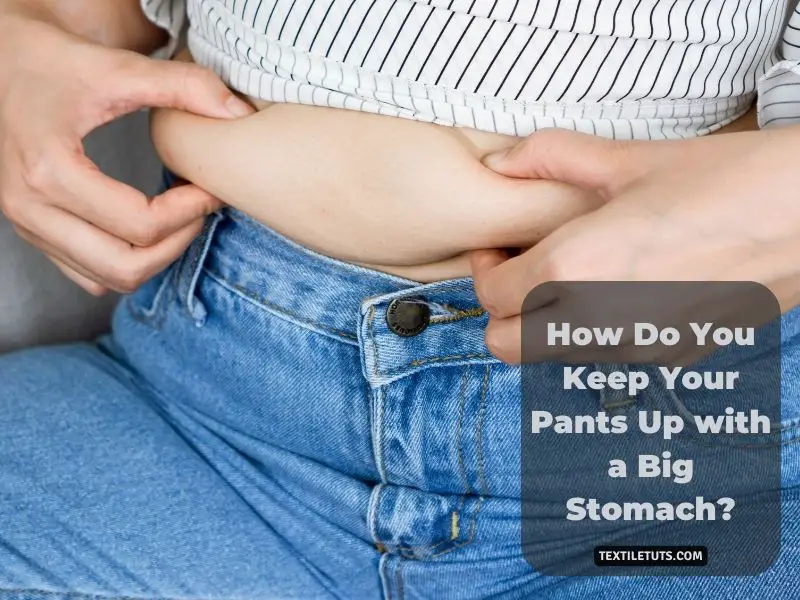
Individuals with larger stomachs face compounded challenges with waistband rolling because the body shape transitions from waist to hip more gradually, reducing the natural ledge that anchors waistbands on slimmer figures.
Wear High-Waisted Pants
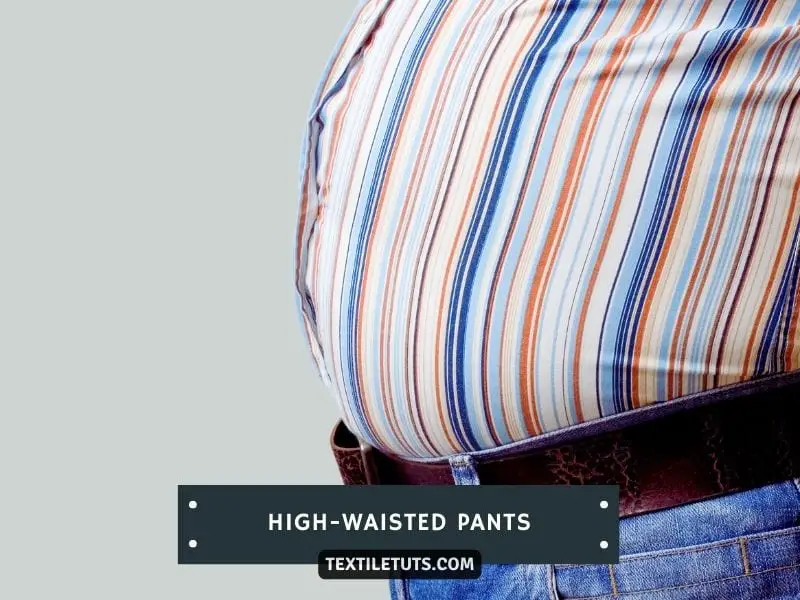
High-waisted pants sit above the belly button where the torso’s circumference is smaller and more consistent. This narrower point acts as a natural anchor. Additionally, high-waisted styles often include interior silicon grip strips or wider waistbands that resist rolling.
Wear Supportive Underwear
High-waisted shapewear or supportive underwear smooths the transition between waist and hip, creating a more uniform surface under your pants. This reduces the step-change geometry that causes waistbands to catch and roll.
Use a Belt Extension or Seatbelt Pad
Belt extensions add 5–8 cm to your belt’s effective length, allowing you to close a belt that would otherwise be too tight around a protruding midsection. Seatbelt pads distribute the pressure of the belt across a wider surface area, reducing the sensation of tightness while maintaining a secure closure.
Wear Leggings Under Pants
Wearing leggings or compression shorts underneath your pants adds a friction layer that prevents the outer pant fabric from sliding against your body. Leggings with a high waist also act as a second waistband, catching any rolling before it reaches the outer garment.
Waistband Rolling and Larger Body Sizes
Waistband rolling affects people of all body sizes, but those with larger waists face structural disadvantages. The primary issue is that standard pants sizing uses a waist-to-hip ratio that assumes a proportional decrease from hip to waist. For individuals where the hip-to-waist ratio is less dramatic, conventional waistband construction fails to engage the natural anatomy properly.
Solutions specific to larger body sizes include custom tailoring, choosing pants with adjustable waistbands (drawstrings, side tabs, or expansion panels), and selecting brands that design specifically for extended sizing with contoured waistbands.
References
- Wikipedia. (n.d.). Clothing sizes. Wikimedia Foundation.
- Wikipedia. (n.d.). Trousers. Wikimedia Foundation.
- Wikipedia. (n.d.). Spandex. Wikimedia Foundation.
- Wikipedia. (n.d.). Waist. Wikimedia Foundation.
- Wikipedia. (n.d.). Diastasis recti. Wikimedia Foundation.


