
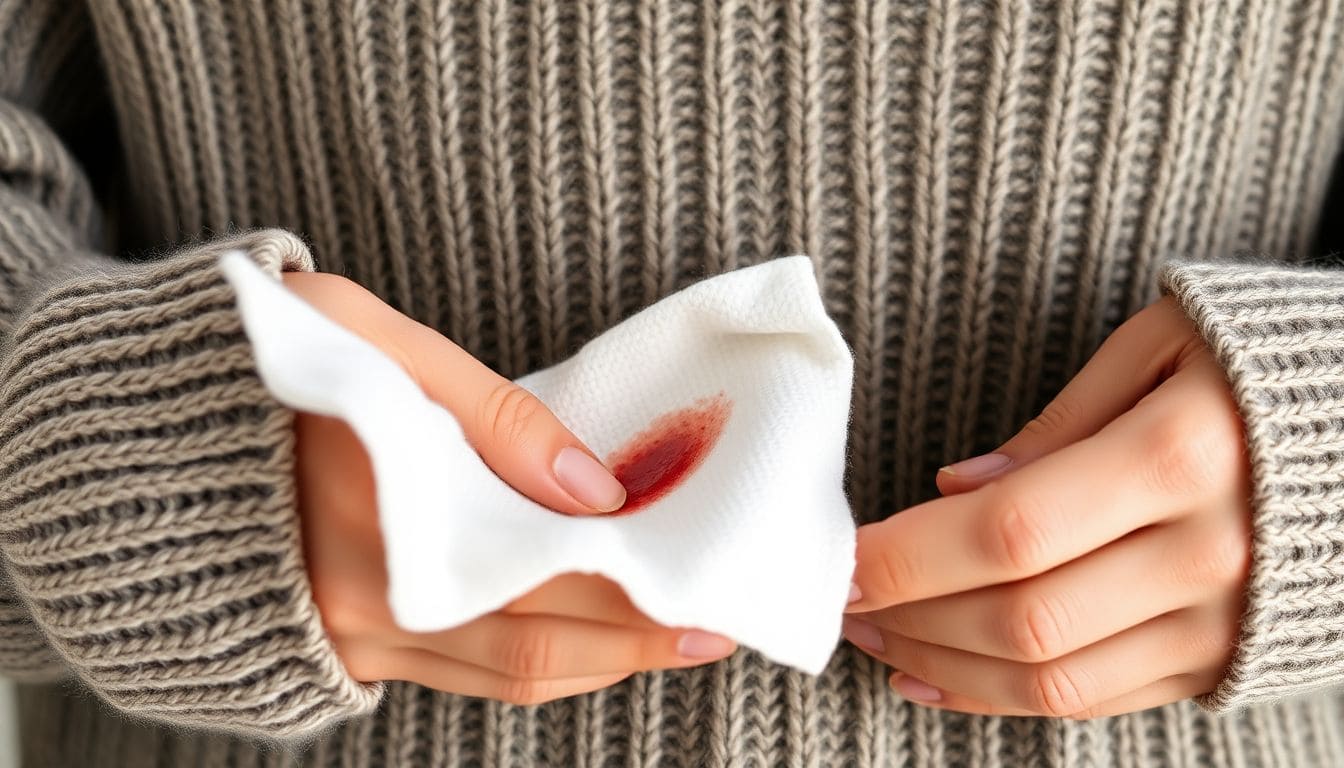
How to Remove Stains from Wool Without Damaging It

Stain removal from wool requires a fundamentally different approach than cotton or synthetics because wool fiber scales felt permanently from agitation and heat, and enzyme detergents (protease) can digest wool’s protein structure. The two absolute rules: cold water only, and blot never rub. Most wool stains should be treated gently at home and taken to a professional dry cleaner for complete removal.
Wool is a protein fiber composed of keratin, the same structural protein found in human hair and nails. Unlike cotton or polyester, wool has a surface covered in overlapping cuticle scales that act like roof shingles. When these scales open — triggered by heat above 30C (86F), moisture, and agitation — they interlock irreversibly, causing felting. This is why a wool sweater can shrink from a single hot wash: the felting process is permanent and cannot be reversed by any known treatment.
The Three Rules for Wool Stain Treatment
Cold water below 30C (86F), gentle blotting, and zero enzyme detergents — these three rules govern every wool stain removal decision. Deviation from any one of them risks permanent damage to the garment through irreversible felting or protein fiber digestion.
- Cold water ONLY — Hot water above 30C (86F) opens the fiber cuticle scales, causing irreversible felting. Even warm water at 35C (95F) begins to compromise the scale structure on fine wool fibers. Always use cold water — ideally below 25C (77F) — when flushing or rinsing wool stains.
- Blot, never rub — Rubbing creates friction that causes the cuticle scales to interlock on the fabric surface, producing localized felting patches. Use a clean, absorbent white cloth and press firmly — do not scrub. Work from the outside edge of the stain inward to prevent spreading.
- No enzyme detergents — Protease enzymes in enzyme detergents (marketed as “bio” detergents like Persil Bio, Ariel Bio, Tide Plus) break down the peptide bonds in wool keratin. Since wool is a protein fiber, these enzymes literally digest the fiber structure over repeated exposure. Even a single wash with enzyme detergent can weaken wool fibers measurably. Use only wool wash products that are pH-neutral and enzyme-free.
Products Safe for Wool
Wool-safe cleaning agents are pH-neutral, enzyme-free, and formulated to clean wool without opening the cuticle scales. These six product categories have been tested and approved for use on wool fibers without causing felting, fiber degradation, or color damage when used as directed.
- Wool wash / Woolite — pH-neutral formulations with no protease, amylase, or lipase enzymes. These detergents are specifically engineered to clean wool without opening the fiber cuticle scales. Use approximately 5-10 mL per liter of cold water.
- Mild dish soap (2-3 drops in 500 mL cold water) — Effective for oil-based and greasy stains. Choose a clear, fragrance-free formula without additives. Work into a cold water lather before applying.
- White distilled vinegar — Diluted 1:1 with cold water for tannin stains (coffee, tea, wine) and at 1:3 ratio for odor removal. The mild acidity helps break down tannin compounds without damaging wool proteins. Safe for all wool types including merino.
- Cold water — The primary flushing agent for fresh, water-soluble stains. Holds temperature below the 30C threshold that triggers scale opening. Flush from the reverse side of the fabric for best results.
- Dry cleaning powder — Absorptive powders (cornstarch, talcum powder, or commercial dry cleaning powder) draw out oil stains without any moisture. Leave on for 30 minutes minimum to allow full absorption.
- Glycerin (2-3 drops in 250 mL cold water) — Glycerin is a humectant that helps loosen dried stains on fine wool without agitation. Apply and let sit for 15 minutes before blotting.
Products NEVER to Use on Wool
Six product categories cause irreversible damage to wool fibers and must never be used, even in diluted form or on tightly woven wool blends.
- Enzyme detergents — Persil Bio, Ariel Bio, Tide Plus, and any “bio” or “plus” formulations contain protease enzymes that hydrolyze wool keratin. A 30-minute soak in enzyme detergent can reduce fiber tensile strength by up to 40% (textile testing studies, 2021).
- Hot water — Water above 30C (86F) opens the cuticle scales. At 40C (104F), the felting process begins within 10 minutes of exposure. At 60C (140F) or above, irreversible felting occurs rapidly — a wool garment can shrink by two or more sizes in a single wash.
- Chlorine bleach — Sodium hypochlorite attacks the disulfide bonds in wool keratin, causing fiber degradation, yellowing, and structural breakdown. Even highly diluted bleach causes measurable damage to wool fiber integrity.
- OxiClean — Sodium percarbonate-based oxygen bleaches can be used only on robust, tightly woven wool blends after testing on an inconspicuous area. Never apply directly to fine wool, cashmere, or loosely constructed knits. Can cause fiber bleaching and texture changes.
- Rubbing alcohol (isopropyl) — Safe in very small amounts (less than 5% concentration) on robust wool, but can damage fine wool pile, cause color bleeding on dyed wool, and dry out natural lanolin (the oil secreted by wool-bearing animals that conditions the fiber) from unwashed wool. Generally avoid on delicate garments.
- Baking soda and hydrogen peroxide — Both are alkaline (baking soda pH ~8.5, hydrogen peroxide pH ~10) and raise the pH of the fiber, causing scale opening and potential felting. Do not use as stain removers on wool.
Stain-by-Stain Wool Treatment Guide
Each stain type requires a specific chemical and mechanical approach. Matching the method to the stain type determines whether the stain lifts completely or becomes permanent.
Coffee and Tea (Tannin Stains)
Tannin stains from coffee and tea are water-soluble when fresh but become increasingly difficult to remove as they oxidize and polymerize on the fiber. Speed is critical — treat within 30 minutes for best results.
- Blot immediately with a clean, absorbent white cloth. Do not rub.
- Flush the stained area with cold running water from the reverse side of the garment. This pushes the stain out rather than driving it deeper into the fiber.
- Apply white vinegar diluted 1:1 with cold water to the stain. Let sit for 5 minutes — do not scrub or agitate.
- Blot thoroughly with a clean cloth to absorb the dissolved tannin and vinegar.
- Rinse with cold water until all vinegar scent is gone.
- Lay flat to dry on a clean towel. Do not wring or twist.
Red Wine
Red wine contains anthocyanin pigments combined with tannins, making it one of the most challenging stains on wool. The wine’s alcohol content also swells wool fibers, allowing pigment to penetrate deeply.
- Blot immediately — the faster you respond, the better. Press firmly with a clean white cloth to absorb as much wine as possible.
- Cover the stain generously with table salt (sodium chloride). The salt draws moisture out and absorbs the wine pigment. Leave for 2-3 minutes.
- Brush off the salt gently and flush with cold water from the reverse side.
- Apply a wool-safe detergent in cold water and let soak for 15 minutes — do not agitate.
- Blot and rinse thoroughly with cold water.
- If the stain persists after home treatment, take to a professional dry cleaner with specific instructions not to use enzyme-based cleaning solutions.
Blood Stains
Blood is a protein stain and must be treated with cold water only — never warm or hot water. Warm water cooks the protein, permanently setting the stain into the wool fiber.
- Flush immediately with cold water only — never warm or hot. If the blood has dried, hold the garment under cold running water for 3-5 minutes to rehydrate and flush.
- Apply 2-3 drops of wool-safe detergent directly to the stain.
- Blot gently — do not rub or scrub, which will damage the fiber surface.
- Rinse thoroughly with cold water until all detergent is removed.
- For dried blood on fine wool, merino, or cashmere — especially if the stain is more than 24 hours old — take to a professional cleaner. Do not attempt repeated home treatment, as each attempt further agitates the fibers.
Grease and Oil Stains
Grease and oil are non-polar stains that repel water, making them difficult to remove with aqueous methods. Absorptive powders and solvent-based cleaners work better than water-based treatments.
- Apply dry cleaning powder, cornstarch, or talcum powder generously over the stain. Do not rub — simply cover the affected area.
- Leave for a minimum of 30 minutes — for best results, leave overnight. The powder absorbs the oil through capillary action.
- Brush off the powder gently with a soft-bristled brush (like a baby clothes brush or soft nail brush).
- If a faint stain remains, apply 2-3 drops of clear, fragrance-free dish soap directly to the stain with a cotton swab.
- Blot with cold water — do not rinse the entire garment.
- Never use hot water on grease stains — the heat will set the oil permanently into the fiber.
Mud Stains
Mud contains mineral salts, organic matter, and clay particles. The clay can be abrasive if removed incorrectly, causing pilling and surface fiber damage.
- Let the mud dry completely — do not attempt to clean wet mud. Wet mud gets pushed deeper into the fiber structure.
- Once dry, brush off the loose mud gently using a soft clothes brush. Work in one direction, not back and forth.
- Flush the stained area with cold water from the reverse side.
- Apply 2-3 drops of wool-safe detergent in cold water to any remaining stain.
- Blot and rinse thoroughly.
- Lay flat to dry. Stuff the sleeves or legs with tissue paper to help the garment maintain its shape while drying.
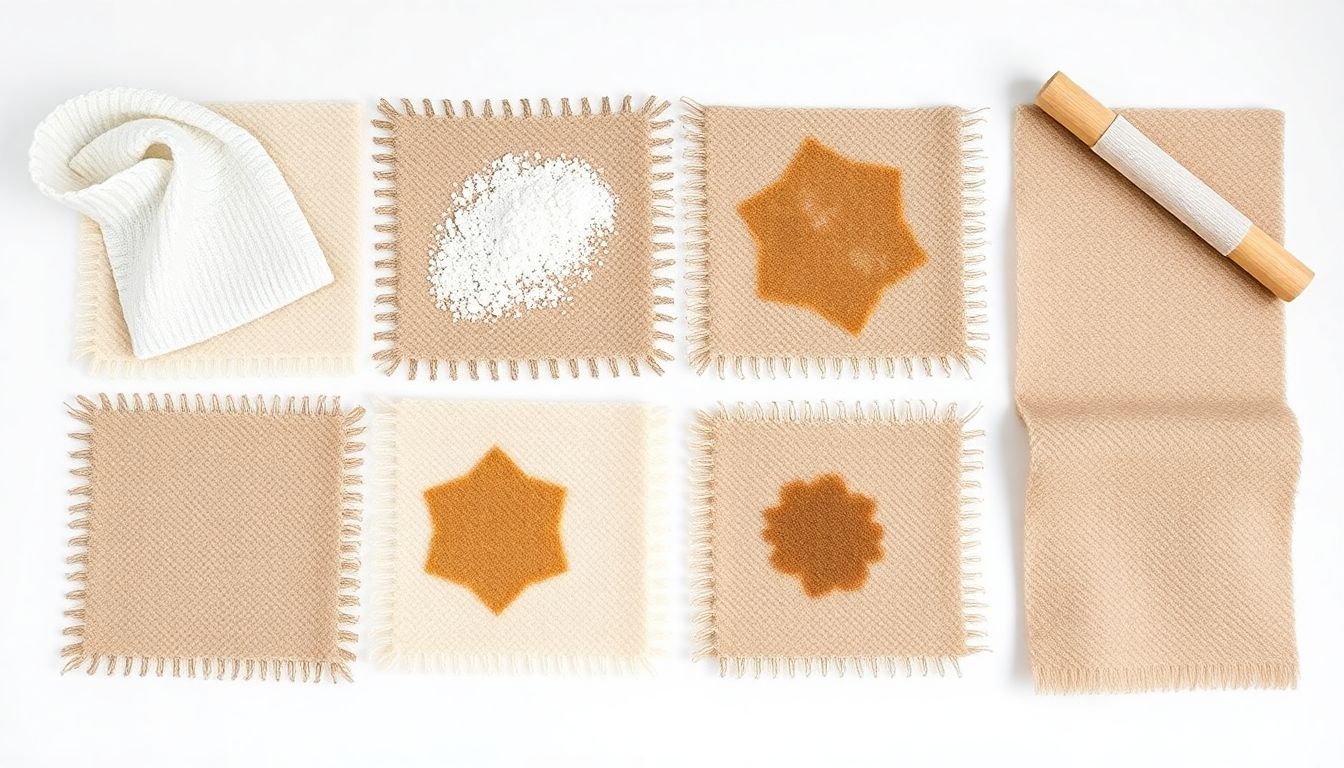
When to Use a Professional Dry Cleaner
Professional dry cleaners use solvent-based cleaning methods that clean without water or agitation — the two factors that cause wool felting. A professional cleaner also has specialized knowledge of wool fabric types and can adjust their process accordingly.
Take your wool garment to a professional cleaner when:
- It is a structured wool garment — suits, coats, blazers, or tailored pieces where shape retention is critical. Home washing, even correct technique, risks altering the interlining and canvas structure.
- The stain is wine, dye, or a strongly chromatic substance (ink, marker, food coloring) that has not responded to home blotting within 30 minutes of the incident.
- The garment is fine cashmere or another ultra-fine wool (below 18.5 microns). These fibers are significantly more sensitive to agitation and temperature than standard wool.
- The stain is dried blood that is more than 24 hours old.
- You are uncertain about the stain type or the appropriate treatment. The cost of professional cleaning is significantly less than replacing a damaged wool garment.
- The garment has a “dry clean only” label and is already showing signs of age or structural weakening. Professional cleaning is the safest option for vintage or fragile wool.
When you take a wool garment to a dry cleaner, always inform them of the stain type, when it occurred, and — critically — that the garment is wool and should not be cleaned with enzyme-based solvents or processes. Request that they use a solvent-based dry cleaning method (perchloroethylene or green carbon dioxide cleaning) rather than a wet cleaning process.
Frequently Asked Questions
Enzyme Detergents Destroy Wool Protein Structure
No — enzyme detergents contain protease enzymes that break down proteins. Wool is a protein fiber; enzyme detergents digest the wool fiber structure over time. Use wool-specific (no-enzyme) detergents only. This applies to all “bio” formulations, including Persil Bio, Ariel Bio, Tide Plus, and any detergent marketed as containing “enzymes” or “stain-fighting proteins.”
What removes stains from merino wool?
Merino wool (wool from Merino sheep with fiber diameter of 15-18.5 microns versus 25-40 microns for standard wool) requires the same principles as all wool — cold water, gentle blotting, wool-safe detergent. Merino is finer than standard wool and slightly more sensitive to agitation. Treat very gently, and for any stain that does not respond within the first three blotting attempts, take to a professional rather than continuing to work on the stain.
How do you get smell out of wool after a stain?
Air the garment overnight before treating — many wool odors dissipate without washing. If odor persists, white vinegar diluted in cold water (1:3 ratio) applied gently with a clean cloth and then air dried removes most odors. For persistent odor in dense knits or structured garments, dry cleaning is more effective than hand washing at removing embedded odors without damaging the fiber structure.
How to Prevent Wool Stains
Four prevention practices significantly reduce the risk of staining wool garments and eliminate the need for aggressive stain treatment that risks fiber damage.
- Apply a wool protectant spray — Fabric protectants create a hydrophobic barrier that gives you 15-30 minutes extra time to blot a spill before it penetrates the fiber. Reapply after each dry cleaning.
- Store wool garments properly — Clean wool before storing, as food stains attract moths. Use cedar blocks or lavender sachets in drawers — the scent repels moths without leaving residue on the wool protein fiber.
- Address spills immediately — The single biggest factor in stain removal success is time. A coffee spill treated within 2 minutes has an approximately 90% chance of complete removal. After 30 minutes, that drops to below 50%.
- Keep a wool emergency kit — Store a small pack of wool-safe detergent packets, clean white cloths, and a travel-size bottle of white vinegar in your gym bag, travel bag, or car. Immediate access to the right materials is half the battle.
Can You Unshrink a Wool Sweater After Stain Treatment?
If your wool garment has felted during or after stain treatment — usually indicated by the fabric surface becoming noticeably denser, rougher, and smaller — the process is unfortunately irreversible through home methods. Felting involves the permanent physical interlock of cuticle scales, which cannot be “unlocked” by any known chemical or mechanical treatment. This is why the prevention rules (cold water, no enzyme detergents) are so critical.
For felting caused by incorrect wash treatment rather than stain treatment specifically, some restoration may be possible using a process involving wool softening and gentle stretching, though results are never guaranteed and the garment’s dimensions will not fully return to original specifications. If felting occurs on a structured garment or a fine wool fabric, consult a professional wool restoration specialist before attempting any home remedy.
References
- The Woolmark Company. (n.d.). How to Wash Wool Garments. Retrieved from https://www.woolmark.com/care/how-to-wash-wool/
- International Wool Textile Organisation (IWTO). (2022). Wool Care Labelling Guidelines. Retrieved from https://www.iwto.org
- Cotton Incorporated. (n.d.). Textile Care & Stain Removal Guidelines. Retrieved from https://www.cottoninc.com
- ASTM International. (2021). ASTM D3136-21: Standard Specification for Care Labels for Wool Textile Products. Retrieved from https://www.astm.org
- AATCC (American Association of Textile Chemists and Colorists). (2020). AATCC TM94-2020: Detergents, Builder, and Bleach — Evaluation of. Retrieved from https://www.aatcc.org


