
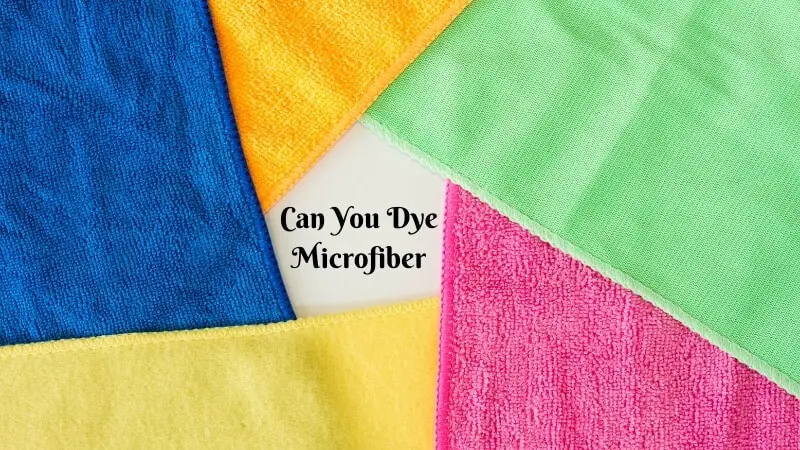
Can You Dye Microfiber? – Problems & Possible Solutions

Yes, you can dye microfiber — but only if the base material that comprises the microfiber accepts dye. Microfiber describes the physical form of a material (any fiber finer than 1 denier per filament, typically ranging from 0.25 to 1.0 denier), not the material itself. Common base materials include polyester, nylon, and polypropylene, each with distinct dyeing characteristics.
Polyester is the most widely used base material for microfiber production due to its excellent dyeability and durability. The compact structure of microfiber — featuring a higher filament density than conventional fibers — creates both opportunities and challenges for successful dyeing. If the material used to produce the microfiber textile accepts dye, that particular microfiber can be dyed successfully.
Dye Comparison by Microfiber Base Material
| Base Material | Dye Type | Optimal Temperature | Optimal pH | Dyeable? |
|---|---|---|---|---|
| Polyester | Disperse dyes | 100–130°C | 4.0–4.5 (acetic acid) | Yes — vibrant, long-lasting color |
| Nylon | Acid dyes (Group B) | Boiling (100°C) | 6.5–7.0 | Yes — good color uptake |
| Polypropylene | None (standard methods) | — | — | No — requires specialized modification |
For designs requiring color correction, fabric dye removers formulated for the specific fiber type and dye class provide effective color reversal without damaging the fabric.
Choosing the Correct Dye for Microfiber Materials
The dye selection depends entirely on the base material used to manufacture the microfiber textile. Polypropylene microfiber cannot be dyed using conventional methods because polypropylene is non-polar and no standard dye classes exhibit affinity for it — specialized modification processes are required. Polyester microfiber dyes effectively with disperse dyes at temperatures ranging from 100°C to 130°C, with optimal exhaustion occurring at pH 4.0–4.5 (adjusted with acetic acid). Nylon microfiber accepts acid dyes, with Group B dyes performing best at pH 6.5–7.0. Polyester and nylon microfibers produce vibrant, long-lasting coloration when paired with the appropriate dye class and process parameters.
Tie Dyeing Microfiber Fabrics
Yes, tie dyeing microfiber produces excellent results when you select the appropriate dye and follow the correct process. For polyester microfiber, disperse dyes deliver the best outcomes. Alternatively, fabric paints offer a simpler application method that bypasses traditional dyebath preparation entirely. Below are the primary techniques:
Tie Dyeing Polyester Microfiber with Disperse Dyes
This method requires immersing the tied fabric in a boiling dyebath (100°C at atmospheric pressure using the carrier method) containing disperse dyes. Jacquard IDYE Polyester produces reliable, consistent results across polyester microfiber substrates. Color mixing follows standard color mixing principles to achieve custom shades, or multiple colors can be applied sequentially for multi-colored effects.
Achieving Multi-Colored Effects on Polyester Microfiber
Follow these steps to create multi-colored tie dye patterns:
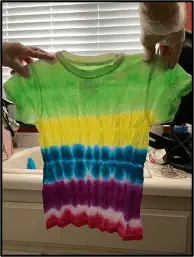
Multi-colored Tie-Dyeing of Microfiber
- Prepare individual dyebaths for each color at boiling temperature (100°C).
- Immerse the tied microfiber in the first dyebath following the dye manufacturer’s instructions.
- After the first dyebath cycle completes, remove the rubber bands.
- Retie the fabric in a new pattern.
- Immerse the fabric in the second dyebath at a different color.
- Repeat for additional colors — note that combined shades begin developing from the third dyebath onward.
The mechanism behind this effect is straightforward: when fabric is retied between dyebaths, the dye cannot penetrate the tightly bound sections. The previous color remains trapped in those bound areas, creating distinct multi-colored bands. This selective penetration produces the characteristic tie dye pattern.
Transfer Printing on Polyester Microfiber with Crayons
This technique falls under transfer printing. Select crayons specifically formulated for heat transfer to synthetic fabrics. Create your design on paper using the crayons, then apply heat (typically 180–200°C) using a heat press or hand iron to transfer the design onto the microfiber. Always test temperature settings on fabric scraps first to avoid damage to the polyester fibers.
Fabric Paint Application on Polyester Microfiber
Fabric paints have gained significant popularity for coloring microfiber. These products combine pigments with binders that chemically bond to synthetic fibers, eliminating the need for traditional fixing agents like soda ash or electrolytes. Ensure the fabric paint you select is specifically formulated for synthetic fabrics.
Application methods include brush painting for detailed designs (treating the fabric as a canvas) or immersion coating for overall color coverage. When immersion coating, dilute the paint solution first — undiluted fabric paint’s high viscosity causes uneven application and patchy coverage.
Always test paint compatibility on a fabric scrap before full application to ensure proper bonding and color fastness.
Common Dyeing Challenges with Microfiber
Microfibers present several technical challenges during dyeing, primarily due to their compact structural characteristics. Understanding these issues helps in selecting appropriate solutions.
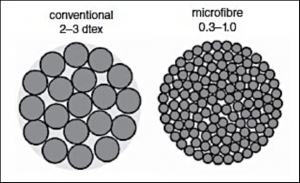
Conventional Fiber vs Microfiber
The most significant challenges include:
- Compact Structure: Microfiber contains significantly more filaments per cross-section than conventional fiber of the same diameter. This higher filament density reduces dye bath accessibility and increases the risk of unlevel dyeing.
- Rapid Dyeing Kinetics: The greater surface area of microfiber causes accelerated dye uptake. This faster exhaustion increases the likelihood of unlevelness if temperature and pH are not carefully controlled.
- Lower Fastness Properties: Microfiber textiles typically exhibit reduced wash fastness, light fastness, and rubbing fastness compared to conventional fiber structures. This occurs because the finer filaments have less bulk to anchor dye molecules.
- Higher Dye Concentration Requirements: Achieving equivalent depth of shade on microfiber requires substantially more dye in the bath compared to conventional polyester — typically 20–40% more depending on the desired color intensity.
Technical Solutions for Dyeing Microfiber Successfully
Professional microfiber dyeing requires strict control of process parameters to ensure level, even color distribution. The following techniques address the core challenges:
- Pre-setting Treatment: Heat setting at 180–200°C improves dimensional stability and enhances dye bath accessibility. Pre-setting also increases fabric softness without compromising color uptake.
- Alkali Treatment: Treating microfiber with concentrated caustic soda (NaOH) at elevated temperatures (110–130°C) opens the fiber structure, improving dye penetration. This process reduces fabric weight by approximately 5–15% and alters hand feel.
- Dye Selection: Choose disperse dyes with demonstrated excellent migration and leveling properties for microfiber applications. High-build dyes with good fastness characteristics produce the most satisfactory results.
- Chemical Assistants: Increase dispersing agent concentration by 20–30% above conventional dosage. Add a leveling agent at 1–3% on weight of fabric and an anti-creasing agent to prevent fiber damage during processing.
- After-treatment Processes: Reduction clearing with sodium hydrosulfite (2–4 g/L) at 70–80°C removes surface dye and improves wash fastness. Follow with thorough rinsing and neutralization.
- Advanced Equipment: Modern dyeing machines with precise temperature gradient control (maximum 1–2°C per minute ramp rate) and automated dosing systems produce the most consistent results on microfiber substrates.
Process Parameter Guidelines for Level Dyeing
These specific parameters will help ensure successful, level dyeing of microfiber textiles:
- Liquor Ratio: Maintain 1:20 to 1:30 (fabric to water ratio) throughout the dyeing process. Higher liquor ratios help prevent unlevel exhaustion.
- Temperature Control: Operate at 10–20°C below conventional polyester dyeing temperatures. For disperse dyes on microfiber polyester, start at 60°C, raise to 100–110°C at 1°C per minute, and hold for 30–45 minutes.
- Extended Holding Time: Allow additional time at maximum temperature beyond conventional processes. This compensates for the diffusion limitations imposed by microfiber’s compact structure.
- pH Monitoring: Maintain pH 4.0–4.5 throughout the dyeing cycle for disperse dyes. Buffer systems help stabilize pH during the temperature ramp phase.


