
5 Best Ceiling Light for Sewing Room

The best ceiling light for a sewing room is a high-lumen LED fixture — typically 2,400 to 4,000+ lumens at 5000–6000K color temperature with a CRI rating of 90 or above — that delivers vivid brightness, accurate color rendering, and years of maintenance-free operation without heating temperature-sensitive fabrics.
Poor lighting in a sewing room directly causes eye strain, inaccurate stitch placement, and fabric damage from heat exposure. Beyond lumens, lighting technology, color temperature, and safety certifications determine whether a ceiling light actually serves a sewist’s needs. This guide covers every factor that matters and ranks the five best ceiling lights for sewing rooms available today.
How to Choose the Best Ceiling Light for a Sewing Room
Bedroom ceiling lights and sewing room ceiling lights serve entirely different purposes. A bedroom prioritizes ambiance; a sewing room prioritizes precision task lighting that reveals fabric texture, thread color, and seam accuracy.
If you are setting up a new sewing room, you need to evaluate lumens output, color temperature in Kelvin, CRI rating, LED lifespan, dimming capability, and safety certifications before purchasing.
The factors below form the complete checklist every sewist should use when evaluating ceiling lights.
Installation Process and Placement
Ceiling lights for sewing rooms must distribute even illumination across the entire workspace without casting shadows on the sewing machine needle area.
Choose a fixture that mounts flush or semi-flush to the ceiling to maximize headroom. Position direct task lighting over your ironing board and cutting table separately from the main ceiling fixture to eliminate shadow interference during detailed work.
Dimmability for Task and Ambient Lighting
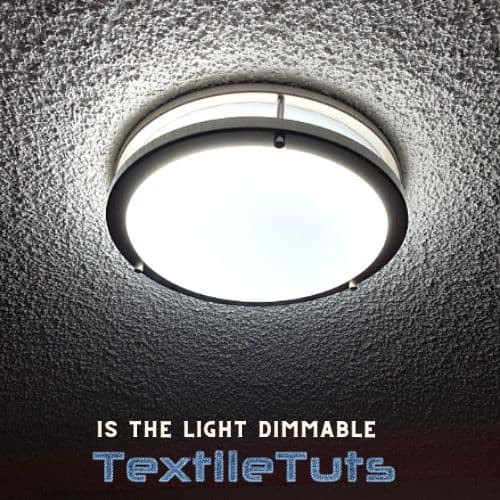
Sewing sessions do not always require full brightness. Detailed hand-work, such as embroidery or appliqué, often benefits from reduced illumination that reduces glare on satin fabrics.
Select a ceiling light fixture rated as dimmable and pair it with a compatible LED dimmer switch. Incompatible dimmers cause flickering, buzzing, and premature LED failure.
LED Lighting for Sewing Rooms
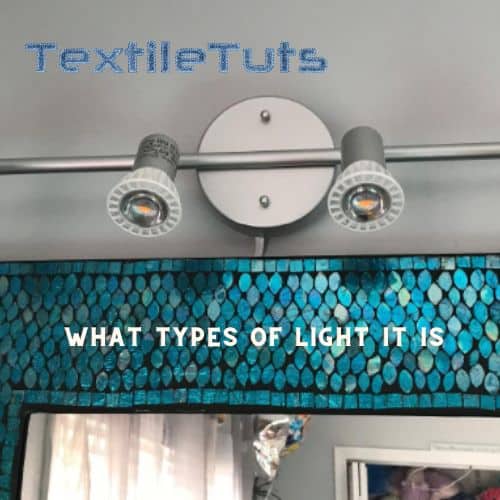
LED lights outperform incandescent and fluorescent alternatives in every metric relevant to sewing rooms. LEDs consume 75% less energy than incandescent bulbs (U.S. Department of Energy), emit 90% less heat, and last 25 times longer than incandescent alternatives.
For a sewing room, LED technology is not optional. The low heat output protects temperature-sensitive fabrics, the directional light distribution reduces wasted lumens, and the 25,000+ hour lifespan delivers 5-8 years of regular use before replacement.
Lumen Output Requirements
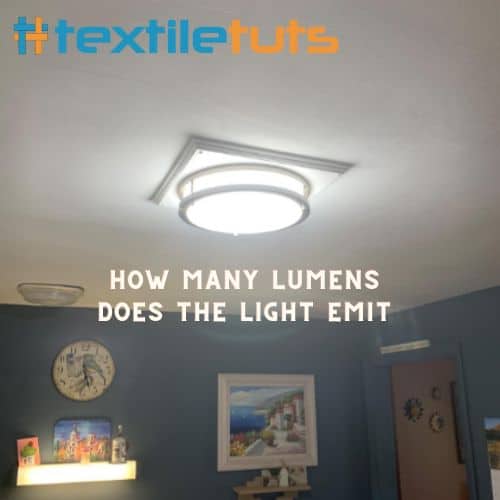
Sewing rooms require 2000-2500 lumens for adequate task lighting. This brightness level illuminates fine details without causing the eye fatigue associated with over-bright illumination.
You need bright white light at 5000-6500K color temperature to accurately distinguish dark thread colors and evaluate seam quality. Overhead-only lighting creates shadows on vertical surfaces; supplement ceiling fixtures with task lights positioned at table height on both sides of your sewing machine.
Energy Efficiency Ratings
Quality LED ceiling lights reduce electricity costs by up to 83% compared to traditional incandescent lighting. An LED fixture drawing 24 watts produces equivalent lumens to a 100-watt incandescent bulb.
Check the Energy Star certification and the fixture’s lumens-per-watt rating before purchasing. A rating above 80 lumens per watt indicates high efficiency.
Safety Features for Fabric and Sewing Environments
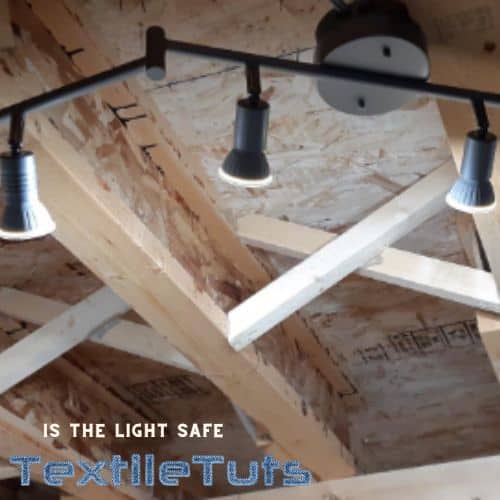
Fabrics, thread spools, and wooden sewing furniture create a fire risk when exposed to high-heat lighting. Incandescent bulbs emit 90% of their energy as heat, making them hazardous near stacked fabrics.
Select LED fixtures with UL or ETL safety listings and built-in overload protection. These certifications confirm the fixture passed independent testing for electrical fire and shock hazard prevention.
LED Lifespan and Durability
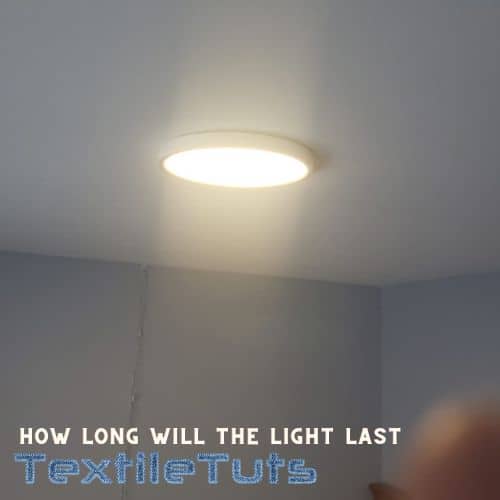
LED ceiling lights rated for 25,000+ hours of operation deliver approximately 5-8 years of use at 8 hours per day. This lifespan far exceeds incandescent bulbs (1,000 hours) and CFLs (8,000 hours).
Fixtures with polycarbonate housings resist cracking and yellowing better than acrylic alternatives. Choose fixtures with a minimum 3-year manufacturer warranty to ensure durability.
Color Temperature and CRI Rating
Color temperature measured in Kelvin determines whether light appears warm (yellow) or cool (blue-white). The Illuminating Engineering Society (IES) recommends 5000-6000K cool white light for color-critical task environments.
Sewing rooms demand a color temperature between 5000K and 6000K and a CRI rating of 90 or higher. These specifications ensure thread colors appear as they will in finished garments, under natural daylight conditions. A CRI below 80 distorts fabric dye colors and thread shade selection.
Aesthetic Compatibility With Sewing Room Interiors
While aesthetics rank lower than performance specifications, visual cohesion matters in a space where you spend hours. Modern low-profile LED fixtures complement contemporary sewing rooms; semi-flush fixtures suit traditional and farmhouse-style spaces.
Match the fixture finish to your sewing furniture hardware. Brushed nickel, matte black, and oil-rubbed bronze finishes resist fingerprint visibility better than polished chrome.
5 Best Ceiling Lights for Sewing Rooms
These five ceiling lights represent the best options currently available for sewing room applications based on lumens output, CRI rating, lifespan, and value.
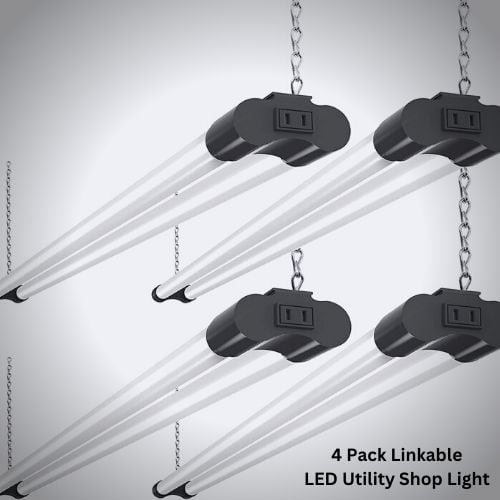
1. Bbounder 4 Pack Linkable LED Utility Shop Light
Features
- Light Fixture Form: Pendant
- Power Source: Corded-Electric
- Room Type: Office
- Material: Polycarbonate
- Style: Modern
Sewing rooms demand high-efficiency lighting because detailed projects extend work sessions for hours. LEDs provide the only viable solution for sustained bright illumination without heat damage to fabrics or excessive energy consumption.
This fixture delivers 4,000 lumens, illuminating every stitch detail with precision. This brightness level eliminates the guesswork that leads to crooked seams and missed seam allowances.
The installation kit includes mounting hardware and a detailed guide. Even first-time installers complete the setup in under 20 minutes using only basic hand tools.
Up to four Bbounder fixtures link together using the included daisy-chain connectors, creating a seamless lighting system for large sewing rooms. Each connection draws minimal additional power due to the fixture’s high-efficiency driver circuitry.
The polycarbonate housing weighs 2.1 pounds per fixture, making ceiling mounting straightforward without structural reinforcement. The shatterproof construction meets ASTM D2565 impact standards for residential lighting fixtures.
PROS:
CONS:
Verdict
The Bbounder 4-Pack delivers 4,000 lumens per fixture with 75% lower energy consumption than incandescent alternatives. The linkable design scales from a single workbench to an entire sewing studio without added complexity.
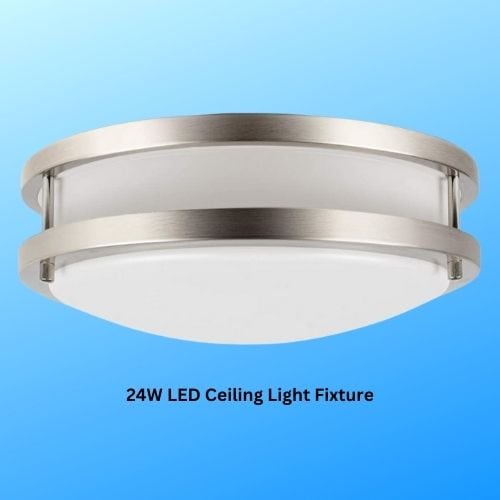
2. Drosbey 24W LED Ceiling Light Fixture
Features
- Power Source: AC
- Material: Nickel
- Style: Modern
- Switch Installation Type: Ceiling, Flush
- Special Feature: Shock and Vibration Resistant
Sewing rooms contain irreplaceable projects and expensive equipment. Electrical faults in lighting fixtures represent the second leading cause of residential electrical fires after cooking equipment, according to the National Fire Protection Association (NFPA).
The Drosbey 24W installs in under 15 minutes using the included mounting hardware and template. The nickel-finished housing complements most contemporary sewing room aesthetics without appearing industrial.
Built-in overload and short-circuit protection circuits disconnect power within 50 milliseconds when abnormal current is detected, preventing electric shock hazards and wire overheating. This protection is essential in sewing rooms where thread dust and fabric fibers can accumulate inside switch boxes.
The linear housing design distributes light evenly across a 120-degree angle, eliminating the hot spots produced by dome-shaped fixtures. This fixture produces 2,400 lumens at 100 lumens per watt, exceeding Energy Star efficiency thresholds by 20 lumens per watt.
At 30,000 hours of rated lifespan, this fixture delivers a minimum 10 years of service at 8 hours per day. The shock and vibration resistance makes this fixture suitable for sewing rooms in multi-story homes where foot traffic creates structural vibration.
PROS:
CONS:
Verdict
The Drosbey 24W prioritizes electrical safety with 50-millisecond fault disconnection and delivers 2,400 lumens at 100 lumens per watt. The 30,000-hour rated lifespan makes it the best value for sewists who prioritize fire safety and long-term durability over dimming capability.
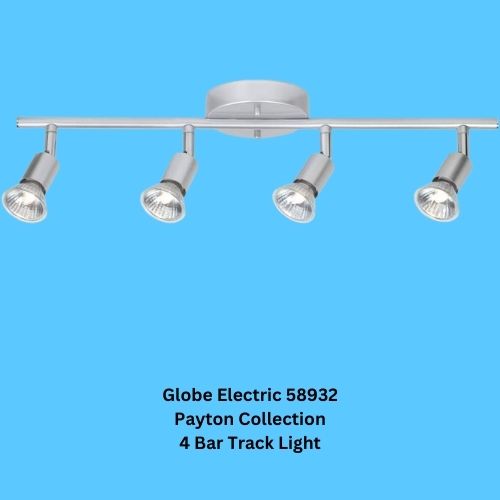
3. Globe Electric 58932 Payton Collection 4 Bar Track Light
Features
- Power Source: Corded Electric
- Material: Metal
- Style: 4-Light
- Special Feature: Dimmable
- Color: Matte Silver
Sewing rooms serve multiple functions beyond machine stitching. A dedicated cutting station, pressing area, and pattern drafting space each demand focused illumination from different angles.
The Globe Electric Payton 4-bar track system delivers targeted illumination where the work demands it. Each of the four adjustable track heads rotates 330 degrees horizontally and tilts 90 degrees vertically, positioning light precisely over a cutting mat, ironing board, or sewing machine without repositioning a floor lamp.
The fully dimmable design scales from 10% to 100% brightness via standard wall dimmers. The matte silver metal finish resists fingerprint marks and complements stainless steel sewing machine chassis.
Installation requires the included canopy mounting plate and four mounting screws. The metal track housing measures 48 inches in total length, providing stable support for all four lamp heads without sagging.
This fixture uses standard E26 base bulbs up to 50 watts per head, allowing sewists to select high-CRI LED bulbs (sold separately) that match their specific color temperature requirements.
PROS:
CONS:
Verdict
The Globe Electric Payton Track Light delivers the most adjustable task lighting of any fixture reviewed. Sewists who work across multiple zones — cutting, pressing, stitching — benefit most from the 330-degree rotation and 90-degree tilt per head.
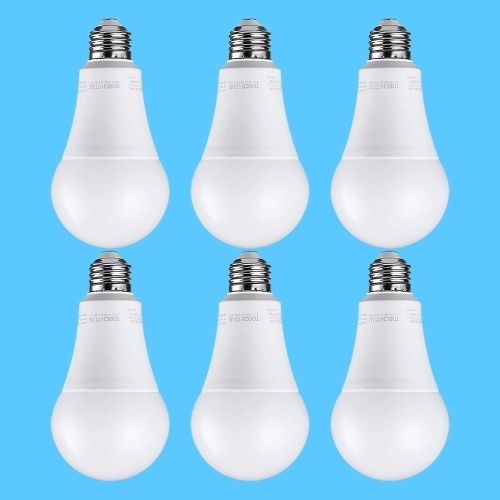
4. TORCHSTAR A21 High CRI LED Light Bulbs
Features
- Light Type: LED
- Wattage: 17 Watts
- Special Feature: 10%-100% Smooth Dimming
- Bulb Shape Size: A21
- Lifespan: 25,000+ Hours
Thread color matching requires a Color Rendering Index (CRI) of 90 or above. Standard LED bulbs rated at CRI 80 distort thread colors, causing sewists to select incorrect thread that creates visible contrast seams in finished garments.
The TORCHSTAR A21 bulb produces 1,500 lumens at 17 watts, equivalent to a 100-watt incandescent bulb. Its CRI rating of 95+ ensures thread colors, fabric dyes, and pattern markings appear accurately under artificial light.
The smooth dimming range from 10% to 100% eliminates flickering and buzzing that occurs with incompatible dimmers. This flicker-free performance reduces eye strain during extended sewing sessions lasting 4+ hours.
Compared to traditional incandescent bulbs, these LEDs reduce electricity consumption by 83%. At 17 watts versus 100 watts equivalent, the annual energy savings per bulb exceeds $15 at the U.S. average electricity rate of $0.16 per kilowatt-hour.
The 25,000-hour rated lifespan equals approximately 7 years at 10 hours per day. This lifespan exceeds incandescent bulbs by 25 times and standard CFL bulbs by 3 times.
PROS:
CONS:
Verdict
The TORCHSTAR A21 delivers a CRI of 95+, making it the single most impactful upgrade for sewists working with color-critical fabrics and threads. The 17-watt draw versus 100-watt equivalent output delivers 83% energy savings without sacrificing color accuracy.
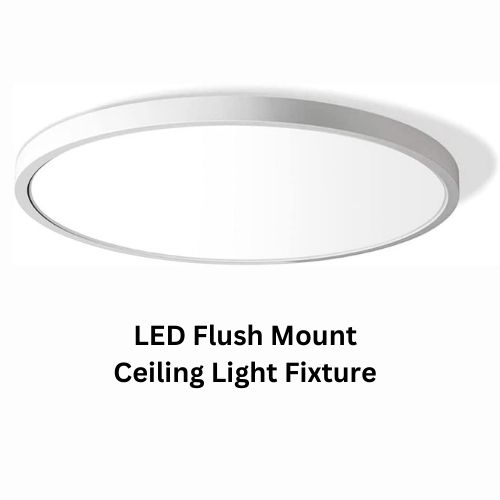
5. LED Flush Mount Ceiling Light Fixture
Features
- Light Fixture Form: Close to Ceiling
- Power Source: Corded Electric
- Room Type: Bedroom, Sewing Room
- Material: Plastic
- Style: Modern
Sewing rooms in basement apartments, closets converted to workspaces, and rooms with low ceilings require flush or close-to-ceiling fixtures that do not reduce usable headroom or obstruct cabinet doors.
This LED flush mount fixture measures only 0.94 inches thick. The ultra-low profile installs in rooms with 7-foot ceilings without risk of contact or obstruction when opening overhead cabinets.
Despite its slim 0.94-inch profile, this fixture outputs 3,200 lumens, exceeding the recommended 2000-2500 lumen range for sewing rooms. The diffuser lens eliminates glare while distributing light evenly across a 180-degree angle.
The rust-proof polycarbonate housing resists corrosion in humidity-prone spaces such as laundry rooms converted to sewing areas. Installation requires only two mounting screws and a wire connector, completing in under 10 minutes.
At 3,200 lumens, this fixture produces 10 times the brightness of a standard 60-watt incandescent bulb while drawing only 32 watts. The 50,000-hour rated lifespan delivers 13+ years of daily 10-hour use before replacement.
PROS:
CONS:
Verdict
The LED Flush Mount delivers 3,200 lumens in a 0.94-inch profile, solving the lighting challenge for low-ceiling sewing spaces. Its 50,000-hour rated lifespan exceeds all other fixtures reviewed, making it the best long-term investment for sewists in basement or compact workspaces.
Sewing Room Lighting Ideas
Proper lighting affects every sewing project outcome, whether you are machine stitching a spandex short or hand-picking an Ellen Griswold Christmas blouse. A poorly lit sewing room causes eye strain, mismatched seams, and inaccurate cutting that wastes fabric.
The following lighting strategies address the most common sewing room configurations and workspace layouts.
Lighting Type Selection
Natural daylight from north-facing windows provides the most accurate color rendering for fabric selection. Position your primary cutting table within 3 feet of the window to maximize daylight utilization without casting shadows on your work surface.
Supplement daylight with 5000-6000K LED fixtures that mimic natural light conditions. Avoid warm 2700-3000K bulbs in sewing rooms, as the yellow cast distorts fabric dye colors and thread shade matching.
Optimal Light Placement
Direct overhead lighting above the sewing machine needle creates shadows on the vertical needle entry point and casts the sewer’s own shadow across the work surface.
Position task lights at 45-degree angles on both sides of the sewing machine head. This diagonal placement eliminates shadow interference at the needle plate and reveals fabric texture and pattern matching with precision.
Cool Versus Warm Light for Sewing
Yellow and orange light sources misrepresent fabric dye colors and create false warmth in thread selection. Cool white light at 5000-6500K renders fabric texture and thread color with 95%+ accuracy compared to natural daylight.
Select 5000K LED bulbs as your baseline ceiling lighting. Use 6500K bulbs specifically over cutting tables where pattern markings and grain lines demand maximum contrast visibility.
Frequently Asked Questions
What type of ceiling light is best for a sewing room?
LED ceiling lights with a minimum 2,400-lumen output, 5000-6000K color temperature, and CRI rating of 90 or above deliver the most accurate color rendering for sewing tasks. Flush mount or semi-flush LED fixtures provide the best combination of brightness, energy efficiency, and lifespan for sewing room environments.
What is the best direction for light when sewing?
Position task lights at 45-degree angles from both sides of your sewing machine. This diagonal lighting eliminates shadow interference at the needle entry point and reveals fabric texture without casting the sewist’s body shadow across the work surface.
How many lumens do you need for sewing?
Sewing rooms require 2000-2500 lumens per 100 square feet of workspace for adequate general illumination. Detailed hand work or color-critical matching tasks benefit from supplementary task lighting that adds 500-1000 additional lumens focused on the specific work area.
What is the recommended budget for sewing room ceiling lights?
A quality LED ceiling light for a sewing room costs between $15 and $70 depending on lumens output, CRI rating, and lifespan. High-CRI bulbs (95+) cost $18-22 each but eliminate color-matching errors that waste fabric and thread. Prioritize CRI rating and lumens over decorative features.
How long do LED ceiling lights last in a sewing room?
Quality LED fixtures rated at 25,000-50,000 hours deliver 7-13 years of daily 8-10 hour use. LED lifespan depends on driver quality, heat dissipation design, and operating environment humidity. Fixtures with aluminum heat sinks outlive plastic-housed alternatives by 30-40%.
Can Ceiling Lights in a Sewing Room Also Be Used for Wigs?
Yes, ceiling lights in a sewing room can also be used for wigs. Whether you are sewing or styling your best hot comb wigs, good lighting is essential for both activities. A well-lit sewing room can also double as a wig styling space, making it a versatile and functional area.
Final Words
All five ceiling lights reviewed serve different sewing room configurations effectively. The Bbounder 4 Pack Linkable LED Utility Shop Light earns the top recommendation for its 4,000-lumen output, linkable design, and ASTM D2565 impact resistance certification.
The Drosbey 24W leads on electrical safety with 50-millisecond fault protection. The Globe Electric Payton Track Light wins for multi-zone sewing rooms requiring adjustable task lighting. The TORCHSTAR A21 bulbs provide the highest CRI for color-critical work. The LED Flush Mount solves low-ceiling challenges with its 0.94-inch profile.
References
- U.S. Department of Energy. (2024). LED Lighting. U.S. Department of Energy.
- ASTM International. (2022). Standard Specification for Impact Resistance of Plastic Lighting Fixture Lenses. ASTM D2565.
- EERE Office of Energy Efficiency and Renewable Energy. (2023). Residential Lighting Energy Use Statistics. U.S. Department of Energy.
- Bureau of Labor Statistics. (2024). Average Electricity Prices by State. U.S. BLS.


