
Why Do Clothes Stain in the Washing Machine? (And How to Stop It)

Why Clothes Stain in the Washing Machine
Clothes develop new stains in the washing machine from five main causes: dye transfer from non-colorfast items, fabric softener dispenser buildup dripping on fabric, rust from corroded drum components, mold growing in the machine seal or drum, and residue from previous wash loads. Identifying which cause applies determines the fix.
Post-wash discoloration accounts for approximately 20% of laundry-related consumer garment damage complaints, according to textile industry loss data. The staining happens inside the machine itself, and each cause has a distinct signature that lets you diagnose and address it.
Cause 1: Dye Transfer — When Whites Turn Pink, Blue, or Grey
Dye transfer occurs when loose dye molecules shed from a non-colorfast item and deposit onto other fabrics in the same wash load. The American Association of Textile Chemists and Colorists (AATCC) defines colorfastness as a fabric’s resistance to fading or running, and wash fastness — the ability to retain color during laundering — is rated on a scale of 1 to 5, where 5 indicates no color transfer. White and light-colored items bear the brunt, developing pink, blue, or grey patches where no stain existed before.
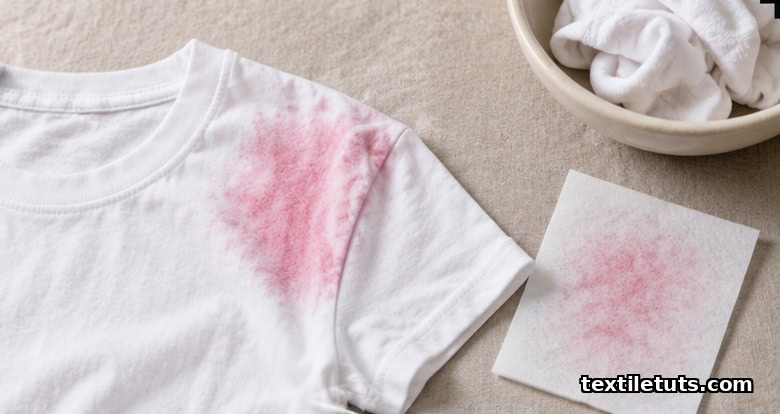
New dark clothing is the most frequent offender. Reactive dyes, used on cotton and cellulosic fabrics, bond strongly to fibers when properly fixed, but many new garments are treated with direct dyes that lack that chemical bond. Dark denim, red T-shirts, and vivid blue synthetic fabrics are repeat offenders. Even a single dark item in a load of whites is enough to cause visible staining. The stain sets into the fabric when heat and agitation drive the loose dye molecules into the fiber structure.
Sorting laundry by color is the single most effective defense against dye transfer.
- Sort rigorously: never wash whites with any colored items
- Wash new dark clothing separately for the first 3–5 washes to allow excess dye to shed
- Use color-catcher sheets, which absorb loose dye molecules from wash water
- Check garment labels for colorfastness certification before purchasing
If dye transfer has already occurred, treat the affected items promptly with an oxygen-based stain remover or a dedicated dye transfer stain product.
Cause 2: Fabric Softener Dispenser Buildup — Greasy Blue-White Blotch Marks
Fabric softener dispensers drip undiluted chemicals onto clothes when overfilled or when thick formulations fail to dilute properly before dispensing. Modern fabric softeners rely on cationic surfactants — primarily quaternary ammonium compounds like distearyldimethylammonium chloride (DSDMAC) — that coat fabric fibers with lubricating aliphatic chains to reduce harsh texture and static cling. These compounds are positively charged and bind electrostatically to the negatively charged surface groups on fabric fibers. Undiluted softener sitting in the drawer can pour directly onto clothes during the wash cycle, leaving greasy, slightly blue or white blotch marks on the first items the drawer releases — typically lighter-colored garments at the top of the load.
Thick, viscous softeners that have not been shaken well before use are particularly problematic. In areas with hard water, the cationic surfactants can also interact with calcium and magnesium ions — the same minerals that react with surfactants in laundry detergent to form soap scum — compounding the dispenser issue.
Following the dosage cap lines prevents softener overflow and dispenser residue buildup.
- Never overfill the fabric softener dispenser — follow the dosage cap lines
- Dilute thick fabric softener with an equal amount of water before adding it to the dispenser
- Clean the dispenser drawer monthly by removing it and rinsing under hot water
- Consider using liquid softener instead of thicker cream formulations
For a deeper look at how softeners interact with fabric and whether they can cause staining beyond the dispenser issue, see our article on does fabric softener stain clothes.
Cause 3: Rust — Orange-Brown Marks with Sharp Defined Edges
Rust is iron oxide — a hydrous iron(III) oxide formed when iron reacts with oxygen in the presence of water — and it deposits as distinct orange-brown marks on laundered items originating from corroded metal components inside the washing machine drum. Even “stainless steel” drums can develop corrosion under the right conditions. While stainless steel forms a protective chromium(III) oxide passivation layer that resists corrosion, this layer can be damaged by physical abrasion, exposure to chloride ions (from salt or certain cleaning agents), or prolonged contact with water in low-oxygen environments. Small chips or pits in the drum’s surface can initiate pitting corrosion — a localized attack that creates deep pits rather than uniform surface rust. Screws, bolts, washers, and other hardware inside the drum are often made from carbon steel and are more vulnerable to corrosion than the drum itself.
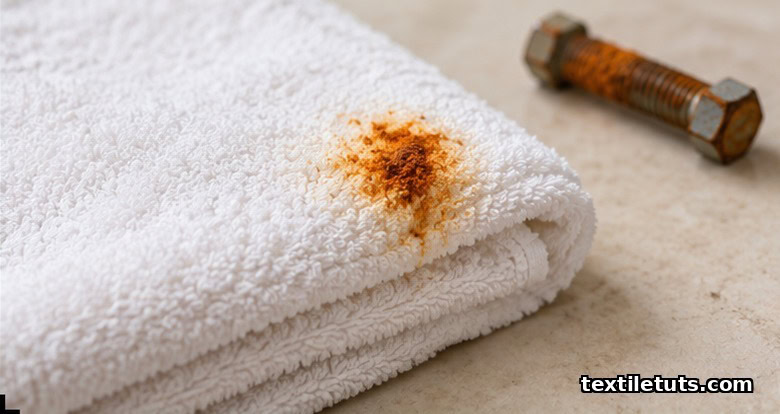
Rust stains appear as distinct orange-brown marks on white or light-colored fabrics. They are particularly visible on white cotton and polyester-cotton blends. Unlike dye transfer, rust stains have a sharp, defined edge and often appear in patterns that correspond to the position of a corroded component in the drum.
Running a monthly 90°C drum-clean cycle dissolves surface corrosion before it transfers to fabric.
- Inspect the interior drum and drum ribs regularly for any orange-brown spots or pitting
- Run a drum-cleaning washing machine cleaner tablet monthly on an empty 90°C cycle
- Avoid using chlorine bleach in machines with older or damaged drums — chloride accelerates corrosion
- If drum corrosion is severe, consider replacing the machine — corroded drums cannot be safely restored
For treating rust stains that have already set into fabric, our guide on how to remove rust stains from clothes covers chelating agent treatments and rust-specific stain removers.
Cause 4: Mold — Dark Spots, Grey Discoloration, and Musty Odor
Mold manifests on laundered clothes as dark spots or greyish discoloration, and the signature symptom is a persistent musty odor that lingers on freshly washed fabric — the mold transfers from the drum or seal to the clothing during the wash cycle, particularly in the final rinse water. Mold is a pervasive issue in front-loading washing machines, where the rubber door seal and the drum itself create a dark, moist environment ideal for fungal growth. According to the EPA, mold requires moisture to grow, and keeping relative humidity below 60% — ideally between 30% and 50% — inhibits growth. A sealed front-loader retains moisture between washes, making the door seal and gasket area the primary breeding ground.
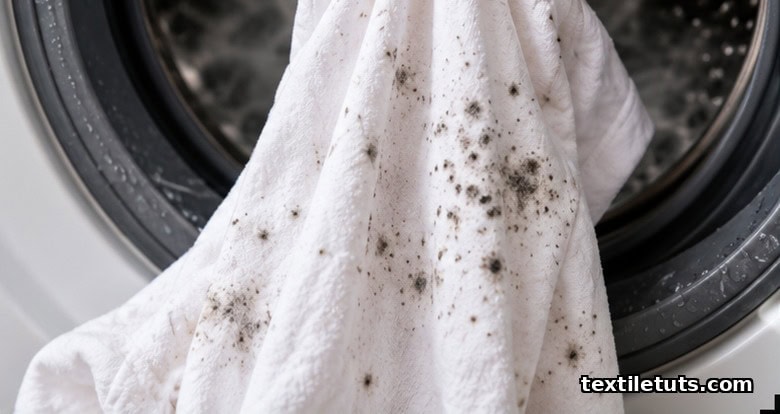
Several common mold species colonize washing machines, including Aspergillus, Penicillium, and Stachybotrys (black mold). Several species begin growing at temperatures as low as 4°C (39°F — refrigerator temperature), meaning cold wash cycles do not kill mold organisms. The majority of molds are metabolically active between 20°C and 30°C (room temperature to lukewarm), which covers the temperature range of most laundry wash cycles.
Leaving the washing machine door ajar between uses eliminates the trapped moisture mold needs to grow.
- Leave the washing machine door ajar between uses to allow moisture to evaporate and humidity to escape
- Wipe the rubber door seal with a solution of white vinegar and water after every wash, then dry with a cloth
- Run a monthly maintenance wash on an empty drum at 90°C (the highest safe temperature for most machines) with a dedicated drum cleaning tablet or 2 cups of white vinegar
- Pay extra attention to front-loading machines — top-loaders with an agitator are less prone to seal mold because the lid allows air circulation
Cause 5: Detergent Residue — White Powdery Patches on Dark Fabrics
Excess laundry detergent leaves white powdery residue on dark fabrics when the surfactant load exceeds the machine’s rinse capacity. Modern laundry detergents contain surfactants (anionic compounds like linear alkylbenzene sulfonates), enzymes (proteases, lipases, amylases, cellulases), and builders that work together to suspend soils in wash water for removal. In hard water areas, calcium and magnesium cations react with anionic surfactants to form insoluble soap scum that can deposit on both fabric and machine components. This manifests as white powdery or slightly grey patches on dark fabrics, most visible in areas where the garment has been bunched or folded during the wash. The detergent dispenser drawer itself can also retain undispensed detergent that gradually builds up, creating a pasty residue that can drip onto clothes entering the drum at the start of a new cycle.
Measuring detergent precisely directly prevents residue buildup — more detergent is not more effective.
- Measure detergent precisely — more is not better and directly causes residue buildup
- In hard water areas, use liquid detergent rather than powder, which is more prone to leaving undissolved residue
- Run a monthly maintenance wash without laundry — use hot water and vinegar or a washing machine cleaner tablet to flush the system
- Pull out and rinse the detergent drawer monthly to remove accumulated residue
Washing Machine Stain Causes Diagnosis Chart
| Cause | Stain Appearance | Prevention |
|---|---|---|
| 1. Dye Transfer | Pink, blue, or grey patches on white/light items; diffuse edges | Sort by color; wash new dark items separately 3–5×; use color-catcher sheets |
| 2. Fabric Softener | Greasy, blue-white blotch marks; often on top items in load | Do not overfill dispenser; dilute thick softener; clean drawer monthly |
| 3. Rust | Orange-brown marks with sharp defined edges; on whites | Inspect drum monthly; run 90°C drum clean; replace if corrosion severe |
| 4. Mold | Dark spots or grey discoloration; musty smell on fabric | Leave door ajar; wipe seal with vinegar after each wash; 90°C monthly |
| 5. Detergent Residue | White powdery or grey patches on dark fabrics; on folded/bunched areas | Measure correct dose; use liquid detergent in hard water; monthly maintenance wash |
Monthly Machine Maintenance to Prevent All Causes
Preventing washing machine stains is almost entirely a matter of regular maintenance. Each of the five causes above is mitigated — or eliminated entirely — by a consistent monthly care routine. Front-loading machines require more attention to the door seal, but all machine types benefit from the following protocol:
- Wipe the door seal: After every wash, wipe the rubber gasket with a cloth dampened with white vinegar and dry thoroughly. This removes moisture, mold spores, and softener residue simultaneously.
- Leave the door ajar: Allow the drum and seal to air-dry between uses. This single habit eliminates the primary condition mold needs to grow — trapped moisture.
- Clean the dispenser drawer: Remove the drawer and rinse it under hot running water at least once a month. Use an old toothbrush to scrub away any accumulated softener or detergent residue.
- Run a 90°C drum clean cycle: Monthly, run an empty wash cycle at the highest temperature (90°C) with a commercial washing machine drum cleaner tablet or 2 cups of white vinegar. This sanitizes the drum, dissolves detergent residue, and kills mold organisms that cold cycles leave untouched.
- Inspect the drum for rust: Check the interior drum, drum ribs, and any visible hardware (screws, bolts, washers) each month. Any orange-brown staining on metal components should be assessed — minor surface rust on carbon steel hardware can be treated, but widespread pitting corrosion of the drum warrants machine replacement.
Frequently Asked Questions
Why do my white shirts get blue spots in the wash?
Blue spots are most commonly from undiluted fabric softener dripping from the dispenser drawer onto clothes. Over-filling the dispenser or using thick softener that does not dispense completely is the cause. Dilute thick softener with equal water before use, and never exceed the dispenser’s fill line.
Why do clothes smell like mold after washing?
The washing machine drum or door seal has mold growing in it. The mold transfers to clothes during washing. Clean the door seal with white vinegar after every wash, run a 90°C maintenance wash monthly, and leave the washing machine door open between uses to allow moisture to evaporate.
How often should I clean my washing machine?
Run a hot drum clean monthly, wipe the door seal weekly, and clean the dispenser drawer monthly. Front-loading machines require more frequent seal cleaning than top-loading machines due to the sealed door design that traps moisture.
References
- American Association of Textile Chemists and Colorists. AATCC Colorfastness Standards. AATCC.
- U.S. Environmental Protection Agency. Mold: General Information. EPA.
- Wikipedia. Fabric Softener. Wikimedia Foundation.
- Wikipedia. Rust. Wikimedia Foundation.
- Wikipedia. Laundry Detergent. Wikimedia Foundation.


