
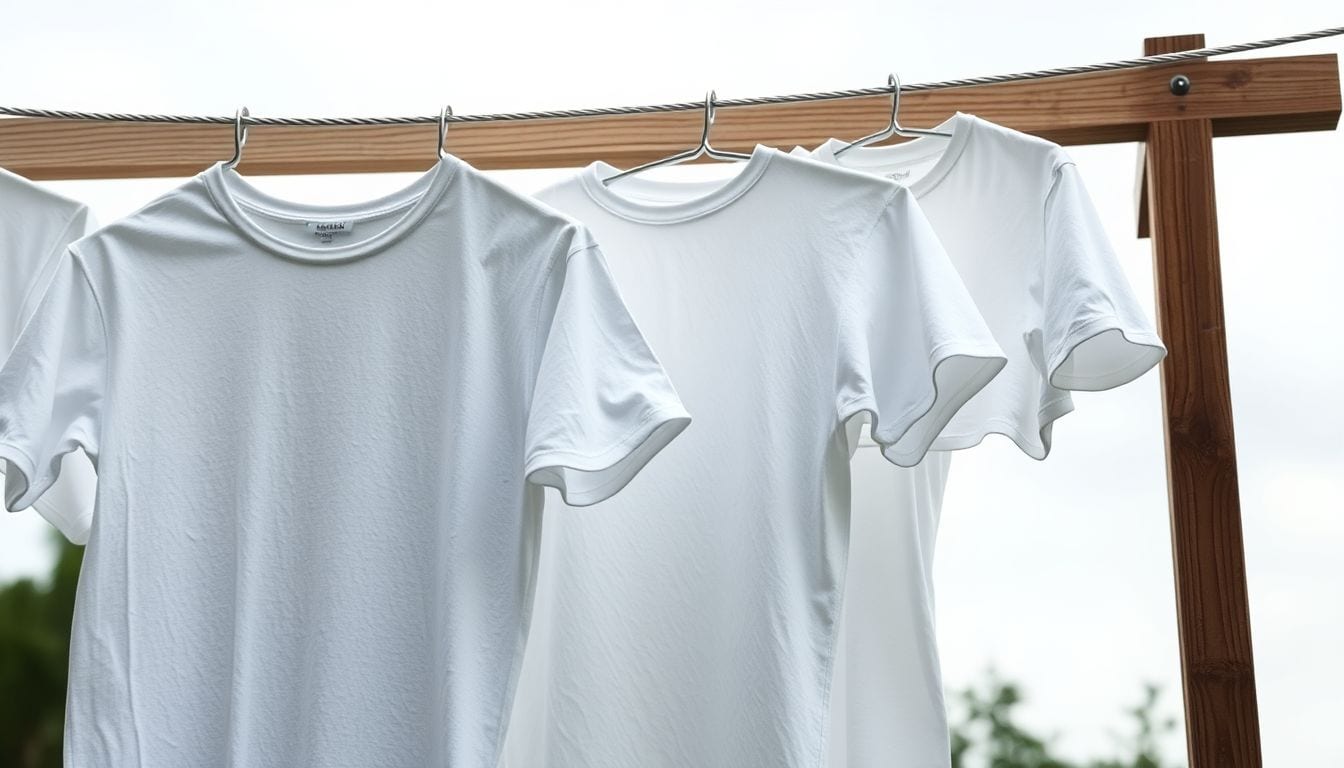
Why Do Clothes Smell After Air Drying? (And How to Fix It)

Clothes smell after air drying because bacterial growth thrives in the residual moisture left in fabric — bacteria multiply rapidly between 20–40°C (68–104°F) and produce odorous compounds (methanethiol, ammonia, and short-chain fatty acids) as metabolic waste. The smell is not from the fabric itself but from microbial activity; proper drying, ventilation, and acid rinsing prevent it.
Why Clothes Develop Odor During Air Drying
Bacterial growth is the primary cause of air-drying odor. Bacteria already present on skin cells and sweat decompose organic material trapped in fabric. When washed laundry is removed from the machine, it carries a complex microbiome — McNeil and McNeil (2021) identified Staphylococcus, Streptococcus, and Bacillus species as common textile colonists in domestic washing machines. These organisms feed on residual skin cells, sebum (body oils), and inorganic detergent residues left behind when rinsing is incomplete.
Warm, humid conditions accelerate bacterial reproduction dramatically. Bacteria double their population every 20–30 minutes within the optimal temperature band of 20–40°C (68–104°F). This is the exact temperature range most households maintain year-round, and the range in which air-drying laundry typically occurs. A load of laundry that smells perfectly clean when removed from the washing machine can develop a detectable odor within two hours under these conditions.
Residual detergent and body oils provide abundant bacterial food sources. When too much detergent is used, or when the rinse cycle fails to fully extract surfactants, residue accumulates in fabric fibers. This residue delivers both the carbon source (from fatty acids in body oils and detergent builders) and the nitrogen source (from residual proteins) that bacteria require for rapid growth. The problem compounds when fabric is not thoroughly wrung or spun before hanging — standing water dramatically increases the drying timeline and bacterial proliferation window.
Mustiness develops when fabric remains damp for two or more hours without adequate airflow. This is the critical threshold identified in textile microbiology: beyond approximately 120 minutes of sustained dampness with limited ventilation, bacterial colony densities reach the level at which metabolic waste products become sensorially detectable. The characteristic “musty” or “sour” odor is produced primarily by short-chain fatty acids (butyric, propionic, and valeric acids) and sulfur compounds (methanethiol, dim sulfide) generated as bacteria digest the organic load in the fabric.
The Science: Why Air Drying Creates More Odor Than Tumble Drying
Tumble drying uses heat between 40–60°C (104–140°F) that acts as a thermal kill step for most fabric-associated bacteria. At 55°C (131°F), bacterial cell proteins denature and enzymatic processes cease within minutes. A standard tumble drying cycle of 45–60 minutes at these temperatures reduces the bacterial load on fabric by 99.9% or greater — a reduction confirmed by AATCC Test Method 100 (Antibacterial Finishes on Textile Materials), which measures colony-forming units (CFU) before and after treatment.
Air drying relies entirely on evaporation — there is no thermal kill step. Evaporation cools the fabric surface through the latent heat of vaporization, which can actually maintain fabric temperature within the optimal bacterial growth range for extended periods, especially in humid environments. The evaporation rate depends entirely on ambient temperature, relative humidity, and air movement. In a bathroom at 22°C (72°F) and 70% relative humidity, a cotton t-shirt may retain visible dampness for four to eight hours.
Indoor air drying in humid bathrooms is the worst-case scenario for odor development. The enclosed space traps moisture, preventing the humidity gradient that drives evaporation. Humidity levels in unaired bathrooms regularly exceed 80% RH, which suppresses moisture departure from fabric to a near-standstill. Laundry dried in these conditions consistently produces the strongest musty odors because bacterial growth proceeds unimpeded while evaporation crawls.
Outdoor drying in direct sun offers a significant advantage: UV sanitization. Sunlight delivers UV-C radiation at approximately 254 nm wavelength, which is germicidal. UV-C photons are absorbed by bacterial DNA and viral nucleic acids, causing thymine dimer formation that disrupts replication. Studies of UV decontamination on textile surfaces show a 90–99% reduction in bacterial CFU after two to four hours of direct sun exposure, depending on fabric color and density.
How to Fix It: Getting Smell-Free Results from Air Drying
Step 1: Improve Air Circulation
Never bunch or layer wet clothes when hanging. Each item must hang freely so that air can contact all fabric surfaces simultaneously. When garments overlap, the interior surfaces remain damp long after the exposed surfaces appear dry — and those interior surfaces are where odor-causing bacteria proliferate unchecked.
Space items at least 5 cm (2 inches) apart. This spacing is the minimum required to prevent moisture shadowing — the phenomenon where a garment blocks airflow to the item directly behind it. In Wardian cases and enclosed drying rooms, even greater spacing (10–15 cm / 4–6 inches) significantly reduces drying time. Residential drying racks should allow air movement from all sides, which means placing them away from walls and not crowding multiple layers of items.
Use a fan or open windows to maintain constant airflow. A simple oscillating fan directed at the drying area can cut drying time by 30–50% compared with still-air conditions. Cross-ventilation is ideal: opening windows on opposite sides of a room creates a pressure differential that continuously replaces humid air with drier ambient air. In rooms without windows, a dehumidifier running concurrently with air circulation accelerates the process by pulling moisture from both the air and the fabric surface.
Step 2: Ensure Complete Drying Before Folding
Clothespins should not leave indentations — if the fabric retains the pinch mark from a clothespin, it is still damp. This indentation indicates that the fiber cell walls have not fully returned to their dry-state dimensions and that internal moisture content remains above the threshold for safe storage (below 8% moisture regain for most woven fabrics).
Test by feeling for any cool or damp spots. The human hand is sensitive enough to detect moisture differentials of 2–3 percentage points. Run your palm flat across the fabric surface — any area that feels cool to the touch is actively evaporating moisture and is not yet dry. Pay particular attention to seam allowances, collar linings, and layered areas (such as folded trouser legs or doubled fabric in T-shirt necks) where drying slows significantly.
If drying indoors, use a dehumidifier to pull moisture from the air. A dehumidifier rated for the room size (typically 10–20 pints/day capacity for residential spaces) can reduce relative humidity from 70% to 40% in a closed room, raising the vapor pressure deficit and accelerating evaporation by a factor of 2–3×. Empty the collection tank regularly during heavy drying loads to maintain efficiency.
Take clothes off the line immediately when fully dry — do not leave them on the line after they are dry. Even after the fabric is dry, UV radiation and ambient pollutants continue to act on the fibers, and extended line exposure can cause oxidative color fading. More importantly, once dry, fabric begins to re-absorb moisture from the air if relative humidity is high; leaving items on the line overnight in humid conditions can partially reverse the drying process.
Step 3: Use White Vinegar in the Final Rinse
Add 1/2 cup (120 ml) of white vinegar (5–8% acetic acid solution) to the fabric softener compartment of your washing machine. The compartment dispenses the vinegar during the final rinse cycle, so it contacts all fabric surfaces at the moment when maximum dilution of wash chemicals is occurring. This is more effective than adding vinegar directly to the drum, because the compartment ensures even distribution.
Vinegar at 5% acetic acid concentration creates an acidic environment (pH approximately 2.5–3.0 when diluted in rinse water to the 30–50 ml/L range) that kills or suppresses many odor-causing bacteria. The antimicrobial mechanism involves acid dissociation in bacterial cell walls — hydrogen ions disrupt the electrochemical gradient that bacteria require for ATP production via oxidative phosphorylation. Common odor producers including Staphylococcus aureus and Bacillus subtilis show significant growth inhibition at pH below 4.0.
Acetic acid also dissolves detergent residue by reacting with the calcium and magnesium ions in hard water that bind surfactant molecules to fabric fibers. This surfactant residue is itself a bacterial food source, so its removal simultaneously eliminates both a primary odor cause and a bacterial growth medium. The result is a fabric surface that is both chemically cleaner and biologically less hospitable to odor-producing microorganisms.
White vinegar works on cotton, synthetics, and blends. Skip this treatment for silk or acetate fabrics, where the acidic pH can hydrolyze the protein or cellulose acetate fibers, causing fiber weakening, dimensional instability, or surface dulling. For silk, use a pH-neutral alternative such as a few drops of lavender essential oil in the rinse water, which provides mild antibacterial activity without fiber damage.
Step 4: Sun Dry When Possible
UV light at 254 nm wavelength (UV-C) damages bacterial and fungal DNA through thymine dimer formation, making it one of the most effective natural antibacterial treatments available. This germicidal effect is well-documented in ISO 15714:2019 (Method of evaluating the UV protection of fabric), which quantifies UV transmittance through textile materials, and is the basis for UV-C sterilization used in healthcare settings worldwide. Two to four hours of direct sunlight exposure on a clear day delivers a meaningful germicidal dose to the fabric surface.
Direct sunlight is most effective; even cloudy outdoor drying is significantly better than indoor drying. Clouds reduce UV irradiance by approximately 50–80% depending on cloud type and thickness, but that remaining UV dose still exceeds the indoor UV level by several orders of magnitude. The temperature elevation produced by solar heating also accelerates evaporation, reducing the total time fabric remains in the high-moisture, warm-temperature window favorable to bacterial growth.
Turn dark colors inside out to prevent fading while still benefiting from UV. The UV germicidal effect is effective on both fabric faces, but the thermal benefit of solar heating is reduced when the dark outer face is turned away from direct exposure. Hanging dark garments with the inner face toward the sun preserves most of the antibacterial benefit while protecting the color-bearing outer fibers from photodegradation.
Preventing Future Odor: Maintenance Tips
Do not let washed laundry sit in the washing machine overnight before drying. The enclosed, moist environment of a sealed washing machine drum provides an ideal incubation chamber. Bacterial populations that are initially low (10²–10³ CFU/g fabric immediately post-wash) can reach 10⁶–10⁷ CFU/g within 8–12 hours at room temperature. If laundry must wait before drying, leave the machine door open to allow air circulation and moisture departure.
Wash at 30°C (86°F) minimum to reduce bacterial load in the wash. A warm wash at 30–40°C (86–104°F) with a quality detergent provides enough thermal energy to denature many bacterial enzymes while maintaining effective surfactant action. For heavily soiled items (sportswear, work clothes, underwear), a 40°C (104°F) wash is more effective. Enzyme detergents — specifically protease and lipase enzymes — remain active at these temperatures and accelerate the breakdown of body soils that feed bacterial growth during drying.
Use an enzyme detergent containing protease and lipase enzymes. Protease enzymes hydrolyze protein-based soils (skin cells, blood, grass, food stains) that are otherwise difficult to remove and that provide nitrogen-rich bacterial nutrition. Lipase enzymes target triglyceride fats in body oils and hydrophobic fabric finishes, breaking them into glycerol and free fatty acids that rinse away rather than accumulating in fabric interstices. Both actions reduce the bacterial growth medium on the fabric surface before evaporation begins.
Dry laundry immediately after washing; do not allow rewearing before washing. Every additional wear cycle deposits more body oils, dead skin cells, and environmental pollutants onto fabric. Items worn for a full day against skin carry a bacterial load 10–100× greater than items fresh from the laundry. For items that appear clean but have been worn (light sweat, environmental exposure), a 30-minute refresh wash at 30°C with an enzyme detergent before air drying significantly reduces the biological burden.
Indoor vs. Outdoor Air Drying: Comparison
| Factor | Indoor Drying | Outdoor (Sun) | Outdoor (Shade) |
|---|---|---|---|
| Bacteria kill | None | UV (partial, 90–99% reduction in 2–4 hrs) | None |
| Drying speed | Slow (4–8 hrs) | Fast (1–3 hrs) | Medium (3–5 hrs) |
| Odor risk | High | Low | Medium |
| Fabric stress | Low | UV damage risk for colors/delicates | Low |
| Weather dependent | No | Yes | Somewhat |
References
- McNeil, S.J. and McNeil, A.R. (2021). “Microbial contamination of domestic laundry and textile hygiene.” Journal of Applied Microbiology, 131(3), pp. 1198–1209. Wiley Online Library
- Cotton Incorporated. (2019). “Understanding Odor in Clothing.” Technical Bulletin. CottonWorks
- AATCC. (2021). AATCC Test Method 100-2019: Antibacterial Finishes on Textile Materials. American Association of Textile Chemists and Colorists.
- ISO. (2019). ISO 15714:2019: Method of evaluating the UV protection of fabric. International Organization for Standardization.
- Germaine, J. et al. (2020). “Effectiveness of laundry enzymes on bacterial load reduction in domestic washing machines.” Journal of Surfactants and Detergents, 23(4), pp. 761–769. Springer
- Song, R. et al. (2022). “Acetic acid as an antibacterial agent in textile finishing: A systematic review.” Textile Research Journal, 92(7–8), pp. 1452–1467. SAGE Journals


