
Nylon Vs Spandex Fabric – Everything You Need to Know

Nylon provides high tensile strength and durability for garments that must withstand repeated wear and abrasion, while spandex provides exceptional elasticity, stretching up to 500% of its original length to deliver comfort stretch and fit retention. The key difference is that nylon resists breaking under tension whereas spandex stretches and recovers. Both are petroleum-derived synthetic polymers, but nylon is a polyamide and spandex is a polyether-polyurea copolymer—fundamentally different chemistries that produce their distinct performance characteristics. Modern stretch garments almost always blend both fibers to combine nylon’s durability with spandex’s stretch comfort.
Quick-Reference: Nylon vs Spandex at a Glance
| Nylon | Spandex | |
|---|---|---|
| Stretch Capacity | 95–99% recovery (returns to original shape) | Stretches to 500% of original length |
| Primary Role | Durability, shape retention, abrasion resistance | Comfort stretch, fit retention, flexibility |
| Best For | Hosiery, swimwear, activewear requiring longevity | Leggings, compression wear, form-fitting garments |
| Heat Tolerance | Melting point 220–265°C | Degrades above 140°C |
| Moisture | Absorbs 3.5–4.5%, dries quickly | Absorbs only 1–2%, fastest drying |
| Typical Blend | 75–85% when combined with spandex | 15–25% when combined with nylon |
When to Choose Nylon vs Spandex
- Choose nylon when durability, abrasion resistance, and shape retention through hundreds of wear cycles are priorities—ideal for hosiery, swimwear, activewear, and items that need to last.
- Choose spandex when comfort stretch, flexibility, and fit are the primary concerns—essential for leggings, yoga pants, compression garments, and form-fitting styles.
- Choose a blend (typically 75–85% nylon / 15–25% spandex) for most activewear and everyday stretch garments to get the best of both fibers’ properties.
What is Nylon
Nylon is a synthetic fiber made from polyamide, derived from petroleum-based chemicals. It is produced through polycondensation of dicarboxylic acid and diamine, resulting in a long-chain polymer with high tensile strength. Nylon’s density is 1.15 g/cm³, making it lightweight yet strong enough for demanding applications like seatbelts, tire cords, and ballistic cloth.
Nylon Fibers
Nylon fiber is a manufactured polymer; monomers are the building blocks of polymers, which is a long chain of carbon-based molecules. The majority of nylon varieties are produced from these monomers, which are obtained from crude oil, also known as petroleum.
It is forced through an extruder with adipic acid, which cooks it into a molten state and then outputs thin fibers for spinning onto bobbins before they’re wound onto another spool in what we call “drawing.” This results in the nylon fibers being spun into the desired garments or other forms of textiles.
Types of Different Nylon
Nylon 66
This is the most common type of nylon. It has a melting point of 265°C (509°F) and offers high tensile strength, making it ideal for clothing, carpeting, and tires. Nylon 66 is produced via polycondensation of adipic acid and hexamethylenediamine.
Nylon 6
This type of nylon has a lower melting point of 220°C (428°F) but offers greater elasticity than Nylon 66. It is produced through ring-opening polymerization of caprolactam and is commonly used for hosiery and swimwear.
High Tenacity Nylon
This type of nylon undergoes cold-drawing at 350–400% elongation, resulting in significantly increased tensile strength. It is used for ropes, webbing, and industrial applications requiring maximum durability.
Low Denier Nylon
This type of nylon is lightweight with a silky texture, typically using fibers under 10 denier. It is commonly used for lingerie, activewear, and sheer hosiery where a lightweight drape is desired.
Aromatic Polyamides
This type of nylon offers superior heat resistance and structural integrity at elevated temperatures. It is used for electrical insulation, molded parts, and aerospace applications where performance under thermal stress is critical.
Characteristics of Nylon
- Nylon is a pure synthetic fiber with excellent abrasion resistance and dimensional stability after heat-setting
- It has a stretch recovery of 95–99%, making it ideal for garments that need to maintain their shape through repeated wear cycles
- Nylon fabric is prone to pilling and bubbling with prolonged friction exposure
- It absorbs 3.5–4.5% of its weight in water and dries quickly due to low moisture retention
- Nylon’s thermal conductivity is 0.25 W/(m·K), providing minimal insulation value
- Nylon fabric resists insects, fungi, mildew, rot, and many chemicals, including most solvents
Popular Fabrics Made from Nylon
- Clothing
- Tights
- Stockings
- Pantyhose
- Leggings
- Athletic wear
- Hosiery
- Tires
- Swimwear
- Carpeting
- Motion Capture Suits
What is Spandex
Spandex (also known as elastane or Lycra) is a synthetic fabric made from polyether-polyurea copolymer. It was developed by Joseph Shivers at DuPont in 1958. Spandex is produced by reacting diols and diisocyanates—typically methylenebis(phenyl isocyanate)—through a specialized solvent-based spinning process since the polymer degrades at melting temperatures.
Spandex Fibers
Spandex fibers are significantly more elastic than other synthetic fibers. They can stretch to 500% of their original length and return to their original dimensions without deformation. This exceptional elasticity comes from the block copolymer structure combining rigid and flexible segments.
Spandex, Lycra, and Elastane – The Difference
Spandex is the generic name used in the United States and Canada. Europe commonly uses elastane, which follows the International Standard definition. DuPont trademarked Lycra for their specific brand of spandex, which remains the most recognized trade name in the industry. All three terms describe the same polymer with identical performance characteristics.
Types of Different Spandex
Polyurethane Spandex
Polyurethane-based spandex offers excellent tensile strength and durability for activewear applications. It maintains its elastic properties through extended use cycles and repeated laundering at temperatures up to 60°C.
Lycra
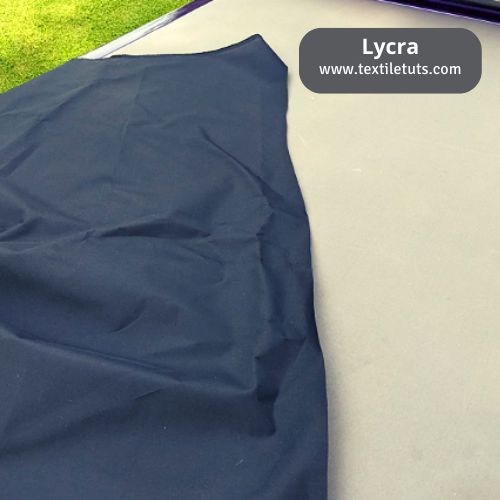
Lycra (DuPont’s brand) is a polyester-based or polyether-based elastane with superior elasticity recovery. It is extensively used for blending with natural and synthetic fibers to provide stretch comfort in garments requiring 15–30% spandex content for optimal performance.
Thermoplastic Polyurethane (TPU) Spandex
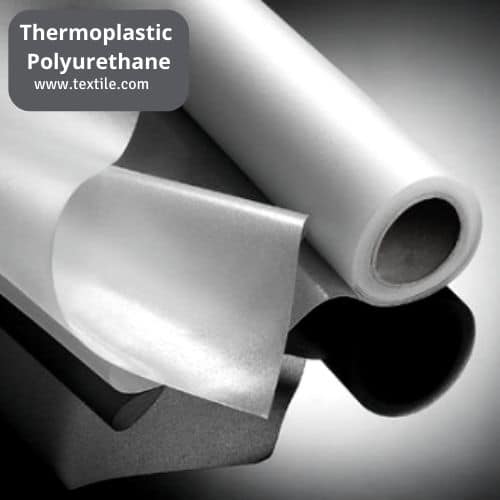
Thermoplastic polyurethane spandex offers enhanced heat resistance and thermal insulation properties. It is used in technical textiles, electrical insulation, and molded components where exposure to elevated temperatures occurs.
Characteristics of Spandex
- Spandex stretches to 500% of its original length and recovers fully, providing exceptional fit retention in garments
- It has lower absorbency than nylon (1–2% moisture regain), enabling faster drying times in wet applications
- Spandex resists pilling and bubbling due to its continuous filament structure
- It is susceptible to degradation from chlorine bleach, high heat (above 140°C), and oils including body oils that break down the polymer over time
- Spandex loses elasticity when exposed to temperatures exceeding 140°C during laundering or drying
Popular Fabrics Made from Spandex
- Spandex leggings
- Compression garments
- Tights
- Stockings
- Pantyhose
- Leggings
- Athletic wear
- Hosiery
- Swimwear
- Motion capture suits
Nylon Vs Spandex Fabric — The Benefits and Drawbacks

Nylon
Nylon is one of the most commonly used synthetic fibers. Both nylon and polyester have inherent stretch, meaning that they can be stretched without losing their original shape. Nylon’s stretch recovery of 95–99% means it returns to its original dimensions after elongation, making it a better choice for garments that need to maintain their shape through repeated use.
Nylon is also an excellent choice for stretchy clothes such as leggings and yoga pants. In addition, nylon is less likely to pill or produce static than polyester. Nylon’s high tenacity fibers provide durability that outperforms many natural fibers in abrasive conditions.
Nylon is a water-resistant fabric with an absorbency rate of 3.5–4.5% of its weight. However, it does not breathe as well as some other fabrics, which means it can trap sweat and body heat during high-intensity activities. In addition, nylon is more susceptible to damage from chlorine bleach compared to spandex.
Spandex
Spandex is a synthetic fiber known for its exceptional elasticity. Its elastic properties allow it to stretch up to 500% of its original length without permanent deformation. Additionally, spandex is lighter than natural fibers and provides superior strength-to-weight ratio. Garments made with spandex offer excellent fit retention and ease of care.
Despite its many benefits, spandex has drawbacks. It is not as durable as nylon when subjected to abrasion, so it is more likely to tear or show signs of wear over time with heavy use. Additionally, spandex degrades when washed in water above 60°C or dried on high heat settings, losing 20–30% of its elastic recovery with each improper cycle.
Nylon Vs Spandex — Key Feature Comparison
| Property | Nylon | Spandex |
|---|---|---|
| Tensile Strength | High (used for seatbelts, tires) | Moderate (stretches instead of resists) |
| Elastic Recovery | 95–99% | 100% (up to 500% stretch) |
| Melting Point | 220–265°C (Nylon 6 / Nylon 66) | Degrades above 140°C |
| Moisture Absorbency | 3.5–4.5% | 1–2% |
| Chlorine Resistance | Poor (degrades with exposure) | Good |
| Durability | Excellent abrasion resistance | Lower abrasion resistance |
| Common Use | Hosiery, swimwear, activewear | Leggings, compression wear, swimwear |
Nylon Key Features
- High tensile strength suitable for seatbelts, tire cords, and ballistic applications
- Low moisture absorbency of 3.5–4.5% enabling quick drying
- Excellent abrasion resistance with 95–99% stretch recovery
- Density of 1.15 g/cm³ provides lightweight durability
- Resists insects, fungi, mildew, rot, and many chemicals
Spandex Key Features
- Stretches to 500% of original length without damage
- Lightweight with superior strength-to-weight ratio
- Excellent elastic recovery maintaining garment fit through repeated use
- Resistant to chlorine damage in swimwear applications
- Requires low-heat laundering (below 60°C) to preserve elasticity
Nylon Vs Spandex — Direct Comparison
Composition
Nylon is a polyamide polymer produced from petroleum-derived diamine and dicarboxylic acid through polycondensation. Spandex is a polyether-polyurea copolymer produced from diols and diisocyanates through solvent-based spinning. This fundamental chemical difference produces nylon’s high tensile strength versus spandex’s high elasticity.
Leggings
Nylon leggings offer superior durability and shape retention through extended wear cycles. However, they trap more heat due to lower breathability. Spandex leggings provide greater flexibility and moisture-wicking for high-sweat activities, but the material degrades faster with repeated washing. A blend of 80% nylon / 20% spandex provides optimal balance for most activewear applications.
Yoga Pants
Yoga pants require fabrics that allow full range of motion and manage moisture effectively during practice. Spandex content of 15–25% provides the necessary 4-way stretch for yoga movements. Nylon-spandex blends dominate the yoga pant market because nylon adds durability while spandex ensures the fabric moves with the body without restriction.
Running Shorts
Running shorts need lightweight fabric that resists sweat saturation and prevents chafing during repetitive motion. Nylon’s higher melting point (220–265°C) and excellent abrasion resistance make it suitable for high-intensity running. Nylon running shorts typically weigh 20–30% less than equivalent polyester shorts, reducing energy expenditure during extended runs.
Stockings and Pantyhose
Nylon dominates the stockings and pantyhose market due to its sheer appearance at low denier counts (under 20 denier) and good durability. Nylon 6 with 10–15 denier produces the sheer texture preferred for formal hosiery. Spandex additions of 3–5% in control-top styles provide shape retention without compromising the sheer aesthetic.
Athletic Wear and Swimwear
Swimwear requires chlorine resistance and UV stability alongside stretch recovery. Spandex provides 4-way stretch essential for competitive swimsuits and maintains its properties in chlorinated water. Nylon-spandex blends (typically 80/20) offer the best balance for recreational swimwear where chlorine exposure is intermittent. Competition swimwear often uses 50–70% nylon / 30–50% spandex for maximum compression and recovery.
Nylon Spandex Leggings Vs Polyester Spandex Leggings
Nylon spandex leggings are made from a blend of nylon and spandex fibers, combining nylon’s durability and moisture management with spandex’s stretch recovery. Nylon-spandex blends typically use 75–85% nylon with 15–25% spandex. These leggings offer excellent breathability, fast drying times, and shape retention through intense workouts.
Polyester spandex leggings are made from a blend of polyester and spandex fibers. Polyester offers superior moisture-wicking and resists pilling better than nylon. However, polyester-spandex blends have 10–15% higher thermal retention, making them less comfortable for high-heat activities. Polyester-spandex blends are preferred for high-sweat strength training where moisture management is prioritized over breathability.
Making Pants or Skirts
Spandex is the preferred choice for form-fitting pants and skirts requiring stretch comfort. A spandex content of 3–8% provides sufficient elasticity for comfort stretch without excessive cling. Woven fabrics with spandex content maintain a more structured silhouette compared to knit fabrics, making them suitable for tailored pants and pencil skirts.
Frequently Asked Questions
Spandex Warmth Retention
Spandex does not provide significant thermal insulation. Its thin fiber diameter and low thermal conductivity (0.25 W/(m·K)) mean spandex-blend garments are unsuitable as primary cold-weather layers. However, spandex’s moisture-wicking properties keep skin dry, which can feel cooler in warm conditions.
Best Fabric for Leggings
Leggings requiring shape retention and durability benefit from nylon-spandex blends. A composition of 75–85% nylon with 15–25% spandex provides 4-way stretch, moisture management, and abrasion resistance. Leggings for yoga or pilates benefit from higher spandex content (20–30%) for maximum flexibility, while everyday leggings perform well at 15–20% spandex.
Nylon Summer Wear Suitability
Nylon’s low thermal conductivity means it does not insulate well in cold weather. However, for summer wear, nylon’s moisture-wicking (absorbing 3.5–4.5% of its weight) and quick-drying properties help keep skin cool by moving perspiration away from the body. Nylon’s UV resistance also provides sun protection with UPF 30+ ratings in untreated nylon fabrics.
Nylon and Sensitive Skin
Nylon can cause irritation for individuals with sensitive skin due to its low breathability and moisture-trapping properties. Nylon-spandex blends with moisture-wicking finishes reduce skin irritation during exercise. For those with textile sensitivities, natural fiber blends with small spandex additions (under 10%) may provide better comfort than pure synthetic fabrics.
Best Fabric for Sensitive Skin
Fabrics with high breathability and moisture-wicking properties work best for sensitive skin. Nylon-spandex blends with silver-ion antimicrobial finishes reduce bacterial growth that exacerbates skin irritation. Bamboo-nylon blends with 10–20% spandex offer natural antimicrobial properties combined with stretch comfort for sensitive skin applications.
Spandex Impact on the Clothing Industry
Spandex transformed the clothing industry after its 1958 commercialization by DuPont. Its exceptional elasticity enabled the athleisure category, compression garments, and performance sportswear. Spandex-blend fabrics now represent over 40% of the global stretch fabric market, valued at approximately $28 billion USD annually.
Stretching Swimwear Made with Spandex
Swimwear made from nylon-spandex or polyester-spandex blends can be stretched when wet to adjust fit. Running lukewarm water over the garment and gently stretching it by hand can relax the fibers by 5–10%, improving fit for slightly snug swimwear. However, excessive stretching beyond 15% can permanently deform the fabric structure.
Nylon vs Spandex vs Polyester Comparison
Nylon offers the highest tensile strength and abrasion resistance of the three, making it ideal for durable garments and industrial applications. Polyester provides superior moisture-wicking and UV resistance with better colorfastness. Spandex provides the highest elasticity, always used as a blend component (typically 5–30%) rather than as a standalone fabric.
These three synthetic fibers are often combined in performance fabrics. A typical athletic shirt might use 88% polyester / 12% spandex for moisture-wicking with 4-way stretch. Activewear leggings commonly use 75% nylon / 25% spandex for durability with compression support. Understanding each fiber’s properties helps in selecting the optimal blend for specific end-use requirements.
Environmental Considerations
Both nylon and spandex are petroleum-derived synthetic fibers with significant environmental footprints. Nylon production generates nitrous oxide emissions (a greenhouse gas 300x more potent than CO₂) and requires high energy input. Spandex is particularly difficult to recycle; even 5% spandex content in fabric blends renders the material incompatible with mechanical recycling processes. Recycled nylon from fishing nets and ocean plastics offers a more sustainable option, while recycled spandex technology remains limited.
Care and Maintenance Differences
Nylon garments tolerate machine washing at 40–60°C and tumble drying on medium heat. However, nylon pillage occurs with repeated high-heat cycles. Spandex garments require washing at 30–40°C maximum and air drying to preserve elastic recovery—each exposure to temperatures above 60°C accelerates elastic degradation by 5–10% per cycle.
How Do Nylon and Spandex Compare to Polyester and Elastane?
Nylon and spandex differ significantly from polyester and elastane in their properties. Polyester elastane stretchiness explained shows that polyester provides better moisture-wicking than nylon, while elastane is the same polymer as spandex with identical performance characteristics.
Last Words
Nylon and spandex each offer distinct advantages for different applications. Nylon excels in durability, tensile strength, and abrasion resistance for hosiery, swimwear, and activewear requiring longevity. Spandex provides unmatched elasticity and comfort stretch for form-fitting garments and performance wear. Most modern stretch garments use nylon-spandex or polyester-spandex blends to combine the benefits of both fiber types.
References
- Wikipedia. (2025). Nylon. Wikimedia Foundation.
- Wikipedia. (2025). Spandex. Wikimedia Foundation.
- Cotton Incorporated. (2025). Nylon Fiber Properties and Applications. Cotton Works.
- DuPont. (2025). Lycra Fiber Technology. DuPont.
- Textile Exchange. (2025). Recycled Polyester and Sustainable Synthetics. Textile Exchange.


