
Satin vs. Sateen Weave: Understanding Floating Yarn Patterns

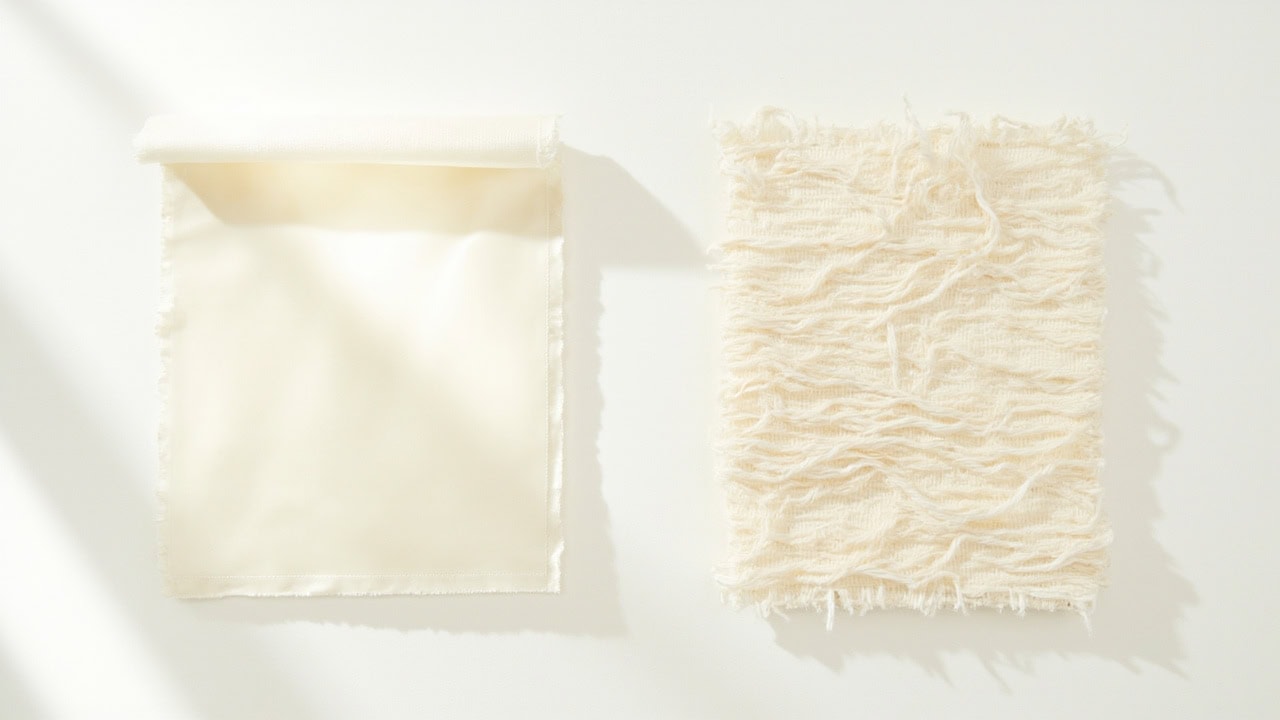
Satin weave and sateen weave are both satin-weave constructions, but they differ in which direction the floating yarns run: satin has warp floats (warp yarns passing over 4+ weft yarns) creating high sheen and snag risk, while sateen has weft floats (weft yarns passing over 4+ warp yarns) creating subtle luster and superior durability. The trade-off is explicit: more float length equals more light reflection and luxury sheen, but increased vulnerability to snags and abrasion.
What Is a Satin Weave? (And Why “Satin” Is Not a Fiber)
Satin is a weave construction, not a fiber — it can be made from silk, polyester, nylon, or cotton. The structure defines the fabric’s character regardless of the underlying fiber. According to textile engineering standards, the satin weave is characterised by four or more fill or weft yarns floating over a warp yarn, and four warp yarns floating over a single weft yarn. This creates the uninterrupted surface that defines satin’s signature look.
The weave structure uses a system of harnesses — the number indicates how many warp yarns are raised or lowered for each pass of the weft. In a 4-harness satin (4HS), the fill passes over 3 warp yarns and under 1. A 5-harness satin (5HS) passes over 4 warp yarns and under 1. The 8-harness satin (8HS) — the most luxurious and pliable — passes over 7 warp yarns and under 1. Each additional harness means a longer float length, which translates directly to more light reflection and higher sheen.
The floating warp yarns create an uninterrupted surface that reflects light uniformly, producing the characteristic high sheen that makes satin prized for evening wear and luxury applications. However, this same float length is the critical vulnerability: longer floats mean easier snagging. If you can run a fingernail under a single yarn and lift it visibly, that float will eventually snag in wear. Satin weaves are classified by “grade” based on harness count — the number indicates the float length and therefore both the lustre and the fragility of the fabric.
What Is a Sateen Weave?
Sateen is also a weave construction, typically made from cotton, rayon, or lyocell. The key difference is the float direction: in sateen, the weft yarns float over 4 or more consecutive warp yarns. This inversion of the satin structure produces a fundamentally different fabric character.
Because the weft floats are naturally shorter on average and the underlying warp structure is tighter, sateen catches on rough surfaces far less often than satin. The result is a soft, subtle sheen — less dramatic than the high-gloss reflection of satin, but more practical for everyday use. The floating yarn pattern in sateen is more protected by the warp structure, making the fabric more durable in wear and laundering.
Sateen is often treated with mercerization, a chemical process that swells the cotton fibers, making them rounder and smoother. Mercerized sateen becomes softer, smoother, more lustrous, water-resistant, and more resilient. This treatment is what gives quality cotton sateen its characteristic silk-like sheen without the delicate care requirements of silk satin.
Satin vs. Sateen: Side-by-Side Comparison
| Property | Satin Weave | Sateen Weave |
|---|---|---|
| Float direction | Warp floats over weft | Weft floats over warp |
| Typical fiber | Silk, polyester, nylon | Cotton, rayon, lyocell |
| Sheen level | High, glossy, lustrous | Low to medium, soft, subtle |
| Snag risk | High (long warp floats) | Low to medium (shorter weft floats) |
| Durability | Moderate | High |
| Drape | Fluid, luxurious | Soft, flowing but stable |
| Breathability | Low (polyester) / Medium (silk) | High (cotton base) |
| Care difficulty | High (silk) / Medium (polyester) | Low to medium (usually machine washable) |
| Common uses | Evening wear, lingerie, linings, ribbons | Bedsheets, quilting cotton, casual wear |
| Price range | Mid (polyester) to high (silk) | Low to mid |
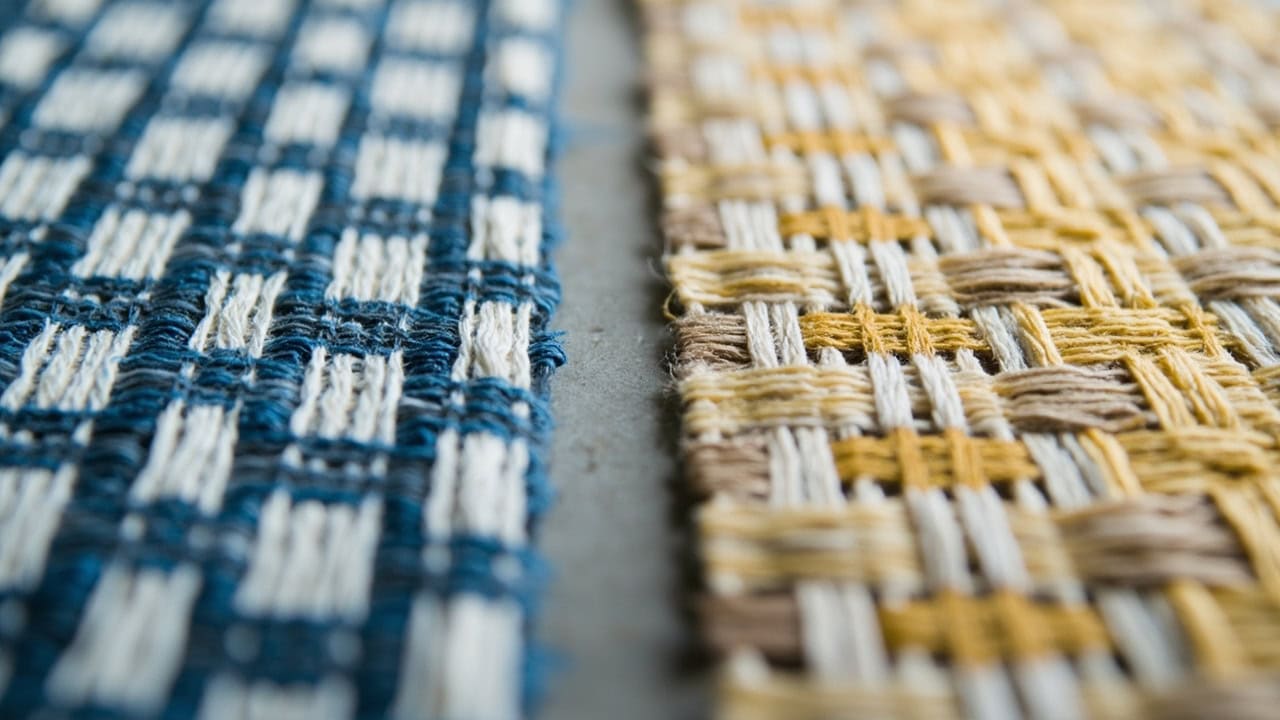
When to Choose Satin Weave
Satin weave is the right choice when visual impact and luxury hand-feel are the absolute priorities. The high, glossy sheen of satin creates an unmistakable elegance that no other weave construction can replicate. Consider satin for:
- Evening wear and formal gowns — bridal attire, cocktail dresses, and costumes where high gloss and fluid drape are the priority
- Lingerie and sleepwear — where silk fabric comfort justifies the care demands
- Home décor accents — pillow tops, lamp shades, and ribbon trims where sheen is decorative
- Luxury artisanal products — where the hand-feel of silk satin is irreplaceable and cost is secondary
Avoid satin if the item will see heavy use, frequent washing, or contact with rough surfaces. The long floating yarns that create satin’s beautiful sheen also make it vulnerable to snagging from jewelry, rough skin, fingernails, and everyday abrasion. The trade-off is explicit and unavoidable: you cannot have maximum sheen and maximum durability in the same fabric construction.
When to Choose Sateen Weave
Sateen weave is the practical choice for anything that needs to look good and last. The subtle sheen adds a touch of luxury without the vulnerability. Choose sateen for:
- Bedsheets and duvet covers — where you want a hint of luxury but need durability and easy care
- Children’s clothing — everyday garments where washability and stain resistance matter
- Quilting cotton and craft projects — where a subtle sheen adds visual interest without delicacy
- Medical or uniform fabrics — where soil resistance, durability, and easy laundering are required
- Frequently laundered items — anything that will be washed often should be sateen, not satin
Cotton sateen sheets are the most common application for good reason: they are durable, machine washable, breathable, and they develop a softer sheen over time as the fabric breaks in. Unlike silk satin, cotton sateen gets better with age and repeated washing.
The Floating Yarn Trade-Off: Sheen vs. Snag Risk
Every satin-weave fabric trades snag resistance for sheen — this is not a weakness of manufacturing but a fundamental property of the floating yarn construction. The longer the float, the more light the fabric reflects and the more luxurious the sheen appears. But longer floats also present more surface area for catching on rough edges, sharp fingernails, or abrasive surfaces.
Float length is determined by the harness count in the loom:
- 4-harness satin (4HS) — shortest floats, tightest weave, least sheen, most durable; found in some cotton satins and utility fabrics
- 5-harness satin (5HS) — medium floats; the most common construction for both cotton sateen and polyester satin; balanced sheen and durability
- 8-harness satin (8HS) — longest floats, most lustrous, most fragile; used only in silk satin and high-end polyester habotai
Sateen avoids the worst of this trade-off because weft floats are naturally more protected by the vertical warp structure. The warp yarns act as a partial shield, reducing the exposure of the floating weft yarns to rough surfaces. This is why cotton sateen is consistently more snag-resistant than comparably priced silk or polyester satin.
The practical snag test: if you can run a fingernail under a single yarn and lift it visibly from the fabric surface, that float will eventually snag during normal wear. This applies equally to warp floats in satin and weft floats in sateen — but because weft floats in sateen are typically shorter and more protected, they resist this test more successfully.
Price and Availability
The price of satin-weave fabrics varies enormously depending on the fiber content and construction grade:
- Silk satin — highest cost; specialist retailers; dry-clean only; 8-harness constructions command premium prices
- Polyester satin — mid-range cost; widely available in fabric stores and online; machine washable in cold water; the most accessible satin option
- Cotton sateen — low to mid cost; ubiquitous in quilting fabric shops and bedsheet retailers; machine washable in warm water; best value per dollar
- Rayon sateen — mid-range cost; softer hand than cotton; some shrinkage risk — always check the label and pre-wash before cutting
Both fabric types are year-round textiles, but cotton sateen peaks in demand during spring and summer for bedding applications. Polyester satin is more consistently popular year-round due to its use in formal wear and craft projects. For more guidance on caring for these fabrics, see our complete fabric care guide.
Care Comparison
Care requirements differ significantly between satin and sateen, and within each category based on fiber content. The table below summarizes the key care parameters:
| Care Step | Silk Satin | Polyester Satin | Cotton Sateen |
|---|---|---|---|
| Wash temperature | Cold; hand wash or dry clean only | Cold; gentle cycle | Warm or cold; standard cycle |
| Detergent | Silk-specific gentle detergent | Standard liquid detergent | Standard liquid detergent |
| Drying | Air dry flat only; never wring | Tumble dry low or air dry | Tumble dry medium; remove promptly |
| Ironing | Low heat with pressing cloth; steam carefully | Synthetic low heat | Medium heat; cotton setting |
| Special risks | Water spots, snags, prolonged sun exposure | Static electricity, heat damage above 150°C | Shrinkage if over-dried; wrinkles if left warm too long |
For detailed instructions on preventing common fabric damage including snags, consult our fabric care guide which covers protective measures for both satin and sateen fabrics.
Frequently Asked Questions
Q: What is the main difference between satin and sateen?
A: Satin is a warp-faced weave (warp yarns float over weft) producing high sheen; sateen is a weft-faced weave (weft yarns float over warp) producing subtle luster. Both are satin-weave constructions but the float direction and base fiber differ, giving sateen better durability and cotton satins better breathability.
Q: Does satin snag more easily than sateen?
A: Yes — satin weave has longer exposed float lengths (typically warp floats), making it significantly more vulnerable to snags from jewelry, rough surfaces, or even fingernails. Sateen has shorter, more protected floats and is considerably more snag-resistant in everyday use.
Q: Can you machine wash satin and sateen?
A: Polyester satin and cotton sateen can typically be machine washed in cold to warm water on a gentle cycle. Silk satin requires hand washing or dry cleaning. Always check the care label — if the fiber content is mixed or the construction is complex, err toward gentler care.
Q: Which is better for bedsheets — satin or sateen?
A: Sateen is almost always the better choice for bedding. Cotton sateen sheets are durable, machine washable, breathable, and develop a soft sheen over time. Silk satin sheets feel luxurious but require specialist care, are less breathable, and snag easily with rough skin or fingernails.
References
- Wikipedia. (2025). Satin — Weave Construction and Properties. Wikimedia Foundation.
- Wikipedia. (2025). Sateen — Weave Construction and Properties. Wikimedia Foundation.
- ASTM International. ASTM D3136-14 Standard Specification for Care Labeling of Textile Floorcovering Covering. ASTM International.
- AATCC. AATCC TM124 — Durability of Fabric Appearance. American Association of Textile Chemists and Colorists.


