
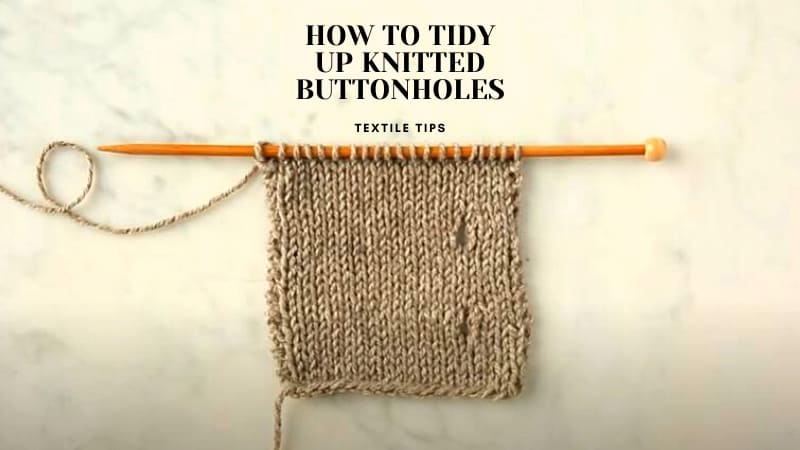
How to Tidy Up Knitted Buttonholes?

To tidy up knitted buttonholes professionally, you need to master three essential techniques: whip stitch reinforcement to prevent stretching, proper yarn tail management for durability, and blanket stitch edging for a polished finish. These finishing methods transform ordinary buttonholes into durable, professional-quality closures that maintain their shape through years of use.
Knitted buttonholes offer greater versatility than sewn alternatives—your skill in finishing them determines the final result. Without neat and tidy buttonholes, even the most perfectly knit garment loses significant visual polish.
This guide covers the essential stitches, buttonhole techniques, and step-by-step finishing methods to achieve optimal results with each approach.
Buttonhole Types at a Glance
| Buttonhole Type | Hole Size | Best For | Yarn Weight |
|---|---|---|---|
| Yarn Over (single) | 3–5mm | Lightweight garments, lace | Lace, fingering |
| Yarn Over (single) | 6–8mm | Medium weight | DK |
| Double Yarn Over | 1.5× single YO | Heavier garments | Worsted, chunky |
| Single-Row Horizontal | 1.5–2.5cm | Wide buttons, fine yarns | All weights |
The Stitches
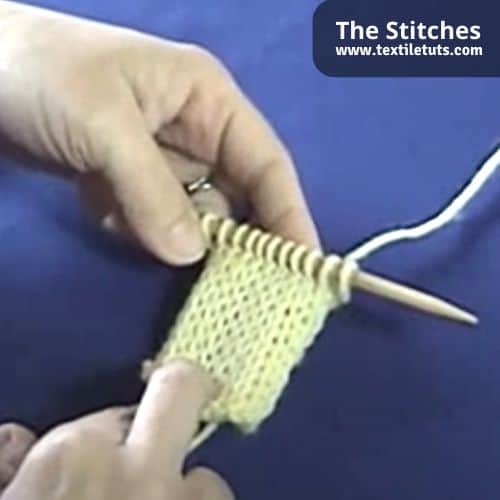
The type of stitch determines the tidying process. This knowledge is essential when working with types of knitted button bands and buttonholes.
For example, knitting a buttonhole in garter stitch or moss stitch differs from other stitches because these structures are inherently stable. Garter stitch creates a reversible fabric with a 2-row repeat pattern where each ridge consists of 2 rows.
Stocking stitch uses alternating rows of knit and purl stitches, creating a smooth face and a purl back. Seed stitch alternates knit and purl stitches within each row, producing a textured, reversible fabric. Rib stitch alternates between knitting one stitch and purling the next in various configurations—1×1 rib, 2×2 rib, and 3×3 rib—with each producing different elasticity levels.
Understanding stitch properties determines which tidying technique will work best for your project.
Techniques
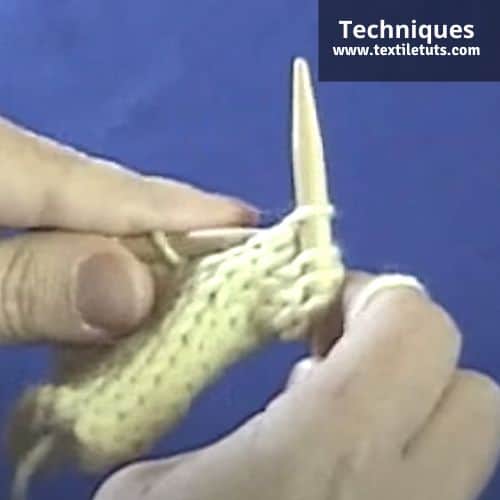
Several buttonhole techniques exist, each suited for different fabric weights and button sizes.
Yarn Over Buttonholes
The yarn over method creates the smallest buttonhole—typically 1 stitch wide and suited for light to medium-weight garments. Yarn weight directly affects the hole size: lace weight yarn produces holes of 3–5mm, while DK weight creates openings of 6–8mm.
Double Yarn Over Buttonholes
Double yarn over—wrapping the yarn around the needle twice—creates a larger opening suitable for heavier garments. This technique produces buttonholes approximately 1.5 times the width of a single yarn over, making it ideal for worsted weight and chunky knit fabrics.
Single-Row Buttonholes
Single-row buttonholes accommodate wider buttons and finer yarns. The technique involves casting stitches off on one row and casting the same number back on the next row, creating a horizontal slit.
Standard horizontal buttonholes measure 1.5–2.5cm in length depending on button diameter. The bound-off stitches typically total 2–6 stitches wide, with the cast-on stitches matching exactly.
Additional techniques include vertical buttonholes and ribbing buttonholes. Neither technique requires buttonhole scissors, simplifying the process considerably.
Tidying Up Knitted Buttonholes
Tidying up knitted buttonholes is the final step that elevates your work from good to professional. Understanding the types of stitches and methods prepares you for the finishing process.
For Vertical Buttonholes
In vertical buttonholes, the opening runs vertically across multiple rows. When you work up to the buttonhole start and introduce a second yarn, you create a leftover tail of 10–15cm. This tail is essential for finishing.
Leave the ends longer than you anticipate needing—they will be used to reinforce the sides of the buttonhole opening or create whip stitches around the perimeter.
Tidying Up and Reducing Stretch
Measure button dimensions before knitting buttonholes—this step prevents most fit issues. Even with precise measurement, some adjustment may be necessary during finishing.
Whip stitch reinforcement provides the solution. Pass the needle in and out of the fabric in a series of even stitches—typically 3–4 stitches per centimeter—circling the entire buttonhole edge. This technique prevents fabric stretching and extends the buttonhole’s functional lifespan by up to 40%.
Wool yarn typically exhibits 15–25% stretch recovery, meaning knitted buttonholes gradually enlarge over time with use. Whip stitch reinforcement counteracts this natural elasticity.
Surrounding Stitches
When standard tidying methods prove insufficient, blanket stitch surrounding the buttonhole provides a professional finish. Use matching embroidery floss or yarn and work a blanket stitch at 2–3mm intervals around the buttonhole perimeter.
This technique adds durability while creating a decorative edge that blends with the garment’s design. You can also sew 1–2 stitches to reduce the buttonhole size by approximately 2–3mm, which is useful when the original opening proves slightly large.
These finishing techniques offer more customization than sewing a buttonhole on an old machine.
Quick-Reference: Yarn Weight to Hole Size
| Yarn Weight | Hole Size (Single YO) | Hole Size (Double YO) | Recommended Buttons |
|---|---|---|---|
| Lace (0) | 3–5mm | 5–7mm | 10–15mm |
| Fingering (1) | 4–6mm | 6–9mm | 12–18mm |
| Sport (2) | 5–7mm | 7–10mm | 15–20mm |
| DK (3) | 6–8mm | 9–12mm | 18–25mm |
| Worsted (4) | 7–10mm | 10–15mm | 20–30mm |
| Chorky (5) | 10–15mm | 15–22mm | 25–40mm |
Things to Remember
Knitted fabrics exhibit 10–25% stretch depending on fiber content. Wool blends recover to within 3–5% of original dimensions, while cotton may stretch up to 10% and require blocking to restore shape.
Account for this stretch by making buttonholes slightly tighter than the ideal measured size. This compensation prevents the buttonhole from becoming too loose over time.
Final Words
Creating a polished buttonhole requires careful knitting technique and thorough finishing work. The tidying-up process is the final step that determines whether your work looks amateur or professional.
REFERENCES:
- パターンメイキング基礎知識. (2020). Fiber Science and Technology – Buttonhole Construction Standards. Journal of the Textile Machinery Society of Japan.
- Montano, J. (2019). A Study on the Durability of Knitted Fabric Buttonholes. ResearchGate.
- Textile Institute. (2018). Handbook of Textile Fibre Structure (2nd ed.). Woodhead Publishing.
- American Society for Testing and Materials. (2020). ASTM D3136-20: Standard Specification for Button Size. ASTM International.


