
How to Remove Chocolate Stains from Clothes

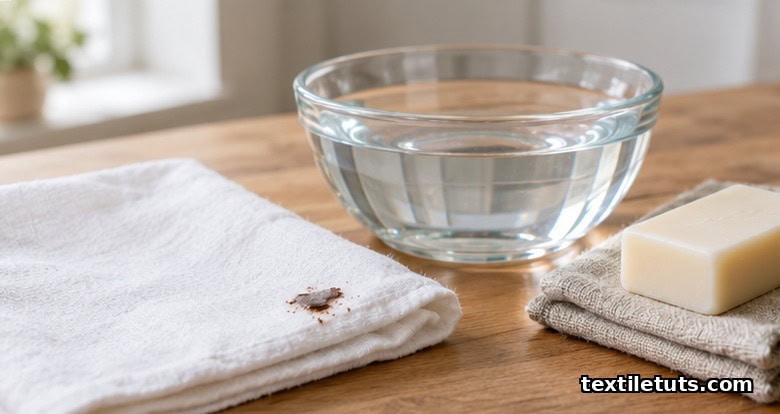
Chocolate stains are a complex triple-component stain: fat (cocoa butter), protein (milk proteins), and tannins (cocoa pigment). The removal approach must address all three — enzyme detergent handles both protein and tannin components; dish soap handles the fat component. Cold water is essential because heat denatures the milk proteins, bonding them to fabric permanently. This guide covers every fabric type and stain severity. For broader fabric care context, see our complete stain removal guide.
Why Chocolate Stains Are Complex
Chocolate presents three distinct challenges simultaneously, each requiring a different treatment approach. According to chocolate composition data, chocolate contains approximately 30% fat by weight (primarily cocoa butter), 8% protein (from milk solids in milk chocolate), and polyphenolic compounds including theobromine (205mg per 100g) and caffeine (20mg per 100g). The fat component requires surfactants in dish soap to emulsify it; the protein component requires protease enzymes to hydrolyze peptide bonds; the tannin component requires enzyme action or oxidizing agents to break down polyphenolic compounds. Understanding these three separate mechanisms is essential because treating them out of order — particularly addressing fat before protein — can permanently set the stain. Never treat fat first, as this can drive protein deeper into fabric fibers.
The order of operations matters critically. Treating the fat component first can actually set the protein component deeper into the fabric. Always treat protein and tannin components with enzyme laundry detergent before addressing any remaining fat residue. Proteases like savinase work optimally at temperatures between 30°C and 60°C, but the initial treatment must always be cold to prevent heat denaturation.
Step-by-Step Chocolate Stain Removal
Chocolate stain removal requires a precise six-step sequence — deviating from this order, particularly using warm water before enzyme treatment, makes removal significantly harder or permanently impossible. Each step addresses a specific component of the triple-component stain system. Follow this sequence precisely for the best chance of complete removal on the first attempt.
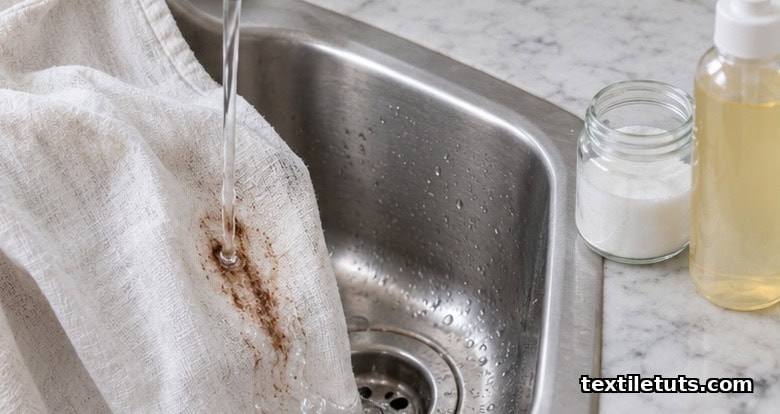
- Remove solid chocolate: Scrape off solid chocolate with a spoon or dull knife, working from the outside edge toward the center. Do NOT rub — this spreads the stain outward and forces chocolate deeper into fabric fibers. For dried chocolate, let it dry completely first (scraping wet chocolate smears it worse).
- Cold water flush: Flush the stain from the reverse side (inside of the garment) with cold running water. This pushes chocolate particles out rather than deeper. Never use warm or hot water at this stage — heat denatures milk proteins at approximately 40°C to 50°C, causing them to bond permanently to cellulose fibers. Protein denaturation is irreversible: once the folded protein structure unfolds and bonds to fabric, no enzyme can reverse it.
- Dish soap treatment (fat component): Apply liquid dish soap directly to the stain. Work it in gently with your fingertips, using a circular motion from outside edge to center. Dish soap contains lipase enzymes (which break down fats) and surfactants like alkylbenzenesulfonates. Let it sit for 5 minutes. Blot (do not rub) with a clean white cloth.
- Enzyme detergent pre-soak (protein and tannin components): Apply liquid enzyme detergent directly to the stain. Laundry enzyme formulations typically contain approximately 2% active enzymes by weight — a combination of proteases, lipases, and amylases. Proteases (like savinase) hydrolyze milk protein chains; lipases continue breaking down any remaining fat; amylases handle any starch-based thickeners in the chocolate. Let the garment soak for 20 to 30 minutes in cold water with additional enzyme detergent.
- Wash: For the first wash cycle, use cold water only. If the fabric tag permits warm water (check care label — cotton typically tolerates warm), you may use warm for a second cycle after confirming the stain has lightened significantly. Use enzyme detergent in the wash.
- Check before drying: Examine the stain under good lighting before placing the garment in the dryer. Heat from a dryer sets any remaining stain permanently — once heat-fixed, the stain becomes essentially permanent. If the stain persists, repeat the enzyme pre-soak and wash cycle before drying.
Chocolate Stain Treatment Flow
Dark Chocolate vs. Milk Chocolate Stains
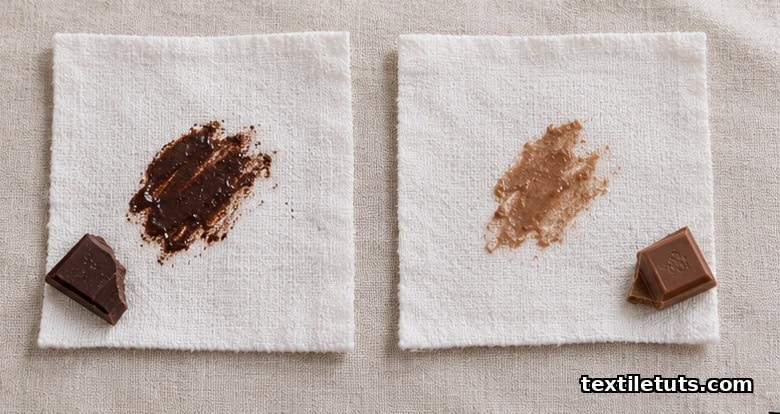
Dark chocolate and milk chocolate require different treatment intensities because of their differing compositions. Dark chocolate contains 50% to 90% cocoa solids, meaning proportionally more tannins (theobromine and cocoa pigment) and less milk protein. The higher tannin content makes dark chocolate stains more stubborn — polyphenolic pigments bond strongly to fabric fibers and require longer enzyme exposure or multiple treatment cycles. If dealing with a red wine stain or other tannin-based stains, similar principles apply for the oxidation step. Milk chocolate, containing approximately 20% to 25% milk solids, has a significant protein component that makes cold water treatment more urgent — milk proteins denature and bond to fabric faster than tannins. Treat milk chocolate stains within minutes if possible. White chocolate, composed primarily of cocoa butter (30% to 35%), sugar, milk solids, and vanilla, has no cocoa powder or tannins and is the easiest to remove — dish soap treatment is most critical, while enzyme detergent is less important.
Chocolate on Specific Fabrics
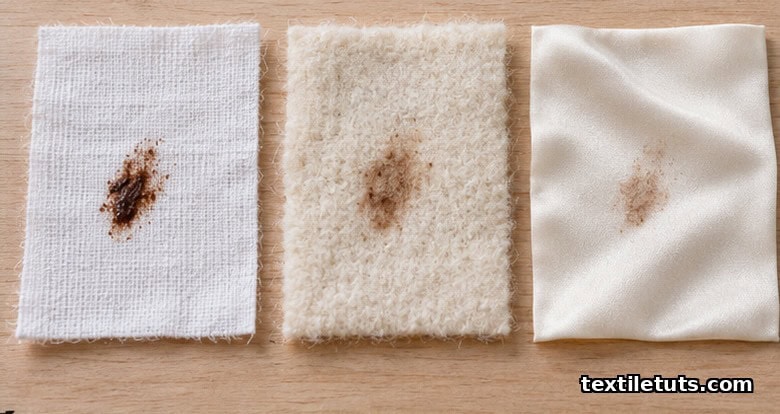
Fabric type fundamentally changes the treatment approach because fiber composition determines enzyme compatibility and heat tolerance. Protein-based fibers (wool, silk) are degraded by protease enzymes, requiring alternative treatment methods. Cellulose-based fibers (cotton) tolerate enzyme detergents and warm wash temperatures well. Synthetic fibers (polyester, nylon) require modified surfactant approaches. Always check the care label before applying any treatment, and test on an inconspicuous area first.
Cotton
Cotton is the most forgiving fabric for chocolate stain removal. Cotton fibers are cellulose-based and tolerate both enzyme detergents and warm wash temperatures well. Follow the full six-step process, using warm water (up to 60°C) in the final wash cycle if the care label permits. Cotton’s absorbent nature means the stain can penetrate deeply, so thorough enzyme pre-soaking is essential — do not rush the 20- to 30-minute soak time. Cotton’s durability allows for stronger enzyme concentrations and longer soak times compared to delicate fabrics.
Wool
Wool is a protein-based fiber (keratin), making it more delicate than cotton. The enzyme pre-soak step requires caution: protease enzymes can degrade wool keratin if exposure is prolonged. Use enzyme detergent at half the normal concentration and limit the soak to 10 to 15 minutes in cold water only. Never use hot water on wool — it causes shrinkage at temperatures above 30°C. For stubborn wool chocolate stains, consult a professional dry cleaner, as solvent-based cleaning may be necessary for the tannin component.
Silk
Silk is the most delicate fabric for chocolate stain removal. Skip the enzyme detergent entirely — proteases will damage silk fibers, which are also protein-based (fibroin). Use only cold water flush and clear dish soap applied sparingly. Work the dish soap in very gently; silk fibers are smooth and the stain may not penetrate deeply if treated immediately. For dried or stubborn chocolate stains on silk, dry cleaning is the recommended treatment. Do not attempt at-home enzyme treatment on silk under any circumstances. Consult a professional silk care specialist for persistent stains.
Upholstery and Carpet
For upholstery fabric and carpet, the principles are the same but the technique differs: do not immerse the fabric. Instead, scrape off solid chocolate, then apply cold water to a clean white cloth and blot the stain (never rub). Apply a small amount of dish soap to the cloth, not directly to the fabric, and continue blotting. For the enzyme step, use a carpet/upholstery-specific enzyme cleaner rather than laundry detergent. Commercial upholstery cleaners are formulated for console cleaning and are safer for backing materials. Always test on an inconspicuous area first. For comprehensive guidance on upholstery stain removal, consult our dedicated guide.
Frequently Asked Questions
Hot Water Permanently Sets Chocolate Stains at 40°C–50°C
Yes — hot water denatures the milk proteins in chocolate, causing them to bond permanently to fabric fibers. Milk proteins begin to denature at approximately 40°C to 50°C. Once denatured, the protein structure cannot be restored and no enzyme treatment can reverse the bonding. Always treat chocolate stains with cold water first. Only use warm water in the wash cycle after the stain has been pre-treated and significantly lightened, and only if the fabric care label permits.
Dried Chocolate Stains Require Extended Enzyme Soaking (30–60 Minutes)
Yes — dried chocolate stains can be removed, though they require more effort. Let the chocolate dry completely if it is still wet (this makes scraping easier and prevents smearing). Then follow the full enzyme pre-soak method, but extend the soak time to 30 to 60 minutes. Multiple treatment cycles may be needed for old, dried-in stains. The tannin component (theobromine and cocoa pigment) is the most difficult to remove from dried stains, as the pigment has had time to bond oxidatively to the fabric. OxiClean or an oxygen-based bleach soak after the enzyme treatment can help lift remaining tannin staining.
OxiClean Oxidizes and Removes the Tannin Component of Chocolate
Yes — OxiClean (sodium percarbonate, an oxygen bleach) is effective on the tannin and pigment components of chocolate stains. Oxygen bleach works by releasing hydrogen peroxide, which oxidizes the polyphenolic compounds in cocoa (including theobromine and caffeine) into water-soluble products. For best results, use OxiClean after the initial enzyme pre-soak treatment. The enzyme treatment removes the protein and much of the fat first; OxiClean then addresses any remaining discoloration from tannins. Do not use OxiClean on silk or wool — oxidation damage can occur.
Key Takeaways
- Chocolate is a triple-component stain: fat (cocoa butter), protein (milk solids), and tannins (cocoa pigment). Each requires a different treatment — enzyme detergent addresses protein and tannins; dish soap handles fat.
- Cold water is non-negotiable for initial treatment — heat permanently sets the protein component at 40°C to 50°C, and protein denaturation cannot be reversed by any enzyme treatment.
- Enzyme detergent containing protease and lipase addresses protein and fat components; oxygen-based bleach (OxiClean) addresses remaining tannins after enzyme treatment.
- Never place chocolate-stained items in the dryer until the stain is completely confirmed gone — heat fixation makes the stain permanent and essentially irremovable.
- Silk requires dish soap only (no enzymes — proteases damage silk fibers). Wool requires shortened enzyme exposure at half concentration. Cotton tolerates full-strength enzyme treatment and warm water.
References
- Wikipedia. (2024). Chocolate — Composition and Properties. Wikimedia Foundation.
- Wikipedia. (2024). Laundry Detergent — Enzyme and Surfactant Composition. Wikimedia Foundation.
- Wikipedia. (2024). Protein Denaturation — Heat-Induced Structural Changes. Wikimedia Foundation.
- AATCC. (2020). AATCC 130: Stain Release Test Method. American Association of Textile Chemists and Colorists.
- Wikipedia. (2024). Tannin — Chemistry and Applications. Wikimedia Foundation.


