
Why Do People Like Cashmere?


People love cashmere because it offers an exceptional combination of softness, warmth-to-weight ratio, durability, and timeless elegance that no other fiber matches. Cashmere provides up to 8 times the warmth of standard wool while remaining remarkably lightweight, and its fibers measure just 14–19 microns in diameter—compared to 25–40 microns for regular wool—making it significantly softer against the skin. With proper care, a quality cashmere garment can last decades, making it both a luxury and a long-term investment.
In this article, we’ll explore why cashmere has become one of the most prized textile fibers in the world, how it’s sourced and produced, and the best practices for caring for your cashmere garments.
How Is Cashmere Made?

Cashmere is made from the soft, downy undercoat of cashmere goats. These goats live in colder climates, such as Mongolia and Tibet. The harsh conditions of these areas cause the cashmere goats to grow a thick coat of fur that protects them from the cold weather.
When the weather starts to warm every spring, the cashmere goats shed their winter coats. This is when farmers collect the soft, downy fibers during the annual combing process. Each goat produces only approximately 150 grams (0.33 lbs) of raw cashmere fiber per year.
It takes the fibers from 2–4 cashmere goats to make one sweater. This scarcity is why pure cashmere garments cost significantly more than other fiber types — global raw cashmere prices range from $80–200 per kilogram depending on fiber diameter and grade.
Cashmere vs. Other Fibers: A Comparison
Understanding how cashmere compares to other common fibers helps explain its popularity and premium pricing.
| Property | Cashmere | Merino Wool | Standard Wool |
|---|---|---|---|
| Average fiber diameter | 14–19 microns | 17–23 microns | 25–40 microns |
| Thermal insulation (clo/oz) | 0.92 | 0.73 | 0.50 |
| Moisture regain | 15–17% | 13–18% | 14–18% |
| Durability (cycles to failure) | 20,000–50,000 | 20,000–50,000 | 10,000–30,000 |
| Annual yield per animal | 150g (0.33 lbs) | 4–5 kg | 3–8 kg |
| Primary origin | Mongolia, China, Tibet | Australia, New Zealand | Worldwide |
Premium cashmere fiber measures 14–16 microns in diameter, placing it well below the U.S. Wool Products Labeling Act maximum of 19 microns for cashmere classification.
Cashmere Grade Quick Reference
| Grade | Fiber Diameter | Quality Characteristics |
|---|---|---|
| Grade A | Under 15 microns | Premium quality, exceptionally soft, highest price point |
| Grade B | 16–19 microns | Good quality, still soft, more affordable than Grade A |
| Grade C | Over 19 microns | Lower quality, coarser feel, rarely sold as premium cashmere |
Reasons to Love Cashmere
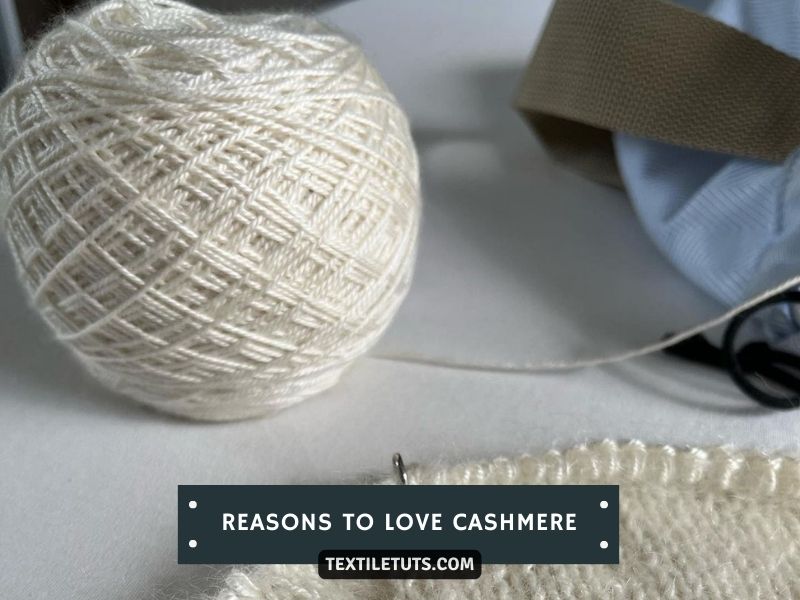
Cashmere is simply fabulous. The warmth-to-weight ratio is exceptional — cashmere provides up to 8 times the warmth of standard wool while weighing significantly less. This makes it more comfortable to wear across a wider range of conditions. The different clothing styles that can be achieved with this fabric type are just as versatile as those who wear it. There are many reasons to love cashmere, but here are just a few:
Unique Visual Appeal

Different from other materials, cashmere has a unique visual character. The luster is rich and soft, and the three-dimensional drape is superior. Cashmere fabric has excellent wrinkle resistance and retains its shape throughout the day.
When wrapped around the neck, it makes people feel beautiful and generous. This is a versatile style. A cashmere scarf can be matched with any style of clothes, making people feel fashionable.
Excellent Warmth-to-Weight Ratio
The most significant advantage of cashmere is its exceptional warmth retention. Cashmere fibers create millions of microscopic air pockets that trap body heat. A cashmere scarf provides 8 times the warmth of equivalent wool weight while remaining lightweight and breathable. In winter, the cashmere scarf around the neck makes people feel very comfortable and warm, and this kind of warmth has a soft, enveloping quality, just like winter sunshine.
Superior Softness
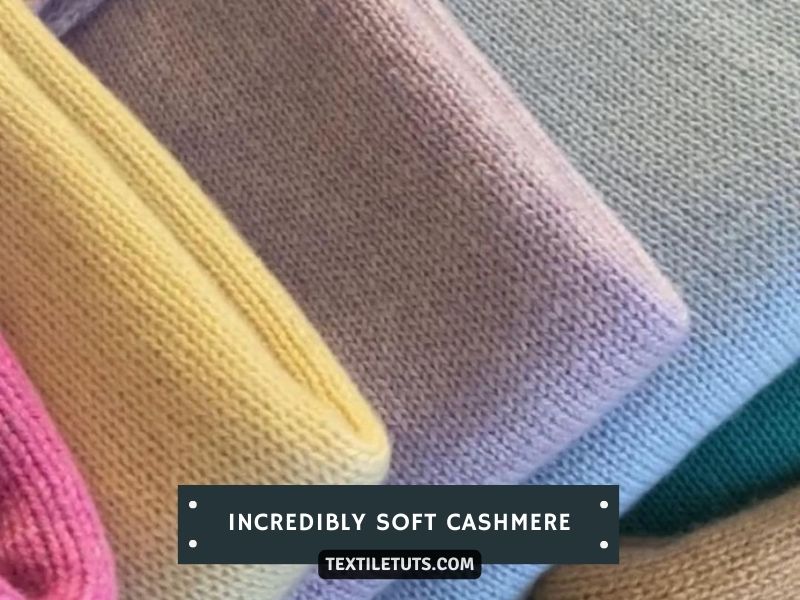
One of the best qualities of cashmere is its superior softness. The fabric is significantly softer than standard wool, making it very comfortable against bare skin. Cashmere fibers measure 14–19 microns in diameter, compared to 25–40 microns for regular wool, which explains the markedly softer hand feel. Cashmere is also very light, so it layers well in colder weather without adding bulk.
Versatile Across Seasons
Another great feature of cashmere is that it adapts to both cold and milder weather. In winter, cashmere provides excellent insulation without excessive weight. In spring and fall, cashmere serves as the perfect transitional fabric. Cashmere’s natural moisture-wicking properties (15–17% moisture regain) help regulate body temperature across seasons.
Durability and Longevity
Despite its delicate appearance, cashmere is quite durable. With proper care, a cashmere garment typically withstands 20,000–50,000 cycles to failure — comparable to merino wool and significantly better than standard wool. A quality cashmere sweater can last for decades when correctly maintained.
Classic and Timeless Appeal
Cashmere has a classic elegance that never goes out of style. The global luxury cashmere market was valued at approximately $3.5 billion in 2023, with projections reaching $4.2 billion by 2025 (CAGR of 3.86%). Whether you’re looking for a cozy sweater or a chic scarf, cashmere remains a consistently valued choice.
Simple Care Requirements
Cashmere is easy to care for — simply hand wash in cool water (15–20°C/59–68°F) or dry clean. Cashmere’s natural resistance to wrinkles makes it easy to pack for travel. Proper care extends the garment’s lifespan significantly.
With all these reasons to love cashmere, it’s no wonder many people choose cashmere garments! Cashmere is the perfect choice if you’re looking for a luxurious and versatile fabric.
How to Care for Cashmere

Now that you know some of the reasons why people love cashmere, let’s explore how to care for your cashmere garments.
Cashmere is a low-maintenance fiber that requires little special care. Simply hand wash in cold water or dry clean to keep it looking great. Cashmere is also simple to pack for travel due to its natural ability to resist wrinkles.
Follow these essential care practices to keep your cashmere looking its best:
- Remove pilling regularly — Use a cashmere comb or battery-operated cashmere shaver to gently remove fuzzballs that form in high-friction areas (underarms, inner thighs, where bag straps cross)
- Wash after every 3–5 wears — Washing too frequently accelerates fiber degradation; wash only when garment shows visible soiling or has absorbed significant body odor
- Use cold water (15–20°C / 59–68°F) — Cold water prevents shrinkage and fiber felting; use mild detergent specifically formulated for wool and cashmere, or 1–2 teaspoons of organic baby shampoo per liter of water
- Never wring or twist wet cashmere — Press excess water by rolling in a clean towel, then lay flat to air dry in a shaded area
- Never hang wet cashmere — The weight of water stretches the fabric and distorts the shape
Pro tip: Dry cleaning solvents (particularly perc) gradually degrade cashmere fibers with each treatment, reducing garment lifespan by an estimated 10–15% per cleaning cycle. Hand washing actually improves cashmere’s texture by gently cleaning and conditioning the fibers.
Remove Pilling Regularly

When cashmere rubs against skin or other surfaces, the friction causes loose fibers to form small pills (fuzzballs). These appear first in high-friction areas such as underarms, inner thighs, and where handbag straps cross. Use a cashmere comb or a battery-operated cashmere shaver to remove pills gently. Regular removal prevents the pills from spreading and keeps the fabric smooth.
Wash After Every 3–5 Wears
Before washing your cashmere, ensure it is free of spills, stains, and sweat. Cashmere garments do not require washing after every wear — washing too frequently accelerates fiber degradation. A general guideline is to wash after every 3–5 wears, or when the garment shows visible soiling or has absorbed significant body odor.
Follow Label Instructions with Adaptation

Most cashmere items are labeled “dry clean only” because they contain delicate fiber blends. However, pure cashmere comes from goat undercoat, which responds well to washing — similar to human hair. Hand washing actually improves cashmere’s texture by gently cleaning and conditioning the fibers. Dry cleaning solvents (particularly perc) gradually degrade cashmere fibers with each treatment, reducing garment lifespan by an estimated 10–15% per cleaning cycle.
Use Cold Water and Gentle Cleansers
Always wash cashmere in cold water (15–20°C / 59–68°F). Cold water prevents shrinkage and fiber felting. Use a mild detergent specifically formulated for wool and cashmere, or 1–2 teaspoons of organic baby shampoo per liter of water. Some cashmere experts recommend soaking the item for 20–30 minutes before gentle agitating, rather than vigorous rubbing.
Do not use regular laundry detergent, which contains enzymes that break down protein fibers. Do not use fabric softener — its chemical compounds coat cashmere fibers and interfere with their natural softness and breathability. Instead, a small amount of white vinegar (1 tablespoon per liter) can be used as a natural fabric softener during the rinse cycle.
Dry Flat and Reshape
Cashmere reaches its maximum delicacy when wet. Never wring or twist wet cashmere — this stretches and distorts the fibers. Instead, press excess water from the garment by rolling it in a clean towel. Lay the garment flat on a fresh towel and gently reshape it to its original dimensions. Allow it to air dry completely in a shaded area away from direct sunlight, which can fade colors.
Drying time varies from 24–48 hours depending on humidity and garment weight. Never hang wet cashmere — the weight of water stretches the fabric and distorts the shape. If using a dryer for a partially dry garment in an emergency, set it to the lowest temperature (below 30°C / 86°F) for no more than 5 minutes. Heat above 40°C (104°F) causes irreversible shrinkage in cashmere.
Are Goats Killed for Cashmere?
No, goats are not killed for their cashmere. Cashmere is a byproduct of the goat’s natural spring coat shedding process. Goats shed their winter coats each year as temperatures rise in spring. This process is called “de-hairing,” and ‘cashmere’ derives from the old Persian word for wool, ‘Kashmir.’
During the spring shedding season, farmers gently comb or brush the cashmere from the goats — a completely non-invasive process. The collected raw fiber is then cleaned, de-haired, sorted by diameter, and spun into yarn. No animals are harmed in the making of cashmere garments. Mongolia alone produces approximately 8,900 metric tons of raw cashmere annually, with China producing around 19,200 metric tons.
Frequently Asked Questions
Is Cashmere worth the investment?
Cashmere is a highly versatile, easy-to-care-for fabric that can be worn year-round. Cashmere provides 8x the warmth of standard wool at a fraction of the weight. With proper care, a quality cashmere garment lasts 10–20 years, making the higher upfront cost cost-effective over time.
Is Cashmere made from goat hair?
Cashmere is made from the soft, downy hair that grows under the outer coat of cashmere goats. This inner layer of hair (known as the undercoat) is shed each spring and collected during the animal’s annual combing. The cashmere fibers are sorted by diameter, cleaned, and spun into yarn. Grade A fibers measure under 15 microns; Grade B ranges 16–19 microns.
How much does Cashmere cost?
Raw cashmere fiber prices range from $80–200 per kilogram depending on quality and fiber diameter. A 100% pure cashmere sweater typically retails for $150–600+, while lower-quality blends may cost $50–150. Premium Mongolian Grade A cashmere can exceed $300 per kilogram on the global market.
Is a Cashmere scarf warm enough for winter?
A cashmere scarf provides up to 8 times the warmth of an equivalent-weight wool scarf. Cashmere’s superior thermal insulation (0.92 clo/oz vs. 0.50 for standard wool) comes from the millions of microscopic air pockets trapped between its fine 14–19 micron fibers. This makes it exceptionally effective at retaining body heat in cold conditions.
Is Cashmere Used in Expensive Prom Dresses as a Luxury Material?
Yes, cashmere is used in expensive prom dresses as a luxury material for reasons for pricey prom dresses. Cashmere’s soft, luxurious feel and its rarity make it highly sought after for high-end gowns. The quality and exclusivity of cashmere make it a popular choice for creating luxurious and expensive prom dresses.
Final Words
People love cashmere because it is a luxurious and comfortable fabric. It is also easy to care for, which makes it ideal for travel. Additionally, cashmere is naturally resistant to wrinkles, making it perfect for packing. Finally, cashmere is a classic fabric that never goes out of style. Are you a regular user of cashmere? What do you love most about it? Let us know in the comments below!
References
- Wikipedia. (2024). Cashmere wool. Wikimedia Foundation.
- U.S. Federal Trade Commission. (2024). Wool Products Labeling Act — Administrative Interpretation. FTC.gov.
- Textile Exchange. (2023). Cashmere Sustainability Guidelines. Textile Exchange.
- Grand View Research. (2023). Luxury Cashmere Market Size, Share & Trends Analysis Report. Grand View Research.


