
Why Are Sewing Machines Loud and 6 Easy Fixes You Can Try!

How Much Noise Does a Sewing Machine Make? A Complete Guide to Sewing Machine Sound Levels
Sewing machines generate between 60 and 90 decibels (dB) during operation—from slightly louder than normal conversation to approaching the hearing protection threshold. Domestic machines typically produce 60–75 dB, while industrial machines range from 75–95 dB depending on age and design. The Occupational Safety and Health Administration (OSHA) requires hearing conservation programs when 8-hour time-weighted average exposure reaches 85 dB.
Noise originates from multiple sources: the needle bar assembly oscillating at high frequencies, the rotary hook spinning at up to 5,000 stitches per minute, the feed dog mechanism, the bobbin case vibration, and the electric motor. Poor lubrication, lint accumulation, incorrect threading, unstable work surfaces, and worn internal components all compound operational noise.
OSHA Noise Exposure Limits Quick Reference
Use this reference to determine safe exposure durations for your sewing environment:
| Noise Level (dB) | Maximum 8-Hour Exposure | Hearing Protection Required |
|---|---|---|
| 85 | 8 hours | Yes — mandatory |
| 90 | 6 hours | Yes — mandatory |
| 95 | 3 hours | Yes — mandatory |
| 100 | 2 hours | Yes — mandatory |
| 105 | 1 hour | Yes — mandatory |
| 110 | 30 minutes | Yes — mandatory |
OSHA uses a 5 dBA exchange rate—when noise increases by 5 dB, allowable exposure time is cut in half. Source: OSHA Occupational Noise Exposure standards.
Sewing Machine Noise Levels Compared to Common Sounds
To contextualize sewing machine noise, the following comparison illustrates how common sound sources measure against typical sewing machine output:
| Sound Source | Noise Level (dB) | Hearing Risk (8-hr Exposure) |
|---|---|---|
| Whisper | 30 | None |
| Normal conversation | 60 | None |
| Domestic sewing machine | 60–75 | Minimal |
| Passenger car at 50 mph | 70–80 | Minimal |
| Industrial sewing machine (modern) | 75–85 | Borderline—use protection |
| Motorcycle | 80–95 | Hearing protection required |
| Industrial sewing machine (legacy) | 85–95 | Hearing protection mandatory |
| Diesel truck | 85–90 | Hearing protection mandatory |
| Rock concert | 110–120 | Immediate hearing damage risk |
| Jet engine at 100 ft | 120–140 | Immediate permanent damage |
According to the Occupational Safety and Health Administration (OSHA), employers must implement a Hearing Conservation Program when noise exposure equals or exceeds 85 dBA as an 8-hour time-weighted average. OSHA uses a 5 dBA exchange rate—when noise increases by 5 dBA, allowable exposure time is cut in half.
5 Causes of Excessive Sewing Machine Noise
Excessive noise in sewing machines stems from five primary causes that account for the majority of complaints from operators. Identifying which cause applies to your machine determines the appropriate remedy.
1. Poor Lubrication
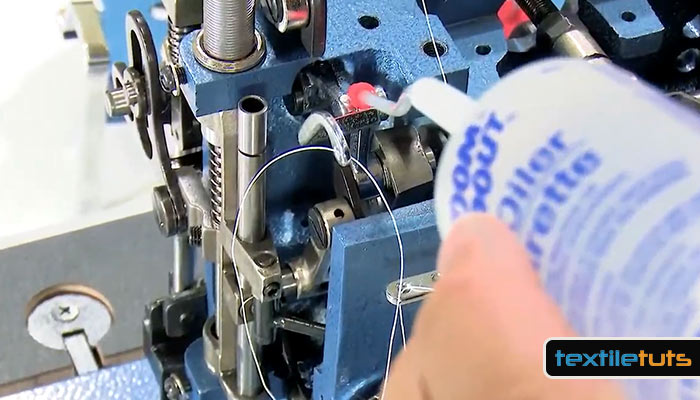
Metal-to-metal contact in sewing machine mechanisms generates substantial friction and noise when lubrication is insufficient. The needle bar, hook race, and balance wheel bearings require regular oiling according to manufacturer schedules—typically every 8-10 hours of operation for industrial machines. Use only sewing machine-specific lubricants; household oils attract lint and create sludge buildup that clogs oil passages.
Signs of inadequate lubrication include squeaking during operation, increased resistance when turning the hand wheel by hand, and visible discoloration of metal surfaces at friction points. Schedule immediate lubrication if you notice any of these symptoms.
2. Lint Build-Up in the Rotary Hook
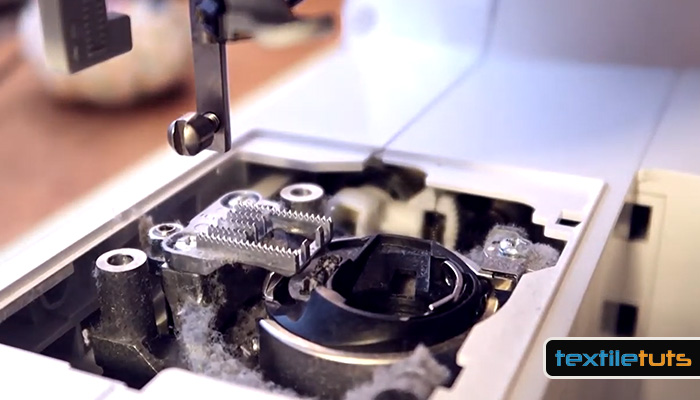
Fabric fibers accumulate in the rotary hook area with every seam sewn. This lint restricts the hook’s rotation, creates irregular tension on the bobbin case, and generates excess friction noise. The TextileTuts sewing machine maintenance guide recommends cleaning the hook race area after every 8 hours of continuous operation using compressed air and a lint-free cloth.
Pay particular attention to the area beneath the bobbin case and the raceway where lint becomes trapped between the hook and the case. Failure to clean these areas leads to accelerated wear on both the hook point and the bobbin case throat plate.
3. Incorrect Threading and Tension Imbalance
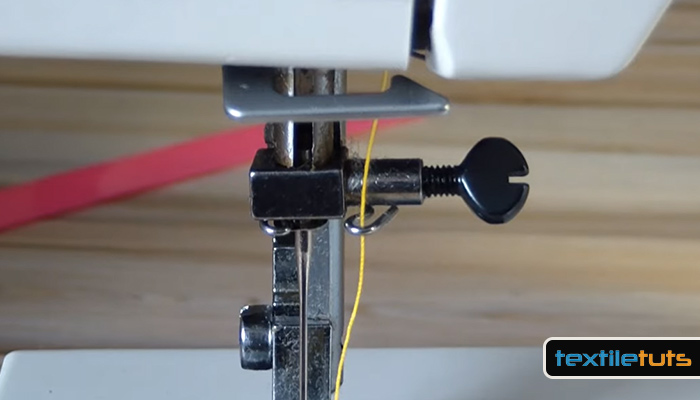
Incorrect upper threading creates uneven tension distribution across the stitch, causing the fabric to bunch, the needle to deflect, and the machine to produce rattling or popping sounds. Thread must follow the tension disc pathway precisely, engage the take-up lever, and pass through the needle eye in the correct sequence.
Common threading errors include skipping the tension discs entirely, failing to seat the thread fully in the take-up lever slot, and threading the needle from the wrong side. Consult your machine’s threading diagram and re-thread completely whenever stitch quality deteriorates.
4. Vibration From Unstable Work Surface
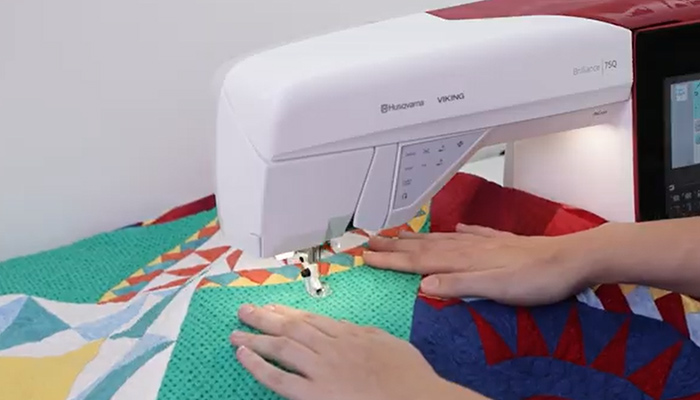
Sewing machines vibrate at frequencies between 50 and 150 Hz during normal operation, depending on stitch speed and machine type. An uneven or flimsy work surface amplifies these vibrations, creating resonance that intensifies perceived noise. Tables with hollow construction, flexing legs, or uneven surfaces compound the problem significantly.
Place your machine on a solid, level surface with adequate structural support. Dedicated sewing furniture and industrial sewing tables are engineered to dampen vibration and reduce noise transmission through the floor structure.
5. Worn or Damaged Internal Components
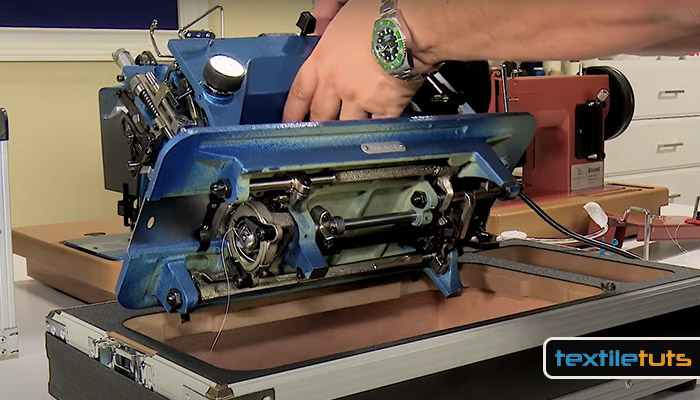
Internal components wear at different rates depending on usage intensity and maintenance consistency. The needle bar bushing wears oval over time, creating lateral play that produces knocking sounds. The hook timing drifts when the hook gear sustains wear, causing irregular stitch formation and associated noise.
Motor brushes in older machines develop flats that create rhythmic clicking at specific engine speeds. Belt-driven models develop cracked or glazed belts that squeal under load. Schedule professional service annually to identify and replace worn components before they cause catastrophic failure.
6 Proven Methods to Reduce Sewing Machine Noise
Reducing sewing machine noise requires addressing both the machine itself and its operational environment. These six methods produce measurable results when applied correctly.
1. Install a Level and Sturdy Work Surface
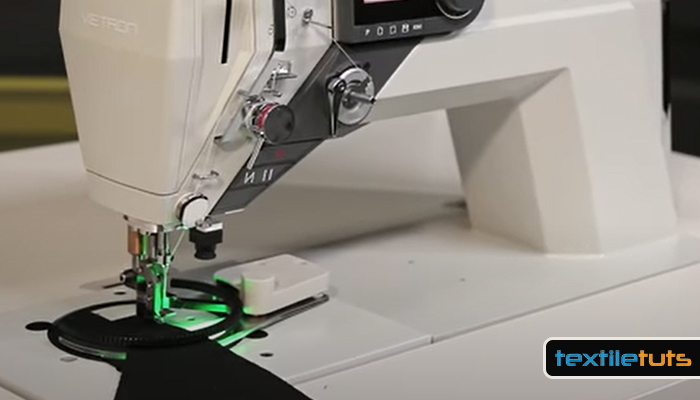
A level, sturdy surface prevents vibration amplification and reduces noise transmission. Use a dedicated sewing table or workstation rated for the weight of your machine plus the dynamic forces of sewing. Verify table levelness using a bubble indicator; adjust table feet or add shims to achieve horizontal alignment within 1 degree of level.
2. Use Soundproofing or Vibration-Dampening Pads
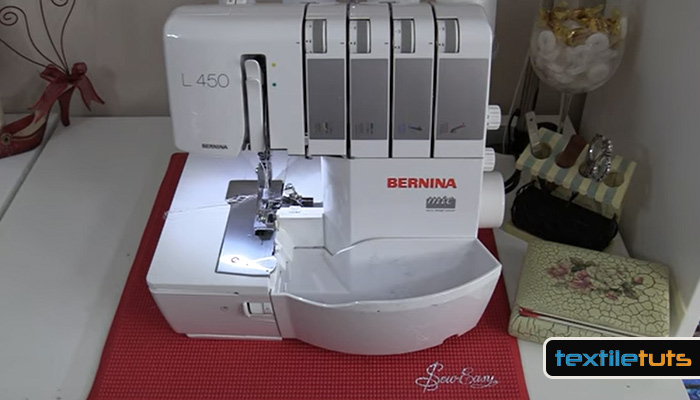
Vibration-dampening pads placed beneath the machine absorb vibration energy before it transmits to the work surface. Select pads with a durometer rating between 30 and 50 Shore A for optimal deflection characteristics. High-density closed-cell foam or rubber matting products reduce noise transmission by 6-12 dB in controlled tests.
3. Identify and Address the Specific Noise Source
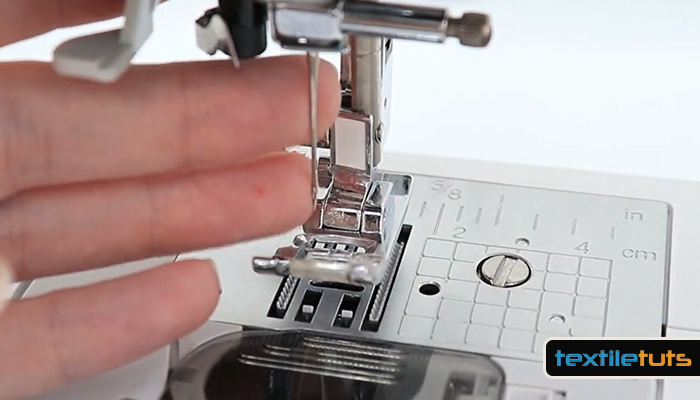
Different noise types indicate different root causes. A grinding sound points to metal-on-metal contact requiring lubrication. A high-pitched squeal suggests belt slip or tension misalignment. A rhythmic clicking indicates a loose component or timing issue. Isolate the noise source by running the machine at different speeds and with different fabrics to narrow down the cause.
If the noise is accompanied by sewing machine jamming underneath the fabric, the issue likely involves the bobbin case, hook timing, or lint accumulation in the lower mechanics.
4. Perform Regular Maintenance on Schedule
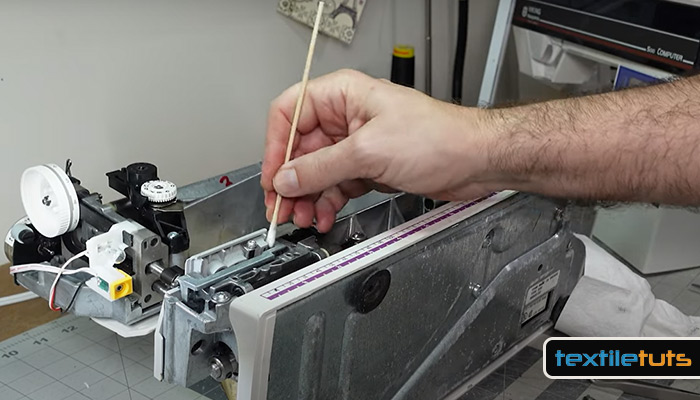
Regular maintenance extends machine life and minimizes noise generation. Replace needles every 8 hours of operational use—bent or dull needles create deflection noise and damage fabric. Apply lubrication every 8-10 hours for industrial machines. Clean lint from the hook race after every 8 hours of continuous sewing.
Follow manufacturer-specified service intervals for professional inspection. Annual servicing typically includes timing verification, tension calibration, motor performance assessment, and electrical connection inspection.
5. Invest in a Thicker, Heavier Work Table
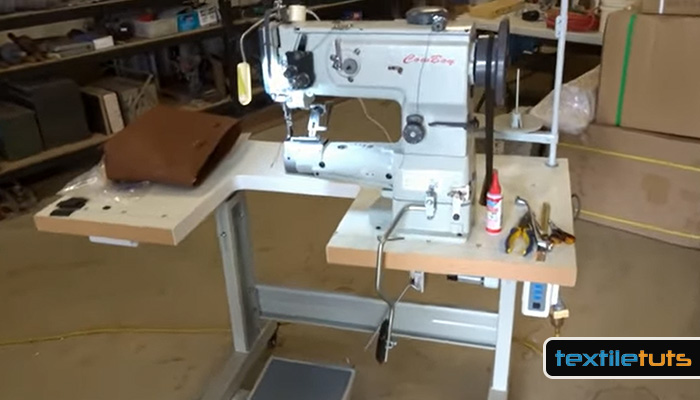
Table mass directly affects noise transmission. A table with a 3-inch thick particle board core reduces vibration transmission by 40% compared to a standard 0.75-inch tabletop. Industrial sewing tables feature reinforced leg assemblies and integrated sound-dampening panels specifically designed for high-speed textile machinery.
For existing tables, adding a 0.75-inch steel plate beneath the machine mounting board increases mass without replacing the entire table. This modification significantly reduces resonance at common sewing frequencies.
6. Reduce Operating Speed
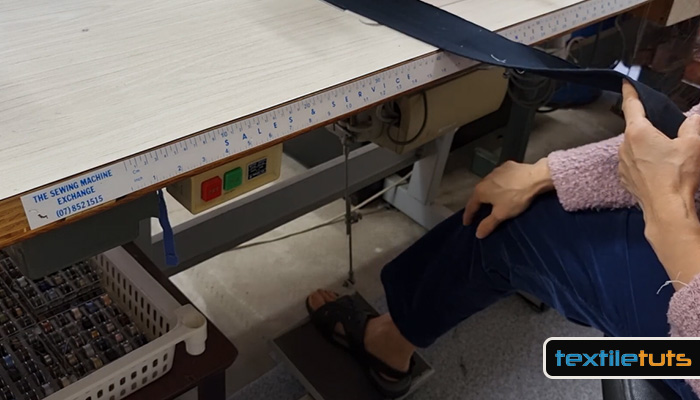
Noise output increases approximately 3-4 dB for every 1,000 SPM increase in sewing speed. Reducing maximum speed from 5,000 SPM to 3,000 SPM decreases noise by 6-8 dB—a noticeable reduction that approaches the threshold for requiring hearing protection.
Use the speed controller to operate at the minimum speed necessary for satisfactory stitch quality. Reserve maximum speed for production runs where operator exposure time is brief.
Industrial Sewing Machines Produce More Noise Than Domestic Machines
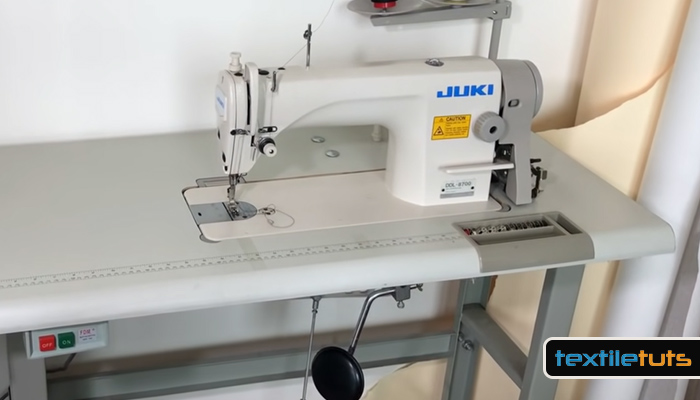
Industrial sewing machines typically produce 10-15 dB more noise than domestic sewing machines due to their larger motors, faster stitching speeds, and heavier mechanical construction. Legacy industrial machines built before 2005 generate 85-95 dB during operation. Modern computerized industrial machines with direct-drive motors produce 75-85 dB—significantly quieter but still within the hearing protection threshold.
Modern industrial sewing machine manufacturers including Juki, Singer, Brother, and Janome have prioritized noise reduction in response to occupational health regulations. Direct-drive motors eliminate the belt-friction noise present in older clutch-motor designs. Improved hook geometry reduces the mechanical impact noise of the bobbin case engagement.
Workplace hearing conservation programs in textile manufacturing facilities now mandate hearing protection for any operator exposed to ambient noise above 85 dB over an 8-hour TWA. This regulation has driven the adoption of quieter industrial machine designs across the industry.
Three Distinct Sewing Machine Noises That Require Immediate Attention
Certain noise patterns indicate mechanical problems that require prompt diagnosis and repair. Ignoring these warning sounds leads to costly repairs and potential operator injury.
Grinding or Squeaking Noises Indicate Lubrication Failure
Grinding or squeaking noises indicate metal-to-metal contact caused by insufficient lubrication, contaminated oil passages, or worn bearings. The source may be the needle bar bushing, the hook race bearings, or the main shaft bearings. Continuing to operate the machine in this condition accelerates wear exponentially and leads to seizing.
Stop the machine immediately and perform lubrication. If grinding persists after lubrication, the bearings require professional replacement. Refer to a qualified sewing machine technician for diagnosis—this noise pattern indicates component wear that progresses rapidly under continued operation.
Clicking or Knocking Noises Signal Component Looseness
Clicking or knocking sounds indicate loose components such as the needle clamp, presser foot screw, throat plate, or bobbin case. Misalignment of the hook timing also produces rhythmic knocking synchronized with the stitch cycle. Loose components cause irregular stitch formation, fabric damage, and increased wear on surrounding parts.
Tighten all visible fasteners and verify needle seating. If clicking persists, inspect for hook timing misalignment by examining stitch formation at low speed. A qualified technician should address timing issues—improper hook timing damages the needle and hook permanently within minutes of operation.
Excessive Whirring or Buzzing Points to Motor or Electrical Problems
While some motor noise is normal during operation, a marked increase in whirring or buzzing indicates motor brush wear, stator issues, or electrical problems. Unusual electrical noises often precede motor failure and should be addressed by a professional with appropriate electrical testing equipment.
Do not operate a machine producing unusual electrical noises. Risk of motor fire or electrical shock exists when motor windings or capacitors fail. Disconnect power and contact a qualified repair technician immediately.
Juki Sewing Machines Offer Advanced Noise Reduction Technology
Juki industrial sewing machines incorporate several design features that reduce operational noise compared to conventional industrial models. Direct-drive motor systems eliminate belt friction noise entirely. Computerized speed control reduces mechanical impact at stitch formation. Precision hook geometry minimizes the bobbin case impact noise characteristic of legacy designs.
Juki’s DDL-8700 series, widely used in industrial textile manufacturing, operates at 75-82 dB depending on speed settings—quiet enough that some facilities operate without mandatory hearing protection. The features of Juki sewing machines include automated lubrication systems that maintain optimal oil distribution at all times, eliminating the dry-friction noise that occurs in machines with manual lubrication schedules.
However, even modern Juki machines produce noise exceeding 85 dB at maximum speed settings. Operators should still utilize hearing protection during extended shifts regardless of machine brand or noise reduction features.
Key Takeaways
- Sewing machine noise ranges from 60-90 dB depending on machine type, age, and condition. Domestic machines typically produce 60-75 dB; industrial machines produce 75-95 dB.
- OSHA requires hearing conservation programs when 8-hour TWA exposure equals or exceeds 85 dB. Above this threshold, hearing protection is mandatory.
- Five primary causes generate excessive noise: inadequate lubrication, lint accumulation in the hook race, incorrect threading, unstable work surfaces, and worn internal components.
- Six remediation strategies work effectively: sturdy level surfaces, vibration-dampening pads, noise source identification, regular maintenance schedules, heavier work tables, and reduced operating speed.
- Three warning sounds require immediate attention: grinding or squeaking (lubrication failure), clicking or knocking (loose components), and excessive whirring or buzzing (motor or electrical problems).
- Industrial machines are louder than domestic machines by 10-15 dB, though modern designs have narrowed this gap significantly through direct-drive motors and computerized control.
- Regular maintenance prevents noise issues: lubricate every 8-10 hours, replace needles every 8 hours, clean lint after every 8 hours of continuous operation.
References
- Occupational Safety and Health Administration (OSHA). (n.d.). Occupational Noise Exposure. U.S. Department of Labor.
- Centers for Disease Control and Prevention (CDC). (2022). Noise and Hearing Loss Prevention. National Institute for Occupational Safety and Health.
- Brother International Corporation. (n.d.). Industrial Sewing Machine Product Information.
- JUKI Corporation. (n.d.). Industrial Sewing Machines.
- CottonWorks. (n.d.). Textile Industry Resources. Cotton Incorporated.


