
Plain Weave Fabric: The Most Common Structure and Its Properties

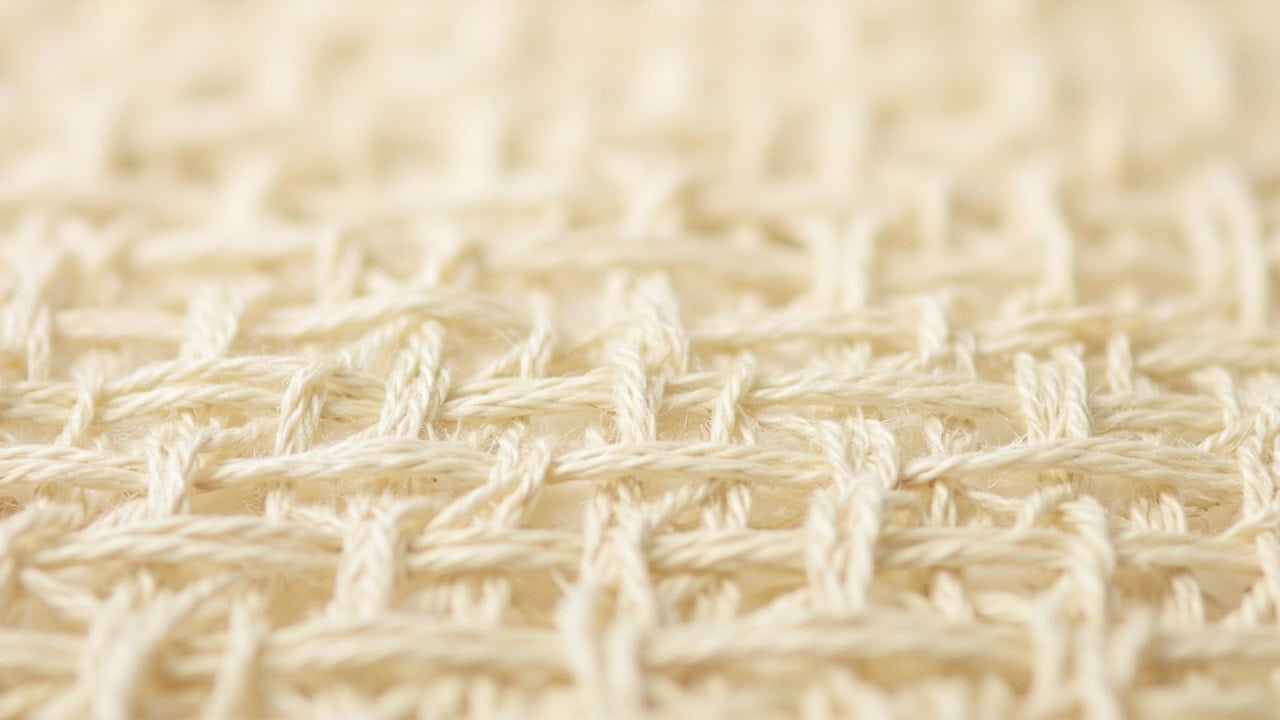
Plain weave is the fundamental 1/1 interlacing structure where each warp thread alternates over and under each weft thread in a simple checkerboard pattern, making it the most common and versatile weave construction in textile manufacturing. This interlocking method produces fabric with excellent breathability due to the loose inter-thread spacing, while the perpendicular fiber arrangement delivers balanced strength and durability across both axes.
What Is Plain Weave? Definition and Overview
Plain weave is the most basic and widely used weaving structure in textiles, accounting for approximately 80% of all woven fabric production globally. This dominance stems from its simplicity: two sets of yarns — the warp (vertical threads held under tension on the loom) and the weft (horizontal threads inserted across the warp) — interlace at right angles in a consistent 1/1 pattern where each warp thread alternates over one weft thread, then under the next.
The resulting fabric surface displays a checkerboard-like pattern visible from both sides, making plain weave naturally reversible. This balanced construction creates a stable, hard-wearing fabric that serves as the foundational knowledge point for understanding all more complex weave structures, including twill and satin weave.
Common everyday fabrics built on the plain weave structure include chambray, percale, muslin, broadcloth, poplin, canvas, taffeta, and organza. The same structural principle scales from lightweight sheer fabrics using fine yarn counts (80s–100s Ne) to heavy-duty industrial canvas using coarse yarns (4s–10s Ne).
How Plain Weave Is Made: The Weaving Process
The weaving process begins with the loom — a device that holds the warp threads in parallel tension while the weft is interlaced through them. Each individual warp thread passes through a heddle, a small device threaded onto a harness. As the weaver or loom operator raises or lowers the harnesses, specific warp threads lift to create an opening called the shed, through which the weft passes horizontally.
The weft yarn is propelled across the shed by one of several mechanisms depending on loom type:
- Hand shuttle — a wooden or plastic bobbin carried through the shed by hand, common in traditional and artisan weaving
- Rapier loom — a mechanical arm (rapier) inserts the weft yarn across the warp shed without human involvement, enabling higher production speeds
- Air-jet loom — compressed air propels the weft yarn across the shed at high speed, widely used in modern high-speed textile mills
- Water-jet loom — uses a focused water jet to carry the weft, common for synthetic filament yarns
With each pass of the weft yarn (each pick), the reed — a comb-like metal frame — beats the newly inserted weft up against the fell (the growing edge of the fabric). This beat-up action compacts the fabric and controls the final picks per inch (PPI) and ends per inch (EPI), which directly determine the fabric’s density, weight, and handle.
The sequence repeats continuously: harnesses rise, shed opens, weft passes, reed beats, fabric advances. A plain weave fabric builds row by row at the intersection of every warp and weft thread. One complete machine cadence — the loom cycle — produces one pick of fabric.
Plain weave is produced on every loom type, from hand-operated backstrap looms used in traditional textile communities to modern shuttleless looms operating at 600+ picks per minute in industrial textile mills. The universal applicability of the 1/1 interlacing pattern across all loom technologies is a key reason for its market dominance.
Key Properties of Plain Weave Fabric
| Property | Description |
|---|---|
| Breathability | High — the loose 1/1 interlacing creates air channels between warp and weft, enabling air circulation |
| Strength | Good — perpendicular fiber arrangement distributes force evenly across both axes; plain weave is the strongest basic weave structure due to the highest thread intersection count per square inch |
| Durability | Excellent — balanced construction resists abrasion and withstands repeated laundering |
| Moisture Absorption | Varies by fiber — cotton plain weave absorbs 8–10% of its weight in moisture; polyester plain weave does not absorb and dries rapidly |
| Heat Conductivity | Good — air spaces between interlaced threads allow heat to escape, making cotton plain weave comfortable in warm conditions |
| Surface Texture | Smooth and flat on both sides with minimal texture variation; neither face dominates |
| Drape | Moderate — stiffer than knit fabrics due to thread intersection constraints, but better drape than heavily interlaced complex weaves |
| Dimensional Stability | Good when properly set — low crimp interchange between warp and weft reduces tendency to skew |
The specific property profile of any plain weave fabric depends heavily on the fiber content and yarn construction. A cotton plain weave shirting at 40s yarn count and 100 EPI will feel entirely different from a polyester plain weave filter fabric at 20s yarn count and 30 EPI — yet both share the same 1/1 interlacing structure at their core.
Common Uses and Applications
Plain weave’s versatility makes it the workhorse construction across virtually every textile category. Its ability to accept printing, dyeing, and surface treatments uniformly — combined with cost-effective production — ensures it remains the default choice when no special fabric property is required.
Apparel
In everyday clothing, plain weave forms the basis of dress shirts, blouses, casual dresses, underwear linings, and lightweight jacket shells. Fabrics such as chambray (typically 20s–40s yarn count, plain weave with colored warp and white weft) and percale (cotton plain weave, minimum 180 thread count per square inch) are standard in bedding and apparel precisely because the 1/1 interlacing produces a smooth, even surface ideal for print and dye absorption.
Home Textiles
The home textile category relies heavily on plain weave for percale bed sheets (minimum 200 thread count percale is a plain weave construction), pillowcases, curtains, and tablecloths. The tight, balanced interlacing in high-thread-count cotton plain weave creates a crisp hand-feel and smooth surface that prints beautifully with intricate patterns. Muslin — an unbleached cotton plain weave — is widely used as a utility fabric in home textiles for backing, quilting, and lining.
Industrial Applications
Industrial plain weave serves as canvas for sails, tents, and tarpaulins; as filter cloths in food and chemical processing; as reinforcement fabrics in composites and rubber products (conveyor belts, hoses); and as scrim support in roofing materials. The consistent, tight interlacing provides a predictable, uniform substrate for coating and lamination processes.
Types and Varieties of Plain Weave
While all plain weave variants share the fundamental 1/1 interlacing, specific modifications to yarn size, yarn count, or interlacing grouping create distinct fabric characteristics and end uses.
Balanced Plain Weave
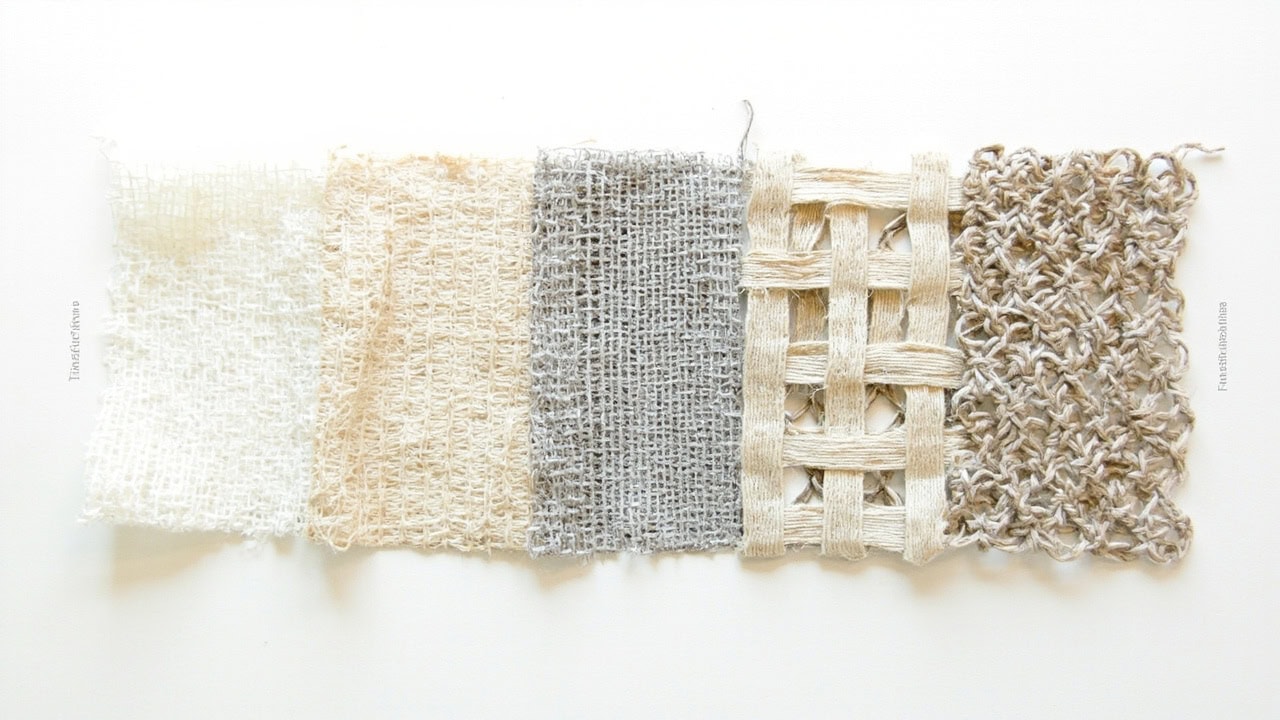
The standard 1/1 interlacing with equal warp and weft yarn weights and approximately equal EPI and PPI. The fabric looks the same from both sides and has uniform properties in both directions. Balanced plain weave is the basis for muslin, percale, and broadcloth shirting.
Rib Weave
A structural variation where one yarn set has a significantly higher thread count than the other. The dominant set’s threads crowd together, forming visible vertical ribs (warp-faced rib) or horizontal ribs (weft-faced rib) on the fabric surface. Broadcloth and poplin are classic rib weave plain weave variants — fine warp threads (60s–80s Ne) dominate over coarser weft threads (30s–40s Ne), creating a subtle but noticeable diagonal rib effect that drapes well and accepts printing with clarity.
Basket Weave
In basket weave, two or more adjacent warp threads act together as one unit while two or more adjacent weft threads similarly interlace as one, creating a 2/2 or 2/1 interlacing pattern. This grouped structure reduces the total number of interlacing points by half compared to true plain weave, which increases surface area and reduces breathability. Basket weave is used for monk’s cloth, rug backing, and certain types of linen toweling. The structure is sometimes called a “basket weave” even though it technically derives from the plain weave family.
Cellular Weave
Also called open-mesh or leno weave in some contexts, cellular plain weave uses deliberate spacing between warp threads (achieved by running warp ends in pairs with increased separation) to create open gaps in the fabric structure. These gaps allow airflow, light transmission, and filtration — cellular plain weave is the structural basis for window screening, surgical mesh, and industrial filter cloths where controlled permeability is required.
Advantages and Disadvantages
| Advantages | Disadvantages |
|---|---|
| Highly versatile — adapts to virtually all fiber types (cotton, linen, silk, polyester, nylon, wool blends) | Wrinkles easily without finishing treatments or fiber blends |
| Strong and durable construction — highest thread intersection count of any basic weave gives maximum structural integrity | Less elasticity than knit fabrics — does not stretch or recover naturally |
| Excellent breathability due to the open 1/1 interlacing and consistent air channels between threads | Low thread-count plain weaves (canvas, muslin) can be see-through, requiring lining or backing |
| Cost-effective — the simple interlacing pattern runs at high speeds on all loom types, minimizing production cost per meter | Limited drape compared to satin weave or twill — hangs more stiffly |
| Accepts printing, dyeing, and finishing uniformly — the flat, even surface ensures consistent color uptake and print registration | Simple appearance lacks visual interest without surface embellishment; may require additional finishing (mercerization, singeing, softener) for premium hand |
| Stable dimensional stability when properly set — low skew tendency in balanced constructions | Lower tear strength than some reinforced weaves when yarn count is very coarse |
Care Summary for Plain Weave Fabrics
Care requirements for plain weave fabrics depend primarily on the fiber content, not the weave structure itself. The 1/1 interlacing pattern does not inherently complicate care — the inter-thread spacing is actually relatively open compared to twill or satin, which means water and detergent penetrate easily during laundering.
Cotton Plain Weave
Cotton plain weave (percale sheets, shirting, muslin, canvas) is generally machine washable in warm water (40°C / 104°F or below to minimize shrinkage in non-pre-shrunk fabrics). Tumble dry on medium heat. Iron on high heat (200–220°C / 400–428°F) for wrinkle-free results. Percale sheets with a thread count of 200+ are more durable and resistant to pilling than lower-count plain weaves. Plain weave fabrics with a lower thread count (under 120 EPI) are more prone to shrinkage — expect 3–7% shrinkage in未经预缩处理的棉织物.
Polyester and Synthetic Plain Weave
Polyester plain weave (used in linings, activewear shells, and industrial filters) machines wash cold (30°C / 86°F) to prevent setting wrinkles that can occur at higher temperatures. Tumble dry on low heat or line dry. Iron on low heat (synthetic setting, 110–130°C / 230–266°F) — polyester melts above 220°C / 428°F. Polyester plain weave resists shrinkage effectively (typically under 1% dimensional change) due to thermoplastic fiber memory.
Blended and Special Finishes
Plain weave fabrics with special finishes — mercerized cotton (for luster and strength), wrinkle-resistant finish (DP finish), or flame-retardant treatments for industrial canvas — may require specific care instructions. Always check the care label for fiber-specific guidance. In general, mercerized cotton plain weave benefits from gentle laundering to preserve the luster treatment; iron at medium-high heat while slightly damp for best results.
Frequently Asked Questions
Q: What is plain weave fabric?
A: Plain weave is a fundamental 1/1 interlacing weave structure where each warp thread alternates over and under each weft thread. This simple over-one-under-one pattern creates the most common woven fabric construction, accounting for approximately 80% of all woven textiles. The result is a stable, breathable, reversible fabric with a checkerboard-like surface.
Q: Is plain weave the same as cotton fabric?
A: No — plain weave describes the weave structure, not the fiber content. Cotton is a fiber type that can be woven in any construction, including plain weave. Many fabrics (cotton, linen, silk, polyester, nylon) use the plain weave structure depending on the end-use requirements. Plain weave is a structural classification; cotton is a material classification.
Q: What are the advantages of plain weave fabric?
A: Plain weave fabrics offer excellent breathability due to the open 1/1 interlacing, good strength from perpendicular fiber arrangement, cost-effective manufacturing on all loom types, and versatile application across apparel, home textiles, and industrial uses. They accept printing and dyeing uniformly and provide a smooth, reversible surface. The 1/1 interlacing creates the highest thread intersection count of any basic weave, contributing to structural stability.
Q: What is the difference between plain weave and twill weave?
A: Plain weave uses 1/1 interlacing (one warp over one weft), creating a flat checkerboard surface. Twill weave uses 2/1 or 1/2 interlacing, producing a characteristic diagonal line pattern (twill line) on the fabric surface. Twill is more drapeable and wrinkle-resistant than plain weave; plain weave is more breathable and cost-effective. Twill has fewer interlacing points per square inch, which allows the fabric to slide and drape more freely.
References
- Adanur, S. (2007). Woven Textile Structure: Theory and Applications. Woodhead Publishing.
- ASTM International. (2021). ASTM D3882-21: Standard Terminology for Woven Fabric Weave Structures. ASTM International.
- Cotton Incorporated. (2024). Fabric Resource Guide: Weave Structures and Cotton Fabrics. cottonworks.com
- Food and Agriculture Organization of the United Nations. (1990). Weaving Manual: Warp Preparation and Loom Operation. FAO.
- Lord, P.R. & Mohamed, M.H. (2007). Weaving: Conversion of Yarn to Fabric (3rd ed.). Woodhead Publishing.


