
Can You Dry Cashmere in the Dryer? The Safe Answer

Cashmere should never be placed in a tumble dryer — the combination of heat above 30°C and mechanical agitation causes the cuticle scales (plicae) on cashmere fibers to lock together permanently, resulting in irreversible felting shrinkage of 15–50% that cannot be blocked, reshaped, or reversed. Flat air-drying is the only safe method to preserve cashmere’s signature softness and loft.
The Direct Answer: No — Dryer Risk Is Felting, Not Just Shrinkage
Cashmere fiber cuticle scales, technically called plicae, are the microscopic, hair-like projections that coat the outer surface of each cashmere fiber. These scales serve as the fiber’s natural protective layer, but they behave unpredictably when exposed to heat and friction. When cashmere enters a tumble dryer — even on a low-heat setting — the combination of thermal energy and mechanical tumbling causes these cuticle scales to open, catch on neighboring fibers, and interlock permanently through a process called differential friction felting.
Felting is fundamentally different from ordinary shrinkage. Standard fabric shrinkage occurs when fibers contract along their length during washing and drying — a relatively uniform dimensional change. Felting, by contrast, causes fibers to compress sideways and matt together simultaneously. The fiber diameter actually increases while the length decreases, creating a dense, compressed mass of entangled fibers that loses all structure, loft, and softness. This is a permanent physical transformation at the cellular level of the fiber.
The damage from a single dryer cycle can reduce a cashmere garment by 15–50% of its original dimensions — often rendering it unwearable. Unlike other fabric damage that might be mitigated with fabric softener or careful stretching, felted cashmere cannot be restored. There is no conditioner, no professional treatment, no amount of careful manipulation that can un-felt a fiber. Prevention is the only solution, and the prevention is simple: never put cashmere in a tumble dryer.
Even “low heat” dryer settings expose cashmere to enough thermal and mechanical stress to cause progressive damage over time. While a single cool-air cycle might not produce visible felting immediately, repeated exposure gradually opens the cuticle scales and increases the likelihood of irreversible matting. Every dryer cycle is a gamble with your cashmere’s lifespan.
What Actually Happens to Cashmere in the Dryer
The cuticle scales on cashmere fibers are the key to understanding why tumble drying is so destructive. These microscopic scales — visible only under significant magnification — lie flat against the fiber shaft under normal, cool conditions, giving cashmere its characteristic smooth, soft texture. When exposed to heat above approximately 30°C (86°F), these scales begin to lift and open, similar to the way human hair cuticles respond to heat styling tools.
Mechanical tumbling compounds this effect catastrophically. As the dryer rotates, cashmere fibers rub against each other and against the drum surface. Open cuticle scales on adjacent fibers catch on one another like Velcro hooks — this is the differential friction effect. Once caught, the scales lock together permanently. Unlike simple tangling, where fibers cross and separate freely, felting involves actual physical fusion of scale edges into a continuous matted structure.
The fiber diameter increases as scales compress sideways while the fiber length shortens dramatically. Simultaneously, the fabric loses its characteristic open, airy structure. The air pockets between fibers collapse as fibers matt together, creating a dense, compressed fabric that feels stiff and rough rather than soft and plush. This is why felted cashmere feels fundamentally different — not just smaller, but qualitatively changed in texture and hand.
Once felting occurs, no amount of conditioning, steaming, or careful stretching can reverse the physical changes. Hairdryers, garment steamers, and cashmere combs cannot restore felted fibers because the scale-to-scale fusion is a permanent chemical and mechanical bond. The garment’s original dimensions, softness, and loft are gone forever. This is why proper drying from the start is non-negotiable for cashmere care.
When Machine Drying Might Be Acceptable (Very Limited Conditions)
There is exactly one scenario in which machine drying cashmere might be considered: the care label explicitly permits it AND you use a no-heat tumble dry (air-only) cycle. This means the dryer runs with zero heat applied — room-temperature air only. The mechanical tumbling action still occurs, which introduces some degree of fiber abrasion, but without heat to open the cuticle scales, the risk of felting drops significantly.
Even air-only tumbling carries some risk. The mechanical friction of fibers rubbing against each other and the dryer drum can still cause minor scale damage over repeated cycles, though felting proper typically requires heat to activate. For this reason, most cashmere care experts recommend air-only tumble drying only as an occasional shortcut — not as a routine practice. If you must use this method, limit cycles to 10–15 minutes maximum and monitor the garment closely.
Professional dryers with controlled humidity and temperature environments exist for a reason: commercial operations that process large volumes of delicate garments need efficiency. These machines can achieve controlled air-only tumbling with minimal fiber stress. However, even professional equipment cannot guarantee zero damage from mechanical abrasion, and home dryers lack the precision controls that commercial machines offer. For personal cashmere care at home, flat air-drying remains the unambiguously superior choice.
If your cashmere care label explicitly states “tumble dry” without heat warnings, follow those instructions precisely. But remember — a label that permits tumble drying does not mean the dryer is the best method. It means the manufacturer has determined the garment can withstand some mechanical stress without visible damage. Flat drying will always produce better long-term results for cashmere fiber integrity and garment longevity.
Recommended Drying Settings and Methods
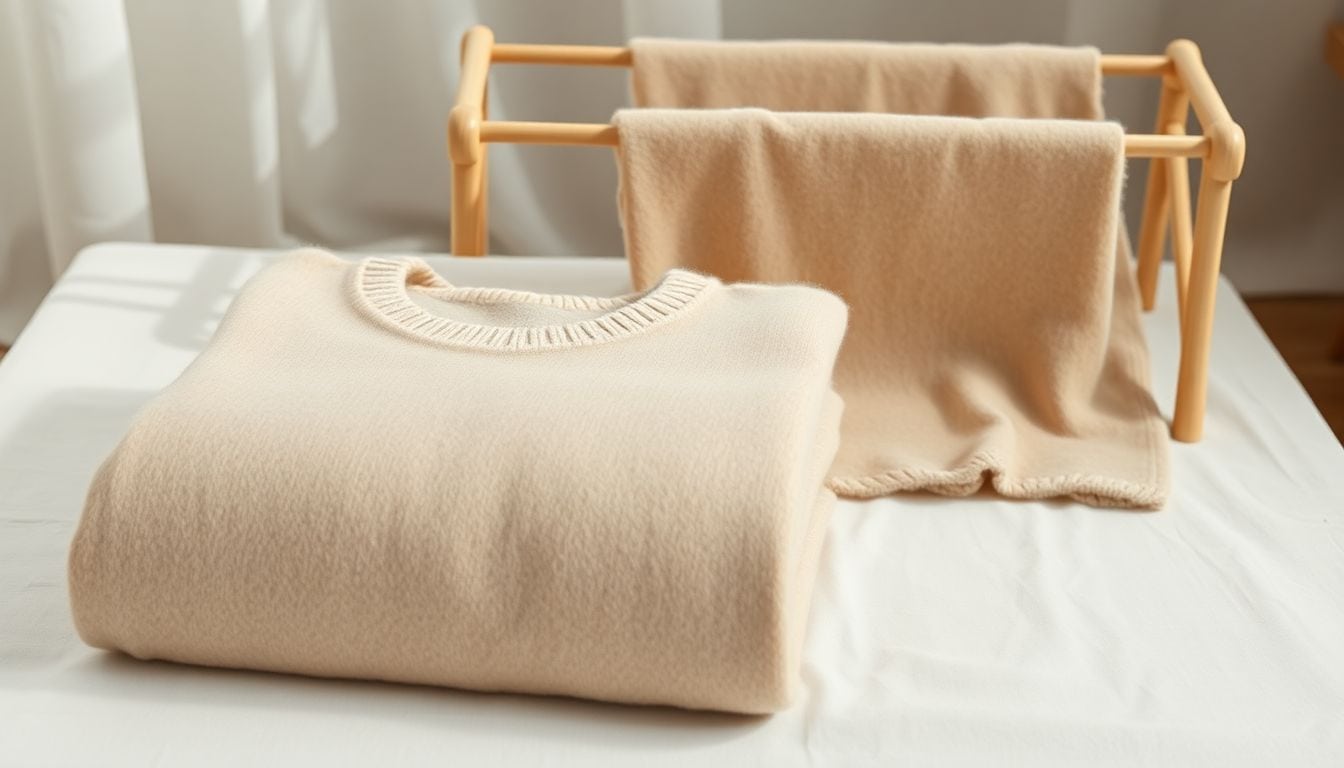
Flat air-drying is the gold standard for cashmere care. Lay your freshly washed, gently towel-dried cashmere on a clean, absorbent white towel in its original shape. Never wring or twist cashmere — instead, press water out gently with a towel roll, then unroll and reshape. Allow 24–48 hours for complete drying at room temperature, turning the garment once halfway through to ensure even air circulation on both sides.
A mesh drying rack improves air circulation compared to flat towel drying, as air reaches the garment from all sides rather than just above and below. The mesh surface also prevents the formation of compression marks that can occur when cashmere dries on a solid surface. Whether using a towel or rack, ensure the surface is clean — any residue or dye transfer from previous items can affect cashmere’s natural color and texture.
If your care label permits no-heat tumble drying as an occasional treatment, use an air-only cycle for 10–15 minutes to plump fibers after washing. This can help restore some loft and softness, particularly for heavier cashmere garments that may feel slightly compressed after flat drying. However, this should supplement, not replace, your primary flat drying method.
Never hang wet cashmere to dry. The weight of water in the fibers creates significant downward pull that stretches cashmere permanently, causing drooping, distortion, and loss of shape. A cashmere sweater that dries hanging will develop permanently elongated sleeves, a stretched body, and a distorted silhouette that cannot be corrected through reshaping. This is distinct from felting damage but equally irreversible — a different mechanism, same permanent result.
During flat drying, turn the garment at least once midway through the drying process. This prevents one side from staying damper than the other, which can lead to uneven drying and potential mildew or odor issues. In humid environments, drying may take closer to 48 hours. If you need to accelerate drying, place the cashmere near (not on) a gentle heat source like a heated towel rail, with a fan circulating room-temperature air across the garment.
How to Reshape Cashmere After Washing (Not Drying)
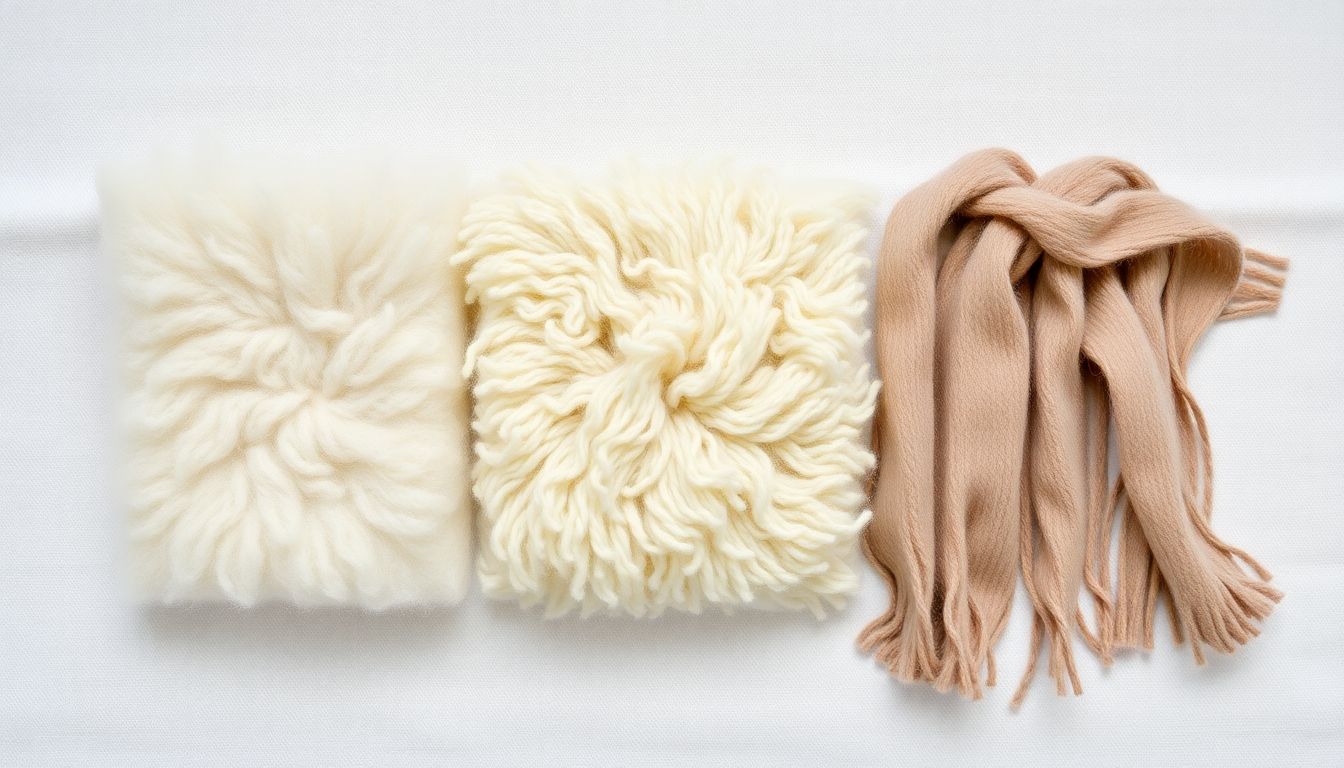
Reshaping cashmere is a critical part of the washing and drying process, but it can only correct minor issues — not felting damage. While the garment is still damp from washing, lay it flat on a clean, absorbent towel. Gently press water out using another towel — roll the two towels together loosely and press down firmly. Never wring cashmere, as twisting creates internal fiber stress that can weaken the garment structure over time.
Unroll the towel bundle and transfer the cashmere to a dry towel. Gently reshape the garment by hand, paying special attention to the shoulders, side seams, and cuffs. If the sleeves appear slightly stretched, you can gently compress them width-wise to bring them closer to original dimensions. Do not pull aggressively — cashmere fibers respond best to gentle, sustained pressure rather than force.
Allow the reshaped garment to dry completely flat before wearing or storing. This typically takes 24–48 hours depending on ambient humidity and the garment’s weight and thickness. The patience required here is significant, but rushing this process by applying direct heat or using a dryer will cause far more damage than any benefit gained from speed.
It bears repeating: reshaping cannot fix felting damage. If your cashmere has experienced irreversible matting from dryer exposure, reshaping will not restore softness, loft, or original dimensions. The fibers themselves have changed physically and cannot be returned to their pre-felting state through any treatment. Reshaping addresses only minor distortion from the washing process itself — primarily stretching from improper handling or hanging.
Cashmere Care Summary
| Method | Risk Level | Recommendation |
|---|---|---|
| Tumble dryer (any heat) | Very High — irreversible felting | Never |
| No-heat tumble dry | Low-Moderate | Use with caution, check label |
| Flat air dry | Minimal | Always recommended |
| Drying rack | Minimal | Best for air circulation |
| Hanging while wet | Moderate-High | Avoid — stretches fibers |
Frequently Asked Questions
Q: Can you put cashmere in the dryer on low heat?
A: No — even low heat tumble drying causes cashmere fibers to felt. The combination of any heat above 30°C and mechanical tumbling opens the cuticle scales and locks them together permanently. Flat air-drying is the only safe drying method for cashmere.
Q: What happens if cashmere is accidentally tumble dried?
A: If the cycle was hot, the cashmere will have felted — the fibers have compressed and matted together, reducing the garment’s size by 15–50% and eliminating softness. Felting is irreversible; the garment cannot be restored to its original shape or feel. If caught early (cool air only), check for stretching but expect some fiber damage.
Q: How do you dry cashmere without a dryer?
A: Flat dry only: lay the damp cashmere on a clean absorbent towel, gently reshape to original dimensions, and allow 24–48 hours for complete air drying. Turn once halfway through. A mesh drying rack improves air circulation. Never hang wet cashmere — the weight stretches fibers permanently.
Q: Can you use a hair dryer to speed up cashmere drying?
A: No — direct heat from a hair dryer can cause localized felting and uneven shrinkage. If you need to speed drying, use a fan or air circulator in the room at room temperature, or place the cashmere near (not on) a gentle heat source with adequate air movement. The safe alternative is a no-heat fan only.
References
- International Wool Textile Organisation (IWTO). Wool Fibre Properties and Felting Mechanism. https://www.iwto.org.
- Cotton Incorporated. Cashmere Fiber Education Resource. https://www.cottonworks.com.
- ASTM International. Standard Test Methods for Dimensional Change of Fabrics. ASTM D1282.
- American Association of Textile Chemists and Colorists (AATCC). Care Labeling for Textile Products. AATCC TM135.


