
How to Remove Rust Stains from Clothes at Home

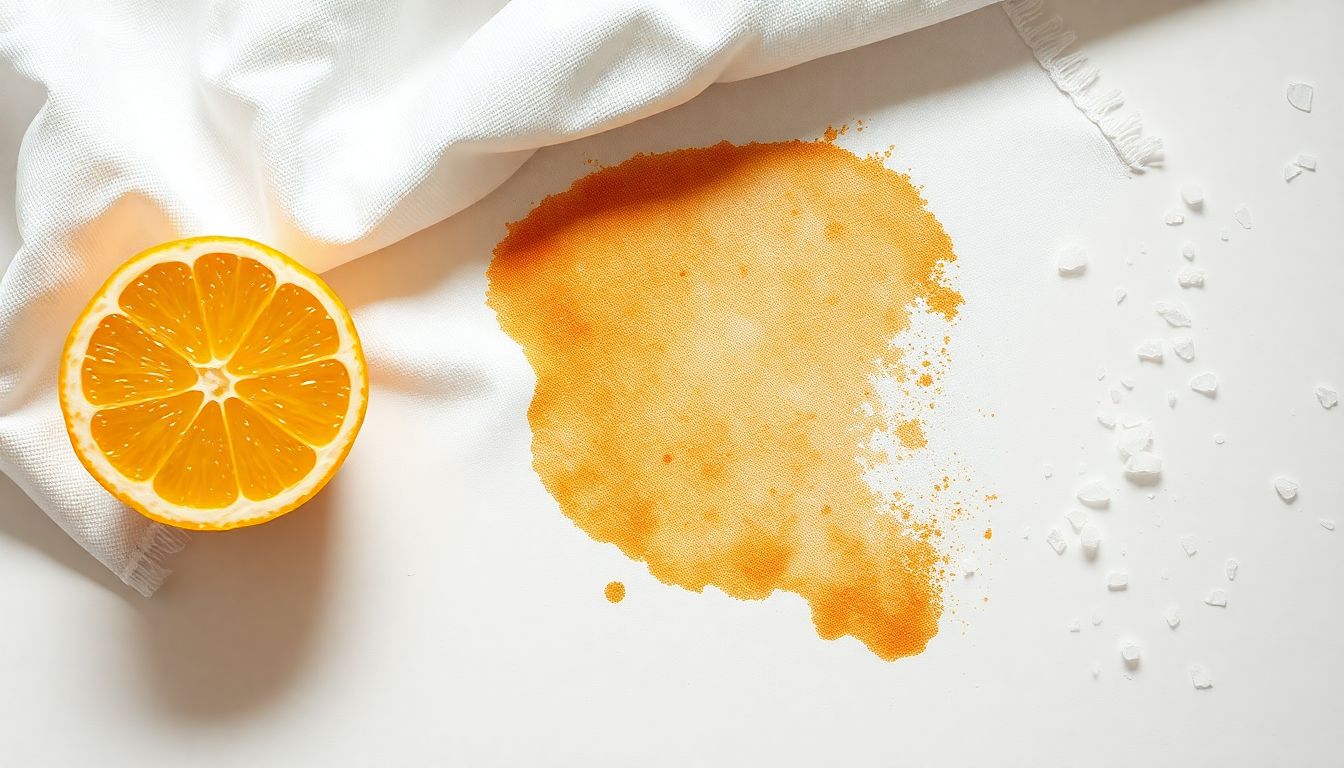
Why Rust Stains Require Acid (Not Surfactants or Enzymes)
Rust stains require acid-based treatment because iron oxide (Fe₂O₃) is an inorganic mineral compound that enzymes and surfactants cannot break down. Enzymes specifically target proteins, starches, and fats — they have no chemical effect on iron oxide. Surfactants emulsify oils and greases, but they cannot bind to or lift an inorganic mineral compound from fabric fibers. Only acid dissolves the Fe-O bonds in iron oxide, converting solid rust into soluble iron salts that rinse away with water.
The iron in rust exists in the +3 oxidation state (Fe³⁺). Acid dissolves iron oxide by donating hydrogen ions that break the Fe-O bonds, forming soluble iron salts — a fundamentally different chemical process from bleaching or surfactant action.
The iron in rust exists in the +3 oxidation state (Fe³⁺). Acid dissolves the iron oxide by donating hydrogen ions that break the Fe-O bonds, forming soluble iron salts that can be rinsed away — a reduction-oxidation reaction fundamentally different from bleaching or surfactants.
The Bleach Warning (Critical)
Never use chlorine bleach on rust stains. When sodium hypochlorite contacts iron oxide, it undergoes a reaction that converts the iron into insoluble ferric compounds that bind permanently to cotton and other cellulose fibers. The stain changes from orange-brown to an even darker brown or black and becomes impossible to remove by any method.
If you have already applied bleach to a rust stain, do not dry the garment — seek professional textile treatment immediately. Heat from a dryer will set the stain further and make removal even more difficult.
The same principle applies to all chlorine-based bleaches and any product containing sodium hypochlorite. Never use chlorine bleach on rust stains — the results are permanent and the stain becomes worse.
Method 1: Lemon Juice + Salt + Sunlight (Natural Acid Method)
Citric acid in lemon juice (approximately 5–6% concentration by weight) dissolves fresh rust effectively on white cotton, linen, and other cellulose fibers. The citric acid donates hydrogen ions that break Fe-O bonds in iron oxide, converting solid rust into water-soluble iron salts that rinse away. The salt acts as a mild abrasive that helps acid penetrate the rust, while UV radiation from sunlight accelerates the reaction.
- Squeeze fresh lemon juice directly onto the rust stain, ensuring the affected area is fully saturated. Bottled lemon juice works but contains preservatives that reduce acidity.
- Sprinkle table salt generously over the lemon juice. Salt acts as a mild abrasive that helps the acid penetrate the rust and keep the fabric damp in sunlight.
- Lay the garment flat or hang it in direct sunlight. UV radiation from sunlight accelerates the acid-rust reaction by providing additional energy to break the Fe-O bonds.
- Allow 30–60 minutes for fresh stains. For older rust stains that have penetrated deeper into the fibers, leave for up to 2–3 hours, reapplying lemon juice if the fabric dries out.
- Rinse thoroughly with cold water to remove dissolved iron salts. Inspect the stain before laundering — if any discoloration remains, repeat the treatment before washing.
- Launder as normal in warm water (not hot) after successful rust removal. Hot water can set any remaining trace iron before it fully dissolves.
The lemon juice and salt method is most effective on fresh rust stains (within 24–48 hours of occurring) and on white or colorfast fabrics that can tolerate prolonged acid exposure. On colored fabrics, test the lemon juice on an inconspicuous area first — citric acid can affect some dyes, particularly on silk and wool protein fibers. For more fabric care guidance, see our fabric care guide for cotton, linen, and synthetics.
Method 2: White Vinegar (Acetic Acid)
Acetic acid in white vinegar (5–8% concentration, pKa 4.76) dissolves rust through the same mechanism as citric acid — hydrogen ions break Fe-O bonds in iron oxide. However, vinegar requires longer exposure time because acetic acid is a weaker acid than citric acid (first pKa of 4.76 versus citric acid’s first pKa of 3.13), meaning fewer hydrogen ions per molecule.
- Pour undiluted white vinegar directly onto the rust stain, saturating it completely.
- Allow 30 minutes of soaking for fresh stains, or up to 2 hours for older, more set-in rust. For severe stains, allow overnight soaking in a sealed plastic bag to prevent evaporation.
- Rinse thoroughly with cold water to remove the dissolved iron acetate salts.
- Launder as normal. Vinegar’s residual acidity is neutralized during the washing process.
Vinegar is less effective than lemon juice for heavy rust stains because acetic acid donates fewer hydrogen ions per molecule. However, vinegar’s availability in larger quantities makes it practical for soaking entire garments, and its lower cost makes it economical for whole-garment treatment. For light surface rust on colored fabrics where lemon juice might affect the dye, white vinegar is the safer choice because it is a weaker acid. Vinegar also works well when combined with salt for an enhanced treatment.
Method 3: Commercial Rust Remover
Commercial rust removers are the most effective option for severe rust stains, old rust stains (weeks or months old), and cases where natural methods have failed. These products contain either oxalic acid, phosphoric acid, or sodium dithionite — all of which chemically reduce iron oxide to a soluble form that rinses away. Oxalic acid works through a chelation process where oxalate ions bind to iron ions, forming soluble complexes. Sodium dithionite reduces Fe³⁺ to Fe²⁺, which is significantly more soluble in water.
Popular commercial products include Iron Out (sodium hydrosulfite-based), Rust Remover by Carbona (oxalic acid-based), and Bar Keeper’s Friend (oxalic acid with mild abrasive). These commercial rust removers like Iron Out or Bar Keeper’s Friend follow product instructions carefully regarding dwell time — typically 10–30 minutes for fresh stains and up to 1–2 hours for older stains. These products work through reduction chemistry rather than simple acid dissolution, making them significantly more effective for severe staining.
- Wear rubber gloves when handling commercial rust removers — oxalic acid and sodium dithionite can cause skin and eye irritation with prolonged contact.
- Test the product on an inconspicuous area of the garment first — some formulations can affect fabric dyes, particularly on synthetic fibers.
- Apply per product instructions — typically 10–30 minute dwell time for fresh stains, 1–2 hours for old rust stains.
- Rinse thoroughly after treatment — residues of rust remover chemicals can cause skin irritation if not fully washed out.
- Wash the garment separately from other laundry to prevent any residual rust remover from affecting other garments.
For rust stains on white cotton that have been laundered and dried (heat-set), commercial rust removers may still be effective after 2–3 applications, though complete removal cannot be guaranteed. Heat-set rust is chemically bonded to the cellulose fibers through oxidation and heat, and some molecular iron may remain permanently fixed in the fiber matrix. In these cases, consult a professional textile conservator or dry cleaner who has access to stronger reducing agents not available to consumers.
Acid-Based Rust Removal Mechanism
Acid dissolves rust through a straightforward ionic reaction. When hydrogen ions (H⁺) from citric acid or acetic acid contact iron oxide (Fe₂O₃) on fabric fibers, they break the Fe-O bonds, converting insoluble Fe³⁺ compounds into soluble iron salts that water rinses away. The net ionic equation for rust dissolution is: Fe₂O₃ + 6H⁺ → 2Fe³⁺ + 3H₂O.
How Acid Dissolves Rust on Fabric
Rust Stains on Specific Fabrics
Different fabric compositions respond differently to rust and to acid-based treatments. The table below summarizes recommended methods and warnings for each fabric type.
| Fabric Type | Recommended Method | What to Avoid | Notes |
|---|---|---|---|
| White cotton | Lemon juice + salt + sunlight; commercial rust remover for severe stains | Chlorine bleach (sets stain permanently) | Most tolerant fabric; can handle prolonged acid treatment and hot wash after treatment |
| Colored cotton | White vinegar (test first); diluted lemon juice on colorfast items | Undiluted lemon juice on unstable dyes; commercial rust removers | Test acid on hidden seam allowance first; if dye bleeds, dilute with equal parts water |
| Linen | Lemon juice + salt; white vinegar soak | Chlorine bleach; harsh commercial products | Similar to cotton; tolerates acid well but wrinkles easily during treatment |
| Wool / Silk | Professional dry cleaning only | All acids (citric, acetic, oxalic) — acids hydrolyze protein fibers, causing irreversible damage | Protein fibers have peptide bonds that acid cleaves; visible fiber weakening and texture change occur. For protein-based stain removal, consult a professional. |
| Polyester / Nylon | White vinegar soak; diluted commercial rust remover (test first) | Strong acids and harsh commercial products may damage synthetic polymers | Synthetics resist acid but some dye formulations are acid-sensitive; always test first |
| Denim / Canvas | Lemon juice + salt + sunlight; commercial rust remover | Chlorine bleach | Heavyweight cotton canvas is highly durable; allow longer soaking times for thick fibers |
For all fabric types, test any treatment on an inconspicuous area first. For wool and silk garments with rust stains, do not attempt home treatment. The peptide bonds in protein fibers are susceptible to acid hydrolysis — even weak acids like lemon juice will weaken the fiber structure, causing thinning, pilling, and potential holes in the fabric. A professional dry cleaner has access to specialized solvents and methods that can treat rust on delicate fabrics without chemical damage.
Frequently Asked Questions
Does OxiClean remove rust stains?
OxiClean has limited effectiveness on rust stains. OxiClean is an oxidizing agent (sodium percarbonate) that releases oxygen to lift organic stains through oxidation — but rust is already oxidized iron (Fe³⁺), so an oxidizing cleaner has little additional effect. For rust stain removal, acid-based treatments like lemon juice or commercial rust removers containing oxalic acid are significantly more effective.
Why do rust stains appear after washing?
Rust stains appearing after washing typically come from the washing machine drum (old machines can develop rust spots internally where the porcelain coating has chipped), metal buttons, zips, or studs on other garments in the same wash load. Inspect your washing machine drum for chips or corrosion. Separate garments with metal hardware from delicate items. If a garment develops rust spots in the wash, re-wash it alone without other items to determine whether the source is the machine or another garment.
Can you remove old rust stains from clothes?
Yes, with commercial rust removers containing oxalic acid. Old rust stains require longer treatment times (1–2 hours) and may need multiple applications. The key variable is whether the rust has been heat-set — if the stained garment was dried in a tumble dryer or ironed after the stain occurred, the iron oxide has bonded more firmly to the fiber and becomes significantly more difficult to remove. For heat-set rust stains older than 2–3 months, complete removal may not be achievable at home and professional treatment is recommended.
Related Stain Removal Guides
Removing rust stains is just one part of comprehensive fabric care. For other common stains, see our guides on how to remove blood stains from fabric and how to remove grass stains from clothes. Proper stain treatment depends on the stain type — protein stains (blood, grass) respond to enzymes, while mineral stains (rust) require acid.
References
- The effect of acid hydrolysis on cotton fiber structure. McNeil, S.J. & Annis, P.A. (2005). Polymer Degradation and Stability, 87(2), 233-238. Elsevier.
- Chemical finishing processes for stain removal from textiles. Schindler, W.D. & Hauser, P.J. (2004). Woodhead Publishing.
- AATCC Technical Manual. American Association of Textile Chemists and Colorists. Standard test methods for stain release and colorfastness in textiles.
- Home and Garden Bulletin No. 197: Removing Stains from Fabrics. U.S. Department of Agriculture. (2021). USDA Extension Service.
- The influence of acid concentration on the removal of rust stains from cotton. Edge, M.L. & West, G.P. (1996). Journal of the Society of Dyers and Colourists, 112(11), 312-316.


