
How to Remove Blood Stains from Clothes (Fresh and Set-In)

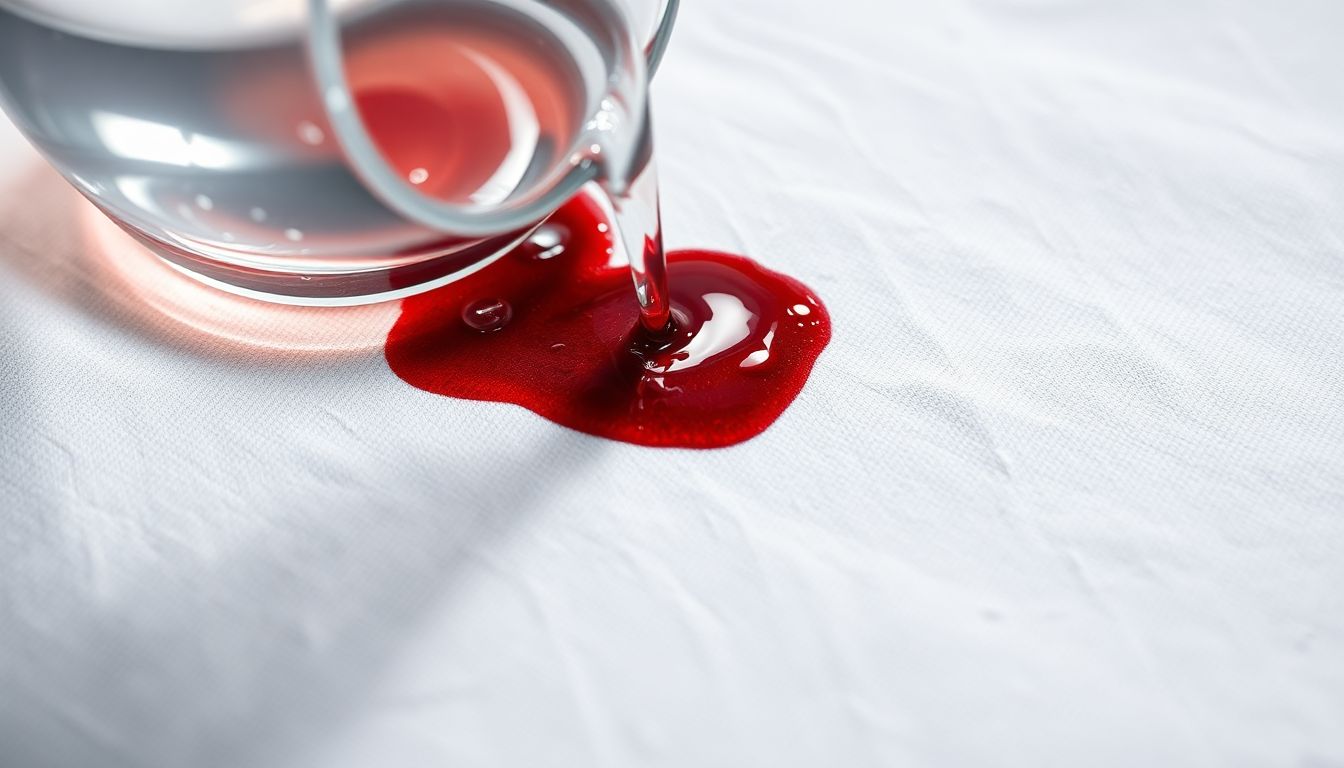
Blood stains must be treated with cold water only — never warm or hot — because blood contains proteins (primarily hemoglobin) that coagulate permanently when heated, binding the stain irreversibly to the fabric. Fresh blood dissolves in cold water within minutes; dried blood requires an enzyme pre-soak or hydrogen peroxide treatment to break down the coagulated protein. This guide covers every fabric type and every stage of blood stain — from the moment it happens to days later.
The Non-Negotiable Rule: Cold Water Only
Blood is a protein-based stain. Its primary component, hemoglobin, is an iron-containing protein that carries oxygen through the bloodstream. When hemoglobin is exposed to heat — warm water, a hot wash cycle, or a tumble dryer — the protein structure undergoes denaturation. Denaturation is the irreversible unfolding of the protein’s 3D shape, causing the molecules to bond with fabric fibers and with each other, forming a stain that becomes permanent at temperatures above 40°C (104°F).
Cold water (below 30°C / 86°F) keeps blood proteins in their soluble, un-coagulated state, meaning they remain dissolved in water and can be rinsed away. This single rule is the foundation of every successful blood stain removal. Violate it — reach for hot water or run a stained garment through a heated dryer — and you risk converting a removable fresh stain into a permanent set stain that may require professional treatment.
Cold Water Flush Removes Fresh Blood Within 10 Minutes
The fastest and most reliable treatment for a blood stain is immediate cold water. Fresh blood will dissolve in cold water alone if treated within 5–10 minutes of the stain occurring, because the hemoglobin has not yet begun to bond with the fabric at a molecular level. Blood proteins begin bonding to cellulose and protein fibers within 10–15 minutes at room temperature — a stain treated at the 2-minute mark lifts effortlessly while one left for an hour requires enzyme pre-soak or hydrogen peroxide treatment.
- Hold the stained area under cold running water, flushing from the reverse side of the fabric. Flipping the garment inside out ensures water pressure pushes the stain outward rather than driving it deeper into the fiber.
- Rub the fabric gently with your fingers or a soft cloth under the running water. Work from the outside edge of the stain inward — this prevents the stain from spreading to a larger area.
- For fabrics you cannot flush under a tap (upholstery, mattresses), press a cold damp cloth firmly onto the stain and hold for several minutes, rewetting as needed.
- After the visible stain is gone, wash the garment in a cold water wash cycle with an enzyme laundry detergent.
Hydrogen Peroxide Breaks Down Dried Blood Through Oxidation
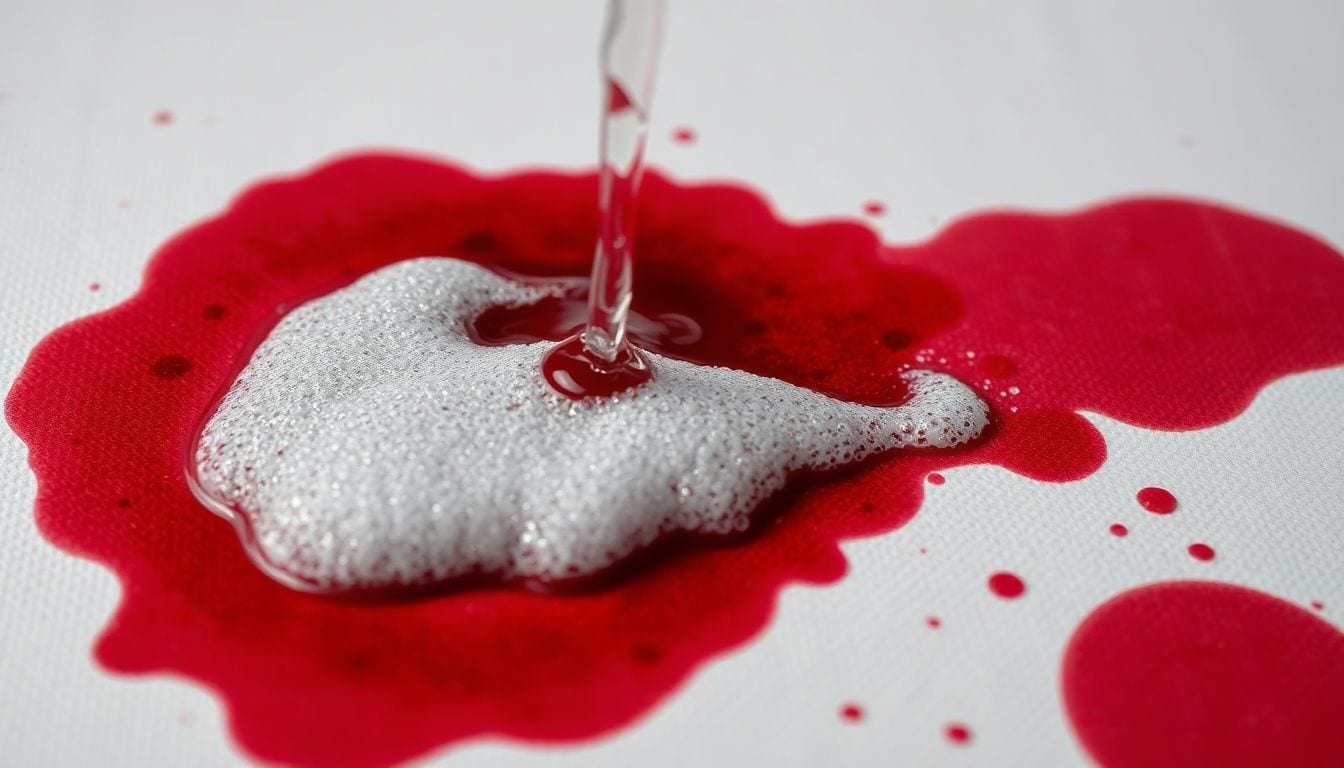
Hydrogen peroxide (H₂O₂) at 3% concentration — the standard pharmacy grade — is one of the most effective household treatments for dried blood stains. It works through oxidation: the H₂O₂ molecule reacts with the iron atom at the center of the hemoglobin molecule, breaking the porphyrin ring structure and converting hemoglobin into smaller, water-soluble compounds that rinse away. When you apply 3% hydrogen peroxide to a dried blood stain, the visible fizzing or bubbling is oxygen gas released as H₂O₂ decomposes — this is active oxidation occurring, not a physical rinse.
- Test colorfastness first: apply a small drop of 3% hydrogen peroxide to an inconspicuous area (inside seam, hem) and wait 5 minutes. If the fabric loses color, do not use H₂O₂ on the stain.
- Apply 3% hydrogen peroxide directly onto the dried blood stain, saturating it completely.
- Let sit for 5–10 minutes. Watch for fizzing — the intensity of bubbling indicates active oxidation of hemoglobin.
- Blot away the lifted stain with a clean white cloth (white prevents dye transfer).
- Rinse thoroughly with cold water.
- Repeat if necessary — stubborn stains may require 2–3 applications.
- Follow with a cold wash cycle before drying.
Important: Hydrogen peroxide is a mild bleaching agent. It is safe for white cotton, white polyester, and most synthetic fabrics. It can cause color loss on dyed fabrics (especially dark colors and reds), natural silk, and wool. Always test first.
Enzyme Detergent Dissolves Dried Blood on Colored Fabrics
Protease enzymes — the active cleaning agents in biological laundry detergents like Persil, Tide, and Ariel — specifically target and break apart protein molecules. Blood stains are composed of protein (hemoglobin and other blood proteins), making them an ideal substrate for enzymatic digestion. The protease enzyme cleaves the peptide bonds that hold the protein chain together, converting the solid blood stain into smaller peptide fragments that disperse in water. Enzyme detergents are the preferred method for colored fabrics where hydrogen peroxide poses a bleaching risk, and they are more effective than detergent alone for aged blood stains.
- Mix 2 tablespoons of enzyme laundry detergent with 500ml of cold water in a bowl or basin.
- Fully immerse the stained area in the solution. For large garments, immerse the entire stained section.
- Soak for 30 minutes minimum. For dried blood stains older than 24 hours, soak for 2–4 hours or overnight for best results.
- After soaking, rinse thoroughly with cold water.
- Wash in a cold water cycle (30°C or below) with an enzyme detergent.
- Check the stain before placing in a dryer — if any trace remains, repeat the enzyme soak before drying.
The enzyme Subtilisin, derived from Bacillus subtilis bacteria, is the primary protein-stain-fighting ingredient in most commercial biological detergents. Subtilisin is a serine protease that cleaves peptide bonds in hemoglobin molecules with high specificity, making it particularly effective against blood protein stains.
Saliva Provides Natural Enzyme Treatment for Small Fresh Stains
Human saliva contains amylase enzymes, which have mild proteolytic (protein-breaking) activity in addition to their primary starch-digesting function. While not as potent as commercial protease detergents, saliva works as a natural first-response treatment for small, fresh blood spots — particularly on delicate fabrics where other treatments carry risk. Saliva is most effective within 10 minutes of a stain occurring and is not reliable for dried blood or large stain areas.
- Collect saliva (ideally from your own mouth — saliva is most effective when fresh).
- Apply directly to the fresh blood stain, saturating the affected area.
- Let sit for 5–10 minutes. The enzymes begin breaking down blood proteins on contact.
- Rinse with cold water and follow with a gentle cold wash if the fabric allows.
Salt Paste Draws Out Fresh Blood as an Emergency Treatment
Table salt (sodium chloride) is a hygroscopic compound — it draws moisture out of surfaces. When applied as a thick paste to a fresh blood stain, the salt absorbs both surface moisture and some of the liquid blood, concentrating the stain less and drawing it away from the fabric surface. Salt paste is a preparation step, not a complete removal solution; it must be followed by a proper cleaning agent such as hydrogen peroxide or enzyme detergent.
- Mix 3 tablespoons of table salt with just enough cold water to form a thick, spreadable paste (roughly a 3:1 salt-to-water ratio by volume).
- Apply the paste directly to the fresh blood stain, covering it completely.
- Let sit for 10–15 minutes. The salt will absorb moisture and begin drawing the blood out of the fabric.
- Rinse with cold water, working the paste out from the reverse side of the fabric.
- Follow with an enzyme detergent treatment or hydrogen peroxide if any trace stain remains.
Blood Stain Removal by Fabric Type
Different fabric compositions react differently to blood stain treatments. Protein fibers (wool, silk) are themselves made of proteins and are vulnerable to damage from protease enzymes. Synthetic fibers (polyester, nylon) are more chemically resistant and tolerate enzyme detergents and mild hydrogen peroxide better. Always use cold water as the first response for all fabric types before applying any treatment.
| Fabric Type | First Response | Best Treatment | Avoid |
|---|---|---|---|
| Cotton (white/light) | Cold water flush | Hydrogen peroxide → cold wash | Hot water, heat drying |
| Cotton (colored) | Cold water flush | Enzyme pre-soak → cold wash | H₂O₂ (bleach risk on dyes) |
| Wool | Cold water flush only | Professional dry cleaning for set stains | Protease enzymes (digest wool proteins), H₂O₂ |
| Silk | Cold water flush | Gentle dish soap in cold water; dry clean for dried stains | Protease enzymes, H₂O₂, vigorous rubbing |
| Polyester | Cold water flush | Enzyme detergent → cold wash | Hot water, heat drying |
Wool-specific caution: Standard enzyme detergents with protease enzymes can damage wool fibers. Proteases digest keratin — the same protein structure that wool is made of. Always use cold water only for wool blood stains, and entrust set stains to a professional dry cleaner who can use specialized solvent-based stain removal.
Silk-specific caution: The sericin protein coating on silk fibers is sensitive to both enzyme detergents and hydrogen peroxide. Use only a pH-neutral liquid dish soap diluted in cold water, applied gently. Dried blood on silk should be taken to a professional cleaner.
Frequently Asked Questions
Does hydrogen peroxide remove dried blood stains?
Yes — hydrogen peroxide is highly effective on dried blood stains. The H₂O₂ oxidizes hemoglobin molecules, breaking them into smaller soluble fragments that rinse away. Apply directly; let fizz; rinse with cold water. Test for colorfastness first on colored fabrics.
Can you remove blood stains that have been washed and dried?
If the stain went through a hot dryer, the proteins are permanently coagulated and the stain may be permanent. The heat of a tumble dryer (typically 50–80°C) is sufficient to denature blood proteins irreversibly. Fresh cold treatment after washing but before drying can still recover these stains. Professional dry cleaning has the best chance for heat-set stains.
Does salt remove blood stains?
Salt is helpful as an immediate first response — it absorbs moisture and draws blood out of fabric. It is not a complete removal solution on its own; follow with hydrogen peroxide or enzyme detergent to fully break down the remaining protein.
Why does my blood stain turn brown?
Blood stains turn brown as hemoglobin oxidizes — the iron in hemoglobin (Fe²⁺) oxidizes to iron oxide (Fe³⁺), forming methemoglobin and eventually hematin, which have a rust-brown color. This is the same chemical process that causes a bruise to change from purple to brown as it heals. Brown blood stains indicate the stain is dried and requires enzyme or peroxide treatment.
References
- Wikihow. (2024). How to Remove Blood Stains. Wikihow.
- AATCC. (2024). AATCC Test Methods and Procedures. American Association of Textile Chemists and Colorists. https://www.aatcc.org
- Mayo Clinic. (2024). Bruises and Blood Spots. https://www.mayoclinic.org/first-aid/first-aid-bruise/basics/art-20056663
- Persil. (2024). Enzyme Technology in Laundry Detergents. https://www.persil.com — contains technical documentation on protease enzyme effectiveness against protein stains.


