

How to Make Jeans Smaller Without Sewing

Hot water wash and tumble dry shrinks 100% cotton denim by 3–5% without any sewing — heat and moisture reactivate residual shrinkage still embedded in the cotton fiber weave. Three no-sew approaches achieve waist reduction: full-garment hot water shrinkage (wash in 60°C+/140°F+ water then tumble dry on high heat), targeted waistband heat shrinking with a steam iron, or a non-invasive waist reduction using a belt, elastic band, or roll-up hem technique. Pre-shrunk denim typically retains 2–5% residual shrinkage potential even after factory processing, meaning jeans that have already been pre-shrunk can be coaxed into a tighter fit with heat and moisture.
Why Make Jeans Smaller Without Sewing?
No sewing machine or needle-and-thread skills are required for any of these methods — making them accessible to anyone whose jeans have loosened at the waist or stretched out over time. Pre-shrunk denim typically retains 2–5% residual shrinkage potential, meaning even jeans that have already been through a factory pre-shrinking process can be coaxed into a tighter fit with heat and moisture. Quick turnaround is a major advantage of no-sew methods: most techniques take either a single wash-dry cycle (30–90 minutes total) or 20–30 minutes of ironing, requiring no equipment beyond a household washing machine, tumble dryer, and steam iron. The reversibility profile varies by method — heat shrinkage is permanent and cannot be undone, while belt and elastic methods are fully reversible and require no permanent alteration to the fabric.
These methods work best on 100% cotton denim. Jeans containing elastane (typically 1–3% in stretch denim) should never be subjected to high heat, as elastane fibers begin to degrade at 60°C (140°F), losing their stretch recovery permanently and creating lumpy, uneven fabric. For stretch denim, alternative methods like belt cinches or elastic waistbands provide safe waist reduction without heat exposure.
Method 1: Hot Water Shrinkage (Full-Garment Reduction)
Hot water shrinkage is the most effective no-sew method for 100% cotton denim. Pre-shrunk denim typically retains 2–5% residual shrinkage — hot water and heat re-activate this dormant shrinkage potential in the cotton fibers. A single hot water wash and high-heat dry cycle can reduce overall dimensions measurably. As explained in our guide to heat exposure effects on denim, the combination of moisture and sustained heat causes cotton fibers to contract and return to their pre-stretched state.
- Turn jeans inside out to preserve the outer surface color and finish, minimizing abrasion and color loss during the wash cycle.
- Set the washing machine to the hottest water temperature available — 60°C (140°F) or higher — to maximize thermal activation of residual cotton shrinkage.
- Add a small amount of detergent. Detergent aids water penetration into the cotton fiber bundles, improving moisture uptake and heat transfer.
- Run a full wash cycle (40–60 minutes depending on machine capacity and model).
- Transfer directly to the tumble dryer immediately after washing — do not air dry or allow jeans to sit wet. Damp denim left to air dry will not continue shrinking.
- Set the dryer to the highest heat setting (Cotton/Heavy duty or equivalent) and run a full dry cycle until completely dry.
- Remove promptly when fully dry. Damp denim continues to shrink, potentially causing uneven or excessive reduction.
Expected results: Waist reduction of 1–2.5 cm (0.5–1 inch); inseam reduction of 1–3 cm (0.5–1.5 inches). Actual results depend on the fabric’s residual shrinkage potential, which varies by manufacturing batch and prior wash history.
Warning: Do not use this method on jeans with elastane content (typically 1–3% stretch denim). Heat damages elastic fibers, causing permanent loss of stretch recovery and creating lumps and divots in the fabric surface that cannot be repaired.
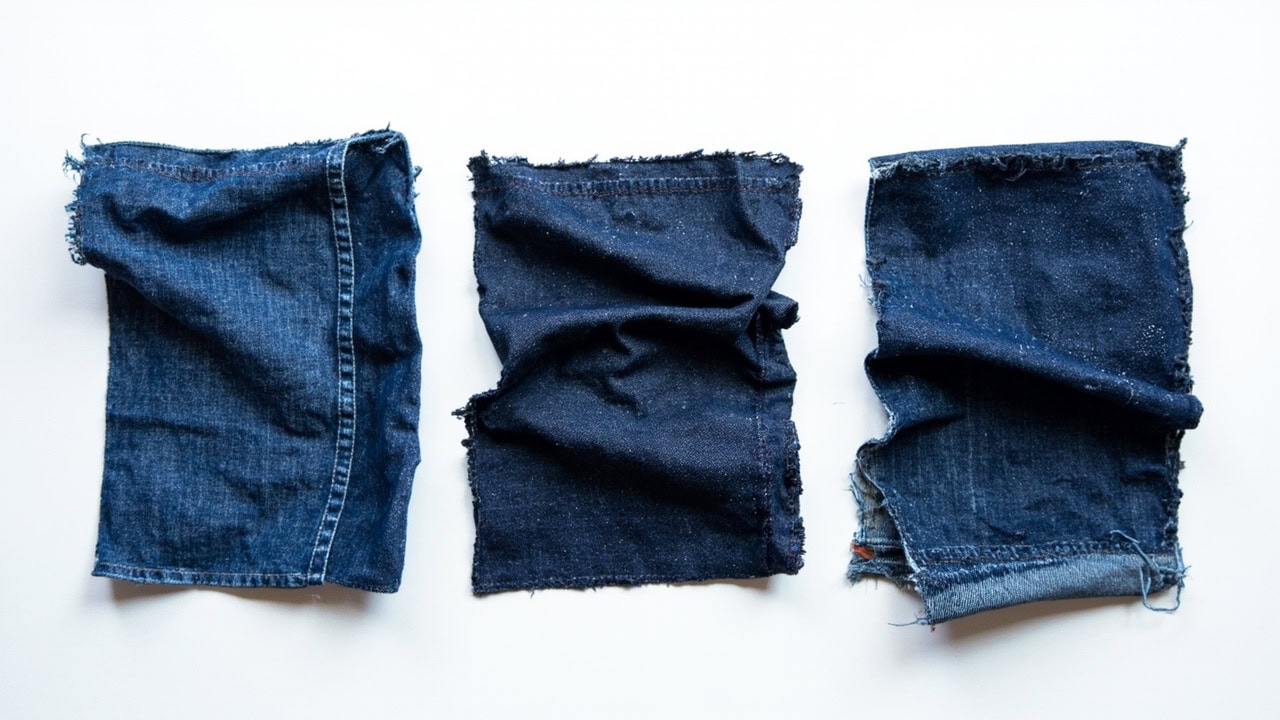
Method 2: Targeted Waistband Heat Shrinking (Iron Method)
The iron method is best for selective shrinkage in the waistband only — it preserves the rest of the fit while tightening a stretched waistband. This is ideal when the thighs, hips, and legs still fit perfectly but the waist has loosened over time. The technique uses directed heat and steam to re-activate residual shrinkage specifically in the waistband circumference. For comparison with sewn waist-take-in methods, see our guide to sewn and no-sew waist adjustment techniques.
- Dampen the waistband area evenly using a spray bottle filled with water. Damp fabric responds better to heat and steam, allowing deeper penetration into the fiber bundles.
- Set the iron to the cotton setting (150–180°C / 300–350°F) and enable the steam function. The steam provides moisture that, combined with heat, reactivates the residual shrinkage in the cotton.
- Place a pressing cloth over the waistband to prevent shine marks and scorching. A clean cotton handkerchief or muslin cloth works well as a pressing cloth.
- Apply the iron with firm pressure along the waistband, working in 10 cm sections. Move methodically around the full circumference, overlapping slightly at section edges.
- Hold the iron on each 10 cm section for 30–45 seconds, allowing steam to fully penetrate the fabric. Do not slide the iron — press and hold, then lift and move.
- Focus extra heat and steam on areas that are most stretched, typically the back center of the waistband where most body weight pressure concentrates when sitting.
- Allow the waistband to cool completely (at least 10–15 minutes) before checking the fit. Shrinkage sets as the fabric dries; checking too soon will give an inaccurate read.
- Repeat the process if additional shrinkage is needed, but allow the fabric to fully cool between applications to avoid over-shrinking.
Expected results: Waist reduction of 0.5–2 cm, depending on the fabric’s residual shrinkage potential and the number of iron applications. This method is more conservative than hot water shrinkage and offers greater control over the final fit.
Method 3: Belt or Elastic Waist Reducer (No-Sew Instant Fix)
These methods do not actually shrink the fabric — they redistribute fit or use hardware to take in the waist. They are completely reversible and involve no permanent alteration to the garment, making them ideal when you need an immediate fix or want to avoid any risk of over-shrinking. For a comprehensive comparison of waist adjustment approaches including both sewn and no-sew methods, see our guide to taking in pants waist.
Option A — Belt Cinch
Wear the jeans at your correct height (not riding up or dropping down). Thread a belt through all the belt loops and cinch to fit snugly at the waist. This eliminates any gap at the back waistband and keeps the jeans riding at the correct position. The belt distributes tension evenly around the waist rather than creating a concentrated pinch point.
Option B — Interior Elastic Band
Feed a 2 cm wide elastic band through the belt loops at the back waist only (skip the side loops for comfort). Overlap the elastic ends and secure them using one of two no-sew methods: fabric glue (applied per manufacturer instructions, typically requiring 24 hours to cure) or a quick hand-stitch with a needle and thread (a simple loop stitch takes under 2 minutes). The elastic draws the back waist inward by 2–5 cm without affecting the front fit.
Option C — Side Buckle Extenders in Reverse
Adjustable side buckle extenders (commonly used to make waistbands larger) can be attached in reverse to pull the waist inward. These are available at haberdashery stores and some department stores in the sewing notions section. Simply attach one end to the front belt loop and the other to the back belt loop on each side, then adjust the buckle to take up the excess slack.
Expected results: Instant waist reduction of 2–5 cm depending on how tightly you adjust the elastic or buckles. These methods are fully adjustable and removable without damaging the jeans.
Method 4: Roll-Up Hem with Grip Tape (Shorter Inseam Without Cutting)
If your jeans are too long rather than too loose, a roll-up hem with grip tape or hemming tape creates a tidy, fixed cuff without sewing. This is particularly useful for raw hem or distressed jeans where you want to preserve the original hemline appearance while shortening the inseam. After shrinking your jeans with one of the methods above, you may need to shorten the inseam — our guide to shortening jeans covers both cutting-and-hemming and no-sew roll-up methods in detail.
- Put on the jeans with the shoes you plan to wear regularly. The inseam length should be measured from your actual footwear.
- Roll the hem up to the desired length — typically 2–5 cm per roll, depending on how much length needs to be removed and the thickness of the denim.
- Apply fabric grip tape or hemming tape along the inside of the hem fold, pressing firmly to secure the tape to the fabric. Hemming tape is available at any fabric or haberdashery store.
- Press firmly along the entire roll and allow the adhesive to set for at least 5 minutes before wearing. For best results, allow 24 hours for the adhesive to fully cure before washing.
Alternative: Snap hem tape uses iron-on snaps that hold the roll permanently in place but can be removed by cutting the snaps if you later want to restore the original length.
Expected results: Instant inseam reduction of 2–10 cm depending on the number of rolls and the thickness of the denim. Heavier denim (12–16 oz per square yard) may require additional tape to prevent the roll from slipping.
Jeans Shrinkage Results by Fabric Type
| Fabric Type | Hot Water Shrinkage | Iron Waistband Method | Belt/Elastic Method |
|---|---|---|---|
| 100% cotton denim | Excellent (3–5% full shrink) | Good (waist only) | Excellent (instant) |
| Cotton-poly blend (under 10% poly) | Good (2–3% shrink) | Moderate | Excellent |
| Stretch denim (1–3% elastane) | Poor — elastane degrades at 60°C (140°F) | Moderate (low heat only) | Excellent |
| Raw selvedge denim | Excellent (full shrinkage potential) | Good | Excellent |
| Washed/distressed denim | Moderate (already shrunk) | Moderate | Excellent |
Critical note on stretch denim: Never use hot water or high-heat drying on stretch denim — elastane fibers begin to degrade at 60°C (140°F), causing permanent loss of stretch recovery. The fabric will become permanently stretched out or, paradoxically, warped and uneven. For stretch denim, use belt/elastic methods or, if you must use water, hand wash in cold water (30°C maximum / 86°F) and air dry flat.
Frequently Asked Questions
Can you make jeans smaller without sewing?
Yes — three main approaches work. Hot water wash and tumble dry shrinks 100% cotton denim by 3–5% by reactivating residual shrinkage in the cotton fibers. Targeted iron heat on the waistband achieves 0.5–2 cm waist reduction. Belt, elastic band, or side buckle methods provide instant waist reduction of 2–5 cm without altering the fabric at all.
Does hot water ruin jeans?
Hot water does not ruin 100% cotton denim — it simply shrinks it. However, hot water can cause color loss and accelerate fading, especially on raw or dark indigo jeans. Turn jeans inside out before washing to minimize surface abrasion and color transfer. Avoid hot water on stretch denim — elastane degrades and the jeans will lose their stretch recovery.
How much can you shrink jeans without sewing?
Hot water shrinkage on 100% cotton pre-shrunk denim yields approximately 3–5% dimensional reduction — roughly 1–2.5 cm on the waist and 1–3 cm on the inseam. Targeted waistband ironing achieves 0.5–2 cm waist reduction. Belt and elastic methods can reduce apparent waist by 2–5 cm instantly but do not actually shrink the fabric.
Will my jeans shrink unevenly in the wash?
Uneven shrinkage is possible if jeans are bunched or twisted during the wash or dry cycle. To minimize: turn jeans inside out, close all zippers and buttons to maintain shape, and ensure the dryer drum has enough space for the garment to tumble freely. Heavily distressed or stone-washed jeans have minimal shrinkage remaining — they have already been shrunk during manufacturing processing.
Internal Linking
For a comprehensive guide to all garment alteration techniques, including both no-sew and sewn methods, refer to the Clothing Alterations Guide: Resize and Refit hub page.
If you need to shorten jeans after shrinking them, see our guide to How to Shorten Jeans covering both cutting-and-hemming and no-sew roll-up methods.
For waist adjustment using sewn techniques for comparison, see How to Take in Pants Waist which covers both sewn and no-sew approaches side by side.
No-sew alteration techniques apply across garment types. See How to Resize a T-Shirt Without Sewing for methods that translate directly to other wardrobe staples.
Understanding heat exposure and denim shrinkage fully is essential before applying these methods. Read Can You Put Denim in the Dryer? for a detailed breakdown of heat exposure effects on denim.
References
- Cotton Incorporated. (n.d.). Cotton Fabric Shrinkage. CottonWorks. Retrieved from https://www.cottonworks.com
- ASTM International. (2021). ASTM D4974/D4974M-20: Standard Test Method for Thermal Shrinkage of Yarn and Cord Using a Thermal Shrinkage Tester. ASTM International.
- American Association of Textile Chemists and Colorists. (AATCC). AATCC Test Method 135: Dimensional Changes of Fabrics After Home Laundering. AATCC Technical Manual.
- International Wool Textile Organisation. (IWTO). (2020). Wool Shrinkage Measurement and Control. IWTO Specifications and Test Methods.
- U.S. Department of Agriculture. (USDA). Cotton Classification and Market News. Agricultural Marketing Service, USDA.


