

How to Dye a Wool Sweater: A Comprehensive Guide

You can dye a wool sweater at home using Rit All-Purpose Dye at a stovetop temperature of 185°F–200°F (85°C–93°C) — wool’s protein-based keratin structure absorbs acid dyes readily in this range, producing rich, wash-fast color. The process takes about 2 hours from pre-soak to final rinse, requires a large pot, 1 cup of table salt, and yields professional-quality results that last through repeated laundering.
Wool is one of the most receptive natural fibers for dyeing — it absorbs up to 30% of its own weight in water, allowing dye to penetrate deeply into the fiber cortex for vibrant, long-lasting color. With the right process, you can transform a faded or stained wool sweater into a custom-dyed garment.
This guide walks you through every step of dyeing a wool sweater at home, from preparing your workstation to setting the color for a wash-fast result.
Quick-Reference: Key Temperatures and Measurements
| Parameter | Value | Why It Matters |
|---|---|---|
| Dye bath temperature | 185°F–200°F (85°C–93°C) | Opens wool cuticle scales for dye penetration without felting |
| Pre-soak duration | 30 minutes (room temperature) | Salt fixative bonds evenly to fiber before heating |
| Cold rinse temperature | Below 65°F (18°C) | Stops dye reaction; prevents uneven color development |
| Detergent wash temperature | Below 85°F (29°C) | Sets final color; hot water causes dye migration |
| Salt per sweater | 1 cup (table salt) | Dye fixative — helps color bond to wool keratin |
| Rit dye per sweater | 1 bottle (½ fl oz) for medium color; 2 bottles for deep color | Double the amount for dark or deep saturation results |
| Wool shrinkage threshold | Above 200°F (93°C) | Triggers fiber interlock and irreversible shrinkage |
Can You Dye Wool?
Yes — wool is among the best natural fibers for at-home dyeing. Unlike cotton, which requires high temperatures and alkaline conditions to accept dye, wool’s protein-based keratin structure absorbs acid dyes readily at temperatures between 185°F and 200°F (85°C–93°C). The result is rich, deep color with excellent wash fastness when processed correctly.
Wool absorbs almost one-third of its own weight in water, which means the dye bath must be sufficient to fully submerge the garment. The fiber’s cuticle scales open slightly under heat, allowing dye molecules to penetrate the cortex for color that resists fading through repeated laundering.
Supplies Needed for Dyeing a Wool Sweater
- Rubber gloves (protect hands from hot water and dye)
- Plastic tablecloth or drop cloth
- Old towels for surface protection
- A large pot (minimum 6-quart capacity for a single sweater)
- Rit All-Purpose Dye or Rit DyeMore for synthetics
- 1 cup of table salt (sodium chloride) as dye fixative
- Mild detergent (Woolite or equivalent)
- Cool water for rinsing
- A stovetop or heat source
How to Dye a Wool Sweater
Follow these steps in order for the best color yield and minimal shrinkage:
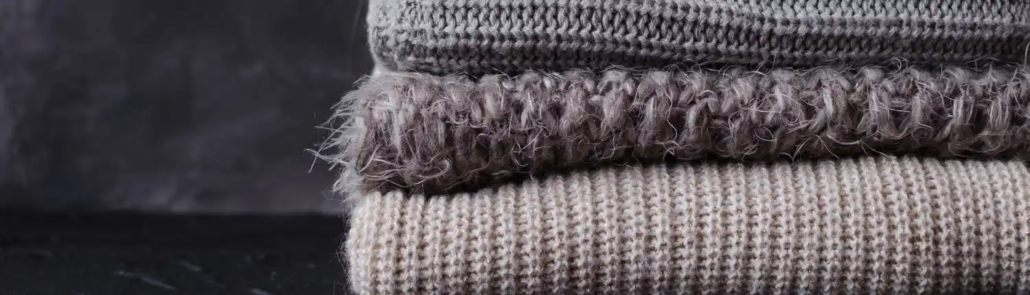
Step 1: Fill the Pot and Pre-Soak
Fill a pot with enough water to fully submerge the sweater. Add 1 cup of table salt and stir until dissolved. Place the wool sweater in the pot and let it soak for 30 minutes at room temperature. This step primes the fiber — the salt acts as a dye fixative, helping the color bond more evenly to the wool keratin. Do not heat the water during this pre-soak phase.
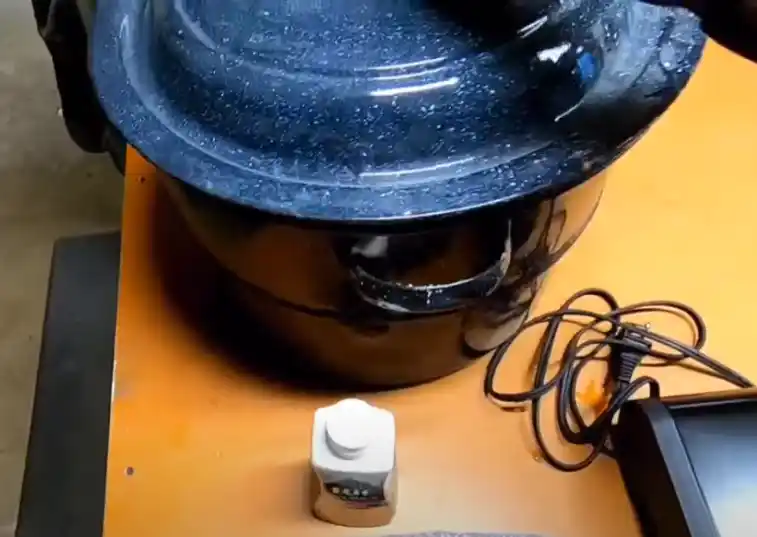
Step 2: Prepare Your Workstation
While the sweater soaks, cover your work surface with a plastic tablecloth or old towels. Set out all supplies within reach: your Rit dye bottle, salt, rubber gloves, detergent, and a wooden or plastic stirring spoon. Working with everything organized reduces the risk of spills and ensures you can move quickly once the dye bath reaches temperature.
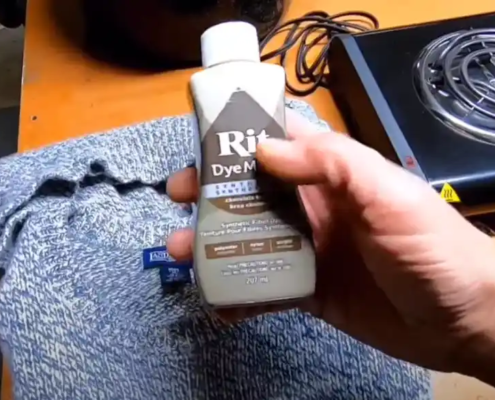
Step 3: Heat the Water to Target Temperature
After the 30-minute pre-soak, place the pot on the stovetop and heat the water to 185°F–200°F (85°C–93°C). Use a cooking thermometer to monitor temperature — this range opens the wool cuticle scales just enough for dye molecules to penetrate without triggering felting shrinkage. Never bring the water to a rolling boil; a vigorous boil causes the wool fibers to interlock and contract, resulting in irreversible shrinkage.
Turn off the heat once the target temperature is reached. Carefully lift the sweater from the pot using tongs or gloved hands, squeezing excess water back into the pot without wringing.
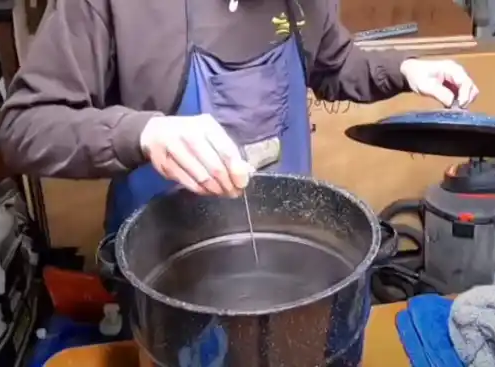
Step 4: Add the Dye
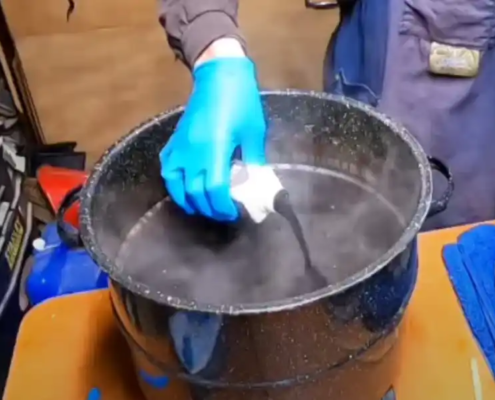
Shake the Rit dye bottle well. For a single sweater in a 6-quart pot, use one bottle (½ fluid ounce) for a medium-color result. Double the amount for deep or dark shades. Pour the dye directly into the hot water and stir with a spoon for 30 seconds until fully dissolved and evenly distributed.
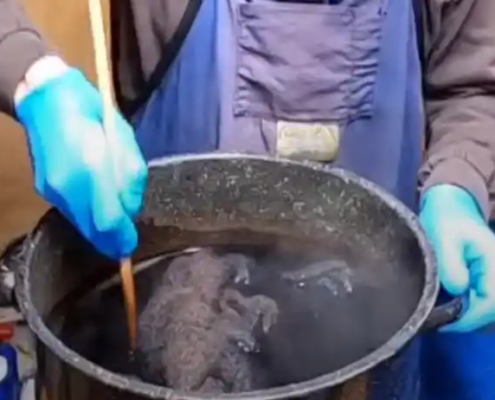
Return the sweater to the pot. Using your stirring spoon, work the garment through the dye bath for 5–10 minutes, ensuring every section of fabric contacts the dye. For multi-tone or ombre effects, you can introduce a second color at this stage by adding it to specific areas and folding or twisting the sweater accordingly.
Step 5: Rinse the Sweater
Remove the sweater from the pot and rinse it under cold running water (below 65°F/18°C) until the water runs completely clear. Cold rinsing stops the dye reaction and prevents the color from continuing to develop unevenly. Do not skip this step — residual dye left in the fiber will bleed during washing.
Step 6: Wash with Mild Detergent
Wash the sweater in cool water (below 85°F/29°C) using a small amount of Woolite or mild liquid detergent. Gently agitate the garment by hand for 2–3 minutes. The detergent binds to any remaining unfixed dye particles and carries them away, setting the final color. Hot water at this stage will cause dye to migrate — always use cool water.
Step 7: Dry the Sweater
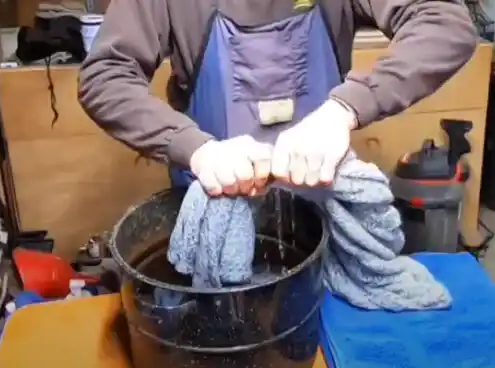
Press the sweater gently to remove excess water — never wring or twist, as wet wool fibers are vulnerable to stretching. Lay the sweater flat on a clean dry towel and reshape it to its original dimensions. Allow it to air dry away from direct sunlight, which can fade the newly set dye. Alternatively, tumble dry on the lowest heat setting (below 110°F/43°C) for up to 30 minutes.
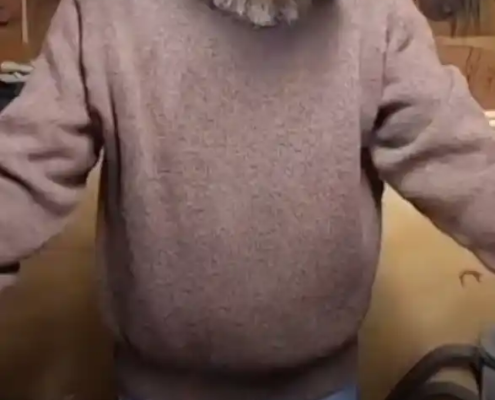
You have now successfully dyed a wool sweater from start to finish. With proper pre-soaking, precise temperature control, and cool-water laundering, the color will remain vibrant through multiple wash cycles.
Important Safety and Quality Notes
- Never wash a freshly dyed wool sweater in hot water — temperatures above 104°F (40°C) cause dye migration and fiber shrinkage in wool
- When using multiple dye colors on one sweater, rinse each section under cold water before moving to the next to prevent color bleeding
- Wool-blend garments (e.g., 60% wool, 40% acrylic) accept Rit All-Purpose Dye, but the acrylic portion will not take color — the result will be a heathered tone rather than solid coverage
- 100% acrylic yarn cannot be dyed with Rit All-Purpose Dye — use Rit DyeMore for Synthetics instead and follow the stove-top method for that fiber type
- Hand-painting and tie-dyeing techniques work exceptionally well on wool because the fiber accepts dye at room temperature with minimal wicking, allowing for precise pattern control
Frequently Asked Questions About Wool Sweater Dyeing
Dyeing a Black Wool Sweater
Dyeing a black wool sweater produces a dark navy or espresso brown rather than a true black, because black wool’s own melanin pigment interacts with the overlaid dye. Use a dedicated black Rit dye and double the standard dye quantity for the deepest achievable result on dark base fibers.
Rit Dye Performance on Wool
Rit All-Purpose Dye bonds effectively with wool protein fibers when applied at 185°F–200°F (85°C–93°C). Always check the Rit dye label for fiber compatibility — Rit DyeMore for Synthetics is not recommended for wool. Follow the temperature guidelines and cool-water rinse protocol above for wash-fast results.
Cross Dyeing Techniques
Cross dyeing exploits differential fiber affinity by using two or more dyes that each bond selectively with different fibers in a blend fabric. In wool-blend sweaters, one dye color bonds to the wool while a contrasting dye bonds to the synthetic component, creating a two-tone heathered effect without additional manual work.
Shrinkage After Dyeing
Wool can shrink 3–5% if exposed to temperatures above 200°F (93°C) or agitated vigorously while wet. Following the 185°F–200°F (85°C–93°C) temperature ceiling and gentle hand washing eliminates shrinkage risk. If slight shrinkage occurs, you can restore the garment’s dimensions by soaking it in lukewarm water with a capful of hair conditioner for 20 minutes, then gently blocking it back to size while damp.
Unshrinking a Wool Sweater
The most reliable unshrinking method is the conditioner soak: combine 1 tablespoon of hair conditioner with 1 quart of lukewarm water (90°F–100°F/32°C–38°C). Submerge the sweater for 20–30 minutes, then gently stretch it back to its original dimensions while still damp. Lay flat to dry, periodically re-stretching until the fiber memory sets.
Conclusion
Dyeing a wool sweater is a reliable, cost-effective way to extend the life of a quality garment or create a personalized colorway. Wool’s protein-based structure accepts dye at moderate temperatures, producing color fastness that outperforms most synthetic fibers. By maintaining a 185°F–200°F (85°C–93°C) dye bath, using 1 cup of salt as a fixative per sweater, rinsing in cold water, and washing only in cool detergent water, you achieve professional-quality results at home.
References
- The Woolmark Company. (n.d.). Wool fiber properties. Retrieved from https://www.woolmark.com
- Rit Dye. (n.d.). Rit All-Purpose Dye instructions. Retrieved from https://www.ritdye.com/instructions/
- Wikipedia. (n.d.). Wool. Retrieved from https://en.wikipedia.org/wiki/Wool
Wikipedia. (n.d.). Dyeing of wool. Retrieved from https://en.wikipedia.org/wiki/Wool_dyeing


