
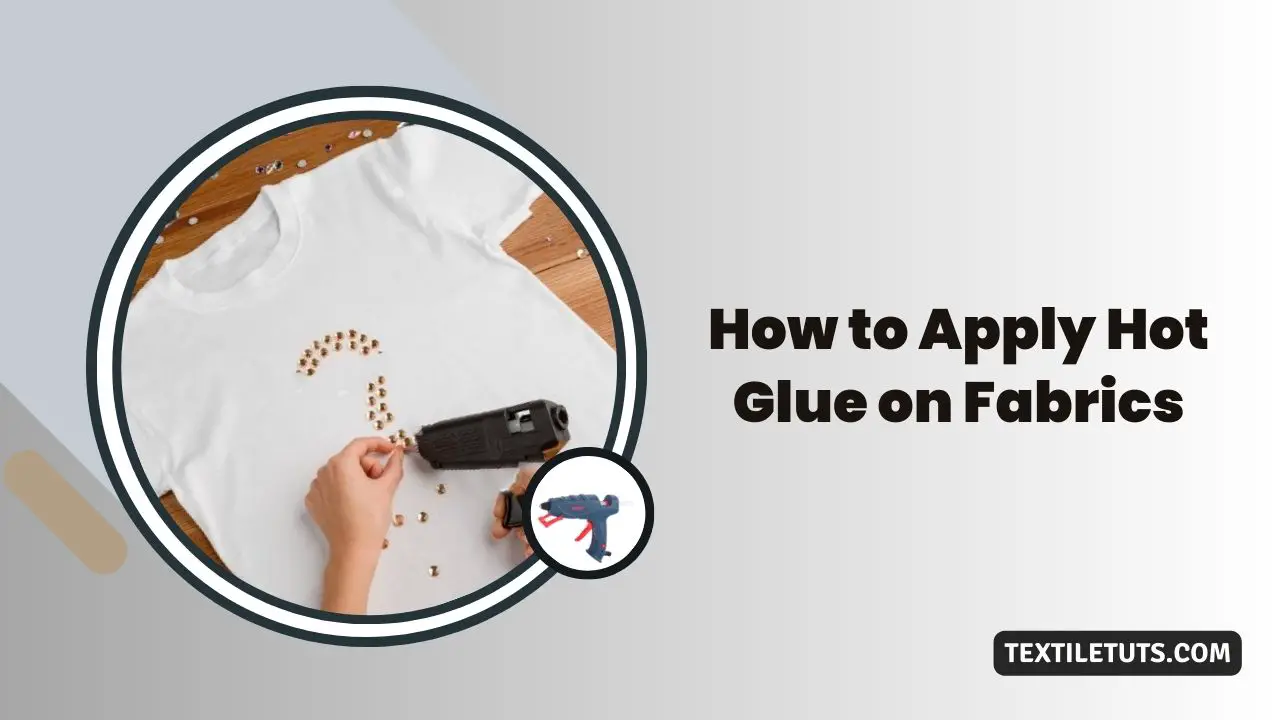
How to Apply Hot Glue on Fabrics

To apply hot glue on fabric, plug in the hot glue gun and allow it to heat up for 3–5 minutes. Cut a small piece of the glue stick and load it into the gun. Apply the glue to the fabric in a thin, even layer at a thickness of approximately 1/16 inch (1.5 mm). Avoid excessive amounts that could stiffen the fabric. Allow the glue to fully dry for 60 seconds before handling the fabric. To remove the glue, peel it off or use a seam ripper to cut through it.
Hot glue is an excellent choice for repairing or securing fabrics because it dries quickly (30–60 seconds), is waterproof, and forms a bond with tensile strength of 300–600 PSI. This guide covers proven techniques used in the textile industry for applying hot glue on fabric.
Fabric Compatibility with Hot Glue: Temperature Guide
Hot glue guns operate at temperatures between 250°F and 425°F (120–220°C). Different fabric types have varying heat tolerances, so selecting the right temperature setting is essential to avoid damaging the material.
| Fabric Type | Melting Point | Recommended Glue Temperature | Risk Level |
|---|---|---|---|
| Cotton | 400–450°F (204–232°C) | 375–425°F (190–220°C) | Low |
| Linen | 375–430°F (190–221°C) | 375–425°F (190–220°C) | Low |
| Wool | 230–320°F (110–160°C) | 250–380°F (120–190°C) | Medium |
| Silk | 300–465°F (149–241°C) | 250–380°F (120–190°C) | Medium |
| Polyester | 230–265°F (110–130°C) | 250–380°F (120–190°C) | High |
| Nylon | 300–355°F (149–179°C) | 250–380°F (120–190°C) | High |
| Acetate | 200–300°F (93–149°C) | 250°F (120°C) or lower | Very High |
| Acrylic | 300–400°F (149–204°C) | 250–380°F (120–190°C) | Medium-High |
Fabric Hot Glues: A Brief Overview
Hot glue, also known as hot-melt adhesive, is a thermoplastic bonding agent that sets rapidly and forms a bond stronger than many conventional adhesives. It is widely used in crafts and textile repairs and is available in both liquid and stick formulations.
Hot Glue Composition and Materials
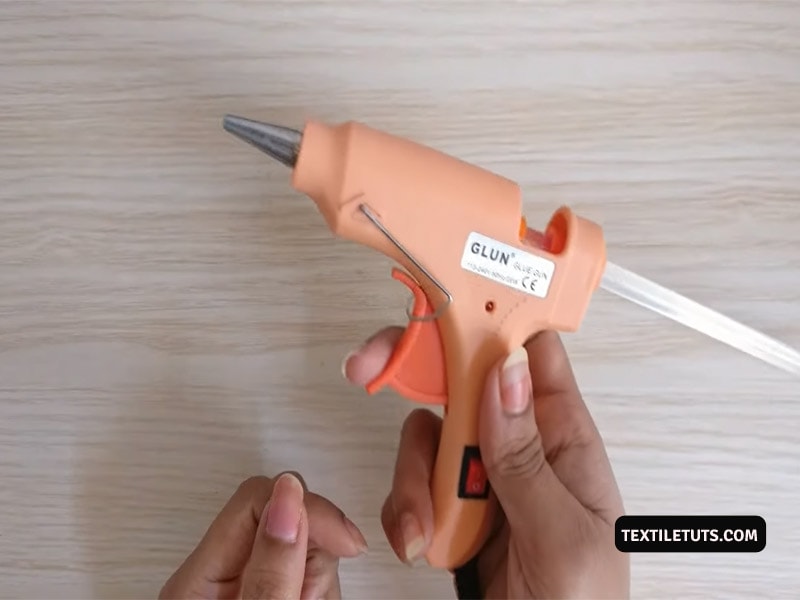
Hot glue is composed of thermoplastic polymers—primarily ethyl-vinyl acetate (EVA) in grades containing 18–28% vinyl acetate—along with tackifying resins (25–40% by weight) and a liquid plasticizer solvent. Manufacturers melt the resin and heat the mixture to 375–425°F (190–220°C), then dispense it through a nozzle where it cools and solidifies within 5–30 seconds.
The Science Behind Hot Glue Bonding
Early adhesives were derived from natural substances like tree sap and animal collagen. These required heating before becoming adhesive, which limited their practicality. In the early 20th century, synthetic polymers replaced natural materials, leading to the modern hot glue formulations used today.
When the hot glue gun reaches operating temperature (typically 375–425°F / 190–220°C for standard guns; 250–380°F / 120–190°C for low-temperature guns), the solid glue stick melts into a liquid with viscosity of 3,000–10,000 centipoise. The liquid wets the fabric surface through capillary action and begins cooling immediately upon contact.
As the adhesive cools below 180°F (82°C), it solidifies and forms a mechanical bond between the two surfaces. The bond strength reaches 75% of maximum within 60 seconds and full cure (approximately 300–600 PSI tensile strength) within 2–5 minutes.
How to Apply Hot Glue on Fabrics
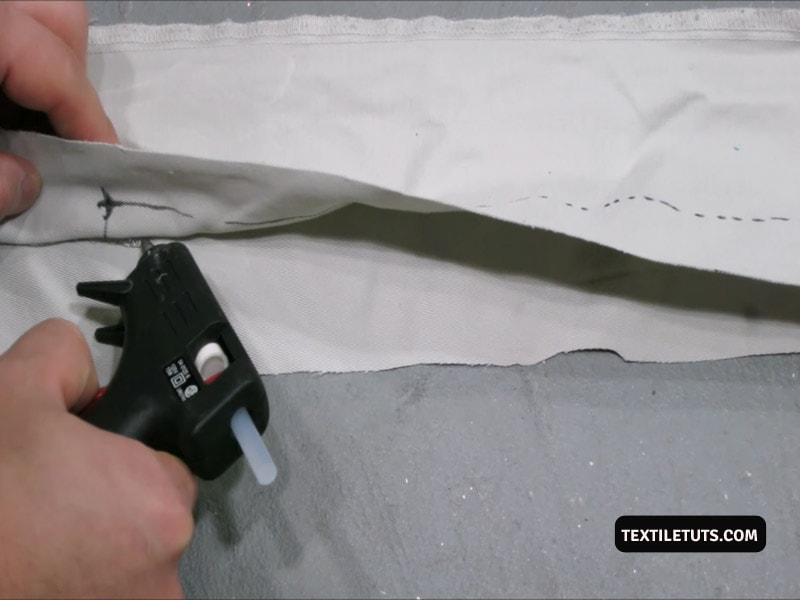
The application process is straightforward and reliable. Follow these steps for a durable bond on most fabric types.
Safety Precautions for Hot Glue on Fabrics
Hot glue guns operate at temperatures between 250°F and 425°F (120–220°C). These high temperatures cause synthetic fabrics with a melting point below 300°F (149°C)—such as acetate, nylon, and polyester—to scorch or melt. The glue bonds tenaciously to natural fibers and requires solvent-based removal.
Always use a low-temperature setting (250–380°F / 120–190°C) and test the glue on a fabric scrap before applying it to the main project.
Read all manufacturer instructions before use. Keep the gun upright during heating and allow 3–5 minutes for the gun to reach operating temperature before applying glue.
Step-by-Step Application Process
Plug in the hot glue gun and allow it to heat up for 3–5 minutes until the indicator light shows it has reached operating temperature (375–425°F / 190–220°C for standard guns).
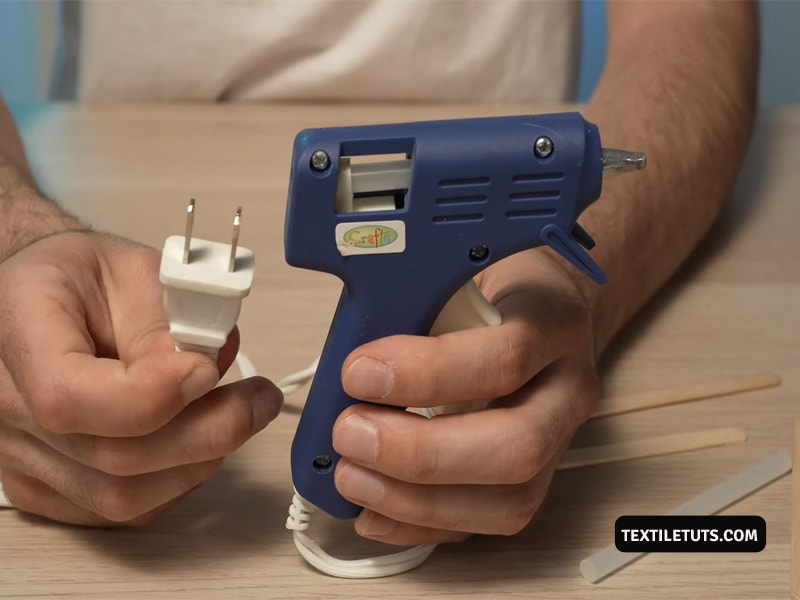
Cut a 3–4 inch (7.5–10 cm) section of the glue stick and insert it into the rear of the gun. Push it in until it engages with the feed mechanism.
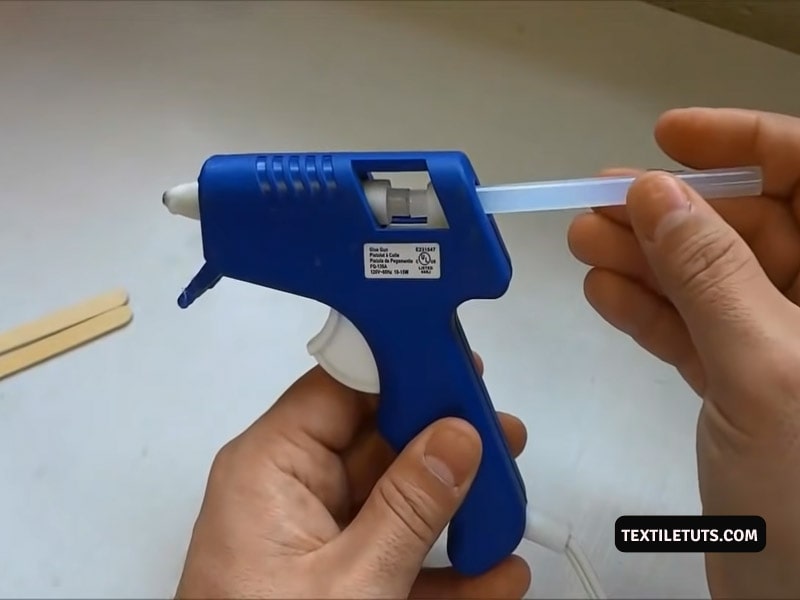
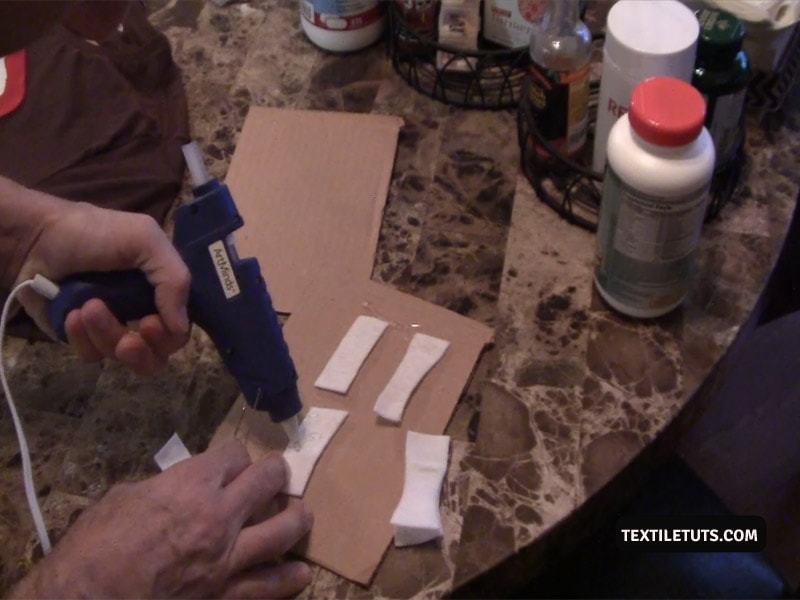
Apply the glue to the fabric in a thin, even layer at 1/16 inch (1.5 mm) thickness. Using more than 1/8 inch (3 mm) of glue increases fabric stiffness by up to 40% and extends drying time to 2–3 minutes.
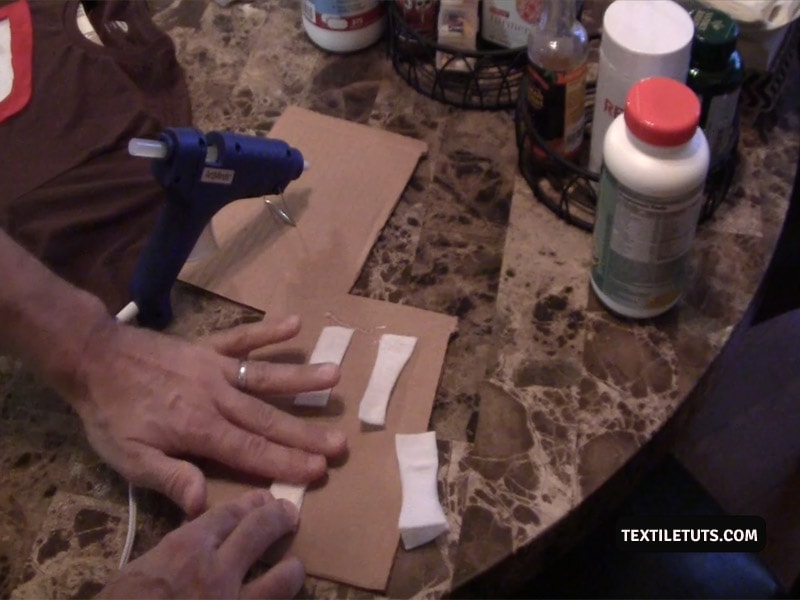
Allow the glue to dry for a full 60 seconds. The bond reaches 75% of maximum strength within this period and achieves full tensile strength of 300–600 PSI after 2–5 minutes.
To remove the hot glue from fabric, follow the hot glue removal guide. Acetone or isopropyl alcohol dissolves EVA-based hot glue within 5–10 minutes of application.
Advantages of Hot Glue
Hot glue offers several advantages over solvent-based and water-based adhesives in textile applications, including rapid setting, versatility across fabric types, water resistance, and heat resistance up to 150°F (65°C) in cured form.
Quick Drying Time
Hot glue sets within 30–60 seconds—significantly faster than epoxy (5–30 minutes) or fabric glue (30–60 minutes). This rapid setting makes it ideal for bonding two fabric pieces that require immediate handling. The bond reaches approximately 75% of maximum tensile strength within the first 60 seconds.
Versatility
Hot glue bonds effectively to cotton, polyester, nylon, denim, linen, wool, felt, and synthetic blends. It produces negligible volatile organic compounds (VOCs), making it safer for indoor craft use compared to solvent-based adhesives. The open time of 5–10 seconds allows for repositioning before the bond sets.
Heat Resistance
Cured EVA-based hot glue withstands temperatures up to 150°F (65°C) without softening. Polyamide-based hot glue formulations resist temperatures up to 250°F (121°C), making them suitable for automotive and industrial textile applications where elevated temperatures occur.
Waterproof Bond
Cured hot glue is waterproof. EVA-based hot glue achieves water resistance of 90–95% after full cure, meaning it will not dissolve or weaken when exposed to water. This makes it suitable for outdoor fabric applications and items that require machine washing on a gentle cycle with cold water (below 86°F / 30°C).
Frequently Asked Questions
Is hot glue permanent on fabric?
Hot glue is not a permanent adhesive on fabric. It forms a strong bond (300–600 PSI) but remains removable with acetone, heat, or mechanical force. For semi-permanent bonds, specialized fabric glues designed to survive washing provide 95–100% bond retention after 25+ wash cycles.
How long do hot glue sticks last in storage?
Unopened hot glue sticks remain effective for 2–3 years when stored in a cool, dry environment at 40–75°F (4–24°C). Opened sticks exposed to humidity and temperature cycling degrade within 12–18 months, with tackifier evaporation reducing bond strength by up to 30%.
How to remove dried hot glue from fabric
Apply acetone or isopropyl alcohol (70% concentration or higher) to the dried glue and allow 5–10 minutes for penetration. Use a putty knife or wooden spatula to scrape softened adhesive. Alternatively, apply heat at 250°F (120°C) with a clothes iron to soften the glue, then peel it away. Test on a hidden fabric area first to avoid damage.
Can fabric with hot glue be washed?
Yes, fabric with cured EVA-based hot glue bonds tolerates machine washing on a gentle cycle at or below 86°F (30°C). The bond retains 90–95% tensile strength after washing. Permanent fabric glues designed for laundry use survive 25+ wash cycles at 105°F (40°C) with less than 5% bond degradation. Avoid dry cleaning, as solvent exposure breaks down EVA adhesives.
Does toothpaste remove hot glue from fabric?
Toothpaste contains mild abrasives and surfactants that soften EVA-based hot glue, reducing bond strength by approximately 40–60%. For complete removal, acetone or isopropyl alcohol is more effective, dissolving the adhesive within 5–10 minutes versus 15–20 minutes for toothpaste.
Conclusion
This guide covers the essential techniques for applying hot glue on fabric. Hot glue provides a quick-setting (30–60 seconds), waterproof bond with tensile strength of 300–600 PSI, making it suitable for textile repairs, craft projects, and semi-permanent fabric applications. Explore the related articles below for more DIY guides and textile care tips.
References
- American Society for Testing and Materials. (2021). ASTM D905-08(2021) Standard Test Method for Strength Properties of Adhesive Bonds by Shearing. ASTM International.


