
How to Remove Hot Glue from Fabric without Damaging It

To remove hot glue from fabric without damaging the material, soak the fabric in cold water, apply 70% isopropyl alcohol, and peel the softened adhesive away at a 45-degree angle—the exact technique varies by fabric type. This guide covers tested methods for six fabric types: cotton, polyester, satin, carpet, leather, and velvet.
Hot Glue Removal Methods by Fabric Type
| Fabric Type | Best Method | Key Material | Time Required |
|---|---|---|---|
| Cotton | Soak + Alcohol | Cold water + 70% isopropyl alcohol | 25–35 minutes |
| Polyester | Alcohol Application | 70% isopropyl alcohol or acetone | 10–15 minutes |
| Satin | Heat Method | Hair dryer (40–45°C / 104–113°F) | 5–10 minutes |
| Carpet | Iron + Cloth Transfer | Iron (150–180°C / 302–356°F) + cotton cloth | 20–45 minutes |
| Leather | Mechanical Abrasion | Pencil eraser | 2–10 minutes |
| Velvet | Mechanical Abrasion | Pencil eraser (gentle motion) | 5–15 minutes |
Quick-Reference: Critical Temperatures and Times
- Cold water soak temperature: 15°C (59°F) or below — prevents glue from softening further
- Isopropyl alcohol concentration: 70% — dissolves polymer bonds without degrading fabric fibers
- Cotton soak duration: 10–15 minutes before alcohol application
- Alcohol contact time: ~1 minute to penetrate and soften dried glue
- Cold rinse duration: 10 minutes minimum (cotton), 5–10 minutes (polyester)
- Satin hair dryer temperature: 40–45°C (104–113°F), held 10–15 cm (4–6 inches) away
- Carpet iron temperature: 150–180°C (302–356°F), medium-high heat
- Peel angle: 45 degrees — avoids lifting fabric fibers
Removing Hot Glue from Cotton Fabric
Cotton is a porous natural fiber with no protective coating, which allows adhesives to seep between threads and create a strong bond. The light weave structure means glue spreads easily, making removal challenging. The method below uses 70% isopropyl alcohol, which dissolves hot glue’s polymer bonds without degrading cotton fibers.
Step 1: Soak the Fabric in Cold Water
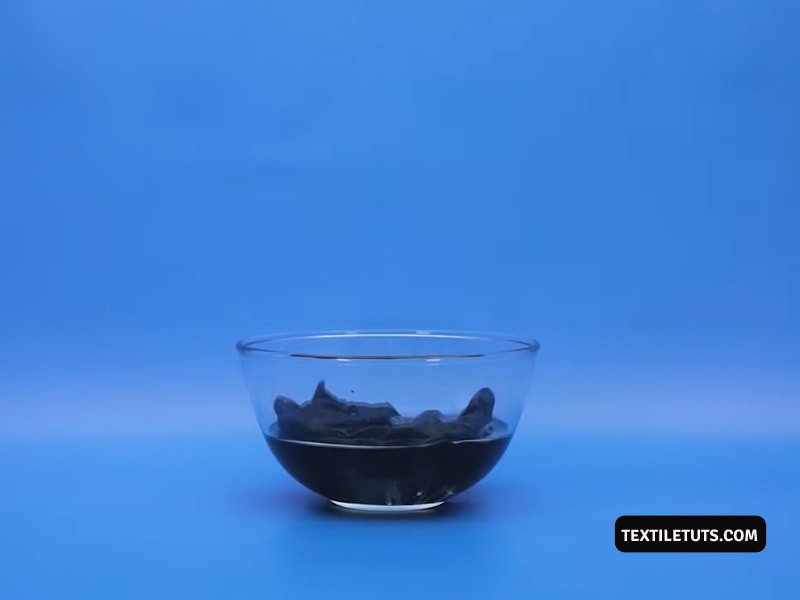
Fill a bowl with cold water at or below 15°C (59°F). Fully submerge the affected area and soak for 10–15 minutes. Cold water prevents the glue from softening further and spreading deeper into the cotton weave. Remove the fabric and allow it to air dry completely before proceeding to the next step.
Step 2: Apply 70% Isopropyl Alcohol
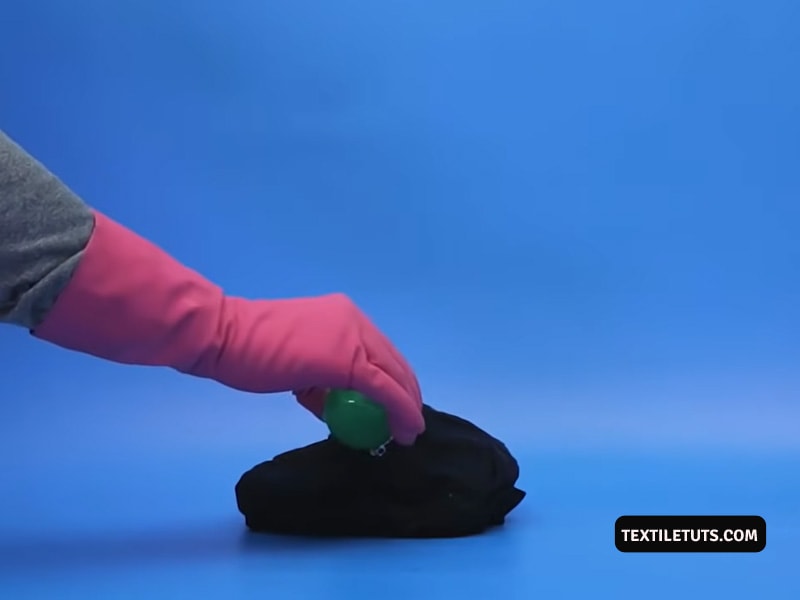
Soak a cotton ball in 70% isopropyl alcohol. Apply the soaked cotton ball directly to the dried glue and rub in gentle circular motions for 5–10 minutes. The alcohol penetrates and softens the glue’s polymer structure within approximately 1 minute of contact. Continue rubbing until the glue begins to lift from the fibers.
Step 3: Rinse and Peel Off the Glue
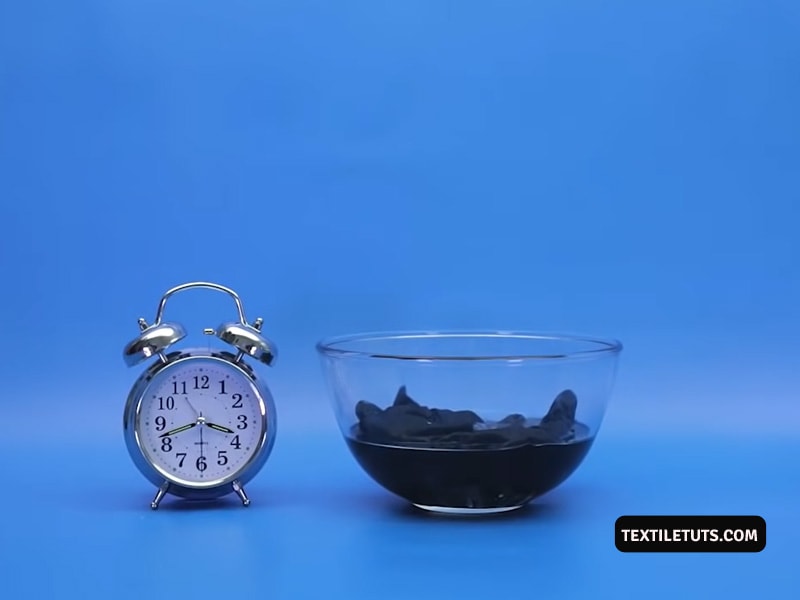
Rinse the fabric under cold running water at or below 15°C (59°F) for a minimum of 10 minutes. The water flushes away dissolved alcohol residue and further loosens the adhesive. Once rinsed, peel the glue away slowly at a 45-degree angle to avoid lifting cotton fibers.
TIP
This exact method also works for knit fabric. Use cold water at or below 15°C (59°F), 70% isopropyl alcohol, and follow the same 10–15 minute soak then 10-minute rinse protocol.
Removing Hot Glue from Polyester Fabric
Polyester is a synthetic polymer fabric with tightly woven fibers that resist glue penetration more effectively than natural fibers. Hot glue bonds to the surface of polyester rather than soaking in, which makes removal significantly easier. The recommended adhesive removal agent is 70% isopropyl alcohol applied directly to the dried glue.
Step 1: Apply 70% Isopropyl Alcohol
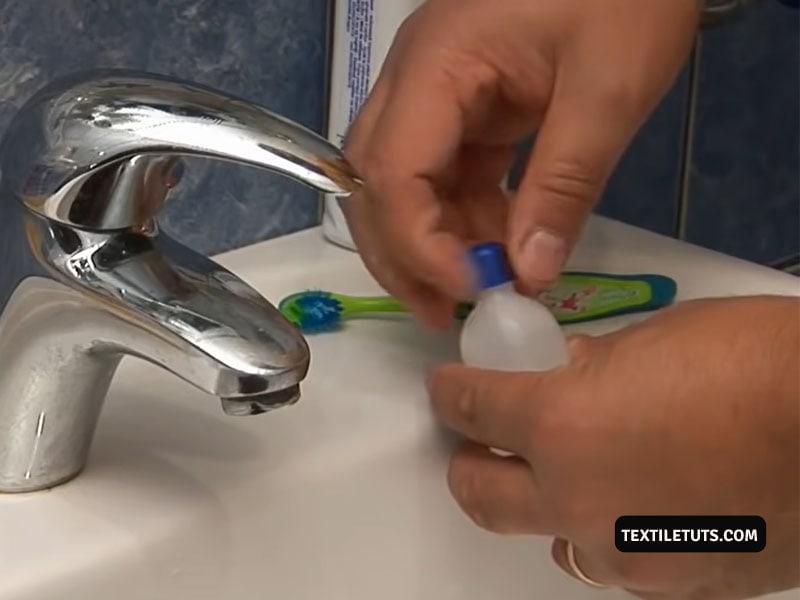
Pour 70% isopropyl alcohol directly over the glued area, ensuring full saturation. Let the alcohol sit for approximately 1 minute to penetrate and soften the adhesive. If isopropyl alcohol is unavailable, 100% acetone or acetone-based nail polish remover dissolves hot glue equally effectively on polyester.
Step 2: Peel Off the Glue
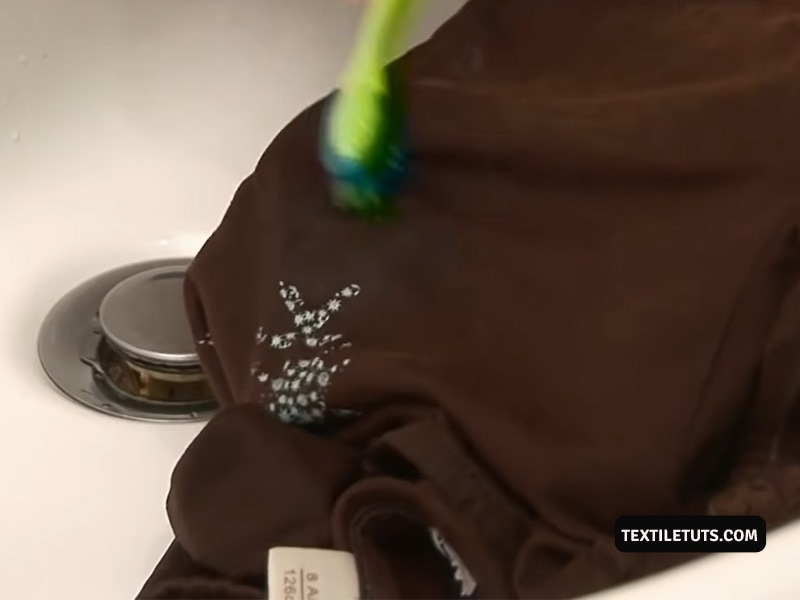
Slowly peel the glue away at a 45-degree angle. If any residue remains stuck to the fabric, do not force it. Apply a cotton swab soaked in 70% isopropyl alcohol and rub in circular motions to target remaining adhesive fragments. Continue until all visible glue has been removed.
Step 3: Rinse Under Cold Water
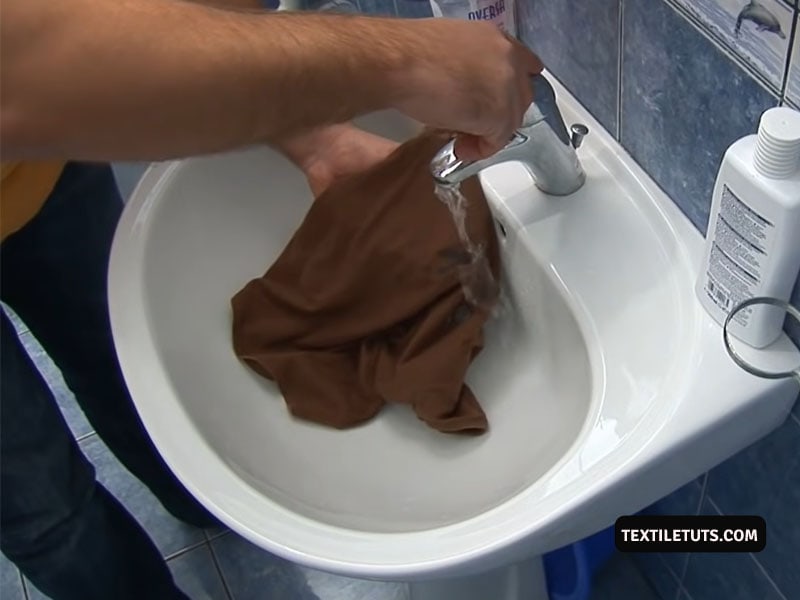
Rinse the fabric under cold running water at or below 15°C (59°F) for 5–10 minutes. In many cases, residual glue fragments detach completely during rinsing. Allow the fabric to air dry before wearing or washing.
Removing Hot Glue from Satin Fabric
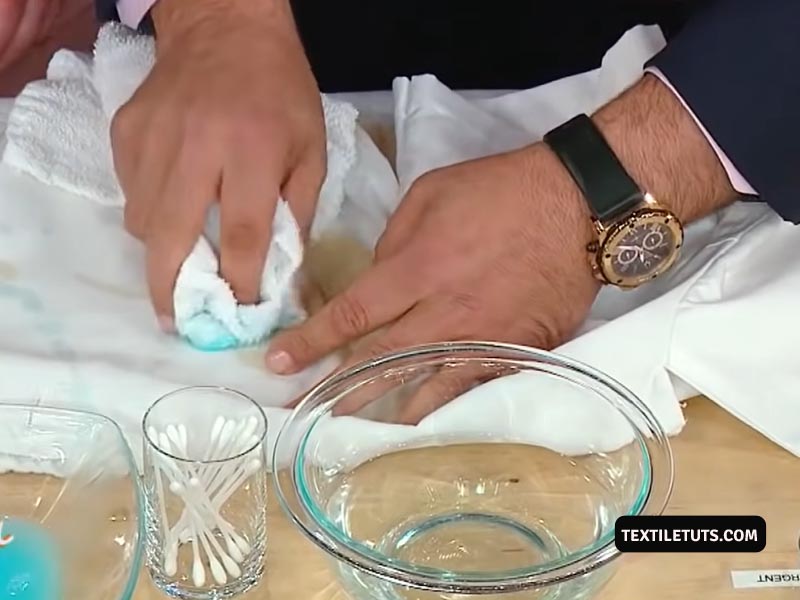
Satin is a weave pattern—not a fiber—that produces a smooth, glossy surface from silk, polyester, or nylon. Its delicate, tightly woven structure is prone to water spots and heat damage. The heat method is preferred for satin because it avoids moisture exposure, which can permanently mark the fabric.
Step 1: Apply Heat with a Hair Dryer
Set a hair dryer to medium heat (approximately 40–45°C / 104–113°F) and hold it 10–15 cm (4–6 inches) from the glued area. Move the dryer continuously to distribute heat evenly. The glue will begin to soften and become tacky within 30–60 seconds. Stop immediately when the glue reaches a pliable, slime-like consistency—overheating can cause the glue to bond more firmly to the satin fibers.
Step 2: Peel Off the Softened Glue
Use a butter knife or plastic scraper to lift the softened glue at a 45-degree angle. Do not use bare fingers—they will burn from residual heat. Once the bulk of the glue is removed, wash the satin fabric in cool water with a mild detergent to eliminate any remaining adhesive residue.
Removing Hot Glue from Carpet
Carpet fibers trap hot glue deep in their pile, making removal particularly challenging on wall-to-wall carpeting. The heat-and-cloth method transfers the melted adhesive to a separate fabric, lifting it from the carpet without leaving residue. This technique works best on nylon, polyester, and wool carpet fibers.
Step 1: Place a Cloth Over the Glue and Iron
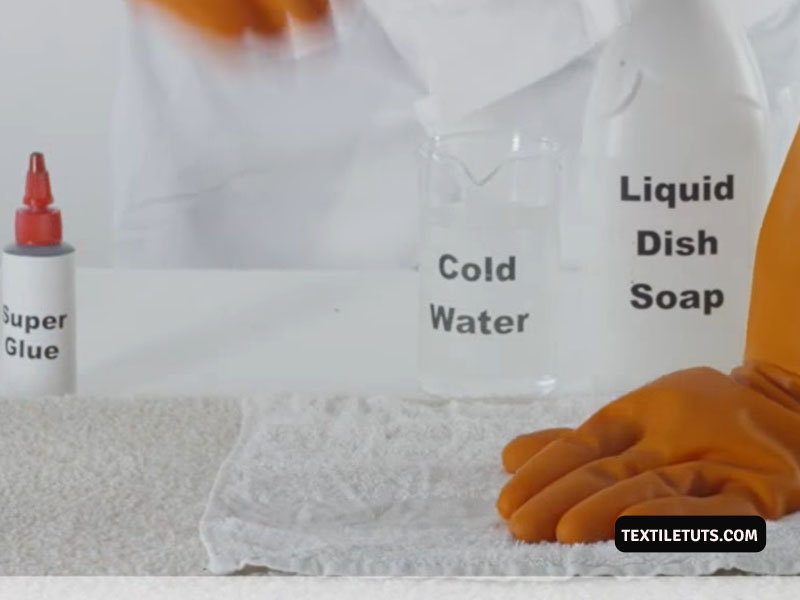
Set an iron to medium-high heat (approximately 150–180°C / 302–356°F). Place a clean cotton cloth or paper towel directly over the glued area. Press the iron firmly onto the cloth for 10–15 seconds without sliding. The transferred heat melts the glue, which then bonds to the cloth. Lift the cloth to reveal partial or complete glue removal.
Step 2: Repeat with Fresh Cloth Sections
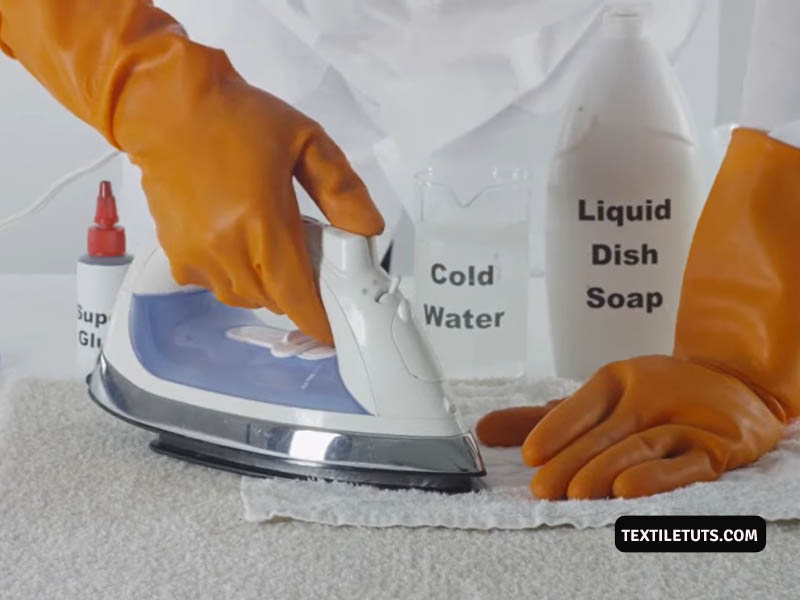
Repeat the ironing process with a fresh section of cloth each time. Full carpet glue removal using this method typically requires 20–45 minutes depending on the surface area and age of the dried glue. If a soldering iron with a rounded tip is available, the process shortens to 10–15 minutes.
Step 3: Vacuum the Area
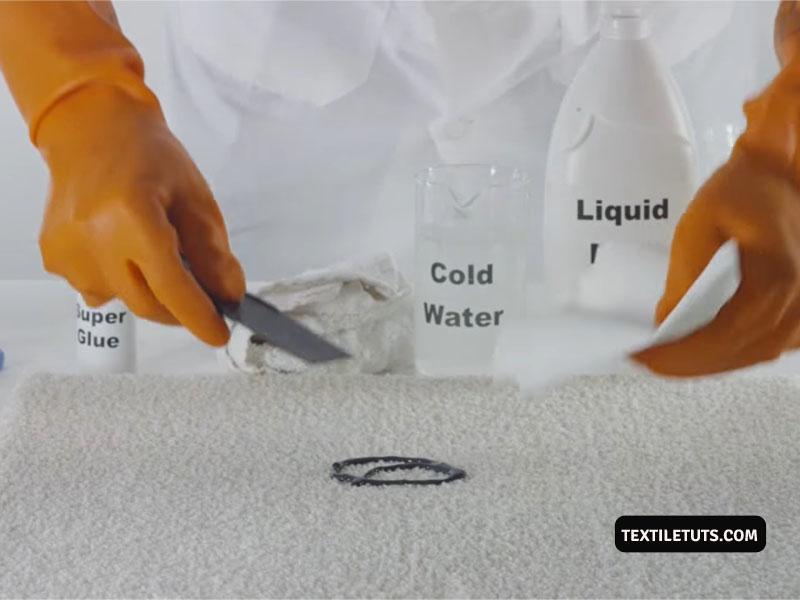
Vacuum the treated carpet area thoroughly to collect any remaining glue fragments and debris. For persistent residue, apply a carpet cleaner solution or a mixture of cold water and white vinegar. Allow the area to air dry completely before walking on it.
TIP
Apply this same iron-and-cloth technique to remove hot glue from microfiber sofas and couches. Use medium-high iron heat (150–180°C / 302–356°F) and a clean cotton cloth, pressing for 10–15 seconds per section.
Removing Hot Glue from Leather
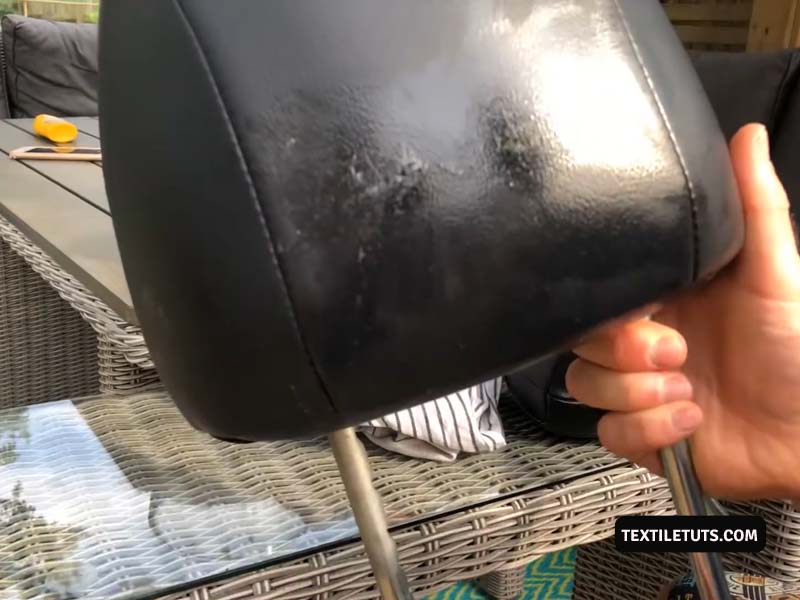
Leather is a durable natural material with a protective surface coating that resists liquid penetration. The pencil eraser method is the recommended technique for leather because it abraids the glue without introducing solvents that could strip the leather’s finish. The same approach applies to suede surfaces.
Step 1: Select an Abrasive Tool
Use a clean pencil eraser or a soft nylon-bristle suede brush. Both materials provide enough abrasion to wear down hot glue without scratching or degrading the leather surface. Avoid metal tools or rough sandpaper, which will permanently damage the leather grain.
Step 2: Rub the Eraser Over the Glue
Apply firm, consistent pressure while rubbing the eraser over the glued area in small circular motions. For small glue spots, 2–3 minutes of rubbing removes the adhesive completely. Larger glue spills require 5–10 minutes of treatment. Wipe the surface with a dry cloth to collect erased glue residue.
TIP
This eraser method also removes hot glue from velvet surfaces without damaging the delicate pile. Use gentle circular motions and work in 2-minute intervals to avoid matting the fibers.
Summary: Choosing the Right Method
The most effective hot glue removal method depends on the fabric type. For natural fibers like cotton, cold water soaking followed by 70% isopropyl alcohol produces reliable results. For synthetic fabrics such as polyester and satin, 70% isopropyl alcohol or controlled heat application works best. For carpet and upholstery, the iron-and-cloth transfer method at 150–180°C (302–356°F) lifts glue without moisture damage. For leather and velvet, mechanical abrasion with a pencil eraser avoids chemical or heat damage to delicate surfaces.


