
Flame-Retardant Fabric Finishes: Phosphorus vs. Nitrogen Systems

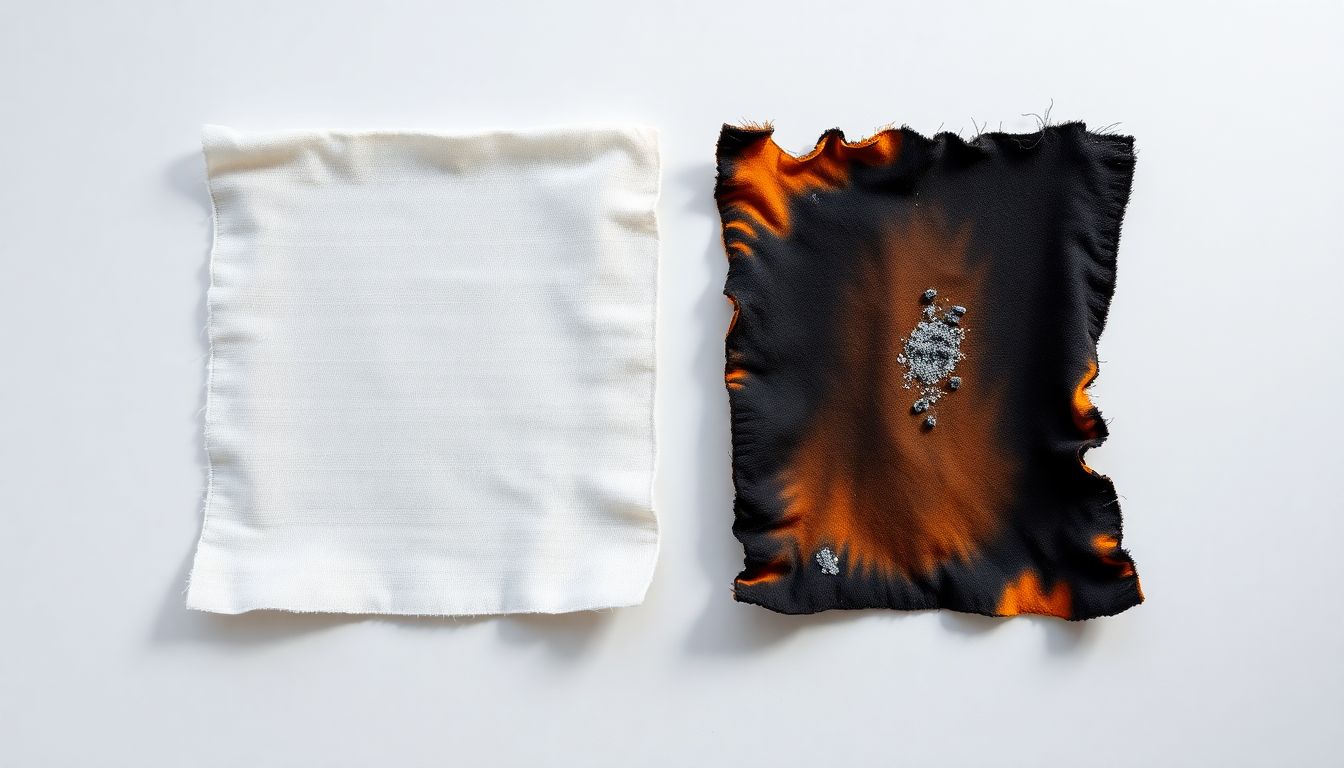
Flame retardant fabric finishes are chemical treatments that reduce fabric flammability by creating a protective char layer on the fiber surface through pyrolysis, inhibiting the combustion cycle. These finishes are critical in industrial protective clothing, firefighter turnout gear, military uniforms, and home furnishings such as mattresses and curtains that must meet strict fire safety regulations. Two primary chemical families dominate the field of flame retardant fabric treatments: phosphorus-based systems and nitrogen-based systems.
Organophosphates, ammonium polyphosphate (APP), and phosphonates are the primary phosphorus-based compounds. Melamine, urea derivatives, and guanidine salts are the primary nitrogen-based compounds. A third category — halogenated flame retardants — has seen increasing regulatory restriction under EU REACH due to health and environmental concerns, pushing the industry toward phosphorus-nitrogen synergistic systems that deliver comparable performance without the associated risks. Both chemical families must meet NFPA EN 11612 performance standards for industrial protective clothing applications.
Flame retardant finishes are classified by their durability. Non-durable treatments sit on the fiber surface and wash out quickly. Semi-durable finishes withstand 5–15 home launderings and are suitable for decorative fabrics. Durable finishes, properly fixed through chemical bonding or polymerization, survive 30–50+ industrial wash cycles — the standard for occupational protective clothing that must retain flame resistance throughout its service life.
Flame Retardant Finishes Interrupt the Combustion Cycle Through Char Formation and Radical Scavenging
Fire requires four elements simultaneously: heat, fuel, oxygen, and a sustained chemical chain reaction. Flame retardants break at least one link in that chain through two primary modes of action: condensed-phase mechanisms and gas-phase mechanisms. In the condensed phase, flame retardants alter the pyrolysis pathway of the polymer, promoting dehydration reactions that convert the fiber’s cellulose structure into a stable carbonaceous char instead of flammable volatile gases. This char layer acts as a physical barrier between the flame and the unburned fuel beneath, insulating the material and starving the fire of additional fuel.
Condensed-phase flame retardants operate primarily between 250–350°C, catalyzing the dehydration of cellulose fibers and converting glycosidic bonds into a carbonaceous char rather than allowing the fiber to depolymerize into flammable tars and gases. This char layer builds up on the fiber surface, creating a thermal barrier that limits heat transfer back into the unburned material while physically blocking flame spread across the fabric surface. Gas-phase flame retardants interrupt the free-radical chain reactions that sustain combustion. The flame zone contains highly reactive hydrogen (H•) and hydroxyl (OH•) radicals that drive continued burning. Radical scavengers — particularly effective in halogenated and some phosphorus-based systems — compete with these radicals, forming less reactive molecules and ultimately extinguishing the flame. The most effective flame retardant systems operate in both phases simultaneously, combining char-promoting chemistry with gas-phase radical scavenging for maximum protection across the widest possible temperature range of 200–600°C.
Phosphorus-Based Flame Retardant Systems Promote Condensed-Phase Char Formation on Cellulosic Fibers
Phosphorus-based flame retardants are the most widely used systems for cellulosic fibers including cotton, linen, and viscose, as well as polyester and cotton-polyester blends that dominate industrial protective clothing markets. Their primary mechanism is condensed-phase char promotion through dehydration of cellulose at the molecular level. When exposed to heat between 250–350°C, organophosphorus compounds catalyze the dehydration of cellulose fibers, converting the glycosidic bonds into a carbonaceous char rather than allowing the fiber to depolymerize into flammable tars and gases.
Organophosphate esters — such as triphenyl phosphate (TPP), resorcinol bis(diphenylphosphate) (RDP), and bisphenol A diphenyl phosphate (BPA-DP) — provide high wash durability on cotton blends, achieving 40–50 industrial wash cycles when correctly fixed with crosslinking agents. Ammonium polyphosphate (APP) is an inorganic polymer that provides intumescent char formation on cotton, polyester, and cellulose blends, achieving 30–50 washes depending on the specific formulation and application method. Phosphonates such as dimethyl methylphosphonate (DMMP) are effective on cotton and linen with medium durability of 20–40 washes. Red phosphorus is used primarily in wool and nylon applications where its high effectiveness offsets handling challenges, delivering 50+ washes on these synthetic and protein fibers.
Phosphorus System Types and Performance
| Phosphorus System | Compound Type | Target Fabric | Wash Durability |
|---|---|---|---|
| Organophosphate | Phosphonate ester | Cotton blends, polyester | High (40–50 washes) |
| Ammonium Polyphosphate (APP) | Inorganic polymer | Cotton, polyester, cellulose blends | Medium-high (30–50 washes) |
| Red Phosphorus | Elemental | Wool, nylon | High (50+ washes) |
| Phosphonate (DMMP) | Methylphosphonate | Cotton, linen | Medium (20–40 washes) |
One limitation of standalone phosphorus systems is their relatively narrow effective temperature range of 250–350°C. Above 350°C, the char itself may begin to oxidize and degrade. This is why combined phosphorus-nitrogen systems — which extend the effective range and provide dual-phase protection — have become the standard for high-performance industrial protective clothing.
Nitrogen-Based Flame Retardant Systems Use Endothermic Decomposition and Gas-Phase Cooling to Inhibit Combustion
Nitrogen-based flame retardant systems operate primarily through a gas-phase cooling mechanism. When exposed to heat in the 250–400°C range, these compounds undergo endothermic decomposition, absorbing thermal energy from the fabric and the flame zone while releasing non-flammable ammonia (NH₃) gas and other nitrogenous volatiles that dilute the concentration of combustible gases. This cooling action starves the flame of heat energy while the released gases displace oxygen in the combustion zone, suppressing flame propagation.
Melamine and its derivatives — including melamine cyanurate and melamine phosphate — are triazine derivatives valued for their relatively low toxicity profile and favorable regulatory status. Between 250–350°C, melamine undergoes endothermic decomposition releasing ammonia while forming polymeric melon structures that contribute to char formation. Above 350°C, residual melamine derivatives continue to decompose endothermically, maintaining the cooling effect through a broader temperature range than phosphorus alone. Guanidine salts — such as guanidine phosphate and dicyandiamide phosphate — follow a similar pathway, with decomposition temperatures varying based on the specific counterion: phosphate salts decompose around 250°C while carbonate and nitrate salts peak at higher temperatures.
Nitrogen System Types and Performance
| Nitrogen System | Compound Type | Target Fabric | Wash Durability |
|---|---|---|---|
| Melamine | Triazine derivative | Cotton, polyester, blends | Medium (20–40 washes) |
| Guanidine phosphate | Guanidine salt | Cellulose, cotton | Medium-high (30–50 washes) |
| Dicyandiamide | Cyanamide derivative | Wool, silk | Medium (20–30 washes) |
| Urea derivatives | Substituted urea | Cotton, linen | Low-medium (10–25 washes) |
Nitrogen-based systems alone generally provide moderate wash fastness. Melamine finishes on cotton achieve 20–40 washes depending on the application method and whether a fixing agent is used. Guanidine phosphate on cellulose delivers the strongest durability in this class at 30–50 washes. Dicyandiamide and urea derivatives are typically used in semi-durable applications where 10–25 washes are acceptable.
The most significant advantage of nitrogen systems is their well-documented phosphorus-nitrogen synergy. When phosphorus and nitrogen compounds are used together, the combination delivers superior flame retardancy to either system alone, operating across a broader temperature range (200–600°C) and providing both condensed-phase char promotion and gas-phase cooling simultaneously. This synergy is the basis for most modern durable flame retardant formulations for industrial protective clothing.
Phosphorus and Nitrogen Systems Differ in Mechanism, Temperature Range, and Fabric Affinity
| Property | Phosphorus Systems | Nitrogen Systems |
|---|---|---|
| Primary mechanism | Condensed-phase char promotion | Gas-phase cooling / radical inhibition |
| Temperature range | 250–350°C (optimal) | 250–400°C (broader) |
| Synergistic effect | Effective alone or combined | Strongly enhanced with phosphorus |
| Environmental profile | Some compounds restricted (REACH) | Generally more benign |
| Cost | Moderate to high | Lower to moderate |
| Best fabric affinity | Cotton, linen, viscose (cellulosics) | Cotton, polyester, wool, silk (broad) |
| Wash durability | 30–50+ industrial washes | 20–50 industrial washes |
| Gas-phase action | Moderate | Primary |
Phosphorus systems excel at creating robust char barriers on cellulosic materials — cotton-rich industrial garments, cotton-linen blends, and viscose fibers — making them ideal for cotton-rich industrial garments. Their condensed-phase action means they are less affected by fabric construction and porosity than gas-phase systems. Nitrogen systems, with their broader temperature range and gas-phase cooling action, perform well across both cellulosic fibers (cotton, linen) and synthetic fibers (polyester, nylon, wool, silk), though they are rarely used alone in high-performance applications.
The choice between systems often comes down to the specific end-use requirements. Firefighter turnout gear and military base layers typically require the broadest protection and longest durability, favoring combined phosphorus-nitrogen systems on aramid-cotton blends. Decorative home furnishings may use nitrogen-dominant formulations for cost efficiency and regulatory acceptability on polyester-cotton blends. Technical workwear for chemical processing plants might prioritize specific chemical resistance alongside flame resistance, influencing the choice of phosphorus compound for nylon and synthetic fiber blends.
NFPA EN 11612 Is the Primary Performance Standard for Industrial Protective Clothing Against Heat and Flame
EN 11612 (Protective clothing — Clothing for protection against heat and flame) is the definitive performance standard for flame retardant protective clothing in industrial applications. This European standard, harmonized under the EU Personal Protective Equipment (PPE) Regulation, specifies minimum performance requirements for garments worn in environments where exposure to heat and flame is a hazard. EN 11612 tests fabric performance across several key metrics that certify the garment’s suitability for occupational thermal hazard environments.
- Limited Flame Spread (LFS): Measures flame spread across the fabric surface after a specified exposure. Fabrics are classified A1 (no flame spread) or A2 (limited flame spread with no glowing or flaming debris).
- Heat transfer — convection: Measures the heat transmitted through the fabric during flame exposure, classified B (5–150 seconds of protection at specified heat flux levels from 1 to 80 kW/m²).
- Heat transfer — radiation: Measures radiant heat resistance, classified C (3–120 seconds at heat flux levels from 20–80 kW/m²).
- Residual strength after exposure: Measures fabric tensile and tear strength retention after heat exposure, classified D (seam strength) and E (dimensional stability).
In the United States, NFPA 2112 (Standard for Flame-Resistant Garments for Protection Against Flash Fires) is the primary industrial standard for occupational flame-resistant garments. Unlike EN 11612, which addresses general heat and flame exposure, NFPA 2112 specifically addresses flash fire scenarios — brief, high-intensity thermal events common in petrochemical, oil and gas, and food processing environments. NFPA 2112 requires garments to self-extinguish within 2 seconds after removing the flame source and imposes limits on afterflame, afterglow, and char length.
ASTM F1506 is the standard performance specification for flame resistant textile materials used in protective clothing for workers exposed to thermal hazards. It references NFPA 2112 test methods and establishes the baseline requirements for fabric supplier certification. Certification under any of these standards requires testing by ISO 17025-accredited laboratories with documented quality management systems. Garment manufacturers must source fabrics with current test reports and maintain chain-of-custody documentation to claim standards compliance.
Industrial Protective Clothing, Firefighter Gear, Military Uniforms, and Home Furnishings Drive Flame Retardant Fabric Demand
Flame retardant fabric finishes serve critical safety functions across numerous industries. Understanding the specific application requirements helps clarify why certain chemical systems are favored over others in different contexts. Industrial protective clothing represents the largest market for durable flame retardant treatments. Foundries, welding operations, chemical processing plants, and electrical utilities require garments that maintain flame resistance through 30–50+ industrial launderings while providing reliable protection against intermittent heat and flame exposure. Combined phosphorus-nitrogen systems dominate this segment due to their balanced performance profile and favorable regulatory status.
Firefighter turnout gear demands the highest available level of flame protection, combining treated fabrics with high-performance aramid fibers (Nomex, Kevlar) in multi-layer laminate constructions. Turnout gear must survive 200+ launderings while maintaining certified performance levels — a requirement that favors high-durability phosphorus systems, particularly red phosphorus for wool components and APP for cotton inner liners. Military base layers use flame retardant treatments to protect personnel from flash fire and burn injuries without the bulk of dedicated protective garments. Here, the critical trade-off is between flame resistance and comfort — lighter-weight fabrics require lower add-on levels of flame retardant, pushing formulations toward efficient phosphorus-nitrogen synergies on cotton-nylon blend fabrics.
Home furnishings including mattresses, curtains, and upholstery must meet mandatory flame safety standards in most developed markets. Mattresses typically require compliance with CPSC cigarette ignition resistance standards and California’s TB 117-2013 requirements. These applications favor semi-durable nitrogen-based systems on polyester and cotton-polyester blends that balance cost, performance, and safety for residential use. Event and crowd safety fabrics used in temporary structures, exhibition halls, and public assembly venues must meet specific flame spread requirements under venue safety codes. These applications typically use non-durable or semi-durable treatments on polyester or polyester-cotton blends, re-treated after each event as part of venue safety maintenance programs.
Fabric Selection for Flame Retardant Applications Depends on Wash Frequency, Processing Requirements, and Certification Standards
Selecting the appropriate flame retardant system for a specific application requires balancing several factors: end-use hazard profile, wash frequency, processing requirements, cost constraints, and regulatory compliance. Making the right choice early in the product development process avoids costly reformulation later. Match the system to wash frequency: garments laundered 5–10 times per month (40+ washes per year) require the highest durability systems — organophosphate or APP finishes rated for 40–50+ industrial washes on cotton and cotton-polyester blends. Lower-frequency applications can use medium-durability systems that save cost without compromising safety on decorative polyester or wool-silk blends.
Consider post-treatment processing: if the fabric will be dyed, printed, or subjected to additional finishing after the flame retardant treatment, verify compatibility. Some dye processes require temperatures above the effective range of certain flame retardant systems. Acid dyeing of wool at 100°C is generally compatible with dicyandiamide-based systems, but high-temperature disperse dyeing of polyester at 130°C may degrade organophosphate finishes unless they are specifically formulated for dye compatibility. Always check for actual standard markings — NFPA 2112, EN 11612, or ASTM F1506 — rather than generic “flame resistant” claims. Certification requires documented testing by accredited laboratories and periodic re-testing to maintain validity. Be cautious of import fabrics claiming EN 11612 compliance without verifiable test documentation from an ISO 17025-accredited testing facility.
Phosphorus-nitrogen combined systems offer the broadest protection profile for most industrial applications on cotton, linen, and synthetic fiber blends. These formulations deliver both condensed-phase char promotion and gas-phase cooling, operate across the widest temperature range of 200–600°C, and provide the best balance of durability (30–50+ industrial washes), cost, and environmental acceptability. For most occupational protective clothing applications, a combined system should be the default choice unless specific requirements — fiber type, chemical exposure environment, or regulatory constraints — dictate otherwise.
Environmental and Regulatory Considerations Are Driving Industry Shift Toward Phosphorus-Nitrogen Synergistic Systems
The flame retardant textile industry has undergone significant regulatory change over the past two decades, driven by mounting evidence of environmental persistence, bioaccumulation potential, and health effects associated with certain chemical compounds. Several organophosphorus compounds face restrictions under EU REACH regulations. Tris(1,3-dichloro-2-propyl)phosphate (TDCPP) and tris(2-chloroethyl)phosphate (TCEP) are classified as substances of very high concern (SVHC) due to carcinogenicity concerns and are restricted in consumer textiles in the European Union. Ammonium polyphosphate (APP) remains widely acceptable, though its phosphate content raises concerns in contexts where phosphorus nutrient loading in wastewater is a concern.
Halogenated flame retardants — primarily brominated and chlorinated compounds — are being phased out across most textile applications. Deca-BDE (decabromodiphenyl ether), once the dominant flame retardant in textiles, was added to the Stockholm Convention on Persistent Organic Pollutants (POPs) in 2017 and is now subject to global elimination provisions. The textile industry’s shift away from halogenated systems has accelerated adoption of phosphorus-nitrogen and intumescent technologies. Formaldehyde-free nitrogen systems represent a significant advancement in environmental acceptability. Traditional melamine-formaldehyde resins used in some flame retardant finishes raised concerns about residual formaldehyde release. Newer formulations based on melamine cyanurate, guanidine phosphate, and dicyandiamide phosphate avoid this issue entirely while maintaining effective flame retardancy on cellulosic and synthetic fabrics.
The industry’s long-term trajectory points toward sustainable phosphorus-nitrogen synergistic systems that deliver high performance without the environmental and health liabilities of restricted compounds. Research into bio-based flame retardants — including casein-derived, chitosan-derived, and DNA-based systems — continues to advance, though wash durability remains a challenge for these emerging technologies on industrial-grade fabrics.
Frequently Asked Questions
What is the difference between phosphorus and nitrogen flame retardant systems?
Phosphorus-based systems work by promoting char formation on fabric fibers at 250–350°C, creating a protective thermal barrier that insulates the unburned material from the flame. Nitrogen-based systems decompose endothermically at 250–400°C, releasing ammonia gas that dilutes flammable gases in the combustion zone and absorbs heat, cooling the flame. Both interrupt the combustion cycle but through fundamentally different mechanisms: phosphorus operates primarily in the condensed phase (on the fiber), while nitrogen operates primarily in the gas phase (in the flame).
Which flame retardant system is more durable for washable garments?
Properly fixed phosphorus-based systems — especially organophosphates and ammonium polyphosphate (APP) — typically achieve 30–50+ industrial wash cycles. Nitrogen systems achieve 20–40 washes depending on the specific compound. Combined phosphorus-nitrogen systems often provide the best balance of durability and performance because they operate across a broader temperature range and provide both condensed-phase and gas-phase flame inhibition. For high-wash-frequency industrial garments, organophosphate-based formulations on cotton blends are the most durable choice.
What standard should flame retardant fabrics meet for industrial protective clothing?
EN 11612 is the primary international standard for protective clothing against heat and flame, specifying minimum performance requirements for limited flame spread, convective heat transfer, radiant heat transfer, and residual strength after exposure. In the United States, NFPA 2112 covers flash fire protection specifically, requiring garments to self-extinguish within 2 seconds after flame removal. ASTM F1506 establishes the baseline performance specification for flame resistant textile materials. All certification requires testing by ISO 17025-accredited laboratories.
Are flame retardant fabric finishes safe for skin contact in everyday clothing?
Industrial-grade flame retardant treatments used in occupational protective clothing are evaluated for skin irritation and sensitization as part of the certification process under EN 11612 and NFPA 2112. These garments are designed for occupational exposure and the chemical compounds used are restricted to those that meet specific toxicity thresholds. Decorative and home furnishing flame retardant fabrics must meet additional safety standards for residential use. Consumer clothing that is not specifically marketed as flame resistant typically does not contain FR treatments. Always check for relevant certification labels (EN 11612, NFPA 2112, OEKO-TEX) when purchasing FR-treated products for skin contact applications.
References
- Horrocks, A.R. & Price, D. (2008). Advances in Fire Retardant Materials. Woodhead Publishing. https://www.sciencedirect.com/
- International Organization for Standardization. (2015). EN 11612:2015 — Protective Clothing — Clothing for Protection Against Heat and Flame. ISO.
- National Fire Protection Association. (2018). NFPA 2112 — Standard for Flame-Resistant Garments for Protection Against Flash Fires. NFPA.
- Cotton Incorporated. (n.d.). Flame Retardant Cotton Technologies. https://www.cottonworks.com/
- European Chemicals Agency. (2023). REACH Restricted Substances List. https://echa.europa.eu/
- Alongi, J., Carosio, F., & Malucelli, G. (2014). Current Emerging Techniques to Impart Flame Retardancy to Fabrics. Materials Science. https://www.mdpi.com/
- International Wool Textile Organisation. (n.d.). Flame Resistance in Wool Textiles. https://www.iwto.org/


