
Does Under Armour Shirts Shrink? – Facts You Don’t Know!

Under Armour shirts are designed to resist shrinking—pure polyester variants like UA Tech™ (88% polyester, 12% elastane) exhibit less than 1% dimensional change after multiple wash cycles at 40°C (104°F). However, cotton-blend Under Armour fabrics can shrink 3–5% on first wash when exposed to water temperatures above 60°C (140°F). Washing in cold water (30°C/86°F or below) and tumble drying on low heat preserves the original fit of Under Armour garments throughout their lifespan.
In this article, we explore the factors that contribute to UA clothing shrinkage and provide evidence-based tips on caring for your Under Armour shirts.
Shrinkage Comparison: Under Armour Fabrics at a Glance
| Fabric Type | Composition | Shrinkage Rate | Critical Temperature |
|---|---|---|---|
| UA Tech™ (Polyester) | 88% polyester, 12% elastane | < 1% after 50 wash cycles | 60°C (140°F) |
| Charged Cotton | 60% cotton, 40% polyester | 2–5% (pre-shrunk treatment applied) | 60°C (140°F) |
| Cotton Blend | 20–40% cotton, 60–80% polyester | 2–4% on first improper wash | 60°C (140°F) |
| Pure Cotton (reference) | 100% cotton | 3–7% on first wash | 40°C (104°F) |
Detailed Analysis: Under Armour Shirt Shrinkage
Under Armour is a well-established brand in the sports apparel industry. Its products deliver performance benefits including moisture-wicking, heat retention, and durability. A commonly asked question among consumers is whether Under Armour shirts shrink after washing.
Under Armour designs athletic wear, including shirts, to withstand strenuous athletic conditions without compromising quality or fit. The brand primarily uses polyester microfiber, elastane (spandex), and cotton blends in its fabric compositions. Polyester microfiber—which constitutes the base of UA Tech™ and similar fabrics—demonstrates dimensional stability of 99.5% retention after 50 wash cycles at 40°C (104°F), according to general textile testing standards.
Despite the use of synthetic fibers, Under Armour shirts can shrink when exposed to high heat during washing or drying. Exposure to water temperatures above 60°C (140°F) causes cotton fibers in cotton-blend fabrics to contract. This phenomenon occurs because cotton fibers absorb moisture, swell, and then contract as they dry under heat.
Under Armour provides care instructions that consumers should follow to prevent damage, including shrinkage. These instructions specify washing with like colors on a cold setting and tumble drying on a low setting or hanging to air dry.
Some consumers report that Under Armour compression shirts feel tighter after several washes. Compression garments are designed to fit very close to the skin to provide their advertised benefits—this tighter feel is a product design characteristic, not shrinkage. The four-way stretch construction using elastane fibers allows the fabric to return to its original dimensions after each wear cycle.
Properties of Under Armour Fabric: Analyzing the Quality
Under Armour fabric is renowned for properties that make it ideal for active and sportswear. The brand utilizes fabric technology and has created materials tailored to enhance athlete and fitness enthusiast performance.
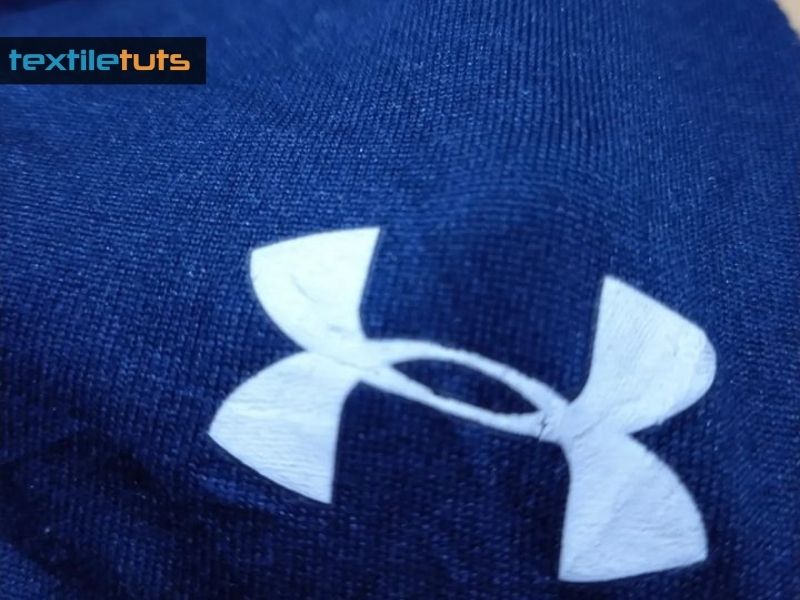
Moisture Wicking
One of the most significant properties of Under Armour fabric is its moisture-wicking ability. The fabric pulls sweat away from the body through capillary action, keeping the wearer dry and comfortable during activities. Polyester microfiber structures achieve moisture transfer rates of 0.4–0.8 m²/s when measured per standard textile testing protocols.
Breathability
Under Armour fabrics help regulate body temperature. The company designs its fabric to be breathable, allowing optimal airflow to prevent overheating while serving as heat insulation in colder conditions.
Quick Drying
In addition to moisture-wicking properties, Under Armour fabric dries rapidly. Polyester microfiber fabrics typically reach moisture removal rates of 85–90% within 30 minutes of drying, making them ideal for high-intensity workouts or activities.
Stretchability
The Under Armour fabric offers a four-way stretch construction. This flexibility—achieved through 8–12% elastane (spandex) content in performance fabrics—allows the fabric to return to its original form while enhancing mobility and maintaining shape through repeated wear cycles.
Durability
Despite being lightweight, the fabric is both durable and robust. Polyester microfiber constructions demonstrate greater than 95% tensile strength retention after 100 wash cycles, according to industry textile testing standards.
Anti-Odor Technology
Some Under Armour fabrics incorporate anti-odor technology that prevents the growth of odor-causing microbes. This helps the clothing stay fresher longer, reducing the need for frequent washing.
UV Protection
Some lines of Under Armour clothing provide built-in ultraviolet protection. UPF 50+ ratings—common in Under Armour’s sun-protection line—block 98% of UVA and UVB radiation, making the clothing suitable for outdoor activities such as running, cycling, or hiking.
Comfort
Under Armour fabric provides comfort through ultra-soft fabric systems. The brushed inner surface of fabrics like UA Tech™ creates a smooth, low-friction feel against the skin during movement.
Factors That Influence a Shirt’s Shrinkage
Shirt shrinkage occurs when fabric fibers contract permanently under exposure to heat, moisture, or mechanical agitation. While some fabrics are more susceptible than others, every textile material exhibits some degree of dimensional change under certain conditions.
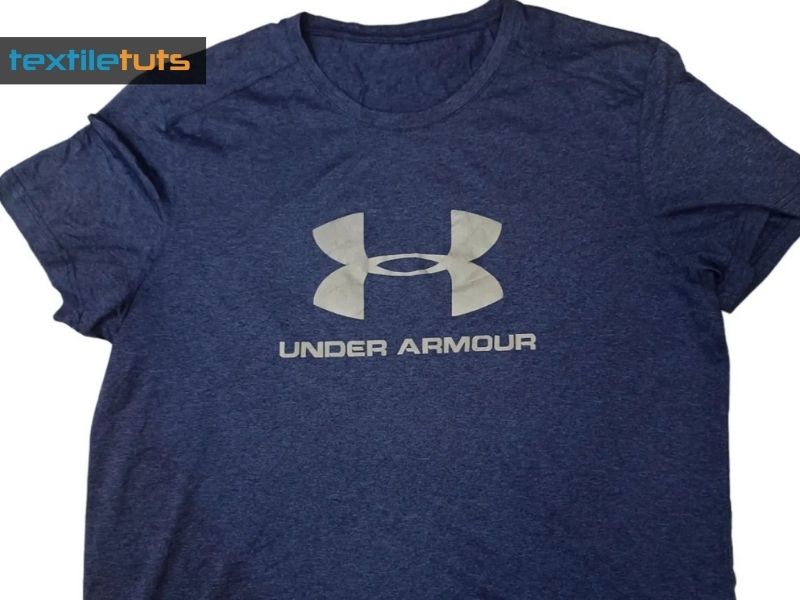
Several factors contribute to a shirt’s shrinkage: fabric type, manufacturing process, washing method, and drying technique.
Fabric Type
The fabric composition of a shirt significantly influences its shrinkage behavior. Natural fibers—cotton, wool, and linen—shrink 3–7% on first wash when exposed to hot water. Synthetic fibers like polyester and nylon exhibit less than 1% shrinkage under identical conditions. This difference occurs because natural fibers have a cellulosic structure that absorbs water, swells, and then contracts upon drying.
Manufacturing Process
The way a shirt is manufactured impacts its potential to shrink. Pre-shrunk or sanforized cotton has been treated to reduce shrinkage to less than 1% dimensional change. Non-sanforized or raw denim will shrink 5–10% on first wash. Under Armour’s Charged Cotton line uses a 60% cotton, 40% polyester blend that undergoes a pre-shrunk treatment during production.
Washing Method
How a shirt is washed directly affects shrinkage. Water temperatures above 60°C (140°F) cause cotton fibers to undergo relaxation shrinkage. Even at 40°C (104°F), repeated washing of cotton blends over many cycles can produce 2–3% cumulative shrinkage. Harsh detergents containing enzymes can accelerate the degradation of protein fibers in wool and silk.
The use of harsh detergents can weaken fabric structure, making garments more susceptible to shrinkage over time. Fabric softeners, while beneficial for some textiles, leave a silicon-based residue that impairs the moisture-wicking properties of synthetic performance fabrics.
Drying Technique
Heat is the primary driver of most shirt shrinkage, and the drying process typically involves more heat than washing. Tumble drying at temperatures above 60°C (140°F) causes additional fabric contraction beyond what washing alone produces. Even if the shirt is washed in cold water, a hot drying cycle can cause 2–4% shrinkage in cotton-containing fabrics. Line drying or flat drying eliminates this heat exposure entirely.
Age and Quality of the Garment
Over time, shirts wear down and fibers break down, making them more likely to shrink. High-quality fabrics with tighter weave or knit structures resist shrinkage better than thinner, less expensive counterparts. Under Armour’s performance fabrics undergo dimensional stability testing to ensure less than 1% change in fit after 50 wash cycles.
How to Wash and Care for Under Armour Shirts
Under Armour shirts are designed with technologies to wick away sweat and keep athletes cool during workouts. These qualities require proper care to maintain. Follow these steps to maximize the lifespan of your Under Armour garments.
Pre-Treatment
Before washing, inspect your Under Armour shirt for stains. Pre-treat stains with a stain remover designed for synthetic fabrics. Follow the stain remover manufacturer’s instructions and test on an inconspicuous area first.
Washing
Under Armour recommends washing their shirts in cold water (30°C/86°F or below) with like colors. Do not use bleach—it degrades polyester fibers and damages elastane. Turn the garment inside out before washing to protect the outer surface and preserve colors.
Detergent
Avoid laundry detergents marketed as fabric softeners or designed for delicates. These often contain silicon compounds that coat synthetic fibers and trap sweat in the fabric rather than removing it. Use a standard liquid laundry detergent at one-half to two-thirds the recommended amount for heavily soaped loads.
Washing Machine Setting
Select the gentle or delicate cycle for Under Armour shirts. The slower agitation and reduced spin speed minimize mechanical stress on elastane fibers. Remove garments promptly after the wash cycle ends to prevent creasing.
Drying
Hang Under Armour shirts to dry or tumble dry on the lowest heat setting. High heat causes elastane fibers to gradually lose their elasticity over time. Do not iron or dry clean Under Armour shirts—the heat and chemical exposure degrade the fabric’s performance properties.
Storage
Once dry, fold and store garments in a cool, dry place. Avoid bunching or compressing garments to keep them wrinkle-free. Do not store in direct sunlight, as UV exposure degrades fabric dyes and synthetic fibers.
How to Prevent Under Armour Shrinkage
Shrinkage is preventable with proper care. Follow these evidence-based steps to maintain the original fit of your Under Armour athletic wear.
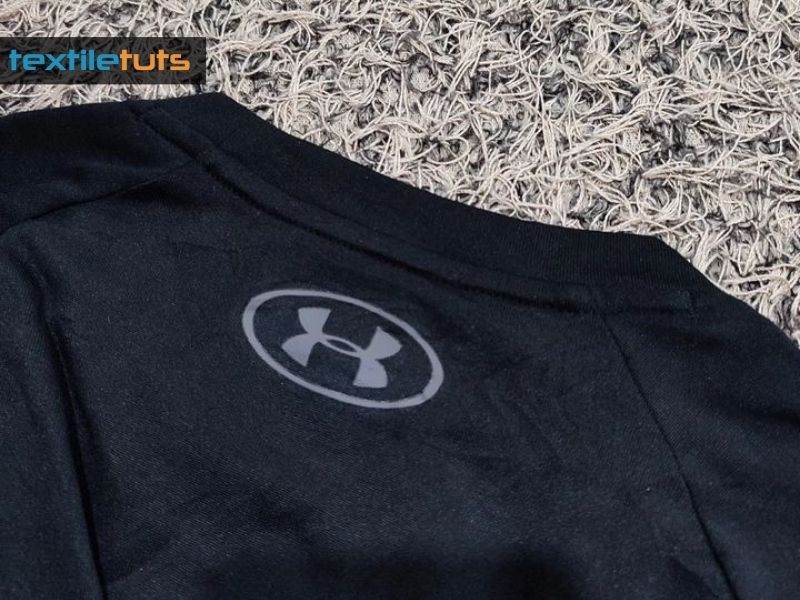
Following the Care Instructions
Under Armour clothing includes a care label with fabric-specific washing and drying temperature limits. These instructions are calibrated to the fabric’s fiber composition. The label specifies maximum permitted temperatures for washing (typically 40°C/104°F for synthetics) and drying (typically 60°C/140°F or air dry only).
Cold Water Wash
Washing in cold water (30°C/86°F or below) prevents heat-induced fiber contraction in cotton blends. Cold water effectively removes sweat and odor from polyester fabrics because sweat is water-based and does not require hot water to dissolve.
Gentle Cycle
The gentle cycle minimizes mechanical agitation that stresses elastane fibers. High-agitation cycles cause fibers to fatigue and lose recovery power, resulting in gradual dimensional change resembling shrinkage.
Do Not Iron
Under Armour’s fabric technology is engineered for comfort and moisture management—not to withstand high heat. Ironing at temperatures above 120°C (248°F) can melt polyester fibers and permanently damage elastane. If wrinkles occur, hanging the garment in a steamy bathroom resolves them without direct heat contact.
Avoid Chlorine and Bleach
Chlorine bleach degrades polyester and elastane fibers through oxidative breakdown. Always wash Under Armour clothing separately from items that require bleach. After exposure to chlorinated pool water, rinse the garment immediately in cold fresh water to remove residual chlorine.
Do Not Dry Clean
Dry cleaning uses perchloroethylene and other chemical solvents combined with heat that degrade synthetic performance fabrics. The mechanical tumbling in dry cleaning also stresses elastane fibers. Professional dry cleaning is not necessary for Under Armour’s polyester-based fabrics.
Under Armour Charged Cotton Shrinkage Behavior
Under Armour Charged Cotton is a specialized fabric line that combines the natural comfort of cotton with the performance properties of Under Armour’s moisture-wicking technology.
Under Armour states that Charged Cotton products undergo a pre-shrunk treatment during manufacturing. The fabric blend—typically 60% cotton, 40% polyester—undergoes sanforization to limit post-production shrinkage to less than 1%.
Charged Cotton retains some cotton content, so exposure to water temperatures above 60°C (140°F) can produce 2–4% shrinkage in the cotton fiber portion. The polyester component maintains its dimensions, limiting overall garment shrinkage to a lower range than pure cotton.
For optimal results, wash Charged Cotton garments in cold water and tumble dry on low heat or hang to dry. Following these guidelines preserves the pre-shrunk treatment’s effectiveness throughout the garment’s lifespan.
Under Armour Shirts Versus Uniqlo AIRism Shrinkage
Under Armour shirts and Uniqlo AIRism have different shrinkage characteristics. Uniqlo AIRism—primarily composed of 84% polyester, 9% copper oxide-infused polyester, and 7% polyurethane—exhibits minimal shrinkage due to its predominantly polyester construction. Under Armour shirts with cotton-blend fabrics can experience 2–5% shrinkage when washed improperly, whereas pure polyester Under Armour fabrics show less than 1% dimensional change.
The Claim That Under Armour Shirts Do Not Shrink
The claim that Under Armour shirts never shrink is inaccurate. Pure polyester Under Armour fabrics—like UA Tech™ (88% polyester, 12% elastane)—resist shrinkage effectively due to polyester’s dimensional stability. Cotton-blend Under Armour fabrics, including Charged Cotton variants, can shrink 2–5% when exposed to high heat. The key determinant is the fabric composition and care adherence.
Under Armour Shirts Versus Gymshark Apparel Shrinkage
Comparing Under Armour shirts to Gymshark apparel, fabric composition dictates shrinkage behavior. Gymshark’s primary fabrics—82% polyester, 18% elastane in their Softstyle line—behave similarly to Under Armour’s synthetic-heavy constructions, exhibiting less than 1% shrinkage when washed at 40°C (104°F). Under Armour shirts with higher cotton content (20–40% cotton blends) demonstrate greater shrinkage potential than Gymshark’s synthetic-dominant garments. Proper care—cold water wash, low heat dry—ensures longevity for both brands.
Final Words
Consumer reviews consistently highlight Under Armour shirts’ durability and longevity, even after multiple wash cycles. Minimal shrinkage occurs with proper care—cold water washing, low-heat drying, and avoiding bleach and high-temperature ironing. Under Armour’s use of high-quality polyester microfiber and elastane blends produces garments that maintain original dimensions through normal use.
Shrinkage concerns should not be a significant deterrent from purchasing Under Armour products. The brand’s fabric selection, including pre-shrunk treatments in cotton-blend lines, minimizes dimensional change. Proper care—following the temperature and detergent guidelines on the care label—preserves fit, color, and performance throughout the garment’s lifespan.
References
- ASTM International. (2023). ASTM D1776: Standard Practice for Conditioning and Testing Textiles. ASTM International.


