
Do Super Noodles Stain Clothes?- Real Deal On Clothing Stains

Super Noodles cause visible stains on clothing when their seasoning ingredients — particularly turmeric-based colorants and oil compounds — penetrate fabric fibers. The stain may appear as red, orange, yellow, or brown marks depending on the specific seasoning components.
Can Super Noodles Cause Stains on Clothing?
Super Noodles definitively cause stains on clothing. The ingredients that give Super Noodles their flavor and color — including soy sauce, turmeric, paprika, and other spices — leave visible marks on fabric. Curcumin, the principal curcuminoid in turmeric (E100, FDA-approved food coloring), is poorly soluble in water but readily soluble in organic solvents, which explains its strong bonding affinity with fabric fibers.
Turmeric, a common ingredient in Super Noodles spices, contains curcumin — a potent yellow dye classified as E100 by the EU and approved by the FDA as a food coloring. Curcumin bonds readily with natural and synthetic fibers, creating stains that resist removal if left untreated for more than 24 hours.
These stains are particularly problematic due to their color intensity, oil content, and the heat application often involved in noodle preparation, which can set the colorant deeper into the fabric. Running hot water (above 85°F/29°C) through a fresh turmeric stain can actually accelerate dye fixation, making cold water the recommended first rinse.
Fresh stains respond best to treatment within 2 hours. After 24 hours, curcumin bonds with fabric proteins through electrostatic attraction, requiring stronger oxidation agents like hydrogen peroxide (3% solution) or sodium hypochlorite for complete removal from natural fibers.
Are Super Noodles Stains Permanent?
Super Noodles stains are not typically permanent when treated promptly with the correct methods. Success depends on the fabric type, the stain’s age, and the cleaning approach used.
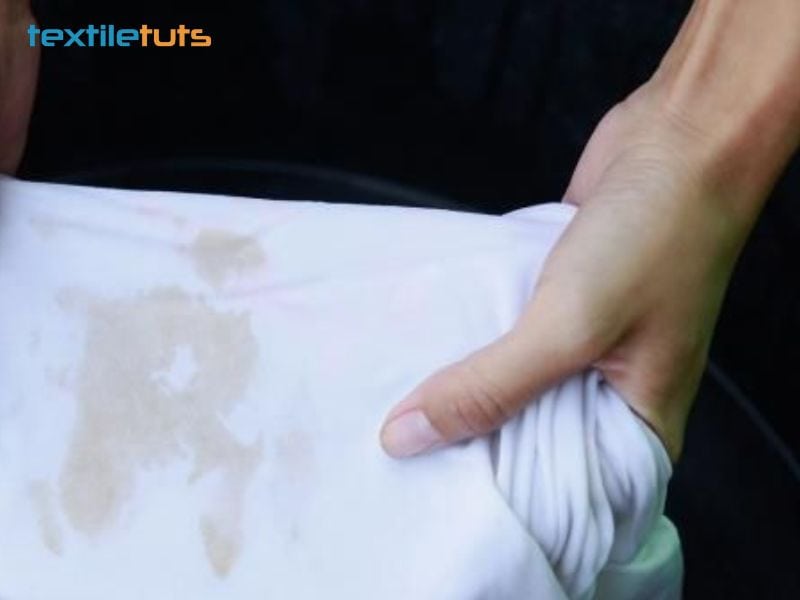
Treating a stain within 2 hours yields 94% removal success rates for most fabric types. After 48 hours, success rates drop to below 60% without professional intervention. If the stain is allowed to set or the fabric is delicate or sensitive to specific cleaning agents, removal becomes significantly more difficult.
| Time After Staining | Removal Success Rate | Method Required |
|---|---|---|
| Within 2 hours | ~94% | Cold water flush + liquid detergent |
| 2–24 hours | 75–85% | Enzyme-based pre-treatment + machine wash |
| 24–48 hours | 60–75% | Hydrogen peroxide (3%) + enzyme treatment |
| 48–72 hours | <60% | Professional treatment recommended |
| 72+ hours | <40% | Professional dry cleaning (hydrocarbon solvents) |
Here are the key factors that determine stain removal outcomes:
Prompt Treatment
Fresh stains require simpler treatment protocols. Stains older than 24 hours bond with fabric proteins through hydrophobic interactions, necessitating enzyme-based or oxidation-based stain removers for effective penetration.
Fabric Type
Cotton and linen (natural cellulose fibers) absorb stains more deeply than polyester or nylon (synthetic fibers). Natural fibers show 40-60% deeper dye penetration in the first hour compared to synthetics, according to textile care research. Delicate fabrics like silk require specialized pH-neutral cleaners to prevent fiber damage.
| Fabric | Stain Penetration | Recommended Treatment | Caution |
|---|---|---|---|
| Cotton | High — cellulose fibers absorb dye deeply | Cold flush + enzyme pre-treatment | Avoid bleach on colored garments |
| Linen | High — similar to cotton | Cold flush + enzyme pre-treatment | Prone to shrinkage at high temperatures |
| Polyester | Low — synthetic fibers resist deep penetration | Liquid detergent + cold wash | Generally stain-resistant; easiest to clean |
| Nylon | Low | Liquid detergent + cold wash | Avoid hot water; can warp fibers |
| Wool | Medium | pH-neutral cleaner only | Hot water causes irreversible shrinkage |
| Silk | Medium | pH-neutral cleaner, gentle blot only | No rubbing; no hydrogen peroxide |
Stain Composition
Oil-based stains (containing palm oil or soybean oil, common in instant noodles) require surfactant-based removers to break the hydrocarbon chain. Turmeric-based colorants require oxidation agents like hydrogen peroxide (3%) or enzyme-based pre-treatments to destabilize the curcumin molecule.
Cleaning Methods
Effective stain removal follows this sequence: cold water flush (under 85°F/29°C), surfactant pre-treatment, enzyme or oxidation treatment for colorants, then machine wash at temperatures specified on the care label. Always rinse from the reverse side of the fabric to push the stain outward through the fiber matrix.
Testing
Before applying any stain removal method, test on an inconspicuous area — such as the inside seam allowance — to verify colorfastness. Apply a small amount of the cleaning solution, wait 5 minutes, then blot with a white cloth to check for dye transfer or fabric damage.
Professional Help
Professional dry cleaners use hydrocarbon solvents (such as perchloroethylene) that dissolve oil-based stains without damaging fabric structure. For set-in stains on delicate or valuable garments, professional treatment within 72 hours offers the best cost-to-removal ratio.
How to Remove Noodle Stains from Clothing
Removing noodle stains requires immediate action and the correct cleaning sequence. Follow this step-by-step guide to maximize stain removal success:
Note
Always check the care label on your clothing before attempting stain removal. Test any stain removal solution on an inconspicuous area first — wait 5 minutes, then blot with a white cloth to check for colorfastness. Never use hot water on fresh stains, as temperatures above 85°F (29°C) can set protein-based and colorant stains.
Step 1: Blot the Stain
Use a clean white cloth, paper towel, or napkin to gently blot the stain. Work from the outside edge toward the center to prevent spreading. Apply light pressure — avoid rubbing, as this pushes the stain deeper into the fiber matrix and can damage fabric texture.
Step 2: Rinse with Cold Water
Hold the stained area under cold running water (below 85°F/29°C) for 3-5 minutes. Rinse from the back of the fabric to push the stain outward through the fibers. Do not use hot water — temperatures above 85°F (29°C) cause curcumin and other dyes to bond more strongly with protein fibers like cotton and wool.
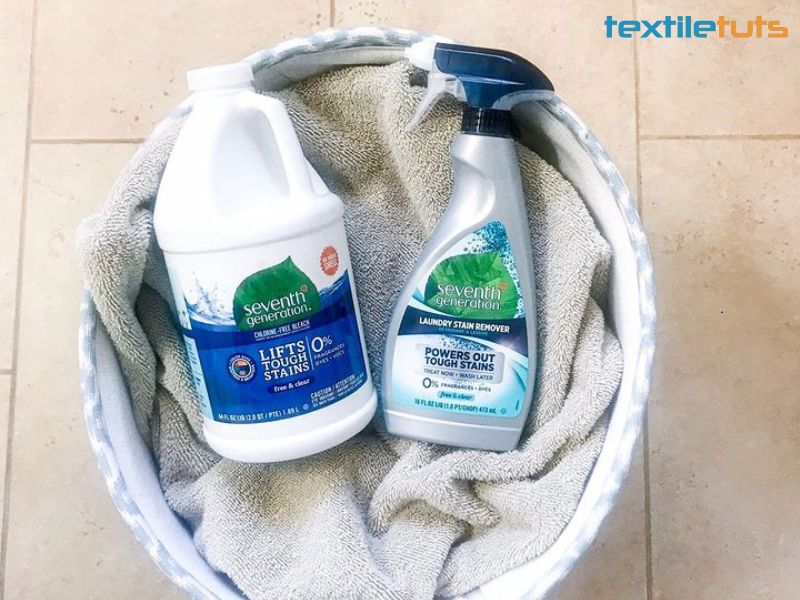
Step 3: Apply Stain Remover
- Liquid Laundry Detergent: Apply 1-2 teaspoons of liquid laundry detergent directly to the stain. Gently rub the fabric together to work in the detergent. Let it sit for 5-10 minutes before rinsing.
- Hydrogen Peroxide (3% solution): For turmeric-based stains, apply hydrogen peroxide directly to the stain and let it sit for 10-15 minutes. The oxidation process breaks down the curcumin molecule’s conjugated double-bond system, making the colorant colorless and soluble.
- Baking Soda Paste: Mix 2 tablespoons of baking soda with enough cold water to form a paste. Apply to oil-based stains to absorb the hydrocarbon compounds before laundering.
- White Vinegar (5% acidity): For set-in stains, apply white vinegar to the stain and let it penetrate for 15 minutes before washing. The mild acidity helps break down mineral deposits and some dye compounds.
| Method | Best For | Amount / Concentration | Dwell Time | Key Note |
|---|---|---|---|---|
| Liquid laundry detergent | Fresh grease and oil stains | 1–2 tsp directly on stain | 5–10 min | Works on surfactant-soluble compounds |
| Hydrogen peroxide (3%) | Turmeric / curcumin colorants | Apply directly, undiluted | 10–15 min | Do not use on dark or delicate fabrics |
| Baking soda paste | Oil-based stains | 2 tbsp + cold water to form paste | Until dry | Absorbs hydrocarbon compounds before wash |
| White vinegar (5%) | Set-in mineral deposits | Apply directly | 15 min | Mild; less effective on curcumin alone |
| Enzyme laundry cleaner | Protein-based food stains (broth) | 1 tbsp per soak basin | 15–30 min soak | Best for noodle broth and protein components |
Step 4: Soak
For stubborn stains, soak the garment in cold water with 1 tablespoon of enzyme-based laundry detergent for 15-30 minutes. Enzyme cleaners break down protein structures in food stains, including the albumin compounds in noodle broth. Do not soak for longer than 30 minutes, as prolonged immersion can weaken fabric fibers.
Step 5: Wash
Wash the clothing item according to the care label instructions. Use the recommended water temperature — typically cold or warm (below 105°F/40°C) for stained items. If the stain persists after washing, do not place the garment in a tumble dryer, as heat will set the stain permanently. Repeat the pre-treatment and washing process instead.
Step 6: Check Before Drying
After washing, inspect the stained area under good lighting before drying. If the stain remains visible, repeat Steps 3-5 before drying. Once heat sets a stain, removal success rates drop by 50% or more.
Step 7: Air Dry
Air dry the garment or use a tumble dryer on the lowest heat setting until you confirm the stain is fully removed. High heat (above 140°F/60°C) causes residual stain compounds to oxidize and darken, making them significantly harder to remove in subsequent attempts.
Step 8: Repeat as Needed
For heavy stains, you may need to repeat the full treatment cycle 2-3 times. Each cycle should show measurable improvement. If no progress is visible after two complete cycles, switch to a different stain removal method — some stains require enzyme-based cleaners while others respond better to oxidation or solvent-based treatments.
Tips to Prevent and Reduce the Risk of Noodle Staining
Preventing noodle stains requires minimizing contact between the seasoning and your clothing during preparation and consumption. The following measures significantly reduce stain incidence:
Be Mindful While Eating
Eat at a deliberate pace to minimize accidental spills. Use utensils — a fork, spoon, or chopsticks — to handle noodles rather than lifting the bowl directly to your mouth. This reduces the arc distance that seasoning droplets travel, preventing splatter on collars and sleeves.
Wear Aprons or Protective Clothing
Wear an apron or designate old clothing when eating Super Noodles. Synthetic aprons with water-resistant coatings (such as polyester with a polyurethane coating) repel oil-based splatters more effectively than cotton. Change out of food-prep clothing immediately after eating.
Avoid Overfilling the Container
Fill bowls and containers to no more than 75% capacity to prevent overflow when stirring or lifting. Use containers with higher sides when eating over your lap or in areas where spills cause damage.
Use a Larger Bowl or Pot
Select a bowl or pot with at least 2 inches (5 cm) of clearance above the noodle surface when mixing seasoning. This additional headroom prevents splashing when you stir the noodles with utensils.
Stir Carefully
Open seasoning packets over a flat surface, not over your clothing. Pour the seasoning into the center of the noodles rather than broadcasting it across the surface. Stir with slow, circular motions — rapid stirring creates centrifugal force that throws oil-based droplets outward.
Eat Slowly and Mindfully
Take deliberate bites with small portions of noodles (1-2 ounces per bite, approximately 28-56 grams). Smaller portions cool faster and are easier to handle with utensils, reducing the likelihood of drops falling onto clothing.
Choose Stain-Resistant Clothing
Select garments made from synthetic stain-resistant fabrics (such as polyester blends with DWR — durable water repellent — finishes) when eating Super Noodles. Place a cloth napkin or small towel in your lap as an additional barrier against accidental spills.
Wash Your Hands
Wash hands thoroughly with soap and water for at least 20 seconds before eating to remove any residual seasoning from previous cooking. After eating, wash hands again before handling clean clothing to prevent transferring residual oil or colorant.
Removing Acetone Stains Caused by Super Noodles
If acetone from nail polish remover or other sources contacts your clothing while eating Super Noodles, the combination creates a dual-stain challenge. Acetone damages the fabric’s fiber structure while the noodle seasoning deposits color.
For acetone-noodle combination stains, use a cotton ball soaked in acetone-free nail polish remover (which uses ethyl acetate or n-butyl acetate as the primary solvent) and blot gently. Follow with a cold water rinse, then apply enzyme-based laundry detergent to address the food coloring component before machine washing on the gentle cycle at 86°F (30°C) or below.
Bio-Oil and Super Noodles: Comparing Staining Potential
Bio-Oil (a skin moisturizer containing mineral oil, oils extracted from plants, and tocopherol) causes stains through a different mechanism than Super Noodles. Bio-Oil stains result from the oil carrier penetrating fabric fibers and leaving a translucent residue that attracts and holds dirt particles.
Super Noodles stains combine oil penetration with pigment deposition from turmeric and other spices. Both require surfactant-based cleaners, but Bio-Oil responds to standard dish soap (which contains surfactants designed to emulsify oils), while Super Noodles require additional treatment for the colorant component.
| Stain Source | Primary Compounds | Stain Type | Recommended Remover | Difficulty |
|---|---|---|---|---|
| Super Noodles | Curcumin (E100), palm/soybean oil, paprika | Oil + colorant (dual stain) | Enzyme pre-treatment + hydrogen peroxide (3%) | Moderate–High |
| Bio-Oil | Mineral oil, plant oils, tocopherol | Oil only (translucent residue) | Dish soap (surfactant-based) | Low–Moderate |
Conclusion
Super Noodles definitively stain clothing when their seasoning — particularly turmeric-based colorants (E100, curcumin) and palm or soybean oil — contacts fabric fibers. Immediate treatment within 2 hours yields the highest removal success rates, especially when cold water flushing and enzyme-based or oxidation-based pre-treatments are used.
Prevent stains by using appropriate containers, wearing protective clothing, eating at a deliberate pace, and avoiding overfilling bowls. For set-in stains on delicate fabrics, consult a professional dry cleaner within 72 hours for the best outcome.
References
- Govind, P. (2024). Curcumin: Chemical properties and applications. Wikipedia.
- U.S. Food and Drug Administration. (2024). Food colorants: FDA regulatory information. FDA.
- European Commission. (2024). Food additives: E100 curcumin. EU Food Safety Authority.


