
5 Best T Shirts for Tie Dye in 2024

PROS:
- Broadbent, A. D. (2001). Basic Principles of Textile Coloration. Society of Dyers and Colourists.
- Choudhury, A. K. R. (2006). Textile Preparation and Dyeing. Science Publishers.
- Chakraborty, J. N. (2010). Fundamentals and Practices in Colouration of Textiles. Woodhead Publishing India.
- Material: 100% cotton
- Quantity: A set of six cotton t-shirts
- Color Availability: White, black, grey, light blue, and other color blends
- Style: Tucked crew shirt
- Sizes Availability: 8 different sizes
- Absorbency: High — cotton cellulose delivers uniform dye uptake across the fabric surface
- Material: 100% Cotton
- Quantity: A set of four t-shirts
- Color Availability: Plain white t-shirt for tie-dye
- Style: Crew neck
- Sizes Availability: Small, Medium, Large, X-Large
- Absorbency: Supreme — cotton with FreshIQ technology maintains fiber softness for optimal dye uptake
- Material: 100% ring-spun cotton
- Quantity: A set of six t-shirts
- Color Availability: White and black
- Style: Crew neck
- Sizes Availability: 5 different sizes
- Absorbency: Moderate — ring-spun cotton produces a tighter weave with even dye distribution
- Material: 100% cotton jersey
- Quantity: A set of six t-shirts
- Color Availability: White, black, and other color bundles
- Style: V-neck
- Sizes Availability: 5 different sizes
- Absorbency: Supreme — jersey knit structure retains dye with minimal bleeding
- Broadbent, A. D. (2001). Basic Principles of Textile Coloration. Society of Dyers and Colourists.
- Choudhury, A. K. R. (2006). Textile Preparation and Dyeing. Science Publishers.
- Chakraborty, J. N. (2010). Fundamentals and Practices in Colouration of Textiles. Woodhead Publishing India.
-
Super soft comfort
-
100% cotton material
-
Breathable
-
Available in various colors and sizes
-
Lay flat double stitched collar
-
Affordable
-
Long-lasting
-
Machine washable
-
100% premium jersey cotton
- Material: 100% cotton
- Quantity: A set of three cotton t-shirts
- Color Availability: Black and plain white shirts for tie-dye
- Style: Crew neck
- Sizes Availability: 10 different sizes
- Absorbency: Superior — cotton cellulose fibers absorb up to 8.5 times their weight in water
- Material: 100% cotton
- Quantity: A set of six cotton t-shirts
- Color Availability: White, black, grey, light blue, and other color blends
- Style: Tucked crew shirt
- Sizes Availability: 8 different sizes
- Absorbency: High — cotton cellulose delivers uniform dye uptake across the fabric surface
- Material: 100% Cotton
- Quantity: A set of four t-shirts
- Color Availability: Plain white t-shirt for tie-dye
- Style: Crew neck
- Sizes Availability: Small, Medium, Large, X-Large
- Absorbency: Supreme — cotton with FreshIQ technology maintains fiber softness for optimal dye uptake
- Material: 100% ring-spun cotton
- Quantity: A set of six t-shirts
- Color Availability: White and black
- Style: Crew neck
- Sizes Availability: 5 different sizes
- Absorbency: Moderate — ring-spun cotton produces a tighter weave with even dye distribution
- Material: 100% cotton jersey
- Quantity: A set of six t-shirts
- Color Availability: White, black, and other color bundles
- Style: V-neck
- Sizes Availability: 5 different sizes
- Absorbency: Supreme — jersey knit structure retains dye with minimal bleeding
- Broadbent, A. D. (2001). Basic Principles of Textile Coloration. Society of Dyers and Colourists.
- Choudhury, A. K. R. (2006). Textile Preparation and Dyeing. Science Publishers.
- Chakraborty, J. N. (2010). Fundamentals and Practices in Colouration of Textiles. Woodhead Publishing India.
- Material: 100% cotton
- Quantity: A set of six cotton t-shirts
- Color Availability: White, black, grey, light blue, and other color blends
- Style: Tucked crew shirt
- Sizes Availability: 8 different sizes
- Absorbency: High — cotton cellulose delivers uniform dye uptake across the fabric surface
- Material: 100% Cotton
- Quantity: A set of four t-shirts
- Color Availability: Plain white t-shirt for tie-dye
- Style: Crew neck
- Sizes Availability: Small, Medium, Large, X-Large
- Absorbency: Supreme — cotton with FreshIQ technology maintains fiber softness for optimal dye uptake
- Material: 100% ring-spun cotton
- Quantity: A set of six t-shirts
- Color Availability: White and black
- Style: Crew neck
- Sizes Availability: 5 different sizes
- Absorbency: Moderate — ring-spun cotton produces a tighter weave with even dye distribution
- Material: 100% cotton jersey
- Quantity: A set of six t-shirts
- Color Availability: White, black, and other color bundles
- Style: V-neck
- Sizes Availability: 5 different sizes
- Absorbency: Supreme — jersey knit structure retains dye with minimal bleeding
- Broadbent, A. D. (2001). Basic Principles of Textile Coloration. Society of Dyers and Colourists.
- Choudhury, A. K. R. (2006). Textile Preparation and Dyeing. Science Publishers.
- Chakraborty, J. N. (2010). Fundamentals and Practices in Colouration of Textiles. Woodhead Publishing India.
-
Super soft comfort
-
100% cotton material
-
Breathable
-
Available in various colors and sizes
-
Lay flat double stitched collar
-
Affordable
-
Long-lasting
-
Machine washable
-
100% premium jersey cotton
- Material: 100% cotton
- Quantity: A set of three cotton t-shirts
- Color Availability: Black and plain white shirts for tie-dye
- Style: Crew neck
- Sizes Availability: 10 different sizes
- Absorbency: Superior — cotton cellulose fibers absorb up to 8.5 times their weight in water
- Material: 100% cotton
- Quantity: A set of six cotton t-shirts
- Color Availability: White, black, grey, light blue, and other color blends
- Style: Tucked crew shirt
- Sizes Availability: 8 different sizes
- Absorbency: High — cotton cellulose delivers uniform dye uptake across the fabric surface
- Material: 100% Cotton
- Quantity: A set of four t-shirts
- Color Availability: Plain white t-shirt for tie-dye
- Style: Crew neck
- Sizes Availability: Small, Medium, Large, X-Large
- Absorbency: Supreme — cotton with FreshIQ technology maintains fiber softness for optimal dye uptake
- Material: 100% ring-spun cotton
- Quantity: A set of six t-shirts
- Color Availability: White and black
- Style: Crew neck
- Sizes Availability: 5 different sizes
- Absorbency: Moderate — ring-spun cotton produces a tighter weave with even dye distribution
- Material: 100% cotton jersey
- Quantity: A set of six t-shirts
- Color Availability: White, black, and other color bundles
- Style: V-neck
- Sizes Availability: 5 different sizes
- Absorbency: Supreme — jersey knit structure retains dye with minimal bleeding
- Broadbent, A. D. (2001). Basic Principles of Textile Coloration. Society of Dyers and Colourists.
- Choudhury, A. K. R. (2006). Textile Preparation and Dyeing. Science Publishers.
- Chakraborty, J. N. (2010). Fundamentals and Practices in Colouration of Textiles. Woodhead Publishing India.
CONS:
How to Select the Best Blank Tie-Dye Shirts
Material
The material of tie-dye shirts depends on your preference, but 100% cotton is the clear winner. Cotton cellulose fibers absorb up to 8.5 times their weight in water, creating the level, uniform dye uptake that produces professional-quality tie-dye patterns.
If you choose a polyester-cotton blend, ensure the polyester portion stays below 10%. Polyester fibers do not absorb the fiber reactive dyes that work on cotton — they only take all-purpose dyes, which produce washed-out results with poor wash fastness.
Absorbency
Uniform absorbency in the dyeing medium determines the levelness of your color effect. The depth of shade — how dark or light the final color appears — depends heavily on this property.
Ring-spun cotton delivers superior absorbency over open-end cotton because the tighter yarn structure creates more capillary action, drawing dye deeper into the fiber. Fabrics with low absorbency produce splotchy, uneven patterns that fade rapidly.
Non-absorbent t-shirts cause discomfort through poor moisture management. The fabric clings to damp skin instead of wicking perspiration away — a critical flaw during summer wear or active use.
Shrinkage and Pilling Properties
Low-quality shirts deteriorate after minimal laundering, becoming unwearable after a handful of wash cycles. Shrinkage occurs when manufacturers skip the heat-setting and compacting steps that stabilize fabric dimensions.
Pilling — the formation of small fabric balls on the surface — develops from low-quality short-staple fibers rubbing against each other during laundering. Pilling degrades appearance and reduces comfort significantly.
Pre-shrunk garments maintain stable dimensions through the industry standard of ±3–5% shrinkage tolerance. Quality blank t-shirts from established brands like Hanes and Gildan consistently meet this specification.
Machine Washable
Machine Washable T-Shirts
Machine-washable t-shirts simplify long-term care significantly. While not a mandatory attribute, it substantially reduces the maintenance burden for high-volume tie-dye artists who launder dozens of shirts at a time.
Color Variability
If you have a specific background color in mind, choose colored t-shirts accordingly. However, you must account for the effect of color combination before formulating your final recipe — the existing color will interact with your dye to produce a third, often unexpected hue.
Mastering color theory allows you to skip bleaching white shirts and save significant dye quantities. A pre-dyed shirt requires far less dye than a white shirt because the base color contributes to the final shade.
Price
Opt for products that come in multi-packs to maximize value. Bulk purchasing reduces per-unit cost by 30–50% compared to single-shirt retail prices. However, suspiciously low-priced bulk lots typically lack mechanical finishing — heat-setting and compacting — which directly causes the shrinkage, bowing, and premature failure you want to avoid.
Budget-conscious buyers should target the $8–15 per shirt range for quality blanks with pre-shrunk construction, ring-spun cotton, and properly finished seams. Anything below $5 per shirt in bulk signals omitted finishing processes.
Frequently Asked Questions
What are the best t-shirts for tie-dye?
The best t-shirts for tie-dye feature maximum absorbency in the aqueous dye medium, producing level shades without splotchy patches. This property alone determines your satisfaction with the finished result.
T-shirts that maintain stable dimensions after machine washing avoid the distortion that renders a shirt unwearable. Based on these two critical factors, any of the five products in this review delivers reliable results.
Can I use colored t-shirts for tie-dye?
Yes, you can tie-dye colored t-shirts. Understanding dye color mixing reveals which colors to add and in what proportion to achieve your desired shade — though the calculation is complex.
The most reliable method is to bleach the shirt first, removing the existing color to create a white base. Be aware that bleaching reduces fabric tensile strength by up to 20%, and soda ash for fixing tie-dyes further compromises fiber integrity with repeated use.
Can I wash multiple tie-dye shirts together?
Washing multiple tie-dye shirts together is not recommended, especially in warm water. Excessive color bleeding stains and distorts adjacent patterns. The issue compounds when detergent is present, which emulsifies loose dye particles.
If you must launder multiple shirts simultaneously, use cold water and mild soap. Dark shades bleed less than bright colors — orange, pink, and turquoise are the most notorious for cross-contamination.
Can you tie-dye a grey shirt?
Yes, grey shirts accept tie-dye effectively. The final result depends entirely on your chosen colors — select high-contrast hues like pink, turquoise, or lime green for maximum visual impact on a grey base.
What color shirts can you tie-dye?
White shirts are the obvious choice, but any light or bright shade works. The contrast between the base color and the dye determines how vivid the final pattern appears — lighter bases yield the most satisfying outcomes.
What do you use to tie-dye a shirt?
For cotton shirts, use fiber reactive dyes — the gold standard for cellulose fibers. For nylon or wool, use acid dyes. For polyester, use dispersed dyes.
For cotton, the primary auxiliaries are salt (for dye exhaustion) and alkali — typically soda ash — for dye fixation. Salt at 5–10% of fabric weight drives dye onto the fiber during the absorption phase.
Soda ash (sodium carbonate) raises the dye bath pH to 10–11, activating cellulose hydroxyl groups so they form covalent bonds with the dye molecules. Without soda ash, fiber reactive dyes wash out completely within a few cycles.
During wash-off, use soap to disperse unfixed dyes — avoid detergents, which weaken the dye-fiber bond. Required accessories include rubber bands, a bucket, gloves, and a wooden spoon for stirring.
What is the best t-shirt brand for tie-dye?
Hanes ranks highest for its combination of absorbency, color permanency, dye levelness, pilling resistance, and affordable pricing. Gildan Platinum is a close second, particularly for ring-spun cotton applications.
Are Gildan Heavy Cotton T-Shirts Good for Tie-Dye?
Gildan Heavy Cotton t-shirts are suitable for tie-dye because the high cotton content resists fraying and stretching during the dyeing process. The heavier fabric weight (approximately 6 oz/yd²) absorbs more dye per shirt, producing deeper, more saturated colors.
Gildan heavy cotton shrinks by approximately 3–5% after the first wash — a predictable and manageable amount if you account for it during sizing. Pre-wash the shirts in hot water before dyeing to stabilize dimensions.
The heavier construction also means more dye is required per shirt — budget for approximately 1.5× the dye quantity used for lightweight tees.
Final Words
These five t-shirts represent the best options for tie-dye projects based on material quality, absorbency, dimensional stability, and value.
Select the shirt that matches your specific needs — Hanes for maximum softness and dye absorbency, Fruit of the Loom for multi-color projects, Gildan Platinum for durability and color permanency, or the Gildan V-Neck for style-conscious layering.
Gildan blank t-shirts include a sewn brand label, but extensive testing confirms it does not cause irritation during wear. If you prefer to remove it, cut it out carefully before dyeing to avoid snagging the fabric.
References
Ring-spun cotton — used in premium Hanes tees — rotates yarn up to 30% more times than open-end spinning, producing a significantly softer, smoother fabric with higher absorbency. The resulting surface accepts dye more evenly, producing cleaner patterns with sharper color transitions.
Cotton fibers withstand multiple wash cycles without degrading, maintaining fabric integrity and color vibrancy over years of use. The tag-free collar eliminates neck irritation, making these comfortable enough for all-day wear under workwear or as standalone pieces.
When tie-dyeing with fiber reactive dyes — the gold standard for cellulose fibers — cotton holds color permanently at 190°F (87°C) or higher. The dye forms a covalent bond with the hydroxyl groups in cellulose, producing wash-fastness ratings that exceed 4–5 on the grey scale after proper fixation. The pre-shrunk construction ensures the hem stays tucked and stable after laundering.
You can use these t-shirts with a wide range of colors and fabric paints with equal success.
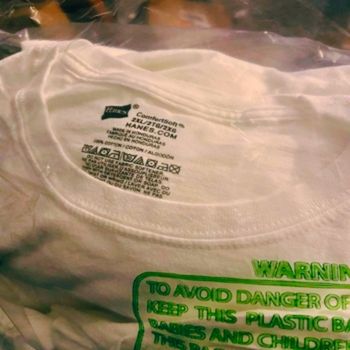
The anti-shrink formula and premium spun cotton provide elasticity and lasting comfort. These factors make Hanes one of the best black t-shirts for tie-dye as well.
PROS:
CONS:
2. Fruit of the Loom Men’s Stay Tucked Crew T-Shirt
Features
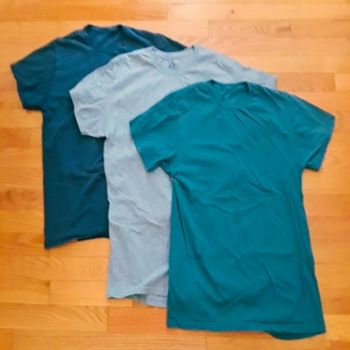
Fruit of the Loom crew t-shirts distribute multiple color spectrums and sizes with consistent results. Unlike Hanes, this brand lets you work beyond white t-shirts — you can tie-dye on solid colors to accentuate dye patterns with striking contrast.
White cotton t-shirts produce the best results for ombre dyes, bright hues, and shadowed colors. Dark t-shirts excel when tinted colors are applied over a deep base. White fabrics also absorb black dyes most effectively, yielding true black tones rather than grey.
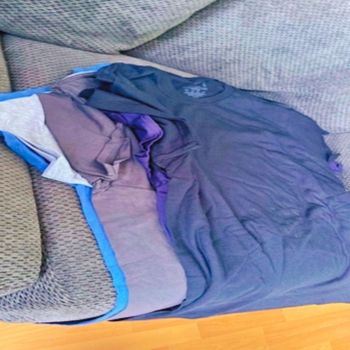
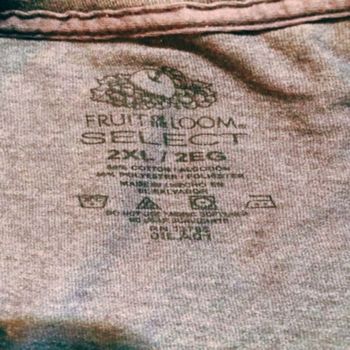
The 100% cotton construction combats moisture build-up while maintaining breathability. It resists shrinkage after multiple washes when laundered correctly: machine wash in a warm gentle cycle, add non-chlorine bleach as needed, tumble dry on low heat, and use a cool iron if required.
The tag-free design ensures comfort throughout the day. For winter layering, style it under a hoodie or full-sleeve coat. During summer, it functions as lightweight bottom clothing that won’t trap heat.
A lay-flat double-stitched collar maintains its shape through repeated laundering, preventing the stretching and distortion that plagues lower-quality tees after a dozen wash cycles.
PROS:
CONS:
3. Hanes Men’s 4-Pack FreshIQ Odor Control Crew T-Shirts, White
Features
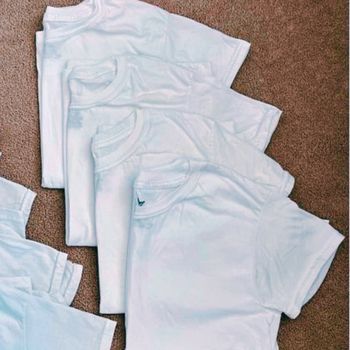
The Hanes Men’s 4-Pack FreshIQ builds on Hanes’ core cotton craftsmanship with a notable upgrade: FreshIQ odor control technology. This innovation inhibits odor-causing bacteria for all-day freshness — a meaningful benefit when wearing freshly tie-dyed shirts in warm weather.
The bundle includes 4 crew t-shirts in basic white, perfect for bright clothes dyes, ombres, and tonal shades. Screen printing is equally viable on these tees, making them versatile canvases for both dye work and t-shirt printing.
These tees excel as standalone pieces — not just as underlayers. The 100% cotton construction means you can dye them without the constraint of hiding results under other clothing. Tag-free collars prevent irritation during extended wear.
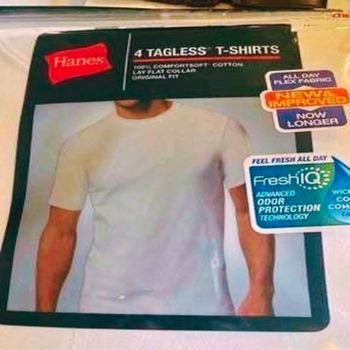
The pre-shrunk fabric ensures seamless fitting after laundering — your hemlines stay true to size and shape through the garment’s lifespan. Pair these with transfer paper or fabric paints to expand your creative options beyond dye.
Anti-odor properties keep these shirts fresh even after prolonged wear in heat, making them a practical choice for festival seasons and outdoor events.
PROS:
CONS:
4. Gildan Platinum Men’s Crew T-Shirts
Features
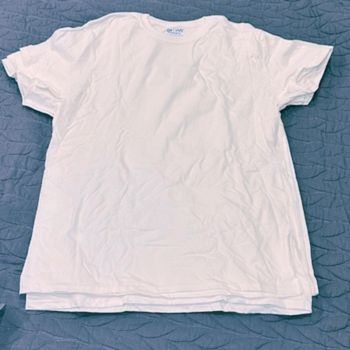
Gildan Platinum sets itself apart with high pigment permanency — the dye bonds to ring-spun cotton fibers at a molecular level, creating wash-fastness that outperforms open-end cotton by 2–3 grey scale ratings. The 100% ring-spun cotton construction delivers exceptional durability against repeated laundering.
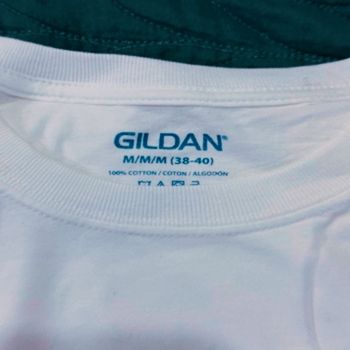
The pre-shrunk quality retains original dimensions through dozens of wash cycles — your hemlines, sleeves, and body width stay true to size. Sealed neck and shoulder seams eliminate the raw-edge irritation common in lesser-quality bulk blanks.
Ring-spun cotton’s tighter fiber alignment produces a smoother, more uniform surface than open-end cotton. This translates to cleaner dye patterns with sharper color boundaries and fewer bald spots where dye fails to penetrate.
The breathable weave manages moisture effectively, preventing the damp, uncomfortable feel that plague synthetic blends after extended wear.
Gildan Platinum crew t-shirts provide a cost-effective solution for both regular wear and customization projects — wear them blank, dye them boldly, or print custom graphics with equal success.
PROS:
CONS:
5. Gildan Men’s V-Neck T-Shirts Multipack
Features
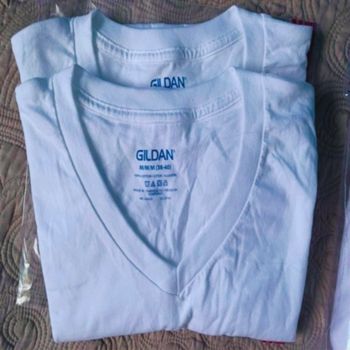
Gildan’s V-neck t-shirts arrive in a set of six color variants. You can select 4 or 5 t-shirts per set if fewer colors are preferred.
The tubular rib collar ensures lasting stretch recovery — it bounces back to its original shape after repeated pulling, maintaining the V-neck silhouette through months of wear and laundering.
For winter styling, these tees pair exceptionally well under leather jackets or layered with flannels. The rib collar sits cleanly without bunching beneath outer layers.
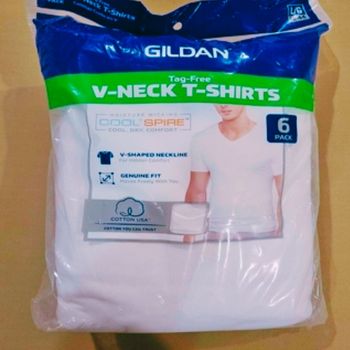
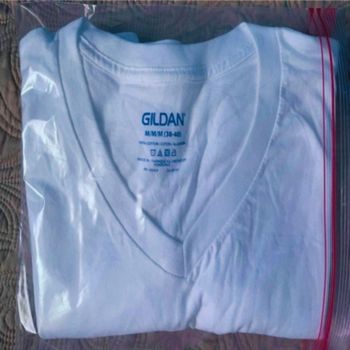
The 100% cotton jersey construction provides quick color absorbency and elasticity. Jersey fabric’s knit structure creates moderate stretch — approximately 15–20% crosswise — without requiring blended synthetics.
Jersey fabrics are denser than woven cottons, which means dye penetrates more slowly but holds color with less bleeding. The trade-off is that jersey requires careful handling during the dye fixation process to prevent uneven patches.
Unlike woven cottons, jersey does not tolerate re-dyeing gracefully — undoing dye from cotton jersey is significantly more difficult than from woven fabrics. Once the dye is set, it is permanent. Plan your color scheme carefully before applying dye to jersey.
Machine wash these t-shirts on a gentle cycle with cold water to preserve both the garment shape and your dye pattern. Avoid high-heat tumble drying, which can cause shrinkage of up to 5% in untreated jersey.
PROS:
CONS:
How to Select the Best Blank Tie-Dye Shirts
Material
The material of tie-dye shirts depends on your preference, but 100% cotton is the clear winner. Cotton cellulose fibers absorb up to 8.5 times their weight in water, creating the level, uniform dye uptake that produces professional-quality tie-dye patterns.
If you choose a polyester-cotton blend, ensure the polyester portion stays below 10%. Polyester fibers do not absorb the fiber reactive dyes that work on cotton — they only take all-purpose dyes, which produce washed-out results with poor wash fastness.
Absorbency
Uniform absorbency in the dyeing medium determines the levelness of your color effect. The depth of shade — how dark or light the final color appears — depends heavily on this property.
Ring-spun cotton delivers superior absorbency over open-end cotton because the tighter yarn structure creates more capillary action, drawing dye deeper into the fiber. Fabrics with low absorbency produce splotchy, uneven patterns that fade rapidly.
Non-absorbent t-shirts cause discomfort through poor moisture management. The fabric clings to damp skin instead of wicking perspiration away — a critical flaw during summer wear or active use.
Shrinkage and Pilling Properties
Low-quality shirts deteriorate after minimal laundering, becoming unwearable after a handful of wash cycles. Shrinkage occurs when manufacturers skip the heat-setting and compacting steps that stabilize fabric dimensions.
Pilling — the formation of small fabric balls on the surface — develops from low-quality short-staple fibers rubbing against each other during laundering. Pilling degrades appearance and reduces comfort significantly.
Pre-shrunk garments maintain stable dimensions through the industry standard of ±3–5% shrinkage tolerance. Quality blank t-shirts from established brands like Hanes and Gildan consistently meet this specification.
Machine Washable
Machine Washable T-Shirts
Machine-washable t-shirts simplify long-term care significantly. While not a mandatory attribute, it substantially reduces the maintenance burden for high-volume tie-dye artists who launder dozens of shirts at a time.
Color Variability
If you have a specific background color in mind, choose colored t-shirts accordingly. However, you must account for the effect of color combination before formulating your final recipe — the existing color will interact with your dye to produce a third, often unexpected hue.
Mastering color theory allows you to skip bleaching white shirts and save significant dye quantities. A pre-dyed shirt requires far less dye than a white shirt because the base color contributes to the final shade.
Price
Opt for products that come in multi-packs to maximize value. Bulk purchasing reduces per-unit cost by 30–50% compared to single-shirt retail prices. However, suspiciously low-priced bulk lots typically lack mechanical finishing — heat-setting and compacting — which directly causes the shrinkage, bowing, and premature failure you want to avoid.
Budget-conscious buyers should target the $8–15 per shirt range for quality blanks with pre-shrunk construction, ring-spun cotton, and properly finished seams. Anything below $5 per shirt in bulk signals omitted finishing processes.
Frequently Asked Questions
What are the best t-shirts for tie-dye?
The best t-shirts for tie-dye feature maximum absorbency in the aqueous dye medium, producing level shades without splotchy patches. This property alone determines your satisfaction with the finished result.
T-shirts that maintain stable dimensions after machine washing avoid the distortion that renders a shirt unwearable. Based on these two critical factors, any of the five products in this review delivers reliable results.
Can I use colored t-shirts for tie-dye?
Yes, you can tie-dye colored t-shirts. Understanding dye color mixing reveals which colors to add and in what proportion to achieve your desired shade — though the calculation is complex.
The most reliable method is to bleach the shirt first, removing the existing color to create a white base. Be aware that bleaching reduces fabric tensile strength by up to 20%, and soda ash for fixing tie-dyes further compromises fiber integrity with repeated use.
Can I wash multiple tie-dye shirts together?
Washing multiple tie-dye shirts together is not recommended, especially in warm water. Excessive color bleeding stains and distorts adjacent patterns. The issue compounds when detergent is present, which emulsifies loose dye particles.
If you must launder multiple shirts simultaneously, use cold water and mild soap. Dark shades bleed less than bright colors — orange, pink, and turquoise are the most notorious for cross-contamination.
Can you tie-dye a grey shirt?
Yes, grey shirts accept tie-dye effectively. The final result depends entirely on your chosen colors — select high-contrast hues like pink, turquoise, or lime green for maximum visual impact on a grey base.
What color shirts can you tie-dye?
White shirts are the obvious choice, but any light or bright shade works. The contrast between the base color and the dye determines how vivid the final pattern appears — lighter bases yield the most satisfying outcomes.
What do you use to tie-dye a shirt?
For cotton shirts, use fiber reactive dyes — the gold standard for cellulose fibers. For nylon or wool, use acid dyes. For polyester, use dispersed dyes.
For cotton, the primary auxiliaries are salt (for dye exhaustion) and alkali — typically soda ash — for dye fixation. Salt at 5–10% of fabric weight drives dye onto the fiber during the absorption phase.
Soda ash (sodium carbonate) raises the dye bath pH to 10–11, activating cellulose hydroxyl groups so they form covalent bonds with the dye molecules. Without soda ash, fiber reactive dyes wash out completely within a few cycles.
During wash-off, use soap to disperse unfixed dyes — avoid detergents, which weaken the dye-fiber bond. Required accessories include rubber bands, a bucket, gloves, and a wooden spoon for stirring.
What is the best t-shirt brand for tie-dye?
Hanes ranks highest for its combination of absorbency, color permanency, dye levelness, pilling resistance, and affordable pricing. Gildan Platinum is a close second, particularly for ring-spun cotton applications.
Are Gildan Heavy Cotton T-Shirts Good for Tie-Dye?
Gildan Heavy Cotton t-shirts are suitable for tie-dye because the high cotton content resists fraying and stretching during the dyeing process. The heavier fabric weight (approximately 6 oz/yd²) absorbs more dye per shirt, producing deeper, more saturated colors.
Gildan heavy cotton shrinks by approximately 3–5% after the first wash — a predictable and manageable amount if you account for it during sizing. Pre-wash the shirts in hot water before dyeing to stabilize dimensions.
The heavier construction also means more dye is required per shirt — budget for approximately 1.5× the dye quantity used for lightweight tees.
Final Words
These five t-shirts represent the best options for tie-dye projects based on material quality, absorbency, dimensional stability, and value.
Select the shirt that matches your specific needs — Hanes for maximum softness and dye absorbency, Fruit of the Loom for multi-color projects, Gildan Platinum for durability and color permanency, or the Gildan V-Neck for style-conscious layering.
Gildan blank t-shirts include a sewn brand label, but extensive testing confirms it does not cause irritation during wear. If you prefer to remove it, cut it out carefully before dyeing to avoid snagging the fabric.
References
The best t-shirts for tie-dye are 100% cotton with high absorbency — cotton cellulose fibers absorb up to 8.5 times their weight in water, producing vivid, level color that lasts through dozens of wash cycles. Ring-spun cotton outperforms open-end cotton, delivering softer fabric with cleaner dye patterns and sharper color transitions. Pre-shrunk construction ensures your hem stays true to size after laundering.
This guide reviews five top-performing blank t-shirts for tie-dye projects, evaluating material quality, wash stability, comfort, color absorbency, and value. Each product below is a 100% cotton option that delivers professional-quality results with fiber reactive dyes.
IMAGES | DESCRIPTION | RATING | PRICE |
 | 1. Hanes Men’s 3-Pack Crew Neck T-Shirt | ||
 | 2. Fruit of the Loom Men’s Stay Tucked Crew T-Shirt | ||
 | 3. Gildan V-Neck T-Shirts |
5 Best T-Shirts for Tie-Dye — Quick Comparison
| Product | Material | Pack | Key Strength | Best For |
|---|---|---|---|---|
| Hanes Men’s 3-Pack | 100% ring-spun cotton | 3 shirts | Superior absorbency (8.5× weight in water) | Maximum color vibrancy |
| Fruit of the Loom Stay Tucked | 100% cotton | 6 shirts | Multi-color availability | Color-on-color tie-dye |
| Hanes Men’s 4-Pack FreshIQ | 100% cotton | 4 shirts | Odor control technology | All-day wear in warm weather |
| Gildan Platinum Crew | 100% ring-spun cotton | 6 shirts | Wash-fastness (2–3× better than open-end) | Long-term durability |
| Gildan Men’s V-Neck | 100% cotton jersey | 6 shirts | Minimal dye bleeding | Clean pattern edges |
5 Best T-Shirts for Tie-Dye Reviewed
I have hand-picked five blank t-shirts suited for tie-dye projects. Each review is unbiased, free of fluff, and curated with meticulous scrutiny.
Use this guide to find the right canvas for your next tie-dye creation.
1. Hanes Men’s 3-Pack Crew Neck T-Shirt
Features
Hanes has built a long reputation for producing some of the best white shirts for tie-dye. The brand has refined its collections over decades, improving comfort with each iteration.
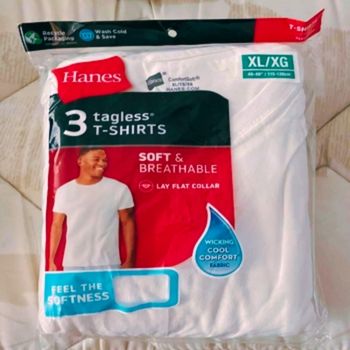
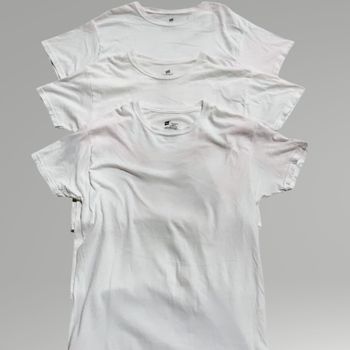
The Hanes Men’s 3-Pack Crew Neck T-Shirt is crafted from 100% cotton. Cotton is a cellulose fiber that absorbs liquid readily, drawing moisture away from skin like a towel. This property makes it ideal for tie-dye, where the dye solution must penetrate every fiber to produce vivid, level color.
Ring-spun cotton — used in premium Hanes tees — rotates yarn up to 30% more times than open-end spinning, producing a significantly softer, smoother fabric with higher absorbency. The resulting surface accepts dye more evenly, producing cleaner patterns with sharper color transitions.
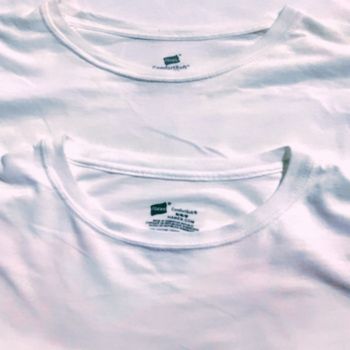
Cotton fibers withstand multiple wash cycles without degrading, maintaining fabric integrity and color vibrancy over years of use. The tag-free collar eliminates neck irritation, making these comfortable enough for all-day wear under workwear or as standalone pieces.
When tie-dyeing with fiber reactive dyes — the gold standard for cellulose fibers — cotton holds color permanently at 190°F (87°C) or higher. The dye forms a covalent bond with the hydroxyl groups in cellulose, producing wash-fastness ratings that exceed 4–5 on the grey scale after proper fixation. The pre-shrunk construction ensures the hem stays tucked and stable after laundering.
You can use these t-shirts with a wide range of colors and fabric paints with equal success.
The anti-shrink formula and premium spun cotton provide elasticity and lasting comfort. These factors make Hanes one of the best black t-shirts for tie-dye as well.
PROS:
CONS:
2. Fruit of the Loom Men’s Stay Tucked Crew T-Shirt
Features
Fruit of the Loom crew t-shirts distribute multiple color spectrums and sizes with consistent results. Unlike Hanes, this brand lets you work beyond white t-shirts — you can tie-dye on solid colors to accentuate dye patterns with striking contrast.
White cotton t-shirts produce the best results for ombre dyes, bright hues, and shadowed colors. Dark t-shirts excel when tinted colors are applied over a deep base. White fabrics also absorb black dyes most effectively, yielding true black tones rather than grey.
The 100% cotton construction combats moisture build-up while maintaining breathability. It resists shrinkage after multiple washes when laundered correctly: machine wash in a warm gentle cycle, add non-chlorine bleach as needed, tumble dry on low heat, and use a cool iron if required.
The tag-free design ensures comfort throughout the day. For winter layering, style it under a hoodie or full-sleeve coat. During summer, it functions as lightweight bottom clothing that won’t trap heat.
A lay-flat double-stitched collar maintains its shape through repeated laundering, preventing the stretching and distortion that plagues lower-quality tees after a dozen wash cycles.
PROS:
CONS:
3. Hanes Men’s 4-Pack FreshIQ Odor Control Crew T-Shirts, White
Features
The Hanes Men’s 4-Pack FreshIQ builds on Hanes’ core cotton craftsmanship with a notable upgrade: FreshIQ odor control technology. This innovation inhibits odor-causing bacteria for all-day freshness — a meaningful benefit when wearing freshly tie-dyed shirts in warm weather.
The bundle includes 4 crew t-shirts in basic white, perfect for bright clothes dyes, ombres, and tonal shades. Screen printing is equally viable on these tees, making them versatile canvases for both dye work and t-shirt printing.
These tees excel as standalone pieces — not just as underlayers. The 100% cotton construction means you can dye them without the constraint of hiding results under other clothing. Tag-free collars prevent irritation during extended wear.
The pre-shrunk fabric ensures seamless fitting after laundering — your hemlines stay true to size and shape through the garment’s lifespan. Pair these with transfer paper or fabric paints to expand your creative options beyond dye.
Anti-odor properties keep these shirts fresh even after prolonged wear in heat, making them a practical choice for festival seasons and outdoor events.
PROS:
CONS:
4. Gildan Platinum Men’s Crew T-Shirts
Features
Gildan Platinum sets itself apart with high pigment permanency — the dye bonds to ring-spun cotton fibers at a molecular level, creating wash-fastness that outperforms open-end cotton by 2–3 grey scale ratings. The 100% ring-spun cotton construction delivers exceptional durability against repeated laundering.
The pre-shrunk quality retains original dimensions through dozens of wash cycles — your hemlines, sleeves, and body width stay true to size. Sealed neck and shoulder seams eliminate the raw-edge irritation common in lesser-quality bulk blanks.
Ring-spun cotton’s tighter fiber alignment produces a smoother, more uniform surface than open-end cotton. This translates to cleaner dye patterns with sharper color boundaries and fewer bald spots where dye fails to penetrate.
The breathable weave manages moisture effectively, preventing the damp, uncomfortable feel that plague synthetic blends after extended wear.
Gildan Platinum crew t-shirts provide a cost-effective solution for both regular wear and customization projects — wear them blank, dye them boldly, or print custom graphics with equal success.
PROS:
CONS:
5. Gildan Men’s V-Neck T-Shirts Multipack
Features
Gildan’s V-neck t-shirts arrive in a set of six color variants. You can select 4 or 5 t-shirts per set if fewer colors are preferred.
The tubular rib collar ensures lasting stretch recovery — it bounces back to its original shape after repeated pulling, maintaining the V-neck silhouette through months of wear and laundering.
For winter styling, these tees pair exceptionally well under leather jackets or layered with flannels. The rib collar sits cleanly without bunching beneath outer layers.
The 100% cotton jersey construction provides quick color absorbency and elasticity. Jersey fabric’s knit structure creates moderate stretch — approximately 15–20% crosswise — without requiring blended synthetics.
Jersey fabrics are denser than woven cottons, which means dye penetrates more slowly but holds color with less bleeding. The trade-off is that jersey requires careful handling during the dye fixation process to prevent uneven patches.
Unlike woven cottons, jersey does not tolerate re-dyeing gracefully — undoing dye from cotton jersey is significantly more difficult than from woven fabrics. Once the dye is set, it is permanent. Plan your color scheme carefully before applying dye to jersey.
Machine wash these t-shirts on a gentle cycle with cold water to preserve both the garment shape and your dye pattern. Avoid high-heat tumble drying, which can cause shrinkage of up to 5% in untreated jersey.
PROS:
CONS:
How to Select the Best Blank Tie-Dye Shirts
Material
The material of tie-dye shirts depends on your preference, but 100% cotton is the clear winner. Cotton cellulose fibers absorb up to 8.5 times their weight in water, creating the level, uniform dye uptake that produces professional-quality tie-dye patterns.
If you choose a polyester-cotton blend, ensure the polyester portion stays below 10%. Polyester fibers do not absorb the fiber reactive dyes that work on cotton — they only take all-purpose dyes, which produce washed-out results with poor wash fastness.
Absorbency
Uniform absorbency in the dyeing medium determines the levelness of your color effect. The depth of shade — how dark or light the final color appears — depends heavily on this property.
Ring-spun cotton delivers superior absorbency over open-end cotton because the tighter yarn structure creates more capillary action, drawing dye deeper into the fiber. Fabrics with low absorbency produce splotchy, uneven patterns that fade rapidly.
Non-absorbent t-shirts cause discomfort through poor moisture management. The fabric clings to damp skin instead of wicking perspiration away — a critical flaw during summer wear or active use.
Shrinkage and Pilling Properties
Low-quality shirts deteriorate after minimal laundering, becoming unwearable after a handful of wash cycles. Shrinkage occurs when manufacturers skip the heat-setting and compacting steps that stabilize fabric dimensions.
Pilling — the formation of small fabric balls on the surface — develops from low-quality short-staple fibers rubbing against each other during laundering. Pilling degrades appearance and reduces comfort significantly.
Pre-shrunk garments maintain stable dimensions through the industry standard of ±3–5% shrinkage tolerance. Quality blank t-shirts from established brands like Hanes and Gildan consistently meet this specification.
Machine Washable
Machine Washable T-Shirts
Machine-washable t-shirts simplify long-term care significantly. While not a mandatory attribute, it substantially reduces the maintenance burden for high-volume tie-dye artists who launder dozens of shirts at a time.
Color Variability
If you have a specific background color in mind, choose colored t-shirts accordingly. However, you must account for the effect of color combination before formulating your final recipe — the existing color will interact with your dye to produce a third, often unexpected hue.
Mastering color theory allows you to skip bleaching white shirts and save significant dye quantities. A pre-dyed shirt requires far less dye than a white shirt because the base color contributes to the final shade.
Price
Opt for products that come in multi-packs to maximize value. Bulk purchasing reduces per-unit cost by 30–50% compared to single-shirt retail prices. However, suspiciously low-priced bulk lots typically lack mechanical finishing — heat-setting and compacting — which directly causes the shrinkage, bowing, and premature failure you want to avoid.
Budget-conscious buyers should target the $8–15 per shirt range for quality blanks with pre-shrunk construction, ring-spun cotton, and properly finished seams. Anything below $5 per shirt in bulk signals omitted finishing processes.
Frequently Asked Questions
What are the best t-shirts for tie-dye?
The best t-shirts for tie-dye feature maximum absorbency in the aqueous dye medium, producing level shades without splotchy patches. This property alone determines your satisfaction with the finished result.
T-shirts that maintain stable dimensions after machine washing avoid the distortion that renders a shirt unwearable. Based on these two critical factors, any of the five products in this review delivers reliable results.
Can I use colored t-shirts for tie-dye?
Yes, you can tie-dye colored t-shirts. Understanding dye color mixing reveals which colors to add and in what proportion to achieve your desired shade — though the calculation is complex.
The most reliable method is to bleach the shirt first, removing the existing color to create a white base. Be aware that bleaching reduces fabric tensile strength by up to 20%, and soda ash for fixing tie-dyes further compromises fiber integrity with repeated use.
Can I wash multiple tie-dye shirts together?
Washing multiple tie-dye shirts together is not recommended, especially in warm water. Excessive color bleeding stains and distorts adjacent patterns. The issue compounds when detergent is present, which emulsifies loose dye particles.
If you must launder multiple shirts simultaneously, use cold water and mild soap. Dark shades bleed less than bright colors — orange, pink, and turquoise are the most notorious for cross-contamination.
Can you tie-dye a grey shirt?
Yes, grey shirts accept tie-dye effectively. The final result depends entirely on your chosen colors — select high-contrast hues like pink, turquoise, or lime green for maximum visual impact on a grey base.
What color shirts can you tie-dye?
White shirts are the obvious choice, but any light or bright shade works. The contrast between the base color and the dye determines how vivid the final pattern appears — lighter bases yield the most satisfying outcomes.
What do you use to tie-dye a shirt?
For cotton shirts, use fiber reactive dyes — the gold standard for cellulose fibers. For nylon or wool, use acid dyes. For polyester, use dispersed dyes.
For cotton, the primary auxiliaries are salt (for dye exhaustion) and alkali — typically soda ash — for dye fixation. Salt at 5–10% of fabric weight drives dye onto the fiber during the absorption phase.
Soda ash (sodium carbonate) raises the dye bath pH to 10–11, activating cellulose hydroxyl groups so they form covalent bonds with the dye molecules. Without soda ash, fiber reactive dyes wash out completely within a few cycles.
During wash-off, use soap to disperse unfixed dyes — avoid detergents, which weaken the dye-fiber bond. Required accessories include rubber bands, a bucket, gloves, and a wooden spoon for stirring.
What is the best t-shirt brand for tie-dye?
Hanes ranks highest for its combination of absorbency, color permanency, dye levelness, pilling resistance, and affordable pricing. Gildan Platinum is a close second, particularly for ring-spun cotton applications.
Are Gildan Heavy Cotton T-Shirts Good for Tie-Dye?
Gildan Heavy Cotton t-shirts are suitable for tie-dye because the high cotton content resists fraying and stretching during the dyeing process. The heavier fabric weight (approximately 6 oz/yd²) absorbs more dye per shirt, producing deeper, more saturated colors.
Gildan heavy cotton shrinks by approximately 3–5% after the first wash — a predictable and manageable amount if you account for it during sizing. Pre-wash the shirts in hot water before dyeing to stabilize dimensions.
The heavier construction also means more dye is required per shirt — budget for approximately 1.5× the dye quantity used for lightweight tees.
Final Words
These five t-shirts represent the best options for tie-dye projects based on material quality, absorbency, dimensional stability, and value.
Select the shirt that matches your specific needs — Hanes for maximum softness and dye absorbency, Fruit of the Loom for multi-color projects, Gildan Platinum for durability and color permanency, or the Gildan V-Neck for style-conscious layering.
Gildan blank t-shirts include a sewn brand label, but extensive testing confirms it does not cause irritation during wear. If you prefer to remove it, cut it out carefully before dyeing to avoid snagging the fabric.
References
Ring-spun cotton — used in premium Hanes tees — rotates yarn up to 30% more times than open-end spinning, producing a significantly softer, smoother fabric with higher absorbency. The resulting surface accepts dye more evenly, producing cleaner patterns with sharper color transitions.
Cotton fibers withstand multiple wash cycles without degrading, maintaining fabric integrity and color vibrancy over years of use. The tag-free collar eliminates neck irritation, making these comfortable enough for all-day wear under workwear or as standalone pieces.
When tie-dyeing with fiber reactive dyes — the gold standard for cellulose fibers — cotton holds color permanently at 190°F (87°C) or higher. The dye forms a covalent bond with the hydroxyl groups in cellulose, producing wash-fastness ratings that exceed 4–5 on the grey scale after proper fixation. The pre-shrunk construction ensures the hem stays tucked and stable after laundering.
You can use these t-shirts with a wide range of colors and fabric paints with equal success.
The anti-shrink formula and premium spun cotton provide elasticity and lasting comfort. These factors make Hanes one of the best black t-shirts for tie-dye as well.
PROS:
CONS:
2. Fruit of the Loom Men’s Stay Tucked Crew T-Shirt
Features
Fruit of the Loom crew t-shirts distribute multiple color spectrums and sizes with consistent results. Unlike Hanes, this brand lets you work beyond white t-shirts — you can tie-dye on solid colors to accentuate dye patterns with striking contrast.
White cotton t-shirts produce the best results for ombre dyes, bright hues, and shadowed colors. Dark t-shirts excel when tinted colors are applied over a deep base. White fabrics also absorb black dyes most effectively, yielding true black tones rather than grey.
The 100% cotton construction combats moisture build-up while maintaining breathability. It resists shrinkage after multiple washes when laundered correctly: machine wash in a warm gentle cycle, add non-chlorine bleach as needed, tumble dry on low heat, and use a cool iron if required.
The tag-free design ensures comfort throughout the day. For winter layering, style it under a hoodie or full-sleeve coat. During summer, it functions as lightweight bottom clothing that won’t trap heat.
A lay-flat double-stitched collar maintains its shape through repeated laundering, preventing the stretching and distortion that plagues lower-quality tees after a dozen wash cycles.
PROS:
CONS:
3. Hanes Men’s 4-Pack FreshIQ Odor Control Crew T-Shirts, White
Features
The Hanes Men’s 4-Pack FreshIQ builds on Hanes’ core cotton craftsmanship with a notable upgrade: FreshIQ odor control technology. This innovation inhibits odor-causing bacteria for all-day freshness — a meaningful benefit when wearing freshly tie-dyed shirts in warm weather.
The bundle includes 4 crew t-shirts in basic white, perfect for bright clothes dyes, ombres, and tonal shades. Screen printing is equally viable on these tees, making them versatile canvases for both dye work and t-shirt printing.
These tees excel as standalone pieces — not just as underlayers. The 100% cotton construction means you can dye them without the constraint of hiding results under other clothing. Tag-free collars prevent irritation during extended wear.
The pre-shrunk fabric ensures seamless fitting after laundering — your hemlines stay true to size and shape through the garment’s lifespan. Pair these with transfer paper or fabric paints to expand your creative options beyond dye.
Anti-odor properties keep these shirts fresh even after prolonged wear in heat, making them a practical choice for festival seasons and outdoor events.
PROS:
CONS:
4. Gildan Platinum Men’s Crew T-Shirts
Features
Gildan Platinum sets itself apart with high pigment permanency — the dye bonds to ring-spun cotton fibers at a molecular level, creating wash-fastness that outperforms open-end cotton by 2–3 grey scale ratings. The 100% ring-spun cotton construction delivers exceptional durability against repeated laundering.
The pre-shrunk quality retains original dimensions through dozens of wash cycles — your hemlines, sleeves, and body width stay true to size. Sealed neck and shoulder seams eliminate the raw-edge irritation common in lesser-quality bulk blanks.
Ring-spun cotton’s tighter fiber alignment produces a smoother, more uniform surface than open-end cotton. This translates to cleaner dye patterns with sharper color boundaries and fewer bald spots where dye fails to penetrate.
The breathable weave manages moisture effectively, preventing the damp, uncomfortable feel that plague synthetic blends after extended wear.
Gildan Platinum crew t-shirts provide a cost-effective solution for both regular wear and customization projects — wear them blank, dye them boldly, or print custom graphics with equal success.
PROS:
CONS:
5. Gildan Men’s V-Neck T-Shirts Multipack
Features
Gildan’s V-neck t-shirts arrive in a set of six color variants. You can select 4 or 5 t-shirts per set if fewer colors are preferred.
The tubular rib collar ensures lasting stretch recovery — it bounces back to its original shape after repeated pulling, maintaining the V-neck silhouette through months of wear and laundering.
For winter styling, these tees pair exceptionally well under leather jackets or layered with flannels. The rib collar sits cleanly without bunching beneath outer layers.
The 100% cotton jersey construction provides quick color absorbency and elasticity. Jersey fabric’s knit structure creates moderate stretch — approximately 15–20% crosswise — without requiring blended synthetics.
Jersey fabrics are denser than woven cottons, which means dye penetrates more slowly but holds color with less bleeding. The trade-off is that jersey requires careful handling during the dye fixation process to prevent uneven patches.
Unlike woven cottons, jersey does not tolerate re-dyeing gracefully — undoing dye from cotton jersey is significantly more difficult than from woven fabrics. Once the dye is set, it is permanent. Plan your color scheme carefully before applying dye to jersey.
Machine wash these t-shirts on a gentle cycle with cold water to preserve both the garment shape and your dye pattern. Avoid high-heat tumble drying, which can cause shrinkage of up to 5% in untreated jersey.
PROS:
CONS:
How to Select the Best Blank Tie-Dye Shirts
Material
The material of tie-dye shirts depends on your preference, but 100% cotton is the clear winner. Cotton cellulose fibers absorb up to 8.5 times their weight in water, creating the level, uniform dye uptake that produces professional-quality tie-dye patterns.
If you choose a polyester-cotton blend, ensure the polyester portion stays below 10%. Polyester fibers do not absorb the fiber reactive dyes that work on cotton — they only take all-purpose dyes, which produce washed-out results with poor wash fastness.
Absorbency
Uniform absorbency in the dyeing medium determines the levelness of your color effect. The depth of shade — how dark or light the final color appears — depends heavily on this property.
Ring-spun cotton delivers superior absorbency over open-end cotton because the tighter yarn structure creates more capillary action, drawing dye deeper into the fiber. Fabrics with low absorbency produce splotchy, uneven patterns that fade rapidly.
Non-absorbent t-shirts cause discomfort through poor moisture management. The fabric clings to damp skin instead of wicking perspiration away — a critical flaw during summer wear or active use.
Shrinkage and Pilling Properties
Low-quality shirts deteriorate after minimal laundering, becoming unwearable after a handful of wash cycles. Shrinkage occurs when manufacturers skip the heat-setting and compacting steps that stabilize fabric dimensions.
Pilling — the formation of small fabric balls on the surface — develops from low-quality short-staple fibers rubbing against each other during laundering. Pilling degrades appearance and reduces comfort significantly.
Pre-shrunk garments maintain stable dimensions through the industry standard of ±3–5% shrinkage tolerance. Quality blank t-shirts from established brands like Hanes and Gildan consistently meet this specification.
Machine Washable
Machine Washable T-Shirts
Machine-washable t-shirts simplify long-term care significantly. While not a mandatory attribute, it substantially reduces the maintenance burden for high-volume tie-dye artists who launder dozens of shirts at a time.
Color Variability
If you have a specific background color in mind, choose colored t-shirts accordingly. However, you must account for the effect of color combination before formulating your final recipe — the existing color will interact with your dye to produce a third, often unexpected hue.
Mastering color theory allows you to skip bleaching white shirts and save significant dye quantities. A pre-dyed shirt requires far less dye than a white shirt because the base color contributes to the final shade.
Price
Opt for products that come in multi-packs to maximize value. Bulk purchasing reduces per-unit cost by 30–50% compared to single-shirt retail prices. However, suspiciously low-priced bulk lots typically lack mechanical finishing — heat-setting and compacting — which directly causes the shrinkage, bowing, and premature failure you want to avoid.
Budget-conscious buyers should target the $8–15 per shirt range for quality blanks with pre-shrunk construction, ring-spun cotton, and properly finished seams. Anything below $5 per shirt in bulk signals omitted finishing processes.
Frequently Asked Questions
What are the best t-shirts for tie-dye?
The best t-shirts for tie-dye feature maximum absorbency in the aqueous dye medium, producing level shades without splotchy patches. This property alone determines your satisfaction with the finished result.
T-shirts that maintain stable dimensions after machine washing avoid the distortion that renders a shirt unwearable. Based on these two critical factors, any of the five products in this review delivers reliable results.
Can I use colored t-shirts for tie-dye?
Yes, you can tie-dye colored t-shirts. Understanding dye color mixing reveals which colors to add and in what proportion to achieve your desired shade — though the calculation is complex.
The most reliable method is to bleach the shirt first, removing the existing color to create a white base. Be aware that bleaching reduces fabric tensile strength by up to 20%, and soda ash for fixing tie-dyes further compromises fiber integrity with repeated use.
Can I wash multiple tie-dye shirts together?
Washing multiple tie-dye shirts together is not recommended, especially in warm water. Excessive color bleeding stains and distorts adjacent patterns. The issue compounds when detergent is present, which emulsifies loose dye particles.
If you must launder multiple shirts simultaneously, use cold water and mild soap. Dark shades bleed less than bright colors — orange, pink, and turquoise are the most notorious for cross-contamination.
Can you tie-dye a grey shirt?
Yes, grey shirts accept tie-dye effectively. The final result depends entirely on your chosen colors — select high-contrast hues like pink, turquoise, or lime green for maximum visual impact on a grey base.
What color shirts can you tie-dye?
White shirts are the obvious choice, but any light or bright shade works. The contrast between the base color and the dye determines how vivid the final pattern appears — lighter bases yield the most satisfying outcomes.
What do you use to tie-dye a shirt?
For cotton shirts, use fiber reactive dyes — the gold standard for cellulose fibers. For nylon or wool, use acid dyes. For polyester, use dispersed dyes.
For cotton, the primary auxiliaries are salt (for dye exhaustion) and alkali — typically soda ash — for dye fixation. Salt at 5–10% of fabric weight drives dye onto the fiber during the absorption phase.
Soda ash (sodium carbonate) raises the dye bath pH to 10–11, activating cellulose hydroxyl groups so they form covalent bonds with the dye molecules. Without soda ash, fiber reactive dyes wash out completely within a few cycles.
During wash-off, use soap to disperse unfixed dyes — avoid detergents, which weaken the dye-fiber bond. Required accessories include rubber bands, a bucket, gloves, and a wooden spoon for stirring.
What is the best t-shirt brand for tie-dye?
Hanes ranks highest for its combination of absorbency, color permanency, dye levelness, pilling resistance, and affordable pricing. Gildan Platinum is a close second, particularly for ring-spun cotton applications.
Are Gildan Heavy Cotton T-Shirts Good for Tie-Dye?
Gildan Heavy Cotton t-shirts are suitable for tie-dye because the high cotton content resists fraying and stretching during the dyeing process. The heavier fabric weight (approximately 6 oz/yd²) absorbs more dye per shirt, producing deeper, more saturated colors.
Gildan heavy cotton shrinks by approximately 3–5% after the first wash — a predictable and manageable amount if you account for it during sizing. Pre-wash the shirts in hot water before dyeing to stabilize dimensions.
The heavier construction also means more dye is required per shirt — budget for approximately 1.5× the dye quantity used for lightweight tees.
Final Words
These five t-shirts represent the best options for tie-dye projects based on material quality, absorbency, dimensional stability, and value.
Select the shirt that matches your specific needs — Hanes for maximum softness and dye absorbency, Fruit of the Loom for multi-color projects, Gildan Platinum for durability and color permanency, or the Gildan V-Neck for style-conscious layering.
Gildan blank t-shirts include a sewn brand label, but extensive testing confirms it does not cause irritation during wear. If you prefer to remove it, cut it out carefully before dyeing to avoid snagging the fabric.
References
The best t-shirts for tie-dye are 100% cotton with high absorbency — cotton cellulose fibers absorb up to 8.5 times their weight in water, producing vivid, level color that lasts through dozens of wash cycles. Ring-spun cotton outperforms open-end cotton, delivering softer fabric with cleaner dye patterns and sharper color transitions. Pre-shrunk construction ensures your hem stays true to size after laundering.
This guide reviews five top-performing blank t-shirts for tie-dye projects, evaluating material quality, wash stability, comfort, color absorbency, and value. Each product below is a 100% cotton option that delivers professional-quality results with fiber reactive dyes.
IMAGES | DESCRIPTION | RATING | PRICE |
| | 1. Hanes Men’s 3-Pack Crew Neck T-Shirt | ||
| | 2. Fruit of the Loom Men’s Stay Tucked Crew T-Shirt | ||
| | 3. Gildan V-Neck T-Shirts |
5 Best T-Shirts for Tie-Dye — Quick Comparison
| Product | Material | Pack | Key Strength | Best For |
|---|---|---|---|---|
| Hanes Men’s 3-Pack | 100% ring-spun cotton | 3 shirts | Superior absorbency (8.5× weight in water) | Maximum color vibrancy |
| Fruit of the Loom Stay Tucked | 100% cotton | 6 shirts | Multi-color availability | Color-on-color tie-dye |
| Hanes Men’s 4-Pack FreshIQ | 100% cotton | 4 shirts | Odor control technology | All-day wear in warm weather |
| Gildan Platinum Crew | 100% ring-spun cotton | 6 shirts | Wash-fastness (2–3× better than open-end) | Long-term durability |
| Gildan Men’s V-Neck | 100% cotton jersey | 6 shirts | Minimal dye bleeding | Clean pattern edges |
5 Best T-Shirts for Tie-Dye Reviewed
I have hand-picked five blank t-shirts suited for tie-dye projects. Each review is unbiased, free of fluff, and curated with meticulous scrutiny.
Use this guide to find the right canvas for your next tie-dye creation.
1. Hanes Men’s 3-Pack Crew Neck T-Shirt
Features
Hanes has built a long reputation for producing some of the best white shirts for tie-dye. The brand has refined its collections over decades, improving comfort with each iteration.
The Hanes Men’s 3-Pack Crew Neck T-Shirt is crafted from 100% cotton. Cotton is a cellulose fiber that absorbs liquid readily, drawing moisture away from skin like a towel. This property makes it ideal for tie-dye, where the dye solution must penetrate every fiber to produce vivid, level color.
Ring-spun cotton — used in premium Hanes tees — rotates yarn up to 30% more times than open-end spinning, producing a significantly softer, smoother fabric with higher absorbency. The resulting surface accepts dye more evenly, producing cleaner patterns with sharper color transitions.
Cotton fibers withstand multiple wash cycles without degrading, maintaining fabric integrity and color vibrancy over years of use. The tag-free collar eliminates neck irritation, making these comfortable enough for all-day wear under workwear or as standalone pieces.
When tie-dyeing with fiber reactive dyes — the gold standard for cellulose fibers — cotton holds color permanently at 190°F (87°C) or higher. The dye forms a covalent bond with the hydroxyl groups in cellulose, producing wash-fastness ratings that exceed 4–5 on the grey scale after proper fixation. The pre-shrunk construction ensures the hem stays tucked and stable after laundering.
You can use these t-shirts with a wide range of colors and fabric paints with equal success.
The anti-shrink formula and premium spun cotton provide elasticity and lasting comfort. These factors make Hanes one of the best black t-shirts for tie-dye as well.
PROS:
CONS:
2. Fruit of the Loom Men’s Stay Tucked Crew T-Shirt
Features
Fruit of the Loom crew t-shirts distribute multiple color spectrums and sizes with consistent results. Unlike Hanes, this brand lets you work beyond white t-shirts — you can tie-dye on solid colors to accentuate dye patterns with striking contrast.
White cotton t-shirts produce the best results for ombre dyes, bright hues, and shadowed colors. Dark t-shirts excel when tinted colors are applied over a deep base. White fabrics also absorb black dyes most effectively, yielding true black tones rather than grey.
The 100% cotton construction combats moisture build-up while maintaining breathability. It resists shrinkage after multiple washes when laundered correctly: machine wash in a warm gentle cycle, add non-chlorine bleach as needed, tumble dry on low heat, and use a cool iron if required.
The tag-free design ensures comfort throughout the day. For winter layering, style it under a hoodie or full-sleeve coat. During summer, it functions as lightweight bottom clothing that won’t trap heat.
A lay-flat double-stitched collar maintains its shape through repeated laundering, preventing the stretching and distortion that plagues lower-quality tees after a dozen wash cycles.
PROS:
CONS:
3. Hanes Men’s 4-Pack FreshIQ Odor Control Crew T-Shirts, White
Features
The Hanes Men’s 4-Pack FreshIQ builds on Hanes’ core cotton craftsmanship with a notable upgrade: FreshIQ odor control technology. This innovation inhibits odor-causing bacteria for all-day freshness — a meaningful benefit when wearing freshly tie-dyed shirts in warm weather.
The bundle includes 4 crew t-shirts in basic white, perfect for bright clothes dyes, ombres, and tonal shades. Screen printing is equally viable on these tees, making them versatile canvases for both dye work and t-shirt printing.
These tees excel as standalone pieces — not just as underlayers. The 100% cotton construction means you can dye them without the constraint of hiding results under other clothing. Tag-free collars prevent irritation during extended wear.
The pre-shrunk fabric ensures seamless fitting after laundering — your hemlines stay true to size and shape through the garment’s lifespan. Pair these with transfer paper or fabric paints to expand your creative options beyond dye.
Anti-odor properties keep these shirts fresh even after prolonged wear in heat, making them a practical choice for festival seasons and outdoor events.
PROS:
CONS:
4. Gildan Platinum Men’s Crew T-Shirts
Features
Gildan Platinum sets itself apart with high pigment permanency — the dye bonds to ring-spun cotton fibers at a molecular level, creating wash-fastness that outperforms open-end cotton by 2–3 grey scale ratings. The 100% ring-spun cotton construction delivers exceptional durability against repeated laundering.
The pre-shrunk quality retains original dimensions through dozens of wash cycles — your hemlines, sleeves, and body width stay true to size. Sealed neck and shoulder seams eliminate the raw-edge irritation common in lesser-quality bulk blanks.
Ring-spun cotton’s tighter fiber alignment produces a smoother, more uniform surface than open-end cotton. This translates to cleaner dye patterns with sharper color boundaries and fewer bald spots where dye fails to penetrate.
The breathable weave manages moisture effectively, preventing the damp, uncomfortable feel that plague synthetic blends after extended wear.
Gildan Platinum crew t-shirts provide a cost-effective solution for both regular wear and customization projects — wear them blank, dye them boldly, or print custom graphics with equal success.
PROS:
CONS:
5. Gildan Men’s V-Neck T-Shirts Multipack
Features
Gildan’s V-neck t-shirts arrive in a set of six color variants. You can select 4 or 5 t-shirts per set if fewer colors are preferred.
The tubular rib collar ensures lasting stretch recovery — it bounces back to its original shape after repeated pulling, maintaining the V-neck silhouette through months of wear and laundering.
For winter styling, these tees pair exceptionally well under leather jackets or layered with flannels. The rib collar sits cleanly without bunching beneath outer layers.
The 100% cotton jersey construction provides quick color absorbency and elasticity. Jersey fabric’s knit structure creates moderate stretch — approximately 15–20% crosswise — without requiring blended synthetics.
Jersey fabrics are denser than woven cottons, which means dye penetrates more slowly but holds color with less bleeding. The trade-off is that jersey requires careful handling during the dye fixation process to prevent uneven patches.
Unlike woven cottons, jersey does not tolerate re-dyeing gracefully — undoing dye from cotton jersey is significantly more difficult than from woven fabrics. Once the dye is set, it is permanent. Plan your color scheme carefully before applying dye to jersey.
Machine wash these t-shirts on a gentle cycle with cold water to preserve both the garment shape and your dye pattern. Avoid high-heat tumble drying, which can cause shrinkage of up to 5% in untreated jersey.
PROS:
CONS:
How to Select the Best Blank Tie-Dye Shirts
Material
The material of tie-dye shirts depends on your preference, but 100% cotton is the clear winner. Cotton cellulose fibers absorb up to 8.5 times their weight in water, creating the level, uniform dye uptake that produces professional-quality tie-dye patterns.
If you choose a polyester-cotton blend, ensure the polyester portion stays below 10%. Polyester fibers do not absorb the fiber reactive dyes that work on cotton — they only take all-purpose dyes, which produce washed-out results with poor wash fastness.
Absorbency
Uniform absorbency in the dyeing medium determines the levelness of your color effect. The depth of shade — how dark or light the final color appears — depends heavily on this property.
Ring-spun cotton delivers superior absorbency over open-end cotton because the tighter yarn structure creates more capillary action, drawing dye deeper into the fiber. Fabrics with low absorbency produce splotchy, uneven patterns that fade rapidly.
Non-absorbent t-shirts cause discomfort through poor moisture management. The fabric clings to damp skin instead of wicking perspiration away — a critical flaw during summer wear or active use.
Shrinkage and Pilling Properties
Low-quality shirts deteriorate after minimal laundering, becoming unwearable after a handful of wash cycles. Shrinkage occurs when manufacturers skip the heat-setting and compacting steps that stabilize fabric dimensions.
Pilling — the formation of small fabric balls on the surface — develops from low-quality short-staple fibers rubbing against each other during laundering. Pilling degrades appearance and reduces comfort significantly.
Pre-shrunk garments maintain stable dimensions through the industry standard of ±3–5% shrinkage tolerance. Quality blank t-shirts from established brands like Hanes and Gildan consistently meet this specification.
Machine Washable
Machine Washable T-Shirts
Machine-washable t-shirts simplify long-term care significantly. While not a mandatory attribute, it substantially reduces the maintenance burden for high-volume tie-dye artists who launder dozens of shirts at a time.
Color Variability
If you have a specific background color in mind, choose colored t-shirts accordingly. However, you must account for the effect of color combination before formulating your final recipe — the existing color will interact with your dye to produce a third, often unexpected hue.
Mastering color theory allows you to skip bleaching white shirts and save significant dye quantities. A pre-dyed shirt requires far less dye than a white shirt because the base color contributes to the final shade.
Price
Opt for products that come in multi-packs to maximize value. Bulk purchasing reduces per-unit cost by 30–50% compared to single-shirt retail prices. However, suspiciously low-priced bulk lots typically lack mechanical finishing — heat-setting and compacting — which directly causes the shrinkage, bowing, and premature failure you want to avoid.
Budget-conscious buyers should target the $8–15 per shirt range for quality blanks with pre-shrunk construction, ring-spun cotton, and properly finished seams. Anything below $5 per shirt in bulk signals omitted finishing processes.
Frequently Asked Questions
What are the best t-shirts for tie-dye?
The best t-shirts for tie-dye feature maximum absorbency in the aqueous dye medium, producing level shades without splotchy patches. This property alone determines your satisfaction with the finished result.
T-shirts that maintain stable dimensions after machine washing avoid the distortion that renders a shirt unwearable. Based on these two critical factors, any of the five products in this review delivers reliable results.
Can I use colored t-shirts for tie-dye?
Yes, you can tie-dye colored t-shirts. Understanding dye color mixing reveals which colors to add and in what proportion to achieve your desired shade — though the calculation is complex.
The most reliable method is to bleach the shirt first, removing the existing color to create a white base. Be aware that bleaching reduces fabric tensile strength by up to 20%, and soda ash for fixing tie-dyes further compromises fiber integrity with repeated use.
Can I wash multiple tie-dye shirts together?
Washing multiple tie-dye shirts together is not recommended, especially in warm water. Excessive color bleeding stains and distorts adjacent patterns. The issue compounds when detergent is present, which emulsifies loose dye particles.
If you must launder multiple shirts simultaneously, use cold water and mild soap. Dark shades bleed less than bright colors — orange, pink, and turquoise are the most notorious for cross-contamination.
Can you tie-dye a grey shirt?
Yes, grey shirts accept tie-dye effectively. The final result depends entirely on your chosen colors — select high-contrast hues like pink, turquoise, or lime green for maximum visual impact on a grey base.
What color shirts can you tie-dye?
White shirts are the obvious choice, but any light or bright shade works. The contrast between the base color and the dye determines how vivid the final pattern appears — lighter bases yield the most satisfying outcomes.
What do you use to tie-dye a shirt?
For cotton shirts, use fiber reactive dyes — the gold standard for cellulose fibers. For nylon or wool, use acid dyes. For polyester, use dispersed dyes.
For cotton, the primary auxiliaries are salt (for dye exhaustion) and alkali — typically soda ash — for dye fixation. Salt at 5–10% of fabric weight drives dye onto the fiber during the absorption phase.
Soda ash (sodium carbonate) raises the dye bath pH to 10–11, activating cellulose hydroxyl groups so they form covalent bonds with the dye molecules. Without soda ash, fiber reactive dyes wash out completely within a few cycles.
During wash-off, use soap to disperse unfixed dyes — avoid detergents, which weaken the dye-fiber bond. Required accessories include rubber bands, a bucket, gloves, and a wooden spoon for stirring.
What is the best t-shirt brand for tie-dye?
Hanes ranks highest for its combination of absorbency, color permanency, dye levelness, pilling resistance, and affordable pricing. Gildan Platinum is a close second, particularly for ring-spun cotton applications.
Are Gildan Heavy Cotton T-Shirts Good for Tie-Dye?
Gildan Heavy Cotton t-shirts are suitable for tie-dye because the high cotton content resists fraying and stretching during the dyeing process. The heavier fabric weight (approximately 6 oz/yd²) absorbs more dye per shirt, producing deeper, more saturated colors.
Gildan heavy cotton shrinks by approximately 3–5% after the first wash — a predictable and manageable amount if you account for it during sizing. Pre-wash the shirts in hot water before dyeing to stabilize dimensions.
The heavier construction also means more dye is required per shirt — budget for approximately 1.5× the dye quantity used for lightweight tees.
Final Words
These five t-shirts represent the best options for tie-dye projects based on material quality, absorbency, dimensional stability, and value.
Select the shirt that matches your specific needs — Hanes for maximum softness and dye absorbency, Fruit of the Loom for multi-color projects, Gildan Platinum for durability and color permanency, or the Gildan V-Neck for style-conscious layering.
Gildan blank t-shirts include a sewn brand label, but extensive testing confirms it does not cause irritation during wear. If you prefer to remove it, cut it out carefully before dyeing to avoid snagging the fabric.


