
Different Types of Scarves: Everything You Need to Know!

There are over 20 distinct scarf varieties in common use — from narrow 15 cm (6 in) football scarves to rectangular shawl scarves measuring 200 cm (79 in) or more — each serving a different purpose: warmth, fashion, hair accessories, formal wear, or travel. The most common types fall into a few broad categories: fashion scarves (plain, plaid, patterned), hair scarves (hair scarves, hair bows, hippie headbands), formal evening scarves (evening, cocktail, pashmina), cold-weather scarves (wool, circle, shawl, faux fur, Afghan), and utility scarves (fan, neck, foldable, turban).
This guide covers each of these scarf varieties in detail, including their specifications, how to wear them, when to reach for them, and key care guidelines.
Scarf Types at a Glance
| Scarf Type | Primary Use | Temperature Range | Formality |
|---|---|---|---|
| Plain Scarf | Everyday warmth & fashion | 0–25 °C / 32–77 °F | Casual to business casual |
| Plaid Scarf | Cold-weather warmth | Below 10 °C / 50 °F | Casual |
| Patterned Scarf | Fashion accent | 2–15 °C / 36–59 °F | Casual to smart casual |
| Hair Scarf | Hair styling & protection | All seasons | Casual to formal |
| Hair Bow Scarf | Decorative hair accessory | All seasons | Casual to formal |
| Evening Scarf | Formal elegance | Year-round indoor/A/C | Black tie & formal |
| Pashmina | Transitional warmth & luxury | 5–18 °C / 41–64 °F | Casual to formal |
| Shawl Scarf | Wind & cold protection | -5–12 °C / 23–54 °F | Casual to business casual |
| Turban Scarf | Head coverage & warmth | 2–15 °C / 36–59 °F | Casual to formal |
| Circle / Infinity Scarf | Everyday warmth | 5–18 °C / 41–64 °F | Casual to smart casual |
| Silk Scarf | All-season fashion accent | 5–30 °C / 41–86 °F | Casual to formal |
| Cocktail Scarf | Formal evening accent | Year-round | Formal & business formal |
| Faux Fur Scarf | Winter warmth & texture | -10–8 °C / 14–46 °F | Casual to semi-formal |
| Afghan Scarf | Bohemian fashion | 5–18 °C / 41–64 °F | Casual |
| Neck Scarf | Lightweight neck warmth | 15–25 °C / 59–77 °F | Casual to business casual |
| Foldable Scarf | Travel & commuting | 5–20 °C / 41–68 °F | Casual |
| Fan Scarf | Sports team display | Any | Casual (sports events) |
| Kimono Scarf | Multi-season layering | 5–30 °C / 41–86 °F | Casual to formal |
| Hippie Headband | Head accessory & warmth | Above 15 °C / 59 °F | Casual |
Common Types of Scarves
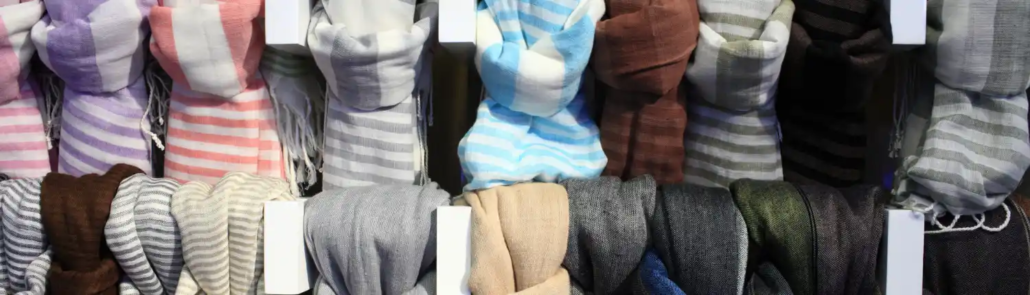
There are over 20 distinct scarf varieties in common use, ranging from narrow 15 cm (6 in) football scarves to rectangular shawl scarves measuring 200 cm (79 in) or more in length. While some are designed primarily for warmth and others function as fashion accessories, all share the same basic elongated or square fabric structure.
Plain Scarves
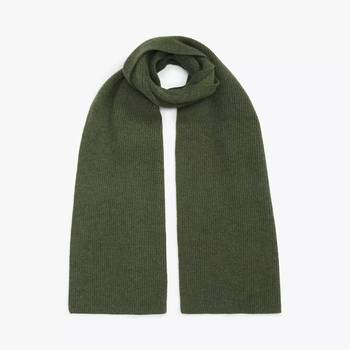
Plain scarves are solid-color pieces with no pattern or print. They are typically made from silk (8–12 momme weight), viscose (100–150 GSM), or cotton (80–200 GSM). You can wear them as-is or layer them over patterned pieces for added dimension.
Wear a plain scarf as a waist belt, looped through the elbows as arm warmers, as a headband, or tied on a bag for a chic accent.
How to Wear
Wrap a plain scarf around your neck and secure one end with a brooch or pin. Alternatively, tie it loosely in a simple knot at the side or front.
When to Wear
Plain scarves work across all four seasons. Lightweight cotton and silk variants suit spring and summer (18–25 °C / 64–77 °F), while heavier wool and cashmere versions provide insulation in autumn and winter (0–15 °C / 32–59 °F).
When Not to Wear
Avoid pairing plain scarves with loud multicolored prints or busy patterns — the visual competition overwhelms both the scarf and the outfit. Steer clear of wearing solid scarves under heavy outerwear like bulky jackets, as the layered look reads as flat rather than intentional.
Plaid Scarves
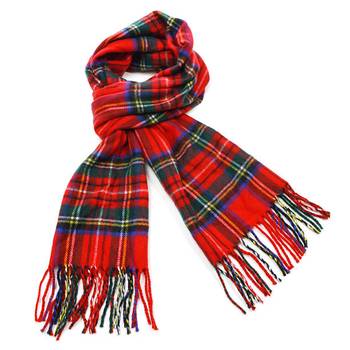
Plaid scarves feature a checked or tartan woven pattern in two or more colors. These scarves typically measure 30–50 cm (12–20 in) wide and 150–200 cm (59–79 in) long. They are most commonly made from wool (300–500 GSM), acrylic blends, or cotton flannel.
Plaid scarves are a cost-effective way to add visual interest to a winter wardrobe. A quality wool plaid scarf costs between $25 and $80 depending on the fiber content and construction.
How to Wear
For the most polished look, pair a plaid scarf with solid-color tops or muted patterns. Let the scarf serve as the sole statement piece by keeping the rest of the outfit plain.
When to Wear
Plaid scarves are ideal for cold-weather months (below 10 °C / 50 °F) and for transitional early-spring days (5–15 °C / 41–59 °F). Pair them with jackets, coats, and solid-color sweaters.
When Not to Wear
Do not pair plaid scarves with other pattern-heavy garments. Limit them to one patterned accessory per outfit during the late spring and summer months.
Patterned Scarves
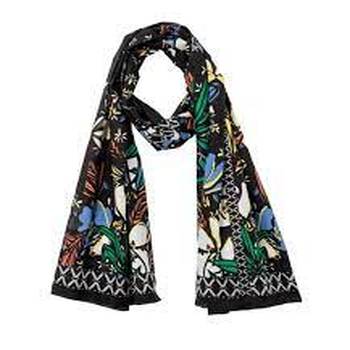
Patterned scarves feature printed or woven designs including florals, geometrics, abstract motifs, and paisley prints. Standard sizes range from 50 × 50 cm (20 × 20 in) squares to 90 × 180 cm (35 × 71 in) rectangular pieces. Materials include silk (8–16 momme), polyester charmeuse, and cotton voile (40–80 GSM).
These scarves add visual flair and color to neutral outfits. They weigh between 30 g (1.1 oz) for a silk square and 200 g (7.1 oz) for a heavier wool blend.
How to Wear
The most popular styling options are: tied around the neck in a knot or loop, wrapped around the neck like a neck gaiter or poncho, or tied in a bow at the front of the chest.
When Not to Wear
Skip patterned scarves when wearing other bold colors or prints — the pattern competes with the outfit rather than complementing it. They pair best with solid, neutral-toned clothing.
Hair Scarves
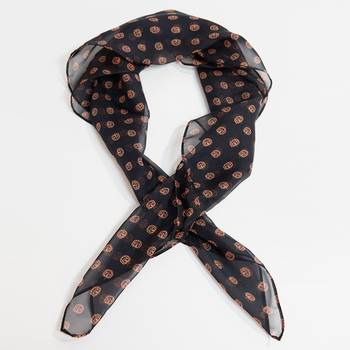
Hair scarves are designed primarily for individuals with medium to long hair to secure hairstyles and add a decorative element. These are generally lightweight — between 20 and 80 g (0.7–2.8 oz) — and made from satin (19 momme), silk charmeuse, or cotton lawn (60–80 GSM).
Typical dimensions range from 50 cm (20 in) squares to 10 × 140 cm (4 × 55 in) rectangular strips.
How to Wear
Ensure hair is down and fully brushed. Tie the scarf around the head at the hairline, or slide it back over your hair so the fabric sits at the nape of the neck. Pull the sides of your hair forward over the scarf for added volume.
When to Wear
Hair scarves are popular for everyday wear, outdoor activities, and formal events such as weddings and garden parties. They also protect hair from wind and UV exposure during daytime outdoor events.
When Not to Wear
Hair scarves are not designed for very short haircuts or pixie cuts, as there is insufficient hair to pass through or secure around the scarf. Avoid wearing them at extremely formal black-tie events where a more structured accessory is expected.
Hair Bow Scarves
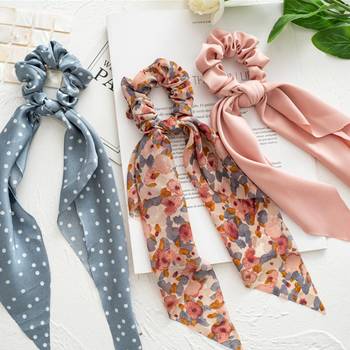
Hair bow scarves are accessories designed primarily for women and children. The scarf fabric is pre-formed into a bow shape and attached to a clip or barrette for easy positioning. The fabric weight is typically 15–30 momme silk or satin.
How to Wear
Brush hair thoroughly, then position the bow clip so it rests just above one eyebrow or at the side of the head. Allow hair to fall naturally around the bow.
When to Wear
Hair bow scarves suit both formal events (weddings, brunches, luncheons) and casual outings (shopping, café visits, outdoor markets). They are a popular choice for Easter, Mother’s Day, and garden party styling.
When Not to Wear
Hair bow scarves are not appropriate for individuals with very short hair or for men in formal business or professional settings.
Fan Scarves
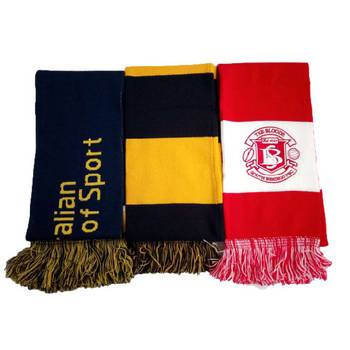
Fan scarves are rectangular pieces — typically 15–25 cm (6–10 in) wide and 90–150 cm (35–59 in) long — printed with sports team logos or solid colors. They are made from polyester micro-fiber (100–120 GSM) or acrylic (200–300 g) for durability and colorfastness.
These scarves are worn to display team affiliation at sporting events and are not designed for warmth or formal occasions.
How to Wear
The most common styling is tying the scarf around the head at the forehead. Alternate methods include tying it around the wrist or upper arm as a team bracelet, or draping it over shoulders and back.
When to Wear
Fan scarves are worn exclusively at sporting events, fan rallies, and team celebrations. They are not suitable for professional, formal, or casual everyday settings.
When Not to Wear
Do not wear fan scarves in formal settings such as dinners, weddings, or professional gatherings. Avoid them in climates where the polyester fabric could cause overheating.
Evening Scarves
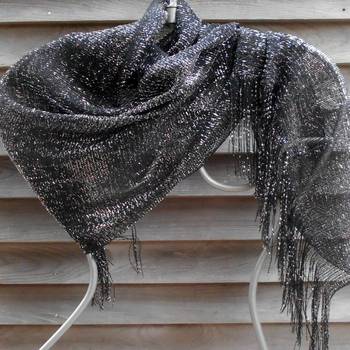
Evening scarves are made from silk (16–22 momme) or satin and are designed as formal accessories. They are typically oblong (20 × 140 cm / 8 × 55 in) or triangular (90 × 90 × 130 cm / 35 × 35 × 51 in), thin, and lightweight (40–80 g / 1.4–2.8 oz).
How to Wear
Wrap the evening scarf around the head once, allowing the majority of the fabric to drape over one shoulder. Secure the ends together with a small pin or leave them to hang loose for an effortless silhouette.
When to Wear
Evening scarves are appropriate for black-tie galas, formal dinners, opera nights, and balls. In daytime, they can be worn over a blazer or cardigan for a polished, elegant look.
When Not to Wear
Do not wear evening scarves in casual settings such as restaurants, shopping trips, or outdoor daytime events — the formal aesthetic reads as out of place.
Shawl Scarves
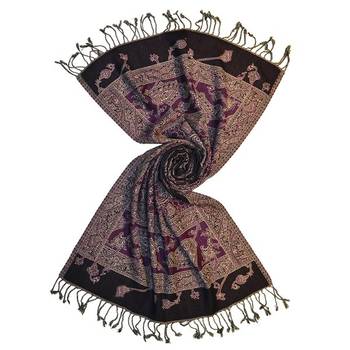
Shawl scarves are long, rectangular pieces typically measuring 70–100 cm (28–39 in) wide and 180–250 cm (71–98 in) long. They range from lightweight cotton voile (40–80 GSM) to heavy wool felt (500–800 GSM).
How to Wear
Drape the shawl scarf over both shoulders so the fabric falls evenly on each side. Tuck the ends into a blazer or coat, or hold them together at the front with one hand while moving.
When to Wear
Shawl scarves provide effective wind and cold protection at temperatures between -5 and 12 °C (23–54 °F). Wear them over blazers, cardigans, and coats during autumn walks, outdoor dinners, and travel.
When Not to Wear
Avoid shawl scarves on hot summer days (above 25 °C / 77 °F) or in high-humidity environments where heavy fabric against the skin causes discomfort.
Pashmina
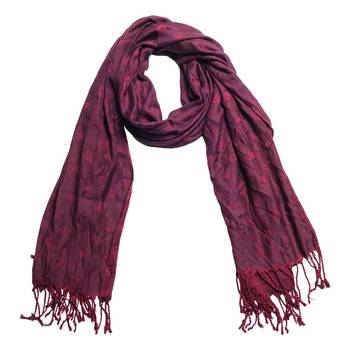
Pashmina scarves are made from a blend of cashmere fiber (14–16 micron diameter) and silk (typically 70% cashmere, 30% silk, though ratios range from 50/50 to 90/10). Authentic pashmina fiber comes from the Changthangi goat found in the Himalayas at altitudes above 4,500 metres (14,800 ft).
Pashmina scarves measure approximately 100 × 200 cm (39 × 79 in) and weigh 150–250 g (5.3–8.8 oz). They feature hand-rolled fringes or machine-cut tassels at the ends. The fabric has a twill or plain weave with a soft, lightweight drape.
How to Wear
Drape the pashmina over both shoulders like an evening scarf or shawl. Tuck the ends into a blazer or coat, or tie them loosely at the front for a casual drape.
When to Wear
Pashmina scarves transition from formal events to casual daytime wear. They provide meaningful warmth in temperatures from 5 to 18 °C (41–64 °F). They are also worn at the beach as a lightweight cover-up in combination with swimwear.
When Not to Wear
Pashmina scarves pair best with solid, neutral clothing. Avoid wearing them with bright, saturated colors or overly busy prints — the scarf’s subtle sheen and texture become the focal point.
Turban Scarves
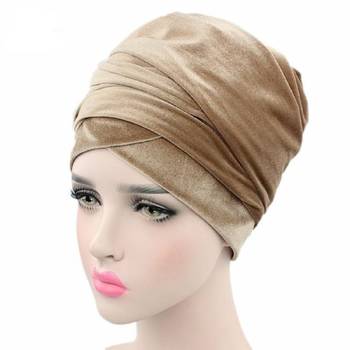
Turban scarves are long rectangular pieces — typically 60–90 cm (24–35 in) wide and 150–200 cm (59–79 in) long — wrapped and tucked to form a circular head shape. They are made from muslin (100% cotton, 80–120 GSM), cotton jersey (120–200 GSM), or satin (19–30 momme).
How to Wear
Tie the scarf into a knot at the base of the skull, then twist the fabric to create the turban shape. Pass one hand through the draped fabric to position it comfortably around the forehead, then tighten by pulling the ends outward.
When to Wear
Turban scarves serve both functional and decorative purposes in cool-to-cold weather (2–15 °C / 36–59 °F). They are worn at formal events, casual outings, and outdoor activities to protect hair and add warmth.
When Not to Wear
Do not wear turban scarves in warm conditions (above 18 °C / 64 °F) as the layered fabric traps heat and can cause headaches, nausea, and scalp discomfort from restricted air circulation. They are not appropriate for individuals with total hair loss without a wig or alternative head covering underneath.
Circle Scarves
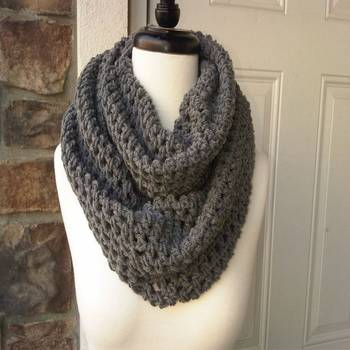
Circle scarves — also called infinity scarves — are continuous loops with no ends to tie. They are made from wool (300–450 GSM), cotton knit (200–300 GSM), cashmere (200–350 GSM), or bamboo fiber (150–250 GSM). Standard inner circumference ranges from 120 to 150 cm (47–59 in).
How to Wear
Wrap the circle scarf around the neck once or twice, adjusting the loop size by knotting the fabric to the desired fullness. The scarf can also be worn looped around the head in a headband style.
When to Wear
Circle scarves suit both formal and casual occasions across temperatures from 5 to 18 °C (41–64 °F). They are particularly practical for commuting and travel due to the absence of dangling ends.
When Not to Wear
Circle scarves with heavy wool or bulk-knit construction can overwhelm small frames or appear too casual for formal business dress codes.
Silk Scarves
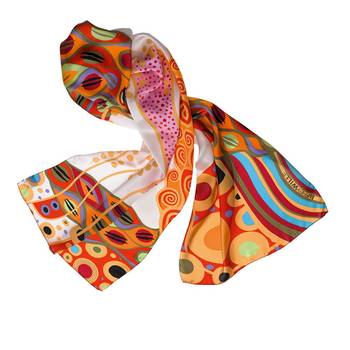
Silk scarves are most commonly cut in a square format — standard sizes are 50 × 50 cm (20 × 20 in), 70 × 70 cm (28 × 28 in), and 90 × 90 cm (35 × 35 in). They are made from silk habutai or charmeuse with a weight of 8–22 momme. The triangular cross-section of silk fibers (5–10 μm wide) gives silk its characteristic luster and cool-to-touch feel.
Silk loses up to 20% of its strength when wet. Dry cleaning is recommended for most silk scarves; hand washing in cool water (below 30 °C / 86 °F) with a pH-neutral detergent is an acceptable alternative for colorfast pieces. Never use chlorine bleach on silk — it destroys the fibroin structure.
How to Wear
Tie a square silk scarf at the neck with one end hanging lower than the other. Wrap it loosely around the wrist as an accessory. Fold it into a narrow band and wear it as a headband. Drape it over one shoulder for a classic European style.
When to Wear
Silk scarves are appropriate for all seasons and occasions. Lightweight silk squares work in spring and summer (above 18 °C / 64 °F). Heavier silk twill and charmeuse versions suit autumn and winter (5–18 °C / 41–64 °F) and air-conditioned indoor environments year-round.
When Not to Wear
Do not wear silk scarves at the beach or in sandy environments — grit embeds in the weave and damages the fibers irreparably. Avoid pairing with more than two additional accessories to prevent an overly coordinated look.
Hippie Headband
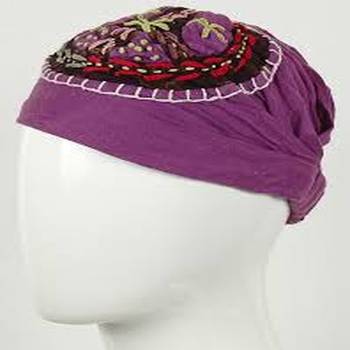
Hippie headbands are triangular pieces of fabric — typically 50–70 cm (20–28 in) at the base — with ties that fasten at the back of the head. Fabric weights range from 100 GSM (lightweight cotton) to 400 GSM (thick wool or fleece).
How to Wear
For a casual look, tie the headband around the base of your neck with the pointed end falling down your back. For a dressier look, tie it across the forehead or under the chin — both are valid styling approaches depending on the outfit.
When to Wear
Hippie headbands are versatile enough for casual daily wear and can be paired with formal outfits for a statement look. They work best in warm weather (above 15 °C / 59 °F) when worn as a head accessory rather than a warmth garment.
When Not to Wear
Layering multiple accessories alongside a hippie headband risks an over-accessorized appearance. Avoid pairing it with large earrings, stacked bracelets, and a statement necklace simultaneously.
Kimono Scarf
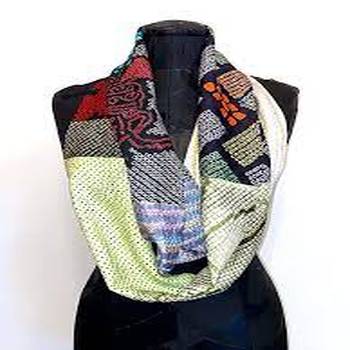
Kimono scarves are long rectangular pieces — typically 35–50 cm (14–20 in) wide and 150–200 cm (59–79 in) long — made from soft silk (8–16 momme habutai or charmeuse) or lightweight wool blends (200–350 GSM).
How to Wear
Kimono scarves offer multiple styling options: tie them around the neck, drape over both shoulders, wrap around an object like a chair or coat rack, or knot them to a bag handle as a decorative accent.
When to Wear
Kimono scarves suit both formal and casual settings across all seasons. Lightweight silk kimono scarves provide UV protection and a layer against air-conditioned environments in summer (above 22 °C / 72 °F). Heavier wool versions serve autumn and winter (5–18 °C / 41–64 °F) as an additional outer layer.
When Not to Wear
Avoid wearing kimono scarves with shorts or highly casual clothing where the aesthetic clash reads as overstyled. Ensure the rest of the outfit has visual cohesion before adding a kimono scarf as an accessory.
Faux Fur Scarves
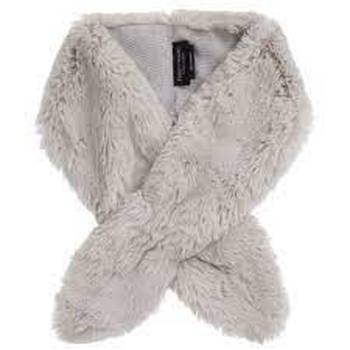
Faux fur is a manufactured textile designed to replicate the appearance of animal fur. Modern faux fur is made from modacrylic (80%) and polyester (20%) fibers with a pile height of 8–25 mm. Faux fur scarf fabrics weigh between 400 and 700 GSM, making them significantly heavier than woven scarf materials.
How to Wear
Drape a faux fur scarf over the shoulders for maximum warmth retention. Alternatively, wrap it loosely around the neck for a textured, voluminous look. The choice between these two styles depends on the formality of the outfit and the level of warmth needed.
When to Wear
Faux fur scarves provide effective cold-weather insulation between -10 and 8 °C (14–46 °F). They are suitable for casual lunches, daily commutes, and outdoor winter events. The textured appearance adds elegance to otherwise plain winter outfits.
When Not to Wear
Faux fur scarves are too dressy for evening wear and too bulky for professional office environments. Reserve them for casual and semi-formal daytime occasions in cold weather.
Afghan Scarf
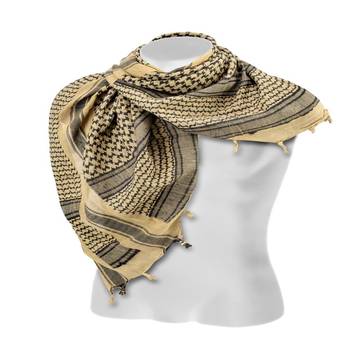
Afghan scarves are long, wide rectangular pieces — typically 50–70 cm (20–28 in) wide and 180–250 cm (71–98 in) long — featuring bold geometric embroidery, tapestry-style woven patterns, and hand-knotted fringe at each end. They are made from wool or acrylic yarn on a loom.
Variants include the traditional oblong Afghan scarf and the infinity-loop style that wraps continuously without ends.
How to Wear
Wrap the Afghan scarf around the neck as a single layer or double layer depending on the desired warmth. Tie the ends at the front for a decorative effect or leave them hanging at the back. The infinity loop variant requires no tying.
When to Wear
Afghan scarves are best suited for casual and bohemian-style outfits during cool autumn and spring weather (5–18 °C / 41–64 °F). Their bold patterns make them better suited for relaxed social occasions than formal settings.
When Not to Wear
Their vibrant, heavily patterned aesthetic does not complement formal or business attire. Do not wear them in professional settings or at elegant evening events.
Neck Scarves
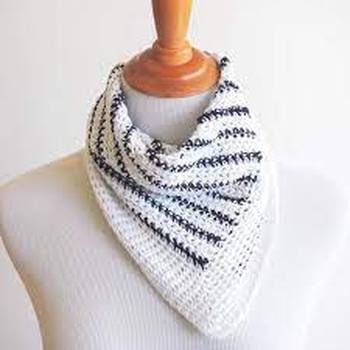
Neck scarves are lightweight pieces — typically 10–20 cm (4–8 in) wide and 80–120 cm (31–47 in) long — made from cotton lawn (60–100 GSM), silk chiffon (8–12 momme), or lightweight viscose. They add a layer of warmth without bulk.
How to Wear
Wrap the neck scarf around the neck twice, leaving the front ends at unequal lengths. Cross the longer end behind the neck, bring it to the front, and tie it to the shorter end at the side of the neck.
When to Wear
Lightweight neck scarves pair well with casual daytime outfits in temperatures between 15 and 25 °C (59–77 °F). They add a polished finishing touch to business casual attire.
When Not to Wear
Do not wear neck scarves during vigorous physical activity or sports where they may become tangled. They are not a substitute for heavier winter scarves in cold weather (below 5 °C / 41 °F).
Foldable Scarves
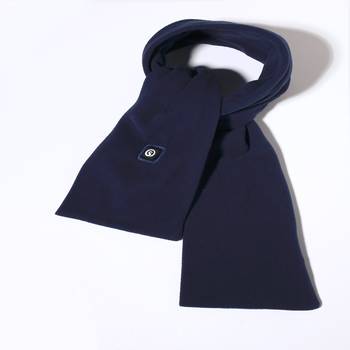
Foldable scarves are designed for portability and pack into a small pouch or pocket — typically compressing to 10 × 15 cm (4 × 6 in). They are made from wrinkle-resistant microfiber (100–150 GSM), cashmere blends, or lightweight wool.
Many foldable scarves feature built-in zippered pockets for storing small items such as keys, lip balm, or a metro card. Some include a detachable heating element powered by a USB power bank.
How to Wear
Unfold and wrap the scarf around the neck as you would any standard neck scarf. Adjust to the desired warmth and style by folding in half or leaving open.
When to Wear
Foldable scarves are designed for travel, commuting, and outdoor activities where space and weight are at a premium. They function across a wide temperature range (5–20 °C / 41–68 °F) depending on the material weight.
When Not to Wear
Choose a foldable scarf in a color and pattern appropriate for the occasion. Highly technical-looking foldable scarves with zippered pockets and D-rings are not suited for formal or evening events.
Cocktail Scarves
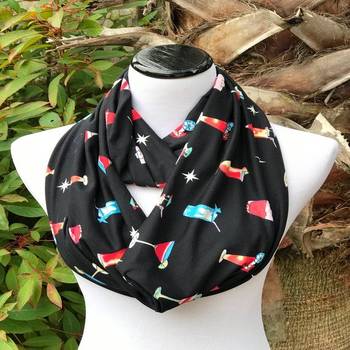
Cocktail scarves are long, narrow pieces — typically 12–20 cm (5–8 in) wide and 100–150 cm (39–59 in) long — made from silk twill, satin, or lamé. They feature plain colors or minimal patterns with a subtle shimmer or sheen finish. Weight ranges from 50 to 100 g (1.8–3.5 oz).
How to Wear
Wrap the cocktail scarf around the neck, fold the ends inward toward each other, cross them in front of the chest, and tie them together at the side. For a more relaxed look, tie the ends loosely around the neck without folding.
When to Wear
Cocktail scarves complement formal and business formal attire including cocktail dresses, tailored suits, and evening gowns. The shimmering quality adds visual interest to dark or neutral formal wear.
When Not to Wear
Do not wear a cocktail scarf with already-formal attire that features its own metallic or beaded embellishments — two shimmer pieces compete for attention. If the rest of the outfit is highly decorated, opt for a plain silk scarf instead.
Scarf Material Comparison
| Material | Weight (GSM) | Typical Temperature Range | Care Method | Best For |
|---|---|---|---|---|
| Cotton | 80–200 GSM | 15–30 °C / 59–86 °F | Machine wash cold | Spring, summer, everyday |
| Silk | 8–22 momme | 10–30 °C / 50–86 °F | Dry clean or hand wash 30 °C | All seasons, formal occasions |
| Wool | 200–500 GSM | 0–15 °C / 32–59 °F | Hand wash cold or dry clean | Autumn, winter |
| Cashmere | 150–350 GSM | 5–18 °C / 41–64 °F | Hand wash cold or dry clean | Autumn, winter, luxury wear |
| Pashmina (cashmere/silk) | 150–250 GSM | 5–18 °C / 41–64 °F | Dry clean preferred | Transitional seasons, formal |
| Faux Fur (modacrylic) | 400–700 GSM | -10–8 °C / 14–46 °F | Machine wash cold | Winter, cold weather |
| Microfiber | 100–150 GSM | 5–20 °C / 41–68 °F | Machine wash cold | Travel, outdoor activities |
Standard Scarf Dimensions
| Scarf Type | Typical Width | Typical Length | Shape |
|---|---|---|---|
| Football Scarf | 15–25 cm / 6–10 in | 91–152 cm / 3–5 ft | Rectangular |
| Academic Scarf | 15–20 cm / 6–8 in | 200 cm / 6.6 ft | Rectangular with stripes |
| Square Silk Scarf | 50–90 cm / 20–35 in | 50–90 cm / 20–35 in | Square |
| Shawl Scarf | 70–100 cm / 28–39 in | 180–250 cm / 71–98 in | Rectangular |
| Slenddang | 51–53 cm / 20–21 in | 220 cm / 87 in | Rectangular |
| Pashmina | 70–100 cm / 28–39 in | 180–220 cm / 71–87 in | Rectangular |
| Infinity / Circle | 20–40 cm / 8–16 in (tube width) | 120–150 cm circumference / 47–59 in | Circular loop |
| Hair Scarf (strip) | 10–15 cm / 4–6 in | 100–140 cm / 39–55 in | Narrow rectangular |
| Cocktail Scarf | 12–20 cm / 5–8 in | 100–150 cm / 39–59 in | Narrow rectangular |
Tips for Buying Scarves
- Purchase at least three different scarf styles to cover multiple occasions, seasons, and outfit pairings.
- Balance solid-color scarves with patterned pieces. Match scarf color to shoes or a bag for a cohesive look.
- Experiment with tying scarves at different body locations: neck, head, waist, wrist, and bag handles.
- Research material composition before purchasing. Scarf prices range from $10 for synthetic blends to $400+ for 100% cashmere. A 70/30 pashmina (cashmere/silk blend) typically costs $40–$120.
- Compare prices across retailers. Discount periods often offer 30–50% off. Subscribe to brand newsletters for early sale access.
- Limit accessories to two or three per outfit. One to two scarves maximum prevents an over-accessorized appearance.
- Assess dress code before wearing scarves to professional settings. In conservative offices, reserve scarves for business casual days or after-work events.
- Match material to the season: silk and linen work best in warm months; wool and cashmere provide necessary insulation in cold months.
Common Scarf Styling Methods
The Basic Knot
The basic neck knot works with any length scarf or shawl and conceals the hair while providing warmth throughout the day.
Fold the scarf in half, ensuring at least 5 cm (2 in) of fabric overlap. Wrap it around your head once, then pull one side of the folded fabric over each shoulder so both sides cross behind you. Pass one fabric end over the opposite shoulder, cross the two loose ends in front of you below the chin, and tie them behind your neck.
The Windmill Scarf
The windmill method suits any hair color and pairs well with or without jewelry.
Fold a long scarf in half to create an overlap of 20–25 cm (8–10 in) at each end. Pull one side up to just below the eye line, ensuring the eyes remain uncovered. Wrap the remainder around the back of your head. Pass the loose fabric ends over the crossed scarf section at the front and secure with a pin or knot.
The Knot Front Style
This style is particularly effective when paired with a statement necklace, adding visual interest to the neckline area.
Tie a long scarf around your neck once, leaving equal-length ends hanging. Pull one end upward behind the front knot, loop it around, and tie a second knot. Thread the remaining fabric end through the newly created loop and finish with an overhand knot at the base of the neckline.
Twisted Topknot
This style works best for short to medium hair and eliminates the need for head-covering fabric.
Twist the scarf into a rope shape, then tie it in an overhand knot at the crown of your head. Leave the ends loose or tuck stray pieces under the knot and pin them in place for a messier, more relaxed look.
The Infinity Loop
This style is ideal for wearing an infinity or circle scarf throughout an entire day without needing to readjust.
Loop the infinity scarf around your neck once, leaving equal gaps of approximately 2–3 cm (1 in) between each layer at both sides. Tie both ends together at the front to create a large bow, or tuck the knot behind the scarf loop for a cleaner silhouette.
Floral Headband Wrap
This method converts any scarf into a temporary headband that keeps ears warm.
Using double-sided or fashion tape, affix one end of the scarf fabric to your forehead. Wrap the fabric around the head to the desired tightness — firm enough to stay in place but not so tight that it causes discomfort. Secure the loose end with pins or additional tape.
Scarf Storage Guidelines
Choose the Right Storage Container
Select a scarf storage solution matched to the weight and bulk of your collection. Heavy winter wool and cashmere scarves require large, sturdy storage with hanging loops — a thin organza bag does not provide sufficient support and causes creasing. Lightweight silk and satin scarves can be stored in smaller, softer pouches.
When possible, use a storage container one size larger than your scarves’ dimensions to prevent compression and maintain the fabric’s natural shape.
Control Environmental Conditions
Store scarves away from direct light, heat sources, and humidity. The ideal storage environment is a dark drawer or closet at room temperature (18–22 °C / 64–72 °F) and relative humidity below 50%. In humid climates (relative humidity above 65%), store silk and wool scarves in an airtight container with silica gel desiccant packets to prevent mold growth.
Avoid Improper Hanging Storage
Never hang scarves on hooks or doorknobs for extended storage — the weight of the fabric stretches the weave over time and distorts the shape. Never store scarves in bathrooms (high humidity and temperature fluctuations) or draped over radiators (direct heat damages fibers).
Use scarf-specific organizational racks with horizontal bars or divided drawers rather than hooks. New storage tubes made of stiff material should be used for several weeks before placing heavy winter scarves inside, allowing the material to soften and conform.
Scarf Care and Maintenance
Prevent Fraying and Snagging
Fraying occurs at scarf edges after repeated use and washing. Do not pull at loose threads — use sharp scissors to carefully trim them level with the weave. Store scarves individually rather than piled together to minimize friction between fabrics.
Roll Instead of Fold
Rolling scarves together rather than folding them reduces creasing and prevents the fabric layers from rubbing against each other, which causes pilling and tangling in fine materials like cashmere and silk.
Keep Scarves Away from Heat and Open Flames
Both heaters and open flames can singe or shrink delicate scarf fibers. Never drape scarves over radiators, heated towel rails, or near stovetops. Allow scarves to air dry naturally after washing.
Wash Only When Necessary
Wash scarves when they show visible soiling or develop odor. Dirt left in fabric provides a food source for mold and causes fiber degradation. Hand wash silk scarves in cool water (below 30 °C / 86 °F) with a pH-neutral detergent formulated for delicates. Send higher-maintenance materials — including 100% cashmere and structured wool blends — to a professional dry cleaner.
Avoid Hot Water and Harsh Chemicals
Hot water causes shrinkage in wool (up to 10% for unscoured wool) and color bleeding in dyed fabrics. Never use chlorine bleach on silk — it destroys the fibroin protein structure. Many fabric shampoos are formulated differently for light and dark colors; check the label before use.
Protect from Sunlight During Storage and Wear
Prolonged exposure to direct sunlight causes fading in dyed fabrics — particularly silk, which can yellow from prolonged UV exposure. Hang-dry scarves in shaded areas and store them in dark drawers or opaque containers.
Handle with Care During Household Tasks
Do not wear fine scarves — especially silk and cashmere — while cooking, cleaning, or gardening. Silk loses up to 20% of its tensile strength when wet and is highly susceptible to snagging on jewelry, utensils, and rough surfaces. Cashmere fibers absorb strong odors (such as garlic and smoke) and are difficult to remove without dry cleaning.
Accessories That Pair Well with Scarves
- Hats — wide-brim sun hats in summer; wool beanies and fedora hats in autumn and winter
- Jewelry — statement necklaces, stud earrings, and brooches complement both plain and patterned scarves
- Belts — used to secure shawl scarves at the waist or to create a layered look
- Bags — crossbody bags and structured handbags pair well with most scarf styles
- Outerwear — blazers, cardigans, trench coats, and wool overcoats
- Footwear — ankle boots, loafers, and ballet flats complement casual scarf styling
Are Cashmere Scarves Superior to Other Scarf Materials?
Cashmere ranks among the most prized natural textile fibers due to its exceptional softness and warmth-to-weight ratio. Cashmere fibers have an average diameter of 14–16 microns — significantly finer than sheep’s wool (25–40 microns) — which creates the characteristic softness against the skin.
The Wool Products Labeling Act requires that any textile labeled “cashmere” must contain cashmere fiber with an average diameter not exceeding 19 microns, with no more than 3% of fibers exceeding 30 microns. Under these standards, genuine cashmere delivers a noticeably softer hand feel than standard wool or acrylic alternatives.
However, “better” depends on the use case. For extreme cold (-20 °C / -4 °F and below), a tightly woven wool scarf provides greater wind resistance than cashmere. For过敏-sensitive individuals, organic cotton or bamboo fiber scarves may be more comfortable against the skin. The best scarf material is the one matched to your climate, skin sensitivity, care preferences, and budget.
References
- Wikipedia. (2025). Scarf. Wikimedia Foundation.
- Wikipedia. (2025). Silk. Wikimedia Foundation.
- Wikipedia. (2025). Cashmere Wool. Wikimedia Foundation.


