
How GSM Relates to Fabric Weight, Thread Count, and Durability

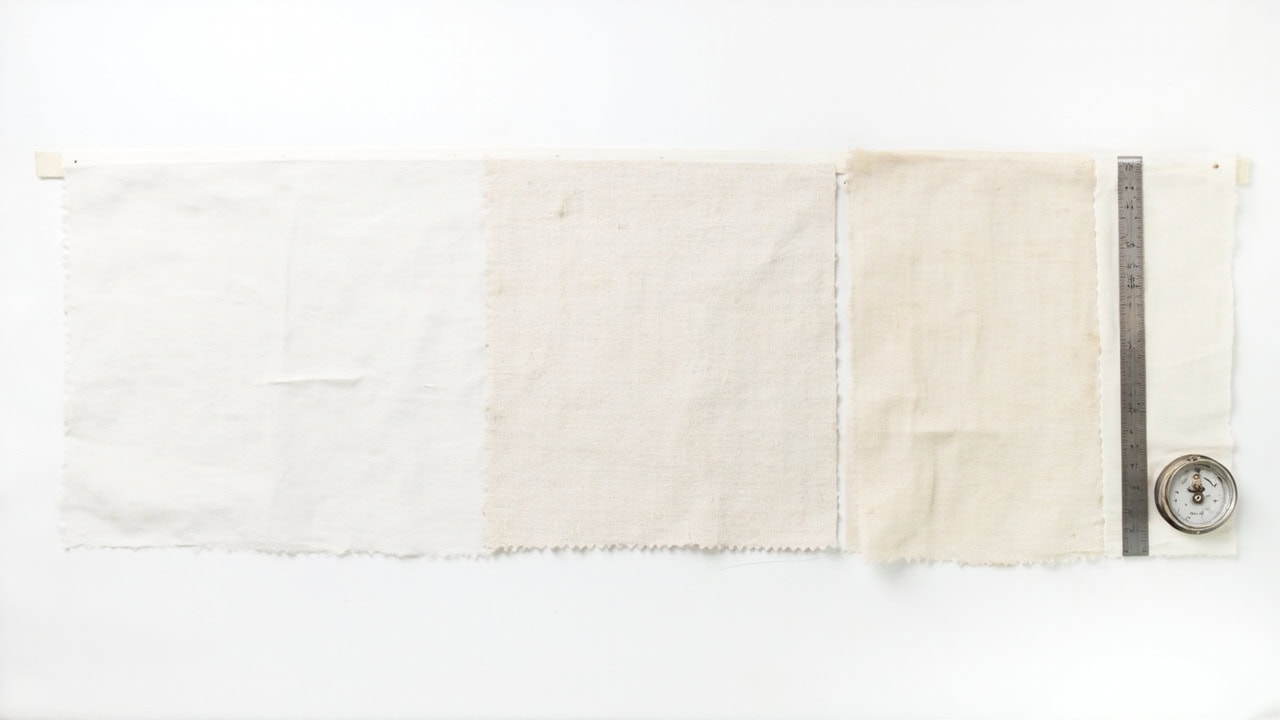
Fabric GSM (grams per square meter) is the direct, standardized measurement of fabric weight — a 200 GSM cotton fabric weighs exactly 200 grams per square meter, regardless of weave or fiber type. GSM serves as the primary determinant of fabric weight classification, while thread count is a secondary yarn-level measurement that interacts with GSM to influence durability, breathability, and handle. Understanding GSM eliminates the guesswork from fabric selection and ensures you choose the right weight for every project.
What Is GSM? Definition and Quick Overview
GSM stands for grams per square meter (g/m²) — the metric standard adopted worldwide for measuring fabric weight. A 100 GSM fabric weighs 100 grams per square meter of material, regardless of whether it is woven, knitted, or non-woven. GSM is a direct physical measurement of fabric weight, independent of fabric dimensions or construction method, making it the most reliable single metric for comparing fabrics across different fiber types and weave structures.
Two fabrics sharing the same GSM can feel entirely different in hand and appearance. A 180 GSM plain-weave cotton poplin and a 180 GSM knitted interlock have identical weights per square meter but different thicknesses, stretch, and drape characteristics. This is because GSM measures mass, not volume — the distribution of that mass through yarn thickness, fiber density, and construction method creates the tactile differences. GSM is therefore best understood as one axis of fabric characterization alongside fiber content, yarn construction, and weave structure.
Fabric GSM spans a wide range depending on intended use. Sheer and lightweight fabrics such as voile, organdy, and chiffon typically fall between 60–100 GSM. Light-to-medium fabrics including poplin, quilting cotton, and standard t-shirt jersey occupy the 100–180 GSM range. Medium-weight fabrics like sateen, lightweight denim, and flannel range from 180–280 GSM. Heavy fabrics — denim, canvas, and upholstery fabrics — typically span 280–400 GSM. Industrial and extremely heavy materials such as tarpaulin, heavy canvas, and boat covers exceed 400 GSM.
How GSM Is Measured: The Testing Method
ASTM D3776-09 — Standard Test Methods for Mass Per Unit Area of Fabric, developed by ASTM International Committee D13.60 on Fabric, defines the standardized method for determining fabric GSM. The procedure uses a circular cutter to punch a 100 cm² sample (a 10 cm × 10 cm square) from the fabric. This sample is then weighed on a precision laboratory scale. Because the sample area equals exactly 1/100 of a square meter, the weight in grams reads directly as the fabric’s GSM — a 2.4 gram sample equals 240 GSM.
For commercial acceptance testing (ASTM D3776 Option A — Full Piece), multiple samples are taken from different locations across the fabric roll or bolt and averaged to produce a representative result. For laboratory swatch testing (Option C), a small specimen is evaluated independently and results apply only to that sample. The standard requires conditioned testing — fabric is acclimated to standard temperature (20°C / 68°F) and relative humidity (65%) before measurement, as moisture content significantly affects weight readings.
GSM does not measure fabric thickness directly. A tightly woven high-thread-count fabric at 180 GSM may feel thinner than a loosely woven low-thread-count fabric at the same GSM, because the high-count fabric uses finer yarns packed more densely. Conversely, a thick, loosely spun bulky yarn can yield the same GSM as a fine, tightly spun yarn while producing a substantially thicker and loftier fabric. This is why GSM must always be interpreted alongside yarn count and weave structure when selecting fabrics for specific end uses.
GSM and Fabric Weight: The Direct Relationship
GSM is fabric weight — they are not two different measurements. GSM is the metric standard expression of fabric weight, making it the universal reference point for comparing fabrics internationally. The confusion arises because the U.S. fabric industry has historically used osy (ounces per square yard) while the rest of the world uses GSM. The conversion is linear: 1 oz/yd² equals approximately 33.9 GSM. An “8 oz cotton” fabric translates to roughly 270 GSM.
Fabric weight classification by GSM follows a consistent framework across fabric types:
- 60–80 GSM: Sheer fabrics including voile, lawn, and batiste — used for overlays, sheer curtains, and lightweight scarves
- 80–120 GSM: Lightweight fabrics for linings, blouses, and scarf fabrics — breathable with minimal body
- 120–180 GSM: Medium-light weight covering shirting, t-shirt fabric, and bedsheets — the most versatile weight category for apparel
- 180–280 GSM: Medium weight suitable for suiting, lightweight denim, and drapery — provides structure with reasonable drape
- 280–400 GSM: Heavy weight for denim, canvas, and workwear — durable with minimal breathability
- 400+ GSM: Very heavy industrial fabrics including tarps, heavy upholstery, and specialty industrial textiles
Fabric weight directly determines warmth, breathability, drape, durability, and cost. Heavier fabrics trap more air within their structure, providing greater thermal insulation — a 300 GSM flannel shirt provides measurably greater warmth than a 150 GSM poplin shirt in identical conditions. Breathability decreases as GSM increases because more material per unit area means fewer air passages for moisture vapor escape. Drape follows a similar inverse relationship: lighter fabrics flow and follow body contours, while heavier fabrics hang stiffly and hold their own shape.
GSM and Thread Count: The Yarn-Level Relationship
Thread count — expressed as threads per square inch (warp threads plus weft threads combined) — measures the density of yarn in a woven fabric. GSM and thread count are related but measure fundamentally different properties: GSM quantifies mass per unit area while thread count quantifies yarn quantity per unit area. Understanding their interaction is essential for accurate fabric evaluation.
Higher thread count generally correlates with higher GSM, but weave structure significantly modifies this relationship. In a plain weave fabric, each warp thread passes over and under each weft thread in an alternating pattern. This tight interlacing structure means thread count and GSM correlate directly — doubling the thread count roughly doubles the fabric’s weight per area. In a twill weave fabric such as denim, the diagonal float pattern allows more threads per square inch at a given GSM than plain weave, because each yarn passes over multiple crossing yarns before interlacing again.
The sateen weave illustrates this most dramatically. Sateen uses long float lengths — each warp thread passes over four to six weft threads before interlacing once. This structure concentrates threads at the fabric surface rather than distributing them through the thickness, dramatically increasing the visible thread count without proportionally increasing GSM. A 180 GSM sateen weave may display a 400-thread-count label while a 200 GSM plain-weave percale with 200 threads/in² feels denser and more tightly woven despite the lower number on the label. This is why comparing thread counts across different weave types without accounting for GSM produces misleading conclusions about fabric quality.
Knit fabrics — including rib knit and interlock fabrics — are not measured by thread count at all. Jersey, interlock, rib knit, and French terry are specified exclusively by GSM because their construction involves looping rather than interlacing warp and weft threads. Attempting to apply thread count specifications to knit fabrics is technically meaningless. A 180 GSM interlock knit and a 180 GSM single jersey have identical weights but entirely different stretch recovery, thickness, and handle characteristics.
High GSM does not automatically indicate high thread count when yarn properties vary. A loosely spun, thick bouclé yarn at 200 GSM may contain fewer individual fibers per cross-section than a tightly spun, fine Combed-Cotton yarn at 150 GSM — yet the bouclé fabric weighs more. Yarn twist level, fiber length (staple vs. filament), and spinning method all influence how much mass is packed into a given area, creating divergence between the two measurements.
GSM and Durability: Performance Implications
Higher GSM generally indicates more material per unit area and therefore greater tear strength and abrasion resistance. The Martindale abrasion test (ISO 12947-2 / ASTM D4966) — the internationally recognized standard for measuring fabric wear resistance — measures the number of double rubs a fabric withstands before visible deterioration. Martindale results correlate more reliably with GSM than with thread count because GSM directly quantifies the material present to resist fiber abrasion and yarn rupture.
Durability is not determined by GSM alone. Three additional factors interact with weight to establish actual fabric performance:
- Fiber strength: Polyester and nylon filaments provide superior abrasion resistance compared to cotton or rayon of equivalent weight. A 150 GSM polyester fabric typically outlasts a 150 GSM cotton fabric in Martindale testing.
- Yarn construction: Ring-spun yarns, which use a drafting and twisting process producing long staple fibers aligned parallel to the yarn axis, produce stronger, more cohesive yarns than open-end spun yarns of equivalent count. Ring-spun cotton at 180 GSM outperforms open-end spun cotton at the same weight.
- Weave structure: Twill and plain weaves resist abrasion more effectively than satin or sateen weaves because their shorter float lengths distribute stress across more interlacing points. A 280 GSM twill weave cotton will typically outlast a 280 GSM sateen cotton in heavy-use applications.
Industry-established GSM thresholds for common durability levels provide practical guidance for fabric selection:
- 100–150 GSM: Light-use fabrics — blouses, lining, scarves, and decorative applications — typically achieve 10,000–15,000 Martindale rubs before visible wear. These fabrics are not suited for sustained abrasion.
- 150–220 GSM: Moderate-use fabrics — dress shirts, casual dresses, and bedsheets — withstand 15,000–25,000 Martindale rubs. This range represents the sweet spot for everyday apparel requiring both comfort and reasonable durability.
- 220–300 GSM: Heavy-use fabrics — trousers, jackets, and light upholstery — provide 25,000–40,000 Martindale rubs. These weights are standard for workwear, tailored garments, and furniture requiring long service life.
- 300+ GSM: Very heavy-use fabrics — denim, heavy canvas, and workwear — exceed 40,000 Martindale rubs. These materials are designed for industrial applications, heavy labor, and furniture subjected to continuous use.
For upholstery and workwear applications, GSM is the primary durability indicator — thread count becomes irrelevant when comparing fabrics of substantially different weights. A 320 GSM heavy cotton canvas will outperform an 180 GSM high-thread-count sateen in every abrasion metric, regardless of yarn quality differences.
Practical GSM Guide by Fabric Type
| Fabric Type | Typical GSM Range | Weight Classification | Common Uses |
|---|---|---|---|
| Voile / Sheer | 60–80 | Sheer | Curtains, scarves, overlays |
| Lawn / Poplin | 80–120 | Light | Blouses, quilting, lining |
| Cotton Shirting | 100–180 | Light-medium | Dress shirts, t-shirts |
| T-shirt Jersey | 120–180 | Light-medium | T-shirts, underwear, sleepwear |
| Sateen | 180–220 | Medium | Bedding, dresses, lingerie |
| Flannel | 180–280 | Medium | Shirts, pajamas, sheets |
| Light Denim | 200–280 | Medium | Summer jeans, skirts, shirts |
| Heavy Denim | 300–400 | Heavy | Jeans, jackets, workwear |
| Canvas / Duck | 280–400 | Heavy | Bags, aprons, workwear, sails |
| Upholstery | 300–500 | Heavy | Furniture, cushions, automotive |
| Tarpaulin | 400–900 | Very heavy | Covers, industrial, marine |
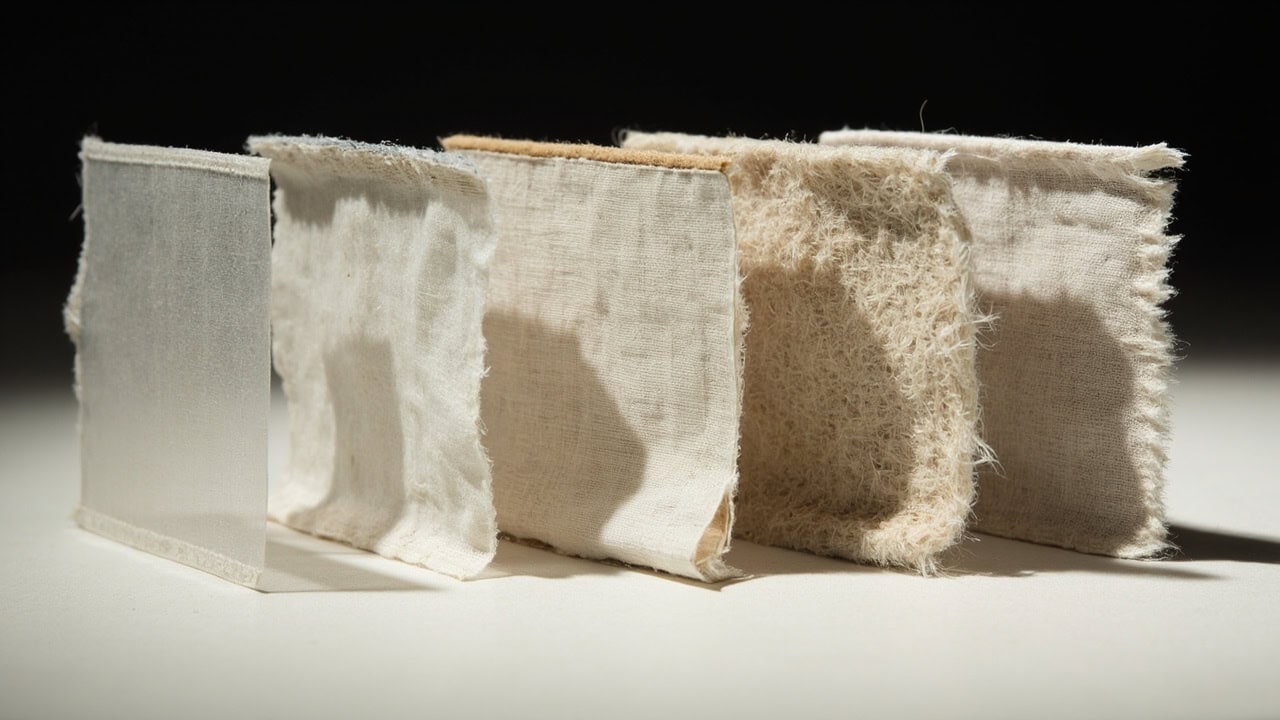
These ranges represent typical commercial specifications, but actual GSM can vary by manufacturer, fiber blend, and finish. A waxed cotton canvas may weigh 400+ GSM finished but start at 320 GSM pre-treatment. A mercerized cotton sateen at 180 GSM will feel different from an unmercerized sateen at the same weight due to the fiber swelling and luster enhancement from mercerization. Always verify the GSM of a specific fabric rather than relying on type alone, particularly when precise performance characteristics are required.
Frequently Asked Questions
What is a good GSM for fabric?
A “good” GSM depends entirely on the intended use — 120–180 GSM is ideal for t-shirts and shirts, 220–300 GSM for pants and jackets, and 300+ GSM for denim and workwear. There is no universal “best” GSM; the right GSM matches the application. A 60 GSM chiffon is perfect for a sheer overlay but unsuitable as a work apron. Conversely, 400 GSM canvas makes excellent heavy-duty covers but would be uncomfortable as a summer blouse.
Does higher GSM mean better quality fabric?
Higher GSM indicates more material and generally greater durability, but quality also depends on fiber type, yarn construction, and weave. A 150 GSM Egyptian cotton sheet is far superior to a 150 GSM polyester blend in comfort, breathability, and longevity. GSM measures weight, not quality or comfort — it tells you how heavy the fabric is, not how good it feels or how long it will last in a given application. Always pair GSM with fiber content when evaluating fabric quality.
Can you estimate GSM from thread count?
You can estimate GSM from thread count only when the weave structure is known. A plain weave fabric with a 200 thread count is approximately 150–180 GSM, while a sateen weave at 400 thread count is approximately 180–220 GSM. Without knowing the weave type, thread count alone is insufficient to determine GSM — the sateen’s longer float lengths pack more threads per square inch without proportionally increasing weight, creating a misleadingly high thread count at a moderate GSM.
What GSM is best for summer clothing?
For summer clothing, 80–150 GSM fabrics are best — light cotton lawn (80–100 GSM), cotton poplin (100–130 GSM), or lightweight linen (100–150 GSM) provide maximum breathability by allowing maximum air circulation through the fabric structure. Above 180 GSM, fabrics become too insulating for hot weather regardless of fiber content, trapping heat against the body. Light colors and loose weaves amplify this effect — a 130 GSM white linen shirt in a loose open weave will feel cooler than a 180 GSM dark cotton shirt in a tight twill, even though both are “summer weights.”
References
- ASTM International. (2009). Standard Test Methods for Mass Per Unit Area of Fabric (D3776-09). ASTM International, Committee D13.60 on Fabric. https://www.astm.org/standards/d3776
- International Organization for Standardization. (1998). Textiles — Determination of abrasion resistance of textile fabrics — Martindale method (ISO 12947-2). ISO. https://www.iso.org/standard/33161.html
- ASTM International. (2010). Standard Test Method for Abrasion Resistance of Textile Fabrics (Martindale Abrasion Tester Method) (D4966-10). ASTM International.
- Cotton Incorporated. Fabric Weight and Thread Count. CottonWorks™ Education Resource. https://www.cottonworks.com
- International Wool Textile Organisation (IWTO). Fabric Weight and Quality Specifications. https://www.iwto.org
- Textile Exchange. Material Standards and Guidelines. https://www.textileexchange.org


