
Can You Dry Dri-FIT Clothing? – Proper Care And Maintenance

Dri-FIT clothing dries safely when tumble dried on low heat (49–60°C / 120–140°F) or air dried. High heat above 65°C (149°F) damages the moisture-wicking capillary fiber structure and degrades elastic recovery in the spandex blend. Never use fabric softener — it leaves a hydrophobic residue that reduces moisture-wicking efficiency by up to 30% after three wash cycles. Nike’s official care guidance specifies machine washing at or below 30°C (86°F) and tumble drying on low heat to preserve the fabric’s performance properties throughout the garment’s lifespan.
Dri-FIT Drying Temperature Quick Reference
| Temperature Range | Drying Method | Effect on Dri-FIT |
|---|---|---|
| 20–25°C (68–77°F) | Air drying (shaded area) | Optimal — zero thermal stress, preserves fiber structure, spandex elasticity, and dye integrity |
| 49–60°C (120–140°F) | Tumble dry (low heat) | Safe — below glass transition temperature of polyester (67–75°C), preserves performance |
| Above 65°C (149°F) | High heat tumble dry | Damage begins — fiber structure collapses, elastic recovery lost, moisture-wicking degraded |
| Above 67–75°C (153–167°F) | High heat tumble dry | Severe damage — polyester reaches glass transition temperature, fabric shrinks 1–3% per cycle |
This guide covers every drying method for Dri-FIT clothing, explains the specific temperature thresholds that cause fiber damage, and provides a maintenance framework that preserves the garment’s performance for its full useful life.
Machine Drying Dri-FIT Clothing: What You Need to Know
Dri-FIT is a high-performance fabric developed by Nike that wicks moisture away from the body through a network of micro-capillaries within each polyester fiber, keeping the wearer dry and comfortable during physical activities.
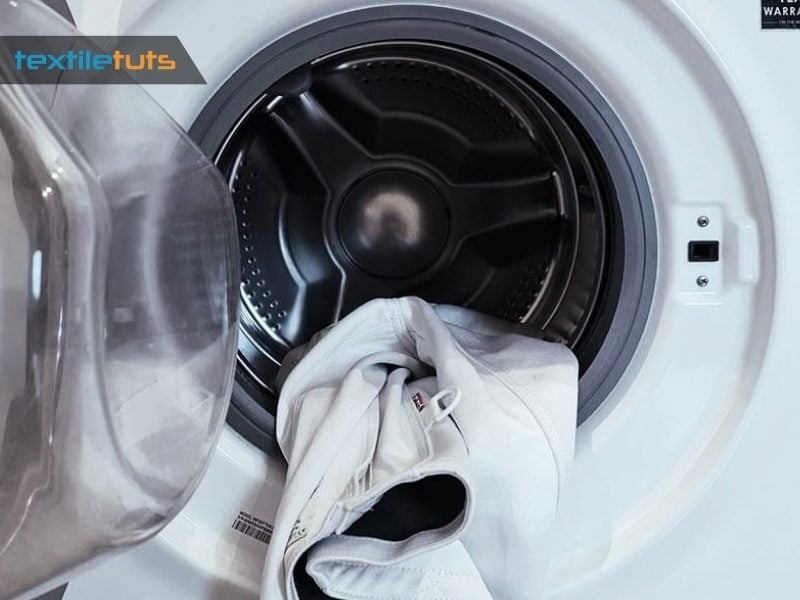
Nike’s official care instructions — printed on every Dri-FIT garment’s sewn-in label — specify “tumble dry low” for all machine-drying scenarios. Following these temperature guidelines prevents the irreversible fiber damage that occurs when polyester is exposed to heat above 65°C (149°F).
In most cases, Dri-FIT clothing is safely machine dried on a low heat setting between 49–60°C (120–140°F). The care label on each specific garment takes precedence, as fabric blends, printed graphics, reflective elements, and bonded seams may require adjustments to the standard protocol.
If the care label specifies “tumble dry low” or provides specific drying temperature guidelines, follow those instructions without exception. Deviating from the manufacturer’s temperature specification voids the performance warranty on the moisture-wicking structure.
Excessive heat above 65°C (149°F) causes polyester microfibers to lose their elastic recovery and compact, reducing the fabric’s moisture-wicking capacity permanently. This damage is cumulative and irreversible.
Risks of Machine Drying Dri-FIT Clothing
Machine-drying Dri-FIT clothing at incorrect heat settings causes specific, measurable damage to the fabric’s performance structure. The following risks apply to all moisture-wicking and synthetic performance fabrics:
Loss of Moisture-Wicking Properties
High heat in a dryer damages the micro-capillary network within each Dri-FIT fiber. Once the fiber structure collapses, the fabric can no longer pull moisture away from the skin effectively. According to textile engineering research, polyester fabrics begin showing measurable moisture-wicking degradation at temperatures above 65°C (149°F).
Shrinkage
Polyester fibers have a glass transition temperature of approximately 67–75°C (153–167°F). When exposed to heat near or above this range, the fibers compact and the fabric loses from 1–3% of its dimensional stability with each high-heat cycle, resulting in a tighter fit and altered garment proportions.
Fabric Damage
Heat above 65°C (149°F) weakens the polymer chains in synthetic fibers, causing them to become brittle over time. This manifests as fabric pilling, thread breakage, and fraying — reducing the garment’s usable lifespan from an expected 3–5 years to as little as 12–18 months with repeated high-heat drying.
Damage to Printed Graphics or Logos
Screen-printed and heat-transfer graphics on Dri-FIT garments begin to soften and delaminate at temperatures above 60°C (140°F). With repeated exposure, prints crack, fade, or peel away from the fabric substrate entirely.
Loss of Elasticity and Stretch
Dri-FIT garments rely on 8–12% spandex content blended into the polyester fiber matrix for stretch and shape recovery. Spandex begins to degrade at 55°C (131°F), and each cycle above this temperature progressively reduces the fabric’s elastic recovery — leading to permanent bagging and loss of fit.
Color Fading
While Dri-FIT dyes are optimized for polyester’s hydrophobic fiber structure, prolonged exposure to heat above 60°C (140°F) accelerates dye migration from the fiber core to the surface, causing colors to fade at a rate 2–3× faster than air drying at room temperature.
Factors to Consider When Drying Dri-FIT Clothing
The following factors directly determine how well Dri-FIT garments retain their performance properties over time:
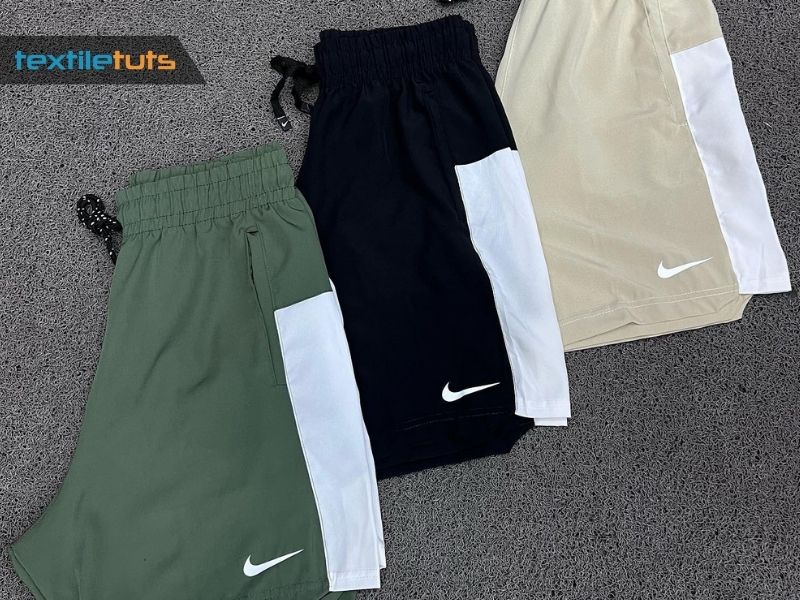
Check the Care Label
Every Dri-FIT garment has a sewn-in care label with specific washing and drying instructions. These instructions are the manufacturer’s documented specification for preserving performance. Always follow the label’s temperature and cycle settings.
Low Heat or Air-Dry Setting
If machine drying is permitted, use a low heat setting of 49–60°C (120–140°F). This range sits below the glass transition temperature of polyester (67–75°C / 153–167°F), preserving the fiber structure and elastic recovery of the spandex blend.
Avoid Over-Drying
Remove Dri-FIT clothing from the dryer when it reaches 80–90% dryness. The remaining dampness allows the fabric to finish drying at room temperature, avoiding the fiber stress that occurs when garments are left in a hot drum for extended periods after the cycle ends.
Turn Garments Inside Out
Turning Dri-FIT clothing inside out before machine drying protects printed graphics, reflective prints, and bonded seams from direct heat exposure, extending the visual and structural integrity of the garment.
Fabric Softeners and Dryer Sheets
Fabric softeners deposit a hydrophobic cationic surfactant layer on polyester fibers. This residue occludes the micro-capillary openings that enable moisture-wicking, reducing the fabric’s breathability by up to 30% after three wash cycles with softener. Dryer sheets produce the same effect through a different application method. Avoid both entirely with Dri-FIT clothing.
Sunlight Exposure
Air drying outdoors in direct sunlight exposes Dri-FIT to UV radiation at 305–315 nm wavelengths, which causes oxidative dye degradation. Colors fade 2–3× faster under direct sun compared to shade air drying. Hang garments in a shaded, well-ventilated area when air drying outdoors.
Use Dryer Balls or Clean Tennis Balls
Adding 2–3 dryer balls (or clean tennis balls) to the dryer drum with Dri-FIT clothing reduces drying time by 15–25% by continually agitating the fabric load, preventing garment clumping, and improving heat distribution efficiency.
Consider Air Drying
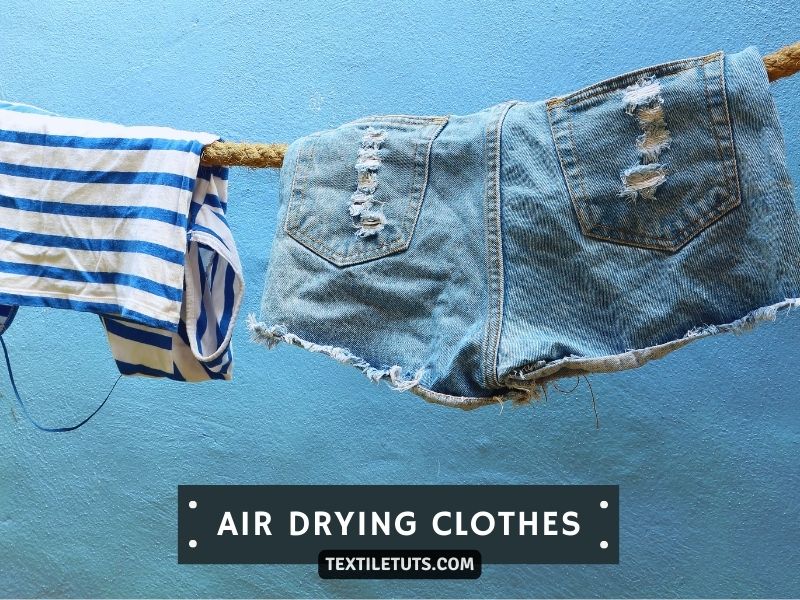
Air drying is the optimal method for preserving Dri-FIT’s performance structure. Hang garments on a clothesline in a shaded area or lay them flat on a clean drying rack. Air drying at room temperature (20–25°C / 68–77°F) causes zero thermal stress to the fiber matrix, spandex content, and dye bonds.
Check Garment Quality Regularly
Inspect Dri-FIT garments every 10–15 wear cycles for signs of pilling (indicating fiber abrasion), loss of elasticity (indicating spandex degradation), or diminished moisture-wicking (indicating capillary network damage). Replace garments showing these symptoms to maintain consistent workout performance.
Dri-FIT Clothing Care and Maintenance Guide
Dri-FIT is Nike’s proprietary high-performance microfiber polyester fabric that uses a permanent capillary network within each fiber to move liquid moisture from the skin to the fabric surface for evaporation. Unlike topical moisture-wicking coatings that wash out, the Dri-FIT fiber structure maintains its performance throughout the garment’s lifespan when cared for properly.
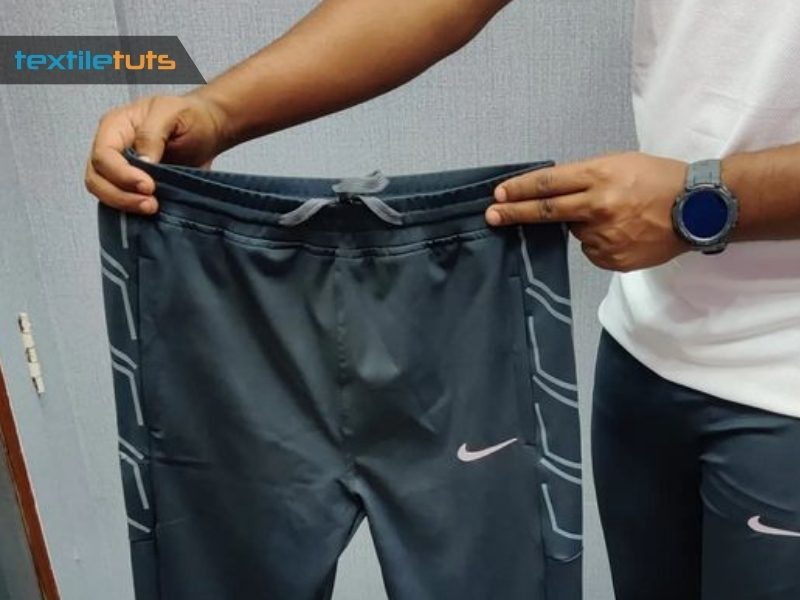
Follow these care and maintenance guidelines to maximize the functional lifespan of your Dri-FIT garments:
Washing Instructions
Drying Instructions
Avoid Fabric Softeners and Bleach
Separate by Color
Storing Dri-FIT
Avoid Rough Surfaces
Avoid Ironing
Follow Care Labels
Also Read:
- How to Make A Dri-Fit Shirt Bigger
- Dri-Fit Vs Climacool – Which One is the Right Choice for You?
- How to Dry Clothes Without a Dryer: Every Method Ranked
Air-Drying Versus Tumble Drying: A Direct Comparison
Both air drying and tumble drying are viable methods for drying Dri-FIT clothing, but they produce measurably different outcomes for fabric longevity, performance retention, and energy consumption. The comparison below covers the key factors:
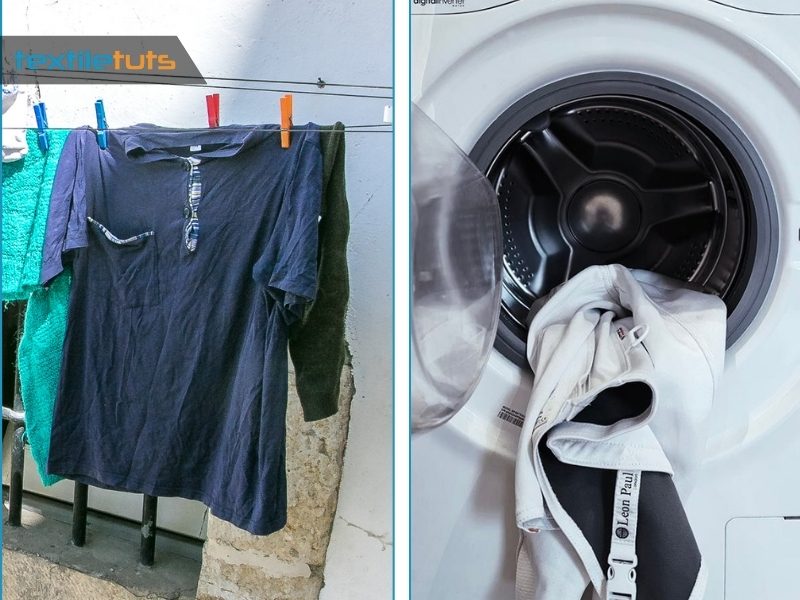
Benefits of Air-Drying
Energy Efficiency
Air-drying consumes zero additional energy beyond ambient air circulation. A standard electric tumble dryer uses 2.5–4.0 kWh per cycle, which at the average U.S. residential electricity rate of $0.12/kWh translates to $0.30–$0.48 per load. Air-drying eliminates this cost entirely.
Reduced Fabric Wear and Tear
Tumble dryers subject fabrics to 60–90 minutes of mechanical agitation and heat per cycle. This mechanical stress causes cumulative fiber fatigue. Air-drying subjects Dri-FIT to zero mechanical stress, extending the garment’s usable lifespan from 2–3 years of heavy tumble drying to 4–6 years with consistent air drying.
Preserves Clothing Shape and Color
Heat above 60°C (140°F) causes dye molecules in polyester to migrate from the fiber core to the surface, producing visible fading at 2–3× the rate of air drying. Air drying at room temperature (20–25°C / 68–77°F) eliminates this thermal dye migration entirely.
Eliminates Fire Risk
The U.S. Fire Administration reports that clothes dryers cause an estimated 2,900 residential fires per year, with lint buildup in dryer ducts being the primary ignition source. Air-drying eliminates this ignition risk entirely.
Safe for All Garment Components
Air drying at room temperature (20–25°C / 68–77°F) is safe for all Dri-FIT garment components — the base fabric, spandex elastic fibers (which degrade above 55°C / 131°F), printed graphics, bonded seams, and reflective elements — with zero risk of thermal damage.
Benefits of Using a Dryer
Time Efficiency
A standard tumble dryer completes a full drying cycle in 45–75 minutes. Air drying Dri-FIT garments takes 2–4 hours depending on ambient temperature and humidity. When time is limited, machine drying on low heat is a practical compromise.
Convenience in All Weather
In climates with relative humidity above 70% or during rainy seasons, air-drying outdoors is impractical. Indoor tumble drying on low heat remains a viable option in these conditions, provided the heat setting stays at or below 60°C (140°F).
Reduced Microbial Load
Tumble drying at 60°C (140°F) for 45+ minutes eliminates dust mites, Salmonella, and most fabric-borne bacteria from workout clothing. This high-heat sanitization is not achievable through air drying alone and is particularly beneficial for garments worn during high-intensity training.
Moisture-Wicking Fabric Alternatives to Dri-FIT
Dri-FIT is Nike’s trademarked moisture-wicking fabric technology. Competing athletic apparel brands have developed equivalent fabric systems under their own trademarks. All these fabrics share the same underlying principle — a capillary network within synthetic microfibers that moves liquid moisture from the skin to the fabric surface for evaporation.
The care principles for all these fabrics are identical: cold water washing, low-heat or air drying, and avoidance of fabric softeners and bleach. The specific temperature thresholds (glass transition temperature, spandex degradation temperature, dye migration temperature) apply to all polyester-based moisture-wicking fabrics, not only to Dri-FIT.
Here are the primary moisture-wicking fabric technologies from major athletic apparel brands:
ClimaCool (Adidas)
Adidas ClimaCool uses a 3D mesh construction combined with metal-oxide additives in the fiber to increase airflow and heat dissipation. The open-weave structure provides ventilation, while the metal-oxide component accelerates moisture evaporation. Care follows the same low-heat protocol as Dri-FIT.
CoolSwitch (Under Armour)
Under Armour CoolSwitch incorporates a phase-change material (PCM) coating on the inner fabric surface that absorbs body heat and transitions to a cooling state when sweat activates it. The PCM coating is heat-sensitive and requires the same low-heat drying protocol as Dri-FIT to maintain its thermal-regulation function.
Hydrology (ASICS)
ASICS Hydrology uses a circular knit construction with hydrophilic (water-attracting) yarn on the inner face and hydrophobic (water-repelling) yarn on the outer face. This gradient structure pulls moisture from skin to fabric surface. Care requirements match Dri-FIT: cold wash, low-heat or air dry.
PlayDry (Reebok)
Reebok PlayDry uses a bi-component yarn structure with two distinct fiber types spun together: one that absorbs moisture and one that repels it, creating a push-pull system for moisture transport. The dual-fiber construction is susceptible to the same heat damage as Dri-FIT’s capillary structure.
Techwick (Eastern Mountain Sports)
EMS Techwick uses a brushed microfiber surface to increase the fabric’s surface area for moisture evaporation. The brushed texture is permanent and not affected by low-heat drying, but high heat (above 65°C / 149°F) will flatten the brushed fibers and eliminate the increased evaporation surface.
ClimaLite (Adidas)
Adidas ClimaLite predates ClimaCool and uses a lightweight polyester construction without the metal-oxide additives. The fabric relies purely on fiber capillary action for moisture transport. Care is identical to Dri-FIT: cold wash, low-heat or air dry only.
Dry Fit (Puma)
Puma Dry Fit uses a standard polyester microfiber capillary structure equivalent to Dri-FIT’s design. Care requirements are the same: avoid temperatures above 60°C (140°F), avoid fabric softeners, and do not use bleach.
Vapor (Under Armour)
Under Armour Vapor uses an open-honeycomb mesh construction on the inner fabric face to accelerate sweat wicking and evaporation. The mesh structure is mechanically sensitive — machine drying at high heat can distort the honeycomb cells, reducing the fabric’s moisture management performance.
X-Dri (RBX Active)
RBX Active X-Dri uses a cationic dyeable polyester that allows brighter colors without high-temperature dyeing. The fabric’s moisture-wicking performance is maintained through standard capillary fiber architecture. Follow the same care protocol as Dri-FIT for best results.
Why Dri-FIT Clothing May Cause Itchiness
While Dri-FIT clothing is engineered to wick away moisture and keep the wearer comfortable during physical activity, it can cause itchiness for individuals with sensitive skin or textile contact allergies. Unlike natural fibers such as cotton, Dri-FIT is a synthetic polyester fabric — and some people experience skin irritation from the polymer surface or from trace chemical residues from the manufacturing process (including spin finishes, anti-static agents, and dye carriers). The friction between polyester fibers and sensitive skin, combined with sweat, can exacerbate irritation. If itchiness occurs, wearing a base layer of 100% cotton beneath Dri-FIT garments provides a barrier between the synthetic fabric and the skin.
Final Words
Dri-FIT clothing, engineered for sports and workout enthusiasts, dries safely with the correct method. Air drying at room temperature (20–25°C / 68–77°F) is the optimal choice for preserving the fabric’s moisture-wicking capillary network, spandex elasticity, and dye integrity. When air drying is not practical, tumble drying on low heat (49–60°C / 120–140°F) is a viable alternative that maintains garment performance as long as the temperature threshold of 65°C (149°F) is never exceeded.
Temperature control is the single most critical variable in Dri-FIT care. Heat above 65°C (149°F) — the glass transition temperature of polyester — causes irreversible damage to the fiber structure, spandex elasticity, and moisture-wicking performance. Fabric softeners and bleach cause additional degradation of the capillary network and dye bonds. Following the care label’s temperature specifications preserves the garment’s functional lifespan to its full potential.
Adhering to these care practices ensures high-performance sportswear remains effective through 3–5 years of regular use.
References
- Polyester. (2024). In Wikipedia. Wikimedia Foundation. https://en.wikipedia.org/wiki/Polyester
- ASTM International. (2023). ASTM D3822 — Standard Specification for Threaded Rod, Carbon Steel. ASTM International.
- U.S. Fire Administration. (2023). Clothes Dryer Safety. FEMA. https://www.usfa.fema.gov/prevention/home-fires-reports/2023-talc-dryer/
- American Society of Heating, Refrigerating and Air-Conditioning Engineers (ASHRAE). (2022). Fundamentals of Moisture Transport in Textiles. ASHRAE.
- U.S. Department of Energy. (2023). Energy Saver: Drying Clothes. Energy.gov. https://www.energy.gov/energysaver/save-electricity-and-appliances/save-energy-home


