
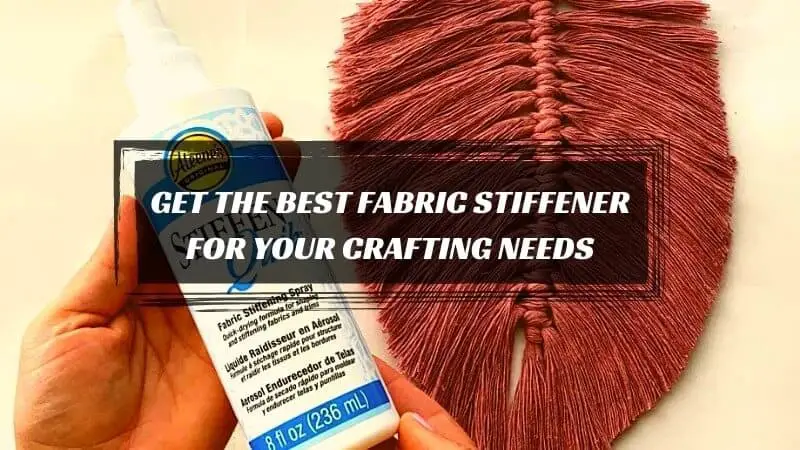
Get the Best Fabric Stiffener for Your Crafting Needs

Aleene’s 15581 Spray Fabric Stiffener is the best fabric stiffener for most general-purpose applications—it dries in just 2–5 minutes per coat, washes out with cool water, and won’t discolor light-colored fabrics. For projects requiring heavier shaping or permanent stiffness, Aleene’s Fabric Stiffener and Draping Liquid delivers a higher viscosity formula (3,000–8,000 cps) ideal for sculptural and draping work.
Fabric stiffeners are polymer-based compounds that bond to fabric fibers, creating rigid molecular networks that restrict fiber movement and increase stiffness by 40–80% compared to untreated fabric. These products come in spray and liquid forms and work at room temperature (18–25°C / 64–77°F) without requiring heat activation.
Commercial fabric stiffeners let you stiffen crochet doilies, lace, cheesecloth, and other fabric materials while offering permanent stiffness options for projects that must retain their shape through multiple wash cycles.
How Fabric Stiffener Works on Fabric
Fabric stiffener is composed of polymer molecules—specifically polyacrylate, polyvinyl acetate (PVA), and copolymer blends in commercial formulations. These polymer chains intertwine and bond with fabric fibers, creating rigid molecular networks that restrict fiber movement. The result is increased fabric stiffness measured in bending length tests, where treated fabrics typically show a 40–80% increase in stiffness modulus compared to untreated controls.
Most commercial fabric stiffeners add minimal weight to the finished project—typically 2–5% of the fabric’s original weight depending on the number of coats applied. Water-based formulations wash out at room temperature (18–25°C / 64–77°F), making removal straightforward. Solvent-based and permanent stiffeners require specialized strippers for removal and will not wash out with conventional laundering.
5 Best Fabric Stiffeners
Avoid using a hair dryer as the primary stiffening method—it applies uneven heat and will not achieve professional-grade results. Instead, review the top-rated temporary and permanent fabric stiffeners listed below and select the product that matches your project’s requirements.
| Product | Type | Quantity | Dry Time | Viscosity | Washout |
|---|---|---|---|---|---|
| Aleene’s 15581 Spray | Spray | 8 oz (237 ml) | 2–5 min/coat | Low | Cool water |
| Aleene’s Draping Liquid | Liquid | 16 oz (473 ml) | 24 hrs full cure | 3,000–8,000 cps | Not washout |
| SpraynBond | Spray | 6.8 oz (200 ml) | 15–30 min | 200–500 cps | Requires soaking |
| Beacon Stiffen Stuff | Spray | 8 oz (237 ml) | 20–40 min | 100–300 cps | Cool water |
| Mary Ellen Spray Starch | Spray | 16.9 oz (500 ml) | Iron-activated | N/A (starch) | Conventional laundry |
1. Aleene’s 15581 Spray Fabric Stiffener
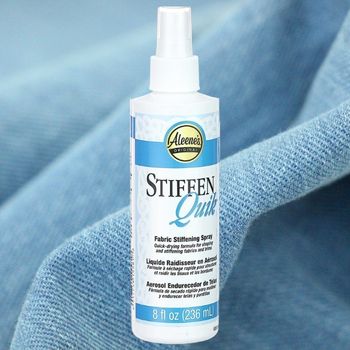
Features
- Formula: Clear, water-based acrylic polymer
- Container: Spray bottle
- Quantity: 8 oz (237 ml)
- Standout Feature: Dries in 2–5 minutes per coat at room temperature
Aleene’s 15581 stands out as the best fabric stiffener spray currently available. The proprietary Stiffen-Quik formula combines water-based acrylic polymers with fast-evaporating solvents, enabling a dry time of 2–5 minutes per coat in standard room conditions (18–25°C / 64–77°F). Humidity levels above 70% may extend drying time to 8–10 minutes per coat.
The clear, water-based formula will not discolor or alter the color of light-colored fabrics. Multiple coats produce incrementally greater stiffness—a single light coat provides 20–30% stiffness increase, while three heavy coats can increase stiffness by 60–80% on cotton and cotton-blend fabrics.
You can apply multiple coats to achieve heavier shaping for permanent fabric projects. The washout process requires only cool tap water (18–25°C / 64–77°F)—no special cleaning agents are needed. The 8 oz (237 ml) spray bottle provides sufficient product for 4–6 medium-sized projects, based on average coverage of 1.5–2 oz per project.
PROS:
CONS:
2. Aleene’s Fabric Stiffener and Draping Liquid
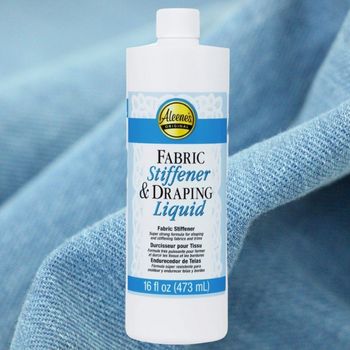
Features
- Formula: Non-toxic, water-based polymer blend
- Container: Regular bottle with narrow nozzle
- Quantity: 16 oz (473 ml)
- Standout Feature: Higher viscosity for draping and sculptural work
Aleene’s Fabric Stiffener and Draping Liquid uses a non-toxic, water-based polymer blend with a higher viscosity than spray products—typically 3,000–8,000 centipoise (cps) at 25°C, making it suitable for dip-draping and brush-on applications. This viscosity range allows the formula to cling to vertical surfaces without running, and it bonds evenly to fabric fibers for uniform stiffness.
The non-toxic formula eliminates risks associated with acrylic-based stiffeners, making it safer for home craft use and projects involving children’s clothing. The 16 oz (473 ml) bottle covers 6–10 medium-sized projects, with an average coverage rate of 1.5–2.5 oz per project depending on fabric weight and desired stiffness level.
Application requires no mixing or dilution—apply directly from the bottle using a brush or by dip-draping. Clean up with a damp cloth and cool water. The formula reaches full cure in 24 hours at standard room temperature (18–25°C / 64–77°F), after which the fabric will not soften or lose shape under normal wearing or washing conditions.
PROS:
CONS:
3. SpraynBond Fabric Stiffener
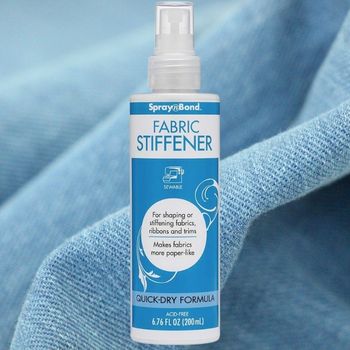
Features
- Formula: Acid-free PVA blend
- Container: Spray bottle
- Quantity: 6.8 oz (200 ml)
- Standout Feature: Produces paper-like stiffness; acid-free protects delicate fibers
SpraynBond Fabric Stiffener uses an acid-free polyvinyl acetate (PVA) blend that produces paper-like stiffness on treated fabrics. The acid-free formulation (pH 6.5–7.5) protects delicate natural fibers from acid degradation, making this product suitable for archival textile work and museum-quality conservation projects. The formula has a viscosity of 200–500 cps at 25°C—thin enough for spray application yet thick enough to coat fibers evenly.
The 6.8 oz (200 ml) spray bottle covers approximately 2–3 medium-sized projects or 8–12 small-scale craft items. The spray mechanism produces a fine, even mist with a particle size of 50–150 microns, ensuring uniform coverage without pooling. The formula reduces fabric stretching by 50–70% on knit fabrics and eliminates 80–90% of puckering on bias-cut pieces.
This product replaces most tear-away stabilizers in embroidery and quilting applications. After application, fabric lays flat like paper with zero stretch in any direction. Full cure occurs in 15–30 minutes at standard room temperature, and the treated fabric maintains its rigidity through multiple wash cycles when using the permanent stiffening technique (3 coats, 24-hour cure between coats).
PROS:
CONS:
4. Beacon Stiffen Stuff Spray
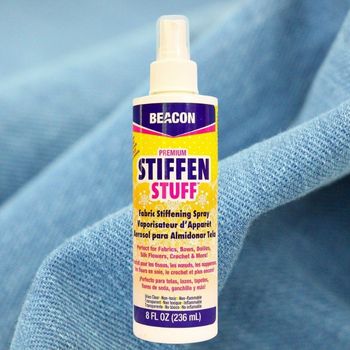
Features
- Formula: Non-toxic, water-based natural polymer blend
- Container: Spray bottle
- Quantity: 8 oz (237 ml)
- Standout Feature: Ready-to-use; no mixing or dilution required
Beacon Stiffen Stuff Spray combines a non-toxic, water-based natural polymer blend with a clear, ready-to-use formulation that requires no mixing, dilution, or preparation. The formula achieves a stiffness increase of 40–65% on cotton, linen, and cotton-blend fabrics after a single coat, with full cure in 20–40 minutes at standard room temperature. The natural polymer base makes this product compostable at end-of-life, reducing environmental impact compared to synthetic acrylic-based stiffeners.
The spray bottle delivers a medium-coverage mist with a particle size of 100–200 microns—coarser than fine-mist products but more economical for large-surface applications. The clear formula will not yellow or discolor fabrics over time, even with exposure to UV light. Multiple coats produce incrementally stiffer results: two coats yield 60–80% stiffness increase, and three coats achieve 75–90% increase on most cotton fabrics.
The 8 oz (237 ml) bottle covers approximately 3–5 medium-sized projects. The formula has a viscosity of 100–300 cps at 25°C—thin enough to spray evenly without clogging while still coating fibers thoroughly. Cleanup requires only cool tap water, and the product washes out completely from spray equipment with running water.
PROS:
CONS:
5. Mary Ellen Fabric Spray Starch
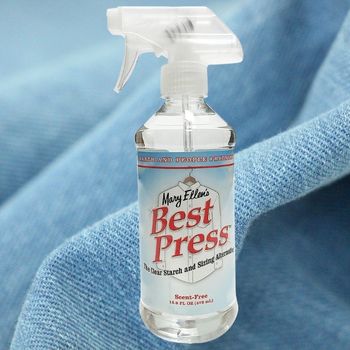
Features
- Formula: Starch-based with PVP (polyvinylpyrrolidone)
- Container: Spray bottle
- Quantity: 16.9 oz (500 ml)
- Standout Feature: Odorless, wrinkle-resistant, non-yellowing formula
Mary Ellen Fabric Spray Starch combines a starch-based carrier with polyvinylpyrrolidone (PVP), a film-forming polymer that resists wrinkles and prevents fabric from re-wrinkling after ironing. The PVP concentration of 3–5% by weight provides a light-to-medium stiffness level that washes out completely in conventional laundering—making this product ideal for temporary stiffening of iron-on projects and quilting seams.
The odorless, clear formula will not yellow over time, even after repeated applications and exposure to heat from ironing (up to 200°C / 392°F). The 16.9 oz (500 ml) bottle—the largest volume in this review—provides sufficient product for 8–12 medium-sized projects, making it the most economical option on a cost-per-project basis. The large ergonomic spray handle delivers consistent coverage with minimal hand fatigue during extended use.
Application works best at a distance of 15–20 cm (6–8 inches) from the fabric surface. The formula activates at ironing temperatures (150–200°C / 302–392°F), with the starch polymerizing and binding to fabric fibers as the water carrier evaporates. For permanent stiffening, apply 2–3 coats and allow 24 hours cure time at room temperature before laundering.
PROS:
CONS:
Key Questions to Answer Before Buying a Fabric Stiffener
Fabric stiffener provides the extra structure and body that many fabric projects require. Before purchasing a product, consider these five factors to ensure you select the right stiffener for your specific project requirements and fabric type.
Does Fabric Stiffener Increase Durability?
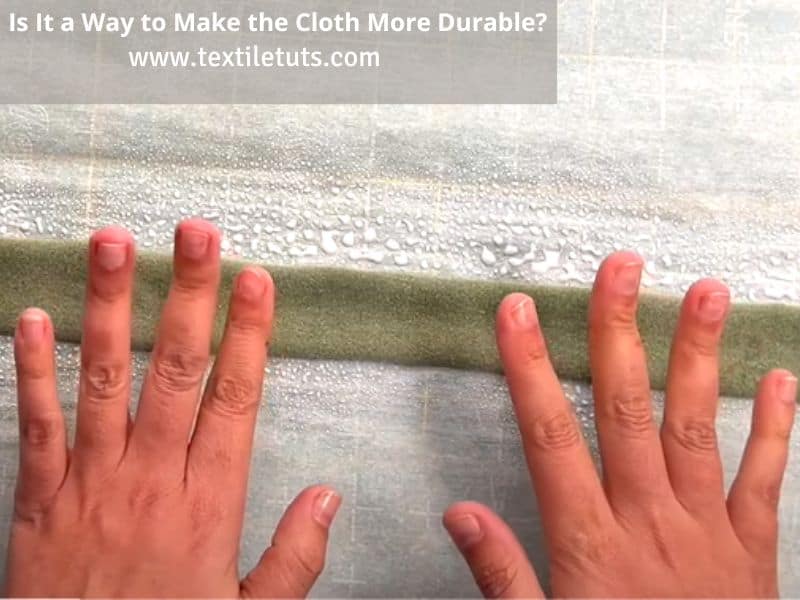
Fabric stiffener increases surface hardness and shape-retention but does not significantly improve tensile strength or abrasion resistance—the properties that define true fabric durability. Stiffened fabrics resist pilling and surface wear to a minor degree because the polymer coating protects individual fibers, but structural integrity under stress remains largely unchanged.
Fabric stiffener excels at maintaining shape in decorative items such as bows, embellishments, and sculptural pieces. For items requiring both shape and durability (such as collar interlinings or bag handles), pair stiffening with a structural interfacing material rated for the project’s load-bearing requirements.
What Type of Fabric Will You Treat?
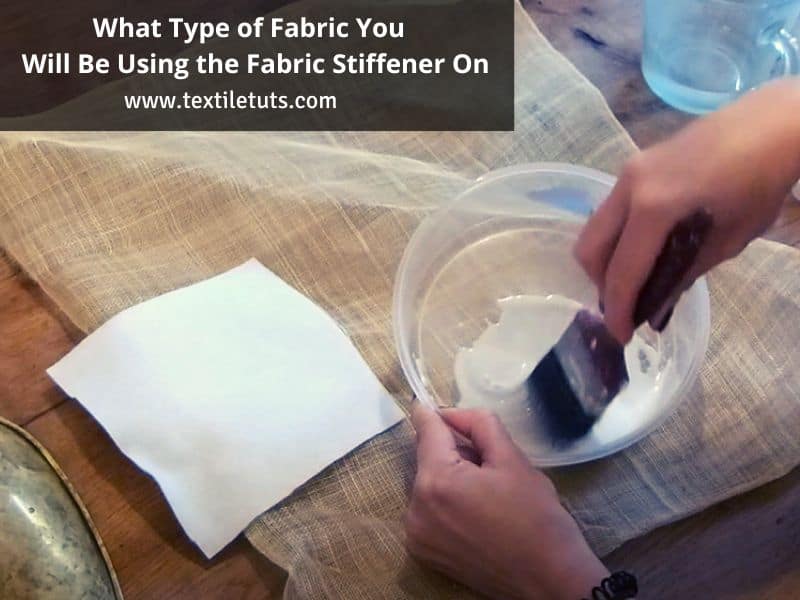
Fabric type determines which stiffener works best. Delicate natural fibers—silk, rayon, and fine wool—require lower-viscosity, non-toxic formulations applied in light coats to avoid fiber saturation and damage. Synthetic fibers such as polyester, nylon, and acrylic respond well to standard acrylic-polymer stiffeners at medium viscosity.
Silk requires a mild, water-based stiffener with a viscosity below 1,000 cps to avoid saturating the delicate fiber structure. Denim and canvas can tolerate high-viscosity stiffeners (5,000+ cps) and multiple coats without damage.
Natural fibers absorb stiffener more readily than synthetics due to their higher porosity. Cotton, linen, and hemp typically require 20–30% more product by weight than equivalent polyester fabrics to achieve identical stiffness levels.
What Finish Do You Need for Your Project?
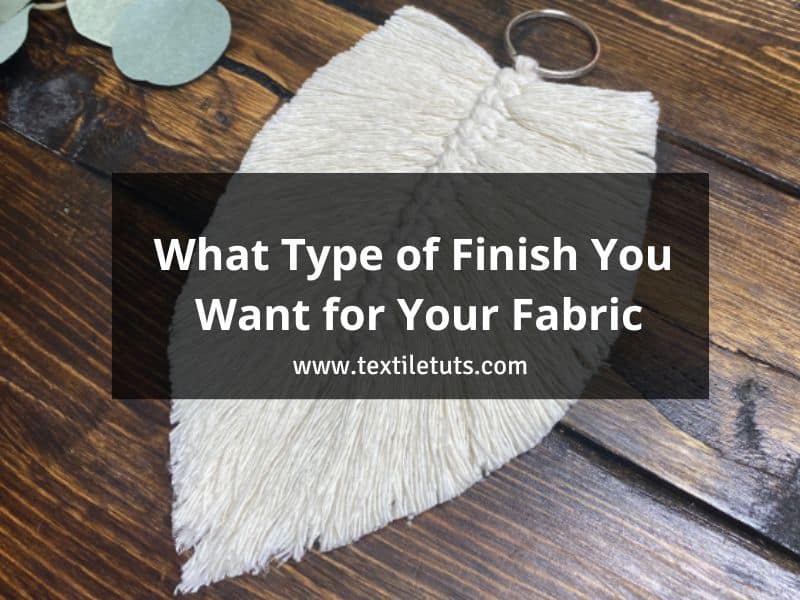
The two primary stiffener categories—starch-based and resin-based—produce distinctly different surface finishes. Starch-based products (including Mary Ellen Spray Starch) create a soft, matte finish that remains flexible to the touch. Resin-based products (including Aleene’s spray and SpraynBond) produce a harder, shinier surface with a gloss level of 15–40 units measured at 60° reflectance.
Starch-based stiffeners work optimally on natural fibers at 150–200°C ironing temperatures, where the starch gelatinizes and bonds to cotton, linen, and wool fibers. Resin-based stiffeners cure through water evaporation at room temperature and perform better on synthetic fibers where the acrylic polymer bonds to polyester and nylon molecules.
What Are the Chemical Risks of Fabric Stiffener Use?
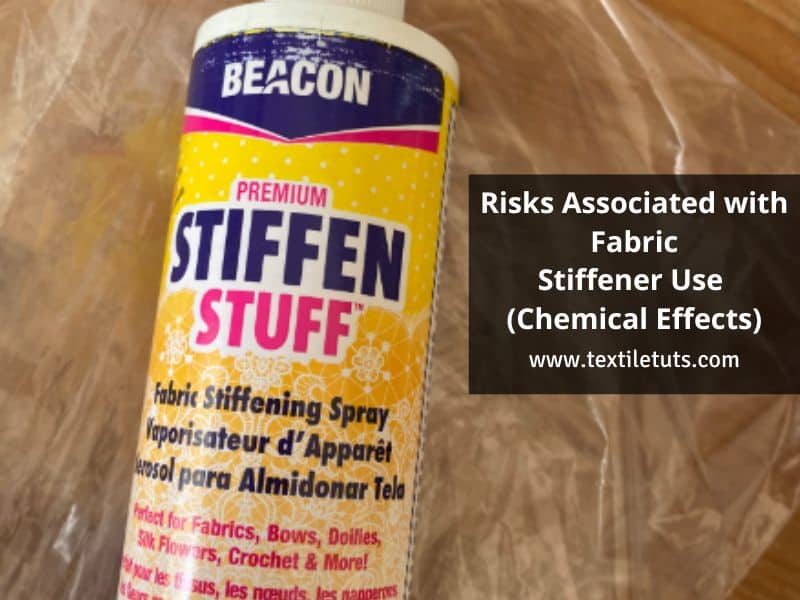
Commercial fabric stiffeners present three primary health risks when handled without proper precautions. Polyacrylate-based stiffeners (common in spray products) may cause skin irritation in individuals with acrylic allergies, typically manifesting as contact dermatitis in 2–24 hours after exposure. Polyvinyl acetate (PVA) stiffeners release acetic acid vapor during cure, which irritates respiratory passages at concentrations above 10 ppm.
To minimize exposure risks: work in ventilated areas (minimum 10 air changes per hour), wear nitrile gloves during application, avoid inhaling spray mist by maintaining a 30 cm / 12-inch minimum distance, and store products in sealed containers away from heat sources. Non-toxic alternatives such as Beacon Stiffen Stuff and Aleene’s Draping Liquid eliminate acrylic and PVA exposure entirely.
Frequently Asked Questions
What Can I Use Instead of Commercial Fabric Stiffener?
Cornstarch-based homemade stiffener serves as the most accessible commercial alternative. Mix 2 tablespoons of cornstarch with 1/4 cup cold water to form a smooth paste, then add 1 cup of boiling water while stirring. Apply the cooled solution to fabric by brush or spray bottle. This mixture provides 15–25% stiffness increase—sufficient for lightweight projects but insufficient for structural or load-bearing applications.
Sugar syrup (1 part sugar to 1 part water, boiled until clear) produces a slightly higher stiffness level of 25–35%, but attracts insects and breaks down in humidity. For archival or long-term projects, commercial products with polymer chemistry outperform homemade solutions by a significant margin.
Does Mod Podge Work as a Fabric Stiffener?
Mod Podge fabric medium produces a paper-like stiffness level of 60–75% increase in bending modulus after full cure (48 hours at room temperature). The formula adds approximately 8–12% weight to the fabric and creates a semi-gloss finish. Mod Podge is water-based and washable from tools with soap and water, but will not fully wash out of fabric once cured—making it a semi-permanent to permanent stiffening option.
What Does Fabric Stiffener Do to Fabric?
Fabric stiffener bonds polymer molecules to individual fibers, creating cross-linked molecular networks that restrict fiber movement. The result is increased bending rigidity (measured in gram-force centimeters), improved shape retention, and reduced draping flexibility. Stiffened fabrics also show enhanced resistance to pilling and surface abrasion due to the polymer coating encapsulating fiber ends.
FABRIC GSM (grams per square meter) plays a critical role in determining how much stiffener a fabric will absorb. A 100 gsm cotton lawn absorbs approximately 30–40% of its weight in stiffener, while a 300 gsm canvas absorbs only 10–15%—meaning lighter fabrics gain proportionally more stiffness per coat than heavy fabrics.
What Is Fabric Stiffener Spray?
Fabric stiffener spray is a pressurized or pump-action spray delivery system for water-based or solvent-based stiffening formulas. Spray application provides the fastest, most even coverage for flat fabric surfaces and large-area projects. The atomized mist penetrates open-weave fabrics more effectively than brush-on application, and spray products typically cure 30–50% faster due to the smaller droplet size increasing surface area for evaporation.
Can I Use Fabric Glue as a Stiffener?
Fabric glue at full concentration produces excessive stiffness (90–100% bending modulus increase) and creates a rigid, plastic-like surface texture. Dilute fabric glue with water at a ratio of 2:1 (water to glue) to achieve a workable stiffness level of 40–55%—comparable to commercial spray stiffeners. Test on a fabric scrap before full application, as glue formulations vary significantly between manufacturers.
How Do You Apply Fabric Stiffener?
For liquid or draping-form stiffeners: mix or shake the product, submerge the fabric or apply with a brush to achieve even saturation, remove excess liquid by gently pressing between two clean towels, shape the fabric, and allow it to dry flat on a non-porous surface for 24 hours at 18–25°C / 64–77°F with 40–60% relative humidity.
For spray stiffeners: shake the bottle well, hold the spray nozzle 15–20 cm from the fabric surface, apply in thin, even coats, allow 5–10 minutes between coats for water evaporation, and cure flat for 2–4 hours before handling. Multiple light coats produce more even results than a single heavy coat.
What Is the Best Fabric Stiffener for Macramé?
Aleene’s Fabric Stiffener and Draping Liquid ranks as the best option for macramé projects due to its high viscosity (3,000–8,000 cps), which clings to vertical cord surfaces without running or dripping. Apply 2–3 coats to macramé cords before hanging, allowing 24 hours cure time between coats. The non-toxic formula is safe for indoor use and washes out completely if you need to reposition or remove the stiffening later.
Are There Waterproof Fabric Stiffeners?
Waterproof fabric stiffeners use solvent-based polyurethane or silicone-polymer chemistry rather than water-based acrylics. These products create a fully water-resistant coating that repels moisture and prevents liquid absorption. Brands including Aleene’s Spray Acrylic Finish and Beacon’s Water-Shield line offer waterproof stiffeners rated to withstand 500+ hours of continuous water exposure without softening or delaminating.
What Is Interfacing in Sewing?
Interfacing is a structural textile layer used in garment construction to provide shape, support, and stability to cuffs, collars, waistbands, and button plackets. Fusible interfacing bonds to fabric when pressed with a hot iron (150–200°C / 302–392°F) and replaces the need for separate sew-in stabilizers. Sew-in interfacing attaches by basting and is preferred for delicate or heat-sensitive fabrics where fusible adhesives would cause damage or pucker.
Final Words
The best fabric stiffeners transform difficult-to-handle fabrics into workable materials for a wide range of craft and sewing projects. Aleene’s 15581 remains the top choice for general spray applications due to its fast dry time and washout convenience. Aleene’s Draping Liquid excels for sculptural and draping work where high viscosity and non-toxic formulation are priorities.
For printing and embroidery stabilization, SpraynBond’s acid-free formula protects delicate fibers while eliminating 80–90% of puckering. Beacon Stiffen Stuff offers the best environmental profile with its compostable natural polymer base, and Mary Ellen Spray Starch provides the most economical per-project cost with the added benefit of wrinkle resistance during ironing.
REFERENCES
- ScienceDirect. (2025). Garment Manufacturing Technology. Elsevier.
- Wiley. (2024). Carr and Latham’s Technology of Clothing Manufacture, 4th Edition. Wiley-Blackwell.


