
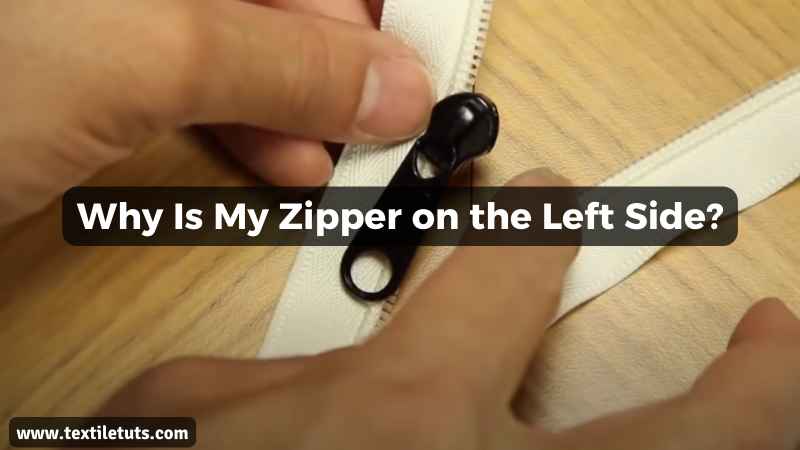
Why Is My Zipper on the Left Side?

Zippers appear on the left side of most jackets and women’s garments because approximately 90% of the global population is right-handed — placing the zipper on the left allows the dominant right hand to hold fabric steady while pulling the slider upward, creating a natural and efficient fastening motion. This left-side placement also helps distribute the garment’s weight more evenly across the body during fastening.
This convention was adopted by manufacturers to prioritize convenience for the majority of wearers. Read on to discover the full history, ergonomic reasoning, and standards behind zipper positioning.
What Does the Zipper on the Left Side Mean?

Dresses typically have a zipper on the side opposite the dominant hand of the person wearing the dress. This convention makes it easier to zip up a dress when the zipper is on the side opposite the dominant hand. For right-handed individuals, the zipper is on the left side of a dress, allowing the right hand to hold the fabric taut while the left hand guides the slider.
If you find a zipper on the left side of a garment, it typically indicates the item is designed for a right-handed person. This design convention can present challenges for left-handed individuals who may struggle to find ready-to-wear garments with reversed zipper placement.
While most zippers in commercially produced clothing are placed on the right side, there are exceptions. Children’s clothing commonly features zippers on the left side, as children do not yet develop a strong and consistent handedness preference as adults do. Many manufacturers use center-front or center-back zipper placement on children’s garments to accommodate both left- and right-handed young wearers.
Ambidextrous garments may feature left-side zippers to allow wearers to choose which hand they prefer for fastening. Some clothing items, such as t-shirts, hoodies, and pullover jackets, use a center-front zipper placement specifically to serve both left- and right-handed users equally.
Some designers place zippers on the left side for aesthetic reasons, creating a unique visual detail that differentiates their garments from conventional designs.
In women’s fashion, the left-side zipper convention became standard after the 1930s. A notable historical event called the “Battle of the Fly” in 1937 saw French fashion designers favor zippers for men’s trousers, further cementing the right-side placement as the male standard, while women’s garments retained the left-side placement for the reasons described above.
Zipper Placement: Left Side vs Right Side vs Center

Most people do not think about which side their zipper is on, even though it is a symmetrical device that can theoretically be placed on either side. However, designers and consumers often have strong preferences based on convenience and convention.
| Placement | Common Garments | Primary Reason |
|---|---|---|
| Left side | Dresses, skirts, blouses, women’s trousers | Easier for right-handed wearers to reach across and fasten |
| Right side | Men’s shirts, jackets, coats, trousers | Prevents slider from resting against chin when dressing |
| Center front | Hoodies, pullover jackets, children’s garments | Ambidextrous design for left- and right-handed users |
Left Side Zipper
Left-side zippers are predominantly found on women’s clothing. Dresses, skirts, blouses, and women’s trousers typically feature left-side zipper placement. This convention dates to the early 20th century when women’s garments were primarily stepped into and pulled up, making a left-side zipper easier for right-handed women to reach and operate.
Right Side Zipper
Right-side zippers are predominantly found on men’s clothing. Shirts, jackets, coats, and men’s trousers typically feature right-side placement. These garments are often put on by slipping them over the head, and a right-side zipper prevents the slider from resting against the chin during dressing. Historical records from the 1920s and 1930s confirm this right-side placement became the standard for men’s outerwear during this period.
Center Zipper Placement
Some garments are designed to be worn by both men and women. In these cases, manufacturers typically place the zipper in the center-front position so that it can be operated equally easily by left- and right-handed people. Hoodies, pullover jackets, and children’s garments frequently use center-front zipper placement for this reason.
Efficiency of Left-Side Zipper Placement
When zipping up a garment, it is ergonomically efficient to hold the fabric with one hand while pulling the zipper slider with the dominant hand. For the approximately 90% of the population that is right-handed, holding the fabric with the left hand and pulling the zipper with the right hand is the natural motion. If the zipper teeth were on the left side, right-handed wearers would need to cross their arms or use an awkward hand position to fasten the garment.
Because right-handed people constitute the majority of the global population, the vast majority of zippers worldwide are oriented with teeth on the right side, requiring the slider to be pulled upward on the left edge of the garment.
Read Also: Why Does My Zipper Keep Falling Down?
The History of Zippers
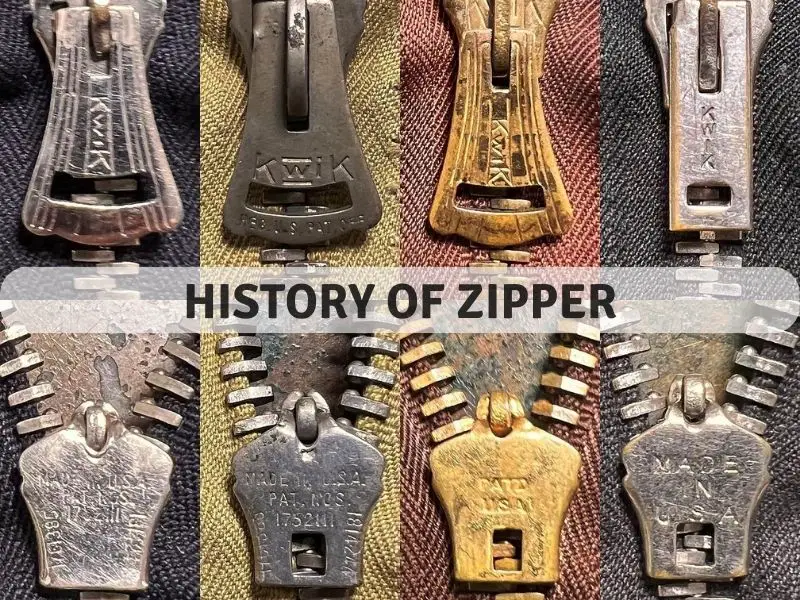
A zipper, also called a zip, fly, or zip fastener, is a commonly used device for binding the edges of an opening in fabric or other flexible material. It is used in garments, bags, luggage, and tents. The word “zipper” was derived from the German word “zipper,” meaning “to zip or close,” though the modern English term was not coined until 1923.
Before Zippers: Buttons and Drawstrings
Until the early 20th century, most clothing was fastened with buttons and drawstrings. Buttons could be sewn on either the right or left side of a garment, depending on the designer’s preference. This lack of standardization created significant difficulties for left-handed individuals, who often had to contort their bodies to reach buttons placed on the opposite side from their dominant hand.
1851: The First Patent
In 1851, inventor Elias Howe received a patent for “Improvement in Fastenings for Garments.” This was the first documented garment fastening device resembling a modern zipper. Howe did not aggressively market or mass-produce his invention, so it remained largely unknown to the public.
1893: Whitcomb L. Judson’s Clasp Locker
In 1893, Whitcomb L. Judson developed and patented the “Shoe-Fastening” device, which he also called the “Clasp Locker.” Judson’s invention was designed for shoes and represented the first commercial attempt at a zipper-like fastener. However, the device was bulky, unreliable, and did not achieve widespread adoption.
1906–1917: Gideon Sundbäck’s Refinements
In 1906, Swedish-American engineer Gideon Sundbäck was hired to improve upon Judson’s clasp locker design. Working from 1906 to 1914, Sundbäck made significant refinements that transformed the crude original into a functional fastener. In 1913, the modern zipper first went on sale. In 1917, Sundbäck received U.S. Patent 1,397,290 for the “Separable Fastener” — widely considered the patent that created the modern zipper as we know it today.
1923: The Word “Zipper” Is Coined
In 1923, the B.F. Goodrich Company began using Sundbäck’s fastener on a line of rubber boots. They coined the term “zipper” as a brand name for the product. The name caught on with the public and became the universal term for the device by the end of the decade.
1925: Zippers Enter Fashion
In 1925, Schott NYC introduced zippers on leather jackets. This was the first time a major clothing manufacturer used zippers on fashionable outerwear. The application was an immediate commercial success. Zippers were marketed as a practical solution that allowed children to dress themselves without assistance.
1937: The Battle of the Fly
French fashion designers championed zippers for men’s trousers in 1937, marking the so-called “Battle of the Fly” in which zippers defeated buttons as the preferred fastening for men’s pants. This adoption cemented the right-side zipper placement as the standard for men’s trousers worldwide, while women’s garments had already established left-side placement as the norm.
The Problem for Left-Handed Wearers and Its Solution
Early zipper designs placed the fastener on only one side, typically the right side or the center of a shoe. This posed a practical problem for left-handed individuals, particularly women who wore dresses with right-side zippers. Reaching across the body with the non-dominant hand to fasten a zipper was awkward and difficult.
Fashion designers resolved this issue by shifting women’s dress zippers to the left side, making the garment easier to fasten for right-handed women. This convention persisted and became the industry standard for women’s dresses, skirts, and blouses worldwide by the mid-20th century. Today, most commercially produced women’s garments follow the left-side zipper convention, while men’s garments use right-side placement.
Key Takeaways About Zipper Placement
Zippers are placed on the left side of women’s garments and the right side of men’s garments due to a combination of ergonomic factors, historical convention, and handedness statistics. With approximately 90% of the global population being right-handed, these placement conventions prioritize convenience for the majority.
The history of zipper placement is rooted in practicality rather than arbitrary design decisions. From Elias Howe’s 1851 patent to Gideon Sundbäck’s 1917 breakthrough, and the 1925 introduction of zippers to fashion by Schott NYC, each development reflected a response to real user needs.
Exceptions to these conventions exist: children’s clothing, ambidextrous garments, and unisex items often use center-front zipper placement to accommodate wearers of all handedness preferences. When purchasing garments, consider which zipper placement will be most convenient for your own dominant hand.
References
- Wikipedia. (2024). Zipper. Wikimedia Foundation.
- Britannica. (2024). Zipper. Encyclopædia Britannica, Inc.
- ISO. (2012). ISO 38667:2012 — Fasteners — Zippers. International Organization for Standardization.
- Cotton Incorporated. (2024). CottonWorks — Textile Industry Resource. Cotton Incorporated.
- Schott NYC. (2024). Schott NYC — Heritage Brand. Schott & Co., Inc.
- U.S. Patent and Trademark Office. (1917). U.S. Patent 1,397,290 — Separable Fastener. Gideon Sundbäck.
- Textile Exchange. (2024). Textile Exchange — Sustainable Textile Standards. Textile Exchange.
- Live Science. (2024). Live Science — Handedness Statistics. Future plc.


