
Why Is Quilting Fabric So Expensive?

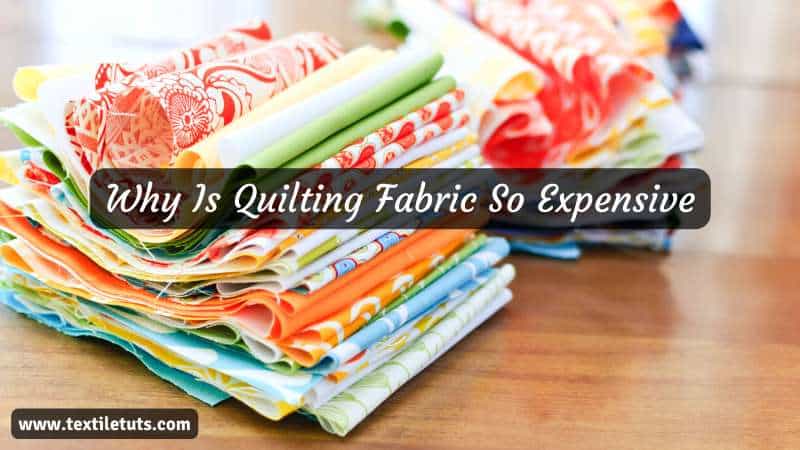
Quilting fabric commands premium prices that often surprise beginners. The fabric typically costs between $12 and $50 per yard, with designer cotton prints reaching $30 to $100 per yard at retail.
Seven key factors drive these costs: production expenses, shipping, demand dynamics, limited supply, quality standards, cotton material prices, and batting expenses. This guide examines each factor with specific data.
Top 7 Reasons Why Quilting Fabric Costs So Much
1. Fabric Production Costs
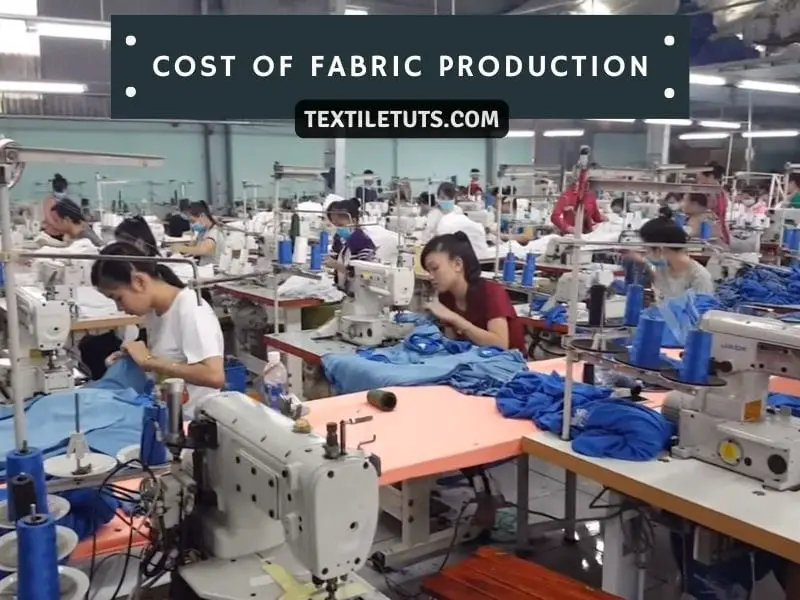
Manufacturing quilting fabric requires significantly more labor and higher-quality inputs than standard textiles. Quilting cotton typically uses 200+ thread count per square inch compared to 150 thread count for standard cotton.
Fabric weight for quilting cotton ranges from 120 to 160 GSM (grams per square metre), heavier than typical dress fabric at 80-120 GSM. This requires more raw material per yard of finished fabric.
High-quality quilting fabrics use long-staple cotton fibers (minimum 1.125 inches) that produce stronger, smoother yarns. These premium fibers cost 20-40% more than short-staple alternatives. Additionally, colorfast dyes and specialty printing processes for intricate quilt patterns add $2-5 per yard to production costs.
2. Shipping and Handling Costs
Most quilting fabric sold in North America originates from overseas manufacturers in Japan, Korea, and China. Ocean freight rates for container shipments range from $2,000 to $6,000 per 20-foot container, directly impacting final retail pricing.
Individual retail orders typically ship via ground carriers at $7-15 per package. Because quilting projects require multiple fabric purchases averaging 8-12 yards per quilt, customers pay $3-8 in shipping surcharges per yard equivalent.
3. High Consumer Demand
The Modern Quilt Guild reports over 14,000 members across more than 200 guilds in 39 countries. This growing hobbyist base creates sustained demand that outpaces supply in many fabric lines.
Seasonal demand peaks occur before major quilting events and holidays, with QuiltCon featuring over 400 quilts at each event. This concentrated demand allows retailers to maintain premium pricing.
4. Limited Manufacturing Supply
Only a handful of dedicated quilting fabric manufacturers serve the market. The three largest producers control approximately 70% of the premium quilting cotton market, limiting competitive pressure on pricing.
Specialty fabric lines run limited production runs of 3,000-5,000 yards per design. When these sell out, retailers cannot restock, driving collectors to pay premiums for discontinued patterns. Rarity creates artificial scarcity that elevates prices 30-50% above baseline production costs.
5. High-Quality Standards and Testing
Quilting fabric must pass rigorous quality specifications before reaching consumers. These requirements include thread count verification (minimum 200 threads per square inch for quilting cotton), tear strength testing (minimum 6 pounds force), and colorfastness ratings (Grade 4 or higher on the AATCC Chromatic Transference Scale).
Fabric must undergo shrinkage testing, with acceptable rates below 3% for pre-washed cotton. Abrasion resistance standards require minimum 15,000 double rubs on the Wyzenbeek scale for durable quilting fabric.
6. Cotton Raw Material Costs
Cotton prices fluctuate based on global supply and weather conditions. World cotton production reaches approximately 25 million tonnes annually across major producing regions. The commodity price volatility directly impacts quilting fabric pricing within 6-12 months of raw cotton processing.
Premium long-staple cotton, preferred for its softness and durability in quilting fabric, trades at a 25-35% premium over standard upland cotton. This cost differential reflects the additional labor and growing conditions required for Pima and Egyptian cotton varieties.
Cotton requires approximately 8,000-10,000 liters of water per kilogram of harvested fiber, with some growing regions requiring up to 22,500 liters. This water-intensive cultivation adds to production costs in arid growing regions.
7. Quilt Batting Costs
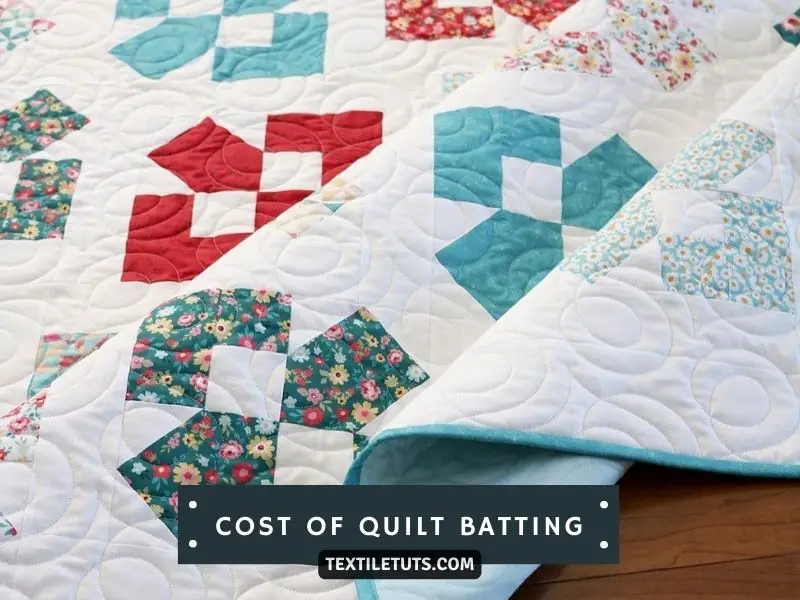
Batting—the middle layer between quilt top and backing—represents a significant quilt investment. Cotton batting typically costs $10-18 per square yard, while polyester options range from $6-12 per square yard. Premium wool batting commands $25-40 per square yard.
A standard twin-size quilt (60″ x 80″) requires approximately 3.5 square yards of batting, adding $35-140 to project costs. Queen-size quilts (90″ x 108″) need 6.75 square yards, while king-size (120″ x 120″) requires 8.3 square yards.
Low-loft polyester batting provides economy at $6-8 per square yard but lacks the breathability of cotton. Cotton batting offers superior temperature regulation but costs 40-60% more. Blended batting (80% cotton, 20% polyester) balances price and performance at $12-15 per square yard.
How to Save Money on Quilting Fabric
Strategic shopping reduces quilting costs without sacrificing quality. These proven methods help quilters maximize their fabric budgets.
Finding Discounts at Fabric Stores
Independent quilt shops typically offer 15-20% discounts on regular-priced fabric. Chain stores like Jo-Ann and Michaels run monthly sales with 40-60% off clearance items. Sign up for loyalty programs to receive early access to sales and birthday discounts.
Shopping Online Fabric Stores
Online retailers including Fabric.com (Amazon subsidiary), Missouri Star Quilt Company, and Hawthorne Supply Co. undercut brick-and-mortar prices by 20-35%. Online-only brands like Ruby Star Society offer quilting cotton at $9-14 per yard versus $15-25 at retail shops.
Buying Fabric in Bulk
Wholesale fabric purchases (20+ yards) from distributors like Riley Blake Designs and Michael Miller Fabrics reduce per-yard costs by 30-50%. Many wholesalers require business licenses, but quilt guilds often organize group purchases to access wholesale pricing.
Timing Purchases for Sales
Major sales events occur predictably: Presidents’ Day (February), Memorial Day (May), Labor Day (September), and Black Friday (November). These events typically offer the deepest discounts—50-70% off—with free shipping promotions common during holiday weekends.
Is Quilting Fabric Worth the Investment?
Quality quilting fabric provides measurable benefits that justify premium pricing for serious quilters. The fabric choice directly affects project longevity and appearance over time.
Impact of Fabric Type on Results
Cotton quilting fabric outperforms synthetic blends in three critical areas: it breathes better for temperature regulation, accepts machine washing more reliably, and develops softer texture with use. These advantages matter for heirloom quilts expected to last decades.
Quality Correlation with Durability
Premium quilting cotton with tight weave structure (200+ thread count) resists pilling and maintains color vibrancy through 200+ wash cycles. Budget fabric with 150 thread count shows visible wear after 50-75 wash cycles, making false economy for frequently used quilts.
Typical Price Ranges
Quilting fabric spans broad price tiers: clearance cotton runs $5-10 per yard, standard quilting cotton costs $12-18 per yard, premium designer prints range $20-35 per yard, and specialty import Japanese cotton reaches $30-100 per yard. Setting realistic budgets depends on project scope and quality requirements.
Budget-Friendly Alternatives
Quilters working with limited budgets can achieve quality results using moderately-priced fabrics ($10-15 per yard) from reputable manufacturers like Connecting Threads, Paintbrush Studio, or Andover Fabrics. These offer 80% of the quality at 50% of designer fabric prices.
Quilting Fabric Price Tiers at a Glance
Use this quick reference to budget for your next quilting project based on fabric quality level.
| Quality Tier | Price Per Yard | Best For |
|---|---|---|
| Budget/Clearance | $5–10 | Practice quilts, children’s projects, backing fabric |
| Standard Quilting Cotton | $12–18 | Most quilting projects, solid everyday quilts |
| Premium/Designer Prints | $20–35 | Show quilts, gifts, heirloom projects |
| Specialty Import (Japanese) | $30–100 | Collection quilts, art quilts, display pieces |
Quilting Fabric vs Regular Fabric: Key Differences
Understanding fabric distinctions helps quilters select appropriate materials for each project. These specifications matter for quilt durability and appearance.
| Feature | Quilting Fabric | Regular Fabric |
|---|---|---|
| Material | 100% cotton (primarily) | Cotton, polyester, silk, linen, blends |
| Thread Count | 200+ threads per square inch | 150 threads per square inch (average) |
| Weight | 120-160 GSM | 80-120 GSM |
| Weave Structure | Plain weave, tight construction | Varies widely by type |
| Print Quality | Colorfast, detailed patterns | Variable quality |
| Width | 42-44 inches typical | 54-60 inches typical |
| Durability | High abrasion resistance (15,000+ rubs) | Lower abrasion resistance |
| Primary Uses | Quilting, patchwork, applique | Apparel, home decor, crafts |
Types of Quilting Fabric Available
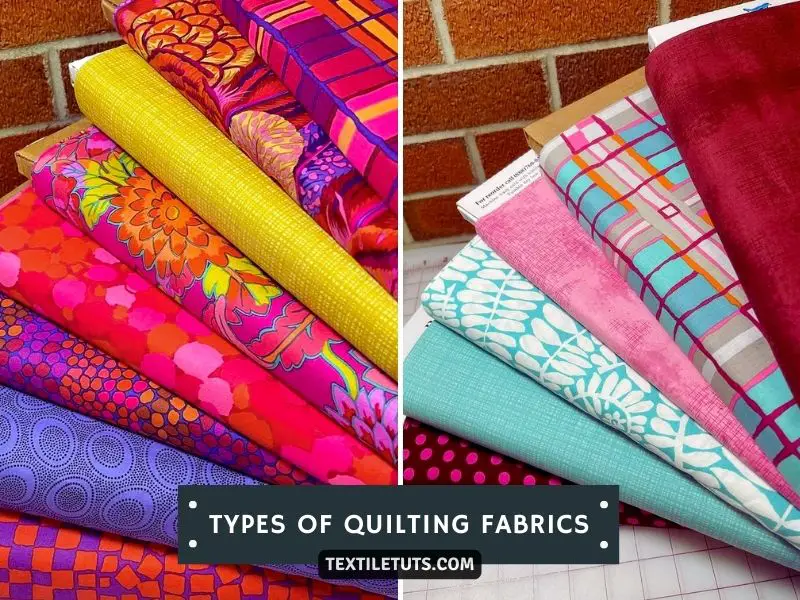
Each fabric type offers distinct characteristics suited to specific quilting applications. Selection depends on project requirements, desired aesthetics, and budget constraints.
Cotton Quilting Fabric
Cotton dominates the quilting market with 85% market share. It provides excellent stitch definition, washes predictably, and develops character with use. Premium quilters grade cotton at $15-30 per yard; standard cotton costs $10-15 per yard.
Wool Quilting Fabric
Wool offers superior warmth retention and natural water resistance. It suits decorative quilts and wall hangings rather than daily-use items. Wool quilting fabric costs $25-50 per yard but provides exceptional durability lasting generations.
Silk Quilting Fabric
Silk delivers luxury aesthetics with lustrous sheen and fluid drape. It requires specialized handling and batting choices. Silk quilting fabric ranges $30-120 per yard, with Liberty of London prints commanding premium pricing due to their proprietary screen-printing process.
Linen Quilting Fabric
Linen provides durability and relaxed aesthetics suited to casual quilt designs. It softens beautifully with washing and resists pilling. Linen quilting fabric costs $18-35 per yard, offering moderate warmth for year-round use.
Polyester Quilting Fabric
Polyester offers economy and wrinkle resistance at $6-12 per yard. It suits practice quilts and children’s projects where durability matters more than aesthetics. However, polyester lacks breathability and may pill over time.
Average Quilt Making Costs
Quilt costs vary significantly based on size, materials, and whether a quilter makes the quilt themselves or commissions one. Understanding cost components helps with project budgeting.
Design Complexity Impact
Simple patchwork quilts require 4-6 yards of fabric and 2-3 hours of cutting/assembly time. Complex applique or foundation paper piecing extends fabric requirements to 8-12 yards and 15-30 hours of construction time. Commissioned quilters charge $150-500 for design work on elaborate patterns.
Size-Based Cost Differences
Throw quilts (50″ x 60″) require 3-4 yards of fabric and $25-50 in batting, totaling $85-170 in materials. Twin-size quilts need 5-7 yards ($150-280 total), queen-size requires 8-10 yards ($240-400 total), and king-size quilts demand 10-14 yards ($320-580 total).
Fabric Selection Impact
Budget fabric choices (clearance, $5-10/yard) reduce material costs by 40-60% compared to premium designer fabrics ($20-35/yard). A queen-size quilt using budget fabrics costs $150-200 in materials; the same quilt with premium fabrics runs $400-600.
Quilt Maker Labor Charges
Professional longarm quilters charge $0.03-0.08 per square inch for custom quilting patterns. A queen-size quilt (5,940 square inches) costs $180-475 for professional longarm services. Hand quilting charges run $200-500 for a twin-size quilt due to labor intensity.
Construction Time Requirements
Hand quilting a twin-size quilt requires 40-60 hours of stitching time. Machine quilting reduces construction to 5-10 hours for straight-line patterns and 10-20 hours for free-motion designs. This time investment explains premium pricing for hand-quilted commissioned pieces.
Key Takeaways
- Quilting fabric costs $12–$50 per yard on average, with designer cotton prints reaching $30–$100 per yard at retail.
- The 7 main cost drivers are: production labor and quality inputs, ocean freight shipping, strong hobbyist demand, limited manufacturers, rigorous testing standards, cotton commodity prices, and batting costs.
- Quilting fabric uses 200+ thread count per square inch vs. 150 for standard cotton—requiring more fiber and tighter weaving.
- Premium long-staple cotton (Pima, Egyptian) costs 25–35% more than standard upland cotton but produces softer, stronger fabric.
- Quality quilting cotton lasts 200+ wash cycles vs. 50–75 for budget 150-thread-count fabric.
- Save money by shopping online (20–35% cheaper), buying in bulk (30–50% off), and timing purchases for major sales events (50–70% off).
- A queen-size quilt costs $150–$600 in materials depending on fabric quality tier.
Cleaning Baby Playmats with Quilting Fabric
Baby playmats made with quilting fabric require special cleaning considerations due to their layered construction and the delicateness of infant products.
Quilting fabric’s layered structure—multiple fabric pieces stitched together with batting between—traps dirt particles in seams and quilting通道. This construction makes thorough cleaning more difficult than single-layer fabrics.
Washing presents specific risks: cotton quilting fabric may shrink 3-5% on first washing, and agitation can distort seam alignment. Hot water and harsh detergents accelerate color bleeding in cotton prints. The trapped batting layer absorbs moisture and dries slowly, creating mold risk if not dried thoroughly.
Recommended cleaning method: Hand wash in cool water with mild detergent, gently squeezing (not wringing) to remove water. Lay flat or use low-heat tumble dry, rotating the playmat periodically. Spot cleaning with a damp cloth works for light soiling without full submersion.
Summary
Quilting fabric costs reflect genuine production and quality factors: heavier weight construction (120-160 GSM), higher thread counts (200+ per square inch), premium cotton fiber selection, and rigorous testing standards. Limited manufacturing capacity and strong hobbyist demand create supply constraints that sustain elevated pricing.
Savvy quilters reduce costs through strategic timing, online purchasing, and bulk buying. The investment in quality quilting fabric pays dividends through improved durability, better stitch definition, and longer quilt lifespan. Premium quilting cotton maintains appearance through 200+ wash cycles compared to budget fabric degradation after 50-75 cycles.
References
- Wikipedia. (2024). Cotton – Wikipedia. Wikimedia Foundation.
- Wikipedia. (2024). Quilting – Wikipedia. Wikimedia Foundation.
- Wikipedia. (2024). Thread Count – Wikipedia. Wikimedia Foundation.
- Wikipedia. (2024). Quilt – Wikipedia. Wikimedia Foundation.
- Cotton Works. (2024). Cotton Works – Cotton Industry Resource. Cotton Incorporated.
- Modern Quilt Guild. (2024). The Modern Quilt Guild. MQG.


