
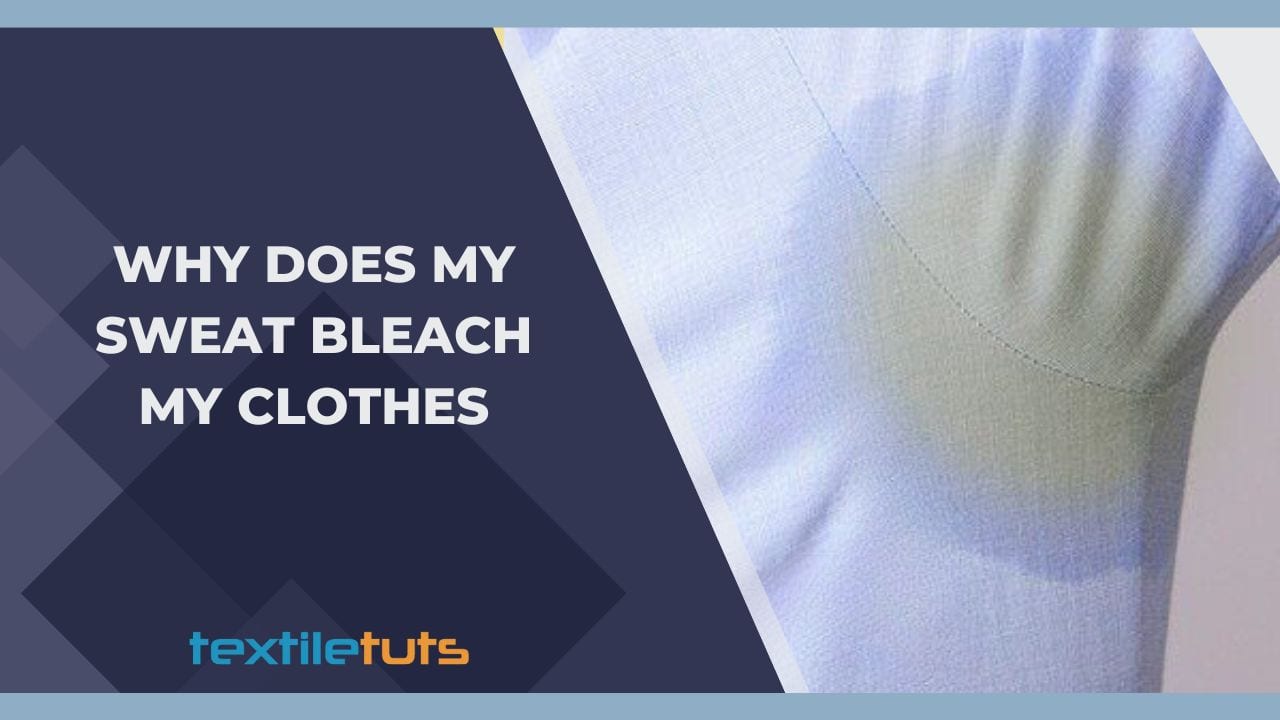
Why Does My Sweat Bleach My Clothes?

Sweat bleaches your clothes because it contains salt (sodium chloride) and urea that crystallize on fabric fibers and break down the organic dye molecules in the fabric. The salt acts as a corrosive agent that degrades textile dyes, while urea reacts with fabric finishes and causes yellowing—especially on white garments. This bleaching effect is most pronounced in areas like the underarms where sweat accumulates and evaporates repeatedly, combining high sweat output with apocrine gland secretions that contain additional fats and proteins.
If you are already dealing with white sweat stains, treat them as soon as possible for the best chance of full removal. A doctor or dermatologist can help determine whether an underlying health condition—such as hyperhidrosis, which affects approximately 2.8% of the U.S. population—is contributing to excessive sweating or unusually acidic perspiration.
The Science Behind Why Your Sweat Bleaches Your Clothes
Human sweat is primarily water, but it also contains dissolved substances that can damage fabric. The key culprits are urea, sodium chloride (salt), potassium, calcium, and trace amounts of fatty acids. Here is the breakdown of what sweat actually contains per liter:
| Component | Concentration in Sweat |
|---|---|
| Sodium (Na⁺) | 30–65 mmol/L (approximately 0.9 g/L) |
| Potassium (K⁺) | 0.2 g/L |
| Calcium (Ca²⁺) | 0.015 g/L |
| Magnesium (Mg²⁺) | 0.0013 g/L |
| Urea | 0.2–8.5 mmol/L |
| pH Range | 4.5–7.0 (slightly acidic to neutral) |
Sweat has a pH between 4.5 and 7.0, which means it ranges from slightly acidic to neutral. When this slightly acidic fluid penetrates fabric and dries, the urea and salt residues crystallize on the fibers. Over time, these residues break down organic dye molecules in the fabric, causing a bleaching effect that is particularly visible on dark and bright-colored clothing. The salt (sodium chloride) acts as a corrosive agent that degrades textile dyes, while urea reacts with fabric finishes and can cause yellowing, especially on white garments.
The bleaching effect is most pronounced in areas where sweat accumulates and evaporates repeatedly. The underarm region is particularly vulnerable because it combines high sweat output with apocrine gland secretions that contain additional fats and proteins.
Who Gets White Sweat Stains?
Some people are more prone to white sweat stains due to their sweat composition, activity level, or underlying health conditions.
Athletes and Physical Laborers
People who engage in regular intense exercise produce significantly more sweat. The eccrine glands, which are distributed all over the body and produce the majority of sweat (up to 99% water), work overtime during physical activity. Athletes are at higher risk because the volume of perspiration increases the concentration of salt and urea deposits on fabric.
People with Excessively Salty Sweat
Some individuals have notably higher sodium concentration in their perspiration — ranging above 65 mmol/L — which makes their sweat significantly more corrosive to textile dyes. This condition, sometimes linked to dietary sodium intake or genetic factors, accelerates fabric degradation and bleaching.
People with Hyperhidrosis
Hyperhidrosis is a medical condition characterized by excessive sweating. It affects approximately 2.8% of the U.S. population. People with this condition produce far more sweat than is needed for thermoregulation, and the constant moisture exposure dramatically increases the likelihood of sweat stains on clothing.
People with Diabetes
Diabetes can affect the autonomic nervous system, which controls sweating. People with diabetes may experience irregular sweat patterns, and the glucose content in their perspiration can create an additional substrate for bacterial growth, which exacerbates fabric staining and odor.
What Causes White Sweat Stains?
Two primary factors determine whether sweat will bleach your clothes: the type of sweat and the type of fabric. Both are equally important to understand.
Type of Sweat: Eccrine vs. Apocrine Glands
The human body has two types of sweat glands, and the type of sweat they produce determines how much damage they can do to fabric:
| Gland Type | Location | Composition | Primary Function |
|---|---|---|---|
| Eccrine | All over body (especially palms, soles, forehead) | 99% water, sodium chloride, potassium, trace minerals; pH 4.5–7.0 | Thermoregulation |
| Apocrine | Axillae (armpits), groin, ear canal, eyelids | Water plus proteins, fatty acids, steroids, and urea; thicker, milky fluid | Pheromone release (scent-based communication) |
Eccrine sweat is the watery, clear type that appears during exercise or heat exposure. It is mostly salt and water and evaporates quickly. Apocrine sweat is thicker and richer in proteins and fats because it originates from a different secretion mechanism. When apocrine sweat contacts fabric and is exposed to bacteria on the skin, the bacterial decomposition of these proteins and fats produces byproducts that are particularly aggressive toward textile dyes, causing both yellowing and bleaching.
Type of Fabric
Fabric choice plays a decisive role in how much sweat damages your clothes. The fiber type, weave structure, and dye quality all influence susceptibility to sweat bleaching:
| Fabric Type | Absorbency | Sweat Stain Resistance | Notes |
|---|---|---|---|
| Cotton (natural) | High — absorbs up to 27× its weight in water | Low — holds sweat against skin, allowing salt and urea to build up | Breathable but retains moisture |
| Linen (natural) | High | Low to Moderate | Fast-drying but similar to cotton in stain retention |
| Polyester (synthetic) | Low — hydrophobic fiber | Moderate — resists absorption but sweat sits on surface | Does not wick moisture effectively; can trap odor |
| Nylon (synthetic) | Low to Moderate | Moderate | Durable but can develop sweat stains over time |
| Wool (natural) | Moderate — absorbs up to 30% of its dry weight | Moderate to High | Naturally resistant to odor; can handle moisture well |
| Bamboo (semi-synthetic) | High — bamboo rayon | Moderate | Antimicrobial properties may reduce odor |
How to Prevent Your Sweat from Damaging Your Clothes
Preventing sweat damage to your clothing requires a combination of wardrobe choices, personal hygiene adjustments, and pre-treatment strategies. Implement these methods to protect your garments:
- Choose natural, breathable fabrics. Cotton and linen absorb sweat effectively, keeping it away from your skin’s surface. However, they retain moisture, so change out of sweaty clothing promptly.
- Apply antiperspirant before dressing. Antiperspirants contain aluminium chlorohydrate or aluminium zirconium compounds that temporarily block sweat ducts. Apply at night for maximum effectiveness — the active ingredients need time to form a plug in the duct.
- Use sweat guards or underarm shields. These fabric shields absorb perspiration before it reaches your clothing. They are particularly useful for formal wear or light-colored shirts.
- Wear loose-fitting clothing. Tight-fitting garments trap sweat against your skin, increasing contact time between perspiration and fabric. Loose, breathable clothing allows airflow that speeds evaporation.
- Select dark colors strategically. Dark fabrics hide sweat stains better than light or white clothing, though they can still suffer from salt residue and structural fabric damage over time.
- Adjust your diet to reduce urea in sweat. High-protein diets increase urea production. Moderating protein intake while staying hydrated can lower urea concentration in perspiration.
- Hydrate well. Drinking plenty of fluids dilutes the salt concentration in your sweat, reducing its corrosive effect on fabric dyes.
- Stay cool to minimize sweating. Use fans, air conditioning, or cooling towels when exercising in hot conditions. Keeping body temperature lower reduces total sweat output.
- Wash sweaty clothes separately. Never wash sweat-stained items with regular laundry. Use cool water and a gentle detergent designed for activewear to prevent salt buildup in your washing machine.
Quick-Reference: Key Thresholds for Sweat Stain Prevention
Keep these critical thresholds in mind when managing sweat and protecting your clothes:
| Factor | Key Threshold | Why It Matters |
|---|---|---|
| Sweat pH Range | 4.5–7.0 (slightly acidic to neutral) | Acidic sweat (pH below 5.5) is more corrosive to fabric dyes |
| Sodium concentration in sweat | 30–65 mmol/L (average); above 65 mmol/L is abnormally high | Higher sodium = more corrosive sweat; accelerates fabric dye degradation |
| Hydrogen peroxide temperature | Above 60°C (140°F) significantly increases bleaching effect | Heat activates the oxidation process but may damage delicate fabrics |
| Cotton absorbency | Absorbs up to 27× its dry weight in water | High absorbency means longer drying time and extended contact between salt/urea and fabric |
| Hyperhidrosis prevalence | Affects ~2.8% of the U.S. population | People with this condition produce far more sweat and face higher stain risk |
Why Some People Experience More Sweat Staining Than Others
Several interrelated factors determine how severely your sweat affects your clothing:
Individual Sweat Composition
The sodium concentration in human sweat varies significantly between individuals, ranging from 30 mmol/L to over 65 mmol/L. People with higher sodium levels in their perspiration produce a more corrosive solution that degrades fabric dyes faster. Dietary sodium intake, genetics, fitness level, and acclimation to heat all influence this concentration.
Fabric Absorbency and Fiber Type
Natural fibers like cotton can absorb up to 27 times their dry weight in water. This high absorbency means they retain sweat within the fiber matrix, prolonging contact between salt, urea, and the dye. Synthetic fibers repel water to varying degrees, causing sweat to sit on the fiber surface rather than being absorbed — which can still lead to surface staining and odor retention.
Body Hair
Body hair acts as a collection point for sweat, allowing it to accumulate and drip onto clothing in larger droplets than would otherwise occur. This concentrated drip pattern creates localized staining spots that are particularly visible on light-colored fabrics.
How to Remove White Sweat Stains
If white sweat stains have already developed, prompt treatment improves your chances of full removal. These methods work through different chemical mechanisms — acidity, abrasion, oxidation, and bleaching — and can be combined for stubborn stains:
| Method | Active Component | Application | Effectiveness |
|---|---|---|---|
| White vinegar soak | Acetic acid (5–8% concentration) | 1 part vinegar : 2 parts water; soak 30 minutes | Moderate — dissolves salt and urea deposits; works best on early stains |
| Lemon juice treatment | Citric acid (5–6% concentration) | Apply directly to stain; sit 30–60 minutes before washing | Moderate — bleaching effect on light fabrics; may lighten dark fabric |
| Baking soda paste | Sodium bicarbonate (mild alkali) | Mix equal parts baking soda and water; apply and scrub gently with a brush | Moderate to High — works as a gentle abrasive and deodorizer |
| Hydrogen peroxide | H₂O₂ — oxidation bleaching agent | Dilute 1 part H₂O₂ (3%) : 2 parts water; test on hidden area first; do not use on dark fabrics | High — powerful oxidizer that breaks down stain compounds; most effective on white and light fabrics |
Note: Hydrogen peroxide becomes significantly more effective as a bleach at temperatures above 60°C (140°F). However, this temperature may damage certain fabrics, so always check the garment’s care label before using hot water treatments. For delicate fabrics like silk or wool, stick to cool water and gentle methods like vinegar soaks or baking soda paste.
Step-by-Step: Vinegar Soak
Mix one part white vinegar with two parts cool water in a basin. Submerge the stained area and let it soak for approximately 30 minutes. Rinse thoroughly with cool water, then launder as normal with a gentle detergent. This method is safe for most fabric types and is particularly effective on early-stage sweat stains before they have set into the fabric.
Step-by-Step: Hydrogen Peroxide Treatment
Dilute 3% hydrogen peroxide with an equal amount of water. Apply the solution directly to the stained area using a clean cloth or spray bottle. Allow it to sit for 10–15 minutes, but no longer than 30 minutes — extended exposure to hydrogen peroxide can weaken fabric fibers. Rinse thoroughly and launder immediately. Always spot-test on an inconspicuous area (like an inside seam) before applying to the stain.
Can Sweat Bleach Clothes After Washing?
Even after washing, sweat stains can reappear or worsen on clothing. This happens because the washing process does not always fully remove urea and salt crystals embedded in the fabric fibers. When the garment is worn again and heated by body temperature, the remaining residues can continue to degrade dyes, producing new or darker white marks. This is why pre-treating sweat-stained clothing before laundering is essential for complete removal.
To prevent this cycle, always pre-soak heavily sweat-stained items and avoid putting damp sweaty clothes in a pile or in a closed hamper — the warmth and moisture create ideal conditions for the residual salts to keep reacting with fabric dyes.
Final Say
Sweat causes white discoloration and bleaching on clothing because it deposits salt, urea, and fatty acids onto fabric fibers. These substances break down textile dyes through both corrosive and chemical reactions. By understanding your sweat type, choosing the right fabrics, and applying targeted stain removal methods, you can effectively protect your clothes from sweat-related damage. Prevention is the most reliable strategy — treat stains early, manage excessive sweating with appropriate antiperspirants, and always change out of sweaty clothing promptly.
References
- Wikipedia. (2026). Sweat. Wikimedia Foundation.
- Wikipedia. (2026). Hyperhidrosis. Wikimedia Foundation.
- Wikipedia. (2026). Laundry Detergent. Wikimedia Foundation.


