
What Is DWR Coating? How Durable Water Repellent Finishes Work

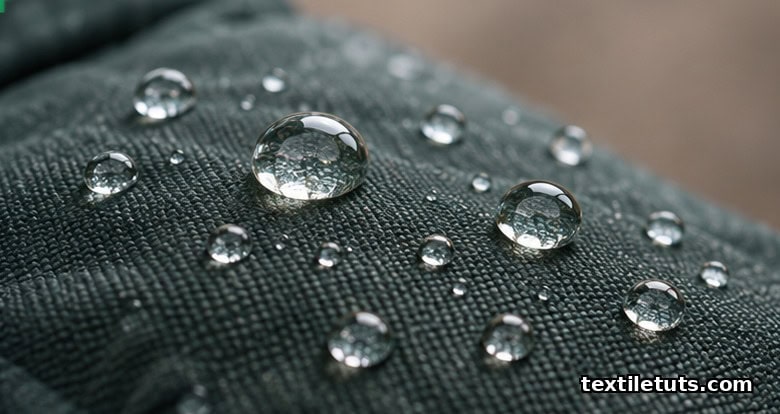
DWR (Durable Water Repellent) coating is a fluoropolymer chemical finish applied to fabric surfaces that creates a hydrophobic barrier causing water to bead and roll off rather than soak in. Modern DWR treatments are either traditional fluoropolymers (containing PFC compounds) or newer PFC-free alternatives using silicone or hydrocarbon-based chemistry — with PFC-free formulations requiring reapplication more frequently than their fluoropolymer predecessors.
DWR Coating: Definition and Purpose
DWR coating is a fluoropolymer surface treatment applied to fabric that creates a hydrophobic barrier causing water to bead up with high contact angles (typically 130–150°) and roll off rather than soaking through to the underlying layers. DWR stands for Durable Water Repellent — a surface treatment applied to fabric during textile manufacturing that creates a hydrophobic (water-fearing) layer on individual fibers. Unlike a waterproof membrane laminated to a garment’s interior, DWR coats the fibers themselves, causing water droplets to bead up with high contact angles and roll off the fabric surface rather than soaking through to the underlying layers.
The primary purpose of DWR coating is keeping the wearer dry by preventing the outer face fabric from absorbing water. Wet fabric becomes heavy, loses insulation properties, and takes far longer to dry. A properly treated DWR fabric maintains its original weight and breathability even in wet conditions. Secondary benefits include resistance to water-based staining and reduced fabric degradation caused by repeated saturation cycles over the garment’s lifespan.
DWR coating functions as a finishing layer, not a standalone waterproofing solution — it works in conjunction with breathable waterproof membranes in breathable waterproof membranes in technical outerwear. The face fabric DWR protects the membrane from saturation, prevents wind-pushed rain from penetrating, and extends the functional life of the membrane laminate beneath it.
The Chemistry Behind DWR: How Fluoropolymer Coatings Work
Traditional DWR coatings use fluoropolymers — long-chain carbon molecules in which hydrogen atoms are almost entirely replaced by fluorine atoms. Fluorine is the most electronegative element in the periodic table, forming extremely strong carbon-fluorine (C-F) bonds with a bond dissociation energy of approximately 485 kJ/mol. This strength makes the C-F bond highly resistant to chemical attack, UV degradation, and mechanical wear.
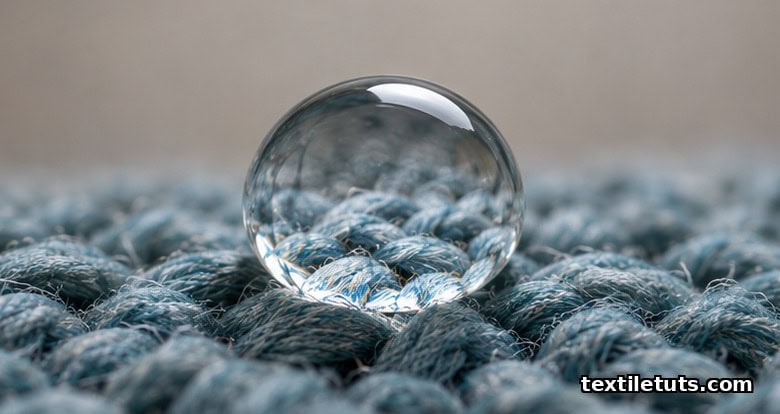
Surface Energy and the Lotus Effect
The densely packed fluorine atoms create a surface with exceptionally low surface energy — typically 10–15 mN/m for fluoropolymer coatings, compared to 30–40 mN/m for untreated synthetic fabrics and 72 mN/m for water. Because surface energy dictates whether a liquid will spread or bead on a surface, water droplets cannot maintain contact with a fluoropolymer-treated fabric. Instead, they bead up and roll off, picking up surface contaminants (dust, pollen, oils) in the process — a phenomenon called the lotus effect.
Chain Length and Repellency Performance
The C-F bond length and fluorine atom density on the polymer chain directly determine the repellency performance. Longer fluorocarbon chains (C8 chemistry, with 8 carbon atoms) provide the highest repellency and durability because they present more fluorine atoms per unit area. Water droplet contact angles on DWR-treated fabric typically measure 130–150°, compared to 90–110° on untreated fabric and 0° on a fully wetted surface.
During application, the fluoropolymer solution penetrates the fiber bundles and bonds to individual fibers during the curing process. The polymer chains orient themselves so that fluorine atoms face outward — away from the fiber substrate and toward the air interface — creating the low-energy surface that repels water.
PFC-Free DWR Alternatives: Silicone and Hydrocarbon Technologies
Environmental and health concerns over per- and polyfluorinated compounds (PFCs) have driven significant innovation in PFC-free DWR chemistries. Long-chain PFCs such as PFOA (perfluorooctanoic acid) and PFOS (perfluorooctanesulfonic acid) are bioaccumulative, persistent in the environment, and have been detected in water systems, wildlife, and human blood samples globally. C8 chemistry is being phased out under regulatory pressure, particularly in the European Union under EU REACH restrictions.
Silicone-Based DWR Technology
The two primary PFC-free alternatives are silicone-based polymers and hydrocarbon-based wax compounds. Silicone DWR uses polydimethylsiloxane (PDMS), a polymer with a silicon-oxygen backbone and methyl groups extending outward. PDMS provides moderate water repellency with a contact angle of approximately 100–115°, and while it is more environmentally benign than fluoropolymers, it typically loses effectiveness after 20–30 home laundry cycles compared to 50+ cycles for C8 fluoropolymer coatings.
Hydrocarbon and Hybrid Chemistries
Hydrocarbon-based DWR employs long-chain alkanes — waxy compounds similar in structure to natural plant waxes — applied as emulsions during fabric finishing. These offer initial repellency comparable to silicone alternatives but with lower wash durability. Some manufacturers are now developing hybrid chemistries that combine short-chain fluorinated segments (C6 or C4) with silicone or hydrocarbon polymers, aiming to bridge the performance gap while reducing environmental persistence.
Brands including Nikwax, Grangers, and Reef-7 have developed PFC-free DWR options for consumer reapplication, while textile manufacturers work toward durable PFC-free options that meet the performance standards of professional-grade outerwear.
Application Process: How DWR Is Applied to Fabric
DWR is applied during textile manufacturing as a finishing treatment, with three primary commercial methods: padding (pad-dry-cure), spray-on coating, and foam coating. The choice of method depends on fabric construction, end-use requirements, and the specific DWR chemistry being applied.
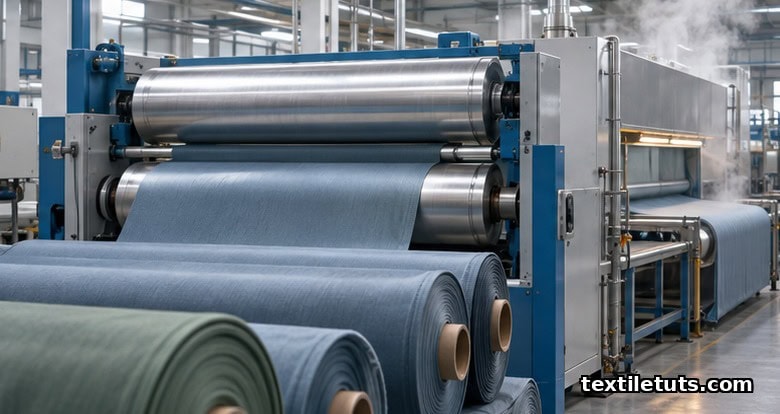
The most common industrial method is the pad-dry-cure process, in which fabric passes continuously through a DWR solution bath and then through paired pressure rollers (a padding mangle) that squeeze excess treatment into the fabric structure and ensure even distribution. The fabric is then dried in a heated oven at 100–120°C to remove water, followed by curing at 150–170°C for 30–60 seconds. This thermal treatment cross-links the polymer chains and bonds them covalently to the fiber surfaces.
The initial cure during manufacturing creates a strong bond, but full functional performance develops over 24–72 hours as the polymer chains fully orient with fluorine atoms pointing outward. Garments should not be exposed to heavy rain or washing during this post-cure window. Spray-on application is used for both industrial garment finishing and consumer DWR reapplication products, where the treatment is applied as an aerosol or pump spray to the face fabric and then heat-activated with tumble drying or ironing.
Foam coating is a low-water-consumption alternative that encases the DWR chemistry in foam bubbles, reducing energy use and chemical waste in manufacturing. It is particularly suited for sensitive fabrics where excessive moisture penetration during padding could damage the textile structure.
DWR Ratings and Performance Standards
DWR performance is quantified using standardized laboratory tests that measure water repellency under different conditions. Understanding these ratings helps buyers and manufacturers select appropriate treatments for specific end-use applications.
| Test Standard | Measurement | What It Evaluates |
|---|---|---|
| ISO 811 / ASTM D3393 | Water column (mm) | Hydrostatic pressure resistance — water height before penetration |
| ISO 4920 / AATCC 22 | Spray rating (0–100) | Surface wetting resistance — visual rating after spray test |
| Contact angle | Degrees (°) | Hydrophobicity of treated surface |
| Martindale / Wyzenbeek | Cycles | Abrasion resistance of DWR coating |
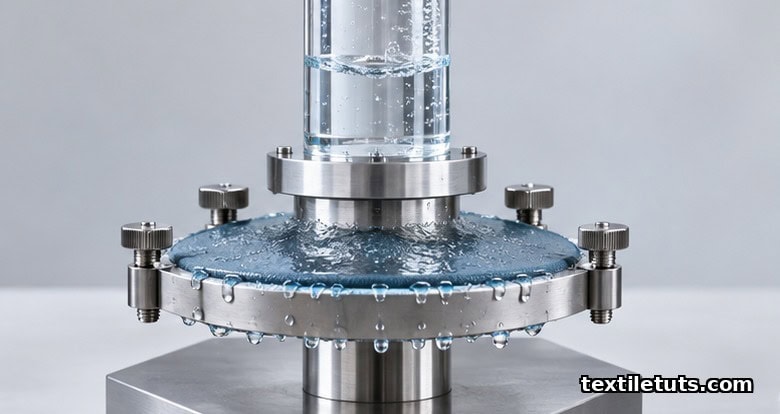
The water column test (ISO 811) is the primary performance metric for technical outerwear. A column of water is placed on the fabric surface and pressure is gradually increased until water penetrates. Basic DWR treatments typically rate 80/20 (80mm water column before penetration), standard treatments rate 80/50 (500mm, suitable for light rain), and premium treatments for severe conditions reach 80/80 (800mm+) and beyond.
The spray rating test (AATCC 22) sprays 250ml of water onto the fabric surface from a specified height. A rating of 100 indicates no wetting whatsoever; 90 indicates slight random wetting; 80 indicates partial wetting in isolated spots; and below 70 indicates significant surface wetting. DWR-treated technical fabrics should maintain a spray rating of 90+ after 50 wash cycles to be considered durable.
Abrasion resistance of the DWR coating itself is measured using Martindale or Wyzenbeek testing, where the fabric is rubbed against a standard abrasive surface under load. Each rub cycle grinds away some of the treatment, and the total cycles before repellency drops below threshold determines the mechanical durability rating.
What DWR Coating Does NOT Do
DWR is frequently misunderstood as providing full waterproofing, which it does not. Understanding the limitations of DWR coatings prevents unrealistic expectations and helps consumers make informed purchasing decisions.
DWR does not create a fully waterproof fabric. Even a premium fluoropolymer DWR with a 150° contact angle has a finite hydrostatic head — typically nowhere near the 5,000–25,000mm ratings of dedicated waterproof membranes. Under high-pressure water impact (heavy rain with wind, direct water jet, or water pooling against the fabric), water will eventually penetrate the inter-fiber spaces.
DWR does not prevent water penetration in conditions involving sustained pressure or force. This is the critical distinction between water repellency and waterproofing: DWR-treated fabric repels falling rain and light spray, but it cannot replace a laminated waterproof membrane for activities involving prolonged exposure to rain, high winds, or submersion. Garments labelled “water-resistant” use DWR; garments labelled “waterproof” incorporate membranes.
DWR does not last forever. The coating degrades with each wash cycle, with mechanical abrasion from use, and with UV exposure. Once a DWR coating has significantly degraded — manifesting as the fabric “wetting out” in high-wear areas such as the shoulders and cuffs — surface-level reapplication cannot restore it. At that stage, professional reapplication or jacket replacement is required.
DWR is fundamentally different from waterproof breathable membranes such as Gore-Tex, eVent, or Pertex Shield. Those membranes are microporous laminates bonded to or coated onto the inner face fabric, providing a physical barrier to liquid water while allowing water vapor (sweat) to escape. DWR is a surface treatment on the outer face fabric that works cooperatively with — but cannot substitute for — a membrane layer.
DWR Degradation: Why DWR Fails Over Time
DWR coatings degrade through a combination of mechanical, chemical, and environmental processes that progressively reduce the fluorine atom density at the fiber surface. Understanding these mechanisms helps garment owners take preventive measures and recognize when reapplication or replacement is necessary.
Mechanical abrasion is the primary driver of DWR failure in active use. Rubbing the fabric against backpack straps, rough surfaces, rocks, or even repeated flexing during movement gradually wears away the fluoropolymer layer, exposing untreated fiber beneath. In high-stress areas — the shoulders, upper back, and forearms — coating failure occurs first due to repeated contact and movement.
Machine washing, particularly with conventional laundry detergents, accelerates DWR degradation in two ways. Standard detergents contain surfactants and builders designed to remove oils and waxes — exactly what DWR is made of. The mechanical agitation and tumbling action further grinds the treatment from the fiber surfaces. Even gentle wash cycles progressively strip the coating over time.
Soil and oil accumulation on fiber surfaces is one of the most common causes of apparent DWR failure that is actually reversible. Body oils, food grease, sunscreen, insect repellent, and general environmental soil coat the fiber surfaces with fatty substances that have high surface energy, allowing water to spread and wet the fabric. This is distinct from true DWR degradation and can often be resolved with a thorough technical fabric wash to remove accumulated contaminants. Following proper fabric care best practices extends garment lifespan significantly.
UV exposure breaks down fluoropolymer chains through photochemical degradation, particularly in garments used for extended periods in bright sunlight at altitude. UV photons cleave C-F bonds, reducing fluorine atom density at the surface and progressively lowering the contact angle.
Fabric softeners and dryer sheets are particularly destructive to DWR coatings. Both deposit fatty substances (silicones, quaternary ammonium compounds) directly onto the fibers, replacing the low-energy fluoropolymer surface with a high-energy coating that water readily wets. Even a single use of fabric softener on a DWR-treated garment can cause catastrophic wetting failure.
Maintaining and Restoring DWR Coating
Proper care significantly extends the functional life of a DWR-treated garment and maintains its water-repellent performance throughout the garment’s lifespan. The maintenance regimen is straightforward but requires consistency and the right products.
Wash DWR-treated garments exclusively with technical fabric wash products such as Nikwax Tech Wash or Grangers Performance Wash. These are specifically formulated to clean fabric and remove oils without stripping DWR chemistry. Use half the normal amount, select the gentle cycle with warm water (30–40°C), and skip the pre-wash soil cycle. Do not use regular laundry detergent, which contains surfactants and enzymes that degrade DWR chemistry.
Never use fabric softener or dryer sheets on DWR-treated garments — not in any wash load, not in any dryer load, ever. One application can coat an entire load of laundry, and the fatty residue transfers between garments. If fabric softener has been used, multiple wash cycles with technical fabric wash may be required to fully remove the residue before the DWR will function again.
Tumble drying on medium heat (medium setting, 40–50°C) is one of the most effective ways to maintain and reactivate DWR coatings. The heat causes the fluoropolymer chains to reorient and re-bond to the fiber surface, partially restoring repellency even after some degradation. If tumble drying is not possible, iron on low heat with a cloth barrier between the iron and the fabric — the heat mimics the curing process of the original factory application.
For reapplication, spray-on DWR treatments such as Nikwax TX.Direct or Grangers Repel are applied to the clean, damp face fabric after washing. The garment is hung or laid flat, the spray is applied evenly to saturation, and then the garment is tumble dried on medium heat to activate the new coating. Reapplication restores water repellency but cannot compensate for heavy fabric abrasion or damage to the underlying fiber structure.
When the face fabric is heavily abraded — visible fiber breakage, thinning areas, or persistent wetting out despite proper washing and reapplication — professional DWR reapplication may be possible, but results vary. In most cases of advanced degradation, the most cost-effective and highest-performance solution is jacket replacement, particularly for high-value technical garments.
DWR in Technical Outdoor Apparel
DWR coating is a defining component of modern technical outdoor apparel, particularly in the complete fabric care guide for backcountry and mountaineering activities. The outer shell layer — whether classified as a hard shell and soft shell outerwear — depends on DWR to function as part of an integrated weather-protection system.
In a typical three-layer layering system, the outer shell fabric serves as the weather-resistant face layer. Its DWR coating causes precipitation to bead and roll off before it can saturate the mid-layer or base layer insulation. Critically, DWR on the outer shell allows moisture vapor (sweat) to escape through the fabric’s inter-fiber capillary channels — maintaining breathability while preventing liquid water ingress.
When DWR is compromised and the outer face fabric wets out, several problems cascade simultaneously. The saturated face fabric becomes heavy, loses breathability dramatically (wet fabric has very low air permeability), and transfers cold through conduction to the layers beneath. More importantly, a wet face fabric can prevent a laminated waterproof membrane from functioning — water pools against the membrane surface instead of beading, increasing hydrostatic pressure and eventually forcing water through membrane pores.
The quality of a garment’s DWR treatment directly affects its price point and performance category. Budget garments may use basic DWR that loses effectiveness after 10–20 washes. Mid-range garments typically offer 30–50 wash cycle durability. Premium technical outerwear from brands such as Arc’teryx, Patagonia, and Black Diamond uses high-quality fluoropolymer or advanced PFC-free DWR formulations rated for 50–80+ wash cycles, often combined with membrane laminates for full waterproof protection.
DWR Environmental and Health Considerations
The textile industry’s shift away from traditional fluoropolymer DWR chemistry is driven by mounting evidence of the environmental and health impacts of PFC compounds. Per- and polyfluorinated compounds are characterized by their extreme persistence — they do not break down in the environment through natural processes, earning them the nickname “forever chemicals.”
Long-chain PFCs including PFOA (C8) and PFOS (C8) have been detected in drinking water supplies, remote Arctic ecosystems, marine food chains, and human blood serum samples worldwide. The European Chemicals Agency (ECHA) has classified C8 PFCs as Substances of Very High Concern under EU REACH, leading to significant restrictions on their use in textile manufacturing. The U.S. Environmental Protection Agency (EPA) has also implemented significant restrictions through the PFOA Stewardship Program.
Short-chain PFC alternatives (C6 and C4 chemistry) have lower bioaccumulation potential and environmental persistence than C8 compounds while offering comparable initial water-repellency performance. However, research is ongoing regarding their environmental degradation products, and regulatory scrutiny continues to intensify. The EU’s proposed PFAS restriction could ban the entire PFAS class — including short-chain alternatives — if adopted.
Textile certification systems including Bluesign and OEKO-TEX have established restrictions and substance lists that limit or prohibit specific PFC compounds in certified textile production. Brands committed to eliminating PFCs from their supply chains increasingly specify PFC-free DWR alternatives, with market share for PFC-free treatments in the outdoor apparel sector growing at approximately 15–20% annually.
For consumers, the choice between traditional fluoropolymer DWR and PFC-free alternatives involves a trade-off between initial performance (where C8 fluoropolymers remain superior), durability (where traditional DWR lasts significantly longer), and environmental responsibility. Premium PFC-free DWR products have improved substantially and are now viable for most recreational uses, though they may still lag behind C8 chemistry in demanding professional and extreme conditions.
Frequently Asked Questions
Q: What is DWR coating on fabric?
A: DWR (Durable Water Repellent) coating is a chemical finish applied to fabric that creates a hydrophobic surface causing water to bead up and roll off rather than soak in. It extends garment life by keeping the fabric dry and reducing saturation-related degradation.
Q: Is PFC-free DWR as effective as fluoropolymer DWR?
A: PFC-free DWR alternatives (silicone and hydrocarbon-based) provide initial water repellency but with lower durability — they typically lose effectiveness after 20–30 washes compared to 50+ washes for fluoropolymer DWR. No PFC-free alternative yet matches the sustained high performance of traditional C8 fluoropolymer chemistry.
Q: How do I restore DWR coating on my jacket?
A: First, wash the garment with a technical fabric wash to remove accumulated soil and oils. Then apply a spray-on DWR treatment (Nikwax TX.Direct or Grangers Repel) to the face fabric while damp. Tumble dry on medium heat to activate the new coating. If the face fabric is heavily abraded, professional reapplication or jacket replacement may be necessary.
Q: Does DWR coating make fabric waterproof?
A: No — DWR provides water repellency, not waterproofing. DWR causes water to bead and roll off the surface but does not prevent water penetration under pressure. Waterproof garments use membrane laminates (Gore-Tex, eVent) in addition to DWR face fabric treatment.
References
- Cotton Incorporated. (2024). STORM COTTON™ Technology. CottonWorks. https://www.cottonworks.com/product-innovation/product-technologies/storm-cotton-technology/
- European Chemicals Agency (ECHA). (2024). Per- and Polyfluoroalkyl Substances (PFAS). ECHA. https://echa.europa.eu/reach/proposals/pfas
- U.S. Environmental Protection Agency. (2024). PFAS Strategic Roadmap. EPA. https://www.epa.gov/pfas
- International Organization for Standardization. (2018). ISO 811:2018 — Textile fabrics — Determination of resistance to water penetration — Hydrostatic pressure test. ISO.
- AATCC. (2022). AATCC 22 — Water Repellency: Spray Test. American Association of Textile Chemists and Colorists.
- Nikwax. (2024). Tech Wash — Technical Fabric Cleaner. Nikwax Ltd. https://www.nikwax.com/en/products/tech-wash/
- Bluesign Technologies. (2024). Bluesign System — Chemical Safety Standards. Bluesign AG. https://www.bluesign.com
- Korade, G. & Gいかだ, K. (2021). Fluoropolymer-based water repellent finishes for textiles. Journal of Applied Polymer Science, 138(22), 50541. https://doi.org/10.1002/app.50541


